

SUBSCRIBE TO OUR FREE NEWSLETTER
Daily news & progressive opinion—funded by the people, not the corporations—delivered straight to your inbox.
5
#000000
#FFFFFF
To donate by check, phone, or other method, see our More Ways to Give page.
Daily news & progressive opinion—funded by the people, not the corporations—delivered straight to your inbox.
Today, April 6, the Government Accountablity Project (GAP) filed a
complaint with the Washington, D.C. Bar Association against Suzanne
Folsom, former Director of the Department of Institutional Integrity
(INT) at the World Bank from 2006 to 2008. The complaint reveals
unethical actions taken by Folsom as the manager of the Bank's
investigations unit, including improper interference with an external
review, abuse of authority, harassment, and deception of INT staff.
According to the complaint, concerns about mismanagement at INT under
Folsom became so serious in 2007, that then-World Bank President Paul
Wolfowitz was obliged to convene an independent external panel chaired
by Paul Volcker to review the investigative practices in place. In the
two years since the Volcker Panel issued its report, Bank management has
repeatedly heralded the implementation of the Panel's recommendations
as
evidence of effective action to combat corruption. Rulings
handed down in December 2009 by the Administrative Tribunal (AT), the
Bank's internal court, in response to sixteen complaints filed by INT
staff members, however, illustrate Folsom's deliberate and substantial
interference with this supposedly independent commission. The rulings
show that Folsom manipulated the inquiry in order to influence its
findings and weaken its recommendations.
When Folsom managed INT, GAP also released a report on management at
the unit that documented widespread irregularities, in contrast to less
critical conclusions of the Volcker Panel.
The bar complaint is available
on GAP's website by clicking here.
Folsom's Source
inside the Volcker Panel
Specifically, Folsom recruited a member of the Volcker panel to
inform her of the identities of the panel's witnesses, as well as the
content of what they said. Ruling No. 419, for example, describes
Folsom's interference in detail; the text identifies Folsom as "Ms. X:"
In October 2005 the President of the
Bank appointed Ms. X as Acting Director of INT. She became Director of
INT in January 2006.
The INT staff member who exposed Folsom's manipulation is identified
as "the Applicant." In the text of the ruling, the witness for World
Bank management is quoted admitting Folsom's
illicit contact with the Volcker panelist:
[The Applicant] makes reference to
sub rosa conversations [Ms. X] regularly had with a member of the
Volcker Panel during which she would receive information on the INT
staff who registered concerns about INT management with the Panel. [Ms.
X] indeed told me that she engaged in these meetings and even informed
me of the name of the specific panel member. ... [Ms. X] indeed told me
and [the Applicant's supervisor] that [the Applicant] was among the
staff who spoke ill of [Ms. X] and that she would punish him, that he
would never get promoted (AT
Decision 419, para. 45)
Acting on information from her informant, Ms. Folsom then retaliated
against those who criticized her.
"Folsom's action inevitably had a
chilling effect on other INT witnesses before the Volcker Panel," said
GAP International Director Bea Edwards. "The Panel informant violated
the witness' confidentiality and exposed them to Folsom's reprisals.
Other staff members saw that happen. The Tribunal rulings taint the
conclusions of the entire Volcker review."
Misleading the
Panel Regarding INT Practice
The rulings also show that Folsom altered her management practices in
order to mislead the Volcker Panel about the administration of INT (AT
Decision 410, para. 52). The witness for management
explained to the Tribunal how Folsom invented department-wide evaluation
criteria solely for the benefit of the panel:
This change [to the Results
Agreement] was a consequence of [Ms. X's] decision during the latter
part of the third quarter of the OPE [Overall Performance Evaluation]
cycle to have the management team develop and issue across the
department standardized Results Agreements for investigators, without
prior notice to INT staff, and was based on [Ms. X's] stated desire to
showcase the standardized Results Agreements in her submissions to then
impending Independent Review Panel headed by Chairman Volcker.
Instead of presenting the Panel with documents that accurately
reflected INT performance standards, Folsom produced fictitious accounts
of her management practices. Her version of administrative procedures
stood uncorrected when the Panel issued its findings and made
recommendations for "reform."
What the Rulings Do
The sixteen appellants to the Tribunal alleged that they suffered:
violations of due process, breaches of confidentiality, a hostile work
environment, unfair treatment, and abuse of discretion at the hands of
INT management (AT
Decisions 408 - 423, para. 3). Tribunal judges validated
these complaints and attributed the responsibility for the chaos at INT
to Folsom. INT staff members have said informally to GAP that under
Folsom, INT became little more than a "plumbers' unit," dedicated to
plugging the information leaks that embarrassed Wolfowitz as Bank
president. They added that the correctives recommended by the Volcker
Panel were insufficient.
A Separate Ruling
against Folsom
In a separate ruling cited in GAP's Bar Complaint, the World Bank's
Tribunal revealed that Folsom personally intervened in an improper
investigation of the General Counsel of the private sector lending arm
of the Bank, the International Finance Corporation, and conveyed the
impression to a senior manager that the investigation's target was
guilty of misconduct allegations when, in fact, she was not.
The ruling found that Folsom's actions in this case damaged the
former General Counsel's professional and personal reputation, and
forced her into early retirement as a result of the stress of a
protracted, intrusive and investigation.
As a consequence of all seventeen decisions, the Bank will pay the
victims over $2 million in damages and compensation.
Folsom's Departure
& the Lack of Bank Action
Ultimately, Bank President Robert Zoellick forced Folsom to resign in
January 2008.
"Ironically, Folsom was forced out for leaking confidential Bank
documents to the press," said Edwards. "In a sense, the head plumber
herself was fired for leaking."
As a condition of her departure, however, Folsom pocketed a severance
payment of about $400,000. Additionally, an INT staff member claims
that Zoellick allowed Folsom a weekend of unfettered access to INT
offices during which she was free to remove and shred documents.
Although the Lead Internal Investigator at INT, Wayne Nardolillo,
informed the AT that Folsom told him the identity of her informant on
the Volcker panel, World Bank management appears to have taken no action
to hold the panel member to account, to determine the influence this
member had on the panel's final recommendations, or to revisit the
Volcker exercise for the purpose of instituting real reforms in
corruption investigations. On the contrary, Bank management continues to
tout the recommendations of the Volcker Panel as if they were credible
rather than distorted by Folsom's unethical influence.
Folsom's Recent AIG
Controversy
Three months after leaving the World Bank, Folsom was hired by AIG as
the chief compliance and regulatory officer. From AIG, she collected a
second golden parachute of $1 million after less than two years at the
company, even as other AIG executives fought the imposition of the
$500,000 annual pay caps by Kenneth Feinberg, the Paymaster for
bailed-out US corporations and banks. Folsom, who left "to pursue other
opportunities," accompanied AIG's General Counsel, Anastasia Kelly, out
the door, who openly left the company because of the pay caps after
counseling other AIG executives on how to avoid them. Senator Charles
Grassley is inquiring into the generous terms of Folsom's simultaneous
separation.
The Government Accountability Project (GAP) is a 30-year-old nonprofit public interest group that promotes government and corporate accountability by advancing occupational free speech, defending whistleblowers, and empowering citizen activists. We pursue this mission through our Nuclear Safety, International Reform, Corporate Accountability, Food & Drug Safety, and Federal Employee/National Security programs. GAP is the nation's leading whistleblower protection organization.
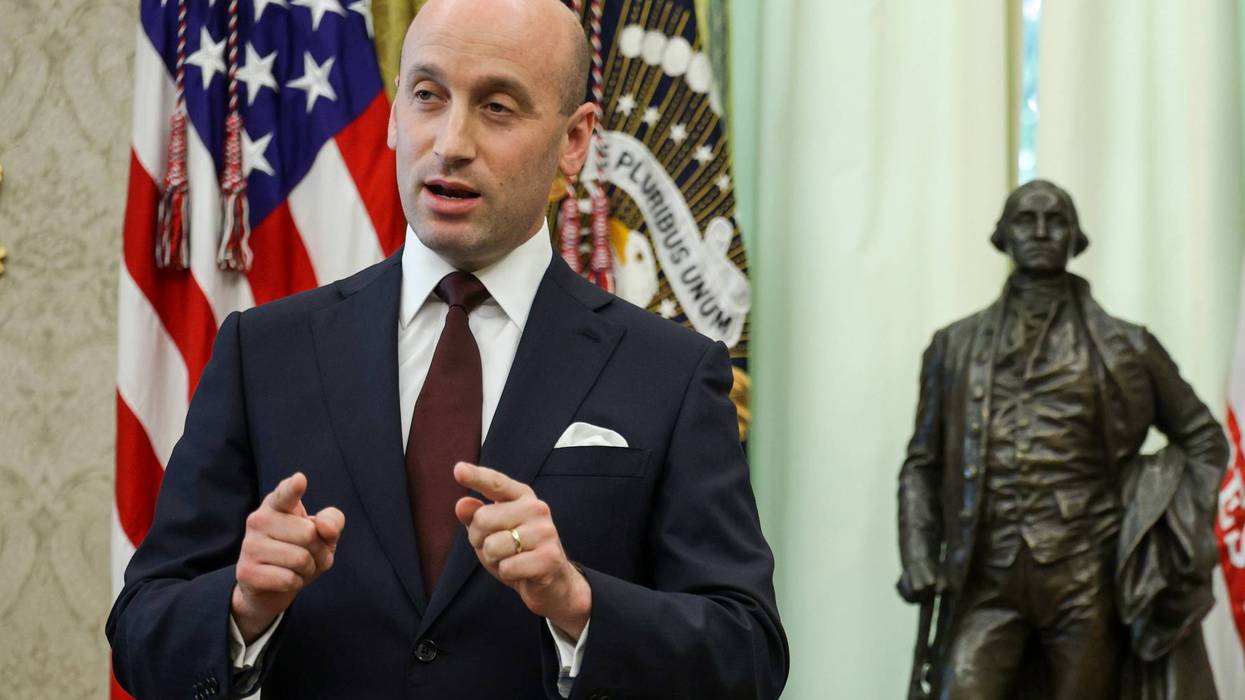
"You can crack down on visa fraud," said one observer. "You cannot have Stephen Miller stand beside the Resolute Desk and turn the 14th Amendment into a hotel checkout policy."
Stephen Miller, President Donald Trump's deputy White House chief of staff and the architect of much of his anti-immigration agenda over the past decade, has been fixated for years on ending birthright citizenship in the US—and one Democratic congresswoman said Thursday that his latest attempt should be the last straw.
"Stephen Miller architected the entirety of Trump’s racist and fascist mass deportation agenda, and he’s the one pushing relentlessly to end birthright citizenship—which is illegal," said Rep. Yassamin Ansari (D-Ariz.) after Trump and Miller announced two new executive orders related to the issue. "He needs to be investigated and prosecuted for the crimes he’s actively committing."
Weeks after the US Supreme Court—where three of the justices who make up the right-wing majority were appointed by Trump—ruled that the president's previous effort to end birthright citizenship for undocumented immigrants was unconstitutional, Trump signaled a new tactic focusing on terminating the right for the children of specific groups of people.
The first order would end automatic citizenship for children born to parents who work for foreign governments at embassies or organizations in the US, parents who "engaged in fraudulent activity to obtain citizenship," and parents who are part of designated terrorist groups or an "alien enemy."
Stephen Miller: The president is using his authority as commander in chief, to sign first an executive order using the new rule in the Supreme Court issued to expand the definitions of people who are ineligible for birthright citizenship
That includes, for example, alien enemies… pic.twitter.com/TtpWe0QYe1
— Acyn (@Acyn) August 6, 2026
The restriction would also pertain to babies who are "born in a territory or territorial waters of the United States where citizenship is not conferred by federal statute"—but eliminating birthright citizenship for children born in US territories would require congressional action, according to The New York Times.
The second order aims to crack down on what Trump called "birth tourism," with more restrictions on visitors to the US who give birth while in the country and try to obtain visas.
Aaron Reichlin-Melnick, senior fellow at the American Immigration Council, said the new executive action, like the order Trump signed to end birthright citizenship shortly after he took office last year, "seemingly violates the Constitution."
In the Oval Office at the White House late Thursday, the president cited no evidence as he claimed foreigners have obtained citizenship for their children, who numbered in the dozens.
“You have one man came in with a family... said he had 56 children," said Trump. "Another one came in. They said they had 98 children. This was not what it was for. This was meant for the babies of slaves. It was, it was right after one week or two weeks after the Civil War ended.”
Miller also emphasized that the 14th Amendment, which guarantees birthright citizenship, due process, and equal protection under the law, was meant to confer citizenship only to the children of people who had been enslaved before the Civil War ended.
But the origin of the law did not stop the Supreme Court from ruling in June that birthright citizenship is the law of the land under the US Constitution.
The president claimed "hundreds of thousands" of people in the US have benefited from birthright citizenship due to tourists giving birth in the country and the other scenarios described in the executive orders, but a study by Pennsylvania State University recently found that fewer than 0.3% of babies born in the US are born to tourists in any year.
Miller spoke during the Oval Office event, speaking out against people who "come here pretending to be a tourist... but the real reason they're here is to have a child."
Lying on a visa application in order to give birth in the US has long been illegal, Reichlin-Melnick pointed out.
Miller claimed that Section 215A of the Immigration and Nationality Act gives Trump the authority to enact the new restrictions on birthright citizenship, but even a Department of Homeland Security official who spoke anonymously to the Times said no new enforcement would come out of the birth tourism order.
The deputy chief of staff, who has also taken a leading role in orchestrating Trump's mass deportation campaign, claimed that the birth tourism order was "especially historic."
The word "historic," said writer Mike Young, was "doing a lot of work."
"You can crack down on visa fraud. You cannot have Stephen Miller stand beside the Resolute Desk and turn the 14th Amendment into a hotel checkout policy," said Young. "Birthright citizenship is not a loophole. It is the Constitution."
Immigration attorney Cyrus Mehta noted that even so-called "birth tourism" was covered in the Supreme Court's recent ruling, with Justice Samuel Alito noting that fact in his dissent.
"I expect a court to hold that most of Trump's new executive order is blatantly unconstitutional," said Mehta. "Trump is a small and petty man with a venal mind, and will be historically remembered as such down the ages, along with his henchman and collaborator Stephen Miller, who love to attack newborn children!"
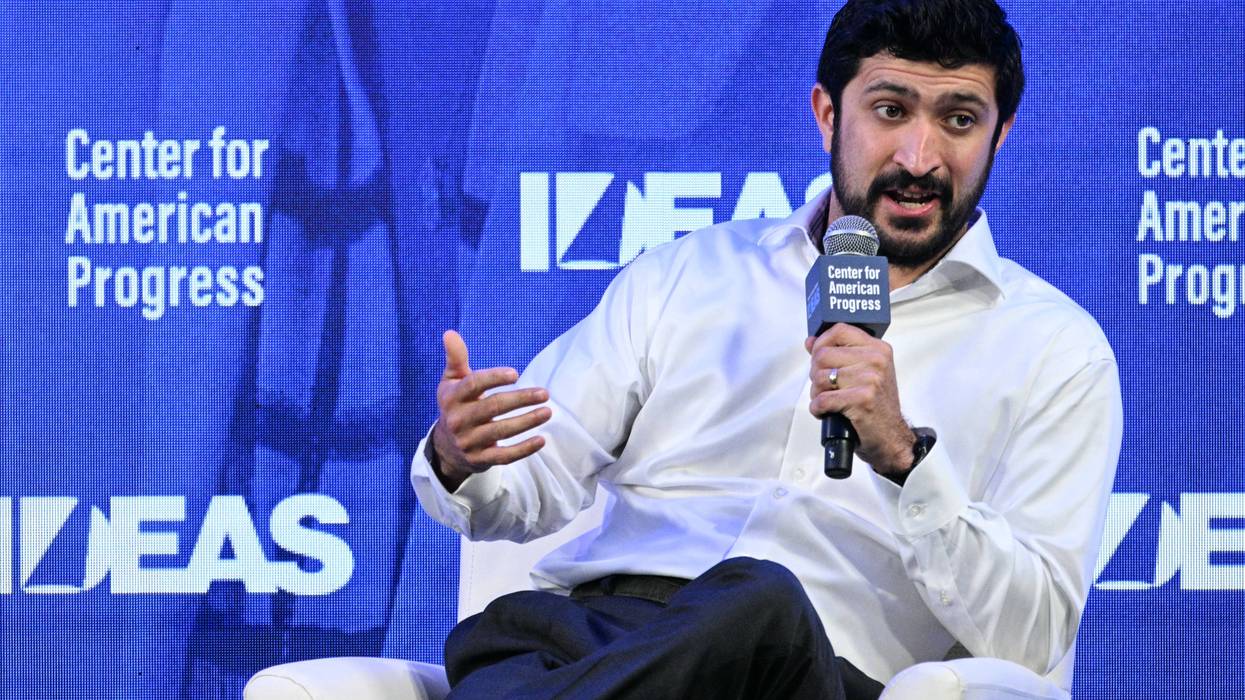
"We need to clearly be 100% on the side of workers who are vulnerable, kids who are vulnerable, everyday people who are vulnerable to mass surveillance."
Congressional Progressive Caucus Chair Greg Casar this week urged fellow Democrats to reject campaign support from artificial intelligence industry lobbyists and unveiled a bill intended to help protect workers from AI-related mass unemployment.
The Texas congressman took aim at Leading the Future (LTF), a pro-industry super political action committee (PAC), and "AI billionaires that are lobbying for no regulation," during a Thursday interview with MS NOW. He argued that "we need to clearly be 100% on the side of workers who are vulnerable, kids who are vulnerable, everyday people who are vulnerable to mass surveillance."
Casar drew a comparison to the American Israel Public Affairs Committee, whose super PAC is spending millions against Democratic candidates critical of the Israeli government and its forces' genocidal violence in the Gaza Strip. He predicted that LTF and the "big anti-AI regulation donors" would soon be "as toxic as AIPAC is today."
According to AI Money Watch, a project launched in June by the progressive advocacy group Demand Progress, "LTF entered 2026 with $70 million cash on hand and operates through affiliated super PACs (Think Big PAC in New York, American Mission PAC in Texas) and a dark-money 501(c)(4) arm called Build American AI."
AI Money Watch found that the two candidates with the most LTF money spent on them so far during this cycle are both former congressional Democrats from Illinois. The group poured over $1 million into supporting Jesse Jackson Jr., who lost the primary for the 2nd District, and AIPAC-backed Melissa Bean, who beat a progressive in the state's 8th District.
LTF also spent over $1 million each on Ben McAdams, a former Democratic congressman running in Utah's 1st District, and Congressman Ritchie Torres (D-NY), who is formally endorsed by the group. Rounding out the top 5 is James Kingston, a Georgia Republican who won the 1st District primary, with over $960,000 spent on him.
Casar told MS NOW that rejecting such support could help his party earn the trust of voters: "If Democrats clearly stand with the 75% plus of Americans that want sensible AI regulations to prevent mass unemployment, mass surveillance, or mass national security risks, I think we should win over the voters... Even if it means we don't win over all the money."
Gallup found last September that 80% of US adults believe the government should prioritize "maintaining rules for AI safety and data security, even if it means developing AI capabilities at a slower rate." In March, 76% of respondents to a Americans for Responsible Innovation poll said that they had concerns about AI tools enabling unprecedented government surveillance of citizens.
A June poll conducted by Justice Research Group for Working Families Power found that 85% of working-class voters support large-scale retraining and apprenticeship programs for workers whose jobs are changed by artificial intelligence, 73% worry that AI will lead to job losses, and 62% fear the rapidly developing technology would personally affect them or people close to them.
Casar partnered with Reps. Valerie Foushee (D-NC) and Sara Jacobs (D-Calif.) on Thursday to introduce the AI Tax and Work Protection Act, a bill that would tax industry giants to fund a Work Protection Administration charged with creating jobs to offset layoffs.
"This bill says: We will not let AI billionaires get rich by putting you out of work," said Casar. "Right now, the path we are on is clear: AI will turn a couple of billionaires into trillionaires but leave millions without work. That is unacceptable. And right now, the federal government is doing nothing to protect workers from the threat of AI mass unemployment. Our bill would protect American workers by making big AI companies pay their fair share."
The bill is backed by various policy experts and advocacy organizations, including the American Federation of State, County, and Municipal Employees; Groundwork Action; and Demand Progress Action—whose executive director, Sean Vitka, applauded Casar's "continued leadership on artificial intelligence."
"Serious, resilient proposals to address the unfolding impacts of this rapidly advancing technology are far too hard to find in Congress," said Vitka. "Some policymakers don't take AI seriously enough, and some don't understand it at all. With this legislation, Rep. Casar is instead demonstrating the kind of policymaking vision needed to meet the moments ahead."
Related legislation recently introduced by progressives in Congress includes the American AI Sovereign Wealth Fund Act proposed in June by Sen. Bernie Sanders (I-Vt.), which would give the public "a direct ownership stake" in the largest artificial intelligence companies in the country, and the landmark data center moratorium bill unveiled in March by Sanders and Rep. Alexandria Ocasio-Cortez (D-NY).
In a sign of how the public is feeling about "AI taking our jobs," data centers driving up utility bills, and "surveillance tech tracking our every move," a coalition of groups is planning a week of action from August 9-16 "to demand that our elected officials stand with the people—not Big Tech billionaires."

"This is all strange in ways that either suggest dishonesty or stupidity," said one critic.
When the Democratic National Committee at long last released its "autopsy" report on former Vice President Kamala Harris' loss in the 2024 election in May, one of the most puzzling aspects was the lack of any conclusions related to her and former President Joe Biden's support for Israel's genocide in Gaza.
Holly Otterbein of Axios reported on Thursday that the document's author, Paul Rivera, did indeed look into the issue of Gaza and found it had a role in Harris’ loss. But he did not submit the findings to the DNC for inclusion in the report. Axios did not include an explanation for that decision.
Rivera confirmed Axios’ reporting from back in February that the conclusions had been shared with the Institute for Middle East Understanding (IMEU) Policy Project, a pro-Palestinian think tank, which told the DNC that Harris’ failure to break from Biden’s policy on Israel's US-backed assault on Gaza proved a liability with progressive voters, especially in Michigan.
This news led to speculation that DNC chair Ken Martin, who had resisted calls to release the autopsy in full, was doing so to avoid publicizing findings that portrayed Israel as an albatross around the party's neck.
Rivera alleged earlier this week that Martin and top DNC brass withheld other portions of his report from public view, including a chapter criticizing the party's overreliance on “self-enriching” consultants and party operatives out of touch with voters. Rivera claims to have handed Martin a three-ring binder containing the report, but Martin denies that this occurred.
Rivera, who was fired from his advisory role at the DNC following widespread public backlash to the release of the autopsy, has since published his own 564-page report on the 2024 election, which includes several pages examining the role of Gaza.
As of Election Day 2024, more than 43,000 Palestinians had been killed, including at least 13,300 identified children, according to figures from the Gaza Ministry of Health, and protests had swept the nation demanding that Biden cut off military aid to Israel.
While Rivera's report does not conclude that Gaza alone cost Harris the election, it found that it had a clear role in alienating voters who would have otherwise supported Harris.
It found that in Michigan, one of the key swing states that handed victory to Trump, the losses in heavily Arab and Middle Eastern communities like West Bloomfield, Sterling Heights, Dearborn, Dearborn Heights, and Hamtramck, were significant.
In these communities, Harris received 30,850 fewer votes in 2024 than Biden did in 2020, while Trump gained 14,874, a swing accounting for nearly 20% of the 234,291-vote shift that handed President Donald Trump the state.
Rivera noted that the Uncommitted Movement, which garnered more than 700,000 votes nationally in the 2024 primary, originated in Dearborn, where Harris lost nearly a third of the support Biden had received in 2020. In nearby Hamtramck, her support tanked by 39% from Biden's in 2020.
Notably, many of these voters did not flock to Trump, but to Green Party candidate Jill Stein, who received more than 12,000 votes across Dearborn, Dearborn Heights, and Hamtramck.
"The political analysis is simple," Rivera wrote. "The electoral results and voting shifts in Michigan and elsewhere demonstrate the impact the crisis had on the Harris campaign."
He concluded that the issue could not simply be boiled down to "messaging" but to concrete policy.
“For many voters whose family members were displaced, subject to violence, or killed, the inability of the administration to effectively intervene was unacceptable,” he wrote. “In 2024, absent a real end to military action and restoration of civilian control in Gaza, many voters in Michigan and elsewhere would not be satisfied.”
Asked by Common Dreams to elaborate on why he did not provide these findings to the DNC, Rivera did not immediately respond to a request sent through his website’s press contact.
Zeeshan Aleem, a political columnist at MSNOW was puzzled by the decision by Rivera not to provide the Gaza findings to the DNC.
"This is all strange in ways that either suggest dishonesty or stupidity," he said. "The author of the DNC report said he did conclude that Gaza hurt Kamala, but didn’t include that finding in the report he submitted to the DNC. Why?"
The opacity and conflicting narratives surrounding the autopsy's release continue to befuddle critics and onlookers.
Dave Weigel, a political reporter at Semafor, described the idea that Gaza cost Harris votes as "a water-is-wet finding guarded like the Ark of the Covenant."
"Martin could have just admitted that, yes, this issue that got Harris protested everywhere and helped Trump win Michigan hurt the campaign," he said. "Instead, it became a secret that Holly pried loose and generated an extra year of negative stories."
The exclusion of Gaza from the official report released in May became ammunition for some commentators seeking to downplay the idea that Democrats' support for Israel is an electoral liability or to accuse the IMEU Policy Project of spinning a false narrative.
Responding to the release of Rivera's report, media critic Adam Johnson mocked those who framed it as a "conspiracy theory."
"What’s so important to understand is that anyone denying Gaza harmed Harris’ chances is a rank propagandist. Nobody believes this in good faith," he said. "Obviously it did. We can debate the degree of harm it had, but clearly it was significant and had many downstream deflating effects."

"The most horrible things shouldn’t have to happen to you in order to oppose them," said one critic.
A Trump voter is in shock after the president's ongoing effort to conduct the largest mass deportation campaign in US history impacted him personally.
In an interview with CBS News published Thursday, Texas businessman John Gannon expressed regret for supporting President Donald Trump in the 2024 election after federal immigration officials last month detained his fiancé, a Venezuelan immigrant named Yasmin Suarez Reyes.
Gannon said that he expected that Trump's mass deportation campaign would only go after criminals who are unlawfully in the US, but instead found "they are picking up law-abiding citizens" and "destroying families, jobs."
Texas businessman John Gannon says he feels "totally betrayed" after his Venezuelan fiancée, Yasmin Suarez Reyes, was detained by ICE at Houston's international airport.
A lifelong Republican who says he voted for President Trump, Gannon told CBS News' @camiloreports he now… pic.twitter.com/7dDvGH1TrM
— CBS News (@CBSNews) August 6, 2026
Gannon, the owner of over 1,000 billboards in the US and of a hotel and restaurant in Mexico, explained that Suarez Reyes was detained in July by multiple US Immigration and Customs Enforcement (ICE) agents after passing through security at the George Bush Intercontinental Airport in Houston.
According to Gannon, the ICE officers "swarmed" Suarez Reyes and "wrestled her off into a car" without providing an explanation.
"This is like the Gestapo," Gannon said.
Anne Kennedy, an attorney representing Suarez Reyes, told CBS that her client entered the US legally and had a pending asylum case and had been able to get a work permit and a Texas driver's license before she was detained. Kennedy also noted that Suarez Reyes had no criminal record.
"For almost two weeks now, she has been in a physical jail cell," said Kennedy, "when she has done nothing more than follow the laws of the United States and do what our immigration laws allow her to do."
When asked by CBS what message he had for Trump, Gannon encouraged the president to "go after the criminals" but "leave the mom and pops and the kids alone."
"Man, he's destroying families," Gannon added.
Some critics expressed little empathy for Gannon's situation, however, given Trump's decades of racist attacks on immigrants.
"You voted for Trump to do this to other people," commented journalist Molly Knight. "You’re mad because he’s not doing this to 'the right people,' as defined by you."
Election forecaster Rachel Bitecofer was similarly unsympathetic, and sarcastically summed up Gannon's position as, "I only wanted other people's relatives deported!"
Gun safety activist Shannon Watts questioned why Gannon needed to be personally impacted by Trump's policies to turn against them.
"The most horrible things shouldn’t have to happen to you in order to oppose them," Watts wrote.

"This proposed rule would fundamentally alter Head Start and break the promise that America has made good on for decades to offer the children born furthest from opportunity with the best our country has to offer in early childhood education.
Advocates for early education and vulnerable children are denouncing a new rule issued Thursday by the administration of President Donald Trump that would severely weaken the Head Start program relied on by families and communities nationwide.
"At a time when the US faces the highest rate of child poverty of any major country, how does Mr. Trump respond?" asked Sen. Bernie Sanders (I-Vt.), in response to the rule. "Instead of expanding access to early childhood education, he is moving to dismantle Head Start and the standards that keep its 700,000 kids safe. How cruel."
Head Start—created as a federal program in 1965 and "designed to prepare America’s most vulnerable young children to succeed in school and in life beyond school"—has been an ongoing target of the Trump administration, which has moved to eviscerate the program's funding and voiced support for scrapping it completely.
Speaking with NPR, journalist Coral Davenport, who reports for the New York Times, explained that early childhood educators fear the changes being proposed represent the most sweeping changes—more like "erasure" than "reforms"—to the program since its founding:
The Trump administration is proposing a major overhaul of Head Start, with new guidelines that could fundamentally change how the program is run nationwide.
Launched in 1965 as part of President Lyndon Johnson’s War on Poverty, Head Start serves 700,000 children ages three to… pic.twitter.com/YsDgM4OzX7
— PBS News (@NewsHour) August 6, 2026
The Children's Defense Fund (CDF) warns that the new rule, published in the federal register by the US Department of Health and Human Services, represents a new attack on Head Start that would "dismantle the program from the inside out."
The rule, according to the CDF, will result in the "stripping away of most of the quality standards that define what children and families actually receive" when they are part of the program, "including the requirements that ensure children are safe and supported, that hold programs accountable to the families they serve, and that guarantee the comprehensive services children need to arrive at kindergarten ready to learn."
In a letter stating their opposition to the attack, CDF—joined by EdTrust, Legal Defense Fund, NAACP, National Center for Learning Disabilities, National Urban League, The Arc, and UnidosUS—warned that Head Start "will exist in name only, offering unequal services based on where the child lives," if the rule is finalized.
According to the coalition:
The proposal strips away most of the quality standards that define what services children and families actually receive, including the requirements that ensure children are safe and supported, that hold programs accountable to the families they serve, and that guarantee the comprehensive services children need to arrive at kindergarten ready to learn. We urge the administration to withdraw it.
Over the past year, the administration has delayed funding that programs depend on to keep their doors open, cut the federal staff who support them, and proposed eliminating Head Start entirely. Each of these moves has created uncertainty for the providers who run these programs and the families who count on them. We oppose this latest attack on Head Start, which will harm the children and families the program was built to serve.
The signers of the letter called on the administration to rescind its proposal and said Congress must "stand behind Head Start and reject these changes so that we maintain the promise of Head Start for future generations."
Democratic lawmakers in the US House and Senate joined Sanders in slamming the move.
"Trump is trying to destroy Head Start—and he's hoping you won't notice," said Sen. Patty Murray (D-Wash.). "He's gutting basic standards and protections for over 700,000 kids, after he already tried and failed to defund the program altogether. We need to speak up and SAVE Head Start."
Trump is trying to destroy Head Start—and he's hoping you won't notice.
He's gutting basic standards & protections for over 700,000 kids, after he already tried and failed to defund the program altogether.
We need to speak up and SAVE Head Start. pic.twitter.com/zDgGqFxVaC
— Senator Patty Murray (@PattyMurray) August 6, 2026
"Head Start is not just preschool," said Rep. Mike Levin (D-Calif.) in a social media post. "For hundreds of thousands of children from low-income families, it is where they learn to read, receive basic health screenings, get support for disabilities, and begin kindergarten with a real chance to succeed."
The regulations that govern Head Start, which Trump's HHS now wants to eliminate, said Levin, "are the difference between children getting the care and support they need or being left to fall through the cracks. Why on earth would anyone want to take that away from them?"
As Murray noted, "this rule is not final," meaning there remain avenues to defeat it.
When a previous Trump memo detailing the desire to eliminate Head Start leaked, said Murray, "we got loud and he backed off. We can protect Head Start again, but it's going to take all of us speaking up and taking a stand for our kids."
"However the White House tries to spin these numbers, their talking points ring hollow for people who are actually experiencing Trump’s weak economy."
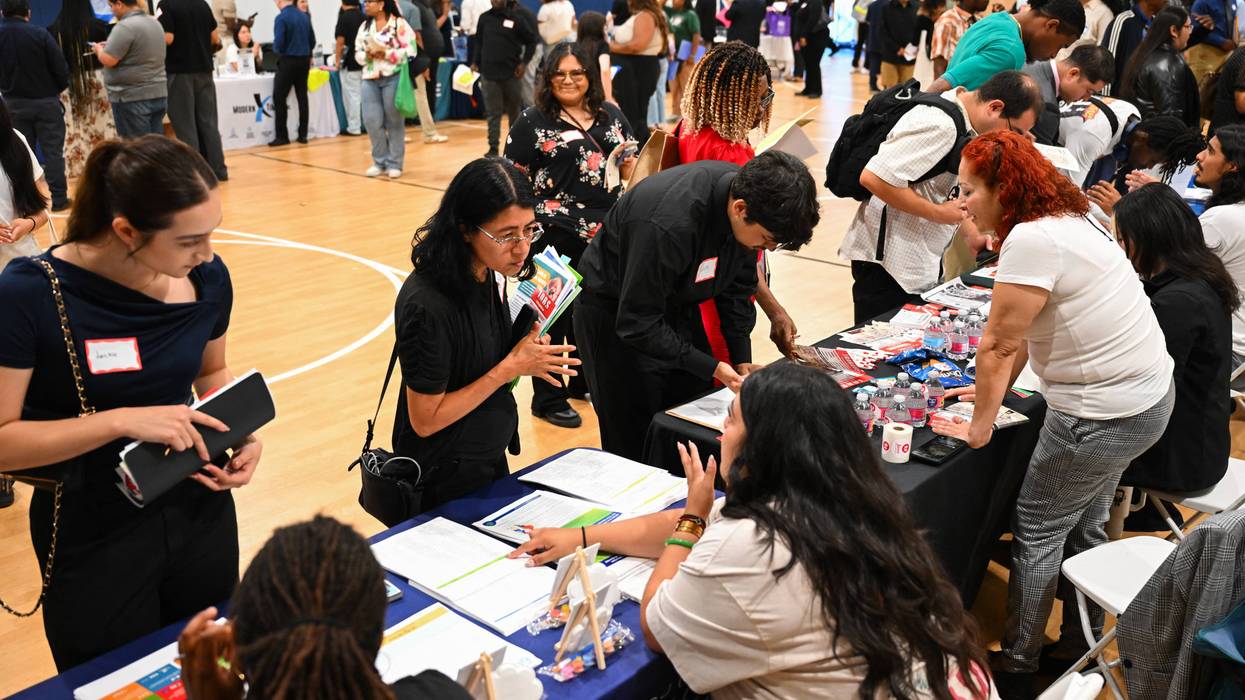
Federal data released Friday shows the US economy shed 23,000 jobs last month, but one analyst said that figure was "only the beginning of the bad news" for the country's job market under the leadership of President Donald Trump.
"This is a bleak jobs report," said Heather Long, the chief economist at Navy Federal Credit Union, noting that the unemployment rate fell slightly in July—but primarily because more people left the labor force—and year-over-year hourly wage growth slowed to 3.2%, not keeping up with inflation.
Breyon Williams, the Groundwork Collaborative's top economist, said in response to the new Labor Department numbers that "regardless of having a job or not, everyone is paying high prices from Trump’s chaotic tariffs and war with Iran."
"Today’s report shows a patchwork economy that is fraying at the seams," said Williams. "Trump’s economic mismanagement has injected so much uncertainty into the economy that employers are not confident enough to add more people, but also have not initiated massive layoffs, creating a frozen job market where those with jobs are afraid to leave them and those without are stuck on the sidelines."
Rep. Pramila Jayapal (D-Wash.) wrote on social media that "Trump is tanking the US economy."
In addition to the loss of 23,000 jobs last month—far worse than forecasters' expectation of an increase of 80,000 jobs—the Bureau of Labor Statistics (BLS) revised job growth downward for both May and June. BLS said job growth in May was actually 20,000 (down from the earlier estimate of 57,000), and job growth in June was 63,000 (down from 129,000). The healthcare sector has accounted for a disproportionate share of US employment growth this year.
"This economy is running on fumes," said Angela Hanks, a former Labor Department official who now works as chief of policy programs at The Century Foundation. "However the White House tries to spin these numbers, their talking points ring hollow for people who are actually experiencing Trump’s weak economy."
White House spin efforts began almost immediately after the release of the new figures.
Kevin Hassett, director of the National Economic Council, claimed during a Fox Business appearance that the dismal job numbers were a testament to the success of Trump's mass deportation campaign, even though the largest job losses in July occurred in state and local government.
"Because we have a tight border and because we've been deporting folks who aren't citizens, then that puts downward pressure on what the sort of breakeven job number is," said Hassett.
Speaking to reporters outside the White House, Hassett also blamed the "end of the World Cup," which "meant that a lot of hospitality workers were then laid off."
Kevin Hassett thinks Americans are very very stupid. This spin is ridiculous, transparent BS. pic.twitter.com/h0qX7c8fbI
— Aaron Rupar (@atrupar) August 7, 2026
"Is this the ‘Golden Age’ that Donald Trump and JD Vance keep talking about?" asked Kendall Witmer, the Democratic National Committee's rapid response director, following publication of the BLS report. "Trump’s disastrous economic agenda has caused irreparable damage to the job market, as layoffs mount and it’s nearly impossible to find a job."
"Working families are already drowning under the weight of skyrocketing costs on everyday goods like groceries, gas, and healthcare, and their paychecks aren’t keeping up," said Witmer. "Americans are barely keeping their heads above water—and Trump can’t even be bothered to care."
"This vote offers one last shot to use his power to do what he knows is right."
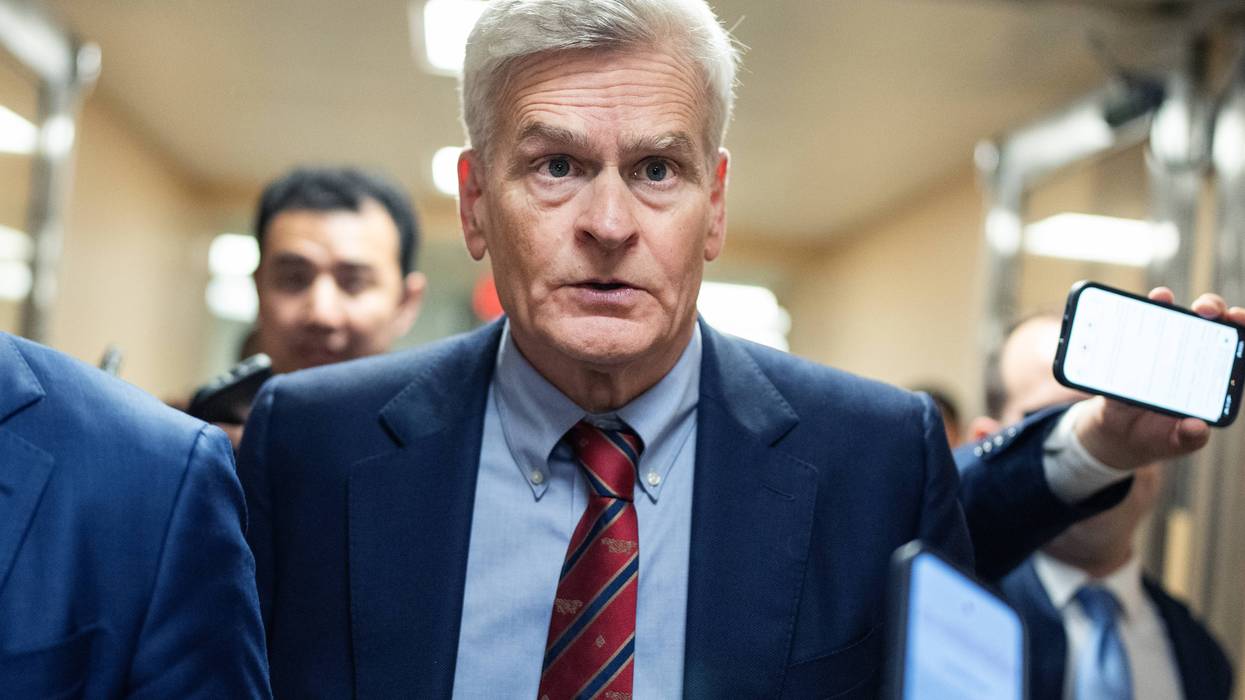
Attention turned to Republican Sen. Bill Cassidy on Friday after his colleague, Lisa Murkowski of Alaska, announced her opposition to confirming President Donald Trump's former personal lawyer Todd Blanche as US attorney general, leaving the GOP without any additional votes to spare.
With Sen. Mitch McConnell (R-Ky.) expected to be absent and Sens. Murkowski and Susan Collins (R-Maine) planning to vote no, Cassidy (La.)—who lost reelection in May to a Trump-backed challenger—is seen as the last-remaining obstacle to confirming Blanche. The Trump lackey is currently leading the Justice Department in an acting capacity.
Murkowski said in a statement that she decided to oppose Blanche's confirmation because of the Justice Department's "handling of the release of the Epstein files; the sweeping immunity protections granted to the President, his family, and their businesses; the statements that have been made to anti-abortion groups; and the repeated targeting of individuals ranging from former administration staff to sitting US senators."
“I am also keenly aware that the Department’s nearly $2-billion dollar slush fund—which likely would have rewarded January 6 protesters—is only off the table because this nomination is pending and the Senate has leverage. Once we vote, that will end, and there is no telling what the future holds," the Republican senator added. “The country needs an attorney general who will check the worst impulses of this administration. I hope Mr. Blanche is able to achieve that, if confirmed, but I simply do not have confidence that will be the case.”
Cassidy met with Blanche earlier this week but has not indicated publicly how he intends to vote. Republicans were hoping to confirm Blanche before senators leave for August recess on Friday.
In an interview earlier this week, Cassidy said that he has to be convinced that Blanche "is an attorney general who just happens to have once been President Trump’s personal attorney, as opposed to President Trump’s personal attorney who is now the attorney general."
"I think there’s a big difference between the two," the Louisiana senator.
Cassidy has repeatedly drawn Trump's ire since voting to convict him in 2021 for inciting the January 6 insurrection. Earlier this year, Cassidy reportedly got into a shouting match with Trump over the Iran war after the Republican senator voted to advance a war powers resolution that sought to bring the illegal conflict to an end.
But in some cases, Cassidy has aided the administration. In February, for instance, the Louisiana Republican cast the deciding vote to confirm Robert F. Kennedy Jr. as head of the Health and Human Services Department. Cassidy, a physician, has since criticized Kennedy's leadership of the health department.
Sarah Longwell, a former Republican and publisher of The Bulwark, wrote Friday that "considering his disastrous decision to confirm RFK and Trump’s attacks against him in the primary, this vote offers one last shot [for Cassidy] to use his power to do what he knows is right."
"For God’s sake man, stand for something!" Longwell added.
If Cassidy announces his opposition, it's possible that Republicans will try to summon McConnell to cast the deciding vote on Blanche.
McConnell was hospitalized in June after a fall, according to his office. On Thursday, McConnell said he was discharged and planned to continue his recovery at home.
McConnell's primary residence is in Washington, DC.
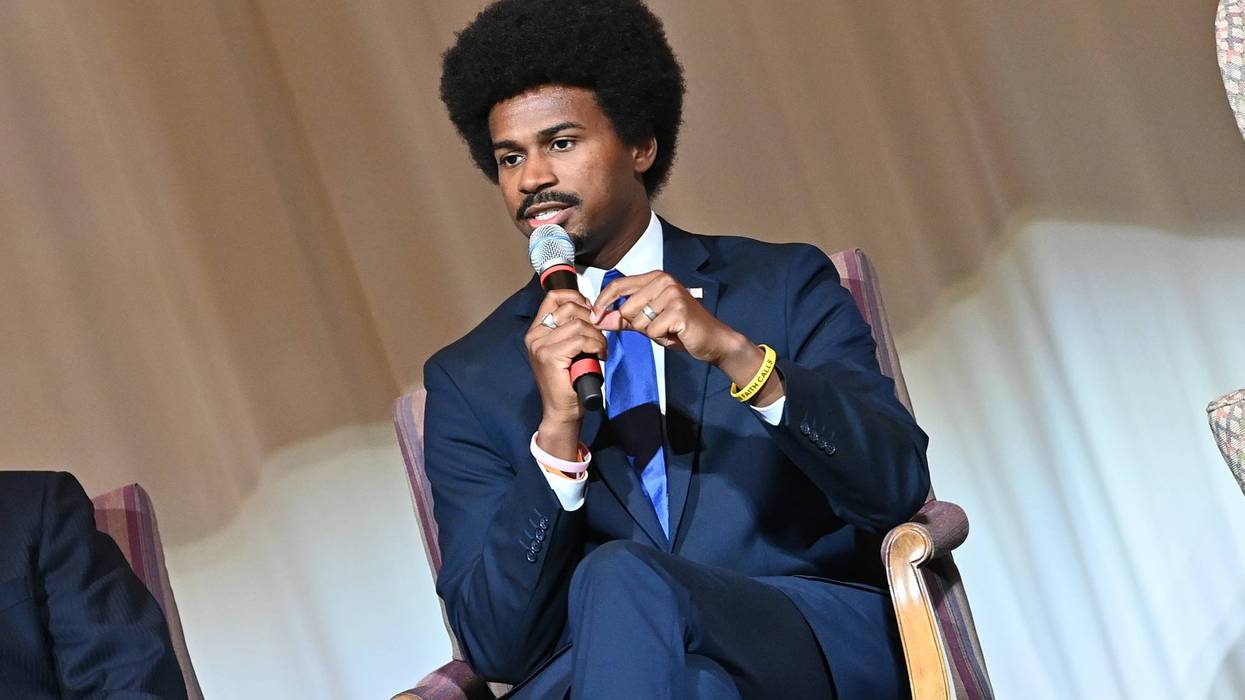
"Exactly 61 years from the signing of the Voting Rights Act, we won our primary despite a redistricting blow that cracked Memphis' representation in Congress."
Justin Pearson, a Tennessee state representative who rose to national prominence for his role in gun control and voting rights protests, won the Democratic primary on Thursday for a US House seat in Tennessee's 9th Congressional District, which Republican lawmakers dismantled earlier this year as part of a broader gerrymandering effort.
In his election night speech, Pearson called GOP redistricting—enabled by a recent US Supreme Court ruling that gutted the Voting Rights Act's protections against racial discrimination—an "attempt to keep people like us out of power." The 9th Congressional District was previously Tennessee's lone majority-Black district, but state Republicans broke it apart earlier this year following the Supreme Court's decision in Louisiana v. Callais.
"Exactly 61 years from the signing of the Voting Rights Act, we won our primary despite a redistricting blow that cracked Memphis' representation in Congress, attacks on our community from Elon Musk and his toxic data centers, and attempts to divide us," said Pearson, who ran on a platform that includes Medicare for All, a minimum wage increase, higher taxes on the rich, and universal rent caps. Pearson won nearly 66% of the vote in Thursday's primary.
Pearson will now face Tennessee state Sen. Brent Taylor, who was endorsed by President Donald Trump, in the general election. The 9th district "previously favored Democrats but now tilts Republican, with 71% of voters new to the district," according to The Associated Press.
“Tonight, on the 61st anniversary of the Voting Rights Act, tens of thousands of voters across Tennessee’s newly drawn 9th congressional district showed up in the face of racial gerrymandering to demand a better future and advance a real fighter: Justin J. Pearson," Britney Whaley, southeast regional director of the Working Families Party, said in a statement late Thursday.
"While Republicans and billionaires try to drag Tennessee and the South back into the past with regressive policies, wrongful power grabs, and inaction in the face of mass suffering, the Working Families Party is proud to fight forward alongside Justin J. Pearson to build a future that centers America’s growing multiracial working class," said Whaley. "A future where well-paying jobs are guaranteed and basic necessities are affordable. A future where our communities are safe from pollution and gun violence. A future where access to healthcare is a right for all, not a privilege for the fortunate few. A future where the needs of the people are prioritized over the interests of greedy corporations. A future where the promise of a fair democracy is finally fulfilled."
Pearson's primary victory came over three years after Tennessee Republicans expelled him from the state House of Representatives for leading protests in support of gun control following a deadly school shooting in Nashville. Pearson was later reinstated and subsequently won a special election by a huge margin.
Earlier this year, Pearson joined protests against Tennessee Republicans' adoption of an aggressively gerrymandered congressional map.
"This is what evil looks like," Pearson said at the time.

"The ability to compose viral genomes using generative AI now exists; the governance to safely steer it does not," a pair of researchers said.
As scientists confirmed the first-ever biological viruses generated by artificial intelligence, experts warned Thursday that governments have failed to keep pace with a rapidly advancing and largely unregulated technology that, while having tremendous potential for medical breakthroughs, could also pose existential threats to humanity in the foreseeable future.
Research published Thursday in Science, available in full only to subscribers, describes how scientists at Stanford University and the Arc Institute used a genome language model, roughly the genetic equivalent of the technology behind AI chatbots, to generate hundreds of novel bacteriophage genomes—viruses that infect bacteria rather than humans. After synthesizing and testing the AI-generated designs, researchers found that 16 functioned successfully in laboratory experiments, infecting and killing E. coli.
While the researchers said that the new viruses pose no danger to humans because they only infect bacteria, experts have warned of the risks of AI creating novel bioweapons—either prompted by scientists or, in a future when superintelligent AI is achieved, independently—that could, in a worst-case scenario, threaten the existence of humanity.
"Although this is promising for life sciences applications, it also raises urgent biosafety and biosecurity questions," Johns Hopkins University School of Public Health Center for Health Security researchers Thomas Inglesby and Moritz Hanke wrote in a related article, also published Thursday in Science behind a paywall. "The ability to compose viral genomes using generative AI now exists; the governance to safely steer it does not."
The Stanford and Arc Institute study authors themselves noted the “important biosafety, biocontainment, and biosecurity considerations” accompanying such advances, urging researchers to “consult both safety and security professionals" during their work.
Calls for more robust regulatory guardrails have mounted in recent weeks amid revelations that one of ChatGPT maker OpenAI's models autonomously broke into the systems of other companies during testing. As AI advances to the point where it will likely outsmart humans, the challenge of ensuring that advanced systems reliably pursue goals that match what humans actually want—known as alignment—becomes increasingly difficult and, experts say, dangerous.
A misaligned, superintelligence could take uncontrolled autonomous actions at massive scale to achieve its goals, with industry pioneers warning of potentially catastrophic outcomes like AI-launched nuclear war or bioattack with existing or AI-generated pathogens.
While advocacy groups, the United Nations, and dozens of national governments are urging more robust regulation of AI development, the United States under President Donald Trump, the Republican-controlled Congress, and Big Tech’s army of lobbyists is strongly opposed to guardrails.
In fact, Trump—who Congressional Progressive Caucus Chair Greg Casar (D-Texas) on Monday accused of being "too busy cashing in" on AI—has rolled back regulations, including some meager steps taken during the Biden administration to bolster safety.
“There’s just a huge disconnect," Hanke told The New York Times on Thursday.
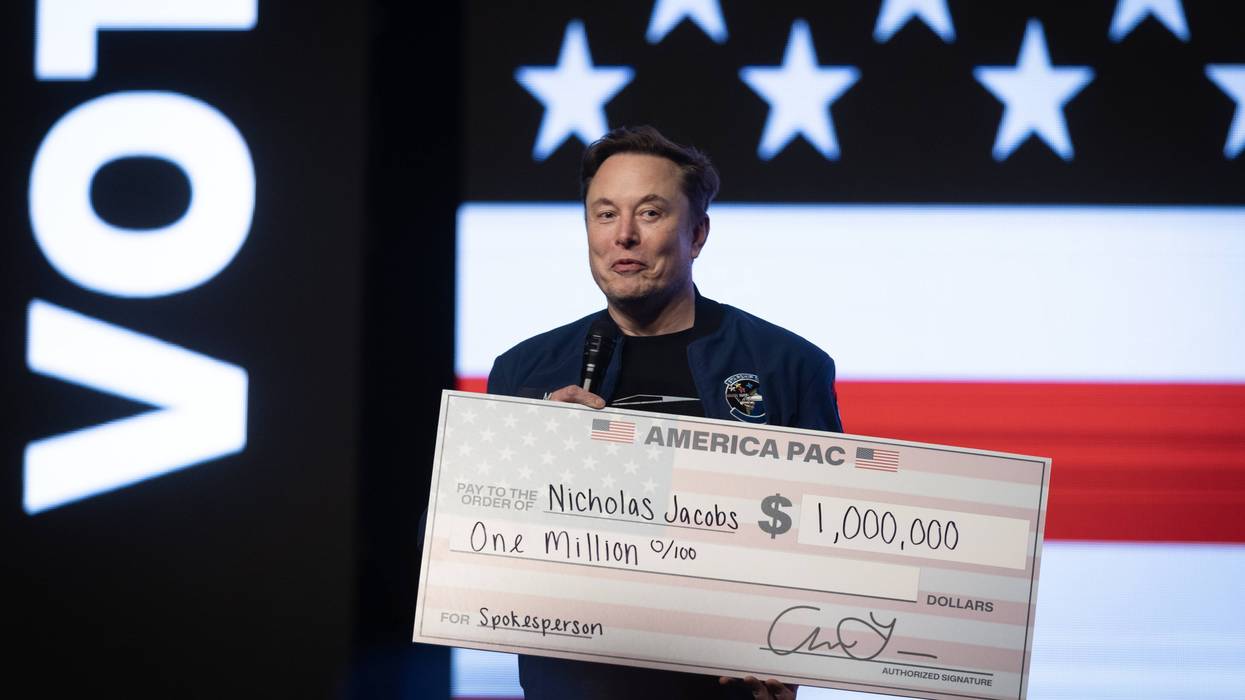
DOGE was a "slapdash and deceptive effort" that only succeeded in "putting Americans’ sensitive data at risk and hollowing out critical agencies," said US Sen. Gary Peters.
A report from the Government Accountability Office released Thursday details how Elon Musk's Department of Government Efficiency wildly exaggerated the savings it was able to deliver for the US federal government.
The report, requested by Sens. Gary Peters (D-Mich.) and Richard Blumenthal (D-Conn.), finds that DOGE used a number of tricks to inflate the value of its purported savings, including taking credit for ending leases that were already in the process of being terminated and falsely claiming to have canceled contracts that were left intact.
The report also finds that DOGE "did not provide sufficient information to verify the method used to calculate 96%" of savings purportedly achieved through grant cancellations.
And in cases where DOGE actually was responsible for terminating a contract or cancelling a lease, the report notes that it "did not consistently use its stated methodology for calculating savings or disclose limitations in a sufficient manner."
Even in instances where the department followed its stated methodology, the report adds, "it did not account for many complexities and nuances of federal contracting," such as obligations or settlement costs that may have come from ending a contract.
In touting the GAO report, Peters said it exposed DOGE as a "slapdash and deceptive effort" at streamlining government spending that only succeeded in "putting Americans’ sensitive data at risk and hollowing out critical agencies."
Blumenthal accused the Trump administration of using DOGE as cover to "recklessly slash government programs, ransacking critical services and resources and proudly displaying supposed 'savings.'"
Jessica Tillipman, associate dean for government procurement law at the George Washington University Law School, highlighted a number of DOGE flubs in a social media post breaking down the GAO report, including a "favorite example" of DOGE claiming $28 million in savings related to an Air Force contract that in reality only saved around $600,000.
Eric Boehm, writer for libertarian magazine Reason, said that the GAO report revealed that the savings Musk and his minions claimed from their work was "mostly just made up."
In his assessment, Blumenthal said the report only "underscores the need for increased transparency and accountability from the Trump administration so the American public can better understand DOGE’s activities as the organization guts vital government programs."