

SUBSCRIBE TO OUR FREE NEWSLETTER
Daily news & progressive opinion—funded by the people, not the corporations—delivered straight to your inbox.
5
#000000
#FFFFFF
To donate by check, phone, or other method, see our More Ways to Give page.
Daily news & progressive opinion—funded by the people, not the corporations—delivered straight to your inbox.

Lisa Gilbert
202-546-9707
(o)
lgilbert@pirg.org
A federal appellate court panel of 3 judges
has overturned campaign finance rules that limit how some political committees
spend money in campaigns. The U.S. Court of Appeals in Washington said that the regulations limit
free speech rights to 527s.
Lisa Gilbert,
U.S. PIRG's Democracy Advocate commented, "Today's
decision in Emily's List vs. the Federal Election Commission turns
back the clock, and makes it far easier for outside political groups to raise
large amounts of funding and air TV ads for or against candidates for Congress
or the Presidency."
The FEC originally enacted the regulations in 2005, after concerns were
raised about the amount of unlimited "soft money" contributions used
to fund attacks in the 2004 election.
To rein in 527 spending, the FEC limited the amount political committees
spend for federal candidate activities to "hard money" contributions,
or to no more than $5000 when a 527 indicates the funds will be used to attack
or advocate for a candidate.
U.S. PIRG, the federation of state Public Interest Research Groups (PIRGs), stands up to powerful special interests on behalf of the American public, working to win concrete results for our health and our well-being. With a strong network of researchers, advocates, organizers and students in state capitols across the country, we take on the special interests on issues, such as product safety,political corruption, prescription drugs and voting rights,where these interests stand in the way of reform and progress.
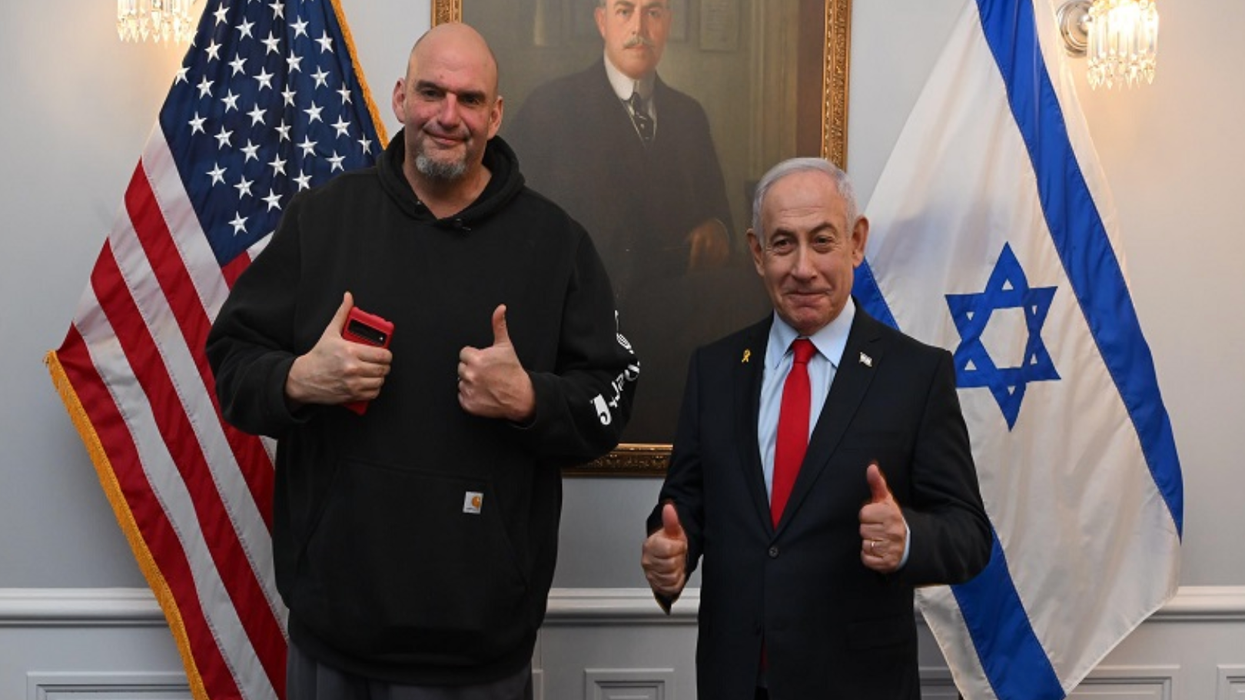
"If he’s willing to throw the entire control of the Senate to the other party over Israel, then he’s dismissing the interests of his own state and constituents," said one critic.
Sen. John Fetterman was mocked on Thursday following his threat to leave the Democratic Party as more than 100 House Democrats voted to cut off US military aid to Israel over its crimes against Palestine.
On Wednesday, 103 of the 212 Democrats in the House of Representatives voted for an amendment introduced by outgoing Republican Congressman Thomas Massie of Kentucky that would have eliminated the $3.3 billion in annual foreign military financing provided to Israel’s military.
While the amendment ultimately did not garner enough votes to pass, the record number of Democrats willing to put an end to more than half a century of practically unconditional US support for Israel was viewed by Palestine defenders as a sign of hope—and by Israel backers as a cause for alarm. Fetterman has clearly positioned himself among the latter.
“My long-term concern has been with the Democratic Party, as I am a member of that, is that our party is going to back away and turn their back to Israel,” he said during an interview at the Hill Nation Summit in Washington, DC, which he headlined along with Mehmet Oz, President Donald Trump's Centers for Medicare and Medicaid Services administrator.
“If our party ever becomes—and just makes it official—the anti-Israel party, that’s when I would leave because that’s been a moral clarity for me,” the senator vowed.
Responding to Fetterman's threat, journalist Zaid Jilani quipped on social media, "What region of Pennsylvania is Israel located in?"
"If he’s willing to throw the entire control of the Senate to the other party over Israel, then he’s dismissing the interests of his own state and constituents," Jilani added.
Fetterman said Wednesday that he “can’t understand why the Democratic Party” was becoming increasingly critical of Israel.
In addition to Israel facing an ongoing genocide case filed by South Africa at the International Court of Justice (ICJ) in The Hague over its conduct in Gaza, Israeli Prime Minister Benjamin Netanyahu and Yoav Gallant, his former defense minister, are wanted by the International Criminal Court for alleged crimes against humanity and war crimes in Gaza, including murder and forced starvation.
Fetterman joined Republicans in slamming the ICC move, saying, "Fuck that" to the warrants. He also warmly embraced Netanyahu and Israeli President Isaac Herzog—who is the subject of criminal complaints in Switzerland for allegedly inciting genocide and crimes against humanity—and reportedly urged in Herzog in private to pardon Netanyahu, who is on trial in his country for alleged bribery, fraud, and breach of trust.
United Nations experts, dozens of nations—either individually or as members of regional blocs—as well as Israeli and international scholars and human rights groups have accused Israel of genocide in Gaza, as have more than 20 of Fetterman's congressional colleagues. Israel's illegal occupation, settler colonization, and apartheid have been condemned by the ICJ and others. Israel also faces accusations of ethnic cleansing and de facto annexation in the illegally occupied West Bank, including East Jerusalem.
Yet for Fetterman, the problem for Democrats is "the kinds of individuals that are winning our recent primaries."
“It’s becoming more anti-Israel and hostile" to Israel supporters, he argued on Wednesday, singling out Abdul El-Sayed, a Michigan progressive seeking the Democratic nomination for US Senate who called Israel a "rogue state" that is committing "genocide and apartheid," while urging an end to "unilateral blank checks" for the key ally.
“If El-Sayed wins, then that puts Michigan much more in play for us and would require us to spend more money," Fetterman said. "What’s defined El-Sayed is the more anti-Israel and hostile-to-Israel thing."
In addition to his staunch support of Israel, Fetterman has been criticized for his backing of President Donald Trump's xenophobic immigration policies, his willingness to vote with Republicans on funding bills, his support for Trump nominees, and frequent criticism of progressive Democrats.
On Wednesday, The Intercept reported that Republican megadonor Harlan Crow "gave the maximum allowed contribution" to Fetterman's campaign during the current election cycle.

The latest supply crunch comes at a time when "US gasoline inventories have become critically low," said one analyst.
President Donald Trump's decision to restart his illegal war with Iran has sent the price of oil back up, leading to a corresponding rise in the prices of gasoline and diesel fuel.
Data published by AAA on Thursday showed that the average price of diesel in the US is once again over $5 per gallon, which is 33% higher than the average price of diesel before Trump unlawfully attacked Iran without congressional authorization in February.
Oil industry analyst Patrick De Haan wrote in a Thursday social media post that diesel fuel powers "the trucks that move nearly everything you buy—groceries, goods, supplies," meaning the current spike will lead to "higher prices down the line" for other key goods.
According to a Thursday report in The Wall Street Journal, the rise in diesel prices is unlikely to be short-lived given that there are now multiple factors pushing costs higher.
In addition to the resumption of the Iran war, the Journal writes, Russia has now banned diesel exports after its refineries came under attack by Ukraine. And in the US, domestic stockpiles of the fuel have now fallen to their lowest levels in 20 years.
Given all these factors, analysts told the Journal that diesel prices "could soon climb an additional 20 to 25 cents a gallon."
An analysis published on Thursday by CNN Business senior reporter David Goldman pointed to another factor pushing diesel prices higher: Global refining capacities have taken a significant hit since the start of the Iran war.
Goldman noted that Iran has "damaged or destroyed 30 Middle Eastern refineries" since the start of the conflict, causing global refinery output to fall by "3 million barrels at the peak of the Strait of Hormuz disruption, and 2.1 million barrels of refining capacity remain offline."
Energy analyst John Kemp said on Thursday that the diesel supply crunch will likely spill over to the price of regular gasoline in the coming weeks.
"US gasoline inventories have become critically low," Kemp explained in a social media post, "as domestic refiners prioritize production of jet fuel and diesel to replace global supplies hit by the closure of the Strait of Hormuz and Ukraine's escalating attacks on Russia's refineries."
Kemp added that the US gasoline stocks "have depleted in 13 of the last 16 weeks by a total of 43 million barrels" since the start of the war, making it "by far the largest [depletion] on record for the time of year, and three times faster than average over the last decade."
In an interview with Bloomberg published on Wednesday, International Energy Agency Executive Director Fatih Birol warned that renewed fighting between the US and Iran was again threatening to create a global fuel supply crisis that could come in "not months" but "weeks."
"If the Strait of Hormuz remains closed," Birol said, "we may again have some difficulty for global economies, including those in the region and developing nations and Asia."
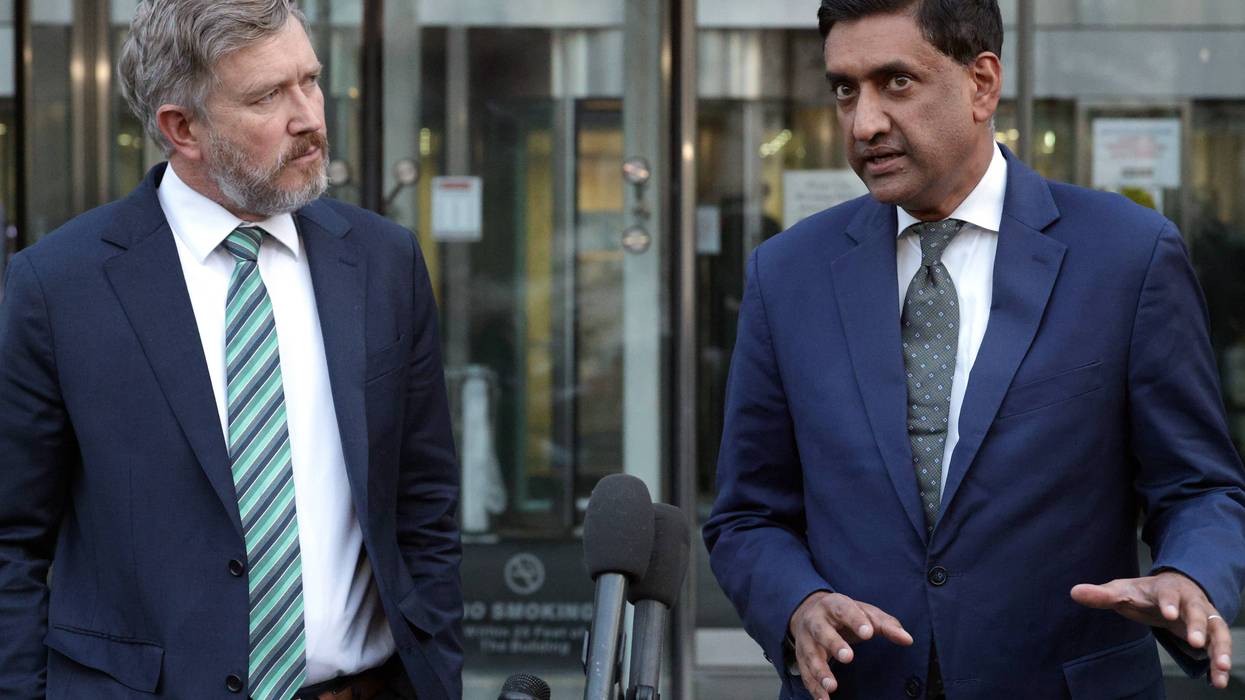
"We need the Epstein Files Transparency Act II to strengthen the original law we wrote, crack down on the DOJ's illegal noncompliance, and stand with survivors and those seeking justice."
After months of the Trump administration refusing to fully comply with the Epstein Files Transparency Act, Congressmen Thomas Massie and Ro Khanna appeared on MS NOW Thursday to promote their newly proposed second edition of the bipartisan law.
"We never anticipated that the chief law enforcement officer of the land wouldn't follow the law—and so, Ro and I took some heat because we didn't put in our original bill the ability to sue the chief law enforcement officer of the land," Massie (R-Ky.) said on "Morning Joe," a day after introducing the bill. "And so that's what the Epstein Files Transparency Act 2.0 does."
"It gives the victims standing to sue the attorney general, to get their own records, their own testimony, in these 302 forms. It also gives congressmen standing to enforce this law," he explained. "Basically, to get in front of a judge to say, 'judge, here's where they've overly redacted these files.'"
The bill also lets state attorneys general, "like the one in New Mexico, who's trying to prosecute crimes that happened at Zorro Ranch... prosecute crimes where the statute of limitations is not impeding him," added Massie—who will leave Congress at the end of this session after losing his May primary to a challenger backed by President Donald Trump, a former friend of Epstein. The convicted sex offender died in prison during his federal sex trafficking case.
The first Epstein Files Transparency Act was introduced last July, then passed by both chambers of Congress and signed by Trump in November. However, since it took effect, the US Department of Justice (DOJ), whose leaders are handpicked by the president, "has violated our law, delayed the release of millions of files, botched the redactions, and denied the survivors justice," Khanna (D-Calif.) said Wednesday.
Khanna and Massie—joined by Rep. Teresa Leger Fernández (D-NM), who chairs the Democratic Women's Caucus, along with Sens. Jeff Merkley (D-Ore.) and Ben Ray Luján (D-NM)—are outraged that the DOJ continues to withhold over 3 million Epstein files and maintain heavy redactions on the documents it has released.
As the sponsors introduced the Epstein Files Transparency Act II on Wednesday, acting US Attorney General Todd Blanche—who was previously Trump's personal lawyer—appeared before the Senate Judiciary Committee for a hearing about his nomination to take over the post permanently; he's been filling it in a temporary capacity since Pam Bondi's April exit.
Both Bondi—who was fired by Trump as she faced mounting calls for impeachment—and Blanche have earned intense criticism for their handling of the Epstein files, including from survivors. One of them, Dani Bensky, testified before the Senate panel on Thursday about her negative experience.
After the sudden death of Sen. Lindsey Graham (R-SC), all Republicans on the committee would have to vote "yes" to advance Blanche's nomination. At least one—retiring Sen. Thom Tillis of North Carolina—said Blanche would have to meet with Epstein survivors to secure his support, which the acting attorney general claimed Wednesday he cannot do if they have legal counsel.
Even if the nomination advances out of committee, Blanche will need approval from a full chamber that's also only narrowly controlled by the GOP amid frustrations that, as Merkley put it, "at Trump’s bidding, the Department of Justice's highest-ranking officials continue to break the law, denying justice to Jeffrey Epstein's victims with an unprecedented cover-up of the abuse of our most vulnerable."
"As long as those in power continue to side with the Epstein Class and shield abusers from accountability for their horrific crimes, we need the Epstein Files Transparency Act II to strengthen the original law we wrote, crack down on the DOJ's illegal noncompliance, and stand with survivors and those seeking justice," the senator argued. "The rich and powerful cannot be allowed to escape justice, and the American public deserves the transparency it is crying out for."