

SUBSCRIBE TO OUR FREE NEWSLETTER
Daily news & progressive opinion—funded by the people, not the corporations—delivered straight to your inbox.
5
#000000
#FFFFFF
To donate by check, phone, or other method, see our More Ways to Give page.
Daily news & progressive opinion—funded by the people, not the corporations—delivered straight to your inbox.
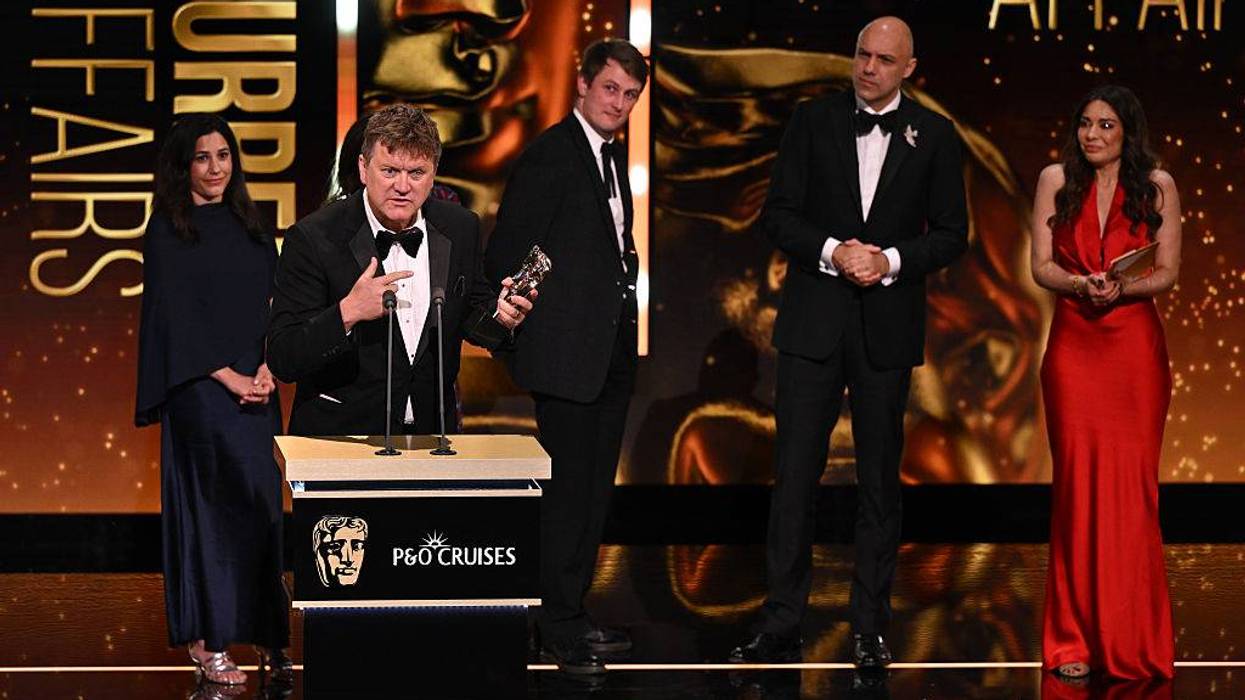
“Just a question to the BBC,” said the documentary's executive producer. “Given you dropped our film, will you drop us from the BAFTAs screening later tonight?”
The makers of a documentary about Israeli attacks on healthcare workers and infrastructure in Gaza won a prestigious BAFTA award on Sunday—and they used their acceptance speech to lash out at BBC for refusing to air their work.
The film, "Gaza: Doctors Under Attack," was originally scheduled to be aired by the BBC in early 2025 before the network announced in June that it would not be releasing the documentary because it had "come to the conclusion that broadcasting this material risked creating a perception of partiality."
Shortly after, the documentary was picked up by the UK-based Channel 4 and aired in July.
UK journalist Ramita Navai, the main reporter of the documentary, criticized the BBC for declining to show the film, which she denounced as a political decision.
“Israel has killed over 47,000 children and women in Gaza so far," Navai said. "Israel has... targeted every single one of Gaza’s hospitals. It’s killed over 1,700 Palestinian doctors and healthcare workers. It has imprisoned over 400 in what the UN now calls a ‘medicide.’ These are the findings of our investigation that the BBC paid for but refuses to show. But we refuse to be silenced and censored."
🇵🇸🇬🇧 A Gaza documentary the BBC paid for and refused to air just won a Bafta.
The filmmakers used their acceptance speech to call out the BBC directly.
Presenter Ramita Navai:
"We refuse to be silenced and censored."
The BBC then edited portions of her remarks from its own… https://t.co/xLRLfdLV6W pic.twitter.com/K8pYhOzJTd
— Mario Nawfal (@MarioNawfal) May 11, 2026
Ben de Pear, the film's executive producer, also pointed the finger at the BBC as he accepted the BAFTA award for best current affairs television program.
"Just a question to the BBC,” said de Pear, according to The Hollywood Reporter. “Given you dropped our film, will you drop us from the BAFTAs screening later tonight?"
As reported by Al Jazeera, de Pear after accepting the award also praised Palestinian journalists Jaber Badwan and Osana Al Ashi, who contributed on-the-ground footage for the documentary at the risk of their own lives.
"[We] woke up every day wondering if the two journalists on the ground were still alive," de Pear told reporters backstage.
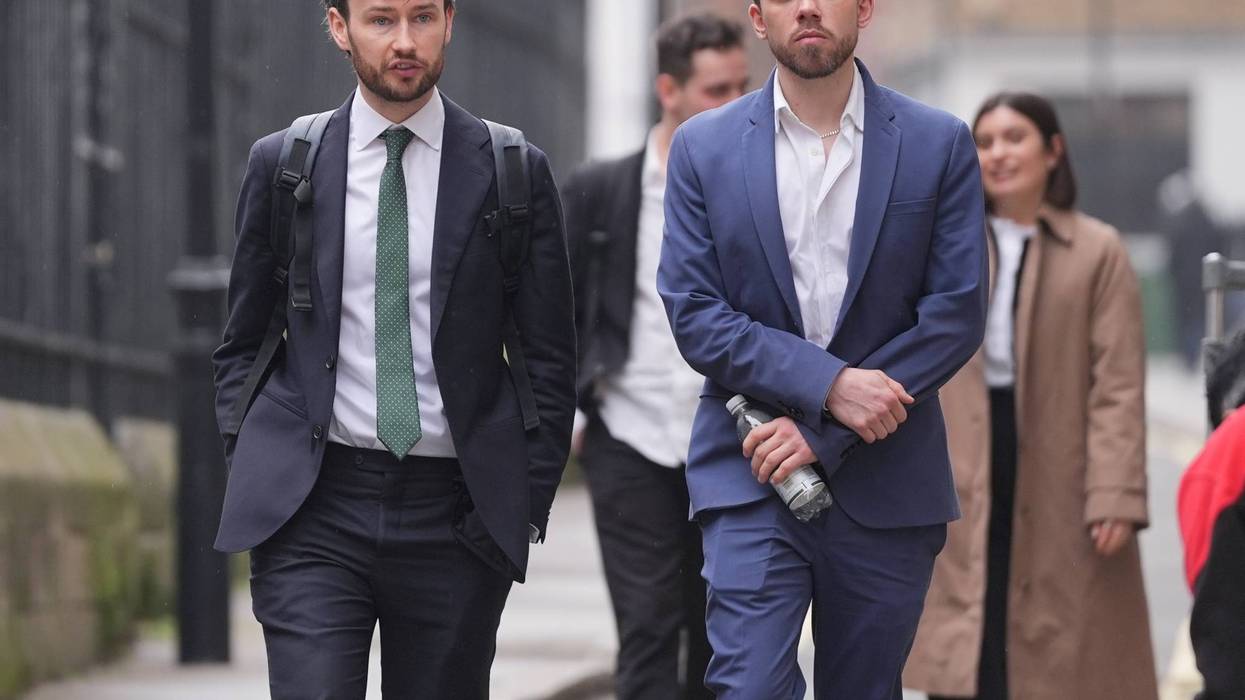
The BBC has long been accused of centering Israel and dismissing the humanity of Palestinians in its coverage of Gaza.
British journalist Owen Jones on Thursday celebrated a UK High Court judge's ruling in his favor in a libel lawsuit that a BBC editor brought against him—and said that should the editor choose to move forward with his case despite the decision, he was looking forward "to defending my article in court."
The High Court ruled that Jones was expressing an opinion when he wrote an article for Drop Site News in December 2024 titled "The BBC's Civil War Over Gaza," in which he spoke to BBC staffers about Middle East online editor Raffi Berg's influence over the news outlet's coverage of Israel and Palestine.
The court also said Jones had expressed his opinion and that of his sources based on concrete examples of Berg's editorial role and journalism.
Jones' article described staffers' allegations that "internal complaints about how the BBC covers Gaza have been repeatedly brushed aside" as Berg "sets the tone" for the outlet's online coverage of Israel's onslaught in the exclave, where more than 75,000 Palestinians have been killed since October 2023 in what's been called a genocide by top Holocaust scholars and human rights groups.
It noted that the BBC failed to report on Amnesty International's finding that Israel was committing genocide in Gaza and displayed an on-screen chyron reading, "Israel rejects 'fabricated' claims of genocide.'"
"Journalists expressed concerns over bias in the shaping of the Middle East index of the BBC news website," wrote Jones. "Several allege that Berg 'micromanages' this section, ensuring that it fails to uphold impartiality."
The BBC has long been criticized for centering Israel and "dehumanizing" Palestinians, as more than 1,000 artists said in a letter last year when they condemned the network for refusing to air a documentary about the impact of Israel's attacks on children in Gaza, on the grounds that it featured the child of the exclave's deputy minister of agriculture—suggesting "that Palestinians holding administrative roles are inherently complicit in violence."
The article also pointed to Berg's own history of pro-Israel coverage, including a 2002 story "that presented young [Israel Defense Forces] soldiers as courageous defenders of their country while failing to mention the occupation and settlement of Palestinian land or the widespread allegations of crimes" documented by human rights groups and the US government.
Berg also presented Israeli settlers in the West Bank as "victims seeking 'a better quality of life' and did not mention the fact that the settlements have been repeatedly deemed illegal," and wrote about the Mossad "in glowing terms" in a book he wrote with extensive cooperation from the Israeli intelligence agency.
He also posted a photo on social media showing Prime Minister Benjamin Netanyahu with a copy of Berg's book on his bookshelf, Jones reported.
Berg's lawyer said last year that Jones' reporting attacked Berg's "professional reputation as a journalist and editor," and led to death threats.
In order for his case against Jones to proceed, Berg would now need to prove in court that "Jones did not genuinely hold the opinion he expressed in his reporting, or demonstrate that the opinion is not one an honest person could hold on the basis of any fact that existed at the time of its publication," Middle East Eye reported.
"I am proud to stand by my journalism," said Jones Thursday.
"This is about the BBC’s independence," said one former BBC official. "So they should definitely fight it."
The British Broadcasting Corporation vowed to fight back against President Donald Trump's $10 billion lawsuit filed on Monday—the latest legal challenge brought by the president against a media organization over its coverage of him.
A spokesperson for the BBC said in a brief statement on Tuesday, "We will be defending this case" after Trump filed a lawsuit in a federal court in Florida, alleging that the network defamed him and violated the state's Deceptive and Unfair Trade Practices Act when it aired edited comments he made in a speech on January 6, 2021, just before thousands of his supporters attacked the US Capitol.
Before last year's presidential election, the BBC series Panorama aired a documentary titled "Trump: A Second Chance?" The film includes a section featuring Trump's speech to a crowd in Washington, DC on January 6, with two clips of him speaking about 50 minutes apart spliced together, making it appear as though he directly urged people to march to the Capitol.
With his lawsuit, Trump has suggested the edited clip created the impression that he incited violence—though several journalists have noted that those allegations predate the documentary. The edited clip received little attention until recent months when the right-wing Daily Telegraph published details from a memo by Michael Prescott, a former BBC standards adviser with links to the Conservative Party.
In the memo, Prescott took aim at the documentary's editing and alleged a "pro-transgender bias" and "anti-Israel bias"in the BBC's news coverage.
Trump's lawsuit cites the internal review mentioned in Prescott's memo, alleging “a string of incidents that demonstrate serious bias in the corporation’s reporting.”
The BBC has publicly apologized for the editing of the documentary, but has denied that Trump has a legitimate basis for a defamation claim.
The lawsuit is Trump's latest against a media company over coverage of him. At least two cases—against ABC and CBS and its parent company, Paramount, have ended in settlements, with the companies agreeing to pay the president $16 million each. He also has a defamation case pending against the New York Times.
On Monday, Trump gave a muddled explanation of his latest lawsuit while speaking to the press at the White House, falsely claiming the BBC was accused of using AI to make him say "things [he] never said" in the documentary.
"Trump is suing the BBC. He doesn’t know why. But he’s suing anyway," said BBC presenter Sangita Myska.
Trump: "I'm suing the BBC for putting words in my mouth ... I guess they used AI or something" pic.twitter.com/VxYMDp6oZ2
— Aaron Rupar (@atrupar) December 15, 2025
Richard Tice, deputy leader of the right-wing Reform Party, expressed support for Trump's lawsuit on Tuesday and agreed with the push for "wholesale change" at the BBC. Christopher Ruddy of the Trump-aligned network Newsmax also told The Guardian that the BBC should "figure out a quick and easy settlement."
But on the network's "Today" program, former BBC Radio 4 controller Mark Damazer said that "it would be extremely damaging to the BBC’s reputation not to fight the case."
"This is about the BBC’s independence," said Damazer. "And, unlike American media organizations which have coughed up the money, the BBC doesn’t have commercial business interests that depend on President Trump’s beneficence in the White House. So they should definitely fight it."
"The BBC has likely an extremely strong case," he added. "The 1960s established a very wide margin of press freedom in a case called Sullivan v. The New York Times, from which the BBC would undoubtedly benefit... President Trump was not harmed by what the BBC mistakenly did in its Panorama edit. The program wasn’t shown in the United States. He was neither financially nor politically hurt, and the BBC should definitely fight this case."
Zoe Gardner, a researcher and commentator on migration policy in the UK, denounced "far-right politicians and pundits" for "cheering" Trump's lawsuit.
"Given the BBC is publicly funded, this is Donald Trump suing you and me," Gardner said. "It’s a pathetic cry-bully attack on journalism by a wannabe dictator and an attack on every British person."

The Dutch historian said the BBC's edit of his lecture shows what happens "when institutions start censoring themselves out of fear of those in power."
The BBC is being accused of bending to pressure from the White House once again after it removed a historian's claim that President Donald Trump was “the most openly corrupt president in American history” from one of its broadcasts.
Rutger Bregman, a Dutch author and historian, said Tuesday that Britain's flagship news broadcaster cut the "key line" out of a speech he gave as part of its prestigious Reith Lecture series.
The broadcast had included Bregman's descriptions of Trump as "a convicted reality star" and a "modern-day Caligula." It also included his criticism of the "establishment propping up" former President Joe Biden, whom he called "an elderly man in obvious mental decline."
But the BBC admits it cut out the line referring to Trump's corruption.
“The BBC has decided to censor my first Reith lecture,” Bregman said. “This sentence was taken out of a lecture they commissioned, reviewed through the full editorial process, and recorded four weeks ago in front of 500 people in the BBC Radio Theatre."
In a subsequent BBC radio broadcast discussing the controversy, the host said Bregman's assessment of Trump's corruption was removed "on legal advice."
"That same BBC legal advice means I can't tell you what was removed," he continued.
Bregman said he "was told the decision came from the highest levels within the BBC.”
The decision to pull Bregman's quote came as the network faces threats of a multibillion-dollar lawsuit from Trump over its edit of one of his speeches leading up to the January 6, 2021 US Capitol riot, which was fueled by the president's false assertions that his defeat in the 2020 election was the result of widespread voter fraud.
A documentary for the network's Panorama series, released days before the 2024 US election, had spliced together three clips of the president's speech to those assembled at the Capitol, which had occurred about 50 minutes apart. The statements made it appear as if Trump had urged supporters to march with him and called for violence.
Trump has since pardoned everyone who committed acts of violence on January 6, referring to them as “patriots,” and has purged investigators within the Justice Department who pursued cases against them.
The BBC issued an apology for its edit of Trump's comments, and its director general, Tim Davie, and the BBC News chief, Deborah Turness, have both resigned. However, it has insisted it did not defame Trump and that it would not settle any lawsuit with him.
In comments to the Guardian, a BBC spokesperson said it removed Bregman's comments because "all of our programs are required to comply with the BBC’s editorial guidelines, and we made the decision to remove one sentence from the lecture on legal advice.”
On social media, Bregman said the network's explanation did not make sense.
"The edit was made at the last minute, after editorial approval and four weeks after the live recording," he said. "A standard editorial edit doesn’t require days of high-level legal review or the involvement of many people at the top level."
He said the real reason was the network's fear of drawing Trump's ire.
"The truth is that the sentence wasn’t inaccurate—it was removed because of legal fears," he said. "And that’s exactly the concern my lecture raises: when institutions start censoring themselves out of fear of those in power."

In a letter to the British public broadcaster, Trump cited a memo from a Conservative Party-linked former BBC adviser who claimed the network displayed an "anti-Israel" bias, despite ample evidence to the contrary.
The BBC in the United Kingdom is the latest target of US President Donald Trump's attempts to root out all unflattering portrayals of him from media coverage, with the president citing a memo penned by a former BBC adviser reported to have ties to the British Conservative Party.
Trump wrote to the BBC Monday, warning that he would file a lawsuit demanding $1 billion in damages unless the publicly funded broadcaster retracts a documentary film about him from last year, issues a formal apology, and pays him an amount that would “appropriately compensate President Trump for the harm caused.”
The president gave the network until Friday to act in regard to Trump's complaint about a section of the film Trump: A Second Chance? by the long-running current affairs series Panorama.
The film was broadcast days before the 2024 US election, and included excerpts from the speech Trump gave to his supporters on January 6, 2021 just before thousands of them proceeded to the US Capitol to try to stop the election results from being certified.
It spliced together three quotes from two sections of the speech that were made about 50 minutes apart, making it appear that Trump urged supporters to march with him to the Capitol and called for violence.
"We’re going to walk down to the Capitol... and I’ll be there with you... and we fight. We fight like hell," Trump is shown saying in the edited footage.
In the unedited quote, Trump said, "We’re going to walk down to the Capitol, and we’re going to cheer on our brave senators and congressmen and women, and we’re probably not going to be cheering so much for some of them.”
BBC chairman Samir Shah said the network's standards committee had discussed the editing of the clips earlier this year and had expressed concerns to the Panorama team. The film is no longer available online at the BBC's website.
"The furor over the Trump documentary is not about journalistic integrity. It’s a power play... It’s a war over words, where the vocabulary of journalism itself is weaponized."
“We accept that the way the speech was edited did give the impression of a direct call for violent action," said Shah. "The BBC would like to apologize for that error of judgment.”
Two top executives, director general Tim Davie and head of news Deborah Turness, also resigned on Sunday under pressure over the documentary.
The uproar comes days after the right-wing Daily Telegraph published details from a memo by former BBC standards committee adviser Michael Prescott, "managing director at PR agency Hanover Communications, whose staff have gone on to work for the Conservative Party," according to Novara Media.
Prescott's memo took aim at the documentary as well as what he claimed was a pro-transgender bias in BBC news coverage and an anti-Israel bias in stories by the BBC's Arabic service.
According to the Guardian, Robbie Gibb, a member of the BBC board who previously worked as a communications official for former Tory Prime Minister Theresa May, "amplified" the criticisms in Prescott's memo in key board meetings ahead of Davie's and Turness' resignations.
Deadline reported Monday that "insiders" at the BBC have alleged that Prescott's memo, the resignations, and Trump's threat of legal action all stem from a right-wing "coup" attempt at the broadcaster.
Journalists including Mehdi Hasan of Zeteo News and Mikey Smith of The Mirror noted that while Panorama's editing of Trump's speech could be seen as misleading, the documentary wasn't responsible for accusations that the president incited violence on January 6, which pre-dated the film.
"To understand how insane it is that the BBC is being accused of ‘making it look like’ Trump was inciting violence with their bad edit, as opposed to Trump actually having incited violence, we know even his own kids that day were desperately trying to get him to call off the mob," said Hasan.
Others suggested the memo cited in Trump's letter to the broadcaster should be discredited entirely for its claim that the BBC has exhibited an anti-Israel bias—an allegation, said author and international relations professor Norrie MacQueen, that amounted to "an entirely new level" of George Orwell's "newspeak."
While the BBC "has been shaken by one of the smallest of its sins," wrote media analyst Faisal Hanif at Middle East Eye, "the greater one—its distortion of Palestinian reality—goes unpunished."
Hanif pointed to a report published in June by the Center for Media Monitoring, which showed that despite Gaza suffering 34 times more casualties than Israel since October 2023, the BBC "gave Israeli deaths 33 times more coverage per fatality and ran almost equal numbers of humanizing victim profiles (279 Palestinians vs. 201 Israelis)."
The network also used "emotive terms four times more for Israeli victims" and shut down allegations that Israel has committed genocide in Gaza, as well as "making zero mention of Israeli leaders’ genocidal statements," even as Israel faces a genocide case at the International Court of Justice.
"The furor over the Trump documentary is not about journalistic integrity," wrote Hanif. "It’s a power play: the disciplining of a public broadcaster that still, nominally, answers to the public rather than the billionaire-owned media. It’s a war over words, where the vocabulary of journalism itself is weaponized."
"The BBC is punished for the wrong things. It loses its leaders over an editing error, while escaping accountability for its editorial failures on Gaza," Hanif continued. "The Trump documentary might have been misedited, but the story of Gaza has been mistold for far longer. If the BBC still believes in its own motto—'Nation shall speak peace unto nation'—then peace must begin with honesty."
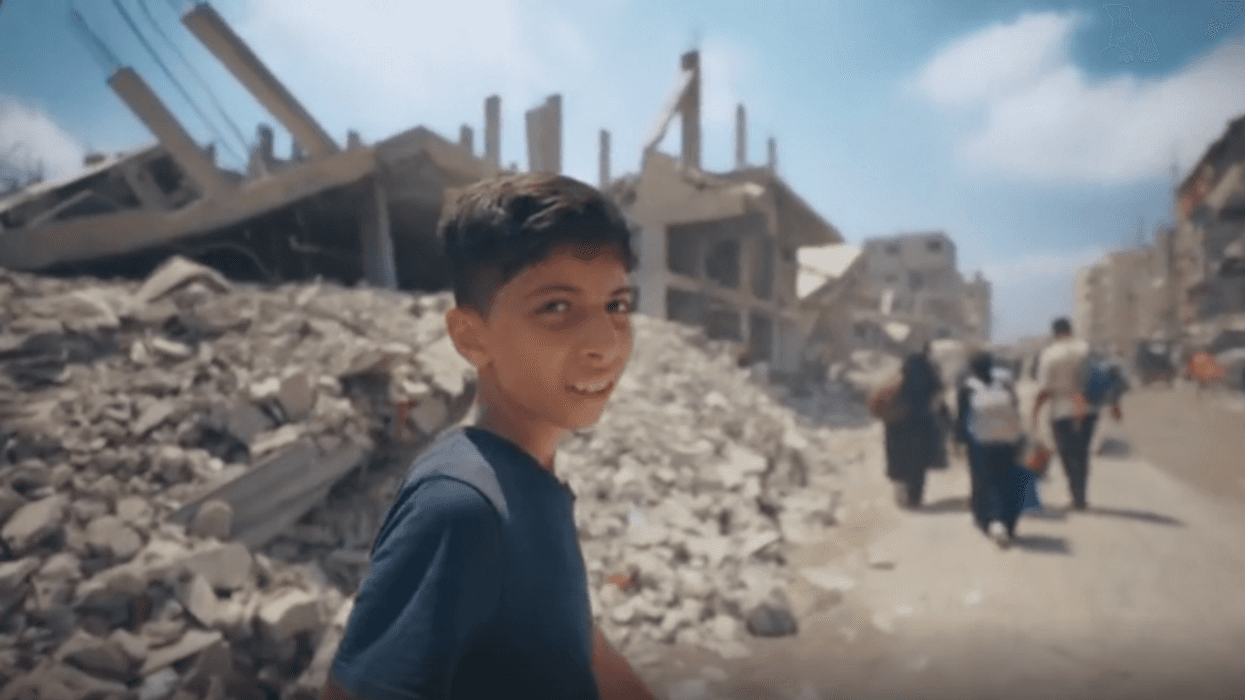
Hundreds of British artists and media personalities argue that the film "deserves recognition, not politically motivated censorship."
Hundreds of U.K. artists and media personalities have signed an open letter decrying the British Broadcasting Corporation's removal of a documentary film about the horrifying impacts of Israel's Gaza onslaught on children.
The BBC pulled Gaza: How to Survive a War Zone—which was produced by Hoyo Films—after the broadcaster learned that its 14-year-old narrator was the son of a Hamas official.
Juliet Stevenson, Gary Lineker, Khalid Abdalla, Anita Rani, and Miriam Margolyes are among the more than 800 film, television, and media workers who, as of Friday, have signed the Artists for Palestineletter condemning what signers called the censorship and racism behind the BBC's cancellation.
"We are U.K.-based film and TV professionals and journalists writing in support of the BBC documentary Gaza: How To Survive A War Zone, which aired on February 17 on BBC Two and was subsequently made available on iPlayer," states the letter, whose signatories include a dozen BBC employees.
"This film is an essential piece of journalism, offering an all-too-rare perspective on the lived experiences of Palestinian children living in unimaginable circumstances, which amplifies voices so often silenced. It deserves recognition, not politically motivated censorship," the letter continues.
Why have the BBC apologised for & removed the documentary 'Gaza: How to Survive a Warzone'? Because it went some way to humanising Palestinians. Here some young children flee in terror from Israeli bullets.
[image or embed]
— Saul Staniforth (@saulstaniforth.bsky.social) February 28, 2025 at 3:24 AM
"Beneath this political football are children who are in the most dire circumstances of their young lives," the signers added. "This is what must remain at the heart of this discussion. As program-makers, we are extremely alarmed by the intervention of partisan political actors on this issue, and what this means for the future of broadcasting in this country."
The Gaza Health Ministry said more than 17,000 Palestinian children have been killed and thousands more wounded by Israeli attacks on the coastal enclave, 10,000 of them in the first 100 days of the war, according to the charity Save the Children. The International Rescue Committee published a report last October revealing that as many as 50,000 children in Gaza have been orphaned or separated from their parents.
Hundreds of thousands more children have been forcibly displaced, with some dying from exposure to cold, windy, rainy conditions. Many other Gazan children have been sickened and starved, sometimes to death—their deaths partly attributed to the "complete siege" imposed on the strip by Israel, which is facing genocide charges at the International Court of Justice in the Netherlands.
The Israeli assault has wrought what Save the Children called the "complete psychological destruction" of Gaza's children, 96% of whom feared imminent death, according to a survey conducted last December by the Gaza-based Community Training Center for Crisis Management, and supported by War Child Alliance.
The international charity Doctors Without Borders has called Gaza "the most dangerous place in the world to be a child."
Another documentary about Palestine, No Other Land, has been nominated for an Academy Award but is unavailable to stream in the United States because no distributor was willing to take it.

"Israel needs to offer the outside world more than a few rifles and other armaments to justify its attacks on Gaza's hospitals and ill and injured civilians," said Euro-Med Human Rights Monitor.
A human rights monitor in Geneva on Friday called on the United Nations to help get to the bottom of Israel's claim that its bombing and raid of Gaza's largest medical complex this week was necessary to stop Hamas from running a vast military compound beneath it—an allegation that more than two days after the attack began, has been backed up only by images Israel released of a small cache of weapons.
Euro-Med Human Rights Monitor said the time has come for an independent international investigation into "Israel's absurd narrative" about al-Shifa Medical Complex in Gaza City, and noted that administrators at the facility are also demanding a probe "that includes a United Nations inspection."
Israel did extensive damage to al-Shifa's cardiac care department, surgical ward, and a pharmaceutical warehouse when it began bombing the hospital at dawn on Wednesday in just one of more than 245 attacks on medical facilities in Gaza since October 7. Israeli officials said they expected to find "the beating heart" of Hamas' military operations in the hospital.
But after searching basement areas and several health departments as well as conducting a "violent interrogation campaign" targeting displaced people and medical personnel, Euro-Med said, Israel has so far produced only a video showing a small number of weapons.
"The absence of any neutral international party's involvement in the Israeli military raids and searches of al-Shifa Medical Complex and other hospitals in the strip raises widespread doubts about the Israeli narrative," said Euro-Med. "Israel needs to offer the outside world more than a few rifles and other armaments to justify its attacks on Gaza's hospitals and ill and injured civilians."
"We are left with nothing—no power, no food, no water. With every passing minute, we are losing a life. Overnight, we lost 22 persons."
Separately, the BBC aired a segment on Friday in which the network noted the Israel Defense Forces first released a seven-minute video displaying the weapons it found—a video that appeared to be edited despite IDF claims that it was filmed in a single shot with no edits, and that raised several other questions.
"This IDF video was posted, then deleted, then reposted, this time without a section referring to an Israeli soldier who'd been held hostage," reported the BBC.
Reporters from the network arrived at al-Shifa a few hours after the IDF released the original video, and were shown a different selection of weapons than those that appeared in the military's video.
"What we see in this IDF video doesn't equate Israel's description of an 'operational command center for Hamas,'" the BBC reported.
The footage, released late at night "after long hours of searches and fruitless inspections," said Euro-Med, "raises a lot of questions, especially since no gunman has been arrested and no evidence has been found to back the previous claims about the presence of tunnels beneath the hospital."
The IDF has also claimed that Hamas "knew we were coming" and had likely "made off with or hidden traces of their presence" at al-Shifa, The New York Times reported.
Israel's narrative about al-Shifa has also drawn scrutiny from Tedros Adhanom Ghebreyesus, director-general of the World Health Organization, who said that even if the hospital were being used as a command center for Hamas, "protecting [patients] is paramount."
"Even if health facilities are used for military purposes, the principles of distinction, precaution, and proportionality always apply," Tedros said.
The director of al-Shifa, Muhammed Abu Salmiya, told Al Jazeera Friday that staff are still trying to save as many of the 7,000 patients and refugees in the hospital as they can amid Israel's ongoing siege, but they "lost all those who were in the intensive care unit" following the attack on Wednesday.
"We are left with nothing—no power, no food, no water," said Abu Salmiya. "With every passing minute, we are losing a life. Overnight, we lost 22 persons."
The Biden administration, which has continued supporting Israel's bombardment of Gaza as the death toll has grown to at least 11,470 in less than six weeks, said this week it believed the IDF's claims about al-Shifa, with President Joe Biden saying it was a "fact" that Hamas has "their headquarters, their military hidden under a hospital."
A day after the bombing, as observers awaited evidence of an extensive command center beneath the hospital, U.S. State Department spokesperson Matt Miller appeared less confident in Israel's narrative, telling reporters that the White House "never said there were command posts in every hospital in Gaza."
"We don't want to see hospitals struck from the air," said Miller. "We understand that Hamas continues to use hospitals in places where they embed their fighters."
After the BBC reported on the IDF's changing video documentation of its findings, Trita Parsi of the Quincy Institute for Responsible Statecraft called Israel's "propaganda" supporting its onslaught in Gaza "increasingly clownish."
"Only Joe Biden seems to believe it," said Parsi.
Journalist Jeremy Scahill pointed out that Israel itself is known to have built "an underground operating room and tunnels under the hospital" in 1983.
"This is not a secret," Scahill wrote on social media, noting that Israel has claimed Hamas expanded the tunnels in recent years.
Allegations of a Hamas command center, supported by the U.S., said Scahill, "should be backed up by clear evidence, not a Geraldo Rivera/Al Capone's vault-style video presentation featuring an English-speaking IDF soldier."
"No matter what is or is not found, there is no justification for the repeated attacks against civilian hospitals—in fact al-Shifa is the largest hospital treating the most vulnerable people in Gaza, including NICU babies," he added. "The mere existence of tunnels, originally built by Israel, does not prove the specific allegations made by the U.S. or Israel. The standard for such evidence should be very, very high."
Two weeks ago, I found myself in conversation with Dr Hans Blix, head of the United Nations weapons inspection team, ahead of the Iraq invasion in 2003.
Dr Blix told me that Tony Blair's claims about Saddam Hussein's weapons of mass destruction were simply not an accurate reflection of the intelligence provided to the British government.
"The big difference in the British dossier," Dr Blix told me, "was that they simply asserted that these items are there. But when Mr Blair asserts that there were weapons, well, that's an assertion, which was not supported by evidence. Both the UK and the US replaced question marks with exclamation marks. I certainly think it was a misrepresentation."
"Both the UK and the US replaced question marks by exclamation marks. I certainly think it was a misrepresentation."
--Hans Blix
He talked about how cautious assessments were turned into bold statements by Blair and the UK government. For example, intelligence chiefs gave this assessment on March 15, 2002: "Intelligence on Iraq's weapons of mass destruction and ballistic missiles programs is sporadic and patchy."
Three weeks later, the prime minister stridently claimed: "We know that he [Saddam Hussein] has stockpiles of major amounts of chemical and biological weapons."
Shaken by the force of his testimony, I eventually said to Dr Blix: "That's devastating. And so basically you are telling me that Mr Blair misrepresented the truth, lied indeed to the British parliament to make the case for an illegal war?"
He paused. Then he said: "Well, I'm a diplomat, so I'm not using such... such words. But in substance, yes. They misrepresented what we did, and they did so in order to get the authorization that they shouldn't have had".
Dr Blix's comments were made before Tony Blair claimed to CNN earlier this week that the information he had received was "wrong". As far as Hans Blix is concerned, Tony Blair misled the British public and parliament about the intelligence he was given.
My conversation with Dr Blix was the culminating moment of my search for the truth about how Britain came to invade Iraq. It is now a matter of days before John Chilcot writes to David Cameron, setting out the timetable for publication of his long-delayed inquiry into the Iraq war.
One report has suggested that Chilcot may push back his report as far as 2017 - no less than seven years late, and a full decade after the last British troops pulled out of Iraq in 2007. The delay in his inquiry, commissioned by Prime Minister Gordon Brown in 2009, has become a national scandal. This is why I approached the BBC a few months ago and asked the Corporation for permission to carry out my Chilcot inquiry.
I pointed out that most of the testimony to Chilcot was publicly available. I also suggested that we should call our own witnesses.
The BBC agreed. For the last few weeks a producer, a researcher and I have been seeking answers to the key questions about the lead up to the Iraq war. The results can be heard tonight on BBC Radio 4.
As background to our work, I asked my friend Dr David Morrison to prepare a series of background narratives on the four crucial questions. These are published today by openDemocracy and they address four key questions:
Question 3: Was the war legal?
Question 4: Did our military action in Iraq increase the terrorist threat to Britain?
I have known Dr Morrison for more than 12 years. Back in 2003, I read the devastating evidence that he dispatched to the Foreign Affairs Committee as it made its report into the Iraq war. The Foreign Affairs Committee ignored the thrust of Dr Morrison's arguments. However, they published his brilliant paper as a memorandum for their own report.
His paper and a later one on the Committee's findings, which are still worth reading today, provided devastating evidence that Tony Blair misled the British public about the threat from Saddam Hussein in order to make the case for war.
I have not accepted all of Morrison's arguments. However, his narratives provided an invaluable basis for our work, because he has a remarkable gift for highlighting like nothing else the key issues.
These documents set out with great clarity the key facts that everyone will need in order to assess whether John Chilcot has produced a fair report. I have summarised Morrison's most devastating points here.
On February 14 2003, Hans Blix told the UN Security Council: "Many proscribed weapons and items are not accounted for. To take an example, a document, which Iraq provided, suggested to us that some 1,000 tonnes of chemical agent were 'unaccounted for'. One must not jump to the conclusion that they exist."
Yet less than a month later, on March 18, Tony Blair told MPs: "When the inspectors left in 1998, they left unaccounted for 10,000 liters of anthrax; a far-reaching VX nerve agent program; up to 6,500 chemical munitions; at least 80 tonnes of mustard gas, and possibly more than 10 times that amount; unquantifiable amounts of sarin, botulinum toxin and a host of other biological poisons; and an entire Scud missile program. We are asked now seriously to accept that in the last few years--contrary to all history, contrary to all intelligence--Saddam decided unilaterally to destroy those weapons. I say that such a claim is palpably absurd."
There, Tony Blair stated as a fact that proscribed material deemed "unaccounted for" by inspectors actually existed. In doing so, he seriously misled the House of Commons.
Furthermore. Blair neglected to mention that his own intelligence services had advised that even if Saddam still had weapons stockpiled, they would have degraded to the point where they were unusable.
Tony Blair stated as a fact that proscribed material deemed "unaccounted for" by inspectors actually existed. In doing so, he seriously misled the House of Commons.
According to a 2002 report the International Institute for Strategic Studies (IISS), much of Iraq's pre-Gulf war stocks of chemical and biological agents listed by Blair, if they existed at all, would have degraded to such an extent that they would no longer be effective as warfare agents. The government's own dossier, which was published a few weeks later, referred to the IISS approvingly as "an independent and well-researched overview."
Among other things, the IISS report notes: "As a practical matter, any nerve agent from this period [pre-1991] would have deteriorated by now ..." It also says: "Any VX produced by Iraq before 1991 is likely to have decomposed over the past decade ...Any G-agent or V-agent stocks that Iraq concealed from UNSCOM inspections are likely to have deteriorated by now. Any botulinum toxin produced in 1989-90 would no longer be useful".
The prime minister didn't tell MPs any of this on 18 March 2003 when they voted to go to war.
Blair also used vital testimony selectively in order to build the case for war. On 18 March 2003, he told MPs:
In August [1995], it [Iraq] provided yet another full and final declaration. Then, a week later, Saddam's son-in-law, Hussein Kamal, defected to Jordan. He disclosed a far more extensive biological weapons program and, for the first time, said that Iraq had weaponized the program--something that Saddam had always strenuously denied. All this had been happening while the inspectors were in Iraq."
The prime minister chose not to divulge to MPs that Kamal also told UN inspectors that, on his orders, all Iraq's proscribed weapons had been destroyed.
A transcript of the IAEA/UNSCOM interview with Kamal came into the public domain in early 2003. In that interview, he said: "I ordered destruction [sic] of all chemical weapons. All weapons - biological, chemical, missile, nuclear were destroyed". He described anthrax as the "main focus" of Iraq's biological program, and when asked, "Were weapons and agents destroyed?" he replied: "Nothing remained". Of missiles, he said: "not a single missile left but they had blueprints and molds [sic] for production. All missiles were destroyed."
A transcript of a CNN interview with Hussein Kamal on 21 September 1995 can be read here. In it, he said "Iraq does not possess any weapons of mass destruction".
In the build up to the Iraq war, Blair's government was repeatedly warned by intelligence chiefs that invading Iraq would dramatically increase the threat of terrorist attacks on UK soil, and act as a recruiting tool for al Qaida and other extremists across the world.
Sir David Omand, Security and Intelligence Co-ordinator in the Cabinet Office from June 2003 until April 2005, has testified to Chilcot that the Joint Intelligence Committee [JIC] "judged that the build-up of forces in the Gulf, in the region, before an attack on Iraq, would increase public hostility to the west and western interests.
He also said the JIC "warned that AQ [al-Qaeda] and other Islamist extremists may initiate attacks in response to coalition military action. We [the intelligence services] pointed out that AQ would use an attack on Iraq as justification ... for terrorist attacks on Western or Israeli targets. We pointed out that AQ was already in their propaganda portraying US-led operations as being a war on Islam and that, indeed, this view was attracting widespread support across the Muslim community".
"Coalition attacks would, we said, radicalize increasing numbers... [and] that the threat from AQ would increase at the onset of any attack on Iraq and that we should all be prepared for a higher threat level to be announced and for more terrorist activity in the event of war."
In addition, Eliza Manningham Butler, head of MI5 at the time, has testified to Chilcot that the Iraq war "substantially" exacerbated the overall terrorist threat MI5 and fellow services had to deal with. She said there was hard evidence for this, for instance "numerical evidence of the number of plots, the number of leads, the number of people identified, and the correlation of that to Iraq and statements of people as to why they were involved, the discussions between them as to what they were doing".
"Coalition attacks would, we said, radicalize increasing numbers... [and] that the threat from Al Qaeda would increase at the onset of any attack on Iraq."
--Sir David Omand
She added: "By 2003, I needed to ask the prime minister to double our budget. This is unheard of, it's certainly unheard of today, but he and the Treasury and the Chancellor accepted that because I was able to demonstrate the scale of the problem that we were confronted by."
In the build up to war, Blair's government was very keen to bring intelligence assessments of the threat from Iraq's "weapons of mass destruction" to public attention, but it kept silent about the pre-war intelligence assessments that the al-Qaeda threat to Britain would be heightened by British participation in military action against Iraq. Had MPs been aware of these assessments on 18 March 2003, they might not have given the green light to military action.
On that day, Tony Blair did not tell them that al-Qaida activity in Britain would likely increase with murderous effect if they voted for war. On the contrary, he told them that a vote for war was a vote to combat al-Qaida; that the overthrow of Saddam Hussein would prevent a future alliance between him and al-Qaida, as a consequence of which al-Qaida would be armed with "weapons of mass destruction".
On March 18 2003 Tony Blair claimed that France had undermined support for a second UN resolution, which would have authorized the use of force to disarm Saddam. He told the House of Commons: "Last Monday [10 March], we were getting very close with it [the second resolution]. We very nearly had the majority agreement... Then, on Monday night, France said that it would veto a second resolution, whatever the circumstances."
In fact, France said no such thing. On the contrary, in an interview that Monday night, President Chirac made it very clear that there were circumstances in which France would not veto a resolution for war. Early in the interview, he identified two different scenarios, one when the UN inspectors report progress and the other when the inspectors say their task is impossible - in which case, in his words, "regrettably, the war would become inevitable." That portion reads:
"The inspectors have to tell us: 'we can continue and, at the end of a period which we think should be of a few months' - I'm saying a few months because that's what they have said - 'we shall have completed our work and Iraq will be disarmed'. Or they will come and tell the Security Council: 'we are sorry but Iraq isn't cooperating, the progress isn't sufficient, we aren't in a position to achieve our goal, we won't be able to guarantee Iraq's disarmament'. In that case it will be for the Security Council and it alone to decide the right thing to do. But in that case, of course, regrettably, the war would become inevitable. It isn't today."
From that, it is plain as a pikestaff that there were circumstances in which France would not have vetoed military action, namely, if the UN inspectors reported that they couldn't do their job. They had never reported this. By contrast, as Hans Blix told the Chilcot Inquiry in 2010, inspectors were given access to every site they asked to visit and inspect: "on no particular occasion were we denied access".
Tony Blair gave Alastair Campbell "his marching orders to play the anti-French card with the Sun and others."
This is not the story the British public was told. The day after Chirac's interview, on 11 March 2003, Blair blamed France for the US/UK failure to persuade more than two other members of the UN Security Council (Spain and Bulgaria) to vote for war. We know this from evidence given to the Chilcot inquiry on 19 January 2011 by Stephen Wall, who was Tony Blair's EU adviser from 2000 to 2004. He confirmed that he had witnessed Tony Blair in a Downing Street corridor give Alastair Campbell "his marching orders to play the anti-French card with the Sun and others".
On the basis of the evidence before Chilcot, there is little reason to doubt that the Blair government misrepresented the intelligence to parliament and to the British public to make the case for an illegal war in which 179 British soldiers and hundreds of thousands of Iraqi civilians died.
The invasion of Iraq was intended to deal with international terrorism. It is plain that the terrorist threat to Britain has increased beyond measure as a result of the decision to go into Iraq.
Let's see if John Chilcot agrees.
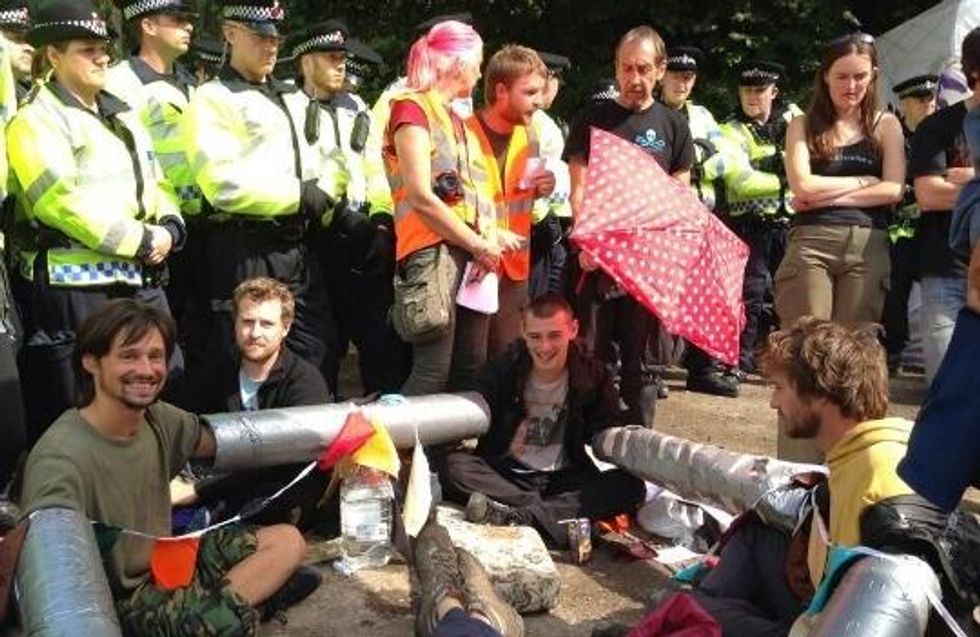
In a rapid-fire succession of civil disobedience actions across the United Kingdom, anti-fracking protesters came out in force Monday against drilling company Cuadrilla, shutting down their headquarters, their PR company and their drill site in Balcombe.
In an effort to suspend the "sustained campaign of corporate misinformation" being peddled by Bell Pottinger, beginning at 8 AM local time, six activists using superglue and reinforced arm tubes blocked the entrance company headquarters in London. Bell Pottinger is the PR company behind Cuadrilla's operation in Sussex where fracking already occurs.
Reporting on the action, the group No Dash for Gas writes:
Another activist climbed the building and unfurled a banner reading: 'BELL POTTINGER - FRACKING LIARS'. The campaigners used a sound system to play an undercover recording in which a Bell Pottinger spin doctor admits the company's pro-fracking PR offensive 'sounds like utter fucking bullshit.'
By 9 AM, 20 activists in Lichfield--two hours north of London--shut down Cuadrilla's headquarters by blockading it with their bodies. According to No Dash for Gas, three people entered the building and successfully occupied eight work stations using D-locks forcing the company to clear the entire floor of staff.
"We need to reclaim our energy system from the hands of corporations that will frack our countryside, crash our climate targets and send fuel bills through the roof," declared protester Debby Petersen.
And in Balcombe, where Cuadrilla's test drilling site set off the nationwide protests, hundreds of protesters faced off with police as they locked arms around five activists who blocked the main gates by securing themselves with D-locks and superglue to a wheelchair. A larger group of activists reportedly blocked the surrounding road.
Meanwhile, No Dash for Gas reports, a double-decker bus with children from the camp toured the area with the slogan "Don't frack with our future" emblazoned on the side of the vehicle.
Elsewhere, activists placed a wind turbine blade on the roof of the constituency office of Balcombe MP and Cabinet member Francis Maude, who was targeted for his pro-fracking views.
Reports of aggressive police tactics being used at the Balcombe protest have already drawn criticism and a formally filed complaint after a video surfaced of officers arresting a peaceful protester by "kneeling on his head and pushing his face into the ground as other officers restrain him." Other police had reportedly charged, pushed and shoved protesters and forced "one protester's head down with a bicycle wheel."
BBC had this video of the police violence in Balcombe:
Police violence at peaceful fracking protest in Balcombe captured on BBC NewsPolice violence caught on camera as protesters peacefully blockade the site of the controversial drilling site in Balcombe, West ...
Among the six demonstrators arrested by the Balcombe gates was Green Party MP, Dr. Caroline Lucas, who--along with her son--was forcibly removed from outside the test drilling site where she sat with her arms linked with other protesters.
"I'm proud of the people around me who have put their bodies where the police are," Lucas said. "They have tried to use the democratic processes, tried to raise the issue through those democratic panels. The government isn't listening. Climate change is the greatest threat that we face and I think that people are right to try and take action against fracking."
The actions follow three weeks of protests by the people of Balcombe against test drilling in the area which, protesters say, could lead to fracking to extract shale gas.
As others have taken up the local fight, a growing 'climate camp' in Balcombe housed and fed roughly 800 people over the weekend as they prepared for their multi-front battle against Cuadrilla and the gas drilling industry.
Reclaim the Power posted a number of images on their Flickr page from Monday's demonstrations.