SUBSCRIBE TO OUR FREE NEWSLETTER
Daily news & progressive opinion—funded by the people, not the corporations—delivered straight to your inbox.
5
#000000
#FFFFFF
To donate by check, phone, or other method, see our More Ways to Give page.
Daily news & progressive opinion—funded by the people, not the corporations—delivered straight to your inbox.
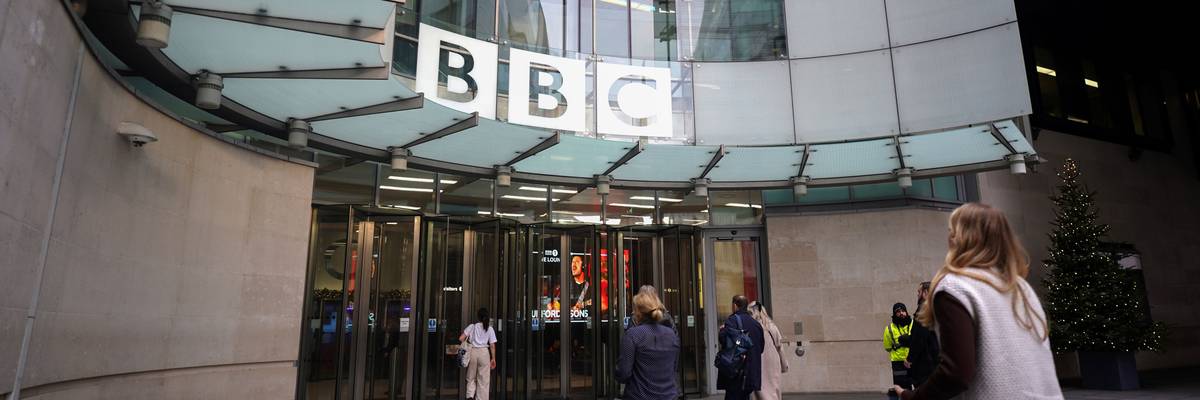
US President Donald Trump filed a lawsuit against the BBC on December 15, 2025 and is seeking up to $10 billion (£7.5 billion) in damages over the editing of a speech he made before the 2021 attack on the Capitol, which was broadcast on Panorama in 2024.
"This is about the BBC’s independence," said one former BBC official. "So they should definitely fight it."
The British Broadcasting Corporation vowed to fight back against President Donald Trump's $10 billion lawsuit filed on Monday—the latest legal challenge brought by the president against a media organization over its coverage of him.
A spokesperson for the BBC said in a brief statement on Tuesday, "We will be defending this case" after Trump filed a lawsuit in a federal court in Florida, alleging that the network defamed him and violated the state's Deceptive and Unfair Trade Practices Act when it aired edited comments he made in a speech on January 6, 2021, just before thousands of his supporters attacked the US Capitol.
Before last year's presidential election, the BBC series Panorama aired a documentary titled "Trump: A Second Chance?" The film includes a section featuring Trump's speech to a crowd in Washington, DC on January 6, with two clips of him speaking about 50 minutes apart spliced together, making it appear as though he directly urged people to march to the Capitol.
With his lawsuit, Trump has suggested the edited clip created the impression that he incited violence—though several journalists have noted that those allegations predate the documentary. The edited clip received little attention until recent months when the right-wing Daily Telegraph published details from a memo by Michael Prescott, a former BBC standards adviser with links to the Conservative Party.
In the memo, Prescott took aim at the documentary's editing and alleged a "pro-transgender bias" and "anti-Israel bias"in the BBC's news coverage.
Trump's lawsuit cites the internal review mentioned in Prescott's memo, alleging “a string of incidents that demonstrate serious bias in the corporation’s reporting.”
The BBC has publicly apologized for the editing of the documentary, but has denied that Trump has a legitimate basis for a defamation claim.
The lawsuit is Trump's latest against a media company over coverage of him. At least two cases—against ABC and CBS and its parent company, Paramount, have ended in settlements, with the companies agreeing to pay the president $16 million each. He also has a defamation case pending against the New York Times.
On Monday, Trump gave a muddled explanation of his latest lawsuit while speaking to the press at the White House, falsely claiming the BBC was accused of using AI to make him say "things [he] never said" in the documentary.
"Trump is suing the BBC. He doesn’t know why. But he’s suing anyway," said BBC presenter Sangita Myska.
Trump: "I'm suing the BBC for putting words in my mouth ... I guess they used AI or something" pic.twitter.com/VxYMDp6oZ2
— Aaron Rupar (@atrupar) December 15, 2025
Richard Tice, deputy leader of the right-wing Reform Party, expressed support for Trump's lawsuit on Tuesday and agreed with the push for "wholesale change" at the BBC. Christopher Ruddy of the Trump-aligned network Newsmax also told The Guardian that the BBC should "figure out a quick and easy settlement."
But on the network's "Today" program, former BBC Radio 4 controller Mark Damazer said that "it would be extremely damaging to the BBC’s reputation not to fight the case."
"This is about the BBC’s independence," said Damazer. "And, unlike American media organizations which have coughed up the money, the BBC doesn’t have commercial business interests that depend on President Trump’s beneficence in the White House. So they should definitely fight it."
"The BBC has likely an extremely strong case," he added. "The 1960s established a very wide margin of press freedom in a case called Sullivan v. The New York Times, from which the BBC would undoubtedly benefit... President Trump was not harmed by what the BBC mistakenly did in its Panorama edit. The program wasn’t shown in the United States. He was neither financially nor politically hurt, and the BBC should definitely fight this case."
Zoe Gardner, a researcher and commentator on migration policy in the UK, denounced "far-right politicians and pundits" for "cheering" Trump's lawsuit.
"Given the BBC is publicly funded, this is Donald Trump suing you and me," Gardner said. "It’s a pathetic cry-bully attack on journalism by a wannabe dictator and an attack on every British person."
Dear Common Dreams reader, It’s been nearly 30 years since I co-founded Common Dreams with my late wife, Lina Newhouser. We had the radical notion that journalism should serve the public good, not corporate profits. It was clear to us from the outset what it would take to build such a project. No paid advertisements. No corporate sponsors. No millionaire publisher telling us what to think or do. Many people said we wouldn't last a year, but we proved those doubters wrong. Together with a tremendous team of journalists and dedicated staff, we built an independent media outlet free from the constraints of profits and corporate control. Our mission has always been simple: To inform. To inspire. To ignite change for the common good. Building Common Dreams was not easy. Our survival was never guaranteed. When you take on the most powerful forces—Wall Street greed, fossil fuel industry destruction, Big Tech lobbyists, and uber-rich oligarchs who have spent billions upon billions rigging the economy and democracy in their favor—the only bulwark you have is supporters who believe in your work. But here’s the urgent message from me today. It's never been this bad out there. And it's never been this hard to keep us going. At the very moment Common Dreams is most needed, the threats we face are intensifying. We need your support now more than ever. We don't accept corporate advertising and never will. We don't have a paywall because we don't think people should be blocked from critical news based on their ability to pay. Everything we do is funded by the donations of readers like you. When everyone does the little they can afford, we are strong. But if that support retreats or dries up, so do we. Will you donate now to make sure Common Dreams not only survives but thrives? —Craig Brown, Co-founder |
The British Broadcasting Corporation vowed to fight back against President Donald Trump's $10 billion lawsuit filed on Monday—the latest legal challenge brought by the president against a media organization over its coverage of him.
A spokesperson for the BBC said in a brief statement on Tuesday, "We will be defending this case" after Trump filed a lawsuit in a federal court in Florida, alleging that the network defamed him and violated the state's Deceptive and Unfair Trade Practices Act when it aired edited comments he made in a speech on January 6, 2021, just before thousands of his supporters attacked the US Capitol.
Before last year's presidential election, the BBC series Panorama aired a documentary titled "Trump: A Second Chance?" The film includes a section featuring Trump's speech to a crowd in Washington, DC on January 6, with two clips of him speaking about 50 minutes apart spliced together, making it appear as though he directly urged people to march to the Capitol.
With his lawsuit, Trump has suggested the edited clip created the impression that he incited violence—though several journalists have noted that those allegations predate the documentary. The edited clip received little attention until recent months when the right-wing Daily Telegraph published details from a memo by Michael Prescott, a former BBC standards adviser with links to the Conservative Party.
In the memo, Prescott took aim at the documentary's editing and alleged a "pro-transgender bias" and "anti-Israel bias"in the BBC's news coverage.
Trump's lawsuit cites the internal review mentioned in Prescott's memo, alleging “a string of incidents that demonstrate serious bias in the corporation’s reporting.”
The BBC has publicly apologized for the editing of the documentary, but has denied that Trump has a legitimate basis for a defamation claim.
The lawsuit is Trump's latest against a media company over coverage of him. At least two cases—against ABC and CBS and its parent company, Paramount, have ended in settlements, with the companies agreeing to pay the president $16 million each. He also has a defamation case pending against the New York Times.
On Monday, Trump gave a muddled explanation of his latest lawsuit while speaking to the press at the White House, falsely claiming the BBC was accused of using AI to make him say "things [he] never said" in the documentary.
"Trump is suing the BBC. He doesn’t know why. But he’s suing anyway," said BBC presenter Sangita Myska.
Trump: "I'm suing the BBC for putting words in my mouth ... I guess they used AI or something" pic.twitter.com/VxYMDp6oZ2
— Aaron Rupar (@atrupar) December 15, 2025
Richard Tice, deputy leader of the right-wing Reform Party, expressed support for Trump's lawsuit on Tuesday and agreed with the push for "wholesale change" at the BBC. Christopher Ruddy of the Trump-aligned network Newsmax also told The Guardian that the BBC should "figure out a quick and easy settlement."
But on the network's "Today" program, former BBC Radio 4 controller Mark Damazer said that "it would be extremely damaging to the BBC’s reputation not to fight the case."
"This is about the BBC’s independence," said Damazer. "And, unlike American media organizations which have coughed up the money, the BBC doesn’t have commercial business interests that depend on President Trump’s beneficence in the White House. So they should definitely fight it."
"The BBC has likely an extremely strong case," he added. "The 1960s established a very wide margin of press freedom in a case called Sullivan v. The New York Times, from which the BBC would undoubtedly benefit... President Trump was not harmed by what the BBC mistakenly did in its Panorama edit. The program wasn’t shown in the United States. He was neither financially nor politically hurt, and the BBC should definitely fight this case."
Zoe Gardner, a researcher and commentator on migration policy in the UK, denounced "far-right politicians and pundits" for "cheering" Trump's lawsuit.
"Given the BBC is publicly funded, this is Donald Trump suing you and me," Gardner said. "It’s a pathetic cry-bully attack on journalism by a wannabe dictator and an attack on every British person."
The British Broadcasting Corporation vowed to fight back against President Donald Trump's $10 billion lawsuit filed on Monday—the latest legal challenge brought by the president against a media organization over its coverage of him.
A spokesperson for the BBC said in a brief statement on Tuesday, "We will be defending this case" after Trump filed a lawsuit in a federal court in Florida, alleging that the network defamed him and violated the state's Deceptive and Unfair Trade Practices Act when it aired edited comments he made in a speech on January 6, 2021, just before thousands of his supporters attacked the US Capitol.
Before last year's presidential election, the BBC series Panorama aired a documentary titled "Trump: A Second Chance?" The film includes a section featuring Trump's speech to a crowd in Washington, DC on January 6, with two clips of him speaking about 50 minutes apart spliced together, making it appear as though he directly urged people to march to the Capitol.
With his lawsuit, Trump has suggested the edited clip created the impression that he incited violence—though several journalists have noted that those allegations predate the documentary. The edited clip received little attention until recent months when the right-wing Daily Telegraph published details from a memo by Michael Prescott, a former BBC standards adviser with links to the Conservative Party.
In the memo, Prescott took aim at the documentary's editing and alleged a "pro-transgender bias" and "anti-Israel bias"in the BBC's news coverage.
Trump's lawsuit cites the internal review mentioned in Prescott's memo, alleging “a string of incidents that demonstrate serious bias in the corporation’s reporting.”
The BBC has publicly apologized for the editing of the documentary, but has denied that Trump has a legitimate basis for a defamation claim.
The lawsuit is Trump's latest against a media company over coverage of him. At least two cases—against ABC and CBS and its parent company, Paramount, have ended in settlements, with the companies agreeing to pay the president $16 million each. He also has a defamation case pending against the New York Times.
On Monday, Trump gave a muddled explanation of his latest lawsuit while speaking to the press at the White House, falsely claiming the BBC was accused of using AI to make him say "things [he] never said" in the documentary.
"Trump is suing the BBC. He doesn’t know why. But he’s suing anyway," said BBC presenter Sangita Myska.
Trump: "I'm suing the BBC for putting words in my mouth ... I guess they used AI or something" pic.twitter.com/VxYMDp6oZ2
— Aaron Rupar (@atrupar) December 15, 2025
Richard Tice, deputy leader of the right-wing Reform Party, expressed support for Trump's lawsuit on Tuesday and agreed with the push for "wholesale change" at the BBC. Christopher Ruddy of the Trump-aligned network Newsmax also told The Guardian that the BBC should "figure out a quick and easy settlement."
But on the network's "Today" program, former BBC Radio 4 controller Mark Damazer said that "it would be extremely damaging to the BBC’s reputation not to fight the case."
"This is about the BBC’s independence," said Damazer. "And, unlike American media organizations which have coughed up the money, the BBC doesn’t have commercial business interests that depend on President Trump’s beneficence in the White House. So they should definitely fight it."
"The BBC has likely an extremely strong case," he added. "The 1960s established a very wide margin of press freedom in a case called Sullivan v. The New York Times, from which the BBC would undoubtedly benefit... President Trump was not harmed by what the BBC mistakenly did in its Panorama edit. The program wasn’t shown in the United States. He was neither financially nor politically hurt, and the BBC should definitely fight this case."
Zoe Gardner, a researcher and commentator on migration policy in the UK, denounced "far-right politicians and pundits" for "cheering" Trump's lawsuit.
"Given the BBC is publicly funded, this is Donald Trump suing you and me," Gardner said. "It’s a pathetic cry-bully attack on journalism by a wannabe dictator and an attack on every British person."