

SUBSCRIBE TO OUR FREE NEWSLETTER
Daily news & progressive opinion—funded by the people, not the corporations—delivered straight to your inbox.
5
#000000
#FFFFFF
To donate by check, phone, or other method, see our More Ways to Give page.
Daily news & progressive opinion—funded by the people, not the corporations—delivered straight to your inbox.
Ted Miller, 202.973.3032
Nancy Keenan, president of NARAL Pro-Choice America, joined Sen.
Chris Dodd (D-Conn.) and other senators at a Capitol Hill press
conference to mark the advancement of major health-care legislation in
a key Senate committee.
Sen. Dodd, along with other pro-choice members of the Health,
Education, Labor, and Pensions Committee, defeated repeated attempts by
anti-choice senators to politicize the bill with divisive anti-choice
amendments. Moreover, the committee adopted important new provisions
that will improve women's access to family-planning care.
"Under Sen. Dodd's leadership, pro-choice senators helped a
health-reform bill clear a major hurdle while stopping anti-choice
political attacks from tainting this legislation," Keenan said. "We are
working day and night to secure a similar outcome in bills that will
come out of other committees in the House and Senate. We are
principally concerned that anti-choice politicians will push measures
that would interfere in the doctor-patient relationship and take away
health-care services many Americans already have. Our belief is that
experts - not politicians - should determine what benefits should be
covered. That's the best way to keep this debate focused on cutting the
costs of health care and making it affordable for more Americans."
NARAL Pro-Choice America has mobilized its network of nearly 600,000
online activists to call on the Senate to reject anti-choice attacks in
health-care reform.
For more information about the organization, please visit www.ProChoiceAmerica.org
For over 50 years, Reproductive Freedom for All (formerly NARAL Pro-Choice America) has fought to protect and advance reproductive freedom at the federal and state levels—including access to abortion care, birth control, pregnancy and post-partum care, and paid family leave—for everybody. Reproductive Freedom for All is powered by its more than 4 million members from every state and congressional district in the country, representing the 8 in 10 Americans who support legal abortion.
202.973.3000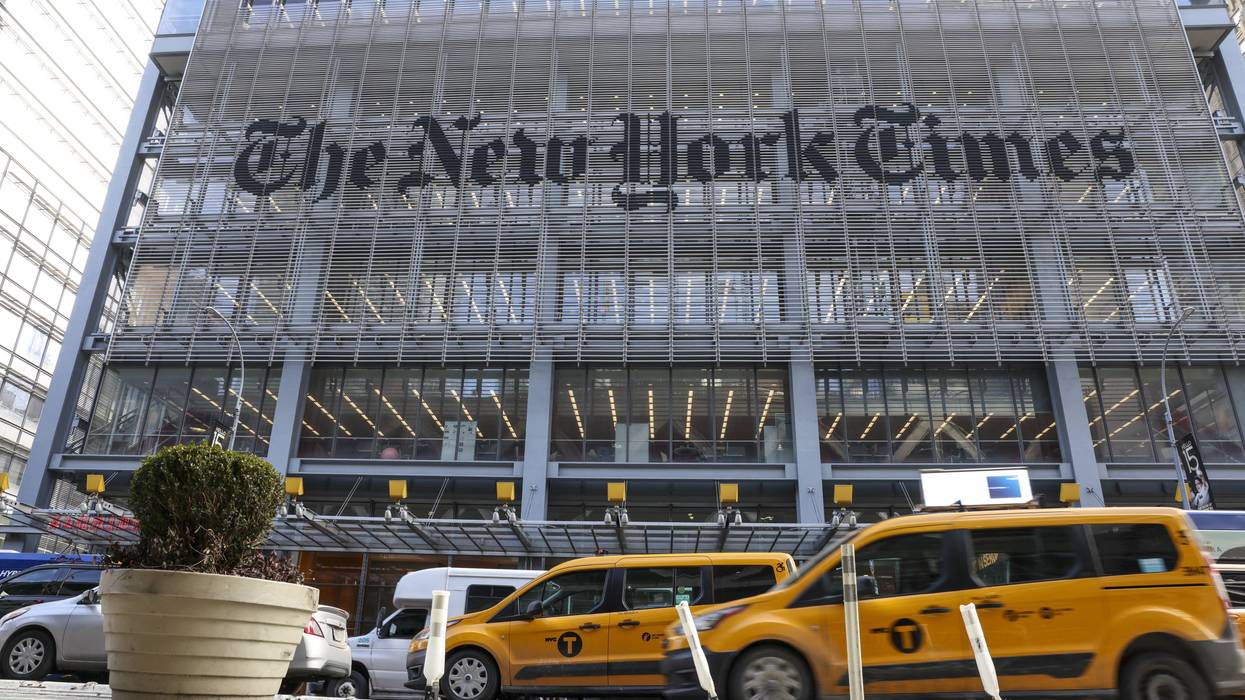
"This brazen act should be seen as nothing more than an attempt to prevent the public from knowing what is happening in their country by intimidating journalists from doing their jobs."
The Trump administration on Friday escalated its war with the press by subpoenaing several reporters at The New York Times days after the paper published a story on Wednesday that detailed security concerns about the luxury jet the Qatari government gave to President Donald Trump.
According to the Times, the subpoenas are attempting to force reporters to testify before a federal grand jury in Manhattan on Wednesday next week, a move that the paper describes as an "extraordinary escalation in President Trump’s efforts to threaten and intimidate independent news organizations."
The issued subpoenas do not specifically name the Times' reporting on the Qatari jet as the reason for the grand jury probe, although they were given to all four journalists—Tyler Pager, Julian Barnes, Eric Schmitt, and Eric Lipton—who reported the story.
Additionally, the Times noted, a senior official at the FBI had asked the paper to hold off publishing its story on the jet before it came out on Wednesday, citing unspecified national security concerns about its content.
David McCraw, the top attorney representing the Times' newsroom, denounced the subpoenas as an attack on the freedom of the press.
"The appearance of federal law enforcement agents on the doorstep of news reporters should shock the conscience of any American who believes in the Constitution and the press freedom it protects," said McGraw. “This brazen act should be seen as nothing more than an attempt to prevent the public from knowing what is happening in their country by intimidating journalists from doing their jobs."
It is highly uncommon for government investigators to subpoena journalists when they are probing national security leaks, as such actions are generally seen as having a chilling effect on reporters’ ability to gather information.
Rick Stengel, former under secretary of state for President Barack Obama, said that the Times' reporting on the Qatari jet, whose security upgrades are being financed with US tax dollars, is completely within the scope of constitutional protections for press freedom.
"The reporting that the Times journalists have been subpoenaed for is exactly the kind of journalism the First Amendment is designed to protect: matters involving national security and taxpayer dollars," wrote Stengel in a Saturday social media post. "Reporting that embarrasses a president is protected speech."
Fox News chief national security correspondent Jennifer Griffin also denounced the Trump administration for trying to drag reporters into a grand jury investigation.
"This action by the US government to subpoena reporters for reporting legitimate news on security concerns about Air Force One should alarm every American," Griffin wrote.
This is the second time in recent weeks that the Trump administration has tried to subpoena reporters to compel their testimony in grand jury investigations.
In June, the US Department of Justice issued subpoenas for national security reporters at The Washington Post and The Wall Street Journal related to national security leaks.
Subpoenas against both news organizations were withdrawn after they issued legal challenges in sealed filings.
“If the party’s selected nominee does not publicly adopt this platform... this statewide volunteer network will not organize, fundraise, or mobilize on that candidate’s behalf."
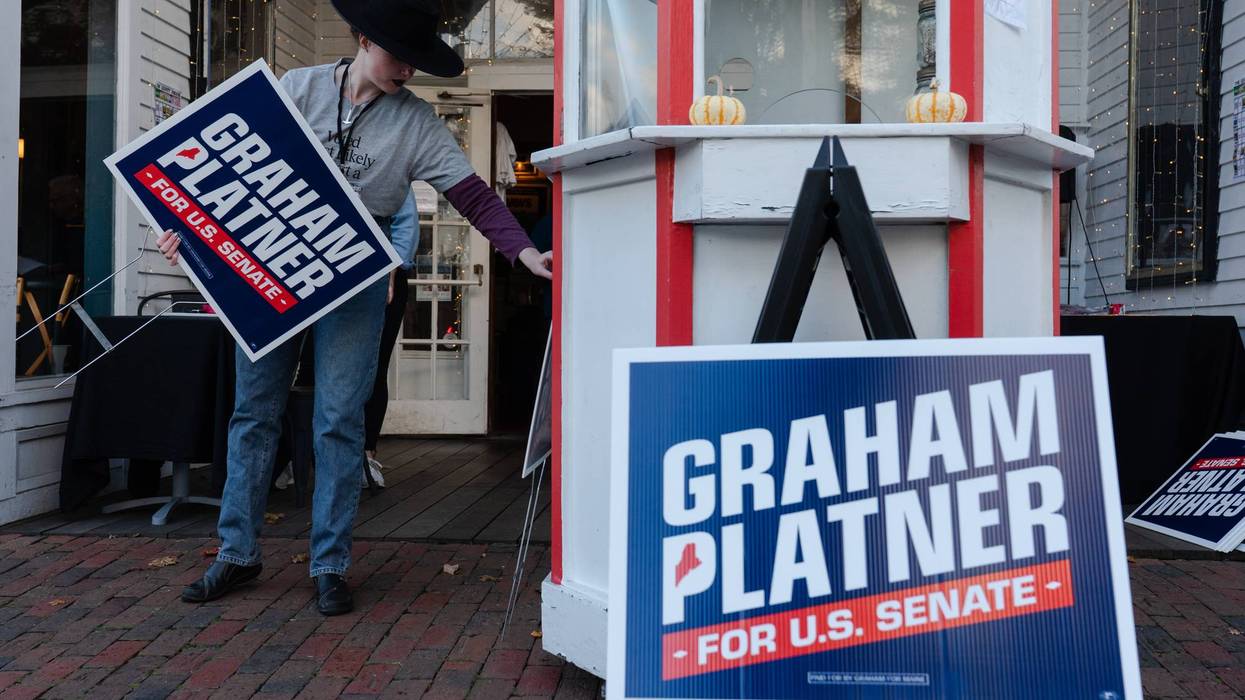
As Graham Platner officially ended his US Senate campaign in Maine Friday after being accused of sexual assault and other misconduct, the volunteer network powering his campaign warned that it will not support any new Democratic nominee who does not align with the disgraced democratic socialist's progressive platform.
Platner notified the Maine Secretary of State's office that he is formally withdrawing his candidacy, just a month and a day after winning the Democratic Senate Primary.
The Secretary of State's office subsequently said that Platner's name will no longer appear on the ballot, and that his party has until July 27 to replace him with a qualified candidate.
Also on Friday, Drop Site News obtained a draft letter from the 15,000-strong volunteer network that was instrumental to Platner's erstwhile success, presenting the Maine Democratic Party and prospective candidates with policy platform demands including “healthcare as a right, housing affordability, an economy that works for regular people and not billionaires, strengthening workers and unions, end forever wars, oppose complicity in atrocities, an end to mass deportation enforcement, energy and climate accountability, and human rights for all.”
“The volunteer infrastructure that this movement built—the organizers, door-knockers, the small-dollar donors, the hosts, the people who make phone calls and staff tables between now and November—does not transfer automatically to whoever the party selects," the letter warns. "That infrastructure exists because people believe in a specific platform. It will only continue to exist and only continue to be deployed for a nominee who publicly and explicitly adopts these core commitments as their own." (emphasis original)
“If the party’s selected nominee does not publicly adopt this platform, we want to be transparent now, before the convention, rather than silent until after it: This statewide volunteer network will not organize, fundraise, or mobilize on that candidate’s behalf," the letter continues, adding, “that is not a threat, but rather a statement of fact about what motivates the people who make up this movement.”
As Drop Site noted:
The Maine Democratic Party’s 100-person state committee voted to approve a process by which 600 delegates, 500 county committee elected delegates, and the 100 state committee members themselves will select the new nominee from a slate of candidates vying to replace Platner. Troy Jackson, Shenna Bellows, Nirav Shah, Dan Kleban, Jordan Wood, and Vallie Geiger are running for the spot. All the candidates lost their respective Democratic gubernatorial and congressional primaries in June, aside from Geiger, who serves as a state representative for the Rockland area.
Drop Site obtained private Maine Democratic Party information showing that the 500 delegates will be proportionally appointed based on 2024 election Democratic vote totals in their respective counties. How those 500 delegates will be elected is still under debate.
Ben Chin, who managed Platner's campaign, on Wednesday accused the Maine Democratic Party of working "behind closed doors" with national party leaders to choose a replacement candidate.
"Both the state and national parties cut our team, our volunteers, and our vast networks of supporters out of the conversation completely," Chin alleged in a text to supporters. “We firmly believe that the supporters and volunteers who built this movement deserve to have a real role in any nomination process."

"If you can sign up with one click, you can cancel with one click," said New York City's democratic socialist mayor.
In a move proponents say will save constituents up to $162.5 million annually, Mayor Zohran Mamdani and other New York City officials on Friday unveiled a "click-to-cancel" rule aimed at ensuring people can end online subscriptions as easily as they start them.
Days after entering office in January, Mamdani signed a pair of executive orders, "Combating Hidden Junk Fees" and "Fighting Subscription Tricks and Traps"—his 9th and 10th mayoral edicts—to protect consumers and make it easier "for New Yorkers to know the real price of what they are buying and to stop paying for the services they no longer want."
Following up on the orders, Mamdani and New York City Department of Consumer and Worker Protection (DCWP) Commissioner Samuel A.A. Levine proposed a rule "requiring transparent, all-in pricing that bans hidden junk fees, alongside a final 'click to cancel' rule that guarantees consumers can cancel subscriptions as easily as they sign up for them."
The landmark proposal is part of Mamdani's affordability agenda, which includes the rent freeze and universal childcare programs he's partially enacted, as well as the free city buses, municipal grocery stores, affordable housing expansion, and redistributive taxation his administration is pursuing.
“For years, companies have built their business model around making it harder for working people to hold onto their money,” Mamdani said during a Friday press conference at Asser Levy Recreational Center in Manhattan's Kips Bay neighborhood. “Whether it’s hidden fees that suddenly appear at checkout or subscriptions that take one click to sign up for and a dozen steps to cancel, the result is the same: Working people pay more while corporations profit. That ends now. If you can sign up with one click, you can cancel with one click.”
Levine said that “these two rules will ensure that the price you see is the price you pay—no hidden charges, no endless subscription services, and no advantages for businesses that cheat. Requiring companies to compete on price will lower costs for all New Yorkers and level the playing field for honest businesses.”
Deputy Mayor for Economic Justice Julie Su spoke at the press conference, saying, “Every dollar a family loses to a hidden fee or a subscription they couldn’t cancel is a dollar stolen from them, a dollar that could have gone toward rent, groceries, childcare, or anything else."
"And just as important, the hours spent trying to cancel a subscription or membership you no longer want is stolen time," the former acting US labor secretary added. “That’s what affordability means in practice—closing the small holes that drain people’s paychecks and their time month after month. These rules put New Yorkers back in control.”
Former Federal Trade Commission Chair Lina Khan—who implemented a similar rule while serving in the role during the Biden administration before it was killed after President Donald Trump returned to office—also spoke Friday, arguing that “nobody should be trapped in subscriptions they can’t escape or stuck paying junk fees they can’t avoid."
“These predatory tactics cheat people out of billions of dollars each year," she added. "With today’s rules, Commissioner Levine and DCWP are cracking down on corporate ripoffs, protecting families and honest businesses alike. The Mamdani administration’s work to tackle the affordability crisis and promote economic fairness continues to set a new standard nationwide, modeling effective governance and a relentless focus on using all of the city’s levers to improve life for New Yorkers.”