SUBSCRIBE TO OUR FREE NEWSLETTER
Daily news & progressive opinion—funded by the people, not the corporations—delivered straight to your inbox.
5
#000000
#FFFFFF
To donate by check, phone, or other method, see our More Ways to Give page.


Daily news & progressive opinion—funded by the people, not the corporations—delivered straight to your inbox.

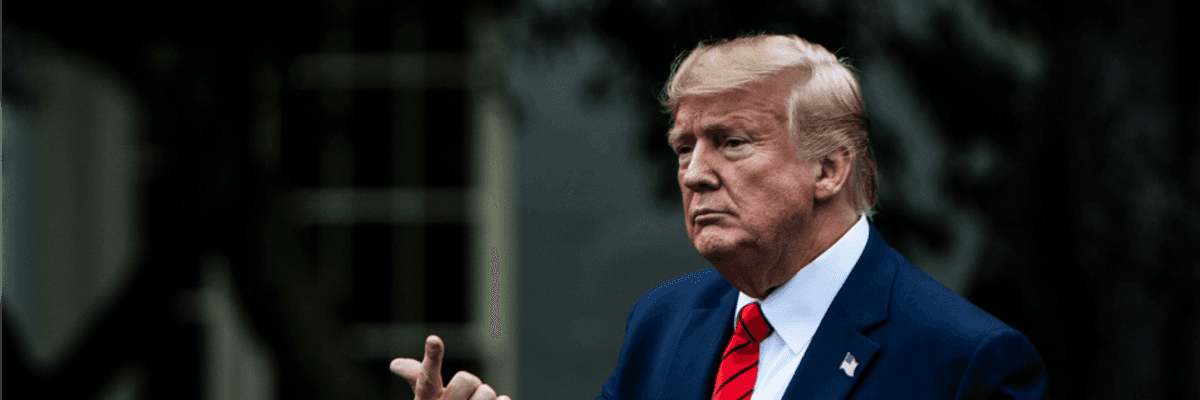
"For President Donald Trump to withdraw support of the WHO at a critical time in the world's history, when a pandemic of enormous proportions is threatening the survival of millions of people, is unethical." (Photo: Jabin Botsford/The Washington Post via Getty Images)
As an international public health consultant, I have carried out several public health missions for the Pan American Health Organization (PAHO), the regional office of the World Health Organization (WHO) in Latin America and the Caribbean. I am aware of WHO's shortcomings, but also of its contribution to world health. President Donald Trump's remarks and actions regarding WHO are counterproductive, and a barrier to people's health, particularly during the coronavirus pandemic.
The WHO is far from a perfect organization... But, like any other organization of its kind, it is as good as its members states want it to be.
Physicians for Human Rights (PHR), a leading human rights organization, recently called on President Trump to stop his attacks on WHO saying, "PHR and our partners are calling on members of Congress to exercise their power to prevent the president from withdrawing U.S. membership and cutting funding for the WHO, which plays a critical role in providing global assistance, coordination, and preparedness to health systems and plays a significant role in vaccine development."
Having conducted health missions in more than 50 countries, I found the U.S. lacking in knowledge of the work of WHO. This is perhaps a reflection of one of WHO's shortcomings: lack of transparency in how the agency provides assistance to people in developing countries.
The WHO is a specialized agency of the United Nations whose main objective is "the attainment by all peoples of the highest possible level of health." It was established by constitution on April 7, 1948, which is commemorated as World Health Day, and has been in operation since then. It is headquartered in Geneva, Switzerland, and has 150 field offices worldwide.
The agency's broad mandate includes advocating for universal healthcare, coordinating responses to health emergencies, monitoring risks to public health, assisting countries on technical issues, setting international health standards and guidelines, making assessments on global health topics, and developing health statistics. It also serves as a forum for health summits on topical health issues.
The work of WHO, partnered with other organizations such as UNICEF, the U.S. Centers for Disease Control and Prevention (CDC), and other organizations has led to significant achievements such as the eradication of smallpox--whose last recorded case was in Somalia in 1977--the development of an Ebola vaccine, and a sustained work on the HIV/AIDS pandemic.
Throughout the world, and often in collaboration with UNICEF, WHO has carried out massive vaccination campaigns against common diseases. Thanks to a Global Vaccination Drive, polio is now on the verge of extinction. In the Americas, the PAHO has contributed to creating Days of Tranquility that allowed the vaccination of hundreds of thousands of children during periods of war that ravaged the Central American countries.
In the 1980s, the PAHO coined the term "Health as a Bridge for Peace," based on the integration of peace-building strategies into health sector development in countries under conflict. As a program, it was later adopted by countries like Mozambique, Croatia, Bosnia, Sri Lanka, and Angola.
During the 1970s and the 1980s, WHO had a critical role in making mental health an issue of concern for people and governments, which led to a better understanding and treatment of those illnesses. In 2001, when Gro Harlem Brundtland--three times prime minister of Norway--was WHO director-general, WHO published the book Mental Health: A Call for Action by World Health Ministers, which set the agenda for dealing more effectively with mental health issues.
At the end of the 1990s, despite enormous commercial pressures, WHO took on the tobacco industry. This led to a groundbreaking WHO Framework Convention on Tobacco Control which was adopted on 2003. Millions of lives were saved thanks to WHO for putting this issue as a prime health concern in the international agenda.
In 1998, on the fiftieth anniversary of WHO's founding, its Director-General highlighted gains in child survival, reduced infant mortality, increased life expectancy and reduced rates of diseases such as smallpox and polio that had affected the life and survival of millions of children worldwide.
These are only some of this organization's accomplishments, and don't include all the partnerships that it has developed over the years. The WHO is far from a perfect organization. It has a grinding bureaucracy and a deference to political leaders even in times of crisis. But, like any other organization of its kind, it is as good as its members states want it to be.
For President Donald Trump to withdraw support of the WHO at a critical time in the world's history, when a pandemic of enormous proportions is threatening the survival of millions of people, is unethical. As Physicians for Human Rights has stated, "President Trump is putting lives at risk in what may be an attempt to deflect attention from his own administration's failures in handling the Covid-19 pandemic."

Dear Common Dreams reader, It’s been nearly 30 years since I co-founded Common Dreams with my late wife, Lina Newhouser. We had the radical notion that journalism should serve the public good, not corporate profits. It was clear to us from the outset what it would take to build such a project. No paid advertisements. No corporate sponsors. No millionaire publisher telling us what to think or do. Many people said we wouldn't last a year, but we proved those doubters wrong. Together with a tremendous team of journalists and dedicated staff, we built an independent media outlet free from the constraints of profits and corporate control. Our mission has always been simple: To inform. To inspire. To ignite change for the common good. Building Common Dreams was not easy. Our survival was never guaranteed. When you take on the most powerful forces—Wall Street greed, fossil fuel industry destruction, Big Tech lobbyists, and uber-rich oligarchs who have spent billions upon billions rigging the economy and democracy in their favor—the only bulwark you have is supporters who believe in your work. But here’s the urgent message from me today. It's never been this bad out there. And it's never been this hard to keep us going. At the very moment Common Dreams is most needed, the threats we face are intensifying. We need your support now more than ever. We don't accept corporate advertising and never will. We don't have a paywall because we don't think people should be blocked from critical news based on their ability to pay. Everything we do is funded by the donations of readers like you. When everyone does the little they can afford, we are strong. But if that support retreats or dries up, so do we. Will you donate now to make sure Common Dreams not only survives but thrives? —Craig Brown, Co-founder |
As an international public health consultant, I have carried out several public health missions for the Pan American Health Organization (PAHO), the regional office of the World Health Organization (WHO) in Latin America and the Caribbean. I am aware of WHO's shortcomings, but also of its contribution to world health. President Donald Trump's remarks and actions regarding WHO are counterproductive, and a barrier to people's health, particularly during the coronavirus pandemic.
The WHO is far from a perfect organization... But, like any other organization of its kind, it is as good as its members states want it to be.
Physicians for Human Rights (PHR), a leading human rights organization, recently called on President Trump to stop his attacks on WHO saying, "PHR and our partners are calling on members of Congress to exercise their power to prevent the president from withdrawing U.S. membership and cutting funding for the WHO, which plays a critical role in providing global assistance, coordination, and preparedness to health systems and plays a significant role in vaccine development."
Having conducted health missions in more than 50 countries, I found the U.S. lacking in knowledge of the work of WHO. This is perhaps a reflection of one of WHO's shortcomings: lack of transparency in how the agency provides assistance to people in developing countries.
The WHO is a specialized agency of the United Nations whose main objective is "the attainment by all peoples of the highest possible level of health." It was established by constitution on April 7, 1948, which is commemorated as World Health Day, and has been in operation since then. It is headquartered in Geneva, Switzerland, and has 150 field offices worldwide.
The agency's broad mandate includes advocating for universal healthcare, coordinating responses to health emergencies, monitoring risks to public health, assisting countries on technical issues, setting international health standards and guidelines, making assessments on global health topics, and developing health statistics. It also serves as a forum for health summits on topical health issues.
The work of WHO, partnered with other organizations such as UNICEF, the U.S. Centers for Disease Control and Prevention (CDC), and other organizations has led to significant achievements such as the eradication of smallpox--whose last recorded case was in Somalia in 1977--the development of an Ebola vaccine, and a sustained work on the HIV/AIDS pandemic.
Throughout the world, and often in collaboration with UNICEF, WHO has carried out massive vaccination campaigns against common diseases. Thanks to a Global Vaccination Drive, polio is now on the verge of extinction. In the Americas, the PAHO has contributed to creating Days of Tranquility that allowed the vaccination of hundreds of thousands of children during periods of war that ravaged the Central American countries.
In the 1980s, the PAHO coined the term "Health as a Bridge for Peace," based on the integration of peace-building strategies into health sector development in countries under conflict. As a program, it was later adopted by countries like Mozambique, Croatia, Bosnia, Sri Lanka, and Angola.
During the 1970s and the 1980s, WHO had a critical role in making mental health an issue of concern for people and governments, which led to a better understanding and treatment of those illnesses. In 2001, when Gro Harlem Brundtland--three times prime minister of Norway--was WHO director-general, WHO published the book Mental Health: A Call for Action by World Health Ministers, which set the agenda for dealing more effectively with mental health issues.
At the end of the 1990s, despite enormous commercial pressures, WHO took on the tobacco industry. This led to a groundbreaking WHO Framework Convention on Tobacco Control which was adopted on 2003. Millions of lives were saved thanks to WHO for putting this issue as a prime health concern in the international agenda.
In 1998, on the fiftieth anniversary of WHO's founding, its Director-General highlighted gains in child survival, reduced infant mortality, increased life expectancy and reduced rates of diseases such as smallpox and polio that had affected the life and survival of millions of children worldwide.
These are only some of this organization's accomplishments, and don't include all the partnerships that it has developed over the years. The WHO is far from a perfect organization. It has a grinding bureaucracy and a deference to political leaders even in times of crisis. But, like any other organization of its kind, it is as good as its members states want it to be.
For President Donald Trump to withdraw support of the WHO at a critical time in the world's history, when a pandemic of enormous proportions is threatening the survival of millions of people, is unethical. As Physicians for Human Rights has stated, "President Trump is putting lives at risk in what may be an attempt to deflect attention from his own administration's failures in handling the Covid-19 pandemic."
As an international public health consultant, I have carried out several public health missions for the Pan American Health Organization (PAHO), the regional office of the World Health Organization (WHO) in Latin America and the Caribbean. I am aware of WHO's shortcomings, but also of its contribution to world health. President Donald Trump's remarks and actions regarding WHO are counterproductive, and a barrier to people's health, particularly during the coronavirus pandemic.
The WHO is far from a perfect organization... But, like any other organization of its kind, it is as good as its members states want it to be.
Physicians for Human Rights (PHR), a leading human rights organization, recently called on President Trump to stop his attacks on WHO saying, "PHR and our partners are calling on members of Congress to exercise their power to prevent the president from withdrawing U.S. membership and cutting funding for the WHO, which plays a critical role in providing global assistance, coordination, and preparedness to health systems and plays a significant role in vaccine development."
Having conducted health missions in more than 50 countries, I found the U.S. lacking in knowledge of the work of WHO. This is perhaps a reflection of one of WHO's shortcomings: lack of transparency in how the agency provides assistance to people in developing countries.
The WHO is a specialized agency of the United Nations whose main objective is "the attainment by all peoples of the highest possible level of health." It was established by constitution on April 7, 1948, which is commemorated as World Health Day, and has been in operation since then. It is headquartered in Geneva, Switzerland, and has 150 field offices worldwide.
The agency's broad mandate includes advocating for universal healthcare, coordinating responses to health emergencies, monitoring risks to public health, assisting countries on technical issues, setting international health standards and guidelines, making assessments on global health topics, and developing health statistics. It also serves as a forum for health summits on topical health issues.
The work of WHO, partnered with other organizations such as UNICEF, the U.S. Centers for Disease Control and Prevention (CDC), and other organizations has led to significant achievements such as the eradication of smallpox--whose last recorded case was in Somalia in 1977--the development of an Ebola vaccine, and a sustained work on the HIV/AIDS pandemic.
Throughout the world, and often in collaboration with UNICEF, WHO has carried out massive vaccination campaigns against common diseases. Thanks to a Global Vaccination Drive, polio is now on the verge of extinction. In the Americas, the PAHO has contributed to creating Days of Tranquility that allowed the vaccination of hundreds of thousands of children during periods of war that ravaged the Central American countries.
In the 1980s, the PAHO coined the term "Health as a Bridge for Peace," based on the integration of peace-building strategies into health sector development in countries under conflict. As a program, it was later adopted by countries like Mozambique, Croatia, Bosnia, Sri Lanka, and Angola.
During the 1970s and the 1980s, WHO had a critical role in making mental health an issue of concern for people and governments, which led to a better understanding and treatment of those illnesses. In 2001, when Gro Harlem Brundtland--three times prime minister of Norway--was WHO director-general, WHO published the book Mental Health: A Call for Action by World Health Ministers, which set the agenda for dealing more effectively with mental health issues.
At the end of the 1990s, despite enormous commercial pressures, WHO took on the tobacco industry. This led to a groundbreaking WHO Framework Convention on Tobacco Control which was adopted on 2003. Millions of lives were saved thanks to WHO for putting this issue as a prime health concern in the international agenda.
In 1998, on the fiftieth anniversary of WHO's founding, its Director-General highlighted gains in child survival, reduced infant mortality, increased life expectancy and reduced rates of diseases such as smallpox and polio that had affected the life and survival of millions of children worldwide.
These are only some of this organization's accomplishments, and don't include all the partnerships that it has developed over the years. The WHO is far from a perfect organization. It has a grinding bureaucracy and a deference to political leaders even in times of crisis. But, like any other organization of its kind, it is as good as its members states want it to be.
For President Donald Trump to withdraw support of the WHO at a critical time in the world's history, when a pandemic of enormous proportions is threatening the survival of millions of people, is unethical. As Physicians for Human Rights has stated, "President Trump is putting lives at risk in what may be an attempt to deflect attention from his own administration's failures in handling the Covid-19 pandemic."