SUBSCRIBE TO OUR FREE NEWSLETTER
Daily news & progressive opinion—funded by the people, not the corporations—delivered straight to your inbox.
5
#000000
#FFFFFF
To donate by check, phone, or other method, see our More Ways to Give page.
Three targeted Americans: A career government intelligence official, a filmmaker and a hacker. None of these U.S. citizens was charged with a crime, but they have been tracked, surveilled, detained--sometimes at gunpoint--and interrogated, with no access to a lawyer. Each remains resolute in standing up to the increasing government crackdown on dissent.
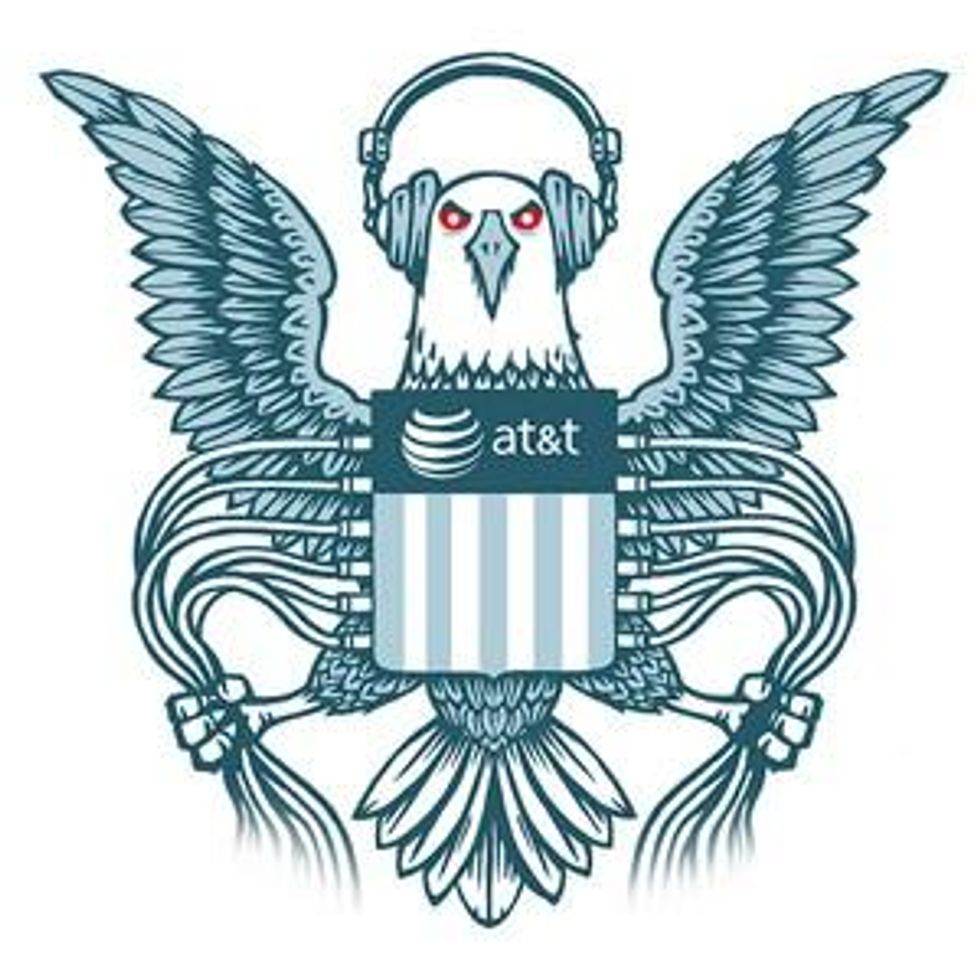
The intelligence official: William Binney worked for almost 40 years at the secretive National Security Agency (NSA), the U.S. spy agency that dwarfs the CIA. As technical director of the NSA's World Geopolitical and Military Analysis Reporting Group, Binney told me, he was tasked to "see how we could solve collection, analysis and reporting on military and geopolitical issues all around the world, every country in the world." Throughout the 1990s, the NSA developed a massive eavesdropping system code-named ThinThread, which, Binney says, maintained crucial protections on the privacy of U.S. citizens demanded by the U.S. Constitution. He recalled, "After 9/11, all the wraps came off for NSA," as massive domestic spying became the norm. He resigned on Oct. 31, 2001.
Along with several other NSA officials, Binney reported his concerns to Congress and to the Department of Defense. Then, in 2007, as then-Attorney General Alberto Gonzales was being questioned on Capitol Hill about the very domestic spying to which Binney objected, a dozen FBI agents charged into his house, guns drawn. They forced aside his son and found Binney, a diabetic amputee, in the shower. They pointed their guns at his head, then led him to his back porch and interrogated him.
Three others were raided that morning. Binney called the FBI raid "retribution and intimidation so we didn't go to the Judiciary Committee in the Senate and tell them, 'Well, here's what Gonzales didn't tell you, OK.' " Binney was never charged with any crime.
The filmmaker: Laura Poitras is an Academy Award-nominated documentary filmmaker, whose recent films include "My Country, My Country," about the U.S. occupation of Iraq, and "The Oath," which was filmed in Yemen. Since 2006, Poitras has been detained and questioned at airports at least 40 times. She has had her computer and reporter's notebooks confiscated and presumably copied, without a warrant. The most recent time, April 5, she took notes during her detention. The agents told her to stop, as they considered her pen a weapon.
She told me: "I feel like I can't talk about the work that I do in my home, in my place of work, on my telephone, and sometimes in my country. So the chilling effect is huge. It's enormous."
The hacker: Jacob Appelbaum works as a computer security researcher for the nonprofit organization the Tor Project (torproject.org), which is a free software package that allows people to browse the Internet anonymously, evading government surveillance. Tor was actually created by the U.S. Navy, and is now developed and maintained by Appelbaum and his colleagues. Tor is used by dissidents around the world to communicate over the Internet. Tor also serves as the main way that the controversial WikiLeaks website protects those who release documents to it. Appelbaum has volunteered for WikiLeaks, leading to intense U.S. government surveillance.
Appelbaum spoke in place of Julian Assange, the WikiLeaks founder, at a conference called Hackers on Planet Earth, or HOPE, as people feared Assange would be arrested. He started his talk by saying: "Hello to all my friends and fans in domestic and international surveillance. I'm here today because I believe that we can make a better world." He has been detained at least a dozen times at airports: "I was put into a special room, where they frisked me, put me up against the wall. ... Another one held my wrists. ... They implied that if I didn't make a deal with them, that I'd be sexually assaulted in prison. ... They took my cellphones, they took my laptop. They wanted, essentially, to ask me questions about the Iraq War, the Afghan War, what I thought politically."
I asked Binney if he believed the NSA has copies of every email sent in the U.S. He replied, "I believe they have most of them, yes."
Binney said two senators, Ron Wyden and Mark Udall, have expressed concern, but have not spoken out, as, Binney says, they would lose their seats on the Senate Select Committee on Intelligence. Meanwhile, Congress is set to vote on the Cyber Intelligence Sharing and Protection Act, or CISPA. Proponents of Internet freedom are fighting the bill, which they say will legalize what the NSA is secretly doing already.
Members of Congress, fond of quoting the country's founders, should recall these words of Benjamin Franklin before voting on CISPA: "They who can give up essential liberty to obtain a little temporary safety, deserve neither liberty nor safety."
Denis Moynihan contributed research to this column.
Three targeted Americans: A career government intelligence official, a filmmaker and a hacker. None of these U.S. citizens was charged with a crime, but they have been tracked, surveilled, detained--sometimes at gunpoint--and interrogated, with no access to a lawyer. Each remains resolute in standing up to the increasing government crackdown on dissent.
The intelligence official: William Binney worked for almost 40 years at the secretive National Security Agency (NSA), the U.S. spy agency that dwarfs the CIA. As technical director of the NSA's World Geopolitical and Military Analysis Reporting Group, Binney told me, he was tasked to "see how we could solve collection, analysis and reporting on military and geopolitical issues all around the world, every country in the world." Throughout the 1990s, the NSA developed a massive eavesdropping system code-named ThinThread, which, Binney says, maintained crucial protections on the privacy of U.S. citizens demanded by the U.S. Constitution. He recalled, "After 9/11, all the wraps came off for NSA," as massive domestic spying became the norm. He resigned on Oct. 31, 2001.
Along with several other NSA officials, Binney reported his concerns to Congress and to the Department of Defense. Then, in 2007, as then-Attorney General Alberto Gonzales was being questioned on Capitol Hill about the very domestic spying to which Binney objected, a dozen FBI agents charged into his house, guns drawn. They forced aside his son and found Binney, a diabetic amputee, in the shower. They pointed their guns at his head, then led him to his back porch and interrogated him.
Three others were raided that morning. Binney called the FBI raid "retribution and intimidation so we didn't go to the Judiciary Committee in the Senate and tell them, 'Well, here's what Gonzales didn't tell you, OK.' " Binney was never charged with any crime.
The filmmaker: Laura Poitras is an Academy Award-nominated documentary filmmaker, whose recent films include "My Country, My Country," about the U.S. occupation of Iraq, and "The Oath," which was filmed in Yemen. Since 2006, Poitras has been detained and questioned at airports at least 40 times. She has had her computer and reporter's notebooks confiscated and presumably copied, without a warrant. The most recent time, April 5, she took notes during her detention. The agents told her to stop, as they considered her pen a weapon.
She told me: "I feel like I can't talk about the work that I do in my home, in my place of work, on my telephone, and sometimes in my country. So the chilling effect is huge. It's enormous."
The hacker: Jacob Appelbaum works as a computer security researcher for the nonprofit organization the Tor Project (torproject.org), which is a free software package that allows people to browse the Internet anonymously, evading government surveillance. Tor was actually created by the U.S. Navy, and is now developed and maintained by Appelbaum and his colleagues. Tor is used by dissidents around the world to communicate over the Internet. Tor also serves as the main way that the controversial WikiLeaks website protects those who release documents to it. Appelbaum has volunteered for WikiLeaks, leading to intense U.S. government surveillance.
Appelbaum spoke in place of Julian Assange, the WikiLeaks founder, at a conference called Hackers on Planet Earth, or HOPE, as people feared Assange would be arrested. He started his talk by saying: "Hello to all my friends and fans in domestic and international surveillance. I'm here today because I believe that we can make a better world." He has been detained at least a dozen times at airports: "I was put into a special room, where they frisked me, put me up against the wall. ... Another one held my wrists. ... They implied that if I didn't make a deal with them, that I'd be sexually assaulted in prison. ... They took my cellphones, they took my laptop. They wanted, essentially, to ask me questions about the Iraq War, the Afghan War, what I thought politically."
I asked Binney if he believed the NSA has copies of every email sent in the U.S. He replied, "I believe they have most of them, yes."
Binney said two senators, Ron Wyden and Mark Udall, have expressed concern, but have not spoken out, as, Binney says, they would lose their seats on the Senate Select Committee on Intelligence. Meanwhile, Congress is set to vote on the Cyber Intelligence Sharing and Protection Act, or CISPA. Proponents of Internet freedom are fighting the bill, which they say will legalize what the NSA is secretly doing already.
Members of Congress, fond of quoting the country's founders, should recall these words of Benjamin Franklin before voting on CISPA: "They who can give up essential liberty to obtain a little temporary safety, deserve neither liberty nor safety."
Denis Moynihan contributed research to this column.
Three targeted Americans: A career government intelligence official, a filmmaker and a hacker. None of these U.S. citizens was charged with a crime, but they have been tracked, surveilled, detained--sometimes at gunpoint--and interrogated, with no access to a lawyer. Each remains resolute in standing up to the increasing government crackdown on dissent.
The intelligence official: William Binney worked for almost 40 years at the secretive National Security Agency (NSA), the U.S. spy agency that dwarfs the CIA. As technical director of the NSA's World Geopolitical and Military Analysis Reporting Group, Binney told me, he was tasked to "see how we could solve collection, analysis and reporting on military and geopolitical issues all around the world, every country in the world." Throughout the 1990s, the NSA developed a massive eavesdropping system code-named ThinThread, which, Binney says, maintained crucial protections on the privacy of U.S. citizens demanded by the U.S. Constitution. He recalled, "After 9/11, all the wraps came off for NSA," as massive domestic spying became the norm. He resigned on Oct. 31, 2001.
Along with several other NSA officials, Binney reported his concerns to Congress and to the Department of Defense. Then, in 2007, as then-Attorney General Alberto Gonzales was being questioned on Capitol Hill about the very domestic spying to which Binney objected, a dozen FBI agents charged into his house, guns drawn. They forced aside his son and found Binney, a diabetic amputee, in the shower. They pointed their guns at his head, then led him to his back porch and interrogated him.
Three others were raided that morning. Binney called the FBI raid "retribution and intimidation so we didn't go to the Judiciary Committee in the Senate and tell them, 'Well, here's what Gonzales didn't tell you, OK.' " Binney was never charged with any crime.
The filmmaker: Laura Poitras is an Academy Award-nominated documentary filmmaker, whose recent films include "My Country, My Country," about the U.S. occupation of Iraq, and "The Oath," which was filmed in Yemen. Since 2006, Poitras has been detained and questioned at airports at least 40 times. She has had her computer and reporter's notebooks confiscated and presumably copied, without a warrant. The most recent time, April 5, she took notes during her detention. The agents told her to stop, as they considered her pen a weapon.
She told me: "I feel like I can't talk about the work that I do in my home, in my place of work, on my telephone, and sometimes in my country. So the chilling effect is huge. It's enormous."
The hacker: Jacob Appelbaum works as a computer security researcher for the nonprofit organization the Tor Project (torproject.org), which is a free software package that allows people to browse the Internet anonymously, evading government surveillance. Tor was actually created by the U.S. Navy, and is now developed and maintained by Appelbaum and his colleagues. Tor is used by dissidents around the world to communicate over the Internet. Tor also serves as the main way that the controversial WikiLeaks website protects those who release documents to it. Appelbaum has volunteered for WikiLeaks, leading to intense U.S. government surveillance.
Appelbaum spoke in place of Julian Assange, the WikiLeaks founder, at a conference called Hackers on Planet Earth, or HOPE, as people feared Assange would be arrested. He started his talk by saying: "Hello to all my friends and fans in domestic and international surveillance. I'm here today because I believe that we can make a better world." He has been detained at least a dozen times at airports: "I was put into a special room, where they frisked me, put me up against the wall. ... Another one held my wrists. ... They implied that if I didn't make a deal with them, that I'd be sexually assaulted in prison. ... They took my cellphones, they took my laptop. They wanted, essentially, to ask me questions about the Iraq War, the Afghan War, what I thought politically."
I asked Binney if he believed the NSA has copies of every email sent in the U.S. He replied, "I believe they have most of them, yes."
Binney said two senators, Ron Wyden and Mark Udall, have expressed concern, but have not spoken out, as, Binney says, they would lose their seats on the Senate Select Committee on Intelligence. Meanwhile, Congress is set to vote on the Cyber Intelligence Sharing and Protection Act, or CISPA. Proponents of Internet freedom are fighting the bill, which they say will legalize what the NSA is secretly doing already.
Members of Congress, fond of quoting the country's founders, should recall these words of Benjamin Franklin before voting on CISPA: "They who can give up essential liberty to obtain a little temporary safety, deserve neither liberty nor safety."
Denis Moynihan contributed research to this column.