

SUBSCRIBE TO OUR FREE NEWSLETTER
Daily news & progressive opinion—funded by the people, not the corporations—delivered straight to your inbox.
5
#000000
#FFFFFF
To donate by check, phone, or other method, see our More Ways to Give page.
Daily news & progressive opinion—funded by the people, not the corporations—delivered straight to your inbox.
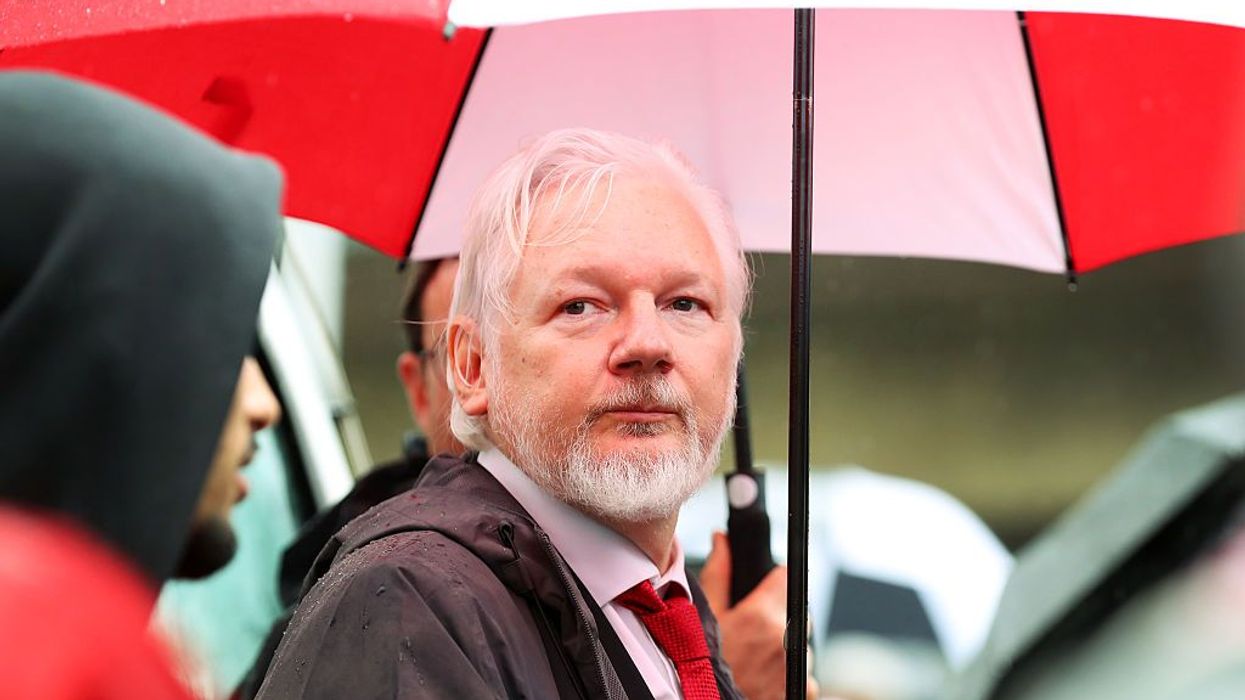
"Alfred Nobel's endowment for peace cannot be spent on the promotion of war."
WikiLeaks founder Julian Assange on Wednesday filed a complaint against the Nobel Foundation to stop its planned payouts to Venezuelan opposition leader and 2025 Nobel Peace Prize winner María Corina Machado, who has backed US President Donald Trump's campaign of military aggression against her own country.
According to a press release that WikiLeaks posted to X, Assange's lawsuit seeks to block Machado from obtaining over USD $1 million she's due to receive from the Nobel Foundation as winner of this year's Peace Prize.
The complaint notes that Alfred Nobel's will states that the Peace Prize named after him should only be awarded to those who have "conferred the greatest benefit to humankind” by doing “the most or the best work for fraternity between nations, for the abolition or reduction of standing armies, and for the holding and promotion of peace congresses."
In an interview that aired on Sunday on CBS News’ “Face the Nation,” Machado praised Trump’s policies of tightening economic sanctions and seizing Venezuelan oil tankers, acts of aggression that appear to go against Nobel's stated declaration that the Peace Prize winner must promote "fraternity between nations."
“Look, I absolutely support President Trump’s strategy, and we, the Venezuelan people, are very grateful to him and to his administration, because I believe he is a champion of freedom in this hemisphere,” Machado told CBS News.
Trump’s campaign against Venezuela has not only included sanctions and the seizing of an oil tanker, but a series of bombings of purported drug trafficking vessels that many legal experts consider to be acts of murder.
In his complaint, Assange claims that Machado's gushing praise of Trump in the wake of his illegal boat-bombing campaign is enough to justify the Nobel Foundation freezing its disbursements to the Venezuelan politician.
"Alfred Nobel's endowment for peace cannot be spent on the promotion of war," Assange states, adding that "Machado has continued to incite the Trump Administration to pursue its escalatory path" against her own country.
The complaint also argues that there's a risk that funds awarded to Machado will be "diverted from their charitable purpose to facilitate aggression, crimes against humanity, and war crimes."
Were this to happen, the complaint alleges, it would violate Sweden's obligations under Article 25(3)(c) of the Rome Statute, which states that anyone who "aids, abets, or otherwise assists" in the commission of a war crime shall be subject to prosecution under the International Criminal Court.
Trump in recent days has ramped up his aggressive actions against Venezuela, and on Tuesday night he announced a "total and complete blockade" of all "sanctioned oil tankers" seeking to enter and leave the country.
“Venezuela is completely surrounded by the largest Armada ever assembled in the History of South America,” Trump wrote in a Truth Social post. “It will only get bigger, and the shock to them will be like nothing they have ever seen before.”

"I am not free today because the system worked," said Assange. "I am free today because after years of incarceration I pleaded guilty to journalism."
In his first public statement since being released from prison in June, WikiLeaks founder Julian Assange on Tuesday urged European lawmakers to take action to protect journalists from being prosecuted for their reporting work, warning that his yearslong case is directly tied to self-censorship and the chilling of press freedom.
Assange spoke to the Committee on Legal Affairs and Human Rights (PACE) at the Council of Europe, which includes members from across the continent, in Strasbourg, France, and warned that current legal protections for journalists and whistleblowers "were not effective in any remotely reasonable time," as evidenced by the 14 years he spent in prison or otherwise in confinement for his work.
"I want to be totally clear," said Assange. "I am not free today because the system worked. I am free today because after years of incarceration I pleaded guilty to journalism. I pleaded guilty to seeking information from a source."
Watch Assange's testimony below:
Assange was released from Belmarsh Prison in London in June after being incarcerated there for five years. His release was secured when he agreed to plead guilty to one felony count of illegally obtaining and disclosing national security materials in a deal with the U.S. government.
He had spent years fighting U.S. efforts to extradite him, threatening him with a sentence of up to 170 years in a federal prison, as punishment for state secrets WikiLeaks published.
The media organization reported on a series of leaks provided by former U.S. Army soldier Chelsea Manning regarding the Army's killing of unarmed civilians in Iraq, as well as publishing diplomatic cables.
"I was formally convicted by a foreign power for asking for receiving and publishing truthful information about that power, while I was in Europe," said Assange, who is Australian, on Tuesday. "The fundamental issue is simple: Journalists should not be prosecuted for doing their jobs."
Assange told PACE members that he had believed that Article 10 of European Convention of Human Rights, which protects the right to freedom of expression and freedom of the media, would protect him from prosecution.
"Similarly, looking at the U.S. First Amendment to its Constitution... No publisher had ever been prosecuted for publishing classified information from the United States," said Assange. "I expected some kind of harassment legal process. I was pre-prepared to fight for that."
He continued:
My naiveté was in believing in the law. When push comes to shove, laws are just pieces of paper and they can be reinterpreted for political expediency.
They are the rules made by the ruling class more broadly. And if those rules don't suit what it wants to do, it reinterprets them or hopefully changes them... In the case of the United States, we angered one of the constituent powers of the United States. The intelligence sector... It was powerful enough to push for a reinterpretation of the U.S. Constitution.
He said he ultimately "chose freedom over unrealizable justice," as the U.S. was intent on imprisoning him for the rest of his life unless he entered the guilty plea.
Assange added that his case set a "dangerous precedent," and that since his arrest he has observed "more impunity, more secrecy, more retaliation for telling the truth, and more self-censorship."
"It is hard not to draw a line from the U.S. government crossing the Rubicon by internationally criminalizing journalism to the chilled climate for freedom of expression now," said Assange.
His comments echoed the findings of Reporters Without Borders (RSF), which published its annual press freedom index in May. The group found that "in the Americas, the inability of journalists to cover subjects related to organized crime, corruption, or the environment for fear of reprisals poses a major problem."
The U.S. fell 10 places in the annual ranking, with citing "open antagonism from political officials" such as Republican presidential candidate Donald Trump, "including calls to jail journalists." RSF also cited the government's pursuit of Assange's extradition.
In Europe, said Assange on Tuesday, "the criminalization of news-gathering activities is a threat to investigative journalism everywhere."
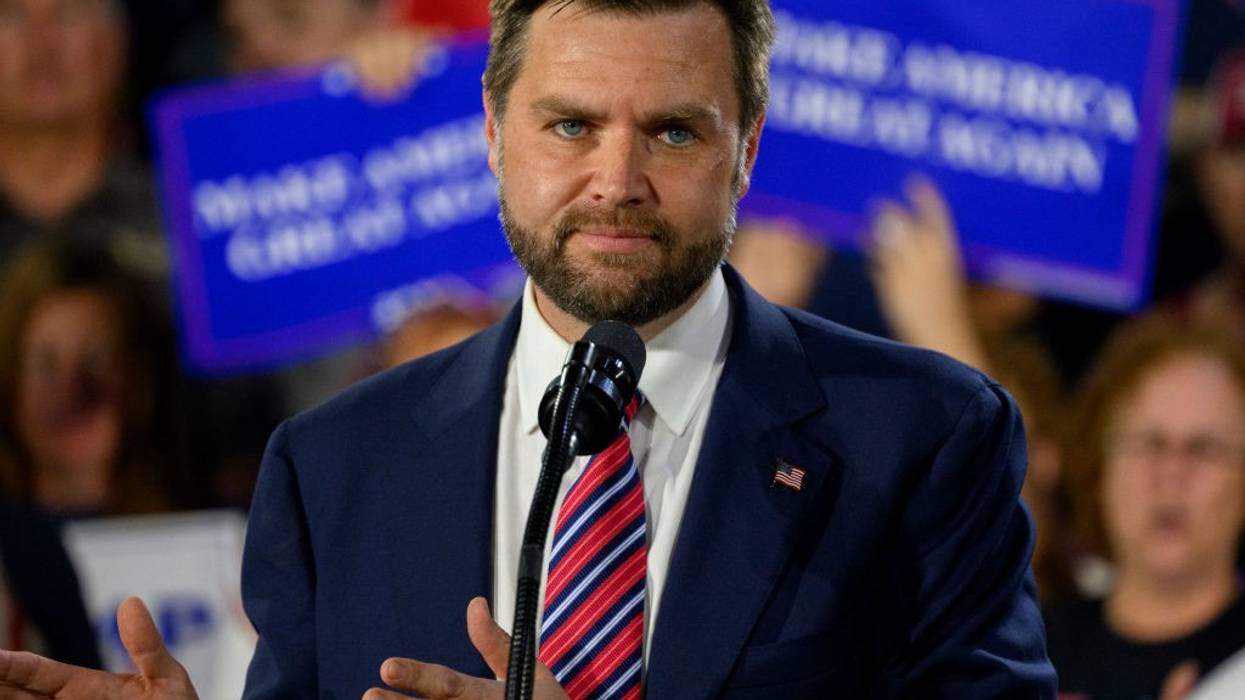
Musk’s Twitter is keeping certain information out of the public view—information that just happens to damage the presidential ticket he supports.
Ken Klippenstein, an independent reporter operating on Substack and an investigative alum of the Intercept, announced (Substack, 9/26/24) that he had been kicked off Twitter (now rebranded as X). His crime, he explained, stemmed from posting the 271-page official dossier of Republican vice presidential candidate’s J.D. Vance’s campaign vulnerabilities; the US government alleges that the information was leaked through Iranian hacking. In other words, the dossier is a part of the “foreign meddling campaign” of “enemy states.”
Klippenstein is not the first reporter to gain access to these papers (Popular Information, 9/9/24), but most of the reporting about this dossier has been on the intrigue revolving around Iranian hacking rather than the content itself (Daily Beast, 8/10/24; Politico, 8/10/24; Forbes, 8/11/24). Klippenstein decided it was time for the whole enchilada to see the light of day:
As far as I can tell, it hasn’t been altered, but even if it was, its contents are publicly verifiable. I’ll let it speak for itself.
“The terror regime in Iran loves the weakness and stupidity of Kamala Harris, and is terrified of the strength and resolve of President Donald J. Trump,” Steven Cheung, communications director for the Trump campaign, responded when I asked him about the hack.
If the document had been hacked by some “anonymous”-like hacker group, the news media would be all over it. I’m just not a believer of the news media as an arm of the government, doing its work combating foreign influence. Nor should it be a gatekeeper of what the public should know.
The US Office of the Director of National Intelligence said in a statement that alleged Iranian hacking (9/18/24) was “malicious cyber activity” and “the latest example of Iran’s multi-pronged approach…to stoke discord and undermine confidence in our electoral process.”
The Vance report isn’t as salacious as Vance’s false and bizarre comments about Haitians eating pets (NPR, 9/15/24), but it does show that he has taken positions that have fractured the right, such as aid for Ukraine; the report calls him one of the “chief obstructionists” to providing assistance to the country against Russia. It dedicates several pages to Vance’s history of criticizing Trump and the MAGA movement, suggesting that his place on the ticket could divide Trump’s voting base.
On the other hand, it outlines many of his extreme right-wing stances that could alienate him with putative moderates. It says Vance “appears to have once called for slashing Social Security and Medicare,” and “is opposed to providing childcare assistance to low-income Americans.” He “supports placing restrictions on abortion access,” and states that “he does not support abortion exceptions in the case of rape.”
And for any voter who values 7-day-a-week service, Vance “appears to support laws requiring businesses to close on Sundays.” It quotes him saying: “Close the Damn Businesses on Sunday. Commercial Freedom Will Suffer. Moral Behavior Will Not, and Our Society Will Be Much the Better for It.” That might not go over well with small business owners, and any worker who depends on their Sunday shifts.
Are the findings in the Vance dossier the story of the century? Probably not, but it’s not nothing that the Trump campaign is aware its vice presidential candidate is loaded with liabilities. There are at least a few people who find that useful information.
And the Washington Post (9/27/24) happily reported on private messages Vance sent to an anonymous individual who shared them with the newspaper that explained Vance’s flip-flopping from a Trump critic to a Trump lover. Are the private messages really more newsworthy than the dossier—or is the issue that the messages aren’t tainted by allegedly foreign fingerprints? Had that intercept of material involved an Iranian, would it have seen the light of day?
In fact, the paper (8/13/24) explained that news organizations, including the Post, were reflecting on the foreign nature of the leak when deciding how deep they should report on the content they received:
“This episode probably reflects that news organizations aren’t going to snap at any hack that comes in and is marked as ‘exclusive’ or ‘inside dope’ and publish it for the sake of publishing,” said Matt Murray, executive editor of the Post. Instead, “all of the news organizations in this case took a deep breath and paused, and thought about who was likely to be leaking the documents, what the motives of the hacker might have been, and whether this was truly newsworthy or not.”
There seems to be a disconnect, however, between ill-gotten information that impacts a Republican ticket and information that tarnishes a Democrat.
Think back to 2016. When “WikiLeaks released a trove of emails apparently hacked from Hillary Clinton’s campaign chairman email account, unleashing thousands of messages,” as Politico (10/7/16) reported, the outlet didn’t just merely report on the hack, it reported on the embarrassing substance of the documents. In 2024, by contrast, when Politico was given the Vance dossier, it wrote nothing about its contents, declaring that “questions surrounding the origins of the documents and how they came to our attention were more newsworthy than the material that was in those documents” (CNN, 8/13/24).
The New York Times and Washington Post similarly found the Clinton leaks—which were believed at the time to have been given to WikiLeaks by Russia—far more newsworthy than the Vance dossier. The Times “published at least 199 articles about the stolen DNC and Clinton campaign emails between the first leak in June 2016 and Election Day,” Popular Information (9/9/24) noted.
FAIR editor Jim Naureckas (11/24/09) has written about double standards in media, noting that information that comes to light through unethical or illegal means is played up if that information helps powerful politicians and corporations. Meanwhile, if such information obtained questionably is damaging, the media focus tends to be less on the substance, and more on whether the public should be hearing about such matters.
For example, when a private citizen accidentally overheard a cell phone conversation between House Speaker John Boehner, former Speaker Newt Gingrich and other Republican congressmembers, and made a tape that showed Gingrich violating the terms of a ethics sanction against him, news coverage focused on the illegality of taping the conversation, not on the ethics violation the tape revealed (Washington Post, 1/14/97; New York Times, 1/15/97).
But when climate change deniers hacked climate scientists’ email, that produced a front-page story in the New York Times (11/20/09) scrutinizing the correspondence for any inconsistencies that could be used to bolster the deniers’ arguments.
When Cincinnati Enquirer reporter Michael Gallagher wrote a series of stories about the Chiquita fruit corporation, based in part on listening without authorization to company voicemails, the rest of the media were far more interested in Gallagher’s ethical and legal dilemmas (he was eventually sentenced to five years’ probation) rather than the bribery, fraud and worker abuse his reporting exposed.
There’s a certain degree of comedy in the hypocrisy of Klippenstein’s suspension. Since right-wing billionaire Elon Musk bought Twitter, he has claimed that his administration would end corporate censorship, but instead he’s implemented his own censorship agenda (Guardian, 1/15/24; Al Jazeera, 8/14/24).
The Independent (1/29/23) reported that Musk “oversaw a campaign of suppression that targeted his critics upon his assumption of power at Twitter.” He
personally directed the suspension of a left-leaning activist, Chad Loder, who became known across the platform for his work helping to identify participants in the January 6 attack.
Al Jazeera (2/28/23) noted that “digital rights groups say social media giants,” including X, “have restricted [and] suspended the accounts of Palestinian journalists and activists.” Musk has likewise fulfilled censorship requests by the governments of Turkey (Ars Technica, 5/15/23) and India (Intercept, 1/24/23, 3/28/23) officials, and is generally more open to official requests to suppress speech than Twitter‘s previous owners (El Pais, 5/24/23; Washington Post, 9/25/24).
Meanwhile, Musk’s critics contend, he’s allowed the social network to be a force multiplier for the right. “Elon Musk has increasingly used the social media platform as a megaphone to amplify his political views and, lately, those of right-wing figures he’s aligned with,” AP (8/13/24) reported. (Musk is vocal about his support for former President Donald Trump’s candidacy—New York Times, 7/18/24.)
“Twitter Antisemitism ‘Skyrocketed’ Since Elon Musk Takeover—Jewish Groups,” blasted a Newsweek headline (4/25/23). Earlier this year, Mother Jones (3/13/24) reported that Musk “has been retweeting prominent race scientist adherents…spreading misinformation about racial minorities’ intelligence and physiology to his audience of 176.3 million followers.”
Now Musk’s Twitter is keeping certain information out of the public view—information that just happens to damage the presidential ticket he supports. With Klippenstein having been silenced on the network, anyone claiming X is a bastion of free speech at this point is either mendacious or simply deluded.
Klippenstein (Substack, 9/26/24) explained that “X says that I’ve been suspended for ‘violating our rules against posting private information,’ citing a tweet linking to my story about the JD Vance dossier.” He added, though, that “I never published any private information on X.” Rather, “I linked to an article I wrote here, linking to a document of controversial provenance, one that I didn’t want to alter for that very reason.”
The journalist (Substack, 9/27/24) claims that his account suspension, which he reports to be permanent, is political because he did not violate the network’s code about disclosing personal information, and even if he did, he should have been given the opportunity to correct his post to become unsuspended. “So it’s not about a violation of X’s policies,” he said. “What else would you call this but politically motivated?”
Klippenstein is understandably concerned that he is now without a major social media promotional tool. “I no longer have access to the primary channel by which I disseminate primarily news (and shitposts of course) to the general public,” he said. “This chilling effect on speech is exactly why we published the Vance Dossier in its entirety.”
UPDATE: Klippenstein (Substack, 9/29/24) reports that his publication of the Vance dossier is being censored not only by X, but by Meta (Facebook and Instagram) and Google as well: “The platforms said that the alleged Iranian origin of the dossier — which no one is calling fake or altered — necessitated removing any links to the document.”

My emotional relief at his escape from the clutches of this government far outweighs my feelings about the broader implications of the guilty plea, which has justifiably stirred concern and controversy.
fter twelve years — including five years of solitary confinement at Belmarsh Prison in London — Julian Assange is free. God bless America! He wasn’t extradited to the U.S. to stand trial, where he faced a sentence of 170 years in prison for violating the so-called Espionage Act.
Instead, he took a plea deal with the U.S. government, pleading guilty to one count of violating that act — you know, threatening America’s freedom — for which he had paid by his time already served. He was officially pronounced free at a U.S. federal court in Saipan, capital of the Northern Mariana Islands (a U.S. territory), after which he flew home to his wife and two children in Australia.
My emotional relief at his escape from the clutches of this government far outweighs my feelings about the broader implications of the guilty plea, which has justifiably stirred concern and controversy. The government got its little triumph: a “legal” acknowledgment of its right to keep monstrous secrets about what it does and punish any unauthorized spilling of the beans as “espionage.”
“He’s basically pleading guilty to things that journalists do all the time and need to do,” according to Jameel Jaffer, executive director of the Knight First Amendment Institute at Columbia University, quoted by the New York Times.
And Matt Taibbi said the decision “will remain a sword over the heads of anyone reporting on national security issues. Governments have no right to keep war crimes secret, but Assange’s 62-month stay in prison is starting to look like a template for Western prosecutions of such leaks.”
While such concerns are no doubt worrisome, I don’t think the legal system is a mechanism for seriously addressing them. Assange, the founder of WikiLeaks, was hardly an equal in this hellish controversy. He was in the legal crosshairs of the most powerful country on the planet, which he had had the nerve to defy, by publishing an enormous amount of “classified” — that is to say hidden — data, given to him by government-employed whistleblowers.
This is called journalism, no matter that part of the U.S. case against Assange was that he doesn’t count as a real journalist. Mainstream, corporate journalists know how to behave themselves, I guess. They’re far more likely to “respect” the do-not-cross lines the government establishes.
As I wrote in 2010, at the beginning of the WikiLeaks controversy: “In a time of endless war, when democracy is an orchestrated charade and citizen engagement is less welcome in the corridors of power than it has ever been, when the traditional checks and balances of government are in unchallenged collusion with one another, when the media act not as watchdogs of democracy but guard dogs of the interests and clichés of the status quo, we have WikiLeaks, disrupting the game of national security, ringing its bell, changing the rules.”
As long as “national security” includes the waging of war, honest — a.k.a., real — journalism will be a nuisance to those in charge, because it includes actual reportage, not simply press-releases and public-relations blather. In the real world, war equals murder. War is not an abstract game of strategy and tactics. War itself is a “war crime” — especially when it’s waged not to gain freedom from an oppressor but to maintain control over the oppressed.
WikiLeaks releases were outrageous acts of espionage — from a war-waging government’s point of view — because the data was raw, real and unsanitized. They included 90,000 classified documents on the US war in Afghanistan and nearly 400,000 secret files on the Iraq war, which . . . uh, bled beyond the official propaganda and, among other things, showed that civilian deaths in the two wars were, according to Al-Jazeera, “much higher than the numbers being reported.”
In addition, WikiLeaks released data that, as Al-Jazeera noted, “unearthed how the Geneva Conventions were being violated routinely in the Guantanamo Bay prison in Cuba. The documents, dating from 2002 to 2008 showed the abuse of 800 prisoners, some of them as young as 14.”
And then, of course, there was the infamous “collateral murder” video, which showed a U.S. helicopter firing at people on a street in Baghdad, killing seven of them, including a Reuters journalist, and wounding a number of others, including two children, who were sitting in a van that had pulled up to aid the wounded people in the street. And all this happened as helicopter crew members snickered about the deaths. This was the United States in full view, waging its “war on terror” by unleashing terror at the level only a superpower could commit.
Showing snippets of truth about the war on terror is Julian Assange’s crime: his act of espionage. And I get the government’s point of view. Assange put war itself into the forefront of collective human awareness — as a hideous reality, not a political abstraction. What he did bears striking similarity to what Emmett Till’s mother did. She exposed the raw horror of Southern racism by insisting that her son, a 14-year-old boy who was beaten and drowned by Mississippi racists for allegedly speaking to a white woman, have a public funeral with an open casket, so the whole world could see what had been done to him. This was in 1955. Not long afterward, the Civil Rights Movement was fully underway.
Human evolution isn’t a legal issue, decided by the courts. It involves humanity facing and transcending its own dark side, which can be a messy and chaotic process. This is the nature of truth.
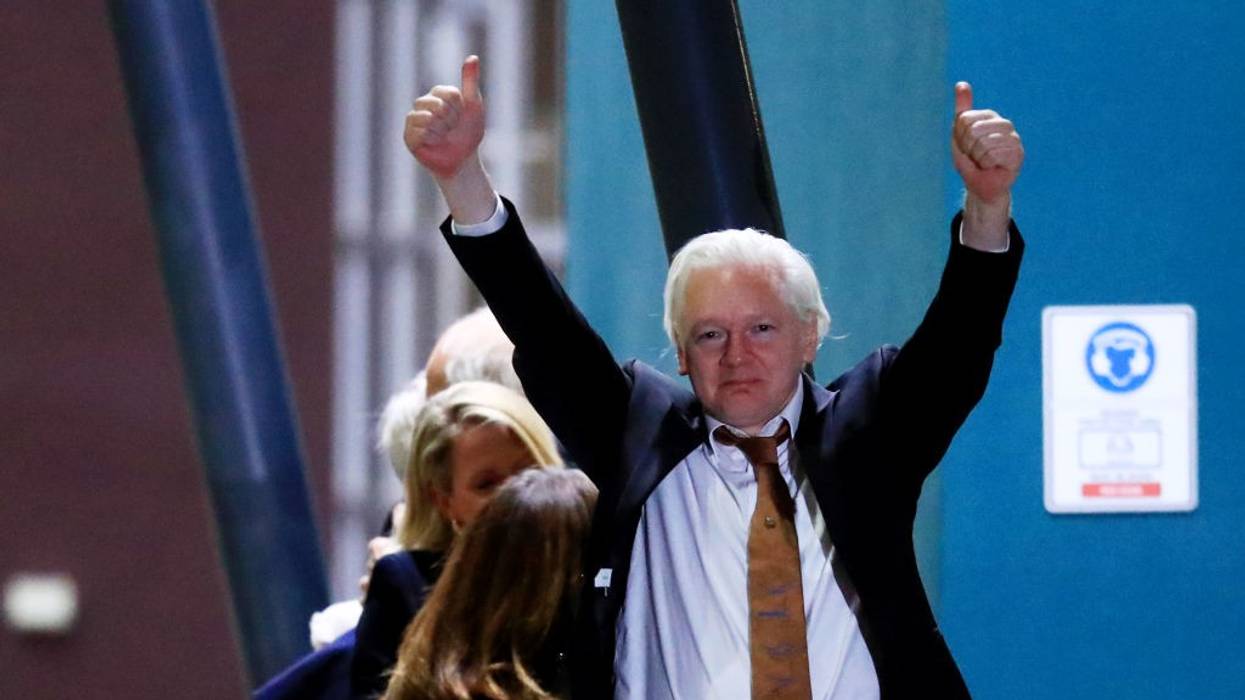
The end of the legal saga for the Wikileaks' founder should not be seen as the end. It should be seen as a warning.
CD editor's note: The original Swedish language version of this op-ed first appeared in Sweden's Dagens Nyheter newspaper and this English translation is provided by the author.
After fifteen years, it appears that the Julian Assange case has reached a conclusion. But, as with almost everything to do with Assange, that conclusion may end up creating more problems than it solves, and raising more questions than it answers.
This was man who, on the back of material leaked by whistleblower Chelsea Manning, and by leveraging the possibilities presented by rapidly-evolving digital technologies, challenged the might of the U.S. military and the authority of the U.S. government. And, he did so through an innovative collaboration between WikiLeaks and major European and U.S. news outlets that for a brief period suggested the possibility of a new model for whistleblowing, data-gathering, and journalism.
The conclusion to the Assange case sends a clear and chilling message to journalists around the world... that you challenge U.S. power at your own peril.
WikiLeaks released the Collateral Murder video, showing a U.S. attack helicopter killing people in Baghdad, including two Reuters journalists. Some of those killed were blown to pieces as they lay injured on the ground. U.S. politicians and commentators, Democrats and Republicans alike, saw Assange and WikiLeaks as the enemy and as people who should, at best, be tried for espionage or treason or, at worst, assassinated. In 2010, none other than Donald Trump said there should be the “death penalty” for what WikiLeaks had done.
Then, the tide turned. In multiple directions. Because, after all, this was Assange.
The allegations of sexual assault made in Sweden in 2010 marked the start of a period where the support Assange and WikiLeaks had developed among some progressives rapidly began to fade. No charges were ever leveled against Assange for sexual assault or rape, but the fallout from the incident was stark. Assange called Sweden “the Saudi Arabia of feminism,” and his followers smeared his accusers as being lying tools of the U.S. government who had set Assange up. The misogyny was obvious and aggressive.
Assange sought asylum in the Ecuadorian embassy in London, and the Ecuadorian embassy years saw WikiLeaks rapidly disintegrate into a farcical side-show, marked by an increasingly close relationship between the Trump administration, a clear opposition to Hillary Clinton, the amplification of right-wing conspiracy theories and potentially dangerous acts such as linking to unredacted emails revealing private information about female voters in Turkey.
Assange, once considered by many to be a symbol of transparency, anti-Americanism and anti-militarism was now seen as doing the bidding of elites on the U.S. political right. He was hailed by right-wing politicians and commentators such as Tucker Carlson. In 2016, Trump, who just six years earlier said Assange and Manning should be put to death, now said, “I love WikiLeaks.”
The WikiLeaks account on Twitter became a steady mix of opinion, hyperbole, half-truths, and disinformation. The lifeblood of organizations that work with whistleblowers is a combination of trust, competence, and solidity. But, just the few short years after the leak of material from Chelsea Manning that shook the U.S. establishment and led to thousands of news articles across the globe, it was impossible to imagine any serious whistleblower deciding to work with WikiLeaks.
So, when Assange faced extradition to the U.S. to stand trial for his role in obtaining and publishing the material from Chelsea Manning, many shrugged their shoulders. The Assange/WikiLeaks image had been permanently tarnished. If he wasn’t guilty of espionage, the reasoning went, then the sexual assault allegations, the suggested support for Trump and the disintegration of WikiLeaks into amplifying right-wing conspiracy theories clearly made him unworthy of sympathy or attention.
And yet.
All of the distaste for Assange the person, and for what WikiLeaks had become in the years after the Manning leaks, overshadowed a fundamental yet powerful truth. The Assange case was, and is, absolutely fundamental to the working of critical investigative journalism in the U.S. and globally. Whatever dislike one may have for Assange or WikiLeaks, the fact remains that his pleading guilty to one felony count of "conspiring to unlawfully obtain and disseminate classified information relating to the national defense of the U.S." might enable Assange to leave prison, but is nevertheless a victory for the United States government and military, and a loss for freedom of information and the critical examination of power.
The conclusion to the Assange case sends a clear and chilling message to journalists around the world—Assange isn’t American, remember—that you challenge U.S. power at your own peril. This, in turn, sends a message to citizens that they are not worthy of knowing what the state does in their name. Which is pretty ironic, given that democracy is supposed to be about the rule of the people.
So, the end of the Assange case has given us one final twist, namely that the end is not the end.
It’s a warning.
"Make no mistake, the vital work of national security journalists will be more difficult today than it was yesterday."
Amid celebrations that a plea deal with the United States resulted in the release of WikiLeaks founder Julian Assange from a British prison, press freedom advocates on Tuesday continued to raise serious concerns about the damage done by the U.S. government's pursuit of a journalist who helped expose state secrets and evidence of war crimes.
"Julian Assange faced a prosecution that had grave implications for journalists and press freedom worldwide," said Jodie Ginsberg, CEO of the Committee to Protect Journalists, following news of the deal.
"While we welcome the end of his detention," Ginsberg added, "the U.S.'s pursuit of Assange has set a harmful legal precedent by opening the way for journalists to be tried under the Espionage Act if they receive classified material from whistleblowers. This should never have been the case."
After spending seven years in the Ecuadorian Embassy in the United Kingdom and then five more in the London's Belmarsh Prison, Assange agreed to plead guilty to one felony to avoid more time behind bars. The 52-year-old Australian was fighting against his extradition to the United States, where he faced 18 charges under the Espionage Act and a federal computer fraud law for publishing classified material and could have been locked up for the rest of his life.
"With today's guilty plea, Julian Assange stands convicted of practicing journalism, and all investigative journalists now face greater legal peril."
"We are hugely relieved that Julian Assange is finally free—a long overdue victory for journalism and press freedom. He never should have spent a single day deprived of his liberty for publishing information in the public interest," said Rebecca Vincent, Reporters Without Borders' director of campaigns, in a statement.
"Nothing can undo the past 13 years, but it is never too late to do the right thing, and we welcome this move by the U.S. government," she added. "We will continue to campaign in support of journalists around the world who find themselves targeted for national security reporting, and for reform of the U.S. Espionage Act, so that it can never again be used to target journalistic activity."
Vincent's group is among several press freedom and human rights organizations that had long called for the U.S. Department of Justice to drop the charges against Assange—and after news of the plea deal broke, several others warned of what is to come.
Amnesty International secretary general Agnès Callamard celebrated what the deal will mean for the WikiLeaks founder and his family—including his wife Stella Assange, who plans to seek a pardon for her husband, and their young children—but said Tuesday that "the yearslong global spectacle of the U.S. authorities hell-bent on violating press freedom and freedom of expression by making an example of Assange for exposing alleged war crimes committed by the USA has undoubtedly done historic damage."
"Amnesty International salutes the work of Julian Assange's family, campaigners, lawyers, press freedom organizations, and many within the media community and beyond who have stood by him and the fundamental principles that should govern society's right and access to information and justice," she added. "We will keep fighting for their full recognition and respect by all."
Not all journalists and media outlets defended Assange, despite the precedent that his conviction could have set, and multiple Monday headlines—including at The Associated Press, The New York Times, and The Washington Post—highlighted his guilty plea. According to the BBC, Assange plans to return to Australia after finalizing the deal in the Northern Mariana Islands, a U.S. commonwealth.
"A plea deal would avert the worst-case scenario for press freedom, but this deal contemplates that Assange will have served five years in prison for activities that journalists engage in every day," said Jameel Jaffer, executive director of the Knight First Amendment Institute at Columbia University. "It will cast a long shadow over the most important kinds of journalism, not just in this country but around the world."
Ben Wizner, director of the ACLU Speech, Privacy, and Technology Project, emphasized that "with today's guilty plea, Julian Assange stands convicted of practicing journalism, and all investigative journalists now face greater legal peril."
"Exposing government secrets and revealing them in the public interest is the core function of national security journalism," Wizner continued. "Today, for the first time, that activity was described in a guilty plea as a criminal conspiracy. And even if the current Department of Justice stays true to its assurances that the Assange case is unique and will not provide a precedent to be wielded against other publishers, we can't be confident that future administrations will honor that commitment."
"The precedent set by this guilty plea would have been far more dangerous had it been ratified by federal courts," he added. "But make no mistake, the vital work of national security journalists will be more difficult today than it was yesterday."
"Just imagine what an attorney general in a second Trump administration will think, knowing they've already got one guilty plea from a publisher under the Espionage Act."
Seth Stern, director of advocacy for Freedom of the Press Foundation (FPF), also looked to the future, tying Assange's deal to the November U.S. election in which Democratic President Joe Biden is set to face former Republican President Donald Trump.
The current administration "could have distinguished itself from Donald Trump, Biden's openly anti-press electoral opponent, whose administration first indicted Assange," Stern noted in a piece for the Daily Beast. "It could have dropped the case."
Instead, the Biden administration opted for a plea deal that "does not add any more prison time or punishment for Assange," Stern stressed, echoing his initial statement on the news. "Its only impact will be to legitimize the criminalization of routine journalistic conduct and encourage future administrations to follow suit—including a potential second Trump administration."
In a Tuesday opinion piece for The Guardian, FPF executive director Trevor Timm wrote: "Just imagine what an attorney general in a second Trump administration will think, knowing they've already got one guilty plea from a publisher under the Espionage Act. Trump, after all, has been out on the campaign trail repeatedly opining about how he would like to see journalists—who he sees as 'enemies of the people'—in jail. Why the Biden administration would hand him any ammo is beyond belief."
"So if the Biden administration is looking for plaudits for ending this case, they should get exactly none," Timm asserted. "Now we can only hope this case is an aberration and not a harbinger of things to come."
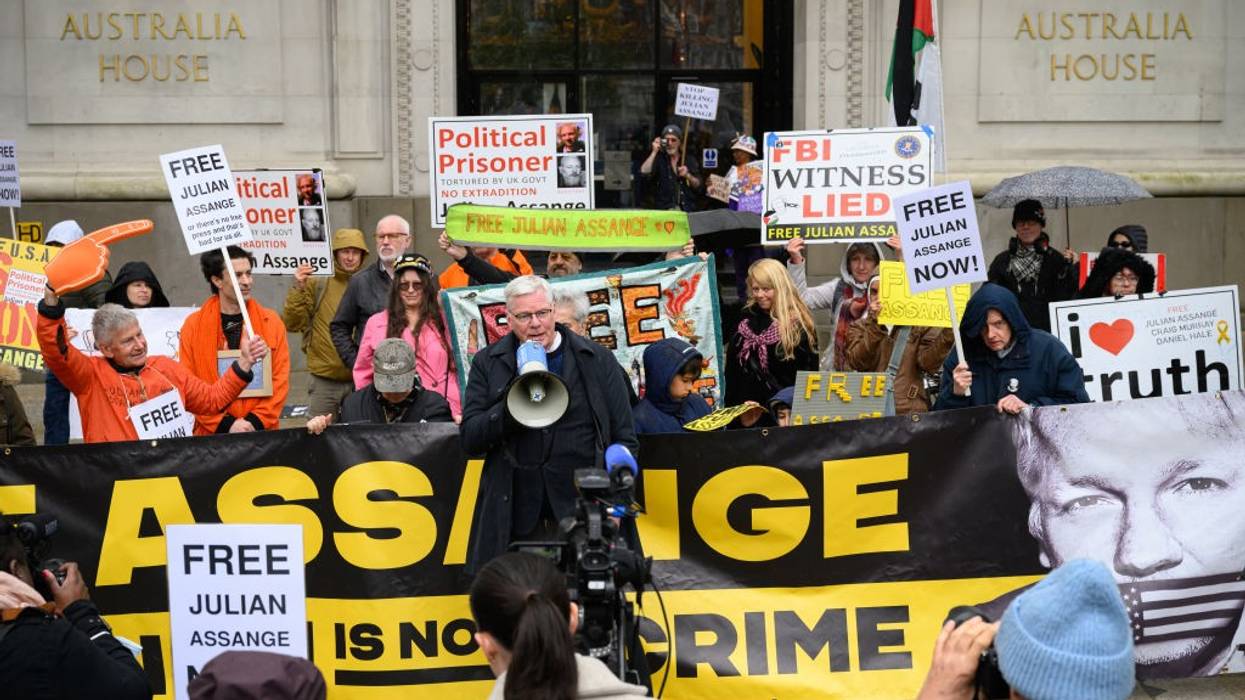
"We thank all who stood by us, fought for us, and remained utterly committed in the fight for his freedom," said WikiLeaks. "Julian's freedom is our freedom."
WikiLeaks founder Julian Assange on Monday reached a deal with the U.S. government, agreeing to plead guilty to one felony related to the disclosure of national security information in exchange for his release from Belmarsh Prison in the United Kingdom.
A related document was filed in federal court in the Northern Mariana Islands, a U.S. commonwealth. Under the plea agreement, which must still be approved by a judge, the Department of Justice (DOJ) will seek a 62-month sentence, equal to the time that the 52-year-old Australian has served in the U.K. prison while battling his extradition to the United States.
Assange faced the risk of spending the rest of his life in U.S. prison if convicted of Espionage Act and Computer Fraud and Abuse Act charges for publishing classified material including the "Collateral Murder" video and the Afghan and Iraq war logs. Before Belmarsh, he spent seven years in the Ecuadorian Embassy in London with asylum protections.
"Julian Assange is free," WikiLeaks declared on the social media platform X, confirming that he left Belmarsh Monday "after having spent 1,901 days there," locked in a small cell for 23 hours a day.
"He was granted bail by the High Court in London and was released at Stanstead Airport during the afternoon, where he boarded a plane and departed the U.K.," WikiLeaks said. "This is the result of a global campaign that spanned grassroots organizers, press freedom campaigners, legislators, and leaders from across the political spectrum, all the way to the United Nations."
"He will soon reunite with his wife Stella Assange, and their children, who have only known their father from behind bars," the group continued. "WikiLeaks published groundbreaking stories of government corruption and human rights abuses, holding the powerful accountable for their actions. As editor-in-chief, Julian paid severely for these principles, and for the people's right to know. As he returns to Australia, we thank all who stood by us, fought for us, and remained utterly committed in the fight for his freedom. Julian's freedom is our freedom."
The news of Assange's release was celebrated by people around the world, who also blasted the U.S. for continuing to pursue charges against him and the U.K. for going along with it.
"Takeaway from the 12 years of Assange persecution: We need a world where independent journalists work in freedom and top war criminals go to prison—not the other way around," the progressive advocacy group and longtime Assange supporter RootsAction said on social media.
Seth Stern, advocacy director at the Freedom of the Press Foundation, said that "it's good news that the DOJ is putting an end to this embarrassing saga. But it's alarming that the Biden administration felt the need to extract a guilty plea for the purported crime of obtaining and publishing government secrets."
"That's what investigative journalists do every day," Stern noted. "The plea deal won't have the precedential effect of a court ruling, but it will still hang over the heads of national security reporters for years to come. The deal doesn't add any more prison time or punishment for Assange. It's purely symbolic."
"The administration could've easily just dropped the case but chose to instead legitimize the criminalization of routine journalistic conduct and encourage future administrations to follow suit," he added. "And they made that choice knowing that [former U.S. President] Donald Trump would love nothing more than to find a way to throw journalists in jail."
Leftist Colombian President Gustavo Petro said in a statement: "I congratulate Julian Assange on his freedom. Assange's eternal imprisonment and torture was an attack on press freedom on a global scale. Denouncing the massacre of civilians in Iraq by the U.S. war machine was his 'crime'; now the massacre is repeated in Gaza I invite Julian and his wife Stella to visit Colombia and let's take action for true freedom."
Australian Greens leader Adam Bandt, who represents Melbourne in Parliament, said on social media that "Julian Assange will finally be free. While great news, this has been over a decade of his life wasted by U.S. overreach."
"Journalism is not a crime," Bandt added. "Pursuing Assange was anti-democratic, anti-press freedom, and the charges should have been dropped."
After more than five years in the maximum-security Belmarsh Prison in the UK, WikiLeaks founder Julian Assange reached a plea deal with the U.S. government. The deal allows for his release and return to his home country of Australia after a formal sentencing at a US court in the… pic.twitter.com/5S3xdbZnG2
— CODEPINK (@codepink) June 25, 2024
The women-led peace group CodePink said in a statement:
Without Julian Assange's critical journalism, the world would know a lot less about war crimes committed by the United States and its allies. He is the reason so many anti-war organizations like ours have the proof we need to fight the war machine in the belly of the beast. CodePink celebrates Julian's release and commends his brave journalism.
One of the most horrific videos published by WikiLeaks was called "Collateral Murder," footage of the U.S. military opening fire on a group of unarmed civilians—including Reuters journalists—in Baghdad. While Julian has been in captivity for the past 14 years, the war criminals that destroyed Iraq walked free. Many are still in government positions today or living off the profits of weapons contracts.
While Julian pleads guilty to espionage—we uphold him as a giant of journalistic integrity.
Vahid Razavi, founder of Ethics in Tech and host of multiple NSA Comedy Nights focusing on government mass surveillance, told Common Dreams that "they took a hero and turned him into a criminal."
"Meanwhile, all of the war criminals in the files exposed by WikiLeaks via Chelsea Manning are free and never faced any punishment or even their day in court," he added. "You can kill journalists with impunity, just like Israel is doing right now in Gaza."
Former United Nations human rights official Craig Mokhiber, who
resigned from his job last year over the world body's refusal to prevent Israel's slaughter of Palestinian civilians in Gaza, said on social media that "political prisoner Julian Assange, persecuted for years for the crime of journalism, simply for telling the truth about U.S. war crimes, is free."
Mokhiber hailed what he called "a moment of light in an age of darkness."
British journalist Afshin Rattansi said, "Let no one think that any of us will ever forget what the British state did to the most famous journalist of his generation."
"They tortured him—according to the United Nations special rapporteur on torture—at the behest of the United States," Rattansi noted.
Andrew Kennis, a professor of journalism and social media at Rutgers University, told Common Dreams that "Julian Assange is nothing less than the Daniel Ellsberg of our time."
"His journalism revealed more war crimes by the U.S. than any other publisher in the world, and far more extensively than what Ellsberg was able to pull off with a photocopy machine," he added. "But as opposed to receiving a deserved pardon... the persecution of Assange has been indicative of the guiding principle of U.S. foreign policy these days: Prosecute the whistleblowers exposing war crimes while funding Israeli war criminals in an ongoing attempt at genocide against occupied Palestine."
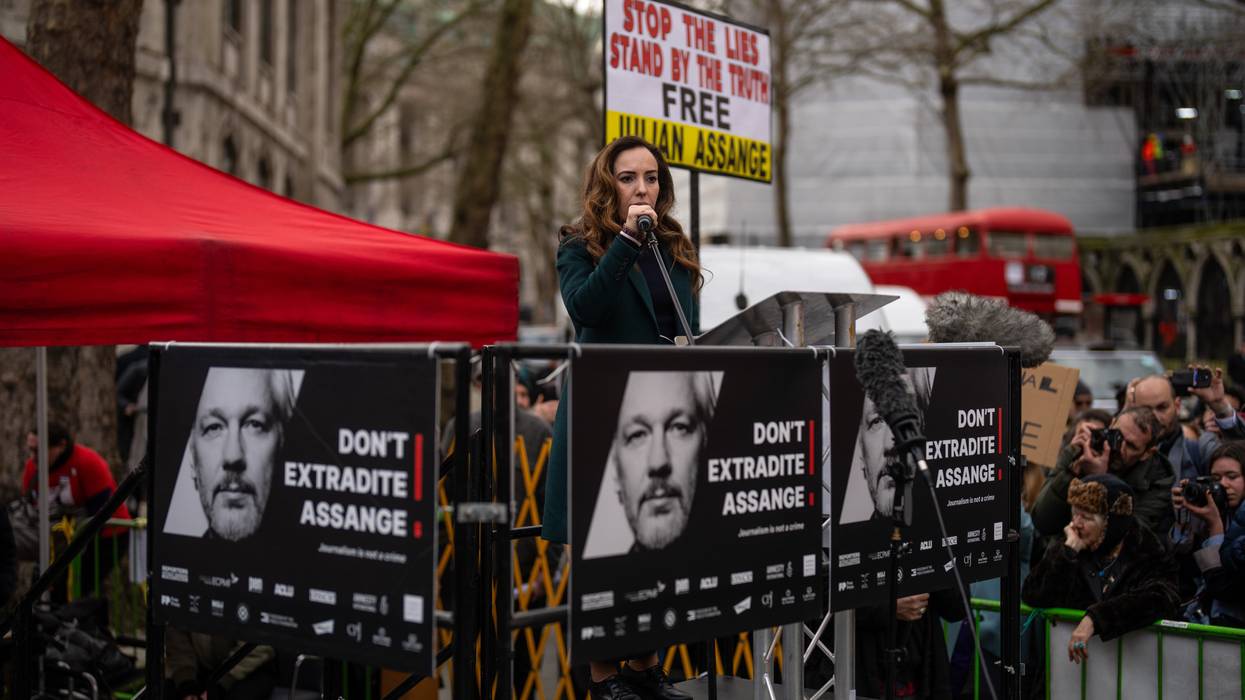
"The diplomatic note does nothing to relieve our family's extreme distress about his future—his grim expectation of spending the rest of his life in isolation in U.S. prison for publishing award-winning journalism."
The wife of jailed WikiLeaks founder Julian Assange sharply criticized "assurances" the U.S. government made as the U.K. High Court considers allowing the 52-year-old Australian's extradition to the United States, where he faces 175 years in prison.
The U.S. document states that if extradited, "Assange will have the ability to raise and seek to rely upon at trial (which includes any sentencing hearing) the rights and protections given under the First Amendment of the Constitution of the United States," though it points out that "a decision as to the applicability of the First Amendment is exclusively within the purview of the U.S. courts."
"A sentence of death will neither be sought nor imposed on Assange," the document adds, noting that he has not been charged with any offense for which that is a possible punishment. It comes after the U.K. court ruled last month that the Biden administration had until Tuesday to confirm that he wouldn't face the death penalty and if it did not, he could continue appealing his extradition.
Responding on social media, his wife, Stella Assange—who is an attorney—blasted the U.S. assurances as "weasel words."
"The United States has issued a nonassurance in relation to the First Amendment, and a standard assurance in relation to the death penalty," she said. "It makes no undertaking to withdraw the prosecution's previous assertion that Julian has no First Amendment rights because he is not a U.S citizen."
"The Biden administration must drop this dangerous prosecution before it is too late."
"Instead, the U.S. has limited itself to blatant weasel words claiming that Julian can 'seek to raise' the First Amendment if extradited," she added. "The diplomatic note does nothing to relieve our family's extreme distress about his future—his grim expectation of spending the rest of his life in isolation in U.S. prison for publishing award-winning journalism. The Biden administration must drop this dangerous prosecution before it is too late."
The U.K. court's next hearing is scheduled for May 20. Last week, reporters asked U.S. President Joe Biden about requests from Australian Prime Minister Anthony Albanese and members of the country's Parliament to drop the extradition effort and charges. He said that "we're considering it."
So far, the Biden administration has ignored significant pressure from Australian and U.S. politicians as well as human rights and press freedom groups, and continued to pursue the extradition of Julian Assange, who was charged under former President Donald Trump—the Republican expected to face the Democratic president in the November election.
Assange was charged under the Espionage Act and Computer Fraud and Abuse Act for publishing classified documents including the "Collateral Murder" video and the Afghan and Iraq war logs. Since British authorities dragged Assange out of the Ecuadorian Embassy in London—where he lived with political asylum for seven years—he has been jailed in the city's Belmarsh Prison.
The WikiLeaks founder's wife, with whom he has two children, was not alone in condemning the U.S. assurances on Tuesday.
"This 'assurance' should make journalists even more worried about how the Assange prosecution could impact press freedom in the U.S. and globally. The U.K. should grant Assange's appeal and refuse to extradite him," said the Freedom of the Press Foundation. "The U.S. doesn't disclaim the ability to argue that the First Amendment doesn't apply to Assange because of his nationality or other reasons, or for a court to rule against a First Amendment challenge to his prosecution."
Jameel Jaffer, director of the Knight First Amendment Institute, similarly said that "no one who cares about press freedom should take any comfort at all from the United States' assurance that Assange will be permitted to 'rely upon' the First Amendment."
"If the prosecution goes forward, the U.S. government will be trying to persuade American courts that the First Amendment poses no bar to the prosecution of a publisher under the Espionage Act," Jaffer warned. "And if the government is successful, no journalist will ever again be able to publish U.S. government secrets without risking her liberty."
"So the government's First Amendment assurances aren't responsive at all to the concerns that press freedom advocates have been raising," he concluded. "This case poses essentially the same threat to press freedom today as it did yesterday."
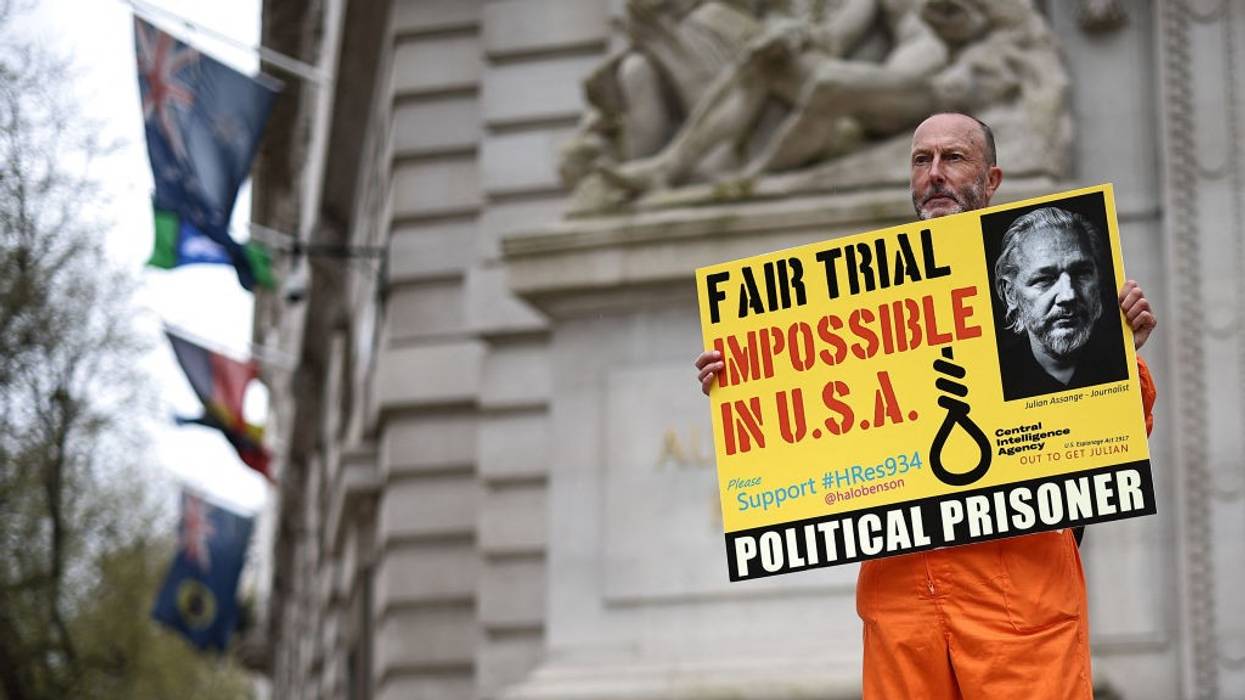
"This would be the best decision Biden ever made," said one supporter of the jailed WikiLeaks publisher.
U.S. President Joe Biden on Wednesday said his administration is weighing the Australian government's requests to drop charges against WikiLeaks founder Julian Assange, who has been deprived of his freedom since 2010 and is currently jailed in London's notorious Belmarsh Prison while fighting extradition to the United States.
Asked by reporters at the White House about requests from Australian Prime Minister Anthony Albanese and members of the country's Parliament for the U.S. and United Kingdom to drop the extradition effort and charges against Assange—an Australian citizen—Biden said that "we're considering it."
Stella Assange, Julian's wife, responded to Biden's remarks on social media. "Do the right thing," she wrote. "Drop the charges. #FreeAssangeNOW."
Srećko Horvat, a Croatian philosopher and co-founder of the Democracy in Europe Movement 2025 pan-European progressive political party,
said that "this would be the best decision Biden ever made."
British journalist Afshin Rattansi
asked, "Why has Julian Assange been put through this ordeal in the first place?"
Assange—who is 52 years old and suffers from various health problems—faces multiple U.S. charges under the Espionage Act and Computer Fraud and Abuse Act for his role in publishing classified government documents, some of them revealing war crimes and other misdeeds. Among the files published by WikiLeaks are the "Collateral Murder" video—which shows a U.S. Army helicopter crew killing a group of Iraqi civilians—the Afghan and Iraq war logs.
Three U.S. administrations have pursued charges against Assange. During the administration of former President Donald Trump—who is the presumptive 2024 Republican nominee—officials including then-Secretary of State Mike Pompeo allegedly plotted to assassinate Assange to avenge WikiLeaks' publication of the "Vault 7" documents exposing CIA electronic warfare and surveillance activities. In 2010, Trump called for Assange's execution.
The U.K. High Court ruled last month that Assange could not be immediately extradited to the U.S., where he faces up to 175 years behind bars if convicted on all counts. The tribunal gave the Biden administration until April 16 to guarantee that Assange won't face the death penalty. Absent such assurance, Assange will be allowed to continue appealing his extradition.
Last month, Assange's legal team denied reports that a plea deal with the U.S. government may have been in the works.
Assange has been imprisoned in Belmarsh since 2019. Before that, he spent nearly seven years in the Ecuadorian Embassy in London, where he had been granted political asylum under the government of leftist former President Rafael Correa.
The United Nations Working Group on Arbitrary Detention
found in 2016 that Assange had been arbitrarily deprived of his freedom since his first arrest on December 7, 2010. In 2019, Nils Melzer, then the U.N.'s special rapporteur on torture, said Assange had been subjected to "psychological torture."
Following the High Court's decision last month, Amnesty International legal adviser Simon Crowther said that "the U.S. must stop its politically motivated prosecution of Assange, which puts Assange and media freedom at risk worldwide."

"The Biden administration should take the opportunity to drop this dangerous case once and for all," said the executive director of the Freedom of the Press Foundation.
The United Kingdom's High Court ruled Tuesday that WikiLeaks founder Julian Assange cannot immediately be extradited to the United States and gave the Biden administration three weeks to provide "assurances" that the publisher's First Amendment rights will be protected and that he won't face the death penalty.
If the U.S. does not provide the requested assurances, Assange will be allowed to pursue a limited appeal of his extradition. Should the U.S. submit assurances by the April 16 deadline, a hearing will be held on May 20 to determine whether they are "satisfactory."
Assange, whose health has deteriorated badly during his five years in a high-security London jail, faces 17 counts of violating the Espionage Act and a possible 175-year prison sentence in the U.S. for publishing classified information—a common journalistic practice. WikiLeaks disclosures exposed grave U.S. and U.K. war crimes in Iraq and Afghanistan.
Press freedom and human rights groups say the extradition of Assange to the U.S. would set a dangerous precedent and pose a dire threat to journalism everywhere.
Trevor Timm, executive director of the Freedom of the Press Foundation, said in a statement Tuesday that "we are glad Julian Assange is not getting extradited today."
"But this legal battle is far from over, and the threat to journalists and the news media from the Espionage Act charges against Assange remains," said Timm. "Assange's conviction in American courts would create a dangerous precedent that the U.S. government can and will use against reporters of all stripes who expose its wrongdoing or embarrass it. The Biden administration should take the opportunity to drop this dangerous case once and for all."
"It's long past time for the U.S. Justice Department to abandon the Espionage Act charges and resolve this case."
The U.S., which has been aggressively pursuing Assange's extradition for years, previously provided the U.K. government with assurances that Assange would not be held at a supermax prison that's notorious for its inhumane treatment of inmates.
Human rights groups have said such assurances from the U.S. government are "inherently unreliable" and should not be taken seriously by British authorities.
"While the U.S. has allegedly assured the U.K. that it will not violate Assange's rights, we know from past cases that such 'guarantees' are deeply flawed—and the diplomatic assurances so far in the Assange case are riddled with loopholes," noted Simon Crowther, legal adviser at Amnesty International.
"The U.S. must stop its politically motivated prosecution of Assange, which puts Assange and media freedom at risk worldwide," Crowther said Tuesday. "In trying to imprison him, the U.S. is sending an unambiguous warning to publishers and journalists everywhere that they too could be targeted and that it is not safe for them to receive and publish classified material—even if doing so is in the public interest."
Jameel Jaffer, executive director of the Knight First Amendment Institute at Columbia University, echoed that message, saying in a statement that "prosecuting Assange for the publication of classified information would have profound implications for press freedom, because publishing classified information is what journalists and news organizations often need to do in order to expose wrongdoing by government."
"It's long past time for the U.S. Justice Department to abandon the Espionage Act charges and resolve this case," said Jaffer.