

SUBSCRIBE TO OUR FREE NEWSLETTER
Daily news & progressive opinion—funded by the people, not the corporations—delivered straight to your inbox.
5
#000000
#FFFFFF
To donate by check, phone, or other method, see our More Ways to Give page.
Daily news & progressive opinion—funded by the people, not the corporations—delivered straight to your inbox.
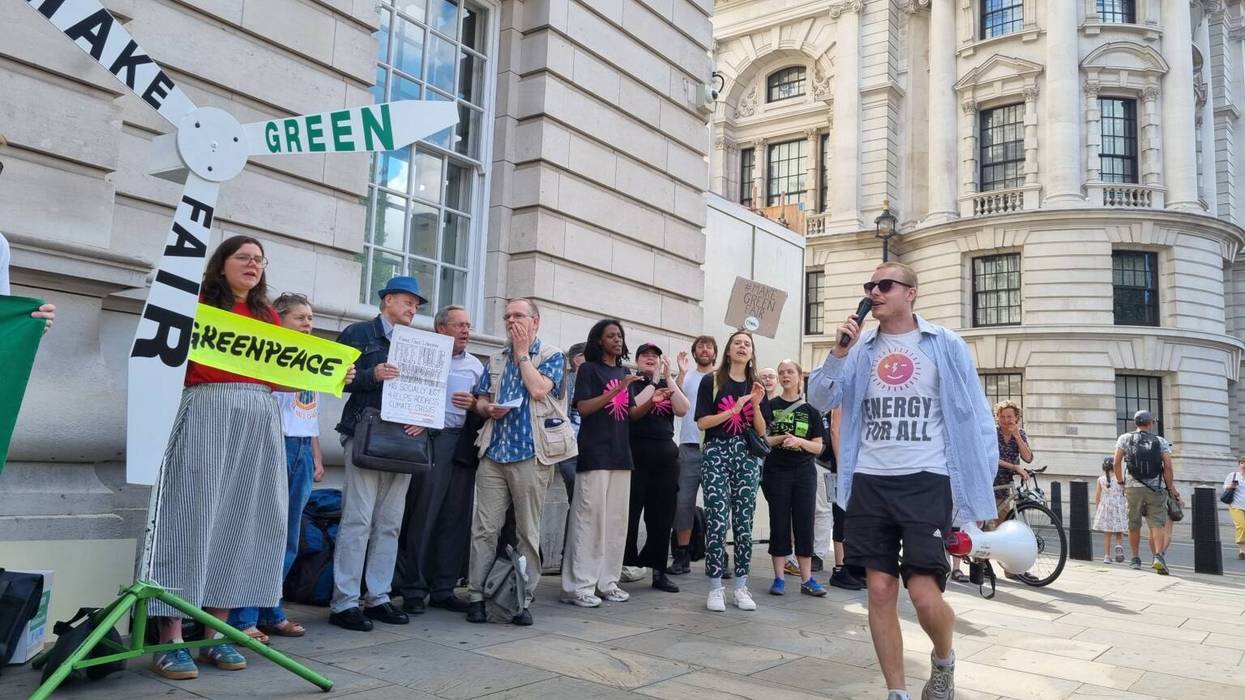
"The $1.1 trillion that governments are pouring into fossil fuel subsidies this year is not a safety net, it is a ransom payment."
With the US and Iranian governments engaged in 60 days of peace talks, the United Nations' latest projections about the illegal war's impact on fossil fuel subsidies this week triggered new demands for taxing the windfall profits of climate-wrecking Big Oil.
The United Nations Development Program (UNDP) on Monday released "Military Escalation in the Middle East: Cushioning the Global Shock," a report detailing how governments have navigated the "most severe oil supply shock in history," caused by Iran limiting traffic through the Strait of Hormuz in response to the Trump administration and Israel's unlawful assault.
As fossil fuel prices have soared worldwide, the report states, "governments have moved quickly to cushion households and firms from higher energy prices through fuel subsidies, tax cuts, price caps, strategic stock releases, emergency procurement, export restrictions, demand-management measures, and fuel switching."
"While energy subsidies had fallen by roughly half in 2024 as energy markets stabilized, the downward trajectory has sharply reversed," the document notes. "We estimate that global fossil fuel subsidies are currently on track to reach $1.1 trillion in 2026 and could reach as high as $1.43 trillion in a severe scenario where the average oil price reaches $110/barrel... This represents an estimated $410-$740 billion increase from 2025."
UNDP Administrator Alexander De Croo said in a statement that "the global spillover of the Middle East conflict is profound and potentially long-lasting. Developing countries, many already struggling with debt, have temporarily managed to protect people from the worst of the energy shock."
"These countries are doing everything they can, but there is a hidden cost," he stressed. "To deal with today's crisis, governments are postponing tomorrow's investments. Money that should be building schools, hospitals, and clean energy systems is being used simply to keep economies afloat. Without international support, these countries won’t escape the shock. They are absorbing it at the expense of future growth."
"No country should have to sacrifice its future development to manage a crisis it did not create," De Croo argued. "First, we must unlock multilateral liquidity in ways that are easy to access for low- and middle-income countries. Second, we must accelerate investment in renewable energy. Every clean energy investment reduces exposure to future shocks. The crisis has made one thing clear: Energy security and the energy transition are no longer separate agendas. They are one and the same."
In addition to reiterating calls for a just transition to clean energy, the advocacy group 350.org has repeatedly advocated for a windfall profits tax targeting oil and gas giants cashing in on the conflict in the Middle East. Executive director Anne Jellema pushed for such policies again on Wednesday, noting the new UNDP numbers.
"The $1.1 trillion that governments are pouring into fossil fuel subsidies this year is not a safety net, it is a ransom payment," Jellema declared. "Every dollar spent shielding the fossil fuel industry from the consequences of its own price volatility is a dollar not spent on the clean energy systems that can bring costs down for good."
"We need a phaseout to end public subsidies for fossil fuel companies, and a permanent windfall tax on fossil fuel profits," she continued. "Not a one-off levy, but a permanent, legislated mechanism that redirects the extraordinary profits of an industry driving this crisis into the just transition every country needs. That means affordable clean energy, retrofitted homes, and funding to protect people from the extreme weather unleashed by fossil pollution."
In the United States, where President Donald Trump's war has cost Americans tens of billions of dollars at the pump, Sen. Sheldon Whitehouse (D-RI) and Rep. Ro Khanna (D-Calif.) reintroduced the Big Oil Windfall Profits Tax Act in March, just weeks into the war.
Backing the bill, Food & Water Watch managing director of policy and litigation Mitch Jones said at the time that "historical evidence could not be any clearer: Big Oil will undoubtedly leverage the current crisis in the Middle East to maximize profit margins, pinching American families and enriching their executives and Wall Street speculators."
"This demands a policy response—namely, a windfall profits tax... which would recover much of these egregious, opportunistic gains and return them to everyday Americans," Jones added. "Fossil fuel companies must be held accountable for the profiteering they are orchestrating as we speak."
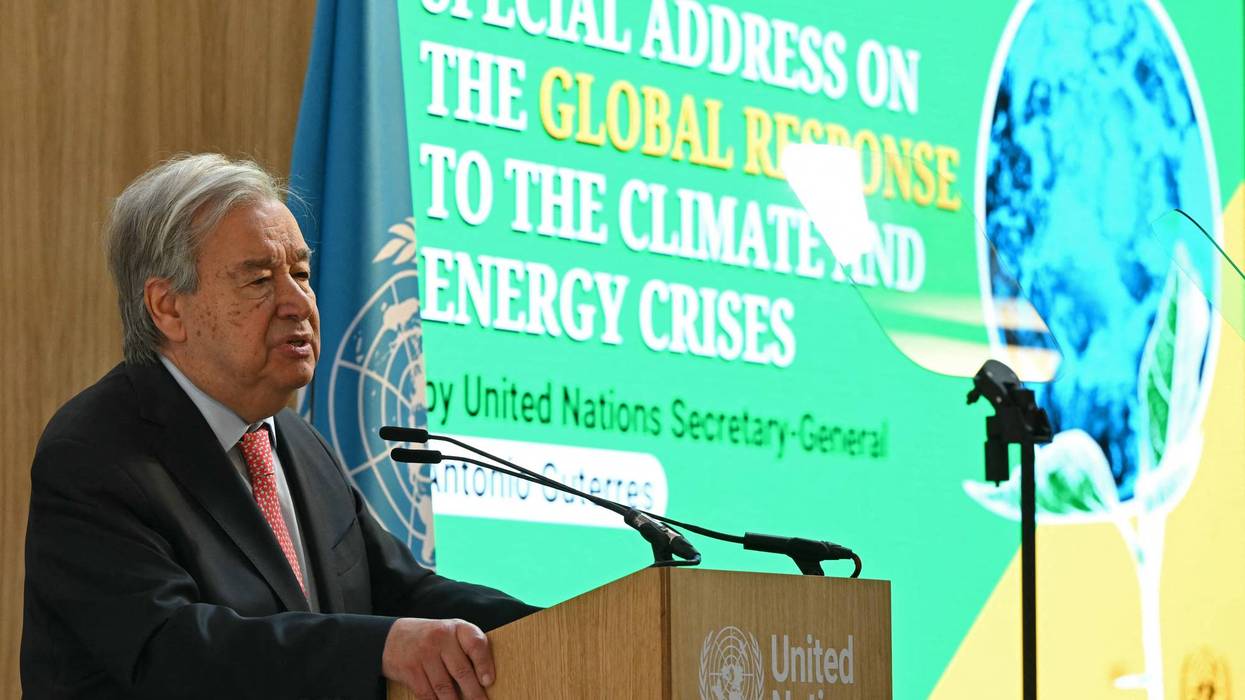
"The companies driving climate chaos cannot continue profiting from the destruction while vulnerable countries struggle."
As world leaders face mounting pressure to tax the windfall profits of fossil fuel giants that are wrecking the planet, United Nations Secretary-General António Guterres pushed for such policies in a pair of speeches at London Climate Action Week, arguing that "polluters must pay."
Since assuming his post nearly a decade ago, the UN chief has repeatedly sounded the alarm about the fossil fuel-driven climate emergency and demanded that rich countries and companies responsible for the crisis contribute financially to adaptation and mitigation efforts, particularly in the Global South.
Just months away from the end of his term, Guterres on Tuesday highlighted the latest warnings from the World Meteorological Organization (WMO) and that "climate disasters are becoming more frequent, more destructive, and more costly." He also flagged key tipping points—including melting ice sheets driving sea-level rise, shifts in conditions of the Amazon rainforest, and the weakening of major ocean circulation systems.
"Here in London—the city of Dickens—it is clear that our world is facing a Tale of Two Crises," he said. "A climate crisis pushing us deeper toward higher temperatures and closer to catastrophic tipping points. And an energy crisis exposing the folly of a world hooked on hydrocarbons."
"On the surface, these crises may seem separate. But they share the same destructive origin: fossil fuels," he continued. "And they demand the same answer: a fast, fair transition to clean energy—and a surge in adaptation, resilience, and climate justice for those already facing climate harm."
The UN leader stressed that "renewables are the cheapest, fastest, and most scalable source of new electricity in most of the world."
"Since 2010, the cost of solar has plummeted by almost 90%, onshore wind by more than 70%, and battery storage by 95%," he pointed out. "More than 90% of new renewable power added globally is already cheaper than the lowest-cost fossil fuel alternatives."
While outlining several essential steps for ending fossil fuel dependence, Guterres issued various calls, such as urging "far greater urgency" to limit any overshoot of the Paris Agreement's 1.5°C temperature goal for this century, and action in response to the exploding energy demands from artificial intelligence data centers.
Data centers have been met with fierce pushback from communities around the world concerned about water, land, and climate impacts. Guterres said that "by 2030, they could use more power than all but five countries—and enough water to meet the basic needs of all 1.3 billion residents of sub‑Saharan Africa for an entire year."
He proposed the AI Environmental Transparency Initiative, "calling on every major AI company to measure and publicly disclose the full environmental impact of its systems—carbon, water, and land footprints—and to commit to power every data center with renewable energy by 2030."
"No more hidden costs. No more shifting the burden onto those least able to bear it," explained Guterres. "It is time to come clean. If AI is to help build a better future, it must be honest about what it costs us now."
As data centers are sucking up massive amounts of power, he acknowledged that "families feeling the strain with higher bills, greater uncertainty, a sense that the system is not working for them—while fossil fuel giants continue to reap extraordinary profits."
"The eight largest fossil fuel companies reported pocketing an extra $6.5 billion in the first quarter of this year alone—and that only includes one month of the Middle East crisis, as oil prices continued to climb and profits to rise," Guterres said.
Without directly mentioning how the US-Israeli war on Iran—which Guterres has criticized—has driven up oil prices around the world, the UN leader said that "these are windfall gains born of pain—of instability, hardship and dependence. I urge governments to tax them."
"Let me conclude where I began—with Dickens," he said. "For the climate agenda, this is indeed the best of times and the worst of times. The worst—because climate impacts are intensifying, tipping points are looming, and the energy crisis has exposed the deep risks of dependence on fossil fuels."
"But also the best—because the renewables revolution is well underway," he added. "A revolution of clean power, electrification, falling costs, rising ambition—and vast opportunity."
Following his special address on Tuesday, Guterres spoke Wednesday at the Climate & Development Financial Forum, where he emphasized that "the countries facing the greatest climate impacts are those who contributed least to causing them."
In addition to arguing that the international community has to "recognize that climate risk is economic risk," "global financial systems must recognize the value of resilience," and "we need better preparation before disasters strike," the UN chief spotlighted the necessity of closing "the finance gap" in terms of adaptation.
He called for developed countries to triple adaptation finance, replenish multilateral climate funds, and prioritize grant-based and predictable finance, and for multilateral development banks to "use their expanded lending capacity to aggressively scale up investment in resilience."
He also reiterated his call for governments "to tax windfall profits from fossil fuel companies to help finance adaptation and climate related losses and damages," declaring that "the companies driving climate chaos cannot continue profiting from the destruction while vulnerable countries struggle."
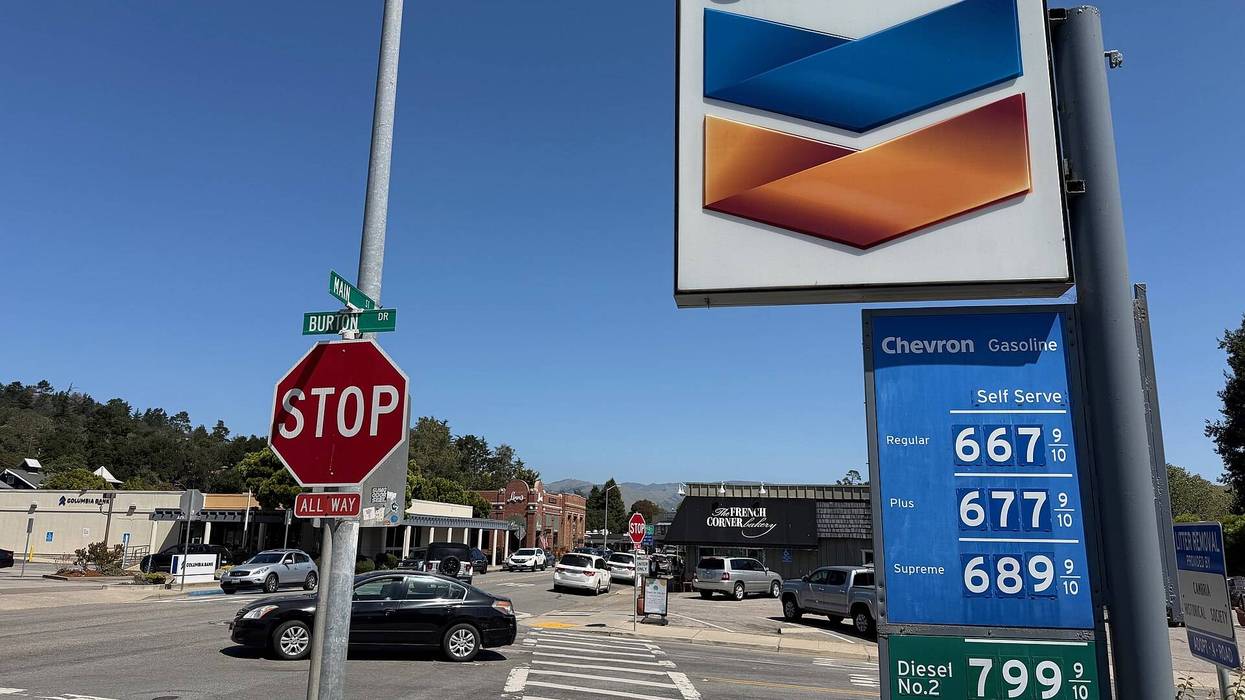
"Mr. President: I have a windfall excess profits bill you could support," said one Democratic senator.
President Donald Trump said Tuesday that he has directed the US Department of Justice to investigate fossil fuel companies for not lowering gasoline prices as the cost of oil declines amid the prospect of an end to the Iran War.
"The big Oil Companies are not dropping their price at the pump commensurate with the sharply lower prices they are paying for Oil. Those prices are dropping like a rock! In other words, customers are being 'gouged,'" Trump said on his Truth Social network.
"I have instructed the DOJ to immediately start looking into this," he added. "Gasoline prices better start going down a lot faster than what I’m seeing!"
While benchmark West Texas Intermediate and Brent Crude oil prices have fallen to their lowest levels since Trump launched the illegal US-Israeli war of choice on Iran on February 28, the average price for a gallon of unleaded gasoline in the United States was $3.93 per gallon on Wednesday, around one-third higher than it was the day before the war started but down from a high of $4.52 a month ago, according to the American Automobile Association.
"The price of fuel is not only a national security issue, it impacts the wallet of every American," an unnamed Trump administration official told ABC News on Wednesday following the president's post. "We will always commit to ensuring affordability in this nation."
Responding to Trump's post, US Sen. Sheldon Whitehouse (D-RI) noted on social media that he has a solution for Big Oil price gouging.
In March, Whitehouse and Rep. Ro Khanna (D-Calif.) reintroduced the Big Oil Windfall Profits Tax Act “to curb profiteering by oil companies and provide Americans relief at the gas pump.”
The legislation—which only applies to large oil companies—would impose a per-barrel tax “equal to 50% of the difference between the current price per barrel of oil and the average price per barrel last year, when big oil companies were already earning large profits.”
Democrats in both chambers of Congress have also called for the prosecution of corporations that use the war as a pretext for price gouging.
Polling has shown that Americans largely support a tax on Big Oil windfall profits, which, according to The Guardian, amounted to $23 billion in the first month of the war alone—or $30 million per hour.
NEW: As Americans face rising oil costs, Maine Senate candidate Graham Platner has released an energy plan aiming to “End Big Oil Price Gouging.”We find voters support key elements of the plan, including an oil windfall tax to freeze or lower electricity rates.
[image or embed]
— Data for Progress (@dataforprogress.org) June 18, 2026 at 11:49 AM
Trump has been a staunch supporter of fossil fuel companies. While running for reelection on a "drill, baby, drill" energy platform, he reportedly promised Big Oil executives that he would eviscerate climate regulations enacted by the Biden administration if they gave $1 billion to his campaign.
Fossil fuel interests spent nearly $450 million during the 2024 election cycle on campaign contributions, lobbying, and efforts supporting Republican causes and candidates, including Trump.
As pump prices soared and Americans suffered amid Trump's war, the president—who promised gas under $2 a gallon and no new wars—said that “when oil prices go up, we make a lot of money."
Last week, the Institute on Taxation and Economic Policy estimated that Americans have paid nearly $54 billion extra for gas and fuel—more than $400 per household—than they would have if the war never happened.
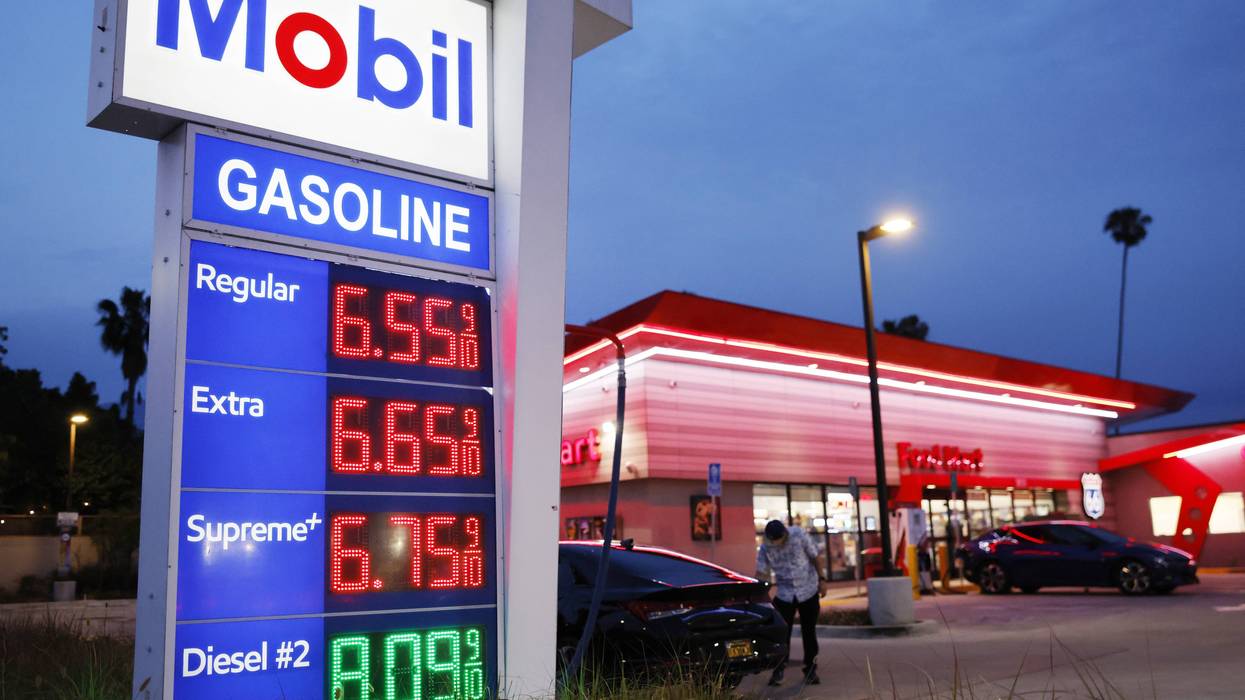
"How about we start by suspending the biggest gas tax of them all, Trump’s illegal war in Iran," said US Senate candidate Graham Platner.
As President Donald Trump's ongoing war of choice on Iran sends US pump prices skyrocketing by 50%, the president and congressional Republicans are moving this week to suspend the federal gasoline tax—a proposal that critics note would reduce funding for the nation's deteriorating highway infrastructure.
Trump said Monday that he would push to suspend the 18.4-cent-per-gallon federal tax on gasoline and 24.4-cent diesel tax "until it's appropriate," as the average price for a gallon of regular gas has soared from just under $3 before the war to over $4.50 today.
Such a move would require congressional authorization. Sen. Josh Hawley (R-Mo.) on Monday introduced the Gas Tax Suspension Act, citing "record profits" reaped by "some of the biggest corporations in the world"—but not the root cause of the price spike, the illegal war itself.
Meanwhile in the House, Rep. Jeff Van Drew (R-NJ) on Monday introduced similar legislation, while calling on state lawmakers and Democratic Gov. Mikie Sherrill to also suspend New Jersey's roughly $0.49-per-gallon gas tax. Rep. Anna Paulina Luna (R-Fla.) also said Monday that she "will be introducing a bill in the House to suspend the federal gas tax in light of Trump’s recent remarks."
This, after Sens. Mark Kelly (D-Ariz.) and Richard Blumenthal (D-Conn.) and Rep. Chris Pappas (D-NH) in March introduced the Gas Prices Relief Act, which would suspend the 18.4-cent tax through October 1. Kelly's office noted the pain of "skyrocketing gas prices due to war in Iran" as the reason for the legislation. Rep. Brendan Boyle (D-Pa.) in April also proposed a similar bill.
"Never before in American history have we seen a 50% increase in the price of gas in such a short time," Boyle said during a Monday interview on MS NOW, adding that the Trump administration's "actions have caused this mess."
Republican support for a gas tax holiday marks a reversal from just four years ago, when they opposed then-President Joe Biden's call to suspend the tax after Russia launched its ongoing full-scale invasion of Ukraine. GOP lawmakers argued at the time that such a suspension would cause the delay or cancellation of critical infrastructure projects, as federal gas taxes provide the vast bulk of Highway Trust Fund money. Such arguments were nowhere to be seen from Republicans after Trump's Monday comments.
Democratic Senate candidate Graham Platner of Maine is pushing a multipronged approach to the issue. First, he is backing a permanent end to federal gas and diesel taxes, whose revenue would be replaced by increased taxation of billionaires.
"Relying on fossil fuels to fund basic infrastructure does not make sense if we want to reduce fossil fuels used in transportation," the climate-conscious candidate explained last week.
Platner's plan also calls for 50% per-barrel windfall tax on Big Oil profits, as well as a national freeze on electric rate increases.
Finally, Platner advocates addressing the number one current cause of high gas prices.
"How about we start by suspending the biggest gas tax of them all: Trump’s illegal war in Iran," he said Monday on X.
Most congressional Republicans and a few Democrats have refused to pass war powers resolutions intended to end Trump's assault—which the administration claims has been "terminated," despite continuing its naval blockade and conducting some alleged "self-defense" strikes during the current ceasefire.

"The economic case for fossil fuels has not just weakened, it has collapsed," said the head of 350.org, the group behind the publication.
Oil price spikes caused by the US and Israel's war in Iran are straining the pocketbooks of ordinary citizens the world over. But a new study shows that even in normal times, dependence on fossil fuels poses a tremendous financial cost while a small group of companies reaps the rewards.
The report published by the environmental group 350.org on Tuesday found that people around the world are subsidizing the fossil fuel industry to the tune of $12 trillion per year, a cost of about $1,400 for every person on Earth.
The number goes beyond direct government subsidies, with the report explaining that "ordinary people are paying for fossil fuels three times over."
The fossil fuel industry costs every person on Earth $1,400 a year — and pays almost nothing back.350.org's new #OutOfPocket report breaks it down. Santa Marta is the first conference ever called to end fossil fuels, and this report is the receipt.Read the full report: 350.org/out-of-pocke...
[image or embed]
— 350.org (@350.org) April 21, 2026 at 9:26 AM
In addition to the $636 billion in government handouts the International Monetary Fund (IMF) found were paid to fossil fuel companies in 2024, the public also has to bear the burden when conflict or other emergencies cause prices to spike.
The report estimates that during the first 50 days of the Iran war, consumers and businesses have paid an additional $158.6–$166.9 billion due to higher fuel costs. This comes not only at the gas pump, but through heightened costs for food, transport fees, and other basic necessities.
"This crisis is a stark reminder of just how risky it is to rely on fossil fuels, with around 80% of global energy still coming from them and driving the instability we see today," said Jan Rosenow, professor of energy and climate policy at Oxford University. "Price volatility is not a flaw in the fossil fuel system; it is a built-in feature."
An investigation published earlier this month by The Guardian found that while consumers are getting hit, the war has been a bonanza for Big Oil. The top 100 companies have raked in an extra $30 million per hour since it began and made $23 billion in windfall profits during the war's first month.
But the true mammoth cost to consumers comes from mitigating the climate damage caused by unrestrained fossil fuel use, from droughts to floods to heatwaves that have grown increasingly frequent and severe as global temperatures have climbed.
Using peer-reviewed data relied on by the US Environmental Protection Agency (EPA), 350.org estimated that the global population is footing the bill for about $9.3 trillion in climate-related damages and air-pollution-related deaths each year, social costs that the industry causes but pays almost nothing to solve.
The effects hit the poor hardest: Low-income households spend almost twice as large a share of their budgets on energy as higher-income households.
Meanwhile, renewable energy infrastructure, which has high upfront costs but pays for itself over time, is less abundant in developing parts of the world, and countries like Pakistan, Bangladesh, and South Sudan have had to ration power during energy crises.
The poorer Global South is also on the frontlines of some of the worst and most immediate effects of the climate crisis.
In addition to one of the deadliest ongoing conflicts in the world, South Sudan has suffered both severe floods and droughts that have ravaged crop outputs, raising the risk of famine, and schools have had to close for weeks as extreme heat caused children to faint from heat stroke.
Eastern Africa has dealt with the displacement of more than 20 million people from record-breaking floods and droughts.
In Sri Lanka, chronic flooding and pest outbreaks exacerbated by rising temperatures are expected to cost the country 3.5% of its gross domestic product by 2050.
Bill McKibben, the co-founder of 350.org, said that in the coming years, climate upheaval can only be expected to get worse.
"A building El Niño means 2026 and 2027 will set new global temperature records, and that will offer yet more chaos, and yet more reminders that it is the poorest people on Earth who must bear most of the cost of this ongoing tragedy," he said.
The research conducted by 350.org was built on a model used by the IMF, which found that fossil fuels were costing taxpayers about $7.4 trillion. However, that research rested on a carbon price of $85 per tonne of CO2 emitted into the atmosphere.
350.org found that this figure, which "represents the cheapest possible price to keep warming below 2°C," vastly understates the damage caused by warming, which peer-reviewed research suggests is between $185-233 per tonne.
While proponents of continued fossil fuel use often oppose green energy expansion on the grounds of cost, the report notes that just that $4.1 trillion undercount would be enough to finance more than 5,900 gigawatts of new solar capacity—enough to power every home in Africa, South Asia, and Latin America combined.
"The economic case for fossil fuels has not just weakened, it has collapsed," said Anne Jellema, 350.org's chief executive.
In addition to calling for an immediate end to both the war in Iran and Israel's war against Lebanon, 350.org called on governments around the world to tax the industry's wartime windfall profits and put the money toward lowering the energy bills of ordinary families.
The group also called to replace fossil fuel subsidies with household support and subsidies for cheaper renewables, which it says will be resistant to the shocks that oil and gas regularly face.
"Renewables are not controlled by a few fossil fuel-exporting countries," said Hala Kilani, the head of energy diplomacy for the international climate policy network REN21. "It is abundant, distributed, and affordable. It can stabilize costs and be deployed locally, empowering communities rather than concentrating power. It is a peace, development, and justice solution. It’s high time we transition to reliable, affordable renewable energy.”
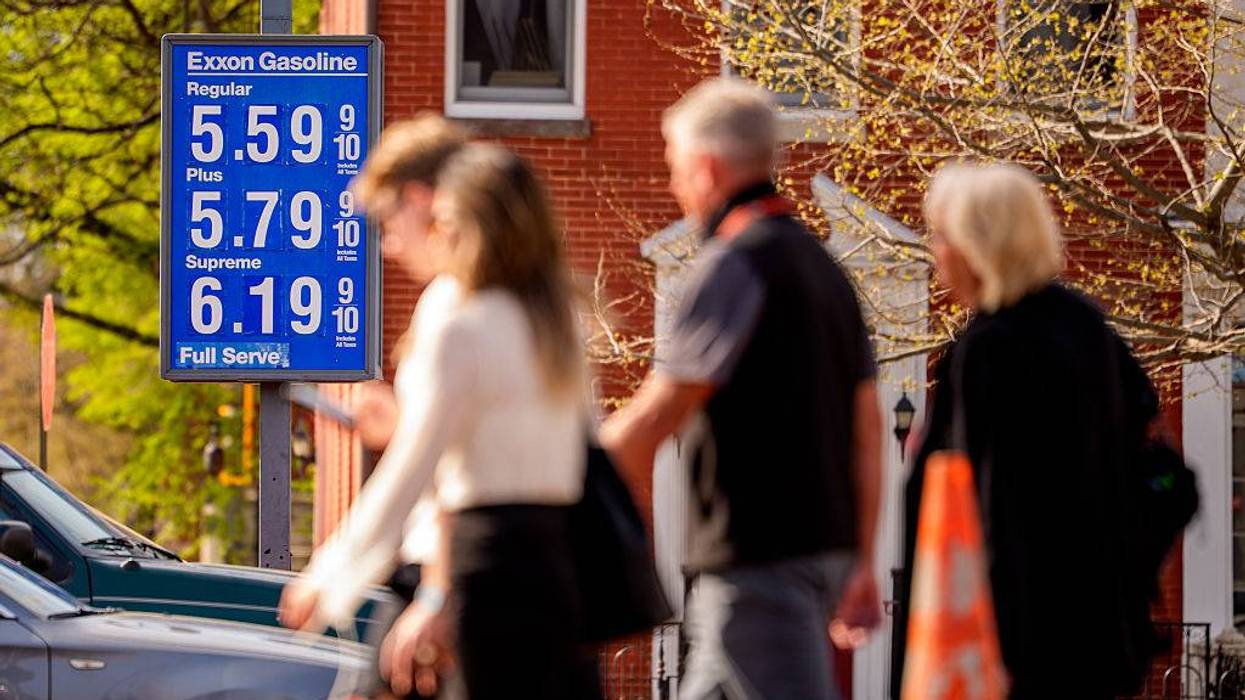
“Moments of global crisis continue to translate into bumper profits for oil majors while ordinary people pay the price."
US President Donald Trump's unprovoked war of choice in Iran has been a goldmine for the fossil fuels industry, which is earning massive windfall profits thanks to the rise in the price of petroleum.
An analysis published by The Guardian on Wednesday estimated that the 100 biggest oil and gas companies have collectively raked in an extra $30 million per hour since Trump launched his war with Iran without any congressional authorization in late February.
In just the first month of the conflict, The Guardian reported, Big Oil made $23 billion in windfall profits, and the industry is projected to haul in an additional $234 billion in windfall profits by the end of the year if the price of oil stays in the $100 range.
The top beneficiaries of the Iran conflict are Saudi Aramco, which is projected to earn $25.5 billion in windfall profits by the end of the year; Kuwait Petroleum Corp., which is projected to earn $12.1 billion; and ExxonMobil, which is projected to earn $11 billion.
"The excess profits come from the pockets of ordinary people as they pay high prices to fill up their vehicles and power their homes, as well as from businesses incurring higher energy bills," The Guardian noted. "Dozens of countries have cut fuel taxes to help struggling consumers, meaning those nations, including Australia, South Africa, Italy, Brazil and Zambia, are raising less money for public services."
The Guardian's analysis was conducted by climate watchdog Global Witness, using data from intelligence provider Rystad Energy.
Patrick Galey, head of news investigations at Global Witness, told The Guardian that Big Oil's windfall profits should be a wakeup call to the world about the dangers of relying on fossil fuels.
"Moments of global crisis continue to translate into bumper profits for oil majors while ordinary people pay the price," Galey said. "Until governments kick their fossil fuel addiction, all of our spending power will be held hostage to the whims of strongmen."
Climate advocates have for months been calling for a windfall profits tax on Big Oil during the Iran War as a way to retrieve some of the money consumers have lost during the conflict.
Earlier this month, the climate advocacy organization 350.org renewed its previous call to slap fossil fuel companies with a windfall profits tax, and then invest the revenue into renewable energy sources to provide real long-term relief to global consumers.
Beth Walker, an energy policy expert at climate change think tank E3G, also recommended a windfall profits tax with the aim of ending reliance on dirty energy sources.
"Governments should use taxes on windfall profits to accelerate the transition to green energy," said Walker, "rather than deepen dependence on fossil fuels.”
The oil and gas companies that invested at least $75 million in Trump’s reelection are cashing in on the instability he has caused.
Our dependence on fossil fuels does more than pollute our air. It destabilizes the world and empowers the ultra wealthy to profit off of that volatility, leaving working families to pay the price.
This dynamic has been on full display since President Donald Trump’s attack on Iran.
Trump’s invasion of one of the world’s most oil-rich regions jolted energy markets, sending gas prices soaring to the highest level in either of his terms. In 2024 he campaigned on cutting them in half. Instead, Americans are now on track to pay roughly $720 more for gasoline this year.
The full cost to working families will be much steeper as high gas prices drive up prices on consumer goods across the board. We’re already seeing that ripple effect take hold, as the US Postal Service has proposed a temporary 8% fuel surcharge on package deliveries to offset rising transportation costs tied directly to the war-driven spike in oil prices.
To reclaim our foreign policy from those who see a global crisis as a line item on an earnings call, we must break the billionaire grip on our energy system, economy, and democracy writ large.
At the same time, the oil and gas companies that invested at least $75 million in Trump’s reelection are cashing in on this instability. A recent Financial Times analysis estimates that US oil companies could collect an additional $63 billion in revenue this year if crude prices remain at these wartime levels. In March alone, the industry is expected to generate $5 billion in extra cash flow.
This type of windfall isn’t a fluke. We’ve seen this pattern for decades.
Oil has a way of appearing in the background of every chapter of US military intervention in the Middle East and beyond. Iran nationalized its oil industry in the 1950s, and a CIA-backed coup followed. Iraq, sitting on some of the world’s largest reserves, was invaded in 2003. And earlier this year, the US invaded Venezuela and immediately began plans for a taxpayer-backed oil industry takeover.
Dependence on fossil fuels keeps us trapped in this cycle. Oil executives have spent billions to maintain this status quo, backing politicians like Trump who will protect their profits. As the oil industry rakes in eye-popping profits, it gains more power to elect leaders who prioritize policies that ensure Americans remain reliant on fossil fuels.
Following Russia’s invasion of Ukraine, Congress considered a windfall profits tax on large oil companies that would capture the excess profits generated by the crisis—and return the money to American households. Roughly 80% of Americans supported the idea.
Failure to advance that legislation cost us. Researchers calculated that if the US had redistributed the portion of fossil fuel profits that exceeded 2021 returns, every American household could have received $1,715.
As oil executives profit off the war in Iran, Congress must once again push for a windfall profits tax on the largest oil companies. This isn’t an outlandish idea. Other countries have already done it. After the 2022 energy shock, the United Kingdom enacted a windfall tax on oil and gas companies, raising about $3.3 billion in its first year and roughly $4.5 billion the next—money used to help households pay their energy bills.
The current situation in Iran underscores how unchecked extreme wealth fuels corporate control, leaving working families vulnerable. New data from Impact Research for Tax the Greedy Billionaires shows that voters blame billionaires for the affordability crisis and want leaders to do more to address this. In fact, 77% of voters nationwide—including 65% of Republicans, 75% of Independents, and 91% of Democrats—support raising taxes on billionaires.
Under the Trump administration, war profiteering has reached new extremes. Confronting corporate power and taxing the ultra wealthy isn’t just about economic fairness—it’s a national security imperative.
To reclaim our foreign policy from those who see a global crisis as a line item on an earnings call, we must break the billionaire grip on our energy system, economy, and democracy writ large. If we want a democracy that works for the people, we must stop letting it be sold to the highest bidder.
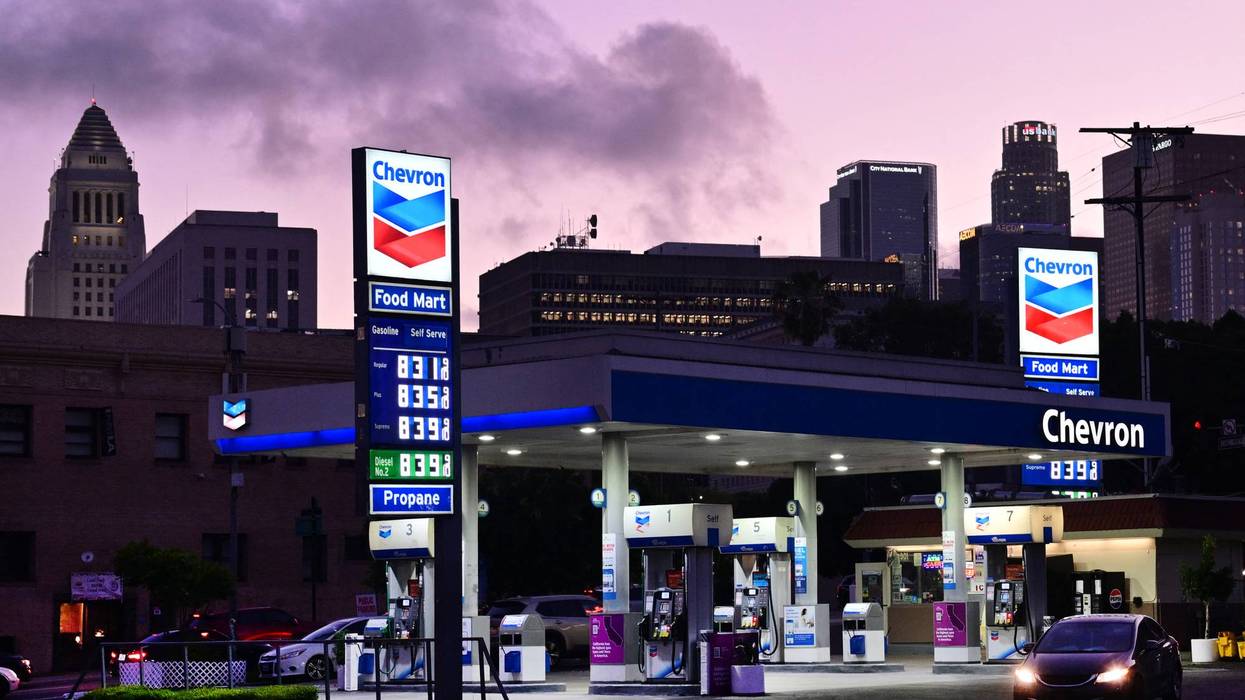
“Trump’s war of choice in Iran is not just a moral mistake but an economic blunder that is skyrocketing gas prices for working Americans," said Rep. Ro Khanna.
With Big Oil poised to profit from a price spike driven by the US-Israeli war on Iran, congressional Democrats on Wednesday revived an excise tax that proponents say would put money back in the pockets of struggling American workers.
Sen. Sheldon Whitehouse (D-RI) and Rep. Ro Khanna (D-Calif.) reintroduced the Big Oil Windfall Profits Tax Act "to curb profiteering by oil companies and provide Americans relief at the gas pump."
The legislation—which only applies to large oil companies—would impose a per-barrel tax "equal to 50% of the difference between the current price per barrel of oil and the average price per barrel last year, when big oil companies were already earning large profits."
As Democrats on the Senate Committee on the Environment and Public Works explained: "Revenue raised from the windfall profits of Big Oil companies will be returned to consumers in the form of a quarterly rebate, which would phase out for single filers who earn more than $75,000 in annual income and joint filers who earn more than $150,000. At $100 per barrel of oil, the levy would raise approximately $33 billion per year. At that price, single filers would receive approximately $216 annually and joint filers would receive roughly $324 annually.”
The committee Democrats noted:
The price of a gallon of gas is up 80 cents just weeks after the onset of war in Iran, and the price of a barrel of oil has increased 50% from what it was at the start of the year. President [Donald] Trump’s war in Iran has further disrupted an already volatile global oil market by reducing supply and choking key shipping lanes. Qatar has warned that oil prices could surpass $150 per barrel in the coming weeks, far above 2022 highs seen following Russia’s invasion of Ukraine.
Trump—who promised gas under $2 a gallon and no new wars—said last week that "when oil prices go up, we make a lot of money."
As in Venezuela—another oil-rich country attacked by a president who has bombed 10 nations, more than any other US leader in history—Big Oil revenue is projected to surge due to the rising volatility and prices the war on Iran is bringing. The Financial Times reported Tuesday that US oil companies could reap $60 billion in additional revenue this year alone if crude prices remain high.
As one oil industry financial analyst told The New York Times earlier this week, “The oil and gas industry’s financial strategy has been ‘pray for war,’ because those are the conditions under which they make money."
Critics said that while fossil fuel interests—which spent close to half a billion dollars to get Trump and other Republicans elected in 2024—rake in profits, ordinary Americans suffer.
“American consumers are once again getting squeezed at the gas pump as President Trump’s war of choice in Iran sends gas prices soaring and money flowing to his Big Oil donors,” Whitehouse said Tuesday. “We should send any big windfall for Big Oil back to the hardworking people who paid for it at the gas pump."
"Over the longer term, accelerating our transition to clean energy will lower energy costs, insulate consumers from these kinds of price spikes, and reduce America’s dependence on foreign despots and greedy fossil fuel companies," he added.
Khanna said: “Trump’s war of choice in Iran is not just a moral mistake but an economic blunder that is skyrocketing gas prices for working Americans. I’m proud to reintroduce the Big Oil Windfall Profits Tax Act alongside Sen. Whitehouse to stop Big Oil from profiteering off of foreign wars at Americans’ expense and deliver real relief at the pump."
The President shouldn't be a cheerleader for Big Oil companies making fatter profits while Americans pay higher gas prices.We should tax windfall oil profits from Trump's war against Iran and give relief to American families instead.
[image or embed]
— Elizabeth Warren (@warren.senate.gov) March 15, 2026 at 10:38 AM
Green groups and economic justice advocates were among those applauding the reintroduction of the bill, which one 2022 nationwide poll found is supported by 80% of Americans.
“Let’s be crystal clear that when Trump said ‘when oil prices go up, we make a lot of money’, he was talking about billionaire Big Oil executives while ‘we the people’ are stuck paying higher costs," said League of Conservation Voters (LCV) senior federal advocacy campaigns director Leah Donahey.
"A recent analysis estimates the oil industry could rake in over $60 billion in additional profits this year, which would all be paid by consumers struggling with higher energy costs," Donahey added. "Congress should pass this bill as soon as possible to make sure they are putting people over oil CEO profits.”
Mitch Jones, who directs policy and litigation at the watchdog group Food & Water Watch (FWW), said Wednesday that "historical evidence could not be any clearer: Big Oil will undoubtedly leverage the current crisis in the Middle East to maximize profit margins, pinching American families and enriching their executives and Wall Street speculators."
"This demands a policy response—namely, a windfall profits tax... which would recover much of these egregious, opportunistic gains and return them to everyday Americans," Jones added. "At a time when many families are already struggling with skyrocketing energy bills caused by money-driven AI schemes from the tech industry, fossil fuel companies must be held accountable for the profiteering they are orchestrating as we speak.”
LCV and FWW are among the more than 70 groups urging Congress to pass the Big Oil Windfall Profits Tax Act.
“As instability in the Middle East once again drives up oil prices, American families are being asked to pay more for gasoline and other basic necessities,” the groups wrote Wednesday in a letter to congressional leaders. “Meanwhile, the largest fossil fuel companies stand to collect billions in additional profits. A windfall profits tax would ensure that when oil companies benefit from crisis-driven price spikes, some of those gains are returned to the households paying the cost.”
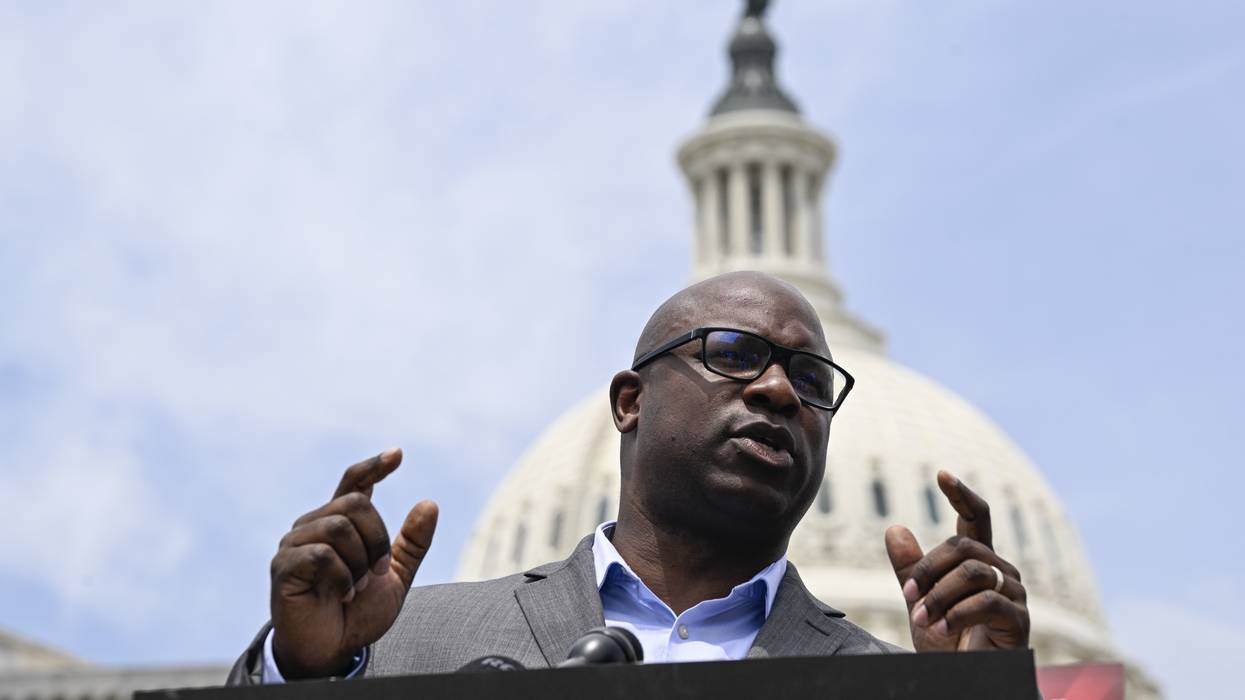
"Enough is enough," said Sen. Bernie Sanders. "We cannot continue to allow large corporations to make obscene profits by price gouging Americans in virtually every sector of our economy."
Rep. Jamaal Bowman and Sen. Bernie Sanders on Friday led a group of progressive lawmakers in announcing legislation that would penalize large corporations with a 95% windfall profits tax for using elevated inflation as a pretext to hike prices and pad their bottom lines.
The
Ending Corporate Greed Act would "establish a 95% windfall profits tax on a company's profits that are in excess of their average profit level from 2015-2019, adjusted for inflation," according to a summary of the measure.
The bill would keep intact the 21% statutory corporate tax rate for profits equal to or lower than they were prior to the coronavirus pandemic. The 95% tax on windfall profits would be limited to companies with $500 million or more in annual revenue and would be temporary, running only through 2026.
Bowman (D-N.Y.), whose primary contest against AIPAC-backed George Latimer is in on Tuesday, introduced the bill in the House on Friday alongside several original cosponsors. Sanders and Sen. Ed Markey (D-Mass.) are expected to introduce companion legislation in the Senate in the near future.
"The American people are sick and tired of being ripped off by large corporations that continue to make record-breaking profits by charging outrageously high prices for gas, rent, food, and prescription drugs, " Sanders said in a statement.
"Enough is enough," he continued. "We cannot continue to allow large corporations to make obscene profits by price gouging Americans in virtually every sector of our economy. If corporate CEOs and their masters on Wall Street will not end their greed, we must end it for them. It is time for Congress to enact a windfall profits tax."
The bill's authors estimate that had the proposed 95% windfall tax been in place last year—when U.S. corporate profits surged to a record high—the federal government would have raised $300 billion in additional revenue from 10 large companies alone.
"Since the pandemic, corporations have remained incredibly selfish in their business practices, squeezing their consumers who rely on them for essential goods and services, including gas, food, prescription drugs, banking, and more," Bowman said Friday. "Congress must do its part to check corporate greed before it completely robs people in America of their ability to live a life in pursuit of liberty, justice, and happiness."
2023 Profits Above Pre-Pandemic Average:
⬆️444%: Amazon
⬆️325%: Marathon Petroleum
⬆️289%: Chevron
⬆️202%: Berkshire Hathaway
⬆️195%: Google
⬆️193%: Centene
⬆️190%: Microsoft
⬆️165%: Exxon Mobil
⬆️165%: Facebook
⬆️111%: Lowe's
⬆️108%: UnitedHealth
We need a windfall profits tax. pic.twitter.com/E4ocyfzdRT
— Warren Gunnels (@GunnelsWarren) June 21, 2024
Companies haven't been shy about using elevated prices across the U.S. economy as a justification for hiking prices on their products.
As Lindsay Owens, executive director of the Groundwork Collaborative, noted in a New York Times op-ed in 2022: "Executives on their earnings calls crowed to investors about their blockbuster quarterly profits. One credited his company’s 'successful pricing strategies.' Another patted his team on the back for a 'marvelous job in driving price.' These executives weren't just passing along their rising costs; they were going for more. Or as one CFO put it, they were 'not leaving any pricing on the table.'"
A recent Groundwork analysis estimated that between April and September 2023, corporate profits fueled more than half of U.S. inflation. Economists with the International Monetary Fund came to a similar conclusion last year about price increases in Europe, blaming "rising corporate profits" for "almost half the increase in Europe's inflation over the past two years."
The new bill's sponsors pointed to examples of major corporations across a range of sectors reaping massive windfall profits last year amid high inflation, including Amazon, which reported $37.6 billion in 2023 profits—a staggering 444% increase compared to the company's average profit between 2015 and 2019.
Amazon, a notorious tax avoider, would have paid an estimated $19.1 billion in windfall taxes if the Ending Corporate Greed Act was in place last year.
"Corporate greed and unconscionable price gouging have resulted in Americans paying more for basic necessities such as gas and groceries," Markey said Friday. "The Ending Corporate Greed Act penalizes large corporations raking in record profits while everyday Americans and workers pay the price."
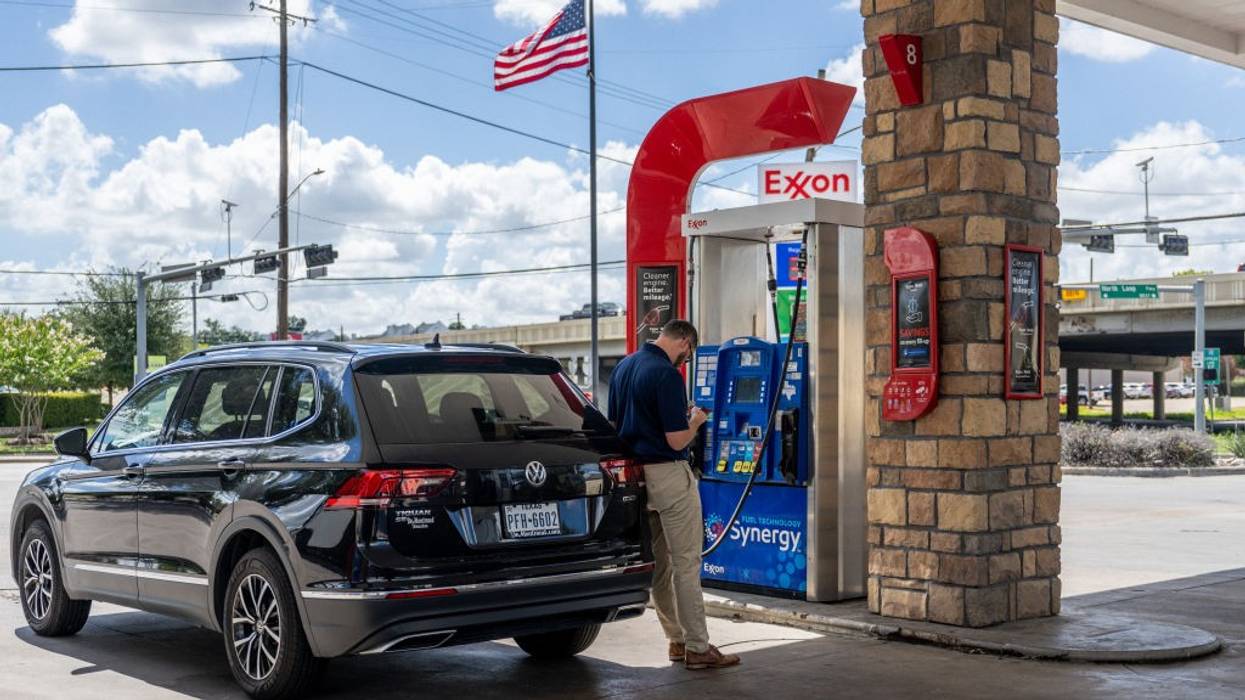
The Groundwork Collaborative's leader also said that "the Department of Justice should criminally prosecute Scott Sheffield," the former Pioneer CEO whom the FTC blocked from joining ExxonMobil's board.
Groundwork Collaborative executive director Lindsay Owens on Tuesday responded to U.S. government allegations of fossil fuel industry price fixing with calls for federal prosecution and congressional action to return money to the American public.
"Americans have been working harder and harder to cover rising energy costs, with the understanding that supply chain snags and geopolitical forces were keeping prices high," Owens said. "Now the Federal Trade Commission has uncovered the real source behind the price at the pump: collusion."
"The Department of Justice should criminally prosecute Scott Sheffield and Congress should tax back the industry's windfall profits and issue every American a refund," she added, referring to Pioneer Natural Resources' founder and longtime CEO.
Owens' statement came after members of the Federal Trade Commission (FTC) declined to contest ExxonMobil's controversial $64.5 billion acquisition of Pioneer—which was completed Friday—but approved a consent order barring Sheffield from serving on Exxon's board of directors or as an adviser to the fossil fuel giant.
"This complaint is a wake-up call about the dangerous consolidation of Big Oil's economic and political power."
The FTC voted 3-2 to accept the order and place related documents on the record for public comment. Citing communications including in-person meetings, public statements, text messages, and WhatsApp conversations, a commission complaint accuses Sheffield of trying to collude with the representatives of the Organization of Petroleum Exporting Countries (OPEC) and OPEC+.
"Mr. Sheffield's past conduct makes it crystal clear that he should be nowhere near Exxon's boardroom. American consumers shouldn't pay unfair prices at the pump simply to pad a corporate executive's pocketbook," said Kyle Mach, deputy director of the FTC's Bureau of Competition. "The FTC will remain vigilant in its enforcement efforts to protect competition in these vital markets."
Pioneer told Fortune that the company and its founder "believe that the FTC's complaint reflects a fundamental misunderstanding of the U.S. and global oil markets and misreads the nature and intent of Mr. Sheffield's actions," but neither party would take "any steps to prevent the merger from closing."
ExxonMobil "learned of the FTC's allegations regarding Sheffield from the agency and said in a statement that they are 'entirely inconsistent with how we do business,'" according to Fortune. "Exxon has agreed to the terms of the consent decree," which also "prohibits the oil giant from appointing any Pioneer employee or director to its board for five years."
Still, since the FTC's allegations were initially reported by The Wall Street Journal last week and then confirmed with the complaint's release, demands for additional action by the U.S. Department of Justice (DOJ) and Congress have mounted.
Cassidy DiPaola, Fossil Free Media's director of communications, on Monday called the complaint "explosive" and said that Democrats "must respond with bold action to hold this rogue industry accountable," including:
"But accountability is just the first step. This complaint is a wake-up call about the dangerous consolidation of Big Oil's economic and political power. We can't let them use megamergers to entrench their control and crush clean energy competition," she stressed. "Ultimately, this is about the future we choose: One where we remain at the mercy of Big Oil's greed and destruction, or one where clean, democratically controlled energy powers our communities. It's time to make the right choice."
In response to the Journal's reporting, Tyson Slocum, director of Public Citizen's Energy Program, similarly said that "Congress must immediately hold hearings on Big Oil's alleged collusion with OPEC to raise gasoline prices for Americans."
"Congress must not only investigate Pioneer's alleged role in conspiring with OPEC, but whether there existed a broader conspiracy by U.S. oil companies to collude with OPEC nations," he argued. "Big Oil must be held accountable for any conspiracy by or among American oil companies and OPEC members."
The reporting was notably published on the same day as the U.S. Senate Budget Committee's hearing about a nearly three-year investigation into fossil fuel companies and trade groups' decadeslong "campaign of deception and distraction," which has evolved from denying the planet-heating impact of their products to pretending to be part of the solution to the climate emergency.
"The joint report and documents we discovered show how, time and again, the biggest oil and gas corporations say one thing for the purposes of public consumption but do something completely different to protect their profits," Rep. Jamie Raskin (D-Md.), the ranking member on the House Oversight Committee, testified during the hearing. "Company officials will admit the terrifying reality of their business model behind closed doors but say something entirely different, false, and soothing to the public."