

SUBSCRIBE TO OUR FREE NEWSLETTER
Daily news & progressive opinion—funded by the people, not the corporations—delivered straight to your inbox.
5
#000000
#FFFFFF
To donate by check, phone, or other method, see our More Ways to Give page.
Daily news & progressive opinion—funded by the people, not the corporations—delivered straight to your inbox.
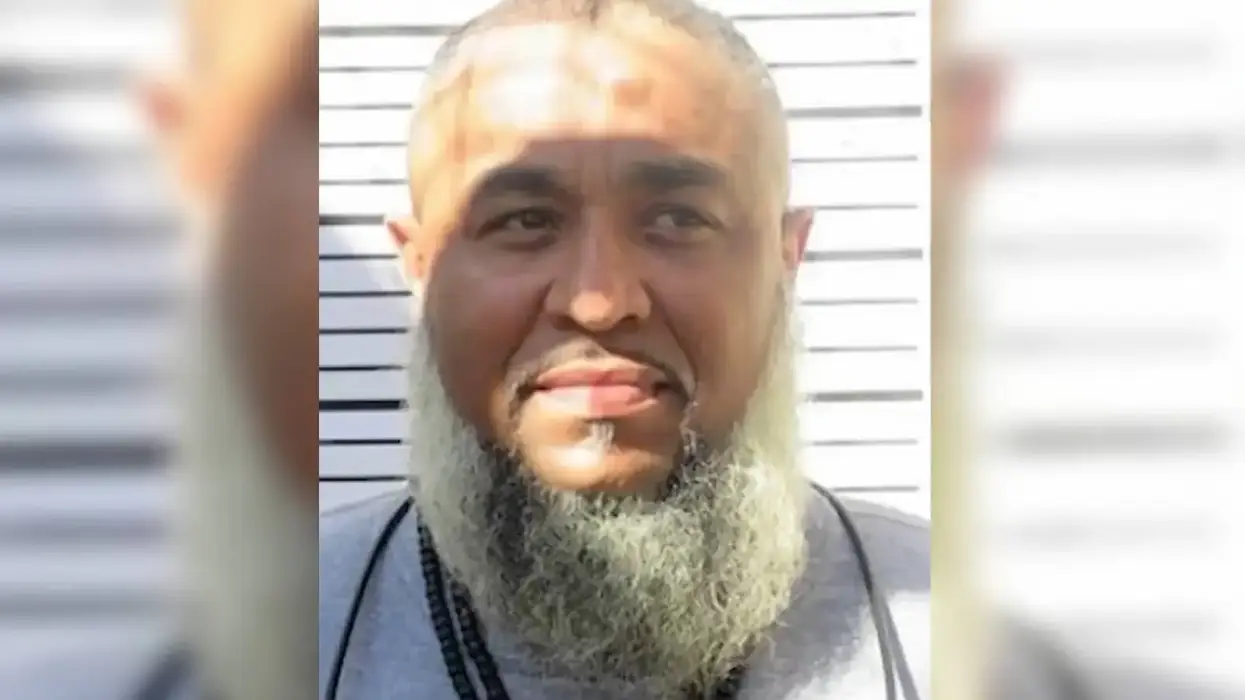
"Tennessee has effectively made the case against the death penalty," said one opponent of capital punishment.
A Tennessee man set to be executed on Thursday got a temporary reprieve—but not due to any intervention by the US Supreme Court.
As reported by The Associated Press, the execution of Tony Carruthers was called off after medical officials struggled to locate a vein during the scheduled lethal injection procedure.
After the failed execution, Republican Tennessee Gov. Bill Lee ordered a one-year stay for Carruthers, who has been on death row for three decades after being convicted of kidnapping and murdering three people in 1996.
Maria DeLiberato, an attorney representing Carruthers, told the AP that she saw her client "wincing and groaning" during the botched procedure, which she described as "horrible" to watch.
DeLiberato, who is also senior counsel at the ACLU’s Capital Punishment Project, later issued a statement describing the execution attempt as "outright barbaric," and reiterated demands for state investigators to examine potentially exculpatory forensic evidence before proceeding with any future attempt.
"We are incredibly relieved Gov. Lee issued a reprieve," DeLiberato said. "We will also continue to push the governor to use this moment to allow the forensic testing that should have happened long ago. Tennessee cannot continue torturing a man while refusing to answer serious questions about his innocence."
The ACLU on Wednesday had called for the US Supreme Court to block Carruthers' execution until all potentially exculpatory evidence had been fully examined.
Lucas Cameron-Vaughn, legal director of the ACLU of Tennessee, said the state had a duty to ensure that it had convicted the right man, and he pointed to troubling aspects of the case that should give courts pause before signing off on his execution.
“Mr. Carruthers was forced to represent himself at trial, and now faces death based on flimsy circumstantial evidence, and unreliable witnesses,” Cameron-Vaughn said. “Forensic evidence the state refuses to test could change everything."
Laura Porter, executive director for US Campaign to End the Death Penalty, argued that the botched execution shouldn't just give Carruthers a one-year reprieve, but should push the US to end capital punishment all together.
"Tennessee has effectively made the case against the death penalty," said Porter. "They forced Tony Carruthers to represent himself at his own capital trial, failed to test DNA and fingerprint evidence and now they have failed to execute him. It is time to end the death penalty."
Stacy Rector, executive director for Tennesseans for Alternatives to the Death Penalty, described the failed execution as "horrifying but not surprising," adding that her organization "has sounded the alarm for years about the serious problems with lethal injection and urged our state toward greater transparency so these problems can be addressed."
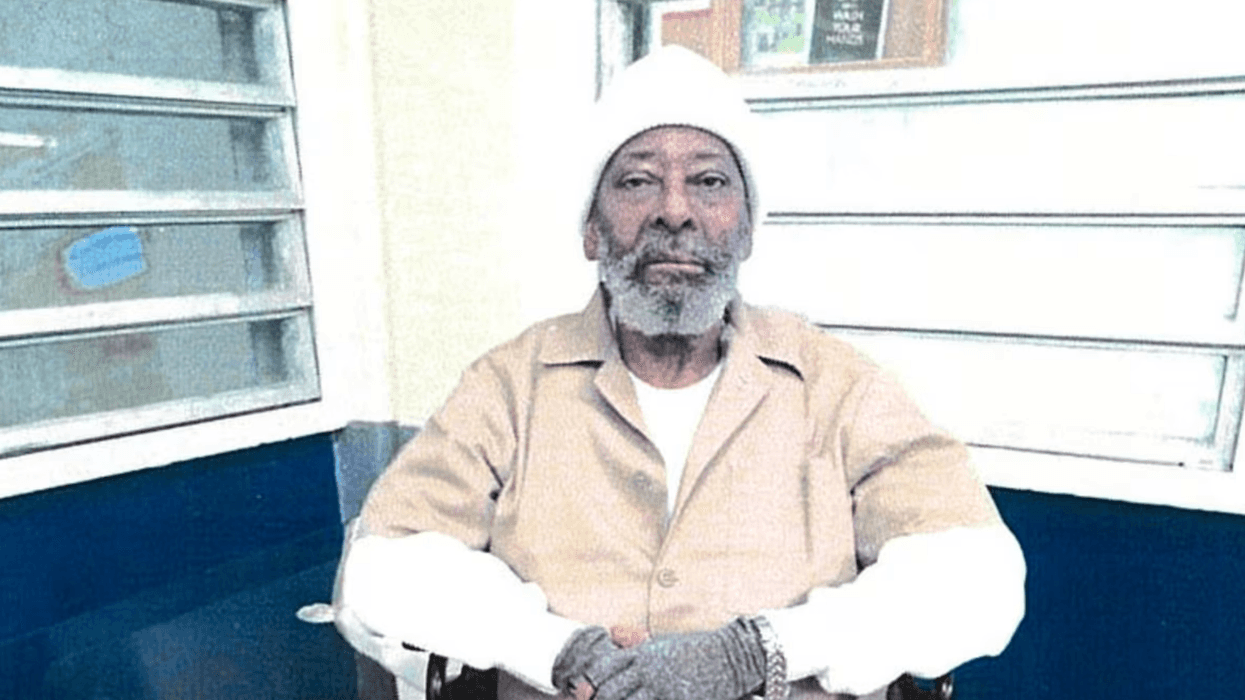
"The state was set to execute Sonny for a crime he didn't commit, but tens of thousands of people nationwide demanded justice—and our voices were heard," said the ACLU.
Amid nationwide public outcry, Republican Alabama Gov. Kay Ivey—a staunch supporter of capital punishment—on Tuesday spared a death row inmate who did not kill the man for whose murder he was sentenced to die and was scheduled for execution on Thursday.
“I firmly believe that the death penalty is just punishment for society’s most heinous offenders, as shown by the 25 executions I have presided over as governor," Ivey said in a statement. "In order to ensure the continued viability of the death penalty, however, I also believe that a government’s most consequential action must be administered fairly and proportionately."
"Doug Battle was brutally murdered by Derrick DeBruce while shopping in an auto parts store. But DeBruce was ultimately sentenced to life without parole," the governor continued. "Charles Burton did not shoot the victim, did not direct the triggerman to shoot the victim, and had already left the store by the time the shooting occurred. Yet Mr. Burton was set to be executed while DeBruce was allowed to live out his life in prison."
"I cannot proceed in good conscience with the execution of Mr. Burton under such disparate circumstances," Ivey added. "I believe it would be unjust for one participant in this crime to be executed while the participant who pulled the trigger was not. To be clear, Mr. Burton will not be eligible for parole and will rightfully spend the remainder of his life behind bars for his role in the robbery that led to the murder of Doug Battle. He will now receive the same punishment as the triggerman."
Burton—who is 75 years old and goes by the name Sonny—has been on Alabama’s death row since 1992, a year after Battle's murder.
"I didn’t kill no one, true enough, but I made a mistake by being part of the crime,” Burton told CNN in an interview last week, anticipating his execution. “I made a mistake, and it seems like all my friends have forgave me. I hope that my friends will remember me and remember that I was a real friend, a good friend.”
While Republican Alabama Attorney General Steve Marshall condemned Ivey for sparing a "murderer," both death penalty supporters and opponents welcomed the commutation.
BREAKING: Alabama Governor Kay Ivey commuted the death sentence of Sonny Burton.The state was set to execute Sonny for a crime he didn't commit, but tens of thousands of people nationwide demanded justice — and our voices were heard.
— ACLU (@aclu.org) March 10, 2026 at 9:18 AM
“It’s absolutely not fair. You don’t execute someone who did not pull the trigger,” Priscilla Townsend, one of three jurors in Burton's trial who asked Ivey for clemency, told the Associated Press, adding that she supports executing "the worst of the worst."
Tori Battle, Doug Battle's daughter, had also pleaded for clemency for Burton.
"No one from the state has ever sat with me to explain why Alabama believes it must execute a man who did not kill my father," Battle wrote in an article published last December in the Montgomery Advertiser. "My love for my father does not require another death, especially one that defies reason."
Laura Burton, executive director of the US Campaign to End the Death Penalty, said in a statement Tuesday: "We are grateful that Gov. Ivey recognized that Charles 'Sonny' Burton should not be executed. The death penalty process is deeply flawed when someone who was not present for the killing faces execution, while the person who committed the murder does not. It is uplifting to see that more and more governors across the ideological spectrum are recognizing problems with death penalty cases."
Last November, Oklahoma Gov. Kevin Still—also a staunch death penalty advocate—granted clemency to Tremane Wood with just minutes to spare before his scheduled execution for a murder his late brother confessed to committing.
Last year, Ivey also commuted the death sentence of Robin “Rocky” Myers to life in prison without parole, citing serious doubts about his guilt.
There are still 155 people on Alabama's death row, according to the state Department of Corrections. The state has executed five people since the beginning of 2025—one by lethal injection and four by nitrogen gas, a method rejected by veterinarians for euthanizing animals and condemned by United Nations human rights experts as possible torture.
Demetrius Minor, executive director of the death penalty abolition group Conservatives Concerned, said Tuesday that “we want to thank Gov. Ivey for granting clemency for Charles 'Sonny' Burton."
"This brings tremendous relief to his family and so many across the country," Minor added. "Conservatives know that government power can be abused and should not be used to execute someone who was not in the building when the murder was committed. Gov. Ivey acted on these conservative principles."