

SUBSCRIBE TO OUR FREE NEWSLETTER
Daily news & progressive opinion—funded by the people, not the corporations—delivered straight to your inbox.
5
#000000
#FFFFFF
To donate by check, phone, or other method, see our More Ways to Give page.
Daily news & progressive opinion—funded by the people, not the corporations—delivered straight to your inbox.
I want to be among the last people whose bodies carry the legacy of the nuclear age; whether I am depends on decisions that are still within our reach.
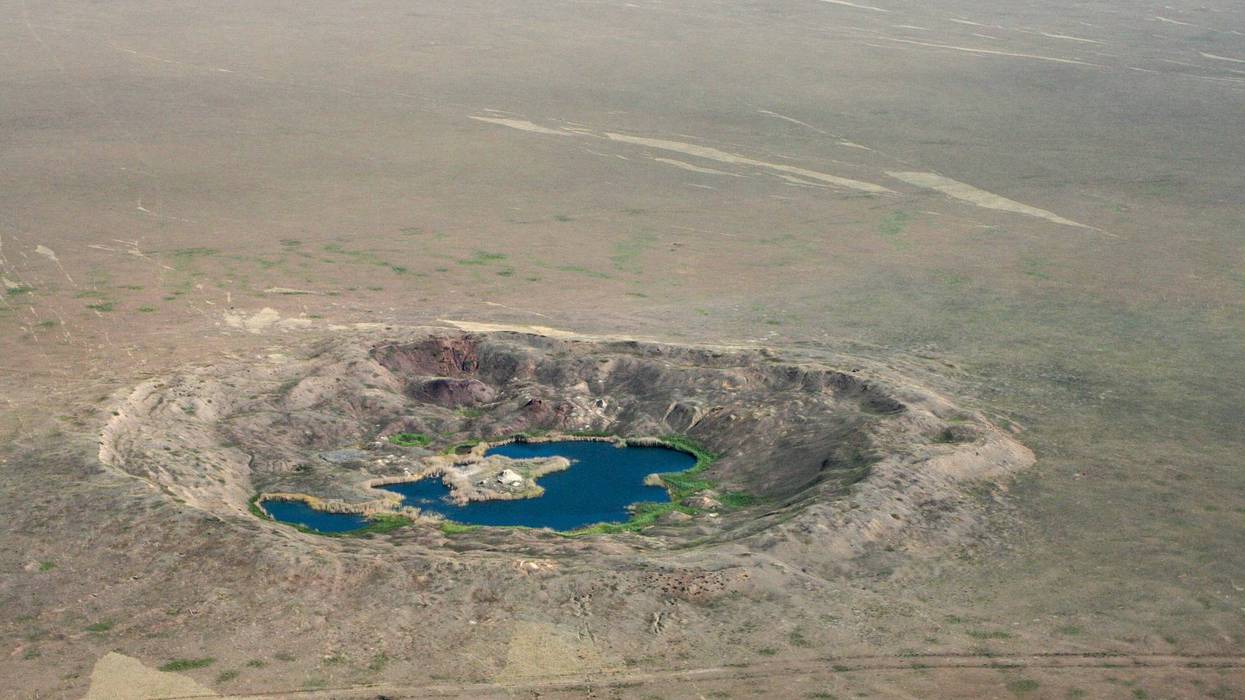
I paint with a brush held between my teeth or my toes. I was born without arms in 1968 about 100 kilometers from the Semipalatinsk nuclear test site in eastern Kazakhstan. My parents’ generation watched mushroom clouds rise over the steppe without being told what the explosions could do to their bodies or their children.
For four decades, the Soviet Union conducted more than 450 nuclear tests at Semipalatinsk. The fallout left cancers, disabilities, trauma, and contaminated land. Today, when leaders discuss nuclear weapons in the language of “deterrence” and “strategic balance,” I think of families paying for decisions in which they had no voice. The bomb is not an abstraction to me. Its history is written on my body.
August 29 carries two memories. On that date in 1949, the Soviet Union detonated its first atomic device at Semipalatinsk. On the same date in 1991, Kazakhstan closed the test site. At Kazakhstan’s initiative, the United Nations later proclaimed August 29 the International Day against Nuclear Tests. It is not simply a day of commemoration. It is a warning from the past about choices being made now.
In 2026, that warning is urgent. The Stockholm International Peace Research Institute estimates that the world began this year with 12,187 nuclear warheads. All nine nuclear-armed states continued strengthening their arsenals last year, while up to 2,200 warheads remained on high operational alert. In February, New START, the last treaty limiting the strategic arsenals of the United States and Russia, expired without a successor. In May, the review conference of the Nuclear Non-Proliferation Treaty (NPT) ended without consensus for the third consecutive time.
I paint the future I want to see: clean land, an unthreatened sky, and children born without the burden my generation inherited.
The world is not merely failing to disarm. It is learning to rely on the bomb again. There is growing rhetoric that nuclear weapons are the ultimate guarantor of peace and security. In moments of heightened tension, some states and strategic thinkers argue that only nuclear capability can prevent coercion, deter conflict, or preserve sovereignty. This logic of “nuclear reassurance” is being normalized not only in official doctrine but in public debate, where deterrence is recast as stability and restraint is portrayed as risk. Yet this framing erodes the very foundation of non-proliferation. It suggests that safety flows from the possession of the most destructive weapons ever created, rather than from law, diplomacy, and mutual restraint.
A non-proliferation system cannot endure if abstinence is portrayed as vulnerability while possession is equated with safety and status. The NPT rests on a bargain: Non-nuclear states agree not to acquire nuclear weapons, while nuclear-weapon states undertake to pursue disarmament. Both sides must keep their word. Rules cannot bind the weak and excuse the powerful.
Kazakhstan chose another logic. When we became independent, 1,410 Soviet strategic nuclear warheads remained on our territory, giving us what was then the world’s fourth-largest nuclear arsenal. We could have treated them as a shortcut to status or a shield against an uncertain future. Instead, a society that knew the price of radiation demanded a different kind of security. We closed Semipalatinsk, relinquished the weapons, and joined the NPT as a non-nuclear state. That choice did not erase the damage, but it showed that renunciation can be an act of sovereignty and strength.
Kazakhstan has tried to turn that experience into institutions. We helped establish the Central Asian Nuclear-Weapon-Free Zone, signed and ratified the Comprehensive Nuclear-Test-Ban Treaty, joined the Treaty on the Prohibition of Nuclear Weapons, and host the International Atomic Energy Agency (IAEA) Low Enriched Uranium Bank.
Our message is not “no” to nuclear science. Peaceful nuclear energy, subject to rigorous safeguards, can serve human development. It is “no” to weapons whose effects no border, hospital, or government can control.
The immediate path is clear. The nine remaining states whose ratification is required must bring the test-ban treaty into force. The United States and Russia must negotiate new verifiable limits, and all nuclear-armed states must join the work of reduction. Iran and the United States must restore full IAEA access through an enforceable agreement. More countries should join the prohibition treaty, while nuclear-armed states should engage with it even before they are ready to accede. Nations must also fund healthcare, victim assistance, and environmental repair. Disarmament cannot speak only about the future while abandoning those living with the past.
Some will call a world without nuclear weapons naive. I have learned what is truly naive: believing that thousands of warheads can remain ready for use indefinitely without error, miscalculation, rage, or technical failure. Deterrence requires every leader to remain rational, every warning system to be accurate, and every crisis to stay controlled—forever. Humanity has never met such a standard.
An artist begins with a blank canvas and believes another reality can be created. I paint the future I want to see: clean land, an unthreatened sky, and children born without the burden my generation inherited.
I want to be among the last people whose bodies carry the legacy of the nuclear age. Whether I am depends on decisions that are still within our reach. Kazakhstan turned away from the bomb. The world can do so too.
When we awaken from this trance and understand that these weapons do not make us safer, but rather are our greatest existential threat, we will be able to work together to lead an international effort to abolish them in a time-bound and verifiable manner.
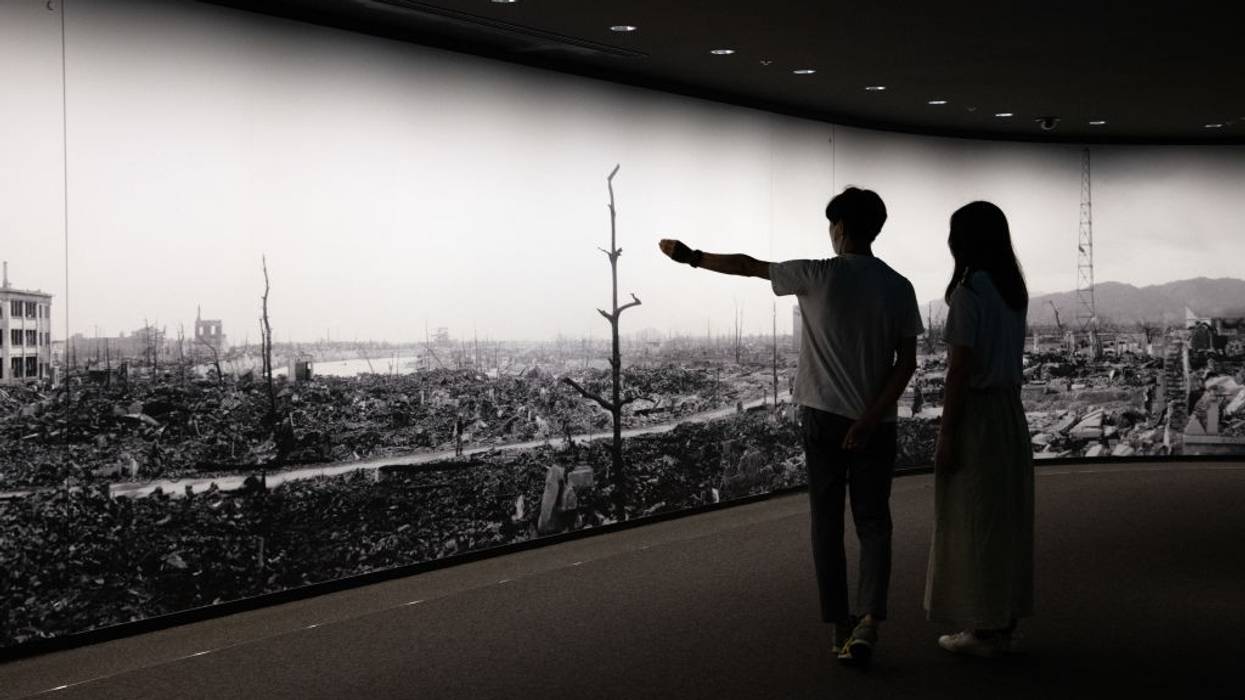
On August 6, 1945 at 8:15 am local time, our world changed forever when the US dropped the first atomic bomb used in war over the Japanese city of Hiroshima. The immediate death toll was approximately 70,000 with ~140,000 to have died by year's end. Three days later, the US would drop a plutonium bomb over the city of Nagasaki. The immediate death toll there was ~40,000 with ~70,000 to have died by year's end with a combined total of ~210,000. Three weeks earlier, following the atomic bombing of New Mexico with the Trinity test, the nuclear age was thrust upon mankind. The nuclear legacies from victims and survivors of the atomic bombings, Hibakusha, and their history lingers to this day. The legacy extends from the mining for the nuclear materials and its impact on local communities to the processing, testing, use, storage, and waste management, as well as the impacts and risks of nuclear power to this day.
Amnesic of past history and events, the United States initiated a new arms race beginning in 2010 with then-President Barack Obama‘s “grand bargain“ to garner favor with the Republican Congress to ratify the New START Treaty. Following our lead, all of the remaining nine nuclear nations are working to modernize their stockpiles as well.
With the advent of artificial intelligence programs already utilized by President Donald Trump’s Department of War and the race to bring this technology to war, we move ever closer to the brink of nuclear war, either by intent, miscalculation, mistake, or cyber attack using disruptive technologies. This fact was recognized by the Bulletin of Atomic Scientists, moving their Doomsday Clock forward this past January to 85 seconds to midnight.
In order to survive, we must awaken from the myth of deterrence, realizing it for what it is, the greatest driver of the arms race. The unexamined assumptions that these weapons must exist is blatantly false. We know how to build these weapons, and we know how to disassemble them. From a height of roughly 64,000 weapons in 1986 we have reduced global stockpiles to approximately 12,187 currently. We also know that even a “limited nuclear war“ in a remote region of the world, for example, between India and Pakistan, using less than one half of 1% of global stockpiles, will result in a global nuclear famine. This could potentially result in up to 2 billion deaths on the planet due to the catastrophic climate change that would follow.
The Hibakusha have a mantra of “never again.” We owe a debt to the Hibakusha, their memory, and future generations to demand the complete abolition of these weapons.
When we awaken from this trance and understand that these weapons do not make us safer, but rather are our greatest existential threat, we will be able to work together to lead an international effort to abolish them in a time-bound and verifiable manner.
What is required in this race to save ourselves is the political courage and will to do so. Thankfully, there is hope both internationally and nationally. The Treaty on the Prohibition of Nuclear Weapons has been ratified by 75 nations and signed by 25 additional nations representing a majority of the global population. Here at home the Back From the Brink grassroots movement currently has endorsing congressional resolutions. There are 70 members of Congress, who have endorsed House Resolution 317 and Senate Resolution 323.
The Hibakusha have a mantra of “never again.” We owe a debt to the Hibakusha, their memory, and future generations to demand the complete abolition of these weapons. We must demand our elected officials endorse this campaign or move out of the way for those who will.
Unless there is an advent of new, less hawkish rulers, a movement revival, or both, a nuclear war seems likely.
Although 81 years have passed since the atomic bombing of Japan in August 1945, the rulers of major nations continue their reckless march toward a nuclear holocaust.
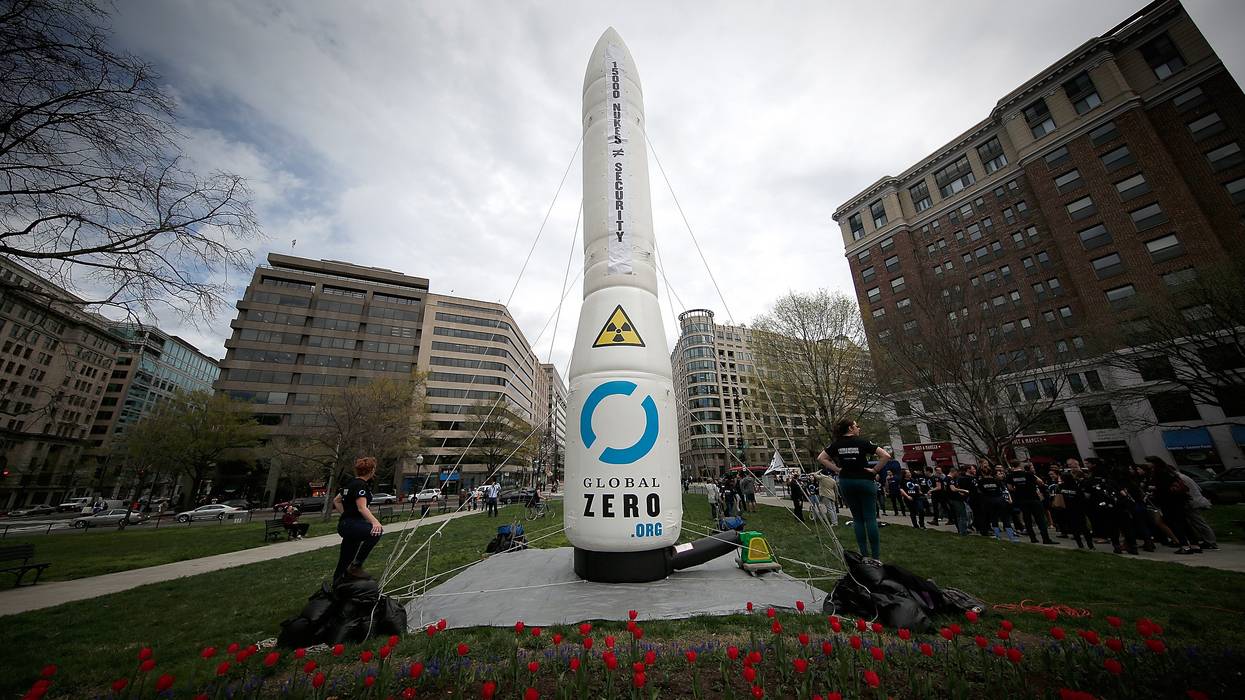
The nine nuclear powers (the United States, Russia, China, Britain, France, Israel, India, Pakistan, and North Korea), possessing some 12,100 nuclear warheads, are all busily upgrading and expanding their nuclear weapons arsenals at an accelerating pace. Nuclear weapons spending rose to an all-time high of $119 billion in 2025―a 19% increase over the preceding year. The US government alone, which accounted for more than half of this spending, is embarked on a $1.7 trillion, decades-long nuclear weapons buildup.
As the International Campaign to Abolish Nuclear Weapons (ICAN) has observed, “This overwhelming spending on nuclear weapons shows a willingness to research, develop, finance, and build tools to exterminate humanity.”
Moreover, international nuclear arms control and disarmament agreements among the nuclear powers have collapsed. Russia and the United States own 86% of the world’s nuclear weapons and, although they signed numerous treaties in the past to limit or reduce the size of their nuclear arsenals, the last of these treaties, New START, expired this February.
Today, most rulers of the nuclear powers are nationalistic, militaristic, and authoritarian, with no interest in nuclear disarmament. Instead, they are busy readying their nations for a disastrous nuclear war.
The accelerating nuclear arms race is accompanied by repeated threats of nuclear war. Russian officials are particularly notorious in this connection. According to the Voice of America, from early 2022 to late 2024 Russian officials publicly issued 135 nuclear threats, with 27 of them coming from President Vladimir Putin. But America’s President Donald Trump has also publicly and repeatedly threatened other countries with nuclear destruction, as has North Korea’s Kim Jong Un.
Early this year, the editors of the Bulletin of the Atomic Scientists, assessing this deteriorating situation, moved the hands of their famous “Doomsday Clock” to 85 seconds to midnight, the most dangerous setting in its history.
Of course, there have been a great many warnings that nuclear weapons portend global disaster, including many beginning right after the shocking annihilation of Hiroshima and Nagasaki. “Seldom, if ever,” reported CBS radio commentator Edward R. Murrow, “has war ended leaving the victors... with such a realization that... survival is not assured.” The Chicago Tribune warned that a future atomic war would leave the world “a barren waste, in which the survivors... will hide in caves.” In France, the resistance leader Albert Camus declared that the modern world had “reached the last degree of savagery,” in which nations were faced with the prospect of “collective suicide.”
As nuclear fear swept around the world, large numbers of people sought to avert catastrophe. Some called for dramatically strengthened global governance to prevent the outbreak of nuclear war, while others, with the same goal in mind, championed nuclear disarmament. Speaking on behalf of the newly-formed Emergency Committee of Atomic Scientists, Albert Einstein typified this popular uprising by arguing that “a new type of thinking is essential if mankind is to survive.”
Over subsequent decades, the anti-nuclear movement ebbed and flowed, but, at times of mass mobilization, it had an important effect on nuclear weapons policies. Naturally, the leaders of many nations felt the allure of nuclear weapons, especially after thousands of years of human history in which national security often seemed to rest upon military strength. Nevertheless, as indicated by opinion polls and massive demonstrations, anti-nuclear agitation inspired revulsion against nuclear weapons and nuclear war among large portions of the public. Consequently, most governments decided not to build nuclear weapons or even to deploy them on their territory.
Hard-pressed by anti-nuclear campaigners and public opinion, even the small number of governments that built nuclear weapons found themselves unable to resist agreement on nuclear arms control and disarmament measures. Dwight Eisenhower, John F. Kennedy, Nikita Khrushchev, Ronald Reagan, and George H.W. Bush were not nuclear “doves” when they entered office, but, in response to popular pressure, they took significant action to curb nuclear dangers. Some government officials, like Mikhail Gorbachev, even became fervent converts to the anti-nuclear cause.
As the 20th century came to an end, however, progress in rolling back the nuclear menace began to unravel. Popular protest declined, and nuclear disarmament organizations dwindled in size. By contrast, conservative and militarist forces grew more assertive, blocking US Senate ratification of the Comprehensive Test Ban Treaty, demanding the building of new nuclear weapons, and derailing Barack Obama’s initiative for creating a nuclear weapons-free world.
Although nuclear disarmament organizations were on the defensive during the early 21st century, they retained enough strength to produce one major victory. Joining together in the International Campaign to Abolish Nuclear Weapons, they cooperated closely with officials in small, non-nuclear nations to produce a series of United Nations conferences on nuclear issues. Then, at the 2017 conference, the national delegates voted 122 to 1 to adopt the UN Treaty on the Prohibition of Nuclear Weapons (TPNW), which banned nuclear weapons. Entering into force in January 2021, the treaty has been signed, thus far, by 100 countries―a majority of the world’s nations.
Even so, the situation remains dire. Today, most rulers of the nuclear powers are nationalistic, militaristic, and authoritarian, with no interest in nuclear disarmament. Instead, they are busy readying their nations for a disastrous nuclear war. Not surprisingly, none of them is willing to sign or even abide by the TPNW. Although the anti-nuclear movement continues to oppose their priorities, it remains weak and unable to halt the momentum toward nuclear catastrophe.
Thus, unless there is an advent of new, less hawkish rulers, a movement revival, or both, a nuclear war seems likely.
Admittedly, it’s possible that, when a calamitous nuclear war does occur, it will finally convince even the slow learners among government officials that the nuclear age requires new thinking about international relations. Unfortunately, that recognition will arrive too late to matter, for such a war will snuff out most life on Earth.
Humanity faces a choice, whether consciously or not, to continue down a path of conflict that leads toward ultimate destruction or to renounce its old ways and center peace at the heart of all its efforts.
This speech was delivered to the 11th Review Conference of the Treaty on the Non-Proliferation of Nuclear Weapons on May 1, 2026.
Honorable President, Distinguished Delegates, Colleagues, and Friends,
We are living in a decisive moment. Humanity faces a choice, whether consciously or not, to continue down a path of conflict that leads toward ultimate destruction or to renounce its old ways and center peace at the heart of all its efforts.
International law, built painstakingly over decades and even centuries to prevent such an unfathomable catastrophe, is under brazen and relentless attack today. At the heart of this divergence lies a fundamental question: whether states may claim a right to wage war without restraint, and whether use and even possession of weapons with potential to end human civilization can ever be justified. These are precisely the issues at the core of the Treaty on the Non-Proliferation of Nuclear Weapons (NPT)—whose future we have gathered to discuss at this Review Conference.
Nuclear disarmament and nuclear non-proliferation are not separate tracks toward a safer world—they are intertwined and inseparable paths.
Our world is a time-ticking bomb. There are more than 12,000 nuclear warheads in existence—each capable of killing hundreds of thousands, some even millions of people, and any one of which could trigger a chain reaction leading to full-scale nuclear war in less time than this session will last.
More than 40 years ago, Presidents Ronald Reagan and Mikhail Gorbachev reminded us that “a nuclear war cannot be won and must never be fought.” And yet today, we hear renewed calls to use nuclear weapons in the name of “saving lives,” alongside threats that contemplate the destruction of entire societies.
The five nuclear-weapon states recognized under the NPT, the United States, the Russian Federation, the United Kingdom, France, and China, possess over 95% of the world’s nuclear arsenal. With that power comes not only a moral responsibility, but a clear legal obligation under Article VI of this Treaty: to pursue negotiations in good faith to achieve not only nuclear disarmament, but also total and complete general disarmament.
Nuclear disarmament and nuclear non-proliferation are not separate tracks toward a safer world—they are intertwined and inseparable paths. As Joseph Rotblat warned in his 1995 Nobel Peace Prize acceptance speech: “If the militarily most powerful and least threatened states need nuclear weapons for their security, how can one deny such security to countries that are truly insecure? The present nuclear policy is a recipe for proliferation. It is a policy for disaster.”
We join the voices of hibakusha and countless others who have come before us in urging all NPT States Parties to take immediate and meaningful action:
This call is not just an abstract moral appeal; it is a prerequisite for human survival. The credibility of the NPT and the future of humanity depend on the actions we take over the next three weeks.
In the words of Joseph Rotblat: “The quest for a war-free world has a basic purpose: survival. But if in the process we learn how to achieve it by love rather than by fear, by kindness rather than by compulsion; if in the process we learn to combine the essential with the enjoyable, the expedient with the benevolent, the practical with the beautiful, that will be an extra incentive to embark on this great task.”
Thank you, Honorable President.
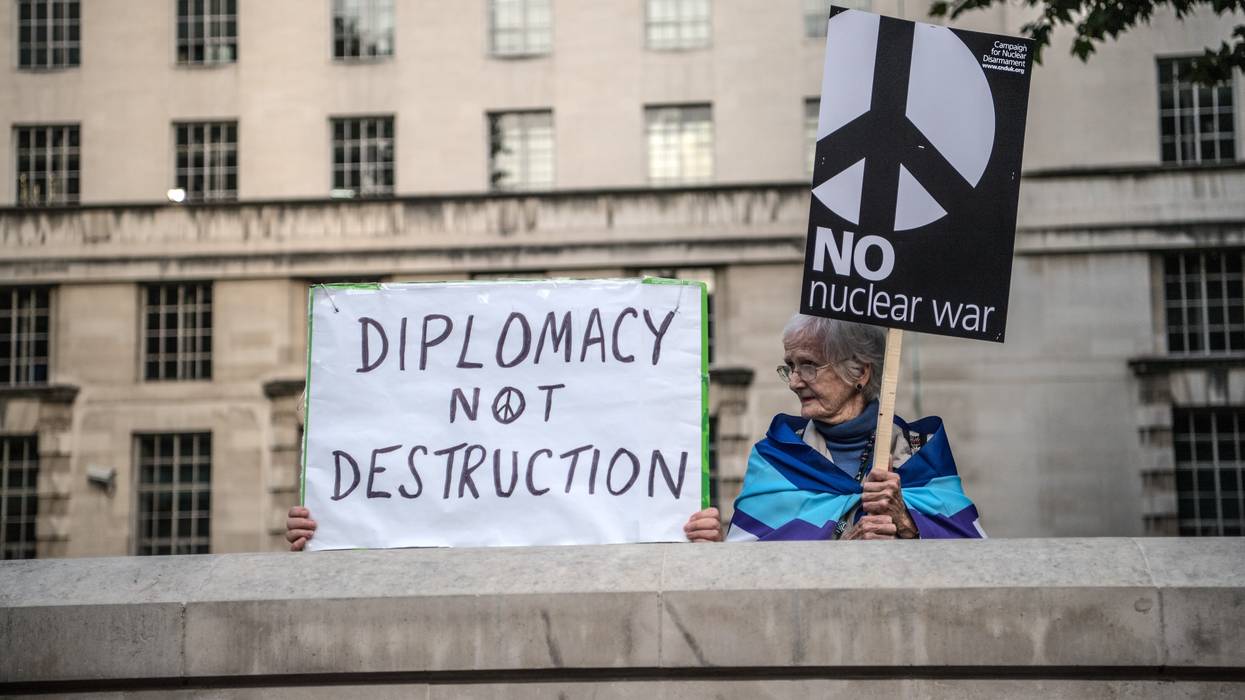
Politicians and the media use deliberately confusing terms that downplay the dangers of a military and nuclear arms race to the general population.
The use of key security policy terms in public discourse is intended to suggest facts that serve to calm people down. However, there are many reasons for concern that could also trigger peace forces.
Political scientist and historian Herfried Münkler called for a European atomic bomb as early as 2023. There is currently an increasingly heated debate about whether Germany should seek refuge under France's nuclear protective shield in view of Russia's aggression in Ukraine. The leader of the Social Democrats in the European Parliament, Katarina Barley, also raised the issue of acquiring nuclear bombs as part of European armament in 2024. The German and French heads of government, Friedrich Merz and Emmanuel Macron, are also paving the way for talks on European nuclear armament and the extension of France's nuclear umbrella, according to Merz in his speech at the Munich Security Conference in early 2026.
There is repeated talk of a nuclear umbrella. The problem is already clear in this choice of words. Such a protective shield, which one would only have to deploy to be protected, does not exist. This term suggests that Germany or even Europe would be protected from attacking missiles with nuclear warheads if the nuclear protective shield were installed. However, there is no protection against dozens of hypersonic missiles with multiple nuclear warheads attacking simultaneously. The few minutes of reaction time are not enough for a successful counterattack.
Anyone who promises a nuclear protective shield in this sense is trying to deceive people about the real danger of a nuclear conflict in order to achieve their actual military-strategic goals.
So-called "mini-nukes" have a yield of between 10 and 20 tons of TNT equivalent, which is roughly the same as the bombs dropped on Hiroshima and Nagasaki.
Those who are more knowledgeable know that the term “nuclear protective shield” refers more to the nuclear deterrence of a potential attacker. This deterrence would result from the nuclear second-strike capability if a nuclear first strike is underway or has already taken place. The question here, of course, is whether a nuclear second strike is still possible if the first strike with nuclear weapons could not be repelled. Here, too, the talk of a nuclear protective shield is problematic.
The distinction between strategic and tactical nuclear weapons also poses a semantic problem. Here, technological language suggests that there is a clear distinction between the two. Tactical nuclear weapons are weapons that are intended for limited use due to their lower explosive power, shorter range, and deployment. However, the boundaries are fluid, and Russia also considers tactical weapons to be strategic. If this distinction is nevertheless used, the use of more limited (tactical) nuclear weapons could then be viewed fundamentally differently from the use of larger and longer-range nuclear weapons in terms of explosive power.
The conceptual problem is further exacerbated by so-called “mini-nukes.” Thus, the gradation and differentiation of nuclear weapons pretends that a nuclear war could be confined to a regional or local level. This merely lowers the nuclear threshold and thus downplays the risk of nuclear escalation. Incidentally, so-called "mini-nukes" have a yield of between 10 and 20 tons of TNT equivalent, which is roughly the same as the bombs dropped on Hiroshima and Nagasaki. This is therefore also a linguistic distortion and trivialization of a terrible weapon.
Russia's invasion of Ukraine in February 2022 was a clear act of war, albeit without a declaration of war. Russia's war against Ukraine, which has now been going on for over four years, has been disguised as a “special military operation.” To this day, the Kremlin refuses to acknowledge the conceptual truth of its war. In doing so, it attempts to downplay the illegality and barbarity of its aggression to its own population and to the world. "Special military operation" sounds more like a clean, technical intervention. Language could not be used in a more manipulative way, considering that hundreds of thousands of people have already fallen victim to this war, millions have fled, and Ukraine's vital infrastructure and ecology have been destroyed.
When people are satisfied with their governments' security policy, which is secured by a system of terminology that obscures the facts, then a false consciousness is hegemonically induced in them.
Equally problematic is the term "Russian world" (Russkij Mir), which Russian President Vladimir Putin uses repeatedly. A Russian world as such does not even exist in Russia, as it is a multiethnic state created by coercion and military force, with very different cultural characteristics among its peoples. Thus, talk of the "Russkij Mir" serves to justify military aggression against other states with the argument that the Russian world and the Russian-speaking people there are under threat.
This ethnically charged term is also the central ideological construct used to restrict the state independence of countries such as Belarus and Ukraine.
Since Germany is not permitted to possess nuclear weapons under the 2+4 Treaty and the Nuclear Non-Proliferation Treaty, NATO has agreed on the principle of "nuclear sharing." However, this term also serves to obscure harsh security policy realities. According to reports, up to 20 US B61-3/4 nuclear bombs are stored in Büchel (Rhineland-Palatinate), combined with German Air Force Tornadoes capable of delivering nuclear warheads to an enemy target.
However, the American nuclear capabilities stored there—and also in other European NATO countries—do not allow for participation by the German federal government. Participation implies the possibility of having a say. But the US government repeatedly makes it clear that the possible use of these nuclear weapons is exclusively subject to the respective US government. This undermines and circumvents the United Nations Nuclear Non-Proliferation Treaty on nuclear sharing among NATO countries, while at the same time obscuring the fact that these weapons are controlled by a foreign power.
The potential dangers of the "modernization" of nuclear weapons are also being downplayed. The term "modernization" as used in security policy also implies a positive development of nuclear weapons—after all, "modern" represents a positive innovation in language usage—and obscures the increasing danger of these weapon systems.
A particularly problematic aspect of this modernization is the integration of artificial intelligence and the expansion of its functionality within the framework of nuclear strategies. However, AI works on the principle of probability calculation and is extremely prone to error. The information from hundreds of sensors, which an AI uses to make a statement in a very short time, e.g., about attacking nuclear missile swarms, cannot be reliably verified by those responsible in the few minutes of time available. However, this development could make an accidental nuclear war more likely.
When German Defense Minister Pistorius says that Germany must become “war ready,” this contradicts the defense mandate of the Basic Law and the prohibition of wars of aggression (GG Art. 26 (1) and 115a). The concept of war includes both defense and attack. Therefore, if the federal government adheres to the Basic Law, it should only talk about and take appropriate measures to become defensible.
War readiness is based on the postulate of military strength through deterrence. Since no state wants to voluntarily face the military superiority of an enemy state or military alliance, that state will devote an increasing share of its national budget to further armament measures in order to surpass its opponent in military strength. This leads to an arms race and—as World War I shows, for example—ultimately to war.
Defense capability relies on the priority of negotiations, diplomacy, and systematically coordinated control and disarmament treaties.
Defense capability means prioritizing military defense capabilities, e.g., with regard to defending against drone attacks, in conjunction with improved “resilience” of critical infrastructure. Even this kind of resilience is currently unachievable for any state. Today's industrialized nations in the digital age are virtually impossible to protect against hybrid attacks, especially hacking of power and heating networks. Anyone who suggests that this is entirely possible creates a false sense of security.
But when people are satisfied with their governments' security policy, which is secured by a system of terminology that obscures the facts, then a false consciousness is hegemonically induced in them. They are deprived of the civil society power to resist their government's risky course. This also characterizes the dilemma of the current peace movement. Although it clearly addresses the dangers of military escalation and nuclear war in its appeals, it does not find the resonance that would actually be expected in the current crisis situation.
The deployment of three different missile systems, including hypersonic weapons, planned for November 2026, follows the verdict of strength through deterrence. These weapon systems will be stationed in Germany under US command. This was agreed upon between former US President Joe Biden and former German Chancellor Olaf Scholz on the sidelines of the NATO summit in New York in the summer of 2024, without any debate in the Bundestag. The deployment will take place without any accompanying offer of negotiation to Russia. These are so-called "decapitation weapons," i.e., weapons that are not primarily intended for defense, as stipulated in the Basic Law.
In this case, too, it is problematic to speak of "security policy" in relation to the US missile deployment. It could well be that this deployment could increase uncertainty and the risk of escalation for Germany. These weapon systems, which certainly pose a threat to Russia, could become targets for Russian missile attacks, which in turn would trigger a corresponding spiral of retaliation, possibly even nuclear.
But defense capability relies on the priority of negotiations, diplomacy, and systematically coordinated control and disarmament treaties. In this context, building up military defenses and attempting to secure critical infrastructure is entirely necessary and legitimate. However, the planned US missile deployment undermines this defense policy objective. What will Russia do in this case? It should not be forgotten that Russia has already deployed Zircon and Kinschal hypersonic missiles, for example in Kaliningrad, and has already used the Oreschnik hypersonic weapon, which is virtually impossible to defend against, at least twice in the war in Ukraine. If NATO's Western allies are not prepared to renegotiate the disarmament and control treaties, Russia will certainly attempt to expand and upgrade its own arsenal once the US missiles are deployed at the end of 2026.
Disclosing the dangers implied in security policy language in connection with nuclear weapons does not mean defeatism or resignation in the face of an opponent armed to the teeth with conventional and nuclear weapons.
However, if people allow themselves to be deceived by appeasing terminology and its use in public discourse on security policy, this leads to a dangerous lulling of these people into a false sense of security. The security policy promises behind this terminology give them a feeling of security that does not correspond to the actual risk when states focus on military armament, in particular the further development of nuclear weapons systems, and military escalation. The disclosure of real dangers is not intended to cause anxiety about security policy and paralysis, but rather to raise awareness of actual dangers as the basis for the priority need for improved defense capabilities, in particular through negotiations and diplomacy.
Historical experience with a policy of deterrence through military strength shows, however, that a spiral of military armament increases the likelihood of military conflict.
In summary, it can therefore be said that the security policy goal must be defense capability. This also includes a disarmament proposal that has already been mentioned several times, within a framework controlled by the United Nations, that the two major military powers, the US and Russia, should gradually disarm all weapons systems, including nuclear weapons, to the level of the People's Republic of China. In a next step, under the transparent supervision of international institutions such as the UN and the Organization for Security and Co-operation in Europe, these three states would have to disarm to the level of smaller states until, for example, the United Nations Treaty on the Prohibition of Nuclear Weapons is fully implemented.
This would be an effective and sensible security policy worthy of the name. Even though there are currently major geopolitical obstacles standing in the way of such controlled and transparent international disarmament, this peace-bringing disarmament strategy must not be lost sight of. The trillions that would be saved by all participating states as a result of disarmament and the elimination of further armament could also be a compelling argument for such an internationally coordinated and balanced disarmament strategy, at least in the medium term.
Historical experience with a policy of deterrence through military strength shows, however, that a spiral of military armament increases the likelihood of military conflict. A security policy that is oriented toward defense capability rather than war capability would also have to use different language. Obscuring terms that are embedded in a context of meaning and semantically designed to conceal rather than reveal military risks are part of a media-mediated military strategy that will not lead to peace.

We have to keep talking about, writing about, and organizing against nuclear weapons to prevent the Doomsday Clock from reaching midnight.
“I’m not scared, you’re scared!” is the repeated line in a children’s story we recently read to the kids at the Unitarian Universalist version of Sunday school I attend with my children. In that story, a scared bear and a brave rabbit, who (naturally!) are best friends, go on a hike together. Rabbit has to cajole and encourage Bear through every imaginable obstacle, but in the end (of course!) it’s Rabbit who gets stuck at the crucial moment and has to call on Bear for help. Bear (no surprise) sets aside his fears to rescue his friend and (tada!) finds new depths of bravery and adventurousness in the process.
After we read the story, the kids worked together to build paths from blocks and Legos through the imagined obstacles in the story—a bridge over a rushing river, a path through a dark forest, a staircase up a steep mountain. It was one of our most engaging classes in recent memory, while the kids kept saying, “I’m not scared, you’re scared!” and laughing while they played. As we stacked blocks and fit Legos together, we adults were supposed to help the kids identify things they were afraid of and how they could confront those fears. For me, it was just one thing too many. I blanked on that part of the assignment.
In fact, I was a little relieved to have done so. Of course, I have fears myself, but I’m not afraid of spiders or heights or small spaces like so many people. I am afraid of nuclear war—not something I would want to confess to a bunch of kids sitting on carpet squares.
What should I have said? “Okay, kids, I know some of you are afraid of monsters or werewolves or the Wither Storm in Minecraft, but I’ll tell you something truly terrifying: the Bulletin of the Atomic Scientists just moved its Doomsday Clock to 85 seconds to ‘nuclear midnight,’ four seconds closer than ever before.” I would have gotten blank stares and quick subject changes and yet, once I had started, I would undoubtedly have kept on sharing the telltale heart of my own bogeyman. “When I was a kid in the 1980s,” I would have said, “we were at three minutes to metaphorical midnight and my dad, who was an activist, wouldn’t even let me go to the movies. Now, they have pushed it even closer—closer than ever before. With nine countries armed with nuclear weapons, we’ve tick-tocked ourselves to 85 seconds to midnight. Yep, 85 seconds, by the way, is probably less time than it takes you to spell your full name or tie your shoes.”
Trump’s famous wrecking ball that blasted the East Wing and the Kennedy Center is now aimed at the nuclear treaty architecture built up over the decades.
Of course, I kept those long-winded, fact-filled fears to myself at that Sunday school. But I’ll tell you all that, in truth, it’s far worse than even what I thought that day. The Bulletin‘s scientists who made the announcement about those 85 seconds to midnight were contending with more than nuclear dangers (which have, by the way, never been more imminent). Those scientists were also responding to the speeding up of catastrophic climate change and the threats posed by artificial intelligence (AI). In the words of Daniel Holz on the Bulletin‘s Science and Security Board, “The dangerous trends in nuclear risk, climate change, disruptive technologies like AI, and biosecurity are accompanied by another frightening development: the rise of nationalistic autocracies in countries around the world. Our greatest challenges require international trust and cooperation, and a world splintering into ‘us versus them’ will leave all of humanity more vulnerable.”
Yes, all of humanity is vulnerable indeed—like my young friends building Lego bridges across felt rivers for a Bear and a Rabbit birthed in late night comedian Seth Meyers’s imagination.
And as if all of that weren’t terrifying enough, Thursday, February 5 marked the end of arms control as we’ve known it. The last treaty controlling nuclear weapons between my country and Russia expired without a replacement on that day, leaving us all vulnerable to the whims of Donald Trump and Vladimir Putin. There are reports of a handshake deal between the two countries to extend the principles of the treaty, but haphazard and informal agreements are simply not “arms control” (at least as we once knew it).
The Strategic Arms Reduction Treaty, known as New START, was signed by US President Barack Obama and Russian President Dmitry Medvedev in 2010 and set out a schedule for verifiable and commensurate nuclear arsenal reductions. It was renewed under Republican and Democratic administrations, but it is very “on brand” for strongmen Donald Trump and Vladimir Putin to deride international treaties of any sort.
Unfortunately, the sort of muscular bombast they’re known for isn’t what’s kept the world reasonably safe from nuclear war for the last eight decades, since the atomic bombings of the Japanese cities of Hiroshima and Nagasaki in 1945. Rather, it was a tight web of treaties—the Comprehensive Test Ban Treaty, START I and II, New START, the Anti-Ballistic Missile Treaty, and the Nuclear Nonproliferation Treaty—that kept the whole world safe (or as safe as we could be with ever more nuclear-armed powers proliferating across the planet). That alphabet soup of promises, schedules, and commensurate acts of disarmament, as fragile and incremental as it was, resulted in the dismantlement of 80% of the US and Russian arsenals over the decades.
Now, we are all being dragged in the other direction.
Trump’s famous wrecking ball that blasted the East Wing and the Kennedy Center is now aimed at the nuclear treaty architecture built up over the decades. In its place, he proposes to construct a Golden Dome missile defense system to protect the United States from incoming nuclear weapons. And that fool’s errand could not only lead us toward nuclear war, but have a price tag in the trillions of dollars.
With his administration’s gold-plated, AI-enhanced sense of aggression, President Trump is now taking aim at NATO, an alliance the United States helped to build after World War II. His administration is abrogating agreements, leveling tariffs, and threatening to annex Greenland. Europe is getting the message that the United States is no longer a reliable ally, stoking concerns that yet more countries will move to create nuclear arsenals. Meanwhile, Vladimir Putin’s Russia is investing more money in nuclear weapons and the Russian strongman has actually threatened to use such weapons, while already at war in a part of Europe.
Of course, Russia and the United States are anything but the only nuclear states these days. China, France, the United Kingdom, Israel, India, Pakistan, and North Korea round out the rogue’s gallery of—to come up with a word of my own—Obliterables.
In 2024 alone, those nine nuclear-armed states spent more than $100 billion on such weaponry, an 11% increase over the year before, according to the Nobel Peace Prize-winning International Campaign to Abolish Nuclear Weapons (ICAN). For example, the Bulletin of the Atomic Scientists‘ Nuclear Notebook finds that China is rapidly and aggressively increasing its nuclear arsenal. Beijing, it points out, has “significantly expanded its ongoing nuclear modernization program by fielding more types and greater numbers of nuclear weapons than ever before.”
Throughout Asia and Europe, the leaders of all too many countries are openly discussing regional pacts and the need to develop their own nuclear weapons programs. They are reviving the moribund logic of proliferators—that only more nuclear weapons can protect us against nuclear weapons. And that is exactly the wrong conclusion to draw in this already endangered world of ours.
Instead of all this unilateralism and nuclear proliferation, nuclear and nuclear-adjacent nations should be signing on to the Treaty on the Prohibition of Nuclear Weapons. It’s clear and smart, and its goals are achievable. In essence, it prohibits countries from developing, testing, producing, stockpiling, transferring, or threatening to use (no less actually using) nuclear weapons. And if that seems remarkably comprehensive, it actually goes further, prohibiting nations from allowing nuclear weapons to be stationed on their territory. It also prohibits assisting, encouraging, or forcing any other country to engage in any of these activities.
Thursday, January 22 marked five years since that treaty entered into force as international law and was adopted by a significant majority of the countries on this planet. On that day, I joined a handful of people gathered at the General Dynamics complex in New London, Connecticut (where I live). We celebrated the 74 nations that have ratified the treaty and the 25 more that have signed it and are in the process of ratifying it. My country, the United States, of course, stands outside of the global consensus on nuclear disarmament.
That same week after the Doomsday Clock moved four seconds closer to midnight, I wrote an essay for my local paper in New London. In less than 800 words, I tried to describe the massive nexus of decisions and dangers that went along with that four-second nudge closer to a metaphorical midnight for us all.
I shared my essay with my 11-year-old daughter Madeline while we sat in the bleachers at a local pool, watching her older brother swim with his swim team. She’s a wise little sixth grader who regularly pays attention when I least expect it. “Look what I did, Madeline,” I said, and showed her a screenshot of my article on my phone. The title was “Closing in on Nuclear Midnight; There’s Still Time to Disarm.” And then I explained to her that it was focused on how the Doomsday Clock had just moved closer to midnight.
“Oh,” she said, “I had a full-blown anxiety attack last week because Joanna told me that the flu shot wasn’t going to work.” Joanna is a seventh-grade friend of hers whose words carry a lot of weight.
I can all too easily spin out into an anxiety attack if I don’t continue to anchor myself to that little speech I made to Madeline, reminding myself of the real work people are doing to make this world a more bearable place.
I struggled to make the connection between that and what I had just shown her. Madeline added flatly, “A whole day of actual anxiety because of that news.”
“You’re going to be fine,” I said, far too quickly. “You’re healthy and, even if you get the flu, you’ll survive just fine.”
Then I slowed down. Of course, she was anxious. There was plenty to be anxious about in this Trumpian world of ours. Masked men in the streets, pulling some people out of cars through broken windows and shooting others in broad daylight. Tear gas, blockades, and crying kids on the nightly news (which we still watch sometimes).
But her fear of a flu shot and the flu she might still get was the right-sized fear for a sixth grader. Flagrant fascism, paramilitary violence, naked racism: those are massive fears for the preteen mind, as large as her mother’s fixation on nuclear war.
I need to tread carefully here, I thought, since panic and fear are contagious and erode rationality. Panic and fear cause isolation and paranoia. And while no one should panic about nuclear weapons, I thought, there’s certainly plenty to be afraid of. So, I pulled her a little closer to me, while remembering a professor at Rutgers who estimated that even a regional nuclear war would have a staggering global impact.
As a group of authors wrote in Nature Food in 2022, “In a nuclear war, bombs targeted on cities and industrial areas would start firestorms, injecting large amounts of soot into the upper atmosphere, which would spread globally and rapidly cool the planet.”
Such an upside-down atomic version of climate change would have a widespread impact on agriculture globally, leading to massive famines. They estimated that more than 2 billion people might die from a “limited” nuclear war between long-time nuclear rivals India and Pakistan.
Brutal, right? I chose to keep that information to myself in the bleachers at that swimming pool. The flu shot, not global famine, I thought to myself. Stay right-sized in this conversation with her.
But my little girl moves fast and she makes connections—and she’s fascinated by time. She’s worn a watch forever and always wants to know how long something will take. (“When?” is her favorite question.) So, it was no surprise to me that the Bulletin of the Atomic Scientists clock fascinated her.
“85 seconds is not a long time, Mom. I mean, look,” and she made a quick little circle with her hand. “That’s like 85 seconds, so what does it mean that we’re 85 seconds to midnight?”
“Well,” I began, my voice suddenly breaking as I imagined the hellscapes of Hiroshima, those grim graphs in the Nature Food paper, and my daughter’s future.
“No, Mom,” she said. (She didn’t want my big emotions.) “Just tell me what happens when we get to midnight.”
“Well,” I began again, “if we hit midnight on their clock, that is the end of the world as we know it.”
“But that isn’t going to happen, right, Mom?” She replied with her usual firm confidence that I always admire and am invariably curious about, wondering where it comes from.
“It hasn’t happened yet, love,” was the best I could muster. “And the reason it hasn’t happened is that so many people all over the world all the time are resisting, pushing back, passing legislation, holding up signs, making documentaries, urging divestment from nuclear-related corporations, being creative and brave, calling for disarmament in every language we human beings speak.”
I’m stirred by my own rhetoric! “Nice!” I think to myself, but I can see her attention has slipped away.
I had, however, said the thing she needed to hear—that people are working to keep nuclear midnight from happening. She sees me working to do so, too. She sees me suiting up for another frigid session of sign holding at General Dynamics, the fourth largest weapons maker in this country with a huge complex in our neighborhood in Connecticut. She sees me coming home from a long organizing meeting. She knows I have some of the answers to the questions that her tidy brain can’t quite yet put into words. She thinks I’ve got things under control, so she snuggles closer to me and goes back to worrying about her friend’s flu shot warning, or where she left her library card and what she’s going to wear to school tomorrow that will be warm, cute, and not too matchy.
Of course, I don’t have it under control. I can all too easily spin out into an anxiety attack if I don’t continue to anchor myself to that little speech I made to Madeline, reminding myself of the real work people are doing to make this world a more bearable place.
The International Campaign to Abolish Nuclear Weapons is engaged in the steady work of adding nations to the Treaty on the Prohibition of Nuclear Weapons, while continuing to build a global consensus for disarmament. Ira Helfand and the Back from the Brink network are working on public education, movement building, and the excruciating but important task of trying to get congressional legislation passed to prevent nuclear war. Leona Morgan and many other Indigenous activists are working to protect the environment, halt uranium mining, and win compensation for “downwinders” from what were once nuclear testing sites. Makoma Lekalakala and other international activists are mobilizing to oppose nuclear proliferation, resist the mining of uranium, and deal with other affronts to our world and health. Don’t Bank on the Bomb is leading the effort of individuals, organizations, and financial groups to divest from nuclear industries. And all of that work is indeed yielding dividends!
So, I refuse to let myself be scared. And so should you.
We have to keep talking about, writing about, and organizing against nuclear weapons—not at the expense of all the other work that so desperately needs to be done right now in this dread-inducing world of ours, but to preserve at least those 85 seconds for our children and grandchildren.
When major powers abandon restraint in the nuclear field, they send a dangerous message: that international commitments are optional, norms are negotiable, and humanitarian principles can be sidelined.
In January 2026, I published an article warning that the world was approaching the final hours of the New START Treaty. On February 5, 2026, that warning has become reality. For the first time since the early 1970s, no legally binding limits exist on US-Russian strategic nuclear forces. This moment is not only a failure of arms control; it is a profound threat to human security, humanitarian disarmament, and the credibility of multilateral commitments across all fields.
New START was the last surviving pillar of bilateral nuclear restraint. Its expiration removes the ceilings on deployed strategic warheads and delivery systems, eliminates inspections and data exchanges, and forces both sides to operate in an environment of opacity and worst‑case assumptions. In my earlier article, I argued that this collapse would deepen the crisis of credibility facing the Nuclear Non‑Proliferation Treaty (NPT), especially the long‑neglected obligations under Article VI. That analysis stands even more firmly today. A world without New START is a world where the NPT’s disarmament pillar is no longer eroding slowly—it is cracking openly.
But the consequences extend far beyond the nuclear domain. The end of New START is a blow to humanitarian disarmament as a whole. Treaties such as the Mine Ban Treaty (MBT) and the Convention on Cluster Munitions (CMC) were built on the belief that international law can restrain the most harmful weapons and protect civilians. When major powers abandon restraint in the nuclear field, they send a dangerous message: that international commitments are optional, norms are negotiable, and humanitarian principles can be sidelined when politically inconvenient.
This erosion of respect for international commitments is not isolated. It is part of a wider pattern visible in multiple conflicts, where the use of explosive weapons in populated areas, attacks on medical facilities, and disregard for civilian protection have become disturbingly normalized. The collapse of New START reinforces this trend by weakening the broader culture of compliance that humanitarian disarmament depends on.
Strengthening humanitarian disarmament—from nuclear weapons to landmines, cluster munitions, and all weapons that devastate civilian life—is now an urgent moral responsibility.
The humanitarian and medical consequences of this moment cannot be overstated. Nuclear weapons are not abstract strategic tools; they are instruments of mass suffering. Their use—even once—would overwhelm health systems, destroy infrastructure, contaminate environments, and inflict irreversible harm on generations. The expiration of New START increases the likelihood of miscalculation, escalation, and arms racing at a time when global humanitarian systems are already stretched beyond capacity.
This is why the Treaty on the Prohibition of Nuclear Weapons (TPNW) has gained renewed relevance. Its humanitarian logic—grounded in the lived experiences of survivors and the realities of medical response—offers a principled alternative to the paralysis of traditional arms control. As nuclear‑armed states retreat from their obligations, the TPNW stands as a reminder that disarmament is not only a legal duty but a moral imperative.
Today’s moment demands more than observation. It requires action.
Governments must restore restraint and rebuild trust in multilateral commitments.
Civil society must raise its voice with renewed urgency.
Humanitarian and medical organizations must continue to highlight the human cost of nuclear policies.
And the media must stop treating nuclear risks as distant or technical; they are immediate threats to human life and dignity.
The expiration of New START is not the end of arms control—but it is a warning. A warning that the international system is drifting toward a world where the most destructive weapons are unconstrained, humanitarian norms are weakened, and global commitments lose their meaning.
Strengthening humanitarian disarmament—from nuclear weapons to landmines, cluster munitions, and all weapons that devastate civilian life—is now an urgent moral responsibility, more than ever.
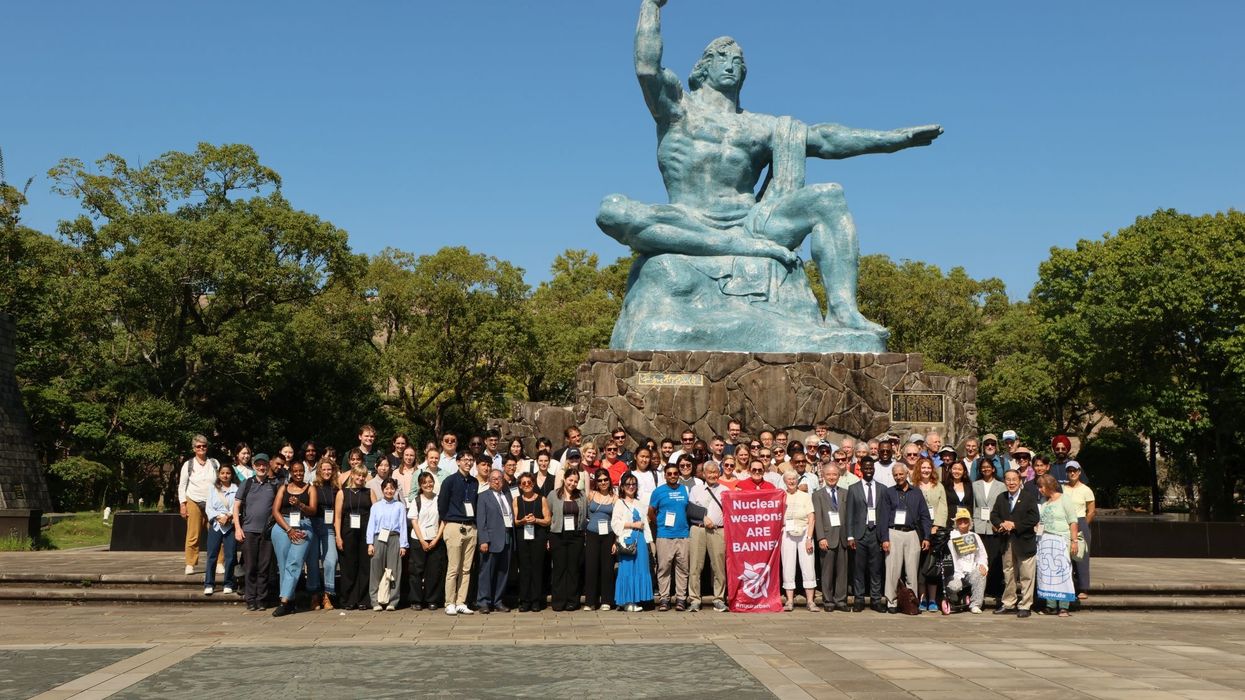
As physicians and health workers, we must educate our communities that there is no adequate medical or humanitarian response to the use of nuclear weapons. Prevention is the only cure.
80 years following the US atomic bombings of Hiroshima and Nagasaki, the Nobel Peace Prize Group, International Physicians for the Prevention of Nuclear War, or IPPNW, has just completed their 24th World Congress in Nagasaki. This congress brought together 324 intergenerational health professionals, medical students, and activists from the Global South and North from 34 of IPPNW‘s 56 member nations. The theme of this meeting was: "A World Without Nuclear Weapons—Nagasaki as the Last A-bombed City.”
The timing of this year's congress in Nagasaki is significant. Our nuclear world at 80 stands at the brink of nuclear war either by intent, miscalculation, or from disruptive technology. The Bulletin of Atomic Scientists has moved the minute hand of their infamous Doomsday Clock to 89 seconds till midnight, the closest it has been since the atomic bombings. The congress was informed by scientists who included health professionals, radiations experts, climate modelers, members of the disarmament community, elected officials, Hibakusha (survivors of the atomic bombings), and survivors of the over 2,000 global nuclear tests, in addition to academics of various fields and representatives of the Red Cross and World Health Organization (WHO).
The message and significance overall is the urgency and recognition that we are living on borrowed time as a species, ultimately relying on luck for our survival. For when, not if, deterrence fails there can be no survival in any real sense. Indeed, extinction of the human race is a distinct possibility.
As physicians and health workers, we are first responders and health promoters in our communities, and ultimately the planet. In our role as health promoters, we must educate our communities that there is no adequate medical or humanitarian response to the use of nuclear weapons. As such there is no cure to this last epidemic facing humanity. We must prevent what we cannot cure. The only way to prevent this outcome is through the total elimination of nuclear weapons.
We must eliminate nuclear weapons before they eliminate us.
From a peak of roughly 70,000 nuclear weapons in 1987 to our current level of 12,241, we have eliminated over 80% of these weapons. We know how to do this, but lack the political will to do so. As physicians and health workers around the planet, we are charged with returning to our communities to inform them of this imminent risk. Internationally there is a campaign, the International Campaign to Abolish Nuclear Weapons, which brought forth the Treaty on the Prohibition of Nuclear Weapons. This treaty, which entered into force in 2021, makes nuclear weapons illegal to have, store, develop, transfer, or threaten to use and provides a time-bound, verifiable legal agreement among nuclear nations to abolish these weapons. A global majority of 99 countries have taken legal action to join the treaty.
In the United States, there is a campaign called Back from the Brink, which is bringing communities together to abolish nuclear weapons. It is a campaign that can be endorsed by all with the ultimate goal of building political will to educate and advance US federal policy change to take a leading role in abolishing nuclear weapons. Currently endorsed by 487 municipal and state officials and 51 members of Congress endorsing US House Res. 317 and Senate Resolution Res. 323. We must reach out to our elected officials and encourage them to cosponsor these resolutions as well and, if they are unwilling to do so, ask why?
In the words of United Nations Secretary-General António Guterres, “Humanity is just one misunderstanding, one miscalculation away from nuclear annihilation.” While the task before us is daunting and may seem overwhelming, we find hope in the energy, understanding, and commitment of the next generation of health professionals in IPPNW who are joining us in breaking down the silos connecting the twin existential threats of nuclear war and climate change.
Each of us has a role to play with the very real outcome of saving the world and humanity. We must eliminate nuclear weapons before they eliminate us. This is our Rx for Survival.
At this challenging time, 80 years since the founding of the United Nations and the bombings of Hiroshima and Nagasaki in a world torn apart by war, there is hope for a just, environmentally sustainable, and peaceful world.
With two significant interconnected anniversaries occurring this week, Sunday marked the 44th anniversary of the United Nations International Day of Peace. This year‘s theme, “Act Now for a Peaceful World,“ is a call to action, identifying individual responsibility and collective power in “cultivating a culture of peace.“
Noting that this year finds a time of global turbulence, tumult, and uncertainty, it is easy to find oneself despairing. Surrendering to this challenge fuels despair. Hope is realized in identifying our individual response and working together to realize collective power. We must discard outmoded “us and them” thinking, realizing that we are one interconnected human family on this fragile planet that will either learn to live together or perish together.
Everyone has a role to play, and each of us must decide what that role is. It is not necessarily a large role or a small role, it is our role. We can no longer assume that “they will take care of it.” They, are us! We must speak up against violence, hate, discrimination, and inequality. We must practice respect and embrace the diversity of our world. The International Day of Peace builds on the Sustainable Development Goals of the United Nations. The theme aligns with the broader UN goals of sustainable development, recognizing that a peaceful world is intrinsically linked to social justice, equality, and environmental sustainability.
This week also marks the 11th anniversary of the “UN International Day for the Total Elimination of Nuclear Weapons” on September 26. With current global nuclear arsenals numbering 12,241 weapons, there is no humanitarian, social, or environmental justice and no sustainability as long as these weapons exist. Everything and everyone we care about is threatened. We must recognize the social and economic costs of the continued existence of these weapons. The United States is spending over $110 billion on all nuclear weapons programs in FY 2025 equating to over $209,000 every minute of every day on these weapons with plans for massive expansion of these expenditures in the years to come under the misguided myths of deterrence and “more is better.“
Ultimately there cannot be peace with the planet until there is peace on the planet.
Fortunately, there is hope in the effort to eliminate these weapons both here at home and around the world. The International Campaign to Abolish Nuclear Weapons was instrumental in the development and adoption of the International Treaty on the Prohibition of Nuclear Weapons, which makes nuclear weapons illegal to have, develop, transfer, use, or threaten to use under international treaty, just as all other weapons of mass destruction are.
At a time when our world is closer to nuclear war than at any time since the bombings of Hiroshima and Nagasaki, 89 seconds till “Doomsday” per the Bulletin of Atomic Scientists, there is a growing movement here in the United States to eliminate these weapons. It is called Back From the Brink. This movement that supports the international effort is bringing communities together to abolish nuclear weapons and making the connection between our future and sustainability goals. Currently there are 502 national organizations, 78 municipalities and counties, eight state legislative bodies, 487 municipal and state officials, and 51 members of Congress endorsing. The people‘s voice is rising and being heard and is the best way to affect federal policy. When the people speak, the leaders will follow. This movement can be endorsed by all, and everyone is encouraged to take the simple action of reaching out to your elected officials, both in the US House, Senate, and local officials to endorse this campaign.
So at this challenging time, 80 years since the founding of the United Nations and the bombings of Hiroshima and Nagasaki in a world torn apart by war, there is hope for a just, environmentally sustainable, and peaceful world. Ultimately there cannot be peace with the planet until there is peace on the planet. The choice is ours. It is in our hands on this week of the International Day of Peace.
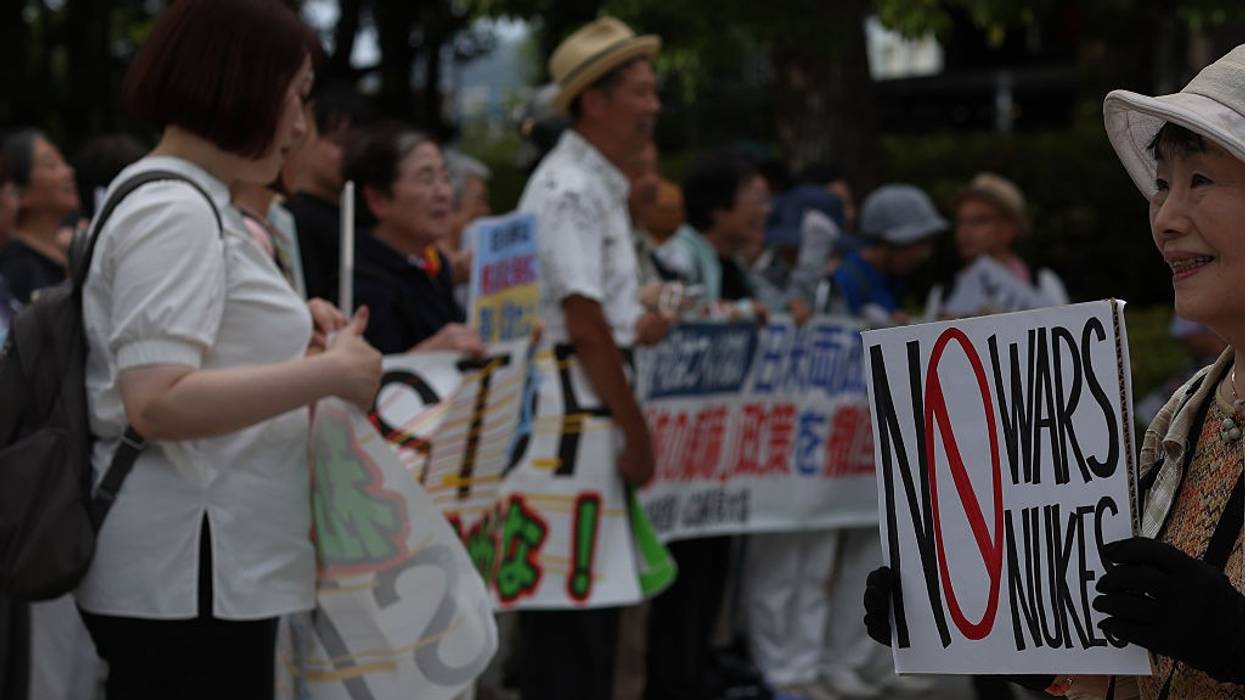
The hibakusha, or survivors, "deserve to see their work vindicated and to witness the end of these inhumane, indiscriminate weapons of total destruction in their lifetime," said ICAN's leader.
Survivors of the U.S. atomic bombing of Hiroshima and other nuclear abolitionists renewed calls for ridding the world of nukes on Wednesday, the 80th anniversary of the American attack on the Japanese city.
During the annual Peace Memorial Ceremony in Japan, Hiroshima Mayor Kazumi Matsui pointed to Israel's assault on the Gaza Strip and the Russian invasion of Ukraine, which have contributed to the narrative that nuclear weapons are necessary for national defense and elevated global fears of their use.
"These developments flagrantly disregard the lessons the international community should have learned from the tragedies of history," he said. Russia and the United States—which is arming Ukraine and Israel—have the largest nuclear arsenals. The other nuclear-armed nations are China, France, India, Israel, North Korea, Pakistan, and the United Kingdom.
"Despite the current turmoil at the nation-state level, we, the people, must never give up," Matsui added. "Instead, we must work even harder to build civil society consensus that nuclear weapons must be abolished for a genuinely peaceful world."
Silent prayers were held in the Japanese city of Hiroshima, marking 80 years since the atomic bombing of the city by the US on August 6, 1945.
[image or embed]
— Al Jazeera English (@aljazeera.com) August 6, 2025 at 6:35 AM
The mayor also urged the Japanese government to respect the wishes of hibakusha, or survivors, and join the United Nations Treaty on the Prohibition of Nuclear Weapons (TPNW), which was adopted in 2017 and took effect in 2021.
"The treaty not only bans nuclear weapons and all activities related to their production, deployment, and use, but also mandates that countries that joined the treaty provide support for people harmed by nuclear weapons in the past and for the cleanup of areas that were used for nuclear testing," survivor Terumi Tanaka noted Wednesday in a New York Times opinion piece.
Tanaka was 13 years old at the time of the bombing—an experience he recounted last year, while accepting the Nobel Peace Prize on behalf of a group he co-chairs: Nihon Hidankyo, also known as the Japan Confederation of A- and H-Bomb Sufferers.
"Our Nobel Peace Prize sends a message to younger people that they need to be aware that we are facing an emergency—and the need to see a larger movement of young activists working to address the nuclear threat," 93-year-old Tanaka wrote Wednesday. "Even here in Japan, not enough people see this as a pressing issue."
The International Campaign to Abolish Nuclear Weapons (ICAN)—which won the Nobel Peace Prize after playing a significant role in building support for the TPNW in 2017—also used the anniversary to advocate for abolishing nuclear weapons.
ICAN executive Melissa Parke, who joined the ceremony in Japan, said in a statement that "it is not possible to come to Hiroshima and attend these solemn commemorations without being moved as well as convinced of the urgent need for nuclear weapons to be eliminated."
"The hibakusha, who were awarded last year's Nobel Peace Prize for their tenacious campaigning for the elimination of nuclear weapons, deserve to see their work vindicated and to witness the end of these inhumane, indiscriminate weapons of total destruction in their lifetime," Parke argued. "That means the nine nuclear-armed countries, most of which were represented here today, must heed their call to join the U.N. Treaty on the Prohibition of Nuclear Weapons and get rid of their arsenals."
As we mark 80 years since the atomic bombings of Japan, CND Vice-President Caroline Lucas writes from Hiroshima and asks why are nuclear powers ditching disarmament for a new nuclear arms race? Read more: www.independent.co.uk/voices/hiros...
[image or embed]
— Campaign for Nuclear Disarmament (@cnduk.bsky.social) August 6, 2025 at 8:03 AM
In a Common Dreams opinion piece about the youth impacted by the 1945 bombings, ICAN treaty coordinator Tim Wright wrote: "The fact that children would suffer the greatest harm of all in the event of a nuclear attack against a city today should have profound implications for policymaking in nuclear-armed states and spur action for disarmament. Yet, all nine such states continue to act contrary to that objective. And the risk of a nuclear weapon being used again appears to be at an all-time high."
Common Dreams also published related opinions from Gerry Condon, a Vietnam-era veteran and former president of Veterans for Peace; Austin Headrick, public education and advocacy coordinator for Asia at American Friends Service Committee; and Ann Wright, a U.S. Army veteran who resigned from the U.S. State Department in opposition to the 2003 invasion of Iraq.
Speaking at the ongoing 2025 World Conference Against Atomic and Hydrogen Bombs, Wright noted that "there are a multitude of organizations in the United States and around the world that are working for the elimination of nuclear weapons."
"As we commemorate the lives lost and damaged by nuclear weapons 80 years ago," she said, "we commit ourselves to work harder for the elimination of these weapons, taking on our governments and the industries that make money from the construction and testing of these weapons of mass destruction."
ICAN in June released a report showing that the world's nine nuclear-armed nations spent more than $100 billion on their arsenals last year, up 11% from 2023. A few days later, the Stockholm International Peace Research Institute's annual yearbook warned that "a dangerous new nuclear arms race is emerging at a time when arms control regimes are severely weakened."
Those reports followed similar warnings from the experts behind the Doomsday Clock, who in January set the symbol of how close the world is to apocalypse at "89 seconds to midnight—the closest it has ever been to catastrophe."
Fueling fears of such a catastrophe, U.S. President Donald Trump said last Friday that he "ordered two Nuclear Submarines to be positioned in the appropriate regions" in response to "highly provocative statements" by former Russian President Dmitry Medvedev, who is now the deputy chairman of Russia's Security Council.
During Trump's first term, he withdrew the United States from the 1987 Intermediate-range Nuclear Forces Treaty with Russia—after which the Kremlin declared a self-imposed moratorium on the deployment of those missiles. The Russian Foreign Ministry announced Monday that it will no longer abide by its rules, citing recent moves by the U.S. and its allies.