
SUBSCRIBE TO OUR FREE NEWSLETTER
Daily news & progressive opinion—funded by the people, not the corporations—delivered straight to your inbox.
5
#000000
#FFFFFF
To donate by check, phone, or other method, see our More Ways to Give page.


Daily news & progressive opinion—funded by the people, not the corporations—delivered straight to your inbox.
"Will these funds be released for the disaster response?” asked a former US ambassador to Venezuela.
The Trump administration has seized at least $8 billion worth of Venezuela's oil wealth since it overthrew President Nicolás Maduro in January, according to the New York Times.
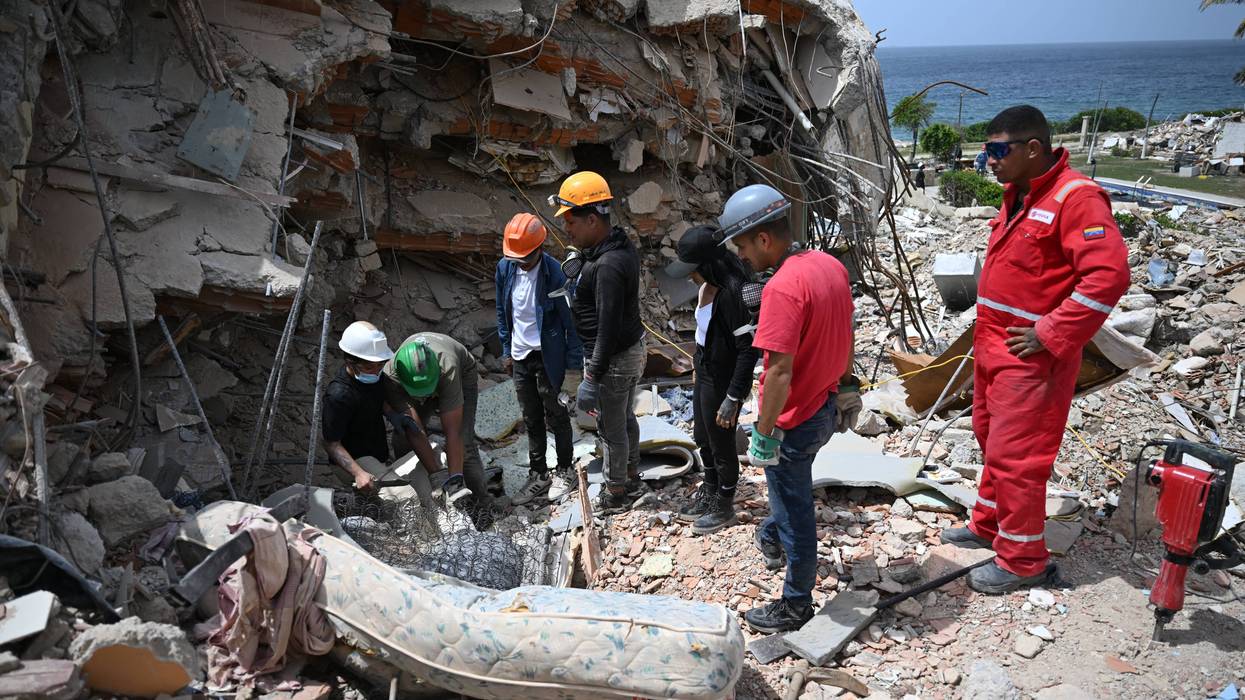
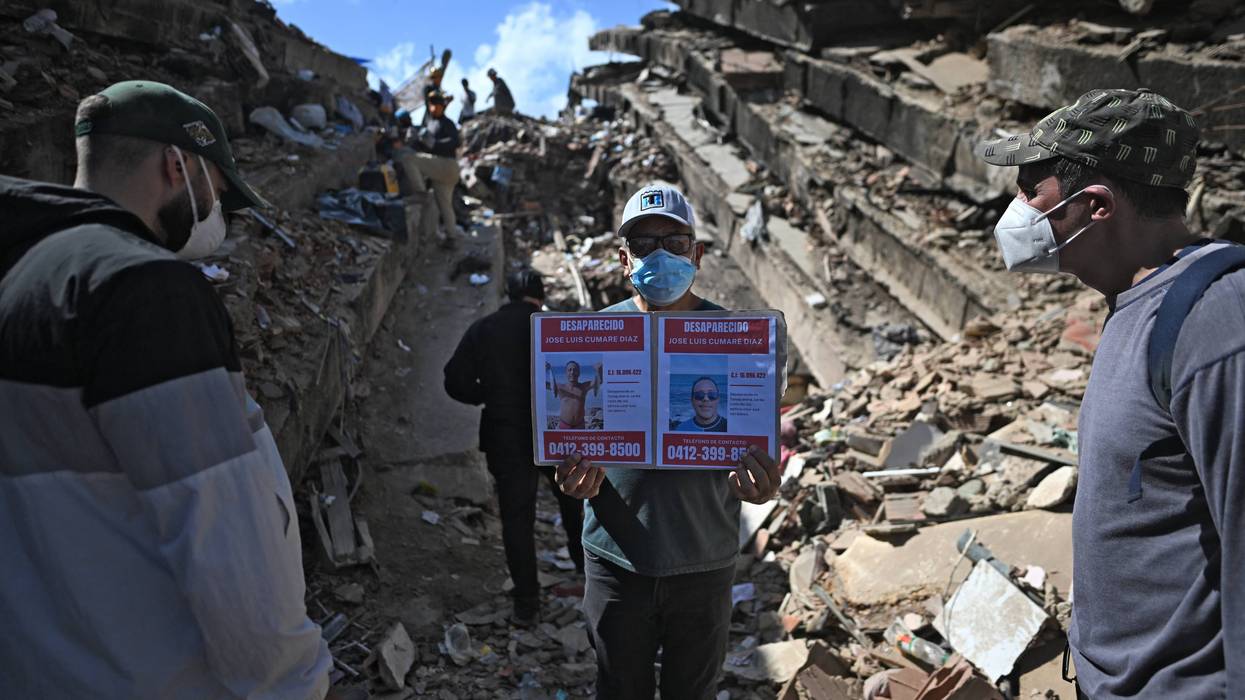
Now, as Venezuela struggles to cope with a catastrophic pair of earthquakes late last month that killed at least 3,300 people and left tens of thousands more injured and homeless, and 41,000-50,000 people are reported missing, the US is providing just $300 million in humanitarian aid, a small fraction of the money it purloined.
The Associated Press reported on Monday that international rescue teams have begun to pull out as hopes of finding missing loved ones alive dwindle each day after the disaster.
Shortly after deposing Maduro, US President Donald Trump declared that the US "took over Venezuela... and the oil is flowing.”
Economist Francisco Rodriguez has found that during the first quarter of 2026, after Trump overthrew Maduro and the US began expropriating Venezuelan oil, the country experienced the lowest rate of economic growth since 2021, even as oil exports rose.
As Roxanna Vigil, a former senior sanctions policy adviser at the US Treasury Department’s Office of Foreign Assets Control, explained in an article for the Council on Foreign Relations last month, "almost 100 million barrels of oil worth an estimated $8 billion have flowed through a process marked by no transparency and minimal oversight."
"While the Trump administration has repeatedly framed this control as benefiting both countries, it has not publicly disclosed how much Venezuelan oil it has sold, how much revenue it has collected, or how it has used those funds," she added.
According to an initial report by the United Nations Development Program, the quakes caused $6.7 billion worth of damage.
Former US Ambassador to Venezuela Jimmy Story credited what he said was a “robust” US effort to provide aid. But he told Reuters that it called into question "the transparency over the oil fund," and asked, "Will these funds be released for the disaster response?”
The Times noted that the Trump administration's response to the Venezuela quakes is dwarfed by the humanitarian response to the earthquake that struck Haiti in 2010, when the US launched a more than $3 billion relief effort and deployed more than 7,000 troops.
Just 900 US troops are on the ground in Venezuela, with another 800 positioned in Puerto Rico and Curaçao to support the operation.
The Times' Simon Romero, who has reported on earthquakes in both countries, noted that the Haiti earthquake was more destructive, but said:
The parallels between the disasters are also haunting: Pancaked multistory concrete buildings, bodies flooding into overwhelmed morgues, survivors disparaging government responses, and civilians leading desperate rescues of people trapped in the rubble.
Viewed against cityscapes clouded by dust from pulverized structures, the images speak to hollowed-out first responder agencies, generalized impoverishment, and political dysfunction in both Haiti and Venezuela.
Beyond the $8 billion taken out of Venezuela since January, anti-war and human rights groups in the US have urged the Trump administration to lift the economic sanctions that have crippled the Venezuelan government, arguing that they have hobbled the recovery effort.
The Washington Office on Latin America (WOLA) estimated that during just four years, between 2017-20, US sanctions caused the Venezuelan state to lose between $17 billion and $31 billion in revenue.
A more recent report by the Tricontinental Institute for Social Research found that between 2017-24, Venezuela suffered an estimated $226 billion in lost oil revenue due to US sanctions, equivalent to 213% of its total gross domestic product.
"Anything short of a full lifting of sanctions will hobble the overall response before it gets off the ground," said a letter sent to Trump and Rubio by a coalition of advocacy groups.
As death and injury tolls from Venezuela's pair of devastating earthquakes last week continue to rise, a coalition of human rights and anti-war groups called on President Donald Trump and Secretary of State Marco Rubio on Wednesday to lift the US sanctions that have crippled the nation's economy.
"As long as sweeping economic sanctions remain in place and Venezuelan assets remain frozen abroad, reconstruction will be unnecessarily delayed, and millions of people will continue to suffer," said the letter, which was written by Just Foreign Policy, the Latin American Working Group, and Venezuelan American Community Action and shared exclusively with Common Dreams.
It has been signed by more than a dozen other groups, including the Center for Economic and Policy Research (CEPR), the Quincy Institute for Responsible Statecraft, Peace Action, and the Presbyterian Church's Office of Public Witness.
The earthquakes have killed nearly 2,300 people as of Wednesday, a death toll that is expected to rise, with the number of missing people greater than 40,000, according to an unofficial estimate. The United Nations' resident coordinator said the UN was preparing more than 10,000 body bags for the country "in anticipation of the death toll rising further."
The quakes caused $6.7 billion in damage, the equivalent of 6% of the country's gross domestic product, the UN Development Program estimated last week.
In the letter sent Wednesday, the groups welcomed the State Department's mobilization of support for Venezuela, which has included search and rescue teams, military personnel for disaster relief, and at least $150 million in humanitarian assistance through aid partners and the UN.
But they said, “It is clear that emergency relief alone will not be enough.”
"Venezuela’s recovery will require access to its own financial resources and the ability to import the equipment, construction materials, medicine, fuel, spare parts, and other goods needed to rebuild homes, hospitals, schools, roads, ports, and critical infrastructure," they said.
They said acquiring these needs has been made vastly more difficult by US sanctions that have "deliberately crushed Venezuela's economy, restricting the government's ability to import goods, maintain infrastructure, and deliver basic services to its population."
Even before the earthquakes, they pointed out, nearly a third of Venezuela's population was in need of humanitarian assistance in May, according to the UN Office for the Coordination of Humanitarian Affairs.
They said US "responsibility" for the state of Venezuela's economy has only grown since Trump's operation in January to topple and abduct President Nicolás Maduro.
Despite Venezuela's oil exports rising 25%, its economic growth plummeted to an annual rate of just 2.5% in the first quarter of 2026, according to an analysis of bank data by Francisco Rodríguez, a senior research fellow at CEPR, who said it was "the lowest rate of growth observed since the second quarter of 2021."
"The data suggests the US may be holding Venezuelan oil revenues in deposit accounts and not disbursing them to the Venezuelan government," the letter said, "currently leaving ordinary Venezuelans with too little of the promised economic improvement and directly contradicting the Trump administration's claim that Venezuelans are doing better than ever."
Given the US role in creating these conditions, as well as the role of US sanctions in turning Venezuela's economic crisis in the 2010s into one of the worst depressions of the last 50 years, the coalition said the Trump administration must not continue using economic warfare to force political concessions.
They also condemned calls from Democrats, including Senate Foreign Relations Committee Ranking Member Jeanne Shaheen (NH) and House Foreign Affairs Committee Ranking Member Gregory Meeks (NY) earlier this month, for the Trump administration to "exercise its leverage" on Venezuela's current government, led by President Delcy Rodriguez, to push for democratic elections.
"The primary leverage the US has long held over Venezuela includes indiscriminate economic sanctions, alongside threats of military action that are illegal under US and international law," the coalition said.
"Using economic pressure against a civilian population as a political tool was unconscionable before this earthquake," they continued. "In its aftermath, any call to tighten that leverage, or to attach political conditions to aid or in exchange for a lifting of economic sanctions must be recognized for what it is—an act of collective punishment against long-suffering civilians who should not face further indiscriminate harm due to US policy."
The coalition said that the Trump administration's limited, temporary unfreezing of some sanctions to allow humanitarian relief transactions was "wildly insufficient," as it did not unfreeze other sanctions that have hamstrung Venezuela's economy.
"The Venezuelan government must be free to receive and allocate earthquake relief and to direct humanitarian support to those who need it most," the letter said. "Anything short of a full lifting of sanctions will hobble the overall response before it gets off the ground."
They called for the US to provide "massive humanitarian assistance" without political strings attached.
They also said the US must release Venezuelan oil revenues held in US accounts and pressure other countries like the UK and Portugal to do so as well.
"This is Venezuela’s money, and it is now urgently needed," the groups said. "Withholding it during a national catastrophe of this magnitude is indefensible."
They also called on the US to lift all sanctions on Venezuela, which they said "impede the delivery of humanitarian goods, reconstruction materials, and financial transfers needed for disaster response and economic recovery."
"The United States has a short window to demonstrate that its relationship with the Venezuelan people is not merely transactional," the letter concluded. "The scale of aid must match the scale of the harm the United States has played a role in creating. Anything less would confirm what many Venezuelans already fear: that American concern for their welfare begins and ends where American geopolitical and economic interests do."
Coloradans' "courage, strength, and willingness to help one another is unmatched—values that President Trump seems to have forgotten," said Gov. Jared Polis.
Top Democratic officials in Colorado are among those condemning President Donald Trump's denial of two disaster relief requests from Gov. Jared Polis—his latest action in a state that critics say he is retaliating against for its prosecution of a former county clerk who was involved in election denial efforts in 2020.
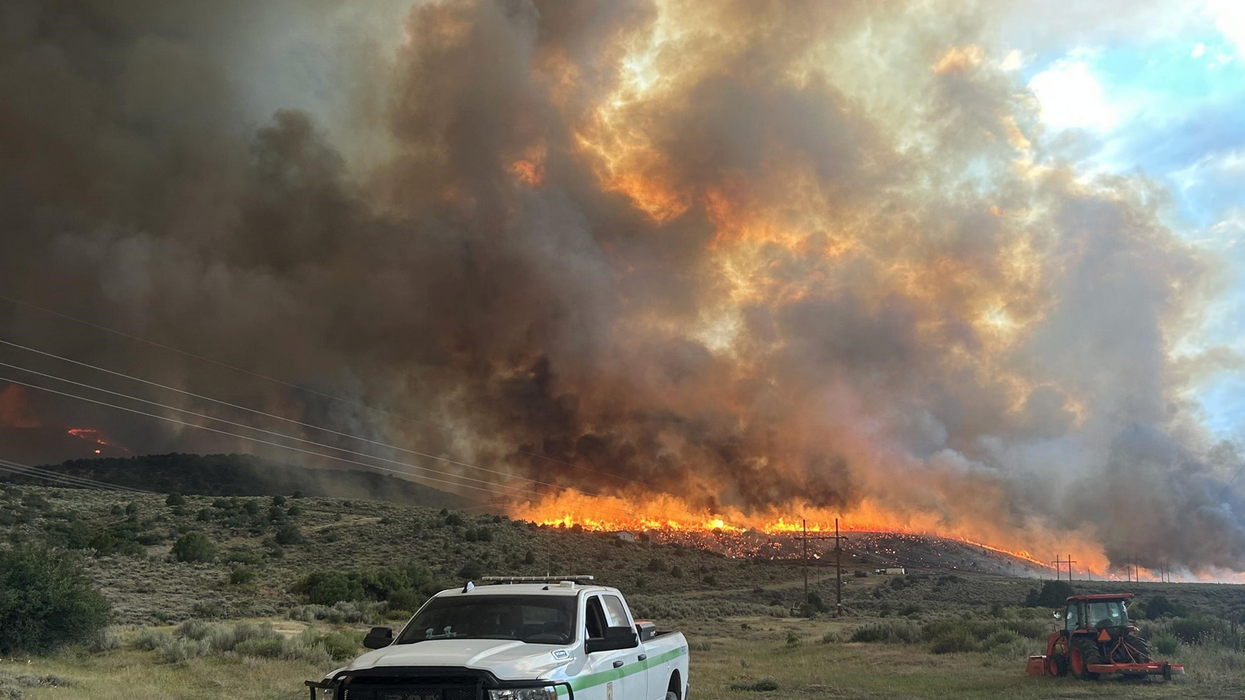
After the White House denied the requests for Trump to declare major disasters in parts of Colorado that experienced the Lee and Elf fires in August and flooding in October—a move that would unlock Federal Emergency Management Agency (FEMA) funding to help with recovery efforts—Polis joined other Democratic leaders in calling on Trump to reconsider and accusing him of playing "political games."
"One of the most amazing things to witness as governor has been the resilience of Coloradans following a natural disaster," said Polis. "Their courage, strength, and willingness to help one another is unmatched—values that President Trump seems to have forgotten. I call on the president’s better angels, and urge him to reconsider these requests. This is about the Coloradans who need this support, and we won’t stop fighting for them to get what they deserve. Colorado will be appealing this decision."
The governor was joined by Democratic Sens. Michael Bennet and John Hickenlooper in speaking out against the denial.
Polis made the requests in late September and last month, noting in his first request that Rio Blanco County, which both fires ripped through, has an economy driven "largely by energy production" at the Piceance Basin.
"This local industry is powered by two local utility providers who have sustained over $24 million in damages to their infrastructure," his office said. "Without support to recover local utility infrastructure, stalled production risks the local economy, major rate increases on Coloradans, and local economic collapse."
In November, Polis noted that FEMA had confirmed $13.8 million in damages to public infrastructure from flooding in several western counties, with roads and bridges particularly affected.
Communities also have ongoing debris removal needs, sewer system failures, and damages to essential drinking water and wastewater infrastructure.
The Stafford Act authorizes the president to declare a major disaster in order to unlock additional federal funding to respond to floods and other emergencies.
Trump has sought to reduce federal funding that goes to states for emergency management—denying at least 12 requests from states between January-October, with Democratic-led states facing many of the denials.
He has overtly politicized disaster relief, announcing in August that any state or city that boycotts Israeli products in protest of its attacks on and policies in Palestinian territories would not receive funding they requested.
Despite this, White House spokesperson Abigail Jackson told The Hill on Monday that "there is no politicization to the president’s decisions on disaster relief"—but Polis and other Democrats suggested the flooding and fire relief request denial was part of Trump's larger efforts to retaliate against the state of Colorado.
Last week, the president's top budget adviser, Office of Management and Budget Director Russell Vought, announced the administration was dismantling the National Center for Atmospheric Research (NCAR), a major climate research and meteorological facility in Boulder.
A number of critics said that move appeared to be in retaliation for the conviction in a state court of Tina Peters, a former county clerk who was found guilty of allowing someone access to secure voting system data as part of an effort to prove the baseless claim that the 2020 election was stolen from Trump.
Despite uncertainty about Trump's authority to pardon Peters, the president claimed recently that he will do so. He has directly attacked Polis for Peters' treatment by the state.
"When the people of Western Colorado need assistance the most—as recovery from the Elk and Lee fires continues—President Trump abandons them in a blatant act of retaliation against our state," said Rep. Joe Neguse (D-Colo.) on Sunday night of Trump's latest action toward Colorado. "Shameful."
"Hurricane season has begun, yet FEMA continues to lack an appointed administrator with the mandated qualifications to fulfill this role," the employees wrote in a letter to Congress.
More than 180 federal emergency relief workers have signed a letter warning that US President Donald Trump's administration is severely harming their ability to respond to future disasters.
The letter, which was sent to members of Congress on Monday, painted a dire picture of the Federal Emergency Management Agency (FEMA) under Trump's watch.
"Since January 2025, FEMA has been under the leadership of individuals lacking legal qualifications, Senate approval, and the demonstrated background required of a FEMA administrator," the employees stated. "Decisions made by FEMA's Senior Official Performing the Duties of the Administrator (SOPDA) David Richardson, former SOPDA Cameron Hamilton, and Secretary of Homeland Security Kristi Noem erode the capacity of FEMA... hinder the swift execution of our mission, and dismiss experienced staff whose institutional knowledge and relationships are vital to ensure effective emergency management."
The employees then detailed several specific ways that the Trump administration has hamstrung the agency, which they said would be tantamount to "the effective dissolution of FEMA itself and the abandonment of the American people" if not corrected.
First, they faulted Noem for requiring personal review for all contracts, grants, and mission assignments costing more than $100,000, which they described as an improper impoundment of agency funds that "reduces FEMA's authorities and capabilities to swiftly deliver our mission."
They then took aim at Richardson, whom they lambasted as wholly unqualified for his position.
"Hurricane season has begun, yet FEMA continues to lack an appointed administrator with the mandated qualifications to fulfill this role," they warned. "The dangers of unqualified leadership were a significant lesson learned from Hurricane Katrina."
The FEMA workers noted that the Trump administration has flouted federal requirements demanding that FEMA administrators demonstrate "ability in and knowledge of emergency management." According to The New York Times, Richardson told employees in June that he hadn't been aware the US had a hurricane season.
"They're breaking the law so they can hire mediocre people," said US Rep. Sean Casten (D-Ill.). "And Americans will die as a result."
The employees also slammed the administration for its "censorship of climate science, environmental protection, and efforts to ensure all communities have access to information, resources, and support."
They also noted that the administration removed the Future Risk Index from FEMA's website this past February, which they said would harm "the nation's ability to properly prepare for and mitigate against the risks of tomorrow."
Finally, the employees called attention to the massive workforce drain FEMA has experienced under Trump's administration.
"FEMA's current capacities have been significantly limited due to a loss of personnel through programs designed to incentivize our workforce to leave federal service, ongoing hiring freezes, and the cancellation of critical support contracts," they wrote. "One-third of FEMA's full-time staff have departed the agency this year, leading to the loss of irreplaceable institutional knowledge and long-built relationships."
The employees also said that the damage done to FEMA was already visible this past summer during the agency's response to deadly floods in central Texas that claimed the lives of more than 130 people.
"As that disaster unfolded, FEMA's mission to provide critical support was obstructed by leadership who not only question the agency's existence but place uninformed cost-cutting above serving the American people and the communities our oath compels us to serve," they said.
A total of 181 FEMA employees signed the letter, although only 35 of them made their signatures a matter of public record.
Trump earlier this year said he'd like to see FEMA dismantled so that more responsibility for handling the aftermath of natural disasters would be pushed off to individual states. Meanwhile, the president has denied some states' requests for disaster declarations, including Kentucky, Tennessee, and Oklahoma.
"Trump's reckless actions have left Americans vulnerable and unprepared," said a senior adviser at Climate Power.
As Hurricane Erin batters the East Coast, North Carolina has been left in the lurch by a Federal Emergency Management Agency (FEMA) badly battered by the Trump administration.
WRAL reported Tuesday that the Tar Heel State is still waiting on $13 million in federal disaster preparedness grants from FEMA.
This is on top of the hundreds of millions of dollars in recovery funds for last year's devastating Hurricane Helene, which the agency has promised but not yet delivered.
North Carolina Gov. Josh Stein told reporters Tuesday that $85 million would begin flowing from FEMA to the state to fund recovery from Helene.
That announcement came after Stein sent US Secretary of Homeland Security Kristi Noem a letter in July asking why she had not signed off on the disbursal of the desperately needed funds.
"Applications submitted as far back as February 2025 remain without a final decision," Stein wrote in the letter, which laid out $209 million worth of Helene recovery projects still awaiting her sign-off. "Further delay of these funds keeps communities and families in limbo, all while we are in another dangerous hurricane season."
Even though some funds are reportedly flowing, Stein says the government has yet to reimburse North Carolina for over $100 million.
"It creates real financial strain, especially on local governments, but also the state," Stein said in a press conference.
Noem's leadership of FEMA came under severe scrutiny earlier this summer after it was reported that her policies hampered the agency's ability to respond to the devastating flooding that killed at least 138 people in Texas.
In June, Noem introduced a new policy requiring all FEMA expenditures over $100,000 to be personally approved by her, which officials within the agency said led to the deployment of search and rescue teams being delayed for days.
Two-thirds of the phone calls from desperate Texans to FEMA also went unanswered after Noem allowed hundreds of contractors to be laid off just a day after the storm hit.
The Trump administration, meanwhile, has implemented massive staff cuts to the agencies responsible for hurricane preparedness.
It laid off hundreds of employees at the National Oceanic and Atmospheric Administration's (NOAA) storm laboratory, including hurricane hunters and researchers.
Nearly half of the National Weather Service (NWS)'s forecasting offices have been left critically understaffed, with around a quarter lacking a meteorologist-in-charge.
On the ground, there are about 20% fewer permanent FEMA staff responsible for responding to hurricanes and other disasters. Emergency training for those who remained on the job was also rolled back.
Sarah Galvez, Climate Power's senior adviser for climate urgency, says that communities in the path of Hurricane Erin "are being put at risk thanks to the Trump Administration gutting the forecasting that people rely on during extreme weather."
Since 1980, as the planet has warmed, the number of significant hurricanes (classified as Category 3 or greater) has doubled. In recent years, they have also begun to intensify more rapidly as they approach landfall, giving forecasters less time to catch them and residents less time to respond.
But as part of a multi-pronged assault on climate science, Trump has also made it harder to track these and other disasters. In May, NOAA announced that it would no longer track the number of disasters resulting in over $1 billion in damage.
"Fueled by the climate crisis," Galvez says, "major hurricanes are only becoming more frequent and severe, but Trump's reckless actions have left Americans vulnerable and unprepared."
On Tuesday, Reps. Greg Casar (D-Texas) and Joe Neguse (D-Colo.) introduced legislation aimed at rolling back Trump's cuts to these agencies.
Hurricane Erin is hitting the East Coast right now.Earlier this year, Trump slashed funding for FEMA and NOAA — the agencies that keep us safe before and after disasters. My new bill would reverse Trump's cuts and restore crucial resources for families across the country.
— Congressman Greg Casar (@repcasar.bsky.social) August 20, 2025 at 1:12 PM
"As we continue to face increasing numbers of natural disasters across our country—wildfires, floods, hurricanes—it's critically important that we equip our communities with the resources they need," Neguse said. "Whether it's the preparedness programs run by NOAA and NWS, or the response and recovery initiatives managed by FEMA, our federal agencies play a crucial role in addressing the increasing frequency of disasters."
"It's only a matter of time before Trump and Musk's reckless assault on disaster response and preparedness kills people in the United States," said a researcher with government watchdog The Revolving Door Project.
President Donald Trump has openly stated his desire to dismantle the Federal Emergency Management Agency—a move that has left some experts fearful about how the United States will handle natural disasters such as hurricanes in the coming months.
The Revolving Door Project, a government watchdog group, has now put together a tracking tool to keep tabs on how much the administration's attacks on both FEMA and the National Oceanic and Atmospheric Administration have worsened the nation's disaster preparedness.
The tool has two components: An interactive map showing all of the state disaster aid requests that the Trump administration has outright denied or only partially approved and an interactive timeline documenting all of the times that the administration has undermined the functionality of America's disaster preparedness agencies through actions such as placing agency employees on administrative leave and disbanding key bodies such as FEMA's National Advisory Council and its National Dam Safety Review Board.
All of these disruptions and cuts, argued Revolving Door Project senior researcher Kenny Stancil, are likely to come back to bite America in a big way when another natural disaster strikes.
"It's only a matter of time before Trump and Musk's reckless assault on disaster response and preparedness kills people in the United States," he said in explaining the need for the initiative. "It nearly happened in mid-May in Kentucky, where a DOGE-damaged NWS forecast office had to scramble for staff before a tornado. Amid last week's heatwave, low-income households across the country were missing the federal support they need to keep the air conditioning on. And when a major hurricane arrives, Trump, Musk, OMB Director Russell Vought, Commerce Secretary Howard Lutnick, and DHS Secretary Kristi Noem will almost certainly have blood on their hands."
Revolving Door Project executive director Jeff Hauser issued a similarly dire warning about the administration's actions on U.S. disaster preparedness and he described the actions being taken by the administration as "a matter of life-and-death." He also accused the administration of "preventing forecasters and emergency managers at all levels from doing what is necessary to prepare for and respond to disasters."
Trump in the past has tried to use federal disaster relief money as a cudgel against his political opponents, such as when he threatened to withhold funding from California during catastrophic wildfires unless the state did a better job of "raking" its forests.
"It's outrageous that Trump and House Republicans are threatening to withhold recovery aid if their conditions aren't met," said a leader in the Working Families Party.
The deputy national director of the Working Families Party had sharp words for a group of House Republicans and President-elect Donald Trump, who, according to Politico reporting published Monday, discussed tying fire relief for California to the politically charged issue of increasing the debt ceiling.
The reporting comes as California continues to battle fires in the Los Angeles area that have consumed tens of thousands of acres and left over 20 people dead. The scale of the destruction could make them, collectively, the costliest wildfire disaster in U.S. history, a climate scientist told the Los Angeles Times last week.
"The Palisades wildfires have destroyed homes, schools, and businesses and left thousands of families without a roof over their heads. It's outrageous that Trump and House Republicans are threatening to withhold recovery aid if their conditions aren't met," said Working Families Party deputy national director Joe Dinkin in a statement Monday.
"Every Republican should be on the record denouncing this abominable plan," he added.
Per Politico, nearly two dozen House Republicans attended a dinner at Trump's Mar-a-Lago Club over the weekend where the option was discussed.
Speaker Mike Johnson (R-Fla.), who was not a part of the conversation but did later confirm the conversation, must deal with the looming debt cliff, which is set to be reached sometime in mid-January, and he faces obstacles within his own party. In December, fractures appeared in the GOP when fiscal hawks refused to back legislation that Trump supported that would have raised the debt limit.
Johnson has also said he would try to lift the debt limit by including it in a reconciliation bill full of President-elect Donald Trump's legislative priorities, though this could run afoul with those same fiscal hawks. Some House Republicans reportedly brought up the pitfalls of this option during discussions at Mar-a-Lago over the weekend.
Of the potential move to link fire relief to the debt ceiling, Politico reported: "The Sunday night discussions prove Republicans are desperately looking for a plan before the nation is due to exhaust its borrowing authority—though Democrats and some Republicans are sure to balk at the prospect of linking disaster relief dollars to a politically charged exercise like extending the debt limit."
Congress recently passed a spending bill that included funding for natural disaster relief, but scope of the destruction in California has some officials wondering if more may be needed, Politico reports.
"Ending the process to replace stolen benefits for victims will also make it more difficult to track and stop the individuals behind these crimes, because fewer people will report the crime," wrote one food assistance advocate.
Congressional budget watchers concerned with food insecurity are lamenting the loss of a provision impacting the Supplemental Nutrition Assistance Program in the final spending deal Congress passed Saturday, which very narrowly averted a government shutdown. The measure is a continuing resolution that will keep the government funded through mid-March at current levels, and includes funding for a few select priorities, like disaster relief.
The final bill did not extend protections for victims of SNAP benefit theft after it was axed from an original spending deal—a move that Bobby Kogan, the senior director of federal budget policy at the Center for American Progress, called "true Ebenezer Scrooge stuff." Kogan laid blame at the feet of billionaire Elon Musk, who whipped up opposition to the earlier, bipartisan version of the spending deal.
Under the original deal, the SNAP benefit theft protections would have been continued for another four years, according to the Center on Budget and Policy Priorities.
SNAP benefits, a far-reaching social program that helps low-income Americans buy groceries, is vulnerable to theft through "skimming"—a practice where thieves can take advantage of the relatively low security on SNAP EBT cards by hiding devices in payment machines that allow them to clone card information, including users' PINs.
"Today, I'm thinking about the low-income families across the country who are about to discover that the SNAP benefits they were counting on to buy groceries were stolen after 11:59 pm last night—and who no longer have a way to get those benefits replaced because of this decision," wrote Katie Bergh, senior policy analyst on the food assistance team at the Center on Budget and Policy Priorities, on Saturday.
Congress approved federal funding for states to reimburse the stolen benefits in 2022. A couple of states reinstate skimmed SNAP funds using state money, according to NBC. Federal funds have so far replaced $53.5 million in stolen SNAP benefits, a dollar amount that has impacted 115,596 households, according to the U.S. Department of Agriculture.
"Ending the process to replace stolen benefits for victims will also make it more difficult to track and stop the individuals behind these crimes, because fewer people will report the crime," wrote Ty Jones Cox, vice president for food assistance at the Center on Budget and Policy Priorities, in a statement Monday.
Cox said that omitting this protection will lessen SNAP benefits by roughly $1.5 billion over the next ten years, citing Congressional Budget Office estimates.
Among the hundreds of billionaires and mega billionaires in the U.S., there are more than several enlightened people upset by our society's problems who could make big improvements.
The next step is breaking down a roadblock of sorts. A prominent, very rich businessman summed it up when he told me: "Ralph, we all know how to make a lot of money, but we don't have a clue as to what to do with it, including me." It is not as if these super-wealthy are contemplating their navels. Many give away lots of money but wonder if their giving is a stopgap. In contrast, others refrain from donating unless they can be assured that their philanthropic investments will likely deliver results.
It helps to distinguish between charity and justice - both noble causes worthy of donations. Charity ministers to the immediate, often desperate needs of vulnerable populations. Charities support soup kitchens and clinics, renovate or build educational buildings, add services for the elderly, provide medicines for the poor here and in developing countries, help local school systems under budget restraints, and quickly respond to tragedies with disaster relief here and abroad. All of these causes are worthwhile (when these services and donations reach the appropriate recipients).
Justice directly confronts the challenge of preventing people from ending up in vulnerable situations. What causes over 15 million children in the U.S. to go to bed hungry each night? Why don't we have universal public health care? Why aren't public colleges and universities tuition-free like high schools in the U.S. and most Western European countries? Why are our public works crumbling and creating unnecessary obstructions for disaster relief (reaching people stranded after hurricanes)?
Will charity ever begin to catch up with the consequences from corruption, self- preserving bureaucracies, man-made environmental damages, and governments indentured to avaricious special interests and concentrated corporate power? Not a chance.
Advocacy promoting justice seeks to prevent the causes of so much misery, institutional harm, poverty, and the loss of human life and potential. Repairing the wreckage of wars places huge demands on charity, and waging peace and negotiating arms control agreements places huge demands on justice.
Last fall, I proposed "Birth-Year Gifts to America," which the very wealthy could jumpstart with other Americans around the country. For example, people born in 1930, 1935, or 1937 would organize to support and endow a self-renewing nonprofit civic institution to improve the quality of life of future generations.
The steel magnate Andrew Carnegie's philanthropy created many organizations, including the Carnegie Institution for Science, the Carnegie Endowment for International Peace, and the Carnegie Corporation of New York (a major foundation dedicated to advancing science). His most memorable gift was funding the establishment of over 2,500 free libraries in as many communities throughout the country. He insisted, however, that the localities provide the land to give themselves a stake. Talk about a legacy!
In my proposal, I suggested twenty-five enduring ideas that could be gifted to our country and cover many needed societal improvements. Birth years for people seventy to ninety years of age have thousands of people of means who, whether they are religious or not, really do not believe that they can take it with them.
You can view the entire list, which may stimulate your birth-year project nationally, regionally, or locally, that advocates for justice through systemic creations or improvements of institutions here. For a copy, write to PO Box 19367, Washington, D.C. 20036.
Bringing together the billionaires who want to get things moving for a weekend roundtable could kickstart a new approach to meaningful and creative philanthropy. We would be pleased to host such a serious historic deliberation to escalate informed wishes into action.
Most progressives express disbelief that the very wealthy would ever support fundamental changes that would shift the power from the hands of the few to the hands of the many and create a much more equitable and prosperous society. We could have a culture that focuses on preventing problems through justice and not just reacting to the disasters and inequality caused by such problems through charity. A cynical view ignores that having the backing of majority public opinion and the financial support of the wealthy can produce positive results. (I strove to detail this potential in my book "Only the Super-Rich Can Save Us!" - a work of realistic political fiction.)
Nearly a century ago, the brilliant philosopher/mathematician Alfred North Whitehead declared, "A great society is a society in which its men of business think greatly of their functions." Today, those heeding the vision of Senator Daniel Webster, who, before the Civil War, said: "Justice, Sir, is the great interest of man on Earth," will surprise their peers by moving from success to significance. They can begin this transition by connecting with advocates with decades-long experience seeking justice under dire conditions, with some success.
There are examples of the wealthy contributing to longstanding progressive improvements in society. Some wealthy philanthropists funded many activities focused on abolishing slavery and obtaining universal suffrage for women. A few rich families provided substantial financial backing for the Civil Rights Movement. In addition, numerous environmental groups today are reaping the benefits of wealthy supporters.
Now, with more wealthy individuals and families than ever,fundingh charity and justice has become more feasible.