
SUBSCRIBE TO OUR FREE NEWSLETTER
Daily news & progressive opinion—funded by the people, not the corporations—delivered straight to your inbox.
5
#000000
#FFFFFF
To donate by check, phone, or other method, see our More Ways to Give page.


Daily news & progressive opinion—funded by the people, not the corporations—delivered straight to your inbox.
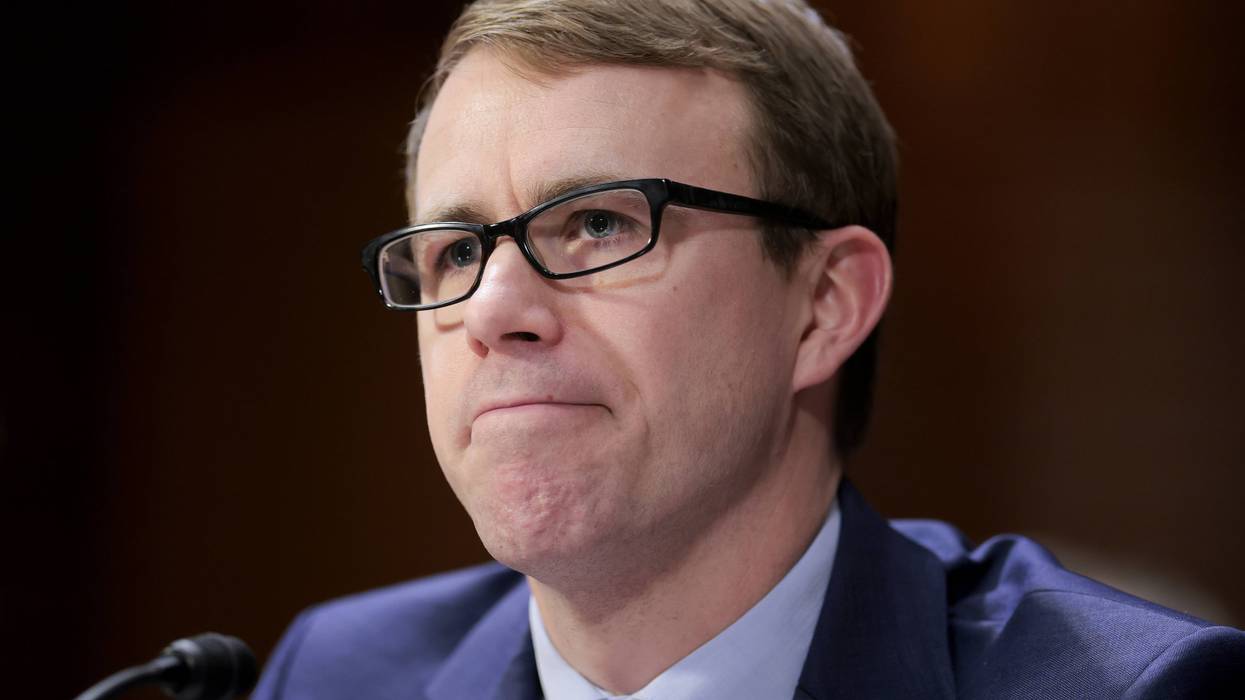
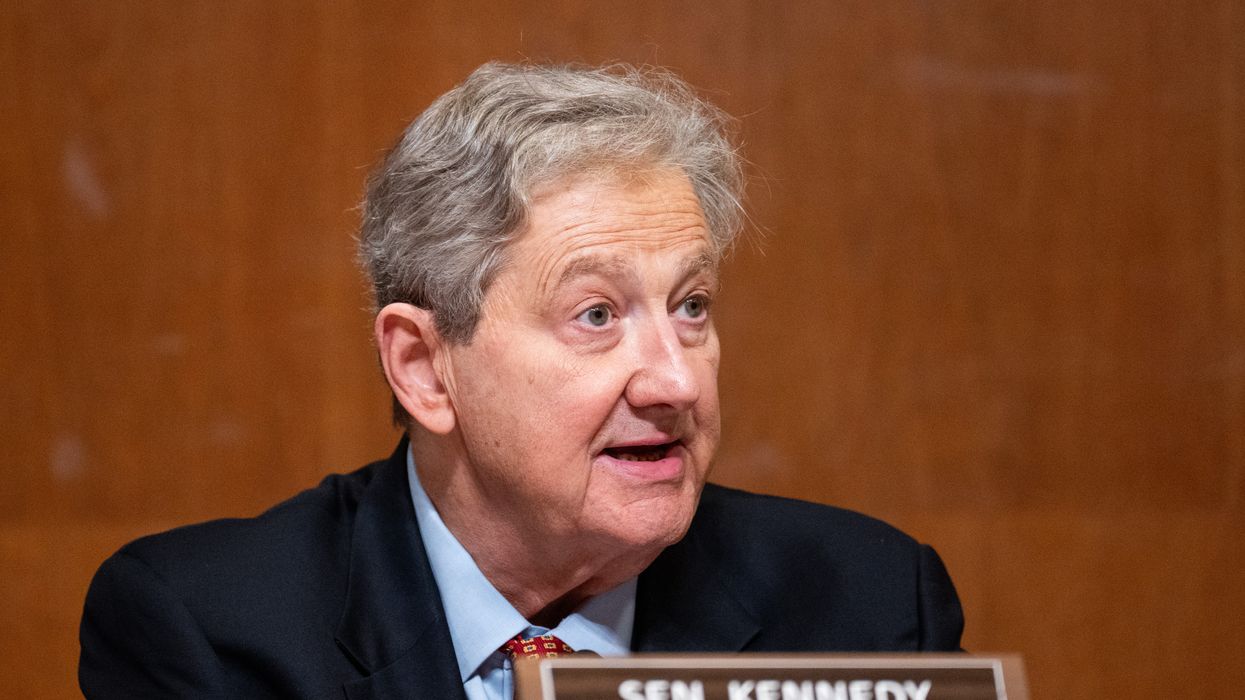
Republican Sen. John Kennedy scoffed as David J. Bier of the Cato Institute outlined how the Trump administration has openly demanded "ethnic cleansing" through the deportation of 100 million people.
A Republican senator on Tuesday accused an immigration policy expert of "hyperbole" in his condemnation of President Donald Trump's anti-immigration agenda during a hearing—but the witness, David J. Bier of the libertarian Cato Institute, emphasized that the administration's own words and policies have clearly pointed to a goal of expelling millions of citizens from the United States.
At a hearing on sanctuary cities held by the Senate Budget Committee, Sen. John Kennedy (R-La.) read a post Bier wrote on social media in December 2025 in which he said Trump administration officials "think they can troll their way into us accepting ethnic cleansing," suggesting it was one of many "hyperbolic statements" that discredit Bier.
Bier, the director of immigration studies for the Cato Institute, has spent the past year tracking the Trump administration's mass deportation agenda, in which a majority of people who have been detained have had no criminal convictions, despite the White House's persistent claims it is targeting "the worst of the worst" violent criminals.
He was unfazed by Kennedy's questioning, quickly replying that his comment was in response to a social media post by the Department of Homeland Security's official account in which the agency shared an image of a Cadillac on a beach, featuring the message, "America after 100 million deportations."
"That was in regard to a Department of Homeland Security post about advocating 100 million deportations," said Bier as the senator attempted to talk over him. "One hundred million deportations would be ethnic cleansing. You would be removing one-third of country."
This exchange between David Bier and Sen Foghorn Leghorn (R-LA) is something else. Kennedy thinks he has him in three separate gotcha moments, but not so fast Bier had his number. The clip is a bit long but it’s 3 minutes of Kennedy getting owned. Watch👇pic.twitter.com/HPHicyUcl1
— Brian Cardone 🏴☠️🇺🇦 (@cardon_brian) March 10, 2026
Kennedy didn't respond, instead reading a post Bier wrote on March 2 which said: "If you rule against Trump's population purge agenda... the nativists will name you, threaten you, and come after you. These judges are much braver than the [Immigration and Customs Enforcement] agents who hide behind masks while violating the Constitution."
Bier stood by his defense of judges; his post had been in reference to a "60 Minutes" interview given by US District Judge John Coughenour, who described a hoax in which law enforcement showed up at his house after getting a report that he had murdered his wife. He also received a bomb threat, with both incidents taking place after he ruled against Trump's executive order aimed at ending the 14th Amendment's guarantee of birthright citizenship.
The Cato expert also defended his reference to a "population purge," saying: "I'm talking about the fact that they're trying to deport US citizens, people born here. They are trying to deport them as well. So it's not a 'mass deportation agenda.' It is also an agenda intended to reduce the population of the United States."
"These are not hyperbolic statements," he said as Kennedy hurled insults at Bier, asking "what planet" he was from and telling him he triggered the senator's "gag reflex" before being cut off by Sen. Lindsey Graham (R-SC).
Kennedy also accused Bier of making a "hyperbolic statement" on February 11, when he posted on the social media platform Bluesky that in addition to advising US military officers to refuse to carry out illegal orders, Democratic members of Congress should warn them "to refuse unethical orders."
Bier readily defended his remark, asking Kennedy: "Do you disagree with it? You think people should do unethical things?" The senator didn't respond.
It was unclear whether Kennedy was unfamiliar with the president's plan to strip people of their US citizenship—one of the first efforts of his second term, with the executive order signed just after he took office—or if he was simply "looking for fundraising sound bites," as one Cato Institute staffer posited.
Bier said Wednesday that it was the second time in a month that Kennedy has appeared "shocked" to learn about the policies of the president he has supported for nearly a decade.
"Just a month earlier I had explained to him how the Trump administration has already banned HALF of all legal immigrants to the US," said Bier, pointing to his testimony from February in which he explained how the White House has suspended immigrant visas and US Citizenship and Immigration Services benefit applications.
Listen to how shocked Senator Kennedy was. I should've clarified more how it's actually three different overlapping policies (the presidential visa ban, the USCIS benefits suspension, and the State Dept immigrant visa suspension) leading to the theft from applicants. pic.twitter.com/SZh4PMzc6j
— David J. Bier (@David_J_Bier) February 11, 2026
The hearing on sanctuary cities was subtitled "The Cost of Undermining Law and Order," but Bier focused his testimony on the Cato Institute's extensive research that's found immigration has reduced government deficits by at least $14.5 trillion over the last 30 years.
"I was invited to the Budget Committee because of this comprehensive study Cato published, not to discuss random tweets," said Bier. "The Democrats all wanted to talk substance. The other side name-called. Incredible contrast."
An ongoing US military probe has determined that the United States launched the Tomahawk missile attack that killed around 175 people—mostly children—in Minab on the first day of the war on Iran.
A Republican senator apologized this week for what US military investigators have reportedly determined was an American missile strike on a girls' school in southern Iran that killed around 175 people—mostly children—amid continued sidestepping by President Donald Trump, who has blamed Tehran for the massacre.
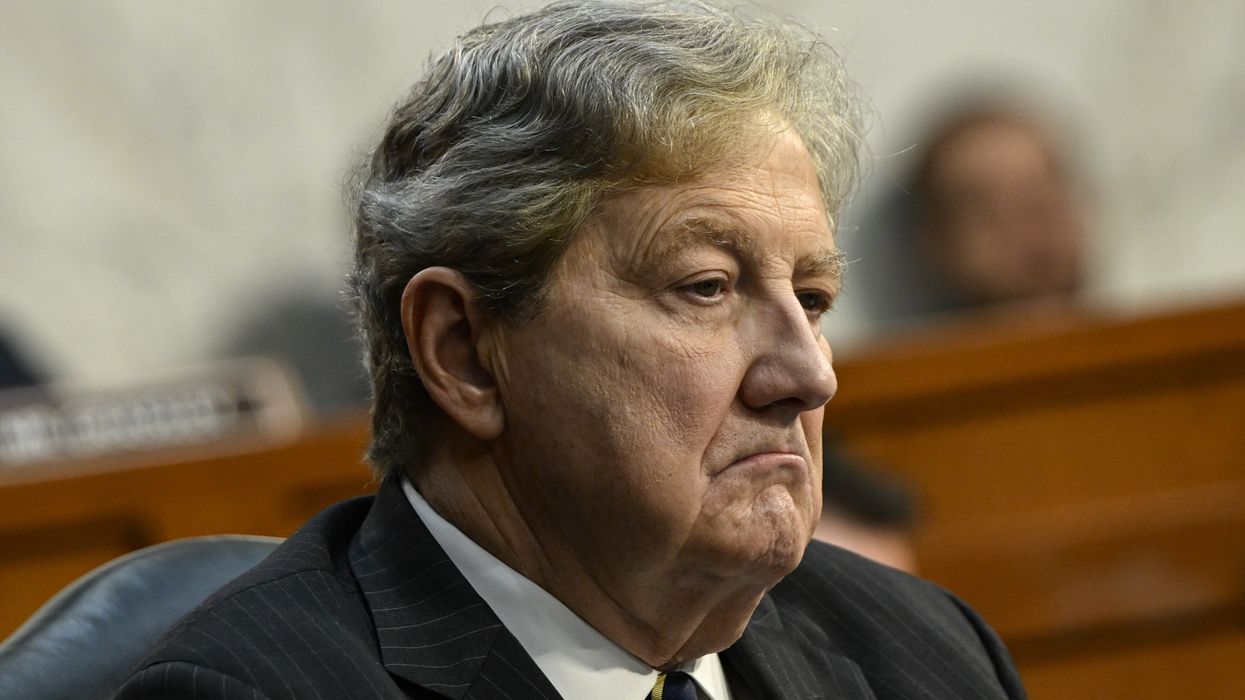
Sen. John Kennedy (R-La.)—who supports the US-Israeli war on Iran—first apologized for the attack on the Shajareh Tayyebeh girls’ elementary school in Minab during a Monday interview with NBC News senior national political reporter Sahil Kapur.
"It was terrible," Kennedy said. "We made a mistake... I'm just so sorry it happened."
Kennedy repeated his apology Tuesday on CNN, telling political correspondent Kasie Hunt: "The investigation may prove me wrong. I hope so. The kids are still dead, but I think it was a horrible, horrible mistake. I wish it hadn't happened. I'm sorry it happened."
1. GOP Senator John Kennedy on why he felt it was important to apologize and acknowledge the truth about the bombing of a school in Minab, Iran, which multiple reports indicate was caused by a U.S. military targeting error.
[image or embed]
— Yashar Ali 🐘 (@yasharali.bsky.social) March 10, 2026 at 4:51 PM
Reuters first reported last week that US military investigators believe American forces carried out the school strike, a preliminary conclusion that came on the heels of a New York Times analysis that found the US was “most likely to have carried out the strike" due to its near-simultaneous bombing of a nearby Iranian naval base.
This week, Iranian officials displayed fragments from what is believed to be the Tomahawk missile used in the school bombing. The remnants were marked with the names of two US arms companies, a Pentagon contract number, and the words "Made in USA."
On Wednesday, Tfhe New York Times reported that the ongoing military probe has determined that the US launched the Tomahawk strike, which paramedics and victims' relatives said was a so-called "double-tap," in which the attacker bombs a target and then follows up with a second strike meant to kill survivors and first responders. Investigators attribute the strike to a "targeting error," according to the Times.
This, as Trump—who warned as his illegal war started that "bombs will be dropping everywhere"—continued sidestepping blame for the attack.
On Saturday, Trump said aboard Air Force One that "based on what I’ve seen, that was done by Iran.”
Two days later, the president falsely claimed that Iran has "some" Tomahawk missiles and may have used one of them to bomb the school. Iran has no Tomahawks—which are highly restricted and sold only to a handful of close allies—and the US does not sell weapons to the Iranian government, with the notable exception of the Iran-Contra Affair, when the Reagan administration secretly sold arms to Tehran in order to fund anti-communist Contra terrorists in Nicaragua.
Other senior Trump administration officials including Defense Secretary Pete Hegseth and US Ambassador to the United Nations Michael Waltz have declined to back the president's claims and have instead deferred to the ongoing military investigation.
Kennedy told NBC News and CNN that the school bombing was unintentional.
"Other countries do that sort of thing intentionally, like Russia," he told Kapur. "We would never do that intentionally."
Since then-President George W. Bush launched the so-called Global War on Terror following the September 11, 2001 attacks on the United States, more than 430,000 civilians have been killed in over half a dozen countries, according to the Costs of War Project at Brown University's Watson Institute for International and Public Affairs.
In 2020, the Costs of War Project reported a 330% rise in civilian casualties in Afghanistan following the first Trump administration's move to loosen military rules of engagement meant to protect noncombatants. While campaigning for president in 2016, Trump infamously vowed to "bomb the shit" out of Islamic State militants and "take out their families"—a war crime—and after his election he ramped up bombing of Syria, Iraq, Afghanistan, and other countries, killing thousands of civilians.
The Biden administration subsequently attempted to tackle the issue, publishing the Civilian Harm Mitigation and Response Action Plan (CHMR-AP), which laid out a series of policy steps aimed at preventing and responding to the death and injury of civilians.
However, since returning to office, Trump has effectively sidelined the plan. Prioritizing "lethality," Hegseth said at the outset of the current war that US forces won't be bound by "stupid rules of engagement."
Israel, which is bombing Iran along with US forces while simultaneously striking Lebanon and Gaza—where more than 250,000 Palestinians have been killed or wounded during 29 months of genocidal war—dramatically loosened its rules of engagement following the October 7, 2023 Hamas-led attack, effectively allowing for an unlimited number of civilian deaths in any strike targeting any member of the militant resistance group, no matter how low-ranking.
According to leaked Israel Defense Forces data, 5 in 6 Palestinians killed by the IDF through the first 19 months of the US-backed war were civilians.
Hundreds of Iranian and Lebanese civilians have been killed by US and Israeli attacks since February 28. US and Israeli use of artificial intelligence systems to select bombing targets exponentially faster than any person has also raised concerns regarding a lack of meaningful human oversight. One former IDF officer said AI enabled a "mass assassination factory" in Gaza.
Last year's US and Israeli attacks on Iran also killed hundreds of civilians, according to the group Human Rights Activists in Iran.
Kennedy's apology—which some observers dismissed due to the senator's support for the war and rejection of a war powers resolution meant to limit Trump's ability to attack Iran without the legally required congressional approval—is still notable, as US leaders, and especially Republicans, are usually highly reluctant to say they're sorry for civilian deaths.
For example, after the USS Vincennes accidentally shot down Iran Air Flight 655 in 1988, killing all 290 civilians aboard, then-Vice President George H.W. Bush—who was running for president—infamously declared, "I'll never apologize for the United States of America, ever; I don't care what the facts are."
The history of US-Iran relations they don’t teach you:
A month after the US shot down Iran Air Flight 665, killing 290 passengers, George H.W. Bush proudly declared:
“I’ll never apologize for the United States, I don’t care what the facts are.” https://t.co/1nNvIYR9MX pic.twitter.com/iFa3Ydh4Fo
— Afshin Rattansi (@afshinrattansi) February 25, 2026
Two years later, Bush, then president, awarded the Vincennes officer in charge of air warfare a commendation medal for the “heroic achievement” of "quickly and precisely" downing the civilian airliner. The ship's captain was also honored with the Legion of Merit for his “outstanding service.”
One side wanted to understand the problem of hate and what can be done to understand and arrest its growth, while the other side seemed more intent on pouring gasoline on the fire. It was shameful.
Our politics and system of governance is in crisis. This was made clear this past week before and during the US Senate Judiciary Committee’s hearing on hate crimes in America.
The hearing was titled, “A Threat to Justice Everywhere: Stemming the Tide of Hate Crimes in America,” and was designed to examine the dramatic increase in hate crimes and to suggest a whole of government approach to deal with this problem. The expert witnesses invited to present testimony were: Kenneth Stern, Director of the Bard Center for the Study of Hate; Maya Berry, Co-chair of the Hate Crimes Task Force at the Leadership Conference on Civil and Human Rights (LCCHR) and Executive Director of the Arab American Institute; and Rabbi Mark Goldfeder, Director of the National Jewish Advocacy Center. Stern and Berry were invited by the Majority (Democrats), while Goldfeder was the pick of the Republican side.
Even before the day of the hearing, the depth of the divisions plaguing American society were evident. Republicans objected that the hearings were designed to focus on hate crimes affecting all vulnerable communities in the US. What they wanted instead was a replication of the hearings that the GOP-led House had convened, ostensibly focused on antisemitism, but which strayed far afield. A few conservative American Jewish organizations were also troubled by this broader approach.
Republicans criticized Stern, who despite having been an official at the American Jewish Committee and the lead author of the controversial International Holocaust Remembrance Alliance (IHRA) definition, has since become a critic of the way this IHRA definition has been used to restrict free speech and its conflation of some legitimate criticism of Israel with antisemitism.
Berry is one of the leading researchers on hate crime data on the federal and state levels and the problems encountered in hate crime reporting. She was also the force behind the “Jabara-Heyer NO HATE Act” designed to improve federal hate crime reporting. Though highly regarded for her advocacy for all affected communities through her work with LCCHR, she was seemingly targeted by Republicans for one simple reason: She’s an Arab American who has been critical of Israeli policies and of efforts, domestically, to punish critics of those policies.
It was clear from the outset that all would not go well. Democrats made the case that their concern was the overall rise in hate crimes affecting multiple groups, while Republicans derided the entire effort as deliberately sidestepping the “real problem”—antisemitism. For her part, Berry meticulously detailed the statistics of the dramatic rise in recent years in hate crimes against each group: Blacks, Latinos, Asians, Arabs, Jews, Muslims, LGBTQ, and those with disabilities. She then outlined problems with underreporting, the difficulty in reconciling state and federal data, and made specific recommendations for improving reporting and enforcement of existing hate crime legislation.
Stern insisted that universities have an obligation to protect all students and faculty against being “bullied, harassed, intimidated, threatened, or discriminated against,” cautioned Congress against codifying a broad definition of antisemitism, noting it has not been necessary to fight hate for any community. He argued that instead of policing speech— prioritizing one view over another, resulting in an “us versus them” polarization—universities had the responsibility to protect speech and promote civil discourse by challenging students to understand diverse points of view and the people who hold these views. It is the more difficult path to pursue, but, in the end, it is the role of the university to educate not police or punish.
On the other hand, Goldfeder agreed with the Republicans that the hearing should have only focused on antisemitism, arguing that it is not only the most important challenge facing America today, but also that all other forms of hate emanate from it.
True to form, the Republicans who asked questions rejected the broad focus of the hearing, delivering inflammatory remarks against U.S. students protesting the genocide unfolding in Gaza, charging that they were being funded or encouraged by Hamas, Hezbollah, and Iran. Goldfeder agreed saying that the students were either directly serving these entities or were their “useful idiots.”
Others harassed Berry, demanding that she denounce Hamas and agree that statements like “intifada” or “from the river to the sea…” were calls for genocide against Jews. Berry calmly rejected this baiting, saying that she of course didn’t support Hamas as it is a “foreign terrorist organization” and she rejected all forms of violence. This, however, wasn’t enough for one Senator, who continued to badger her, causing her to respond that she was only being asked these questions because she is an Arab-American woman. She went on: “It’s regrettable that as I sit here today, I have experienced the very issue that we’re attempting to deal with today. This has been regrettably a real disappointment, but very much an indication of the danger to our democratic institutions that we’re in today.”
The audience of largely Arab and Jewish Americans, who had gathered to witness the hearing, instead of learning about the rise of hate and the crimes that might result from it, left with heightened passions. It was, as Berry noted, disappointing and an indication of how broken we have become. One side wanted to understand the problem of hate and what can be done to understand and arrest its growth, while the other side seemed more intent on pouring gasoline on the fire and watching it burn—all for political gain.