

SUBSCRIBE TO OUR FREE NEWSLETTER
Daily news & progressive opinion—funded by the people, not the corporations—delivered straight to your inbox.
5
#000000
#FFFFFF
To donate by check, phone, or other method, see our More Ways to Give page.
Daily news & progressive opinion—funded by the people, not the corporations—delivered straight to your inbox.

The organizers said the "culture of bipartisan elite immunity" was why "Biden officials knew they could arm, defend, and cover up the genocide in Gaza for 15 months, and simply move back into liberal spaces."
As another presidential election approaches and a new Democratic administration may be on the horizon, human rights campaigners are trying to ensure that it won't be staffed with the same policy officials who architected former President Joe Biden's Gaza policy.
Most Democratic voters are now appalled by Israel's military campaign in Gaza, which leading human rights groups and scholars have recognized as a genocide. It has led to the deaths of at least 73,000 Palestinians, including more than 21,000 children, according to official totals, and left most of the population displaced and living amongst rubble.
But many of the Biden advisers and appointees who gave cover to Israel during its pivotal, exceptionally deadly early months have settled comfortably back into the respectable liberal intelligentsia, with roles at universities, think tanks, and media outlets.
As 2028 inches closer, a coalition of peace groups is urging these institutions to pledge that they will "drop the Genocide 20," a group of 20 ex-Biden officials they deemed "responsible for promoting, lying about, and covering up the Gaza genocide," even as Israeli officials made numerous statements indicating intent to fully destroy Gaza and its people.
The list, published Thursday on the coalition's website, includes:
"The purpose of the list is to demand these officials be removed from future Democratic administrations, as well as think tanks and academic and liberal spaces," said the coalition, which includes Just Foreign Policy; Palestinian Youth Movement; Track AIPAC, which tracks lobbying by pro-Israel donors; Peace Action; the Democratic Socialists of America; and About Face, a group representing anti-war veterans.
"The culture of bipartisan elite immunity is what drives US war crimes and support for war crimes. From the Vietnam War to post-9/11 torture to the Iraq War, elite war criminality never receives any meaningful sanction from either party. It is treated as a mere policy disagreement among friends," the coalition said. "This dynamic is a key reason Biden officials knew they could arm, defend, and cover up the genocide in Gaza for 15 months, and simply move back into liberal spaces, nonprofits, and future governments."
The campaign urged these organizations to oppose any efforts to give the 20 people on the list "institutional or political power that positions them to continue to perpetrate harm."
Rep. Rashida Tlaib (D-Mich.), the only Palestinian American lawmaker in the US House of Representatives, has signed the pledge, as has Pennsylvania state Rep. Chris Rabb, who is likely to enter the US House in January after winning the Democratic primary for Pennsylvania's 3rd Congressional District earlier this year.
Zeteo reporter Prem Thakker, who first broke news of the coalition's effort, said more lawmakers were expected to join in support.
The coalition noted that there were "far more than 20 people in the US government responsible for the US-backed genocide in Gaza" but acknowledged that it needed to limit itself to those most responsible to remain actionable.
It also said that a parallel effort was in the works to hold members of the Trump administration accountable for their own policies in Gaza and elsewhere.
"The Trump administration’s time will come, especially given its attack on Iran and war crimes against the Iranian people," the coalition said.
But for now, the activists are putting their focus on the Biden administration because “that’s who is currently out of power and actively engaging in reputation laundering and historical revisionism.”
The pledge comes as increasing numbers of Democratic politicians describe Israel's conduct in Gaza as constituting a genocide, a position shared by the majority of Democratic voters. The coalition said that without consequences, this is meaningless.
“The word ‘genocide’ has certain implications and obligations. It’s not a buzzword,” the coalition said. “If an elected [official] says Israel committed genocide, as 22 members of Congress have, then it logically follows they would agree to not hire, work with, or otherwise validate those most responsible for that which they themselves argue is a genocide. It’s common sense.”

"Primary voters won’t trust any Democratic presidential candidate who does not have a record of moral and strategic clarity on these issues."
A senior Senate Democrat said his party needs to own up to its "complicity" in Israel's genocide in Gaza and attacks on Palestinians, and warned against reinstating the foreign policy officials from the Biden administration who have enabled them.
In a New York Times op-ed published Tuesday, Sen. Chris Van Hollen (D-Md.)—a senior Democrat on the Senate Foreign Relations Committee who has visited the occupied Palestinian territories multiple times since October 7, 2023—wrote that "Democrats need to face a hard truth," that their party "has provided reflexive and unconditional support to Israeli governments, even as their actions have increasingly undermined American interests and values."
Seeming to recognize the overwhelming shift in opinion against Israel among the US public, and especially Democratic voters, over the last two-plus years, the senator said Americans “do not want to be complicit in ethnic cleansing in the West Bank, or what human rights organizations and scholars have determined to be genocide in Gaza.”
The things he witnessed firsthand while visiting the region—the ruins of Gaza left behind by US-provided bombs, the "apartheid system" in the West Bank, and the accelerating forced displacement of Palestinians by violent West Bank settlers—he said, were the responsibility of "both Republican and Democratic administrations."
While noting President Donald Trump's role in legitimizing Israel's expansionist project during his first term, Van Hollen said former President Joe Biden "failed to reverse most of these actions, even as Israel elected the most extremist government in its history" and after October 7, "failed to use US leverage as Israel imposed devastating collective punishment on the people of Gaza."
He said Democrats must pursue a “last-gasp effort” to revive the idea of a “two-state solution,” which he acknowledged Israel’s gradual annexation of the West Bank has made increasingly untenable.
"Presidents have paid lip service to that goal even as Israeli settlements stretched into the West Bank. This time must be different. The United States must draw a red line against Palestinian displacement, and we must enforce it," Van Hollen said, calling for the US to restrict “offensive” weapons to Israel until it agrees to a plan to end the occupation of Palestinian territory and one for a two-state solution.
Van Hollen said “Democrats must stand firm against... headwinds” like the powerful influence of pro-Israel lobbying groups like the American Israel Public Affairs Committee (AIPAC), which has used its vast resources to target candidates who criticize Israel.
"Primary voters won’t trust any Democratic presidential candidate who does not have a record of moral and strategic clarity on these issues, especially if, as a legislator, he or she voted to send [Prime Minister Benjamin] Netanyahu bombs even as his government imposed a total blockade on Gaza," Van Hollen said. "Nor will they support a candidate who plans to re-enlist the senior Democratic decision makers who whitewashed the truth during the Biden administration and refuse to acknowledge their complicity."
"Democrats failed to meet the moment in 2024," he concluded. "Americans were rightly fed up with Democratic hypocrisy and complicity in the gross violation of the values we profess to hold dear. That, in turn, hurt our credibility with voters. We cannot let that happen again."
Van Hollen’s message comes as many of the senior figures who architected Biden’s “blank check” policy toward Netanyahu attempt to rehabilitate their images in a Democratic Party where Israel is now persona non grata.
As Harrison Mann—an ex-intelligence professional who resigned in protest over Gaza—recently wrote, these officials are “popping up everywhere” in the second Trump era with words of measured contrition.
Former Secretary of State Antony Blinken acknowledged in March during a speech at Harvard that the US “maybe” could have acted more quickly to force Israel to accept a ceasefire, "such that the suffering the people endured, the loss of the children, so many others, could have been averted." Jake Sullivan, Biden's former national security adviser, now says that the US should withhold weapons from Israel, a policy he opposed during his time in the White House.
Prior to Van Hollen, another top Democrat, Sen. Brian Schatz (Hawaii), the caucus’s chief deputy whip, made a similar plea—without naming names—that the next Democratic presidential administration cannot simply invite these same establishment figures back into positions of authority.
"I’m not into black listing anyone from future work in their area of expertise, but I do think it’s fair to want a whole new crop of foreign policy staffers in the next democratic administration," Schatz wrote on social media Sunday. "It’s not like the same 120 people are the only people who know anything."
Van Hollen has previously been more pointed in saying that figures in both parties who supported the genocide "should be held accountable for US complicity in the man-made humanitarian disaster, indiscriminate killings, and massive destruction we have witnessed in Gaza."
Adam Johnson, a journalist at The Intercept who recently wrote a book about the role of the media and the Biden administration in "selling" the genocide to the American public, criticized Van Hollen for refusing to use the term directly (instead defaulting to the less explicit phrase "ethnic cleansing").
However, Johnson said it was a good sign [that] this is becoming more and more conventional wisdom.“ He said the ”next step“ was to ”name names and make specific commitments" regarding the policies the party should and should not promote in Israel and Palestine.
"I am disappointed in those who think keeping quiet will save them," said said one Trump critic. "It will not."
Even as they acknowledged that only the public opposition of people in power would rein in President Donald Trump's attacks on democracy and the rule of law, a number of political, military, business, and academic elites made clear Friday that they "are scared of crossing" the president.
In a column published on Friday in the Financial Times, Edmundv Luce revealed that he has been talking with "dozens of figures, including lawmakers, private sector executives, retired senior military figures and intelligence chiefs, current and former Trump officials, Washington lawyers, and foreign government officials," and he found that the vast majority asked to remain anonymous for fear of attacks from the president and his administration.
"Such is the fear of jail, bankruptcy, or professional reprisal, that most of these people insisted on anonymity," Luce explained. "This was in spite of the fact that many of the same people also wanted to emphasize that Trump would only be restrained by powerful voices opposing him publicly."
Trump's revenge campaign against his foes has taken many forms, Luce found. The most high-profile examples have been instances in which the president has personally pushed for officials at the US Department of Justice to criminally indict many longtime adversaries, including New York Attorney General Letitia James, former FBI Director James Comey, and John Bolton, Trump's own former national security adviser.
Luce also learned that the administration has been waging pressure campaigns on private employers to blacklist former Biden administration officials and other opponents from being offered jobs.
"Every employer says something along the lines of 'We’d love to hire you but it’s not worth the risk,'" one former Biden White House staffer told Luce. "All they offer me is apologies."
Former Biden national security adviser Jake Sullivan, who is now a professor at Harvard University, told Luce that he spends much of his time "trying to help former colleagues find jobs" because so few employers are willing to chance angering the president.
Military officials who spoke with Luce expressed fears that the US armed forces will not resist Trump, as they did in his first term, were he to give them illegal orders. One retired four-star general said he worried that Dan Caine, the current chairman of the Joint Chiefs of Staff, would not refuse to carry out requests to have the military interfere with elections, as many officials did in 2020 when Trump tried to get the US Army to seize voting machines in swing states that he had lost to former President Joe Biden.
"Caine has the thinnest background to run the military at its most difficult stress test in modern history," the general said.
Many Trump critics who read Luce's reporting found it appalling that so many wealthy and powerful Americans were afraid to publicly criticize the president.
"When all this is over, we need to have a pretty serious conversation about the utter moral failure of the elite of this country," remarked Leah Greenberg, co-founder and co-executive director of Indivisible, on Bluesky.
Brendan Nyhan, a political scientist at Dartmouth, said that Luce's reporting shows "how much opposition we never see or hear because people fear reprisal" from the president.
Bradley Moss, a national security attorney who was one of Luce's few sources willing to speak on the record, wrote on Bluesky that more elites needed to start speaking out against the president and his authoritarian ambitions.
"I am disappointed in those who think keeping quiet will save them," he said. "It will not."
Ryan Enos, a political scientist at Harvard University, acknowledged the dangers outlined in Luce's column but also pointed out reasons for hope.
"This wannabe dictator is also extremely unpopular and those of us with the courage to stand up have the American people on our side," he argued. "It'll take courage and focus, but democracy can win."
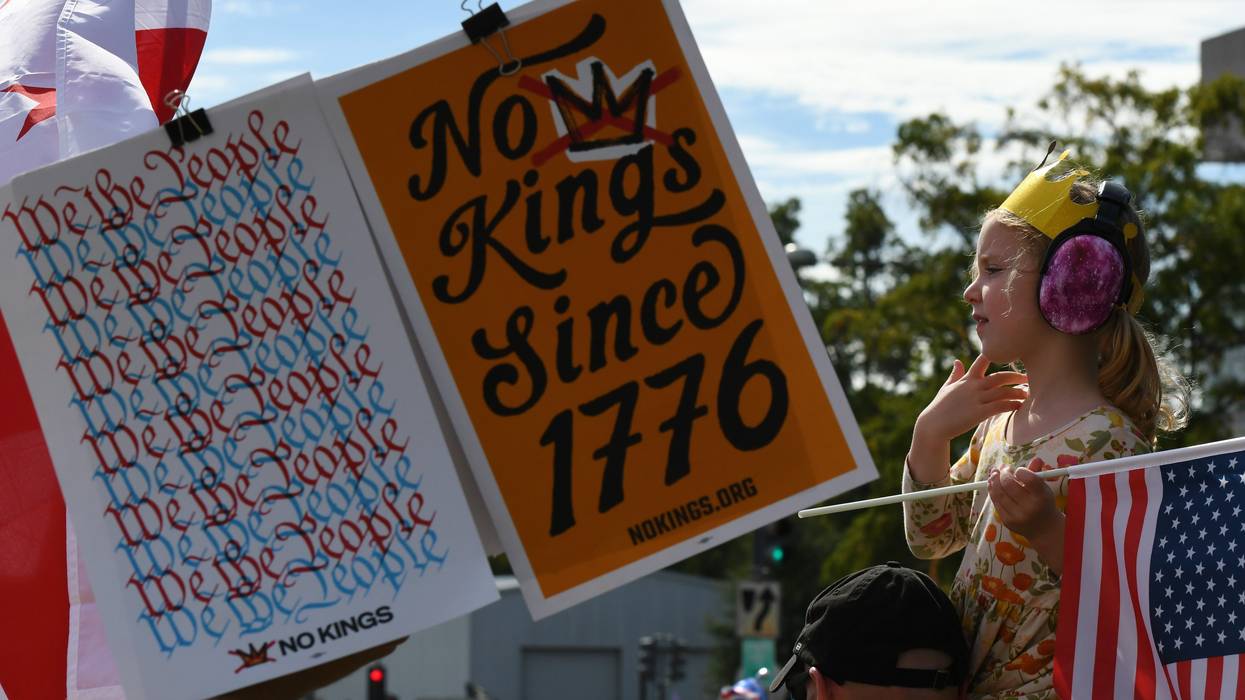
The elites interviewed by Luce expressed their reticence to publicly speak out against Trump days after more than 7 million people gathered at thousands of "No Kings" protests condemning the president's authoritarian agenda—despite the administration's threats against protest movements. Residents in cities including Portland, Oregon and Chicago have also resisted federal agents carrying out Trump's mass detention and deportation campaign.
"Jake Sullivan's been a critical decision-maker in every Democratic catastrophe of the last decade," said one observer. "Why is he still in the inner circle?"
Amid the latest battle over the direction the Democratic Party should move in, a number of strategists and political advisers from across the center-left's ideological spectrum are assembling a committee to determine the policy agenda they hope will be taken up by a Democratic successor to President Donald Trump.
Some of the names on the list of people crafting the agenda—named Project 2029, an echo of the far-right Project 2025 blueprint Trump is currently enacting—left progressives with deepened concerns that party insiders have "learnt nothing" and "forgotten nothing" from the president's electoral victories against centrist Democratic candidates over the past decade, as one economist said.
The project is being assembled by former Democratic speechwriter Andrei Cherny, now co-founder of the policy journal Democracy: A Journal of Ideas, and includes Jake Sullivan, a former national security adviser under the Biden administration; Jim Kessler, founder of the centrist think tank Third Way; and Neera Tanden, president of the Center for American Progress and longtime adviser to former Secretary of State Hillary Clinton.
Progressives on the advisory board for the project include economist Justin Wolfers and former Roosevelt Institute president Felicia Wong, but antitrust expert Hal Singer said any policy agenda aimed at securing a Democratic victory in the 2028 election "needs way more progressives."
As The New York Times noted in its reporting on Project 2029, the panel is being convened amid extensive infighting regarding how the Democratic Party can win back control of the White House and Congress.
After democratic socialist and state Assemblymember Zohran Mamdani's (D-36) surprise win against former New York Gov. Andrew Cuomo last week in New York City's mayoral primary election—following a campaign with a clear-eyed focus on making childcare, rent, public transit, and groceries more affordable—New York City has emerged as a battleground in the fight. Influential Democrats including House Minority Leader Hakeem Jeffries (D-N.Y.) and Sen. Kirsten Gillibrand (D-N.Y.) have so far refused to endorse him and attacked him for his unequivocal support for Palestinian rights.
Progressives have called on party leaders to back Mamdani, pointing to his popularity with young voters, and accept that his clear message about making life more affordable for working families resonated with Democratic constituents.
But speaking to the Times, Democratic pollster Celinda Lake exemplified how many of the party's strategists have insisted that candidates only need to package their messages to voters differently—not change the messages to match the political priorities of Mamdani and other popular progressives like Sen. Bernie Sanders (I-Vt.) and Rep. Alexandria Ocasio-Cortez (D-N.Y.).
"We didn't lack policies," Lake told the Times of recent national elections. "But we lacked a functioning narrative to communicate those policies."
Sanders and Ocasio-Cortez have drawn crowds of thousands in red districts this year at Sanders' Fighting Oligarchy rallies—another sign, progressives say, that voters are responding to politicians who focus on billionaires' outsized control over the U.S. political system and on economic justice.
Project 2029's inclusion of strategists like Kessler, who declared economic populism "a dead end for Democrats" in 2013, demonstrates "the whole problem [with Democratic leadership] in a nutshell," said Jonathan Cohn of Progressive Mass—as does Sullivan's seat on the advisory board.
As national security adviser to President Joe Biden, Sullivan played a key role in the administration's defense and funding of Israel's assault on Gaza, which international experts and human rights groups have said is a genocide.
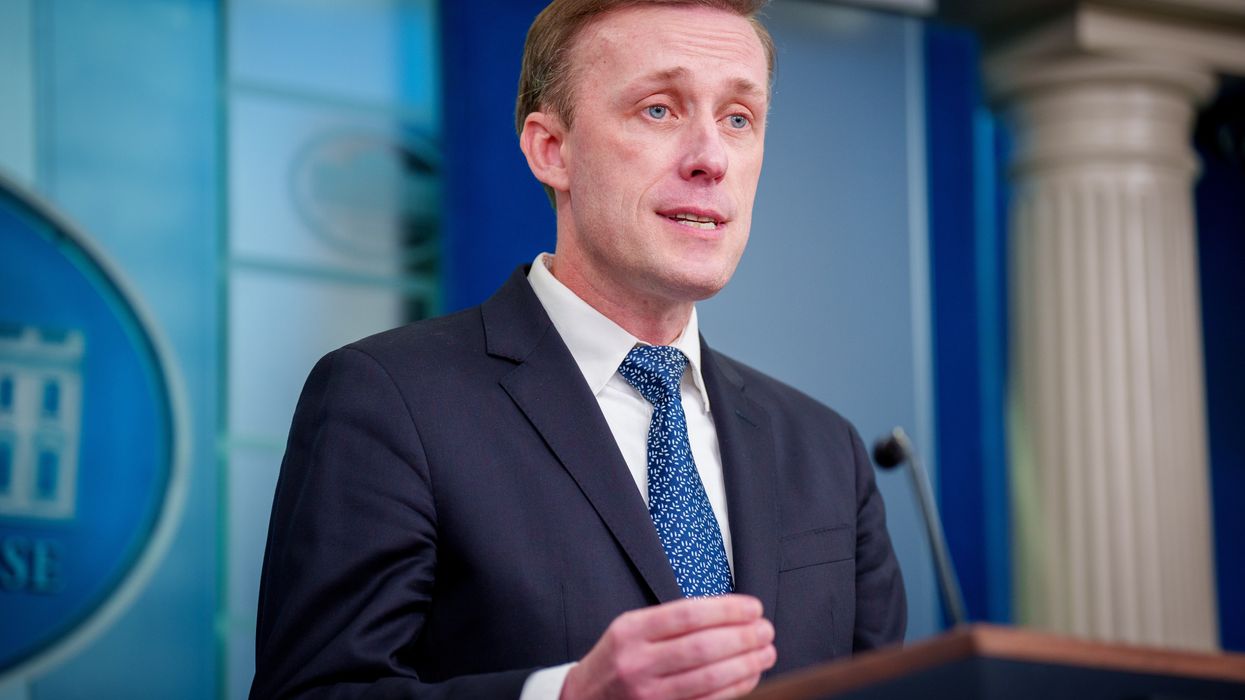
"Jake Sullivan's been a critical decision-maker in every Democratic catastrophe of the last decade: Hillary Clinton's 2016 campaign, the withdrawal from Afghanistan, the Israel/Gaza War, and the 2024 Joe Biden campaign," said Nick Field of the Pennsylvania Capital-Star. "Why is he still in the inner circle?"
"Jake Sullivan is shaping domestic policy for the next Democratic administration," he added. "Who is happy with the Biden foreign policy legacy?"
No matter how disastrously they perform in office—or what law-breaking they enable—departing White House officials from any administration can usually find cushy new jobs at lobbying outfits, hedge funds, media outlet, or major colleges and universities.
If a worker consistently and completely fails at a job, he or she should not receive a promotion, a pay raise, or a pat on the back. Sooner or later, that worker should receive a termination notice.
This is especially true of workers who engage in unethical behavior on the job. Almost any worker who violates office rules, defrauds their employer, or hurts their customers risks not only termination, but potential lawsuits and criminal charges.
Yet a small sector of workers in our nation do not face such consequences for such mistakes or misconduct on the job. Some people, no matter how badly they fail at their job or how many disasters they create on their job, can keep their positions or even move on to even better jobs.
Who are these special people who can “fail up” again and again?
Outgoing White House officials.
No matter how disastrously they perform in office, departing White House officials from any administration can usually find cushy new jobs at lobbying outfits, hedge funds, media outlets, or major colleges and universities.
To be very clear, McGurk and Sullivan were not civil servants carrying out orders. They were political appointees who developed, advocated, and executed disastrous, deadly and illegal decisions.
For the latest example of this pattern, look no further than where two of the most prominent and disastrous foreign policy officials from the Biden administration just landed.
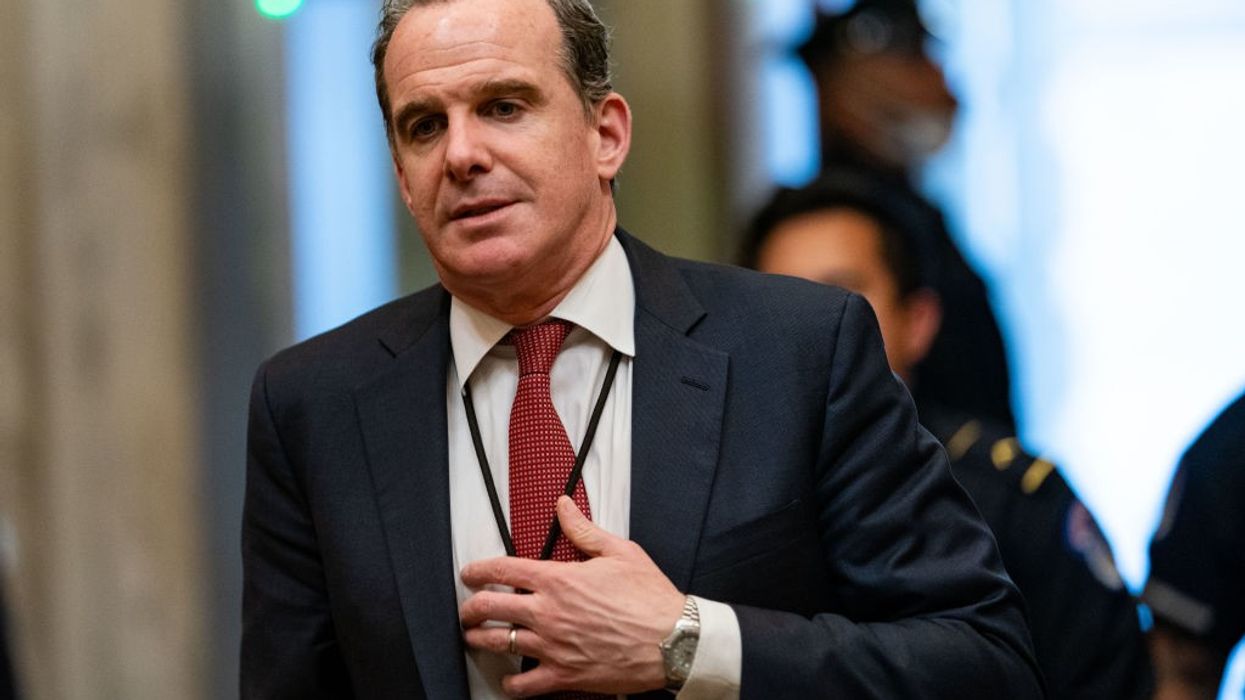
President Biden's former National Security Advisor, Jake Sullivan, and his former National Security Council coordinator for the Middle East, Brett McGurk, left the White House when the Trump administration took over in January. Since then, both Sullivan and McGurk have obtained prestigious positions at some of America's most respected universities.
Without any hint of irony, the Harvard Kennedy School recently appointed Mr. Sullivan to serve as its first-ever "Kissinger Professor of the Practice of Statecraft and World Order." He has also just been appointed a Senior Fellow at the University of New Hampshire’s Carsey School of Public Policy.
Meanwhile, Mr. McGurk joined the Harvard Kennedy School’s Belfer Center for Science and International Affairs at the end of last month as a senior fellow (he also, predictably, joined a hedge fund).
In a moral and rational society, neither Mr. Sullivan or Mr. McGurk would be able to land such jobs after leaving behind a trail of death and destruction stretching halfway around the world.
Take Mr. Sullivan. He personally spent months presiding over planning for the U.S. military's phased troop withdrawal from Afghanistan. Remember how well that ended? Vietnam-like images of U.S. diplomats scrambling to evacuate the Embassy. Panicking Afghans overwhelming U.S. military bases and falling off of airplanes. The killing of 13 American soldiers and hundreds of Afghans at Abbey Gate.
The Pentagon, which often reported to President Biden through Mr. Sullivan, capped the Afghan withdrawal disaster off by launching a drone strike on a supposed ISIS car bomber who turned out to be a well-known humanitarian aid worker returning home to his family. The attack killed 10 civilians, including children who were outside and visible to drone operators when they fired on them. Under Mr. Sullivan's leadership, no one faced any accountability for this war crime.
In a moral and rational society, neither Mr. Sullivan or Mr. McGurk would be able to land such jobs after leaving behind a trail of death and destruction stretching halfway around the world.
Both Mr. Sullivan and Mr. McGurk also played critical roles in ensuring U.S. financial, military and diplomatic support for the Israeli government's war crimes against the people of Gaza.
When asked in 2023 if Israel’s targeting of civilian infrastructure in Gaza constituted a war crime, Sullivan attributed such reports to the “fog of war.”
In November 2023, when the Israeli government was carrying out the defense minister’s pledge to block all food, fuel, water to everyone in Gaza because they were fighting “human animals,” Mr. McGurk endorsed the illegal collective punishment of an entire civilian population by saying that if all the hostages were released, humanitarian aid would be allowed in.
According to reporting by The Atlantic, Mr. McGurk would push back against colleagues concerned by civilian casualties in Gaza by “invoking his stint overseeing the siege of Mosul during the Obama administration,” an operation that cost the lives of 9,000 Iraqi civilians.
During a May 2024 press briefing, Mr. Sullivan denied that what was going on in Gaza was a genocide, and in 2025 he went on to preposterously say that President Biden’s policies saved lives in Gaza.
In addition to their rhetorical support for war crimes in Gaza, Sullivan and McGurk helped develop and execute the policy that led to massive arms shipments to the Netanyahu government.
In April 2024, the Biden administration approved a shipment of $17 billion in unconditional military aid to the Israeli government. The administration also approved a shipment of over $20 million worth of fighter jets and other military equipment in August 2024. In one of their final acts, the administration approved an $8 billion dollar arms deal with Israel in January 2025.
By overseeing arms shipments to the Israeli government long after it was well-established that American weapons had been used in the commission of war crimes by Israeli forces, Mr. Sullivan and Mr. McGurk brazenly violated federal laws, including the Leahy Law, Section 6201, and Section 502B of the Foreign Assistance Act.
To be very clear, McGurk and Sullivan were not civil servants carrying out orders. They were political appointees who developed, advocated, and executed disastrous, deadly and illegal decisions.
Harvard and the University of New Hampshire’s decisions to reward McGurk and Sullivan with prestigious appointments represent the worst example of failing up. The appointments also show a callous, arguably racist disregard for the countless Palestinian Americans whose family members were victims of the White House’s policies.
Everyone knows that if these two officials had enabled the slaughter of 40,000 blonde-haired, blue-eyed Europeans instead of 40,000 mostly Muslim people of color, Harvard and UNH would never hire them.
Starting with Jake Sullivan and Brett McGurk, it's time for White House officials to face the same treatment that most other Americans would face for sparking disasters on the job.
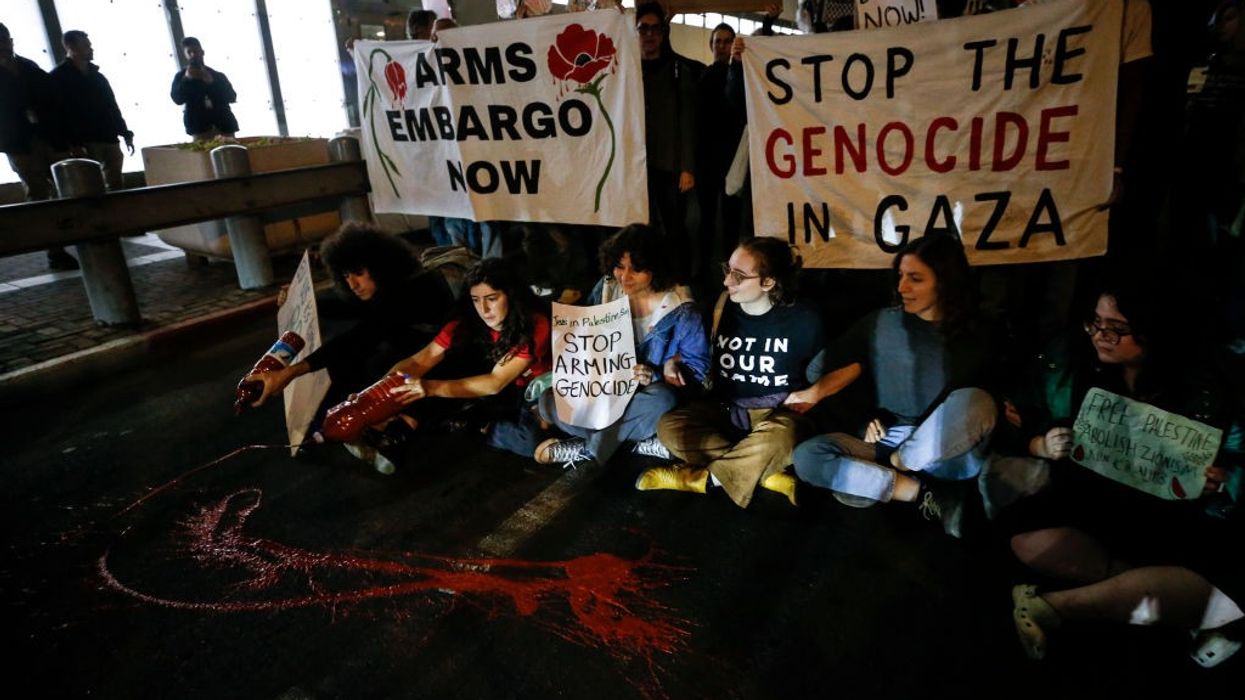
Multiple human rights organizations and international bodies have accused Israel of committing genocide in Gaza
The administration of US President Joe Biden announced on Saturday an arms sale to Israel valued at $8 billion, just ahead of President-elect Donald Trump's return to the White House.
Biden has repeatedly rejected calls to suspend military backing for Israel because of the number of civilians killed during the war in Gaza. Israel has killed more than 45,000 people in Gaza, primarily women and children.
The sale includes medium-range air-to-air missiles, 155mm projectile artillery shells for long-range targeting, Hellfire AGM-114 missiles, 500-pound bombs, and more.
Human rights groups, former State Department officials, and Democratic lawmakers have urged the Biden administration to halt arms sales to Israel, citing violations of US laws, including the Leahy Law, as well as international laws and human rights.
The Leahy Law, named after former Sen. Patrick Leahy, requires the US to withhold military assistance from foreign military or law enforcement units if there is credible evidence of human rights violations.
The Council on American-Islamic Relations (CAIR), the nation’s most significant Muslim civil rights and advocacy organization, today called Biden’s new $8 billion arms deal “racist” and “sociopathic.”
Multiple human rights organizations and international bodies have accused Israel of committing genocide in Gaza. The International Criminal Court (ICC) issued arrest warrants for Israeli Prime Minister Benjamin Netanyahu and former Defense Minister Yoav Gallant for committing war crimes.
The US is, by far, the biggest supplier of weapons to Israel, having helped it build one of the most technologically sophisticated militaries in the world.
CAIR National Executive Director Nihad Awad said on Saturday:
“We strongly condemn the Biden administration for its unbelievable and criminal decision to send another $8 billion worth of American weapons to the government of indicted war criminal Benjamin Netanyahu instead of using American leverage to force an end to the genocide in Gaza.
“Only racists who do not view people of color as equally human, and sociopaths who delight in funding mass slaughter, could send Netanyahu even more bombs while his government openly kidnaps doctors, destroys hospitals, and exterminates the last survivors in northern Gaza.
“If President Biden is actually the person who approved this new $8 billion arms sale, then he is a war criminal who belongs in a cell at The Hague alongside Netanyahu. But if Antony Blinken, Brett McGurk, Jake Sullivan, and other aides are making these unconscionable decisions as shadow presidents, then anyone with a conscience in the administration should speak up now about their abuses of power.”
According to the Stockholm International Peace Research Institute (SIPRI), the US accounted for 69% of Israel's imports of major conventional arms between 2019 and 2023.
On the other hand, incoming President-elect Donald Trump has also pledged unwavering support for Israel and has never committed to supporting an independent Palestinian state.

It appears that the decades of costs in arming and defending dictatorships in the Middle East remain entirely lost on the Democratic leadership.
Perhaps we should be grateful that it took President Biden over four years to fully abandon his campaign pledge to end arms sales to Saudi Arabia, eroding the promise bit by bit before finally announcing at the end of the day on Friday, August 9, that the administration would resume sales of offensive air-to-ground munitions to the Kingdom.
In reality, the ban was merely the last vestige of a long-abandoned policy to isolate and sanction Saudi Arabia for its various, gruesome atrocities and abuses both at home and abroad. In its place, the Biden administration’s courtiers doubled down on their embrace of Crown Prince Mohamed bin Salman (MBS), offering up a never-ending basket of concessions and goodies, as the golden ticket for continued U.S. primacy in the Middle East, come what may to everyone and everything else.
What follows will be their rush to the finish line, bestowing on the prince the biggest prize of all — an unprecedented U.S. security guarantee — before the clock runs out on Joe Biden’s presidency.
Cutting off the biggest U.S. weapons purchaser in the world carried well-understood costs of its own, upsetting not only U.S. defense companies deprived of the Saudi cash cow, but also encouraging MBS to retaliate by flaunting closer ties with China and Russia. And so just a few months into the first year of the Biden administration, his national security team walked back the arms embargo, clarifying that they only intended to block “offensive” weapons, not “defensive” ones.
Queries from members of Congress about the distinction between these terms went unanswered. Soon, billions in weapons were flowing, paving the way for a further mending of relations with the Saudi ruler, culminating in the now infamous July 2022 Biden/MBS “fist bump” in Jeddah.
Once the Biden team announced that it too would follow Trump’s lead to make adding Saudi Arabia to the Abraham Accords its number one Middle East foreign policy priority, any lingering concerns about rewarding the Kingdom with new military support despite its widespread horrors in Yemen and at home, or fueling its further belligerence in the region, were swept under the desert sands.
Coupled with national security adviser Jake Sullivan’s open admission of his secondary priorities — cheap oil and keeping China out of the region — the only answer to MBS’s “jump” was to ask “how high?” MBS turned to a hardball game of reverse leverage, not only refusing to open his oil spigot to relieve global oil prices ahead of the 2022 November primaries despite Biden’s pleas, but prominently hosting Chinese President Xi Jinping in a multiday red carpet affair, announcing China would build a civilian nuclear plant and support missile development in the country, and refusing to sanction Russia for its invasion of Ukraine.
And so it was time for the Biden team to bow to MBS’s wishes. The first major concession was to grant the Crown Prince immunity from U.S. prosecution, squashing several lawsuits against him for the murder of Jamal Khashoggi, the attempted murder of Saad Aljabri, and the targeted harassment and attacks against Al-Jazeera journalist Ghada Oueiss. The next was for the Biden team to secure the ultimate prize in the Saudi bucket list: a NATO Article 5 treaty level U.S. security guarantee for the Kingdom. Efforts by the Biden team to woo the Crown Prince with a mere aerial security umbrella was not sufficient to persuade him; only a bilateral, treaty level guarantee would work, he made clear.
The Hamas attacks on Israel on October 7, and the nine months of relentless Israeli bombardment and starvation of Gaza’s civilian population that it precipitated, upended these plans. A humiliated Sullivan, who only days before the cataclysmic assault pronounced that the Middle East was “quieter today than it has been in two decades now” and boasted that “the amount of time that I have to spend on crisis and conflict in the Middle East today compared to any of my predecessors going back to 9/11 is significantly reduced,” was forced to shelve the plans for a Saudi/Israeli peace agreement.
Even MBS could not dare to openly endorse Israel in the face of near universal Saudi sympathy for Palestinian suffering.
While a largely AIPAC-funded Congress would likely have supported a U.S. security guarantee for Saudi Arabia in exchange for its joining the Abraham Accords, without this, ratification of a treaty level commitment would be a very hard sell. The Biden team is now considering the idea of delinking the security guarantee, as well as poaching China’s development of the civilian nuclear plant, from normalization with Israel in a “less for less” deal.
Under a proposed “Strategic Alliance Agreement” the U.S. would commit to helping defend Saudi Arabia if it were attacked, in exchange for Saudi granting Washington access to Saudi territory and airspace, prohibiting China from building bases in the Kingdom or pursuing security cooperation with it, and signing a parallel “Defense Cooperation Agreement,” to boost weapons sales, intelligence sharing and strategic planning on terrorism and Iran.
Such a move strips away the cover of “regional peace for Israel” as the motivation for the Saudi security guarantee, more nakedly exposing the underlying motivations driving the Biden team: a stale but cemented worldview that U.S. interests require military hegemony in the Middle East, alongside cheap oil and defense industry profits. It’s hard to discount the siren call of personal profiteering for Biden officials, who will no doubt consider multi-million payouts from the UAE and Saudi, even if they’re not as lucrative as the billions in take-home by Trump officials Stephen Mnuchin and Jared Kushner. (Recall also that Secretary Blinken’s WestExec Advisors, whose client list Secretary Blinken has never disclosed, is now partly owned by Teneo, a firm that works for the MBS controlled Saudi public investment fund.)
It appears that the decades of costs in arming and defending dictatorships in the Middle East — from the mass slaughters of civilians and perpetual war-footings, encouraging destabilizing bellicosity, entrapping our country in zero-sum military conflicts, and undermining U.S. global standing as a credible force for human rights and democracy — remain entirely lost on the Democratic leadership.
With the clock ticking on the expiration of the Biden term as the Gaza war rages on, it’s doubtful that the administration will be able to deliver any expansion of the Abraham Accords or a security agreement for MBS. It’s not even clear MBS will accept these rewards, saving them for the next round of haggling with a new administration. For now, we’ll just have to hope that “Mr. Bonesaw” will show more sense than the Biden administration and avoid any new wars in the region.

"The entire operation was a failed exercise in public relations by the Biden administration," said one observer.
After failing to re-anchor its "humanitarian pier" in Gaza, the Pentagon said Thursday that the much-ballyhooed project—which critics dismissed as a "public relations ploy" that did next to nothing to stop the deadly starvation spreading in the besieged Palestinian enclave—would shut down indefinitely.
Pentagon Press Secretary Maj. Gen. Patrick Ryder said U.S. troops had failed to reconnect the floating Trident Pier to Gaza's shore due to "technical and weather-related issues," according to The Washington Post.
The $320 million project—which consists of a floating offshore barge and 1,800-foot causeway to the shore—was touted as eventually being able to accommodate up to 150 aid trucks per day. Instead, it facilitated the shipment of the equivalent of about a single day's worth of prewar food deliveries while operating for a total of less than three weeks.
"As a pier, it's shutting down. As a metaphor, it will live forever," said Tom Philpott, a senior researcher at Johns Hopkins University's Center for a Livable Future.
Stephen Semler, co-founder of the Security Policy Reform Institute, welcomed the project's demise.
"The U.S. pier was never supposed to work. It was designed to give a humanitarian gloss to [U.S. President Joe] Biden's pro-genocide policy in Gaza," he said on social media. "Good riddance to this failed PR stunt."
However, during a Thursday press conference, National Security Adviser Jake Sullivan defended the pier, arguing that it "has made a difference in trying to deal with the heartbreaking humanitarian situation in Gaza."
"I see any result that produces more food, more humanitarian goods getting to the people of Gaza, as a success," he asserted. "It is additive. It is something additional that otherwise would not have gotten there when it got there. And that is a good thing."
Even if the pier had achieved its expected capacity, it would still have been far fewer than the prewar daily mean of more than 500 truckloads that U.S. and United Nations officials said are required to meet the needs of a population facing critical shortages of food, water, medicine, and other lifesaving supplies.
The pier was in operation for only about 20 days in May before it broke apart during stormy conditions. The structure was subsequently repaired, but then was dismantled just a week after reopening in June due to more rough seas.
It is also likely that the pier was used for military purposes during the June raid by Israel Defense Forces troops, who killed or wounded hundreds of Palestinians—including many women and children—during the rescue of four Israelis kidnapped by Hamas militants on October 7.
"It seems clear that the entire operation was a failed exercise in public relations by the Biden administration, which has sat on its hands while the extremist Netanyahu cabinet, full of the Israeli equivalent of neo-Nazis, has half-starved or in some instances whole-starved the Palestinians of Gaza," Middle East expert Juan Cole wrote Friday, referring to the far-right government of Israeli Prime Minister Benjamin Netanyahu.
At least dozens of Palestinians, mostly children, have died in Gaza due to a lack of food, water, and medical treatment. Palestinian and international agencies say that Israel's 280-day war on Gaza has left at least 137,500 people dead, maimed, or missing; around 90% of the embattled strip's population forcibly displaced; and hundreds of thousands of Palestinians starving.
"A U.S. administration has to have an answer when reporters ask it why it is allowing Palestinian children to become emaciated, and the pier was an attempted answer," Cole added. "The other possibility was for the Biden administration to man up and just tell Netanyahu and his rogues' gallery cabinet that they cannot starve innocent civilians as part of their campaign against Hamas, and that if they do not cut it out there will be hell to pay. But Biden is in the tank for the Israeli government."
U.N. experts and others have called Israel's forced starvation of Palestinians in Gaza "a form of genocidal violence and has resulted in famine."
The International Court of Justice—which is weighing whether Israel is committing genocide in Gaza—has ordered Israel to prevent genocidal acts in the embattled enclave, to "immediately halt" its offensive in Rafah, and to stop blocking humanitarian aid from entering Gaza in the face of worsening "famine and starvation." Israel is accused of flouting all three ICJ orders.
Meanwhile, International Criminal Court Prosecutor Karim Khan accused top Israeli officials of using "starvation as a weapon of war" and "extermination" in his May application for arrest warrants for Netanyahu and Israeli Defense Minister Yoav Gallant. Khan is also seeking to arrest three Hamas leaders for alleged crimes including extermination and rape.
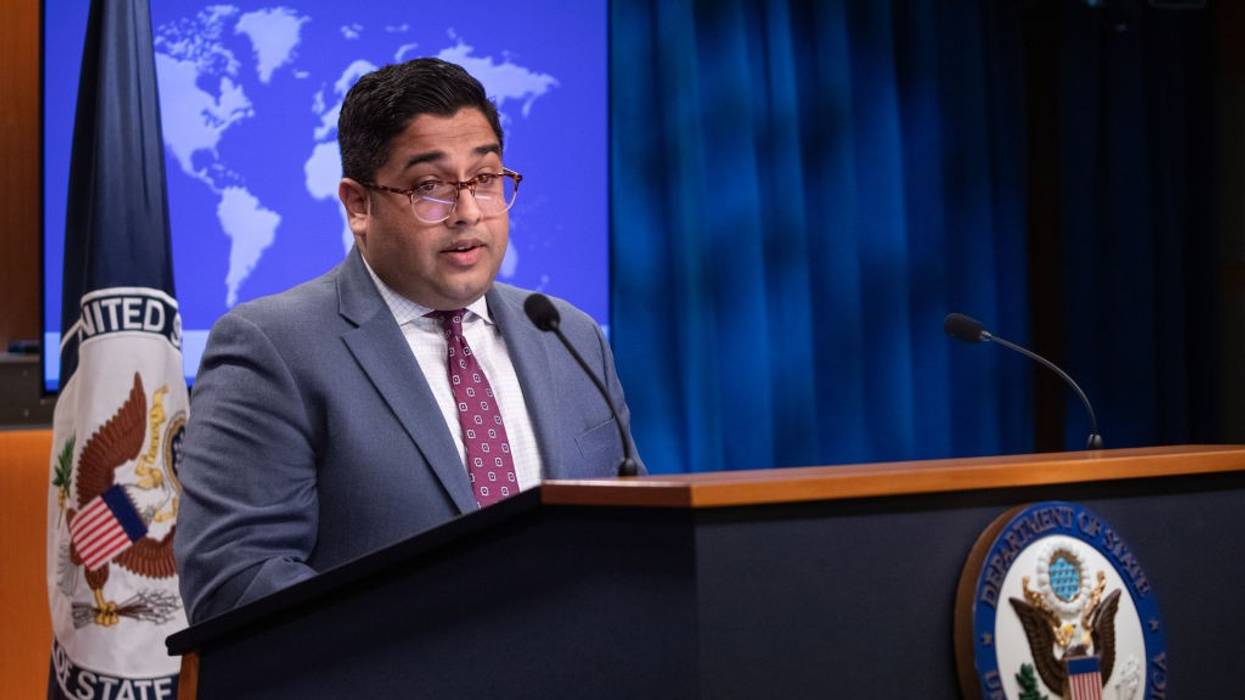
"How does it ever make sense that the United States asks the accused party to examine itself?" asked one incredulous reporter.
A Biden administration spokesperson once again brushed off calls for an independent investigation into how hundreds of Palestinians found in mass graves near Gaza hospitals died when asked Thursday about new reports that many of the victims were tortured, summarily executed—and in some cases, buried alive by Israeli invaders.
During a Thursday U.S. State Department press conference in Washington, D.C., a reporter noted Gaza officials' claim that mass grave victims "including children were tortured before being killed" and that "some even showed signs of being buried alive, along with other crimes against humanity."
"What's wrong with an independent, scientific, forensic investigation?"
Noting calls by Palestinian officials and United Nations High Commissioner for Human Rights Volker Türk for an independent probe into mass graves, the reporter said that "this administration repeatedly said that it asks... the Israeli government to investigate itself."
"How does it ever make sense that the United States asks the accused party to examine itself and provide reports that you have previously said that you actually trust?" the reporter asked State Department Principal Deputy Spokesperson Vedant Patel. "What's wrong with an independent, scientific, forensic investigation?"
Patel replied: "We continue to find these reports incredibly troubling. And that's why yesterday you saw the national security adviser for this to be thoroughly investigated."
While National Security Adviser Jake Sullivan on Wednesday called reports of mass grave atrocities "deeply disturbing" and said that "we want answers" from Israel, he did not call for an independent investigation.
When the reporter pressed Patel on the legitimacy of asking Israel to investigate itself, Patel said, "we believe that through a thorough investigation we can get some additional answers."
Thursday's exchange followed a similar back-and-forth on Tuesday between Patel and Said Arikat, a journalist for the Jerusalem-based
Palestinian news outlet al-Quds who asked about the mass graves.
At least 392 bodies—including numerous women and children—have been found in mass graves outside Nasser Hospital in Khan Younis, southern Gaza, where Palestinian Civil Defense and other workers have been exhuming victims for nearly a week. Officials believe there are as many as 700 bodies in three separate mass graves.
Based on more recent exhumations, local Civil Defense chief Yamen Abu Sulaiman said during a Wednesday press conference that "we believe that the occupation buried alive at least 20 people at the Nasser Medical Complex."
"There are cases of field execution of some patients while undergoing surgeries and wearing surgical gowns," he stated, adding that some victims showed signs of torture and 10 bodies had medical tubes attached to them.
Gaza Civil Defense official Mohammed Mughier told reporters that "we need forensic examination" to definitively determine the causes of death for the 20 people believed to have been buried alive.
Previous reporting on the mass graves quoted rescue workers who said they found people who were apparently executed while their hands were bound, with some victims missing heads, skin, and internal organs.
Other mass graves have been found in Gaza, most notably on the grounds of al-Shifa Hospital, where Israeli forces last month committed what the Geneva-based Euro-Mediterranean Human Rights Monitor called "one of the largest massacres in Palestinian history."
It's also not the first time there have been reports of Israeli troops burying victims alive during the current war, in which Palestinian and international officials say Israeli forces have killed or wounded more than 122,000 Gazans, including at least 11,000 people who are missing and feared dead. Israeli forces attacking Kamal Adwan Hospital in Beit Lahia last December reportedly bulldozed and buried alive dozens of injured patients and displaced people.

"The U.S. cannot partner with a country that is starving children," said Sen. Bernie Sanders.
U.S. Sen. Bernie Sanders responded to the news Wednesday that a top Biden administration official warned Israel of an imminent famine declaration in Gaza with one demand.
"No more money for Netanyahu," said the Vermont Independent senator, referring to right-wing Israeli Prime Minister Benjamin Netanyahu.
As Axios reported Wednesday, National Security Adviser Jake Sullivan warned Israeli officials in a virtual meeting earlier this week that the Integrated Food Security Phase Classification (IPC) could in the coming weeks declare a famine in Gaza, which would be only the third such declaration worldwide in the 21st century.
Famines were declared in South Sudan in 2017 and in Somalia in 2011—starvation crises that killed tens of thousands of people.
The IPC identified two of Gaza's five governorates as experiencing famine "with reasonable evidence" last month, but an official declaration for the enclave would represent a significant turning point in Israel's bombardment and blocking of aid in Gaza, Sullivan told the Israeli officials.
"Sullivan said it would be bad for Israel and for the U.S.," a source with direct knowledge of the meeting told Axios.
The national security adviser reportedly warned Israel that it would bear responsibility if a famine is declared—but Sanders noted that as the top international funder of Israel's military, the Biden administration would also be to blame.
"The U.S. cannot partner with a country that is starving children," said the senator.
As Oxfam reported Wednesday, people in northern Gaza, where about 300,000 Palestinians are believed to be trapped, are now subsisting on 245 calories per day—less than a can of beans and about 12% of the recommended daily intake to prevent malnutrition.
For Gaza's population of 2.2 million people, Oxfam found that the food deliveries allowed into Gaza since October have allowed Palestinians there to consume an average of just 41% of the daily calories needed per person.
"Israel is making deliberate choices to starve civilians. Imagine what it is like, not only to be trying to survive on 245 calories day in, day out, but also having to watch your children or elderly relatives do the same. All whilst displaced, with little to no access to clean water or a toilet, knowing most medical support has gone and under the constant threat of drones and bomb," said Amitabh Behar, international executive director of Oxfam. "All countries need to immediately stop supplying arms to Israel and do all they can to secure an immediate and permanent cease-fire; only then can we stop this horrifying carnage for the 2.2 million people who have endured six months of suffering."
Israel has denied Gaza is facing starvation and an imminent famine, even as it has blocked food aid and fired on crowds of Palestinians waiting to receive relief deliveries.
On Wednesday, as international outrage grew over Israel's killing of seven aid workers with U.S.-based nonprofit World Central Kitchen as they were delivering food in Gaza, the New York Times reported that the U.S. State Department is currently pushing Congress to approve the sale of as many as 50 F-15 fighter jets to Israel, among other military support. The Biden administration has approved weapons transfers without congressional approval since October, directly aiding Israel in attacks that have killed at least 33,037 people.