

SUBSCRIBE TO OUR FREE NEWSLETTER
Daily news & progressive opinion—funded by the people, not the corporations—delivered straight to your inbox.
5
#000000
#FFFFFF
To donate by check, phone, or other method, see our More Ways to Give page.
Daily news & progressive opinion—funded by the people, not the corporations—delivered straight to your inbox.
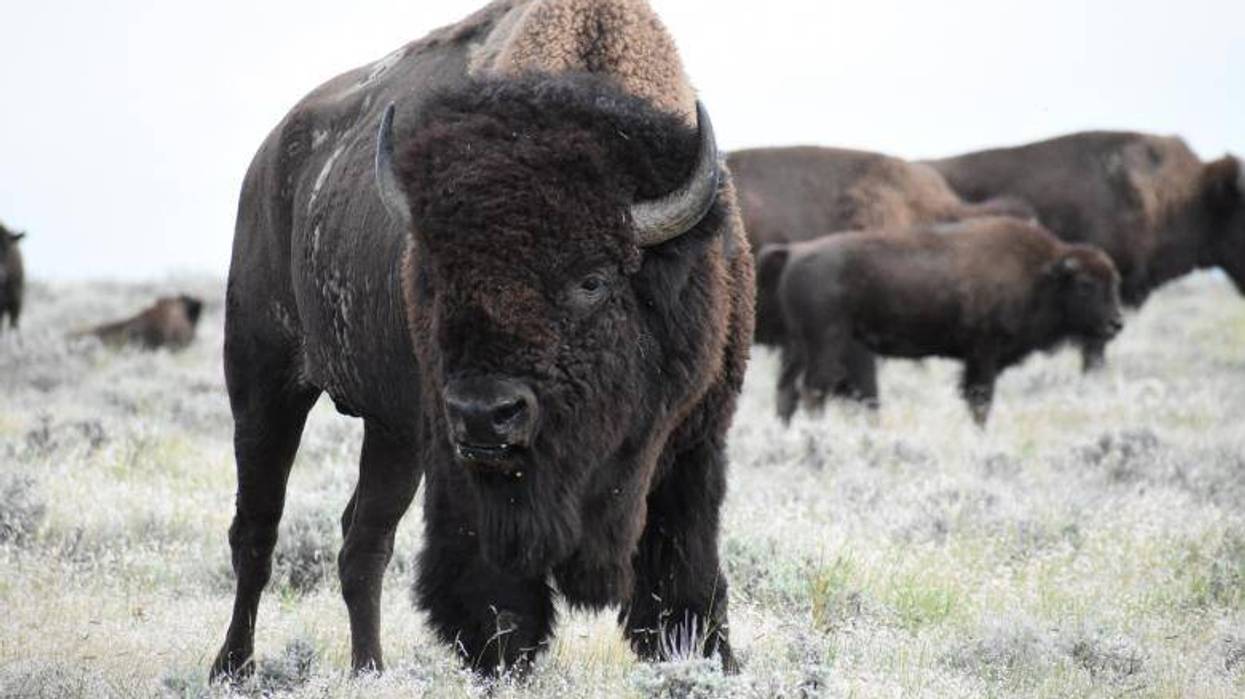
Last month the Interior Department approved new grazing rules that revoke tribal rights to graze bison on federal land in favor of cattle, all to benefit wealthy ranchers.
When the Senate Energy and Natural Resources Committee held confirmation hearings for current Department of Interior head Doug Burgum, he made it quite clear that he viewed public lands, lands belonging to the American public, as an asset on “America’s balance sheet.” His implication was pretty clear: These public lands should be used to turn a profit.
Public lands belong to all Americans and were set aside for their protection, not for profit. But, no surprise, Burgum fully supports exploitative industries like oil, gas, and mining on public lands, so who’s balance sheet will benefit? At an energy conference in Houston last year he noted, “If we’re going to drill, baby, drill, then we’ve got to be asked to also mine, baby, mine.”
So much for conservation and environmental protection of our public lands! But, like most members of the current administration, he acts like using your office to extract profit wherever possible is acceptable and “smart”—protecting the public trust takes a back seat. In 2024, President Donald Trump asked a gathering of oil and gas executives at his Florida estate hosted by Burgum to raise $1 billion for his campaign, for which in return he would roll back environmental protections requested by the oil industry. In his thinking, that’s smart, a win-win, personal profit for the president and windfall profits for energy companies.
But Burugm also knows there is profit to be made above ground on the public lands that cover large stretches of the Great Plains. Last month the Interior Department approved new grazing rules that revoke tribal rights to graze bison on federal land in favor of cattle, i.e. “production-oriented livestock.”
Aside from money made by extractive industries, administration officials, and ranchers—all at the expense of taxpayers and the environment—there are too few who question why the ongoing racism of the current administration is allowed to continue.
In the early 1800s, upward of 50 million bison roamed the Great Plains; by 1900, fewer than 1,000 were left. An organized campaign of commercial hunting, the government’s desire to subjugate the Native tribes by exterminating their food supply, and the perceived need to close the range for private cattle grazing nearly exterminated the American bison.
Déjà vu.
Tribal efforts to expand the herd, in cooperation with former Interior Secretary Deb Haaland during the Biden administration, prioritized efforts to manage the herd for traditional purposes of food, cultural heritage, and land conservation—and public land overseen by the Bureau of Land Management (BLM) was part of that partnership.
While fees charged for cattle grazing on BLM land are claimed to benefit the US Treasury, these fees do not help Secretary Burgum’s “balance sheet” either. Permitted grazing on BLM land actually costs taxpayers money, while it benefits a small number of mostly rich landowners. True, there are ranchers who use the privilege of grazing public lands responsibly, yet there are others who abuse the privilege, while the administration turns a blind eye and continues to roll back environmental enforcement. Nevada rancher Cliven Bundy continued to illegally graze BLM land in Nevada for years after piling up fees and fines of over $1 million.
Aside from money made by extractive industries, administration officials, and ranchers—all at the expense of taxpayers and the environment—there are too few who question why the ongoing racism of the current administration is allowed to continue. While the outright slaughter of Native tribes as seen in the 1800s is no longer occurring, the government is clearly denying the tribes the right to celebrate their culture, their heritage, and their right to a decent life on land that was once theirs, land where millions of bison grazed, animals that evolved with the native prairie and in effect managed it and put it to its highest use. Land that now, in addition to production-oriented livestock, is covered by millions of acres of corn and soy.
It is unlikely that cattle, corn, and soy will ever be replaced by bison herds on the Great Plains, because as the Coalition of Large Tribes (COLT), which represents more than 50 tribes managing 25,000 bison on land that accounts for about 95% of Indian Country noted, the new Interior Department rules are designed to protect cows and were published without prior consultation with tribes.
It is not nostalgia that bison should graze public lands, especially those adjacent to tribal reservations. Bison are far better environmental stewards than cattle and, for that matter, probably people as well. It is also, perhaps, a pipe dream that this administration would recognize the inherent cultural rights of Native Americans, or any minority for that matter. To them, the extraction of profit for themselves and their corporate cronies is all that matters. But this administration will someday end, and perhaps the next will be more enlightened and respectful of minority rights and common sense.
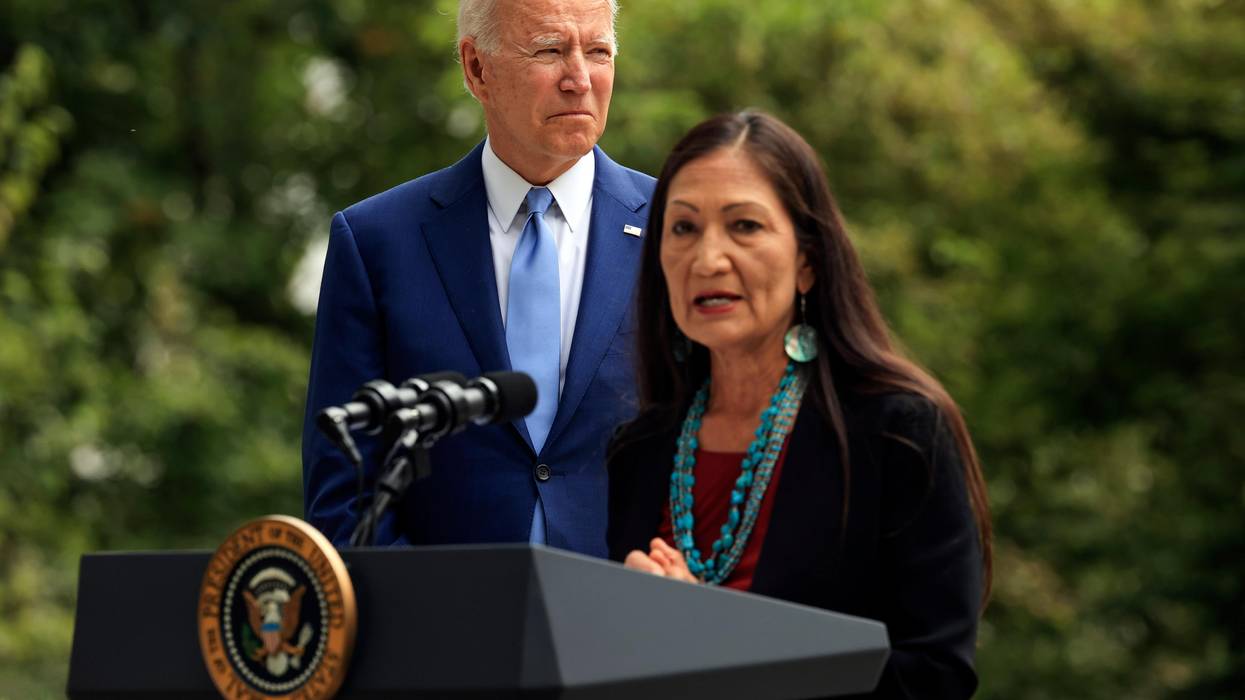
The lawsuit aims to "shed light on the Biden administration's dumbfounding refusal to align our country's federal fossil fuel programs with its own climate goals," said one campaigner.
A national conservation group sued the Biden administration on Tuesday for failing to respond to a public records request pertaining to the Interior Department's dismissal of a petition that called for a phaseout of oil and gas extraction on federal lands and waters.
Submitted last year, the petition from more than 360 environmental and Indigenous organizations called on the Interior Department to initiate a rulemaking process aimed at reducing oil and gas production on public lands and waters by 98% by 2035.
The department rejected the petition earlier this year, claiming that it "has a robust rulemaking agenda already underway to address the climate crisis and implement reforms to our conventional energy programs" and doesn't have adequate resources to "undertake the proposed rulemaking at this time."
The administration's reply came after the Center for Biological Diversity (CBD) sued the administration for not responding to the petition for more than a year.
CBD is now taking legal action against the Interior Department again, this time for violating the Freedom of Information Act (FOIA).
In July, CBD requested that the Interior Department turn over records related to the agency's deliberations about the fossil fuel phaseout petition and its response.
"At the time of the filing of this complaint, over 130 days have passed since the Center submitted its FOIA request to Interior. To date, however, Interior has not provided any requested records," the new lawsuit states. "Accordingly, the Center challenges Interior's FOIA violations resulting from its failure to respond to the Center's request and seeks declaratory and injunctive relief to require Interior to promptly search for and produce all responsive records without further delay."
"The administration needs to explain its failure to take bold, urgent action but instead it's hiding public records."
Taylor McKinnon, CBD's southwest director, said in a statement that the lawsuit "will shed light on the Biden administration's dumbfounding refusal to align our country's federal fossil fuel programs with its own climate goals."
"All-time high federal oil production is causing our planet's life support systems to shut down under the stresses of the climate emergency," said McKinnon. "The administration needs to explain its failure to take bold, urgent action but instead it's hiding public records."
The suit comes days before the start of the COP28 climate summit in the United Arab Emirates, closely watched and critically important talks that Biden has decided to skip.
Under Biden's leadership, U.S. crude oil production is on pace to surge to a record 12.9 million barrels this year. During his first two years in office, the Biden administration approved more than 6,400 permits for oil and gas drilling, exceeding the number of approvals during former President Donald Trump's first two years.
According to a CBD analysis released Monday, drilling projects that the Biden administration has approved could "erase" emissions-reduction progress from the Inflation Reduction Act, the president's signature legislative achievement.
"The Biden administration is canceling out its own climate progress by greenlighting major oil and gas projects," said Shaye Wolf, CBD's climate science director.

Legislation that the Republican-controlled House Appropriations Committee is set to mark up on Wednesday would take an axe to U.S. climate spending, cutting the Environmental Protection Agency's budget by a staggering 39% while promoting fossil fuel development as huge swaths of the planet face devastating heatwaves.
Kyle Jones, director of federal affairs with the Center for Policy Advocacy at the Natural Resources Defense Council (NRDC), said in a statement Tuesday that the Republican bill is "historically bad... the worst of its kind we've ever seen."
Jones went on to say that the legislation—one of a dozen appropriations bills currently moving through the House—"reads like a 'how-to' manual for destroying the planet."
"While Americans take refuge from record-setting extreme heat and suffer from wildfire smoke, the House majority proposes slashing environmental funding to the lowest level in 30 years," said Jones. "This is a non-starter, based on galling scientific ignorance and reactionary politics."
Made public last week amid record-shattering heat and other extreme weather across the U.S., the GOP's Interior, Environment, and Related Agencies funding bill calls for $4 billion in total cuts to the EPA budget—slashing the agency's clean water funds, emissions-reduction grants, and other programs.
The bill would also cut the Interior Department's budget by $721 million, remove the Gray Wolf from the list of endangered and threatened wildlife, and prevent the EPA from considering the social cost of carbon in any regulatory action.
Meanwhile, the Republican legislation aims to bolster the industry fueling climate chaos by requiring the Interior Department to hold at least two offshore oil and gas lease sales in both the Gulf of Mexico and Alaska each year.
"The bill includes an exhaustive list of anti-environment riders that seek to derail any effort to combat climate change and undermine clean water and clean air protections," Rep. Chellie Pingree (D-Maine), the top Democrat on the House Interior, Environment, and Related Agencies Subcommittee, said during a hearing on the measure last week.
Republicans "give an open invitation to exploitative oil, gas, and mineral leasing by blocking environmental regulations and even overriding judicial review," Pingree added. "At the same time, the bill suppresses clean energy production."
"This effort by the Republican House majority is a slap in the face to the millions of Americans suffering through weeks-long heatwaves and devastating floods."
The NRDC's Josh Axelrod and Valerie Cleland wrote in a blog post that the legislation marks "the Republican majority's latest in a series of attempts to hand over our public lands and waters to Big Oil."
"To say these provisions would have devasting impacts on both climate and communities would be an understatement," Axelrod and Cleland added. "This effort by the Republican House majority is a slap in the face to the millions of Americans suffering through weeks-long heatwaves and devastating floods and who are looking to Congress for solutions to meet this historic and challenging moment."
As their appropriations bills make clear, House Republicans are looking to enact painful cuts across the federal government, drawing vocal opposition from congressional Democrats and increasing the likelihood of a shutdown.
Late last week, as Common Dreams reported, a GOP-controlled subcommittee advanced an agency funding bill that would cut the Department of Education's budget to below the 2006 level and slash programs that help employ hundreds of thousands of teachers nationwide.
Additionally, as The Washington Post noted Tuesday, "a series of GOP bills to finance the federal government in 2024 would wipe out billions of dollars meant to repair the nation's aging infrastructure, potentially undercutting a 2021 law that was one of Washington's rare recent bipartisan achievements."
"The proposed cuts could hamstring some of the most urgently needed public-works projects across the country, from improving rail safety to reducing lead contamination at schools," the Post added.
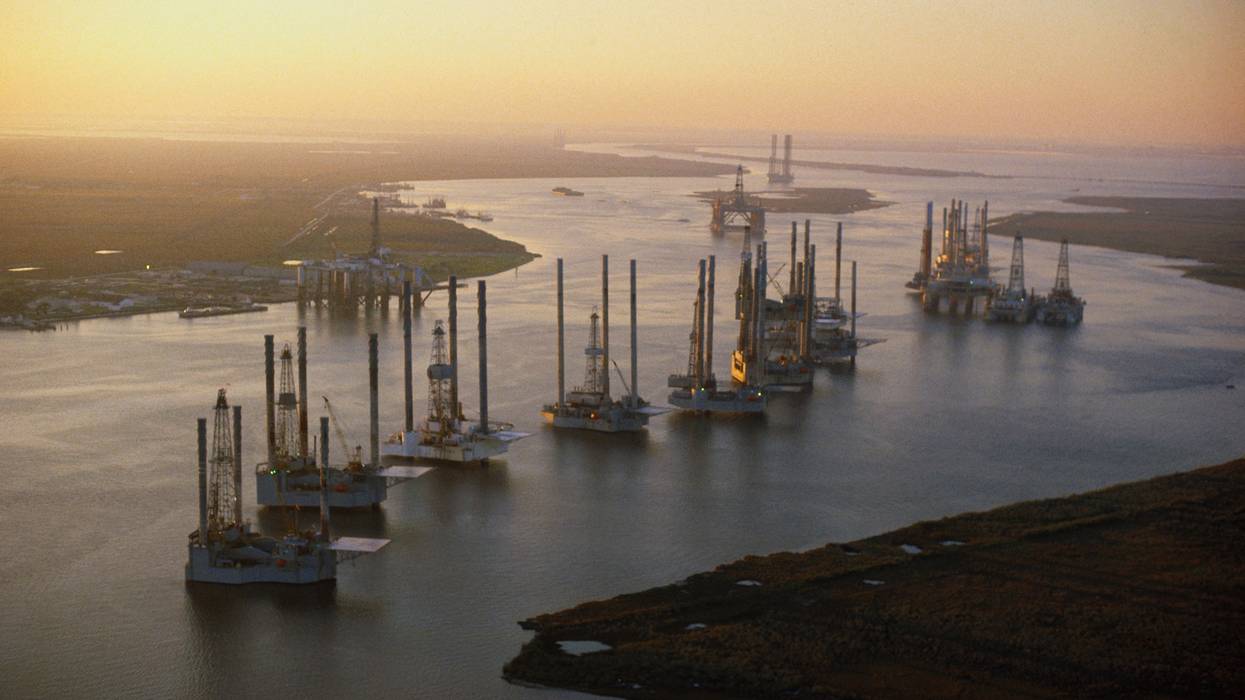
The Republican majority’s latest in a series of attempts to hand over our public lands and waters to Big Oil, this bill strips away the Department of Interior’s land and ocean management discretion.
In their latest legislative attack on our climate, the Republican majority in the House has written a bill that is so detrimental to our environment and communities, it may rank as the worst appropriations bill in decades.
For both our shared public lands and oceans, the bill carves out giveaways for the fossil fuel industry that go against not only our climate goals but also common sense. Instead of recognizing that federally managed lands and oceans host a myriad of uses and industries and contribute in countless ways to the national economy, the House majority seems to view them as having one purpose: unabated production of oil, gas, and coal.
The Republican majority’s latest in a series of attempts to hand over our public lands and waters to Big Oil, this bill strips away the Department of Interior’s land and ocean management discretion. In doing so, it tips the scales toward congressional control of the oil and gas leasing process, dictates the number of lease sales the administration must offer, and overrides any commonsense considerations as to which areas should or should not be leased.
At a time when we need to act swiftly on climate, these congressional proposals to write fossil fuel interests into law undermine the progress we need to make to tackle the climate crisis.
For offshore ocean areas, House Republicans have proposed:
For onshore federal public lands, House Republicans have proposed:
At a time when we need to act swiftly on climate, these congressional proposals to write fossil fuel interests into law undermine the progress we need to make to tackle the climate crisis. To say these provisions would have devasting impacts to both climate and communities would be an understatement. This effort by the Republican House majority is a slap in the face to the millions of Americans suffering through weeks long heat waves and devastating floods and who are looking to Congress for solutions to meet this historic and challenging moment.
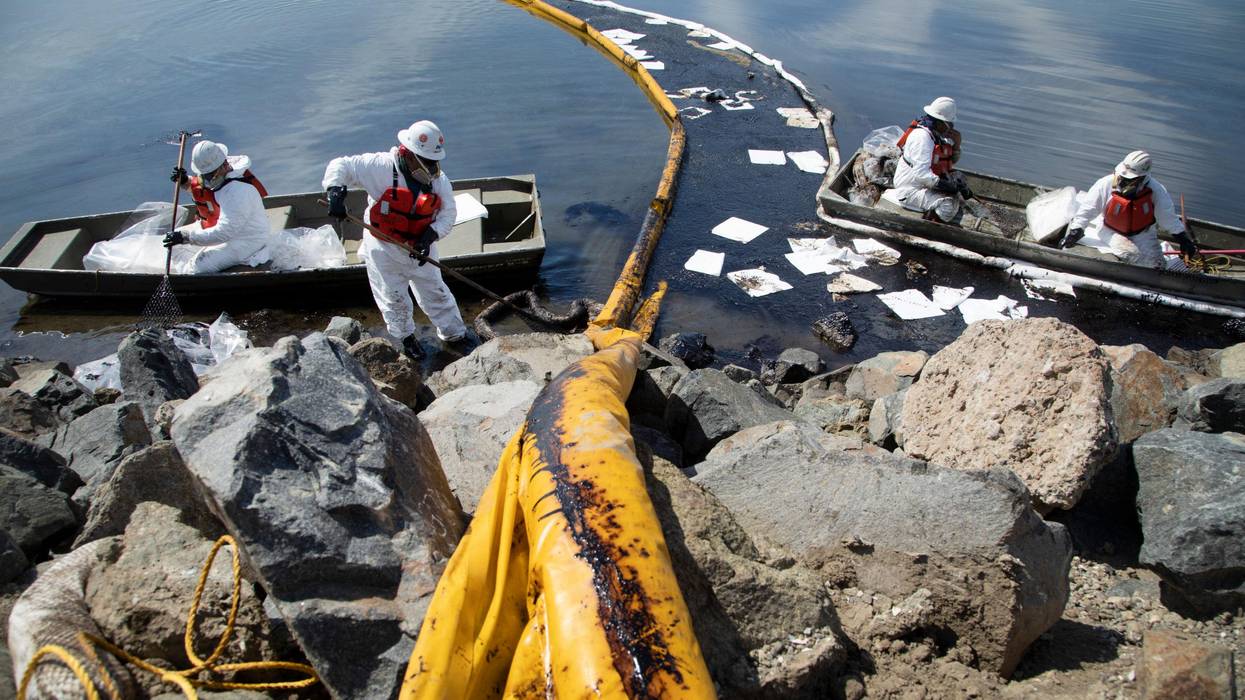
"As the climate crisis escalates," said one advocate, "ending these destructive extraction practices is a matter of survival—not just for the whales, otters, and other animals in the channel, but for all life on earth."
The U.S. Supreme Court on Monday rejected a call from several fossil fuel companies to hear their challenge to a lower court ruling handed down a year ago, which prohibited fracking in federal waters off the coast of California.
The 9th U.S. Circuit Court of Appeals last June upheld a decision to bar the issuing of permits for offshore fracking, finding that the U.S. Department of the Interior had violated the Endangered Species Act (ESA), the National Environmental Policy Act, and the Coastal Zone Management Act when it allowed fracking in offshore gas and oil wells in the Pacific.
In the original case, the ruling was the result of three separate lawsuits filed by the Center for Biological Diversity (CBD) and the Wishtoyo Foundation, the Environmental Defense Center (EDC) and Santa Barbara Channelkeeper, and the state of California, challenging the federal government.
Earlier this year, fossil fuel companies ExxonMobil and DCOR, LLC were joined by the American Petroleum Institute in intervening in the case, filing a petition for certiorari in an effort to overturn the 9th Circuit ruling.
Despite the history of the case, the Biden administration opposed the fossil fuel companies' move, with Solicitor General Elizabeth Prelogar writing in a Supreme Court brief last week that "the court of appeals' decision does not warrant this court's review."
"California's amazing coast and vulnerable marine life deserve this victory, which will protect the ecosystem from the many dangers of offshore fracking," said Kristen Monsell, oceans legal director at CBD. "The fracking ban will help prevent more toxic chemicals from poisoning fish, sea otters, and other marine life."
EDC filed its lawsuit after finding in 2014 through several Freedom of Information Act requests that the federal government had issued more than 50 permits without conducting environmental reviews or a public comment process.
"The Supreme Court was right to reject the oil industry's latest attempt to allow fracking and acidizing in our waters with zero meaningful environmental review," said Maggie Hall, senior attorney at EDC, on Monday. "The Santa Barbara Channel is one of the most ecologically rich and important regions in the world. As the climate crisis escalates, ending these destructive extraction practices is a matter of survival—not just for the whales, otters, and other animals in the channel, but for all life on earth."
The decision upheld by the Supreme Court forbids the Interior Department from issuing fracking permits without completing an assessment of the practice's adherence to the ESA and files an environmental impact statement that analyzes "the environmental impacts of extensive offshore fracking" and evaluates alternatives.
Monsell expressed hope that the Supreme Court's decision marks "the beginning of the end of drilling off California's coast" but noted that the Biden administration has welcomed fossil fuel extraction in federal waters, including in the Gulf of Mexico.
"Our ocean won't be truly protected," she said, "until offshore drilling stops once and for all."
"Today's decision just isn't enough to give our communities a fighting chance against the climate emergency," said one campaigner.
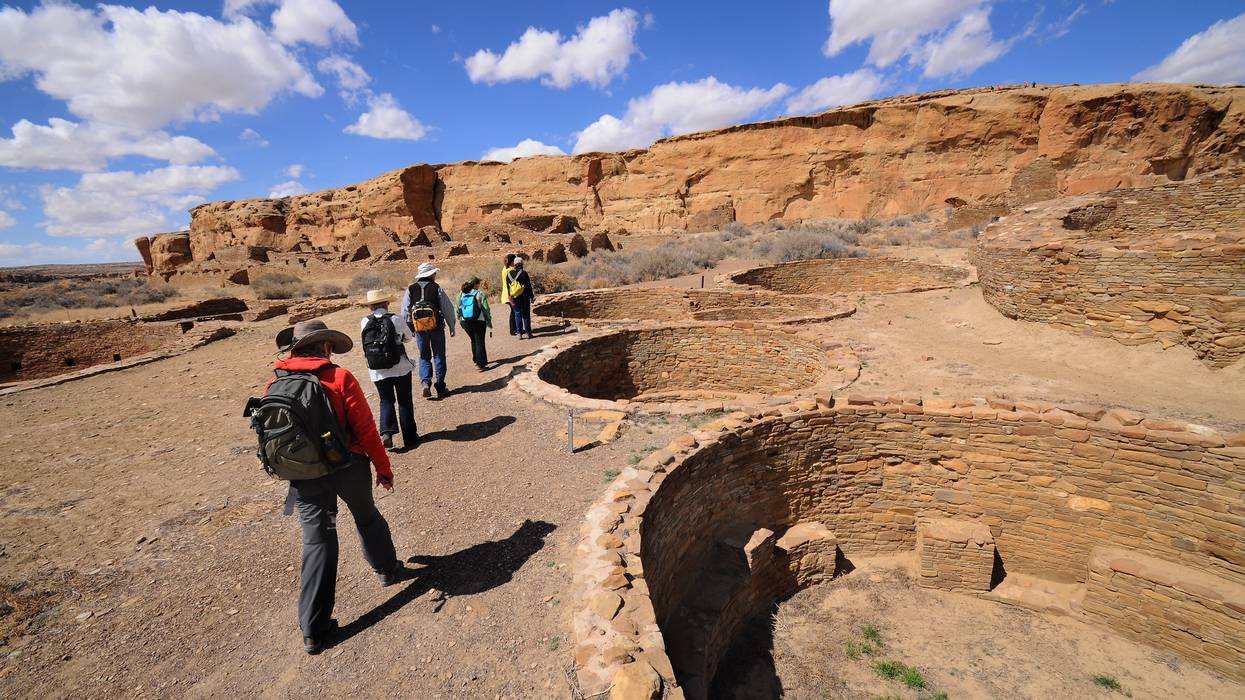
Climate and environmental protection campaigners welcomed an announcement by the Biden administration on Friday that the U.S. Interior Department is blocking new oil and gas leases in the area surrounding Chaco Canyon in New Mexico, but emphasized that the move will not undo the damage done by President Joe Biden's approval of drilling on other public lands or by years of fossil fuel extraction in the region.
Interior Secretary Deb Haaland announced that after a public comment period and decades of campaigning by Indigenous rights groups, her agency will block new oil and gas leasing on public lands within a 10-mile radius of the Chaco Canyon National Historical Park.
Existing oil and gas leases on public and private lands within the 10-mile area will not be affected, and Diné C.A.R.E., a group representing Diné, or Navajo, communities affected by environmental issues, noted that the Greater Chaco Region in northwestern New Mexico is suffering the effects of oil and gas drilling, including the formation of a 2,500-square-mile methane cloud over the area.
"Protection of Chaco Canyon is a great first step, but protections for the Greater Chaco Region, where there are living communities of Diné relatives, wildlife, and plant life, including countless sacred sites throughout the region, are just as critical and should be a priority for the Biden administration," said Robyn Jackson, executive director of Diné C.A.R.E. "We cannot ignore the devastating impacts that oil and gas have on our climate, region, culture, living communities, and future generations."
Jackson called on the Biden administration to entirely phase out fossil fuel extraction, as climate scientists and energy experts have said all countries must in order to avoid planetary heating over 2°C above preindustrial levels, and "support a renewable and sustainable economy."
"We will continue to push for an end to oil and gas drilling on all public land in the U.S. so we may all enjoy a healthy, livable future in which our leaders prioritize environmental justice."
"Our Indigenous communities deserve environmental justice," she said.
The Chaco Canyon National Historical Park is a UNESCO World Heritage site and covers roughly 30,000 acres which were integral to Pueblo culture between the ninth and 13th centuries.
The Chaco Canyon Coalition, which includes Indigenous groups and has demanded protections for the park and the surrounding region for years, noted that the Interior Department's own estimates have found the administration's decision will block only a few dozen oil and gas wells, reducing natural gas production in the area by 0.5% and oil production by 2.5%.
"More than 90% of Greater Chaco is already either industrialized by oil and gas extraction or promised to industry for more drilling in the future, even as we recognize this activity's impacts on the area's communities and the climate," said attorney Ally Beasley of the Western Environmental Law Center, a member of the coalition. "We will continue to push for an end to oil and gas drilling on all public land in the U.S. so we may all enjoy a healthy, livable future in which our leaders prioritize environmental justice."
The limited protections for Chaco Canyon are "a welcome first step," said Soni Grant, New Mexico campaigner for the Center for Biological Diversity, on Friday. "But the Biden administration needs to follow up by ending all fossil fuel leasing on public lands and phasing out extraction."

"Climate policy is not a partisan issue," said one critic. "Voters across the political spectrum worry about the threats posed by drought, wildfire, heatwaves, rising seas, and other climate disasters."
Suggesting that the appointment of federal regulators who acknowledge the threat of the climate crisis is a signal of inappropriate "partisan politics," U.S. Senate Energy and Natural Resources Committee Chair Joe Manchin on Friday announced that he will not advance President Joe Biden's nominee to oversee land and minerals management at the Interior Department.
In an op-ed for The Houston Chronicle, the right-wing West Virginia Democrat wrote after months of speculation that he will not allow Laura Daniel-Davis' nomination for assistant secretary for lands and minerals management to proceed.
Manchin wrote that he particularly objected to a recently revealed internal memo from the Interior Department which showed Daniel-Davis—currently principal deputy assistant secretary for lands and mineral management—approved a decision to not lower federal fees for fossil fuel companies.
As The Hill reported last week, the Interior Department considered charging lower royalties for leased parcels to oil and gas companies when it sold leases in Alaska's Cook Inlet. In the internal memo, which was mistakenly made public on the department's website, Amanda Lefton, then-director of the Bureau of Ocean Energy Management, claimed that cutting fees would "incentivize additional blocks receiving bids, increase bonus bids, and increase the chances of a discovery being developed."
"Nevertheless, because of the serious challenges facing the nation from climate change and the impact of [greenhouse gases] from fossil fuels, the bureau is not recommending this option since it would not include an appropriate surcharge to account for those impacts," Lefton added, in a decision that secured Daniel-Davis' signoff.
As he weighed Daniel-Davis' nomination last week—months after she was first nominated by Biden—Manchin expressed concern about the memo, saying he opposed the confirmation of anyone he believes has put "their radical climate agenda ahead of the needs of the people of Alaska and the United States."
"With this position vacant, critical clean energy and conservation funds will not reach the communities that need them most."
On Friday, he confirmed in the Chronicle his opposition to Daniel-Davis over what he called her "misguided reasoning" for maintaining higher royalties for fossil fuel companies.
"Even though I supported her in the past," he wrote, "I cannot, in good conscience, support her or anyone else who will play partisan politics and agree with this misguided and dangerous manipulation of the law."
Manchin backed Daniel-Davis in previous committee votes on her nomination last year.
The senator went as far as suggesting Daniel-Davis demonstrated insufficient loyalty to the U.S. when she approved the fees for oil and gas companies, writing on Friday, "Going forward, each and every proposed nominee I will review will be judged through one prism: Are they political partisans first or Americans first?"
On Wednesday, he also denounced officials in the Biden administration for "putting their radical climate agenda ahead of our nation's energy security."
Jennifer Rokala, executive director of the Center for Western Priorities, called Manchin's decision "baffling, hypocritical, and short-sighted," noting that Manchin confirmed many of former Republican President Donald Trump's nominees "by saying that he 'always understood the importance of an executive being able to assemble a team of people they trust.'"
"It appears that standard no longer applies," said Rokala.
The group particularly took issue with Manchin's suggestion that "shaping policy based on the threat posed by climate change makes someone a 'political partisan,'" even as polls show more than half of Republican voters back policies to confront the climate crisis.
"Climate policy is not a partisan issue. Climate change doesn't care whether you're a Republican, Democrat, or Independent," said Rokala. "Voters across the political spectrum worry about the threats posed by drought, wildfire, heatwaves, rising seas, and other climate disasters. But it's clear today that Joe Manchin's real constituents are the oil and gas executives at [global energy conference] CERAWeek, not the American people."
The Sierra Club noted that without an assistant secretary for lands and minerals management, "critical clean energy and conservation funds will not reach the communities that need them most."
Manchin's rejection of Daniel-Davis marks just his latest decision obstructing the climate agenda of his own party. Last month he signaled plans to revive a "dirty deal" to accelerate fossil fuel permitting and joined Republicans in pushing a proposal that would bar the U.S. Consumer Product Safety Commission from banning methane-powered gas stoves in the interest of protecting public health and safety.
The senator's latest financial disclosure forms show that he earned nearly $500,000 from his family's coal business and that his share of the company is worth between $1 million and $5 million. The fossil fuel industry donated more money to Manchin than any other lawmaker during the last election cycle.
Jamie Williams, president of the Wilderness Society, said Friday that Manchin's rejection of climate action led him to block a nominee who "is imminently qualified for this role and deserved a fair process."
"We regret that [Daniel-Davis'] exceptional bona fides were not enough to shield her from the politics that seem to have infected the process," said Williams.

"There is no time to waste in making bold investments to address the climate crisis, and building a strong domestic offshore wind industry is key to meeting that challenge head on."
Clean energy advocates on Wednesday applauded an announcement from U.S. Interior Secretary Deb Haaland, who said her department is proposing the first-ever offshore lease sale for wind power in the Gulf of Mexico, long a center of oil and gas extraction.
Haaland said the proposed sale is part of the Biden administration's efforts to "jump-start our offshore wind industry and harness American innovation to deliver reliable, affordable power to homes and businesses."
"America's clean energy transition is happening right here and now," said the interior secretary. "There is no time to waste in making bold investments to address the climate crisis, and building a strong domestic offshore wind industry is key to meeting that challenge head on."
The Biden administration aims to open up more than 100,000 offshore acres near Lake Charles, Louisiana and nearly 200,000 acres near Galveston, Texas as part of President Joe Biden's plan to develop wind power along every U.S. coastline.
"These areas have the potential to power almost 1.3 million homes with clean energy," the Department of the Interior said.
The development of wind power in the Gulf of Mexico would be significant in the United States' shift toward renewable energy. The Gulf is the country's primary source of offshore oil and gas, generating about 97% of the country's supply from offshore sources.
The Gulf was the site of the largest marine oil spill in history in 2010, when an explosion on BP's Deepwater Horizon drilling rig killed 11 people and sent about 210 million gallons of oil into the water.
"This is huge," said Antonio Arellano, vice president of communications for NextGen America, of the news that Biden is planning to begin the region's shift away from fossil fuel energy.
Haaland's announcement came a year after a wind power lease sale off the coast of New York and New Jersey brought in $4.37 billion, an unprecedented amount for energy leases. In December, companies paid the federal government more than $757 million for
wind leases in the Pacific Ocean.
Biden aims to deploy a total of 30 gigawatts of offshore wind power by 2030, which could power 10 million homes and create 44,000 jobs in the industry as well as an additional 33,000 jobs in communities supported by offshore wind, according to the administration.
A 60-day public comment period on the proposed sale will commence later this month after the proposal is published in the Federal Register. The Bureau of Ocean Energy Management (BOEM) is seeking feedback on lease stipulations including:
"BOEM is committed to ensuring any offshore wind activities are done in a manner that avoids or minimizes potential impacts to the ocean and ocean users," said BOEM Director Elizabeth Klein. "Today's announcement comes after years of engagement with tribes, other government agencies, ocean users, and stakeholders."
The National Audubon Society applauded the proposal and said it plans to work with the Biden administration and wind energy producers to protect North America's migrating birds, half of which rely on the Gulf of Mexico.
"Clean energy is a critical part of reducing emissions and climate threats that affect both people and wildlife, and we are committed to working with energy producers to make sure projects are sited and operated responsibly," said Garry George, director of the Audubon Society's clean energy initiative.
American Clean Power (ACP), which represents the renewable energy industry, called the Interior Department's announcement "another significant milestone in the development of domestic offshore wind production."
"This proposed lease sale will continue the legacy of energy production in the Gulf of Mexico, providing Americans with an affordable clean energy supply. It will also help secure our nation's energy independence while reducing costs for consumers," said Josh Kaplowitz, vice president for offshore wind at ACP. "By harnessing our abundance of renewable natural resources, these projects will unleash economic growth here at home and create good paying jobs."

"The energy sector should be looking to the future of justly sourced renewable energy, not pushing outdated technology that exploits people and the planet."
More than a dozen groups intervened in a case in Wyoming on Wednesday to defend the Biden administration's decision to postpone the sale of oil and gas leases in the state, arguing that numerous court ruling and settled laws have affirmed the U.S. Interior Department is free to determine when such sales will go forward—or whether they will at all.
The legal groups Earthjustice and the Western Environmental Law Center are representing 17 national and local groups in the case, in which the state of Wyoming and two industry trade groups sued the U.S. Bureau of Land Management (BLM) in December over its postponement of sales that had been planned for 2021 and 2022.
The BLM currently has several sales scheduled for 2023, covering nearly half a million acres, but as Friends of the Earth (FOE) said in a press statement Wednesday, the groups "want the court to order the Department of the Interior (DOI) and the BLM to hold lease sales every three months across the West"—despite warnings from energy experts and scientists that fossil fuel extraction must be phased out in order to avoid the worst effects of the climate emergency.
"Today's filing demonstrates that we refuse to sit back and allow Big Oil to push for policies that perpetuate dirty energy," said Hallie Templeton, legal director for FOE. "The law is crystal clear: the federal government holds broad authority over whether, when, and how to lease public lands for oil and gas development. The energy sector should be looking to the future of justly sourced renewable energy, not pushing outdated technology that exploits people and the planet."
FOE is joined by groups including the Sierra Club, the Wilderness Society, Citizens for a Health Community, and the Western Organization of Resource Councils in defending the Biden administration's decision.
A U.S. District Court ruling in Wyoming in September 2022 affirmed that the administration can postpone the sales, and the U.S. Supreme Court has also ruled that the agencies "have broad discretion to determine the timing and scope of lease sales, including not holding them at all," FOE said in the press statement.
Bob LeResche, a Powder River Basin Resource Council board member and chair of the Western Organization of Resource Councils, noted that the industry has already "stockpiled" more than 9,000 approved federal drilling permits.
"Forcing Interior to lease without fully weighing public impacts is industry’s attempt to continue looting public resources by accumulating excess leases at bargain basement prices," said LeResche. "The industry could continue drilling and producing as normal for decades even with no new leases."
The postponement represents a correction of BLM's longtime practice of "blindly" leasing public lands for oil and gas drilling "without actually understanding the impacts of development," said Peter Hart, an attorney with Wilderness Workshop.
"Now the agency is working to reevaluate its oil and gas management and to assess impacts, like those that new development will have on the climate," he added. "It just makes sense to pause new leasing until the program is brought into this century, and it is well within the agency’s authority."

"More drilling and more fracking is just a recipe for more climate disaster. For our future, President Biden needs to get real."
More than 300 environmental and Indigenous rights groups said Wednesday that the Biden administration must take a number of concrete actions to protect the nation's public lands and waters from fossil fuel industry exploitation and bring U.S. policy into line with climate science—and the president's own campaign pledges.
In a letter to U.S. Secretary of the Interior Deb Haaland, the climate coalition noted that President Joe Biden "made a bold promise to ban new oil and gas leasing on public lands and waters, and within days of taking office issued his Executive Order on Tackling the Climate Crisis at Home and Abroad."
"However, since then, the Biden administration and Interior's leadership has fallen short Interior issued new permits to drill at a rate faster than the Trump administration during Biden's first year in office," the letter continues. "The Bureau of Land Management and Bureau of Ocean Energy Management pushed forward with new oil and gas lease sales, including a sale in the Gulf of Mexico that was vacated by a federal court for a faulty environmental review. And Interior's final report on the leasing program failed to take into account climate impacts from extraction on public lands and waters."
The groups also pointed to the Biden administration's recent decision to go ahead with a major oil and gas lease sale off Alaska's coast, ignoring warnings that the auction would imperil marine life, pollute coastal communities, and contribute to the nation's rising carbon emissions.
"The climate science is clear: Several analyses show that climate pollution from the world's already-producing fossil fuel fields, if fully developed, will overshoot the targets in the Paris Climate Agreement and push warming past 1.5 degrees Celsius," the letter states. "Avoiding such warming requires ending new investment in fossil fuel projects and phasing out production to keep as much as 40% of already-developed fields in the ground."
In a press release, the coalition outlines nine steps the Biden administration can and must take to manage "public lands and waters in a manner consistent with climate science":
"Indigenous and frontline communities continue to bear the brunt of the climate crisis, and we are calling for the administration to end fossil fuel expansion and implement a just transition," Lake continued. "There is simply no time to lose and our public lands need to be a part of the solution."
Recent research estimates that fossil fuel extraction on public lands and waters has accounted for nearly a quarter of all U.S. greenhouse gas pollution since 2005, making the end of such development critical to efforts to bring the country's emissions into line with its domestic and international commitments.
"More drilling and more fracking is just a recipe for more climate disaster," Jeremy Nichols, climate and energy program director for WildEarth Guardians, said in a statement Wednesday. "For our future, President Biden needs to get real, start keeping oil and gas in the ground, and truly drive meaningful action to save our climate."