

5
#000000
#FFFFFF
To donate by check, phone, or other method, see our More Ways to Give page.
Daily news & progressive opinion—funded by the people, not the corporations—delivered straight to your inbox.
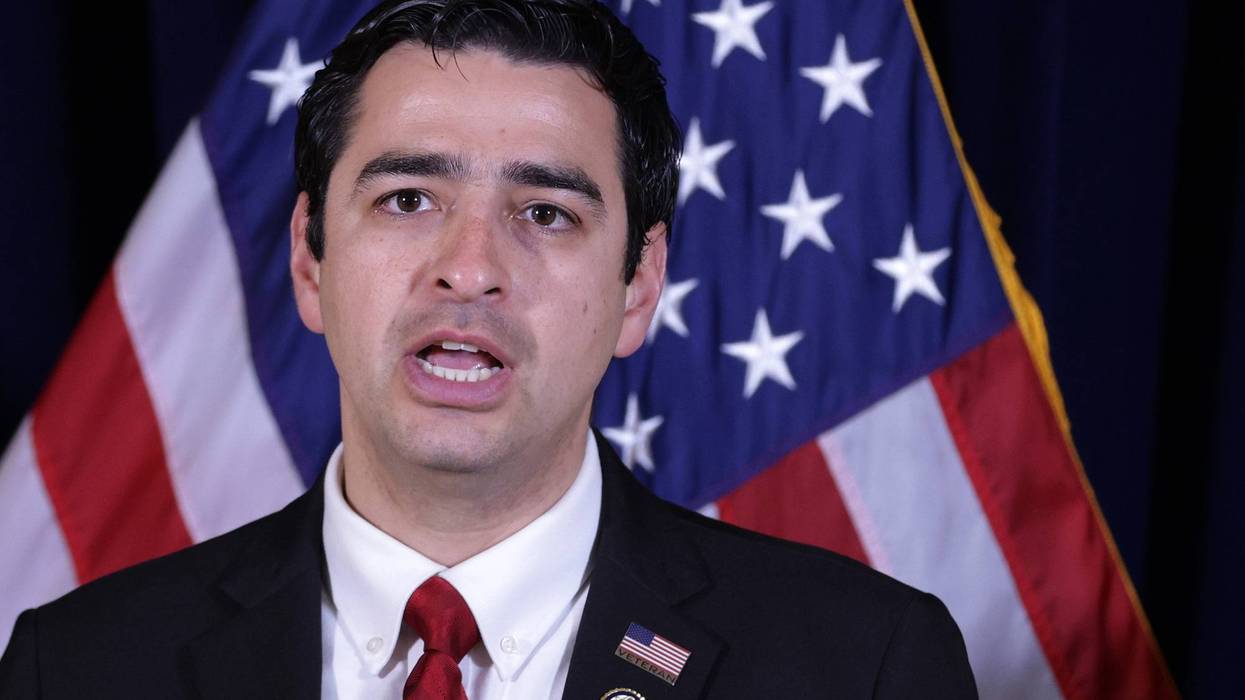
"Let's Give Gabe the Boot!"
On behalf of those Colorado Congressional District 8 constituents who rely on Medicaid benefits to access healthcare, your neighbors who are part of the Mountain West team for Social Security Works want to help you give Trumpublican (trum-pub-li-kin) Rep. Gabe Evans the boot. Gabe voted for your benefits to be slashed because of his deep devotion to his own well-being, not yours. Gabe thinks cutting your access to healthcare is “cost cutting,” or so he claims as his reasoning behind voting for what his boss, Donald Trump, required his Trumpublican minions to do. Gabe chose your suffering to appease people in DC, and he did not give a second (or even first) thought to what might happen if he cut healthcare access for as much as 28% of his constituents (and up to 43% of the children in CD8) who depend on Medicaid. We must give Gabe Evans the boot this fall.
Gabe is not a true representative who ought to find his glory in the US House of Representatives (aka the People’s House). “We could write shame on you, Gabe,” but we don’t think a person who sees his constituents lose healthcare access and calls it cost cutting can be easily shamed. Do you? While the people in CD8 in Colorado barely elected Gabe in 2024, now they have a much more accurate sense of his loyalties.
Let’s look at what Gabe says about himself on his campaign webpage: “Congressman Gabe Evans is a conservative leader who has spent his entire life running toward challenge. He represents Colorado's 8th Congressional District, where he is fighting to secure the border, strengthen public safety, and make life more affordable for hardworking Coloradans.”
Is he writing about the Utah border or maybe that scary Four Corners part of Colorado where folks from all sorts of other states might creep in, or is he referring to The Southern Border way south of Colorado (between Texas and Mexico) that his boss, Trump, wants him to highlight as very, very dangerous to the people of his own district? So, this, then, was one of the things that was his reasoning for cutting Medicaid benefits? To have enough funds to protect CD8 from the scary border and the scary people who might come to CD8 from the scary border, Gabe cut healthcare access.
Gabe needs to get the boot. Those of us fighting to protect the social safety net not only for future generations but for our own neighbors, friends, and families right now are a much larger group than those who would harm us. The Mountain West Team of Social Security Works invites you to learn more about CD8 in Colorado.
So, who can we vote for as a smart alternative to the cruelty and misguided loyalty Gabe offers CD8? Manny Rutinel is the Democratic candidate for the CD8 seat. Manny could use strategists who know and share the outrage of his future constituents about the healthcare mess this nation is in, and it’s way past time for him to advance a sane and clear healthcare message. During a recent primary election debate televised throughout the Front Range of Colorado, Manny stumbled a bit on his healthcare policy ideals, like many politicians do when they fear attacks from the powerful health industry. Yet even in that debate, Manny did not say cutting healthcare access would be his plan.
Manny Rutinel is a young Colorado state legislator raised by a single-immigrant mom who has all the appropriate tools for success in politics. Yet he responded inelegantly to a debate question about his previous position during his college years in support of single-payer, Medicare for All financing for healthcare. Most of us can point to our college-aged opinions and ideas as subject to modification as we aged and as we gather more information upon which to base those positions. It’s not selling out; it’s maturing. Manny believes in access to healthcare—period.
Offending or alarming any healthcare industry interests in his district could spell disaster for him, and Manny knew that. I waited for him to formulate an answer like President Barack Obama once said about single-payer. Obama said that if we were starting from scratch, there is no question that single-payer (not government control of healthcare – just one public pool for insuring everyone) would be the best system to design.
But we are well beyond that, Manny might have said. He needed to clarify and broaden his position – but instead he panicked and denied any lingering support for single-payer, and that will haunt him until he clarifies his intentions to truly represent his district. We know he will represent people in CD8, and he is not a Trumpublican. Manny intends to fight not only to restore lost Medicaid funding but also look to a better, more equitable and less volatile healthcare system going forward, and he looks forward to a rich conversation with the healthcare industry leaders, doctors, nurses, caregivers, and patients in CD8.
Might a CD8 community of healthcare interests support a form of single-payer like Medicaid or Medicare or the VA with modifications and improvements? Sure, and might it be something we haven’t even mapped out yet? Of course it could. Even in nations around the world with universal health programs for their residents, healthcare programs vary greatly—but Manny supports making sure everyone can access healthcare when they are in need, and he should say that every chance he gets. There is still time, and Manny will win on this issue by a margin at least equal to the number of people Gabe decided could be sacrificed to the Trumpublican alter—and that will be a marvelous win.
So, in this piece, I want my Common Dreams readers to meet Manny and offer him support, courage and stamina to follow a courageous path upon which so many lives depend. In this political moment, we all understand the enemy. Now we need to surround one another with grace and courage as we lift imperfect Americans, imperfect politicians, and imperfect humans with our effort. Lives depend on it. Our democracy does too. So, let’s “Give Gabe the Boot.”

“Yesterday, we were reminded who the Republicans are: a group of millionaires working for billionaires who will rip healthcare away from those who need it most," said one campaigner.
In what critics called a troubling sign of where US healthcare policy is headed, Senate Republicans on Thursday torpedoed an effort by their Democratic colleagues to block a Trump administration pilot program under which private companies will use artificial intelligence to review—and possibly deny—healthcare to patients seeking certain Medicare services.
Senators voted 50-46 along party lines against a Congressional Review Act resolution introduced by Sen. Ron Wyden (D-Ore.) and supported by 20 Democratic colleagues and Sen. Bernie Sanders (I-Vt.). The resolution was aimed at overturning the Trump administration's final rule establishing the US Centers for Medicare and Medicaid Services’ (CMS) so-called Wasteful and Inappropriate Service Reduction (WISeR) Model.
"Yesterday, I voted to block [President Donald] Trump’s plan to let AI decide whether Medicare will approve or deny your medical care. Every Senate Republican supported Trump’s scheme," Sen. Ed Markey (D-Mass.) said Friday on social media. "Doctors should be deciding what care seniors need—not a computer program."
The AFL-CIO, the nation's largest labor union federation, said on X: "No senior should have to wait weeks to see a doctor because a flawed AI system won’t authorize it. The Trump [administration's] WISeR program is delaying treatment for Medicare patients and putting tech companies’ interests first. Congress must end it."
Alex Jacquez, senior vice president of policy, advocacy, and research at the Groundwork Collaborative, highlighted the "horrendous" WISeR rollout, which, according to KFF, "has created confusion, errors, long wait times, and stress" and has left many patients "ensnared in the same red tape as those with private insurance."
CMS claims WISeR “helps protect American taxpayers by leveraging enhanced technologies, such as artificial intelligence (AI) and machine learning, along with human clinical review, to ensure timely and appropriate Medicare payment for select items and services.”
However, critics warn that AI will make it easier and faster to deny or delay care and have raised concerns that AI would likely be used as a cost-cutting tool to fulfill financial incentives.
“Yesterday, we were reminded who the Republicans are: a group of millionaires working for billionaires who will rip healthcare away from those who need it most," Alex Lawson, executive director of the advocacy group Social Security Works, told Common Dreams on Friday.
"The White House leaned on the Republican senators and they folded like the cheap suits they are," he continued. "Cowards to a person."
Singling out Sen. Josh Hawley, Lawson said the Missouri Republican "pretends he would oppose Medicare delays and denials by algorithm or AI, but when the vote is called dutifully dances to the tune his master calls."
"Their goal is to destroy Medicare, to destroy guaranteed healthcare, to ensure that every facet of the 'healthcare system' serves only one purpose, profit," Lawson said of Republican lawmakers.
Private Medicare Advantage healthcare profiteers have been using AI to deny care for years. Consumers are aware of—and outraged by—the practice.
“I don’t know any senior, Republican or Democrat, who asked President Trump to let AI decide if their doctor-recommended treatment was necessary," Sen. Patty Murray (D-Wash.) said on Thursday.
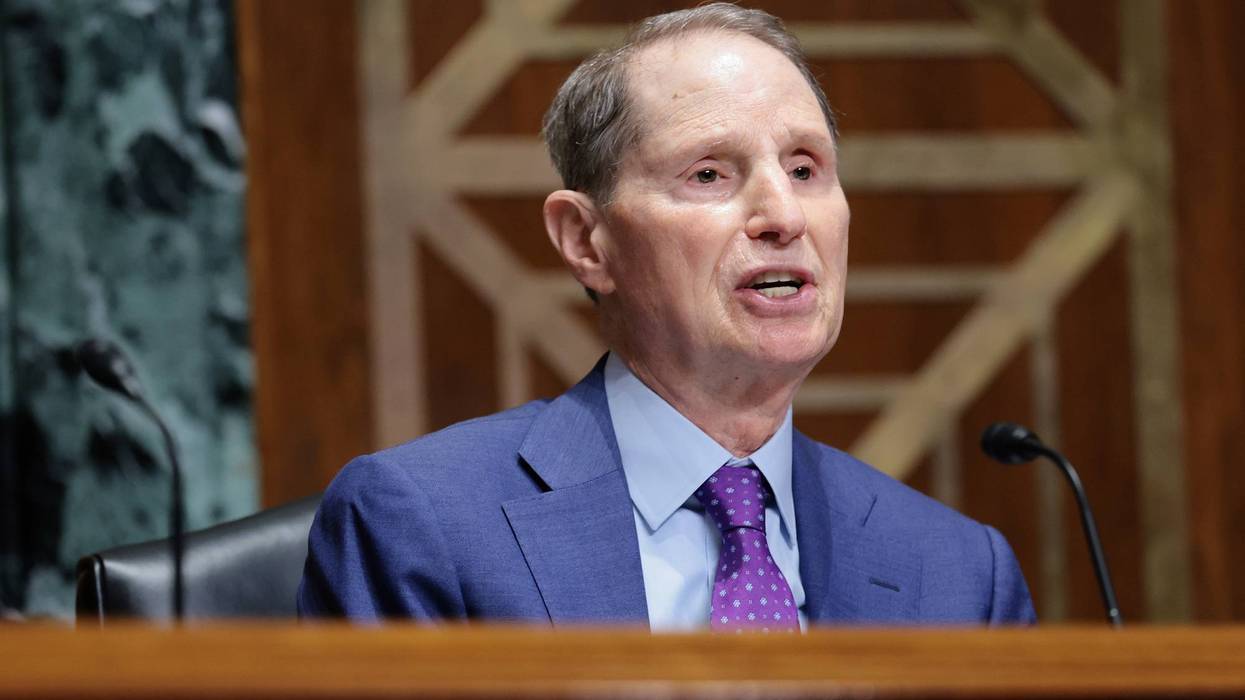
"The bottom line is this: Seniors who choose traditional Medicare should not have their care blocked by AI," said one campaigner.
Advocates for seniors on Wednesday urged US senators to vote for a resolution that, if passed, would block a new Trump administration pilot program under which claims by patients seeking certain healthcare services through traditional Medicare would be reviewed by private companies using artificial intelligence to deny care.
Upper chamber lawmakers are set to vote Thursday on a resolution introduced by Sen. Ron Wyden (D-Ore.) and supported by 20 Democratic colleagues and Sen. Bernie Sanders (I-Vt.) to stop the US Centers for Medicare and Medicaid Services' so-called Wasteful and Inappropriate Service Reduction (WISeR) Model.
CMS claims WISeR "helps protect American taxpayers by leveraging enhanced technologies, such as artificial intelligence (AI) and machine learning, along with human clinical review, to ensure timely and appropriate Medicare payment for select items and services."
What CMS doesn't mention—and what alarms a growing number of physicians and advocates—about the voluntary model is that AI-assisted reviews could contribute to inappropriate care denials, despite the required human review. Private Medicare Advantage healthcare profiteers have been using AI to deny care for years.
Critics argue that, even if a human must sign off, AI will effectively drive many of the recommendations, making it easier and faster to deny or delay care. They also warn of inevitable financial incentives tied to reducing Medicare spending, raising concerns that AI would likely be used as a cost-cutting tool.
"WISeR is not wise at all. It is a dangerous, profit-motivated experiment that allows private third parties to use artificial intelligence to delay and deny seniors’ medical care," Social Security Works executive director Alex Lawson said Wednesday. "Under the WISeR pilot program, which went live in January 2026, reports already show Medicare beneficiaries are waiting 2 to 4 times longer to access certain care."
"This is just one more example of the harm that Republicans’ disastrous healthcare agenda has already waged on American patients," he continued. "Last year, Republicans slashed $1 trillion in Medicaid and Affordable Care Act spending to line their cronies’ pockets. Now, they are importing the worst parts of Medicare Advantage—automated care denials—into traditional Medicare."
"The bottom line is this: Seniors who choose traditional Medicare should not have their care blocked by AI," Lawson added.
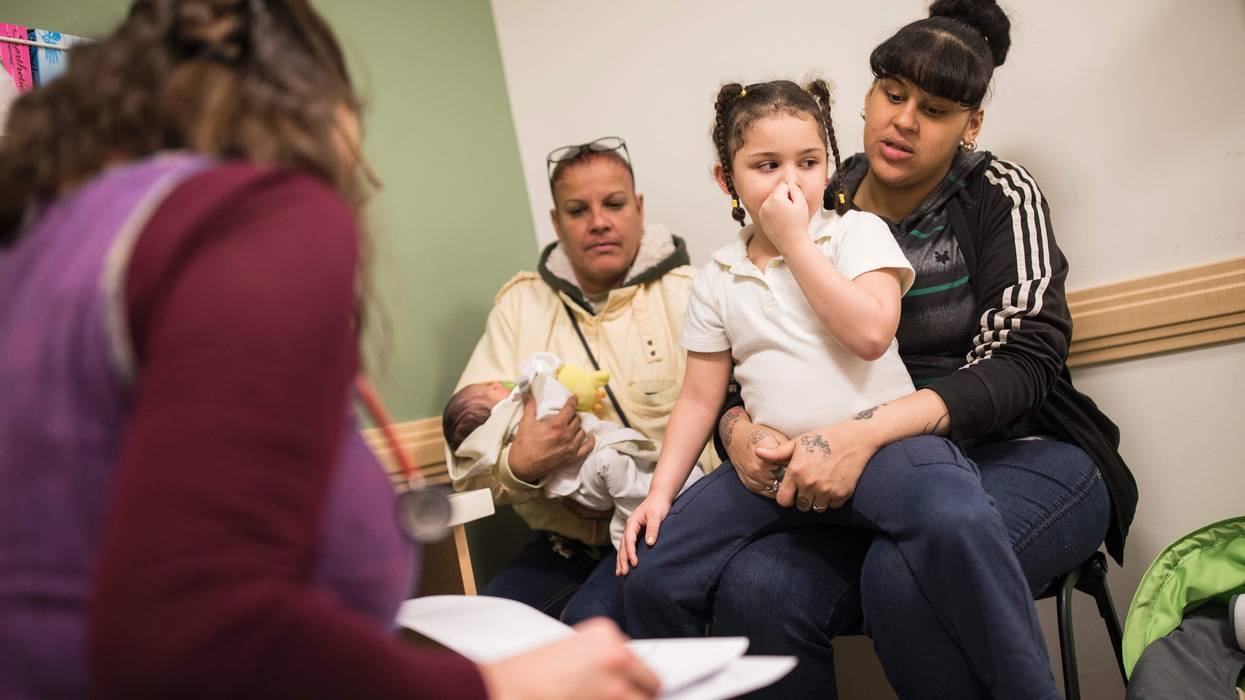
Cuts to Medicaid don’t only hurt the poor, disabled, or seniors—as my family and I learned, they hurt all of us.
I was 13 years old. We’d just returned from Christmas vacation, and I was asleep in my room.
My mother tells me she heard a noise and found me in my bed, twisted up like a clam, frothing at the mouth. She was in shock. The paramedics came and took me to the ER. I don’t remember anything about it.
That night, I had a CT scan and an MRI. They found an abnormality in my brain called a cavernoma, and I needed surgery right away to correct it. Because it was a delicate operation, I needed not only a pediatric surgeon but a sub-specialist—a pediatric neurologist.
Little did my family know, there is a nationwide shortage of pediatric sub-specialists.
Medicaid and CHIP must be protected. Congress must invest in pediatric care so that no other children are told to wait months for necessary care.
The surgeon on-call that night assured us that I could be cured with surgery, but we needed to get it done as soon as possible to avoid another seizure and more damage. But when my mom called the hospital, they said the next available appointment was more than three months away due to a lack of pediatric neurosurgeons.
I was already isolating myself. Scared, missing school, I withdrew from sports and hid from my friends. At 13, you don’t want to be different, and you definitely don’t want anyone to know there’s something wrong with your brain. The depression and anxiety deepened. And I would have to go on like this for months?
My family was financially comfortable, we had private insurance, and we lived in Manhattan. Yet even someone as fortunate as I was had to wait because there’s a severe shortage of pediatric specialists.
What if it happens to a girl from a poor or middle class family without good insurance, or who lives farther away from good care? How long would her wait be? Would her family be able to afford it all?
Thankfully, I was lucky. I was able to get the surgery sooner before three months passed, and I’m cured now. But having gone through this experience, my mom and I wanted to find out the cause of the deficit in pediatric care—and how it can be fixed.
With the help of a bipartisan advocacy organization that works on these issues, First Focus On Children, we found out that most pediatric specialties are reimbursed largely through Medicaid and its state-tailored companion program, the Children’s Health Insurance Program (CHIP).
Half of the nation’s children receive health coverage through Medicaid or CHIP, and even children with private insurance rely on Medicaid when they need specialized care. So most pediatric specialists and sub-specialists have to rely on these government programs for reimbursement.
But unlike Medicare and private insurance, which reimburse adult and senior care specialists at much higher levels, Medicaid reimbursements are significantly smaller for pediatric care—though the doctors go through the same expensive training and have the same qualifications. Because of this, far fewer medical specialists go into pediatric care because it’s financially untenable.
As a result, there is a crisis in pediatric care. To make it worse, Congress’s partisan “Big Beautiful Bill” slashes almost $1 trillion from Medicaid over 10 years. At a time when we desperately need more investment in Medicaid, we are going in the opposite direction.
Cuts to Medicaid don’t only hurt the poor, disabled, or seniors—as my family and I learned, they hurt all of us. Healthcare in this country isn’t sufficiently serving those in need. If things continue this way, what will pediatric care look like for my own children one day?
We must do better. Medicaid and CHIP must be protected. Congress must invest in pediatric care so that no other children are told to wait months for necessary care. It’s not only about the “haves” and the “have-nots.” It’s about all of us.

"Every day the consequences of GOP healthcare cuts get worse," said one campaigner.
Health insurance companies that offer plans on the Affordable Care Act marketplace are proposing double-digit premium increases for 2027, signaling the second consecutive year of out-of-pocket cost hikes following President Donald Trump and congressional Republicans' refusal to extend enhanced subsidies that lapsed last December.
The health policy research group KFF and the Peterson Center on Healthcare released an analysis on Wednesday showing that ACA marketplace insurers "are proposing a median premium increase of about 14% in 2027." While that would represent a decrease compared to the median finalized premium increase of 20% for 2026, it marks "the second-highest requested rate change since 2018, as premium growth had been relatively flat in this market for several years," the analysis notes.
"If these early indications of median premium increases for 2027 hold, typical premiums for insurers participating in the ACA marketplaces will have jumped by more than one-third over a two-year period," KFF and the Peterson Center found, pointing to the significance of Trump and the GOP's deciseion to oppose an extension of enhanced ACA premiums that were established in 2021 during the Biden administration.
KFF and the Peterson Center explain:
As anticipated, many healthier enrollees left the ACA Marketplaces in 2026 as their subsidies decreased—leading to an average increase in premium payments after subsidies of 58% this year—leaving behind an enrollee base that is on average somewhat sicker and more expensive to cover. For 2026, this dynamic was estimated to drive rates an average of four percentage points higher than they otherwise would have been, and insurers are now building 2027 rates on top of that adjusted, less-healthy risk pool—compounding the effect into next year’s premiums as well.
Leslie Dach, chair of the advocacy group Protect Our Care, said in a statement Wednesday that the analysis underscores "just the latest hit on hard-working families struggling to get by after Republicans ripped away the tax credits that helped millions of Americans afford coverage."
"Every day the consequences of GOP healthcare cuts get worse," said Dach. "This was a deliberate choice by Republicans who took away affordable coverage from millions of people to help fund tax breaks for billionaires and big corporations. The damage is already being felt at kitchen tables across America, and these new premium hikes show the worst is still ahead. And Republicans will pay the political price. Healthcare is already the driving issue leading up to the elections, and as the consequences mount, it will only mobilize voters further.”
Since the start of President Donald Trump's second White House term, ACA enrollment has declined by more than 5 million people as a growing number of Americans are priced out of coverage by surging premiums.
For 2027, at least 20 insurers across states that have submitted rate filings so far have proposed premium increases exceeding 20%, according to the KFF-Peterson Center analysis.
Kendall Witmer, the Democratic National Committee's rapid response director, said in a statement Wednesday that "healthcare is unaffordable for millions of Americans because Donald Trump and Republicans sold them out to give billionaires even bigger tax cuts."
"Working families are already grappling with sky-high prices for groceries and gas, and growing medical bills are putting them over the edge," said Witmer. "Healthcare for Americans has never been more expensive—and Trump and Republicans are squarely to blame."
Leor Tal, campaign director for the advocacy group Unrig Our Ecnomy, echoed those arguments and called for GOP lawmakers, who still control the House and the Senate, to act.
“Millions have already lost access to health insurance, and these planned premium hikes will only escalate this crisis," said Tal.
"We need Republicans in Congress to restore the health care tax credits they took away from millions. Otherwise, when their premiums rise again, Americans will know who is at fault.”

"These deals produce harm reliably enough that researchers can now count it."
Investigative journalist Ronan Farrow on Tuesday published a video on social media where he examines how private equity firms have been buying up hospitals throughout the US and saddling them with enormous debt burdens.
At the start of the video, Farrow notes that private equity firms such as The Carlyle Group, Cerberus, and Pinta have acquired hundreds of hospitals and nursing homes over the last 20 years.
"The pitch is generally: Infuse capital, cut inefficiency, and exit in five to seven years," Farrow explains. "And the deals work like this: A private equity firm puts some of its own money and borrows the rest. Typically, it'll borrow more than 70% of the purchase price."
"The twist is that debt doesn't sit on the firm's books," Farrow continues. "It gets placed on the facility itself, so the hospital or nursing home now carries the debt and the interest on it."
Studies now present a striking picture of what happens when private equity firms acquire hospitals and nursing homes: predictable increases in harm and deaths. One landmark study shows: patient deaths up about 11% after such acquisitions. pic.twitter.com/N6yfXJQIwW
— Ronan Farrow (@RonanFarrow) July 7, 2026
Farrow then cites research published by The Review of Financial Studies in 2023, which found healthcare facilities saw their interest payments more than triple after being acquired by private equity firms.
"In many cases," Farrow says, "private equity firms sold the nursing home's building shortly after acquiring it, returning the proceeds to investors, and then charging the facility rent on the building it used to own."
In addition to added debt burdens placed on hospitals and nursing homes, Farrow adds, the 2023 study found that private equity firms also cut staff hours after acquiring facilities, which has hurt patient care.
"The authors... found that private equity ownership can increase patient mortality by up to 11%," he says. "Over the study period, that translated to more than 20,000 lives lost."
Farrow then points to a 2025 study that found salaries of emergency room workers fall by an average of 18% in hospitals acquired by private equity firms, while hospital-acquired infections and complications rose by 25%.
Farrow concedes that not all private-equity deals turn out poorly and that some of the facilities are already in distress before being acquired.
However, he warns that "these deals produce harm reliably enough that researchers can now count it," adding that "so far, the industry has moved faster than the rules."
Research published Monday by the Private Equity Stakeholder Project (PESP) warned that private equity firms have been increasingly relying on nonprofit joint ventures to expand their reach throughout the US healthcare industry and "siphon profits from health systems and critical healthcare infrastructure."
"Private equity's healthcare playbook is evolving,” said Jim Baker, executive director of PESP. “Our research documents how private equity has increasingly relied on joint ventures with nonprofits to expand its presence in healthcare. These arrangements have received far less attention than traditional private equity buyouts, even as they become more common across hospitals and other healthcare sectors."
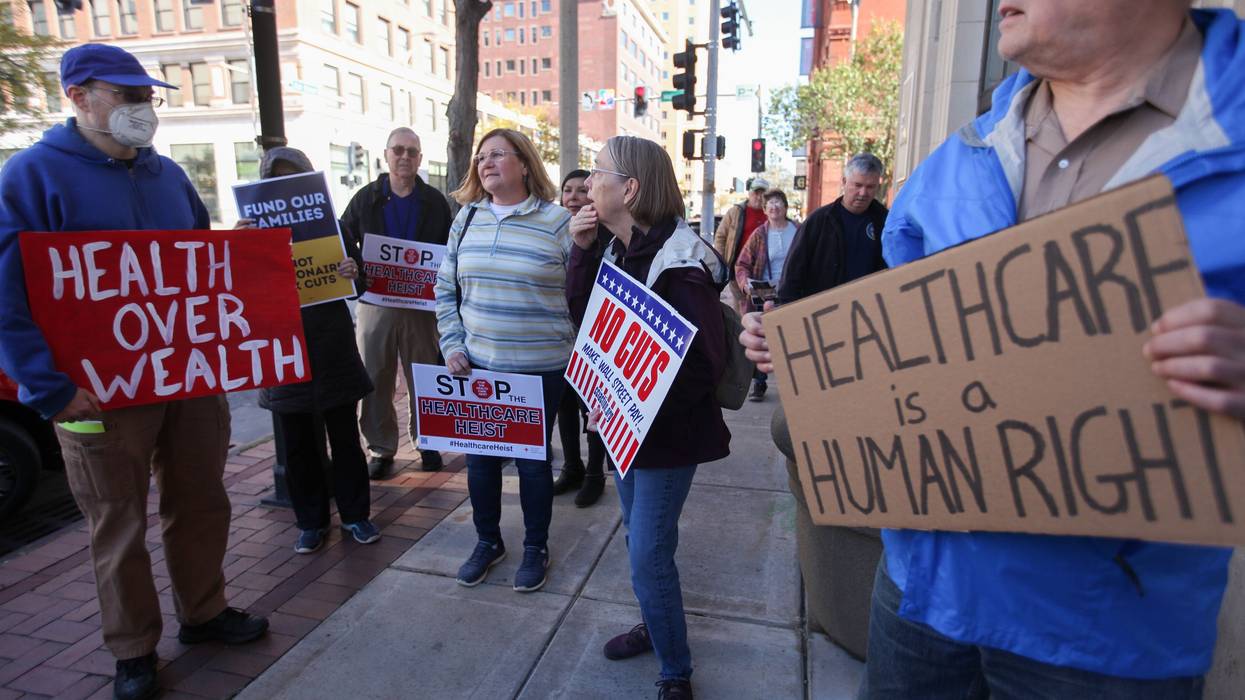
"They didn’t cheat their way in. They simply can’t afford to stay in the program."
President Donald Trump's administration has tried spinning government data showing millions of people have dropped their health insurance coverage under the Affordable Care Act by claiming these people were defrauding the program.
However, an analysis published Tuesday by Public Citizen refutes this claim, finding that most people who lost their ACA coverage did so because they could not afford to keep it after congressional Republicans let enhanced health insurance subsidies expire last year.
Data released last month showed that nationwide ACA enrollment fell from 22.3 million people in 2025 to just 17.5 million in 2026, a drop of nearly five million people over the span of just a year.
US Health and Human Services Director Robert F. Kennedy Jr. and Centers for Medicare and Medicaid Services Administrator Mehmet Oz have both said this drop is due to the administration's efforts to root out fraud, with Oz even saying that current enrollment in the program is at "too high of a number."
The Public Citizen report, however, finds that "the decline in... enrollment this year has nothing to do with removing deceitful enrollees," as what "the numbers show is that American families are being priced out of coverage."
According to Public Citizen's analysis, the best way for a fraudster to game the system created by the ACA would be to falsely claim to have an income right around the poverty line, which would ensure the fraudulent enrollee would get a higher subsidy to purchase coverage.
In other words, if the administration were really pursuing fraud on a mass scale, it would likely mean a drop in enrollees who are claiming incomes near the poverty line.
"But that’s not what is happening," the report explains. "The people losing coverage are concentrated at incomes well above the poverty line. They are low- and middle-income families whose premiums doubled after subsidies were cut. They didn’t cheat their way in. They simply can’t afford to stay in the program."
In fact, the report finds that enrollment is actually growing among people who claim income right at the poverty line, which could suggest there is more prospective fraud in the program than before.
However, the report authors do not think that this increase is due to fraud, but rather to "people living just below the poverty line in states that refused to expand Medicaid" and whose income is not low enough to qualify for Medicaid, but too high to qualify for ACA subsidies.
"To escape the coverage gap, some have reported incomes just above the poverty line," states the report, "enough to be eligible for the ACA marketplace."
The ACA isn't the only federal healthcare program under pressure from Trump administration and GOP policies, as cuts to Medicaid included in Republicans' 2025 budget law are projected by the Congressional Budget Office to leave more than 10 million fewer people enrolled in the program by 2034.

An inspiring 4th of July parade in Colorado's 8th Congressional District proves that its people deserve better than Evans, who supports the Trump agenda and voted to gut the social safety net.
The Greeley Stampede 4th of July Parade is the largest Independence Day Parade in Colorado, and it is held deep in the soon-to-be-blue-again Congressional District 8. That is why I registered our walking unit in that parade. We wanted to make sure all the tens of thousands of people who turned out were reminded of the human and economic good our social safety net does in Colorado. It was an incredible experience fueled by love for one another and not love of Trump’s America. The 2026 Greeley Stampede Parade was the most uplifting and hopeful thing I have experienced in a long, long time. It proved to me that Republican Rep. Gabe Evans, of Colorado's 8th District, needs to get the boot in November’s general election.
Gabe Evans is currently barely representing his constituents in his diverse, incredibly beautiful district. And mostly, Evans seems to represent himself first and supports the Trump agenda. Immigrant rights? Are you kidding me? Stopping wars and the bombing President Donald Trump uses to distract everyone from those Epstein files? No, Gabe goes right along with the Trump agenda, the whole Project 2025 agenda, and mostly the me-first agenda. Greed and neglect are about to turn CD8 beautiful blue again, deep and lasting blue. And marching in this parade reaffirmed all those feelings of community and connection I know people hunger for in a post-pandemic world.
The crowd at the parade was so gorgeous. As we all saw in the stores for months, all that red, white, and blue was going to turn up somewhere. At the Greeley parade on the 4th of July, there were little tykes in adorable outfits, their older siblings in stars and stripes along with their parents and beyond. Many families had tents up for shade, and one creative group was misting their folks to stay cool. This was the sort of old-fashioned, community supported parade that once was so common in America. I saw US Navy sailors marching, local businesses, car clubs, cowboys and cowgirls, bands, floats, and people balancing on floats to see and absorb the whole moment. Life affirming community was on parade.
As we continued along the parade route, I kept thinking about how many of those beautiful people, how many at this celebration—how many of the children and how many of our disabled—will lose access to their healthcare because their Barely-Representative Gabe Evans thought voting for the Big, Beautiful Bill was cost cutting via the devastating cuts to Medicaid, SNAP benefits, and more, and has never told the truth about his lack of character and failure to represent his district. Evans knew he was hurting people with his vote, and his reality is that he did not care.
Barely-cares Evans cannot hide from his votes, and he cannot hide from his constituents.
People in his district see through his deep and abiding devotion to the cruel and community-killing, family-splitting and painful cuts to Medicaid coverage. After being a part of this parade, I know without a doubt that the people of Colorado’s CD8 are hardworking, decent, and kind people—and they will not stand for anyone destroying any part of what they are.
Evans needs to get the boot from these dear people before he does more damage by supporting huge, unnecessary cuts to Social Security when the change that needs making is to make sure billionaires pay their fair share in taxes—oh, and the almost-trillionaire too. It is ridiculous to have a representative like Barely-there Evans is this district since neighbors and friends rely on and deeply support Social Security—even the 9news announcer cheered when our unit passed by (maybe he is grateful his parents receive their earned benefits, I thought, since he was lots younger than me).
Barely-cares Evans cannot hide from his votes, and he cannot hide from his constituents. The patients, the nurses, the doctors, the healthcare techs, the housekeeping staff, the dietary crew, and all the lives impacted and damaged by his selfishness stand in stark contrast to what is alive and well in his own backyard—hardworking Colorado CD8 families and all the other residents who receive their earned benefits through Social Security and all who are lifted from despair and suffering through Medicare and Medicaid. We all showed up to celebrate 250 years as a nation. The ideal is still in sight in places like Colorado’s Congressional District 8, but only if we confirm that solidarity and give Evans the boot.
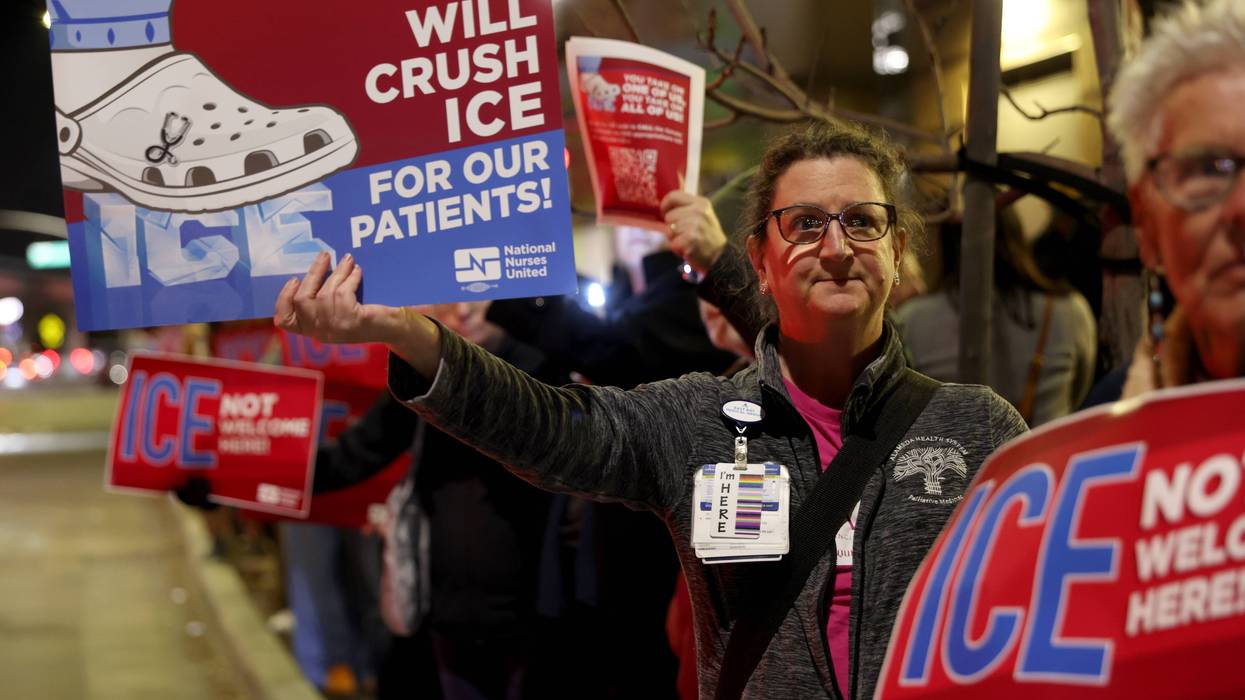
The White House and their congressional allies are funding ICE’s brutal dragnet operations in our communities by cutting health coverage, defending clinics, and making it harder for families to get the care they need.
Congress just passed $70 billion in additional funding for Immigration and Customs Enforcement. In cities like Minneapolis, Los Angeles, Chicago, and beyond, children have been detained, families separated, and neighbors stopped based on their skin color or spoken language. ICE violence has killed a mother and an ICU nurse, separated more than 100,000 American children from their families, and left people detained in inhumane facilities.
The decision by congressional Republicans to double down on President Donald Trump’s immigration agenda through new funding is not just another attack on our immigrant friends and neighbors, including those who are legal residents, but it is also a direct attack on our public health and healthcare systems.
The tens of billions in additional funding is on top of an unprecedented $170.7 billion for the Department of Homeland Security (DHS), including $30 billion for ICE and deportation efforts, approved last year under the so-called One Big Beautiful Bill Act (H.R.1)—a law which also slashed more than $1 trillion in federal healthcare funding. These cuts have and will continue to kick people off their healthcare coverage, give Americans fewer options for affordable healthcare, and drive up costs at clinics and hospitals across the country, all while billions of dollars have been funneled into ICE raids and violence that threaten the safety and well-being of immigrants and US citizens alike. All the while, American families are facing an affordability crisis, struggling to make ends meet to pay for essentials like groceries, rent, and healthcare.
Put simply: The White House and their congressional allies are funding ICE’s brutal dragnet operations in our communities by cutting health coverage, defunding clinics, and making it harder to get the healthcare families depend on—and it affects everyone’s health.
What makes our neighborhoods healthier and safer isn’t ICE enforcement. It’s communities that can access the care, services, and resources they need to thrive and remain resilient.
The divergence of federal dollars away from healthcare and into ICE has led to an influx of poorly trained enforcement agents in our cities, in our airports, and on our streets. The aggressive policing and surveillance of our neighborhoods create an environment of fear, turning our streets, schools, workplaces, and hospitals into places of threat rather than safe community spaces. As a result, community members, including vital immigrant healthcare workers, are staying home, unable to contribute to the economic vitality of our neighborhoods or seek and provide necessary healthcare. In addition, as more people lose health coverage, uninsured patients seeking emergency care results in higher uncompensated care costs, putting financial pressure on health facilities, and forcing them to scale back services for all.
We cannot afford to let ICE enforcement gut the health system we all rely on. What makes our neighborhoods healthier and safer isn’t ICE enforcement. It’s communities that can access the care, services, and resources they need to thrive and remain resilient. We should all be treated with dignity and be able to safely access healthcare and other neighborhood resources vital for our health and well-being.
A new poll from the Protecting Immigrant Families coalition finds that most Americans agree. Sixty-four percent of Americans disapprove of how ICE is handling their job, and 83% of Americans support access to healthcare and social services for lawfully present immigrants. The data overwhelmingly show that Americans, no matter where they stand politically, believe in and want to protect the humanity of their immigrant neighbors, despite actions from the federal government.
We urge congressional and state leaders to act. Stand in solidarity with immigrant communities. Codify sensitive locations protections that prohibit ICE raids or presence at schools, places of worship, hospitals and health centers, and other places that are meant to be safe spaces for everyone. Ban local officials from inquiring about immigration status. Secure our sensitive personal and health data from inappropriate federal access. Make future DHS funding conditional on real oversight and accountability for the families being torn apart, the neighborhoods being destabilized, and the dismantling of the healthcare system we all rely on.
Wishful thinking and wildly unrealistic assumptions will not magically make a horrible policy a good one.
As I noted in an article earlier this month, the Congressional Budget Office (CBO) estimates that the federal government will save $911 billion over 10 years and that 10 million people will lose health insurance as a result of Medicaid changes in H.R.1, aka the One Big Beautiful Bill Act (OBBBA). This bill requires near-poor, able-bodied Medicaid beneficiaries with incomes currently above the poverty line but under thresholds that depend on family size — $22,025 for an individual or $45,360 for a family of four — to navigate a maze of red tape and reporting requirements twice a year to remain enrolled. Disabled people on Medicaid, including those with cancer or end stage renal disease, will have to prove that they are too disabled to work in order to waive the work requirement.
An analysis by health policy organization KFF found that in 2023, 64 percent of adults 19 to 64 years of age enrolled in Medicaid were working either full or part-time. Nearly 30 percent were not working because of caregiving responsibilities, disability or school attendance — barriers to employment that typically exempt people from work requirements in programs that mandate them. Most of the 8 percent who were not working were retired or unemployed. The result is that only a small share of Medicaid enrollees will lose access to the program because they do not meet work requirements. However, many more will lose coverage because of the difficulty of navigating the reporting requirements and the administrative red tape built into the OBBBA for this purpose.
In June 2026, HHS released interim regulations for the changes to Medicaid that states must implement by January 1, 2027. The regulations are much more severe than the requirements in H.R.1, and have upended work that states had already done to be ready to comply by the January 1 deadline. This has forced states to scramble to be ready in just six months, an extraordinarily short window to prepare for the large changes in reporting requirements. Disenrolling people by mistake may mean the difference between life and death for Medicaid enrollees. The rollout of the new work and massively burdensome reporting requirements is likely to be bumpy.
In conjunction with the release of the new eligibility and reporting requirements, the Department of Health and Human Services released a brief, prepared by the Office of the Assistant Secretary for Planning and Evaluation (ASPE), with the Orwellian title, “Medicaid Work Requirements Incentivize Employment and Are Estimated to Reduce Poverty.” The brief’s conclusion that pushing people off the Medicaid rolls will increase employment and reduce poverty is contradicted by an earlier assessment by the Congressional Budget Office (CBO). CBO found that mandating work requirements would decrease what the federal government pays for Medicaid, increase the number of people without health insurance, raise costs for states, and wouldn’t increase employment.
The four-and-a half page ASPE brief has few citations for its assertions about how cutting access to health insurance for poor people will magically produce jobs for those disenrolled from Medicaid. While the authors say they have reviewed three decades of literature on work requirements in social programs, and they have an online bibliography with more than 130 references, they cite only 10 papers in the brief. As NOTUS observes, the researchers that produced the 10 papers cited in the brief are crying foul, claiming that their studies are being misused, and in some cases are being used to support conclusions that are the opposite of what the studies show. In other cases, researchers complain that while the findings of their studies may not be distorted, crucial job search supports for job seekers in their studies that are not available to people facing disenrollment from Medicaid in 2027 are ignored in the ASPE brief.
As noted in a technical analysis of the ASPE brief published in Health Affairs, the brief assumes totally unrealistic employment effects. It considers two scenarios. In the first, all 5.8 million people on Medicaid — who the brief assumes will not meet the new work requirements and are not exempt from them — will increase their work effort. The report does not spell out where the 5.8 million figure comes from, but a back-of-the-envelope calculation suggests it includes about 4.2 million people enrolled in Medicaid who are working part-time and 1.6 million who are retired, unemployed or otherwise not working. The brief assumes that these Medicaid recipients will increase their hours of work at their current wage or at the average wage among similarly educated Medicaid-eligible individuals.
Part-time workers are assumed to increase their hours and those who are not working are assumed to find jobs. Unbelievably, the change in employment participation is assumed to be 100 percent in the first scenario. This is more than 23 times higher than the 4.2 percent increase the ASPE brief authors report for welfare-to-work experiments that, unlike Medicaid work requirements, involved cash assistance and provided people leaving welfare programs with substantial help for finding work.The help included employment services such as transportation and job search assistance and case management services to assist people in meeting work requirements. In the second scenario, the brief’s authors assume that 80 percent of the 5.8 million people they believe will not meet the work requirements will succeed in finding employment. This is a 57 percent increase in participation and is 13 times the welfare-to-work effect.
The reductions in poverty cited in the ASPE brief are not calculated independently, but follow from the entirely unrealistic assumptions about the increases in work participation. The earnings increase on average per family is $16,780 — a result of the built-in employment and wage assumptions. Net of the loss of benefits as their incomes rose, families of Medicaid recipients whose work participation rises experience an increase in resources or $12,034. In the first scenario, this reduces poverty by 2.9 million people; in the second, by 1.6 million.
The ASPE brief omits any mention of the one instance where a state — Arkansas — implemented work requirements in 2018. This is a glaring omission in a report on the effects of work requirements in Medicaid, and suggests the brief’s authors may not have wanted to report the disastrous results of this introduction of work requirements.
The application of work requirements to Medicaid is a new development and there are just a few empirical studies of the Arkansas case. A cutting edge 2026 analysis by Harvard Medical School researcher Yuji Mizushima found that total Medicaid participation declined sharply during the months in which the mandated work requirements were in effect. Mizushima examined two groups of people — those on Medicaid who were disenrolled because they didn’t meet the work requirement, and those in the general population who failed to enroll in Medicaid because of the work requirement. The author found that participation in Medicaid fell by about 28,810 adults — 18,164 who were disenrolled and more than 10,500 who did not apply or reapply for Medicaid. There was no discernible change in the number of hours worked and no increase in employment or in participation in the labor force of the Medicaid population in the months leading up to, during, or following the enforcement of the work mandate. This supports similar findings in research on the Arkansas experience in other studies. A year after Arkansas implemented work requirements, the poor results led a federal judge to pause and later to strike down the work requirement.
The introduction of work requirements in Medicaid in Arkansas during the first Trump administration led to a disastrous decline in access to health insurance for people who had relied on Medicaid for health care, but did not increase hours of work or employment. This stands in direct contradiction to the wishful thinking and wildly unrealistic assumptions embodied in the two scenarios in the ASPE brief, and raises unavoidable questions about why the authors failed to examine the Arkansas experience.