

5
#000000
#FFFFFF
To donate by check, phone, or other method, see our More Ways to Give page.
Daily news & progressive opinion—funded by the people, not the corporations—delivered straight to your inbox.
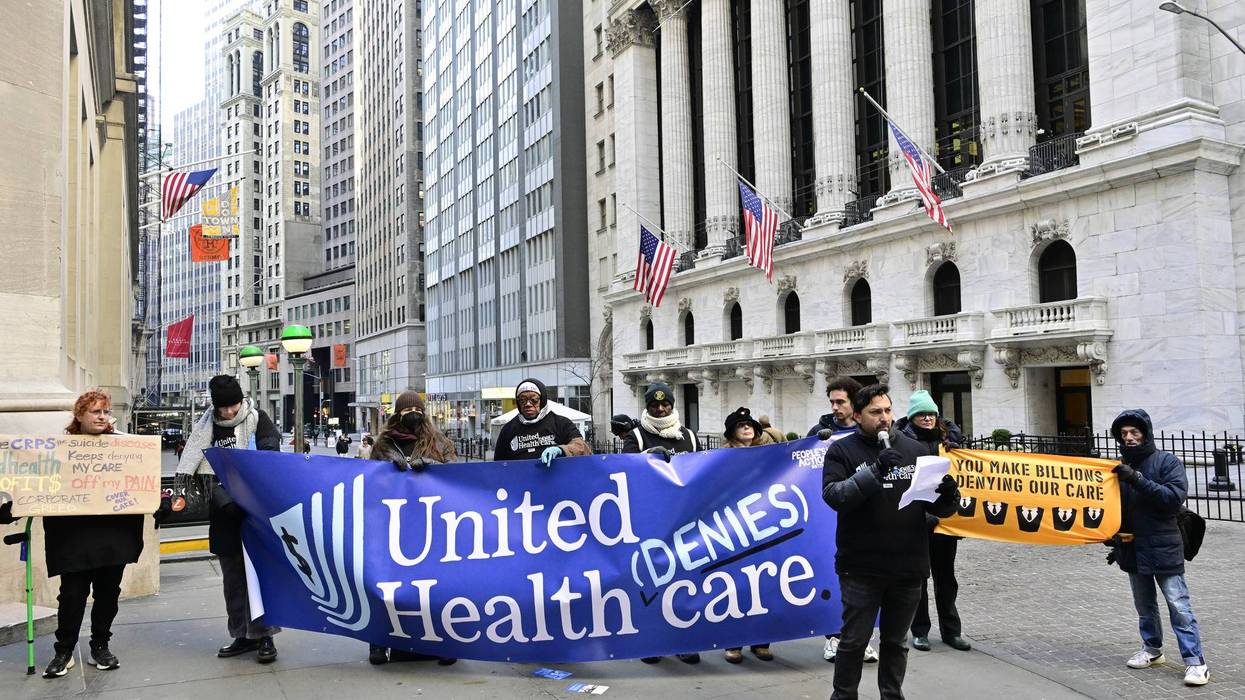
Researchers found prior authorization—which allows insurers to overrule physicians and deny coverage—acts as a “corporate care veto” that drains tens of billions of dollars each year that could go toward patients.
A new report is making the case for ending a widely-hated and sometimes deadly tactic used by for-profit health insurers to deny needed care.
It's called "prior authorization," and it allows health insurance companies to override physicians and decide whether certain care is medically necessary before it is covered.
The policy brief, published Monday by the American Economic Liberties Project (AELP), an anti-monopoly think tank, argues that the system is a massive drag on the US healthcare system, draining doctors of their time, fueling hiring shortages, and—most importantly—worsening treatable health problems for millions of Americans.
"This practice has massive financial and human costs, as I know personally from my family’s own tragic experience,” said the report's author, Hannah Garden-Monheit—a senior fellow at the AELP, whose late father was denied rehab by UnitedHealthcare after cancer forced his leg to be amputated.
"Prior authorization may have started as a narrow cost-control tool," she explained. "But it’s mushroomed into private insurers’ strategy for diverting resources from care toward their own profits. It’s time to ban prior authorization as we know it.”
The report examines how prior authorization went from a tool used sparingly to prevent payment for unnecessary treatments to what Garden-Monheit and co-author, AELP senior healthcare fellow Emma Freer, described as a "corporate care veto."
Around 1 in 5 adults with private insurance report that they or a family member had experienced a coverage denial in the past year, with 28% reporting that it worsened their health problem, according to a June survey from the Commonwealth Fund.
While insurers claim that their decisions to deny care are "evidence-based," the authors say that "in reality, the practice empowers distant corporate entities with a financial conflict of interest to override the professional judgment of physicians with firsthand knowledge of patients’ medical needs."
"There is generally little to no transparency or accountability for these decisions," the authors wrote.
While insurers claim that denials are reviewed by qualified clinicians, one survey from the American Medical Association (AMA) found that only 16% of physicians participating in peer-to-peer reviews reported that the “peer” was often or always qualified.
Garden-Monheit said United denied her father's claim multiple times, first citing his cancer diagnosis—the reason his leg was amputated in the first place—then by claiming that he had made significant enough "progress" that paying for rehab was unnecessary. The "progress" was that he "had figured out how to hop on one leg from his hospital bed to a chair."
Garden-Monheit describes how she, her father, and their care team were forced to navigate a "bureaucratic maze" by United, which ultimately led them to give up.
"At least twice, I learned of a denial only after calling United to check on the status of their request. They hadn’t even bothered with a letter," she said. "While the lines of communication felt frustratingly unpredictable, the answers always led to the same place: 'no.'"
As she explained in a recent op-ed for MS NOW: "My family’s experience wasn’t a one-off glitch. For United, the system was working as designed."
Former United chief medical officer Dr.Archelle Georgiou estimated that across just two Medicare Advantage plans from United and Humana, the companies save an estimated $100 million per year by denying claims that never get appealed. She said that's a "conservative estimate." Across the two plans, 1.75 million people were denied care, even after appeal.
While insurers pad their profits, patients suffer, the researchers found. Among people reporting a prior authorization denial, 41% said it delayed their care and 28% said their health problem worsened, according to the Commonwealth survey.
"My family’s experience wasn’t a one-off glitch. For United, the system was working as designed."
Meanwhile, the AMA survey found that 95% of physicians said that prior authorization delays care, 79% said it causes patients to abandon recommended treatments, and more than 1 in 4 doctors said it has caused a serious adverse event, including hospitalization, permanent impairment, or death.
Denied timely treatments, many patients end up paying for costly and ineffective alternatives that only make their situations worse and cause the costs to increase down the line.
"It was extremely difficult to obtain authorizations for substance abuse treatment when I covered the emergency department as a practicing psychologist," one healthcare professional, identified in the report as Nancy, said. "Other times, in my private practice, I would get authorizations and later experience ‘clawbacks’ where Blue Cross, for example, would decide the treatment was not medically necessary and take back the money already paid."
"It is impossible at times to provide sound ethical treatment and extremely hard to make a living," she said, "when reimbursement rates kept going down, and the insurance companies could take back the money they had already paid for no obvious reason.”
Prior authorization doesn't just deny care to patients. It also creates piles of paperwork for their doctors, taking away precious time that could be dedicated to their care.
The report found that physicians and their teams now spend so much on prior authorization paperwork that it consumes the equivalent of nearly 100,000 full-time physician and advanced practice clinician workloads, plus more than 213,000 clinic staff, costing as much as $32.7 billion each year. If prior authorization were eliminated, they found, it would free up enough capacity to turn a national physician shortage into a surplus.
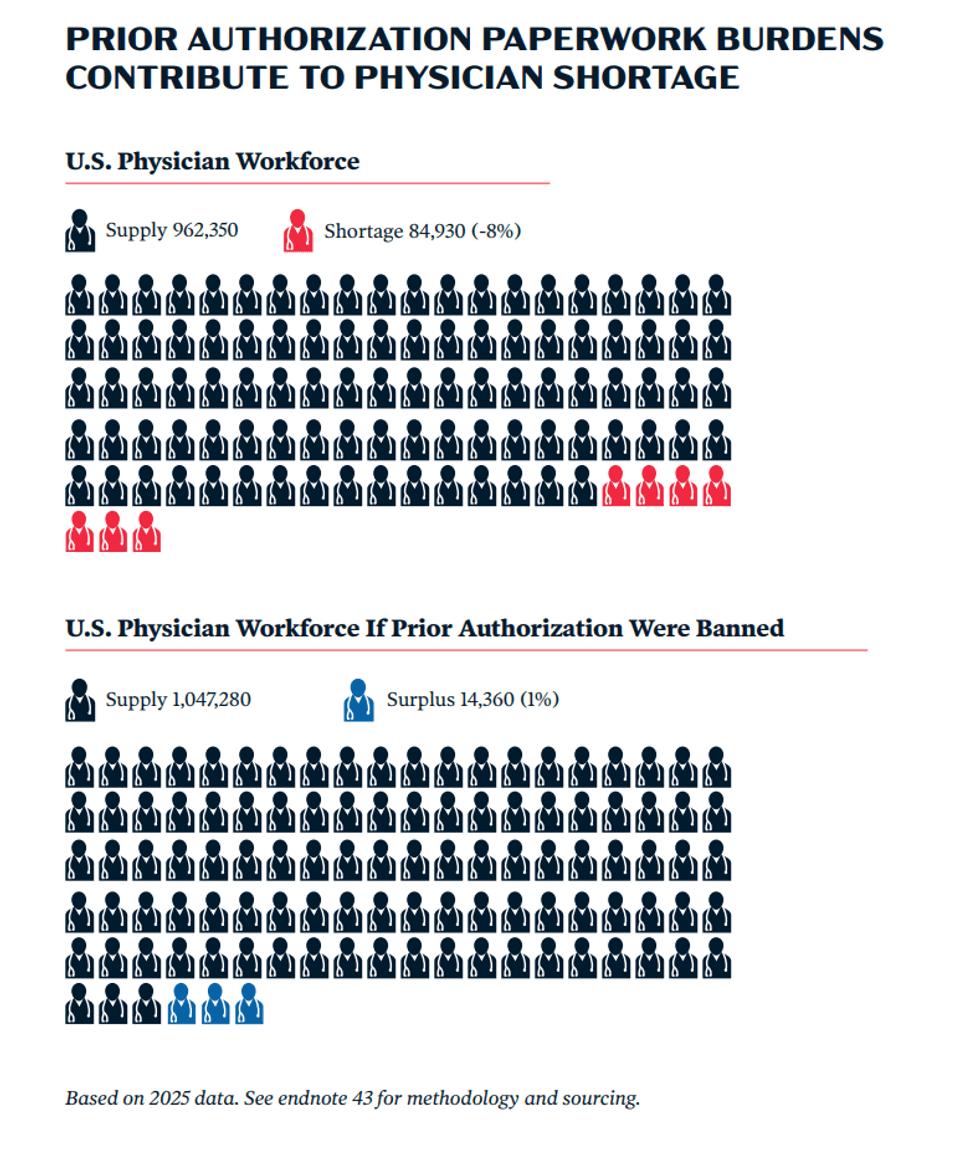 (Graphic: American Economic Liberties Project)
A YouGov poll for AELP found that more than two-thirds of voters in both parties want legislation banning prior authorization outright. But the researchers said both the Trump and Biden administrations have enacted only minor reforms that "fail to address the structural conflict of interest that underpins the corporate care veto strategy."
Meanwhile, the industry is making the denial process even more ruthlessly efficient, increasingly deploying artificial intelligence to deny requests en masse.
According to a 2023 class action lawsuit, United's NaviHealth system used a predictive AI model to determine whether Medicare Advantage patients should receive rehabilitation care despite knowing that the model had a 90% error rate.
President Donald Trump, meanwhile, has expanded prior authorization for traditional Medicare through a pilot program that allows AI models to adjudicate claims in some states. In July, Senate Republicans blocked Democrats' attempt to end the pilot program.
As part of a national pro-AI strategy, Trump has also sought to preempt state laws banning the use of AI to deny care.
The AELP researchers called for a series of reforms to end prior authorization as it currently exists. Among other changes, they said decisions to authorize treatments should be made by independent third parties without the incentive to deny care, that denials must be evidence-based, that the use of AI tools to deny claims should be banned, and that physicians should review patients in person before denying their claims.
“For too long, prior authorization has allowed insurance companies to put profits ahead of patients by overruling doctors and delaying and denying essential care,” Freer said. “This status quo is failing patients, ratcheting up costs, and undermining the basis of effective, expert-informed care. It’s time to end this ‘corporate care veto’ and put medical decisions back where they belong: with patients and their doctors.”
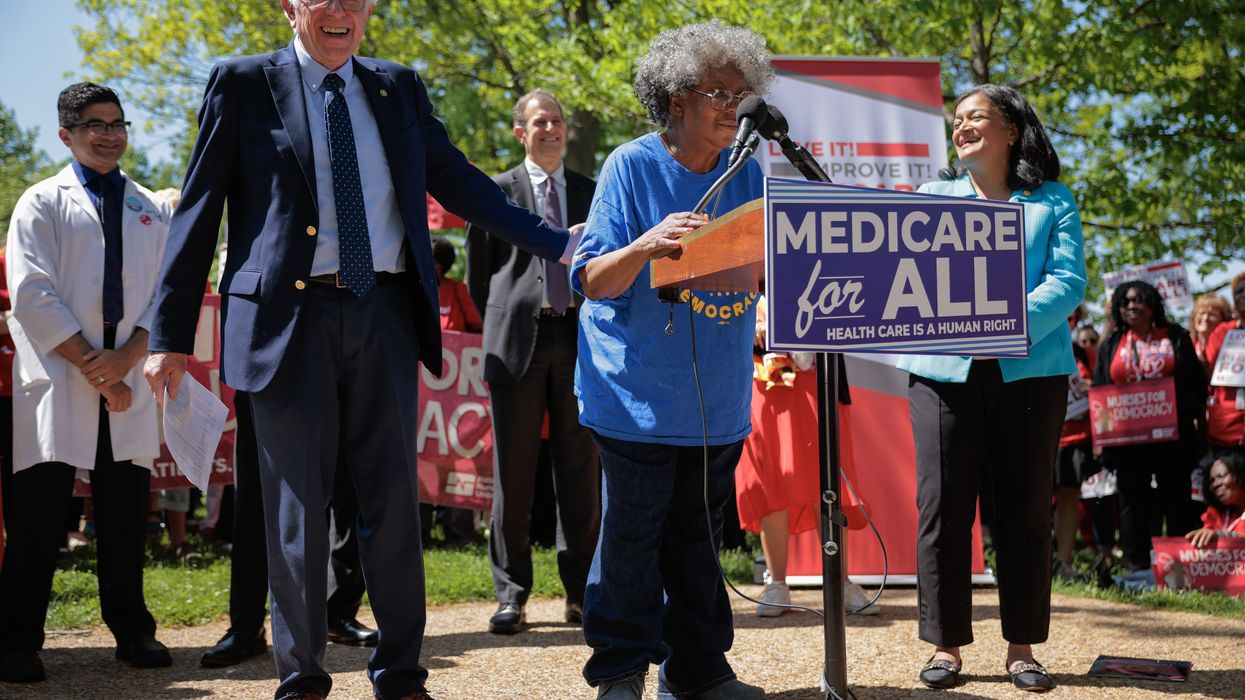
"Do not tell me we cannot afford Medicare for All," said Sen. Bernie Sanders. "What we cannot afford is a broken healthcare system based on greed."
Previous research has shown that shifting the United States to a Medicare for All system could save roughly 68,000 lives and $650 billion per year, but a new study by experts at Yale University suggests the savings would likely be even greater on both fronts.
In a Tuesday statement, Sen. Bernie Sanders (I-Vt.), lead sponsor of the Medicare for All Act in the Senate, highlighted the findings, published recently on medRxiv, a server for preprints, or research that hasn't yet been peer reviewed.
"The US spends more on healthcare than any other nation, yet tens of millions of Americans are uninsured or underinsured, and coverage retractions enacted in 2025 are widening these gaps," the five experts wrote.
Upward of 15 million Americans could lose health insurance coverage over the next decade because of Medicaid cuts in President Donald Trump's so-called One Big Beautiful Bill Act and the Republican-led Congress' failure to extend Affordable Care Act subsidies that expired at the end of last year.
"The misalignment between the for-profit insurance architecture and optimal patient care, together with the inefficiencies of a fragmented system, contributes to both unnecessary costs and preventable mortality," according to the Yale researchers. "We update our previous analyses with the most recent data to project the economic benefits and the number of lives saved that would be achieved by single-payer universal coverage, as proposed in the Medicare for All Act."
"We estimate that such a system would reduce national health expenditure by $1,041 billion annually," they explained. "Sources of savings include reductions in administrative overhead, pharmaceutical prices, fraudulent billing, and avoidable emergency care. Combined with the reversal of recent retractions, universal coverage would save over 114,000 lives annually."
Specifically, as Sanders' office detailed in a statement, Americans would save:
Welcoming the findings, the senator declared that "this study confirms what we have known for years: Medicare for All saves lives and saves money. In fact, guaranteeing healthcare as a human right through a Medicare for All, single-payer system would cost $1 trillion less than our current dysfunctional system."
"It would save working families thousands of dollars a year. And it would prevent over 100,000 Americans from dying unnecessarily each and every year because they cannot make it to a doctor in time," he stressed. "At a time when 15 million Americans are being thrown off the healthcare they have and 20 million Americans have already seen their premiums double, on average, as a result of Trump's so-called 'Big Beautiful Bill,' we need Medicare for All now more than ever."
"The time is now to end the greed of the big insurance and drug companies and pass Medicare for All," he added.
The research comes as Americans face high prices for not only healthcare but also food, gasoline, housing, and more under President Donald Trump and the GOP-led Congress. It also comes amid a renewed push by hundreds of advocacy groups that support Medicare for All and a wave of victories by progressive candidates who support the policy.
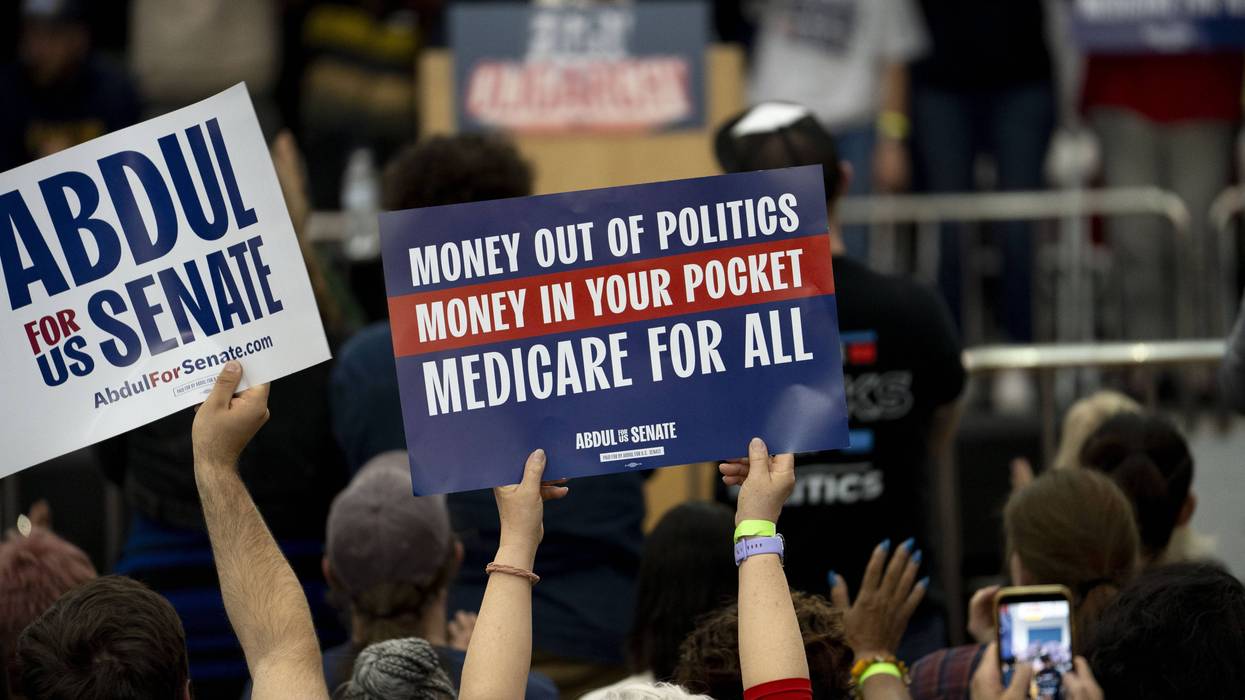
Among them is former Detroit health official Abdul El-Sayed, who won the Democratic primary for US Senate in Michigan last week having campaigned on a promise to prioritize "money out of politics, money in your pocket, and Medicare for All." His victory followed those of various other candidates, from Colorado to New York and Pennsylvania.
However, it's not just elected Republicans standing the way of a transition to universal healthcare in the United States. As a Monday analysis from the investigative outlet Sludge shows, the health insurance industry is pouring money into Third Way, a think tank reportedly preparing to spend $15 million combating the rise of candidates who support progressive policies including Medicare for All.
Third Way has received donations from CVS Health, Johnson & Johnson, and an organization that counts the Blue Cross Blue Shield Association as one of its members, tax filings reveal.
The investigative outlet Sludge published an analysis on Monday showing that the health insurance industry is among the corporate donors to Third Way, a think tank that is reportedly preparing to pour $15 million into an effort to combat the rise of candidates who support Medicare for All and other progressive policies.
Third Way, which has long been hostile to the progressive wing of the Democratic Party and Medicare for All in particular, does not publicly disclose its donors. But Sludge's David Moore uncovered some of the group's benefactors by examining corporate tax filings, which revealed that the private insurance industry group Better Solutions for Healthcare (BSFH) donated $50,000 to Third Way's advocacy arm in 2024.
Among BSFH's members are the Blue Cross Blue Shield Association and the health insurance industry trade group AHIP. Moore noted that BSFH is "run out of the offices of leading Republican digital and strategy firm Targeted Victory in Arlington" and was founded by GOP operative Alexander Schriver.
Sludge's review of corporate tax filings showed other healthcare industry donors to Third Way, including CVS Health and Johnson & Johnson.
"Another corporate lobbying heavyweight, the Business Roundtable (BRT), gave $50,000 to Third Way in 2024, up from the $25,000 it gave in 2023 and down from the $75,000 it gave in 2022," Moore reported. "Each year in 2019, 2020, and 2021, BRT gave $50,000 to Third Way. The CEO group’s health insurance members include the heads of UnitedHealth, Cigna, Elevance (formerly Anthem), CVS Health—all members of AHIP (formerly America's Health Insurance Plans), save for UnitedHealth—as well as healthcare company Centene and many Big Pharma firms like Johnson & Johnson."
NEW: Who's funding the dark money Third Way, dug up in most recent tax filings:
- Republican-run insurance industry front group
- Health insurance giant
- Big Pharma
- More insurance lobbyists
...as it fights the Democratic left and Medicare for All:https://t.co/w787PVhxsH
— David Moore (@ppolitics) August 11, 2026
Moore's reporting came days Third Way president Jonathan Cowan told The New York Times that his organization is "preparing for the next war that is coming."
Cowan said that "it is deeply troubling to see radical, far-left candidates winning in places that are potentially presidential swing states"—a comment published two days after progressive epidemiologist Abdul El-Sayed, a vocal supporter of Medicare for All, won the Democratic primary for a critical US Senate seat in Michigan.
The Times story characterized Third Way as "a leading centrist Democratic group," without mentioning the organization's corporate ties.
"Post El-Sayed’s win, Third Way has done media hits in NYT, CNN, WaPo, Vox, and not one of these outlets has mentioned who funds Third Way historically or bothered to ask who their current donors are," journalist Adam Johnson wrote in a social media post on Tuesday, praising Sludge's review of tax records.
"Journalists are, in principle, supposed to do what David did here: investigate ulterior motives, follow the money, dig deeper," Johnson wrote. "Alas what mainstream outlets have done for Third Way this past week is credulously take them at their word they are merely 'concerned about electability.'"
Earlier this year, Third Way published a memo attacking Medicare for All and its purportedly "astronomical cost." (The memo does not mention research showing that a Medicare for All system would cost less than the status quo, while providing comprehensive universal health coverage and saving tens of thousands of lives per year.)
A recent study by Yale University researchers found that a Medicare for All system would reduce US national health expenditures by more than $1 trillion a year and "save over 114,000 lives annually."
Dr. Ed Weisbart, the national board secretary of Physicians for a National Health Program, told Sludge that "anybody who chooses to attack [Medicare for All] is putting themselves out of step with what I think most people in our country see as the solution."
“People want this, even when they understand that of course it's going to mean a change in their taxes—but they also understand that for 95% of people or so, the change in taxes is smaller than the amount that they would save by not having premiums, not having co-pays, not having deductibles,” said Weisbart. “People are getting that. And if you try to market a political view that's opposite, people see right through that."
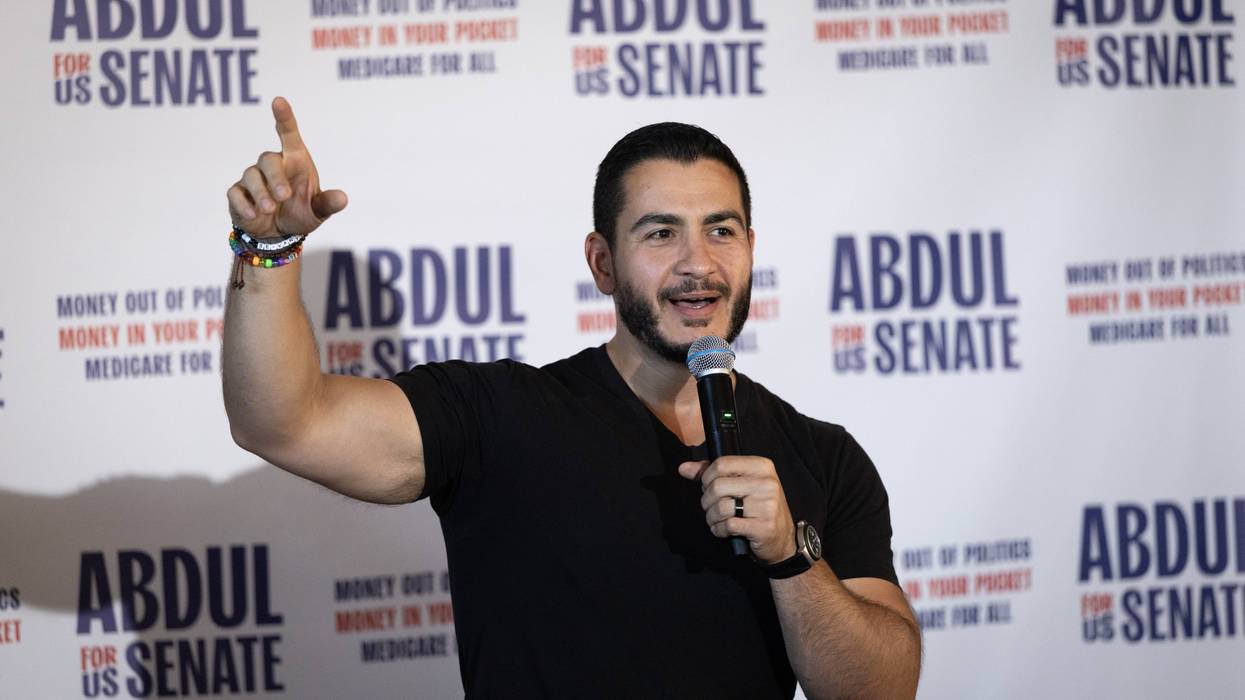
In the Michigan Democratic Senate primary, Abdul El-Sayed put guaranteed healthcare at the center of a statewide campaign and let voters decide. They decided.
You won’t find “Medicare for All” printed on any Michigan ballot from Tuesday’s primary. What you’ll find is a name: Abdul El-Sayed, the Ann Arbor physician who literally wrote the book on single-payer healthcare and then built his Senate campaign around it.
El-Sayed co-authored Medicare for All: A Citizen’s Guide, with a foreword from Sen. Bernie Sanders (I-Vt.), laying out how the country could guarantee healthcare as a right instead of rationing it by income. He wasn’t a candidate who discovered Medicare for All in a focus group. He ran because of it, and Tuesday night he routed the Democratic establishment’s chosen candidate, Haley Stevens. That’s as close to a referendum on single-payer healthcare as American politics gets, and voters delivered a verdict.
El-Sayed didn’t soften his message for the donor class. He paired “Medicare for All” with a blunt indictment of a country rich enough to end medical bankruptcy but too captured by insurance money to bother. Voters in Washtenaw and Kent counties answered.
What makes this remarkable is who El-Sayed beat and how. Stevens had every advantage institutional Democratic politics can hand a candidate: Sen. Chuck Schumer’s (D-NY) early backing, a late endorsement from Michigan Gov. Gretchen Whitmer, and roughly $30 million from the American Israel Public Affairs Committee (AIPAC) and its affiliates, the largest single-race investment in that organization’s history. This was one of the most expensive Democratic primaries ever run, a fire hose of establishment cash aimed at burying a single-payer candidate. It wasn’t enough. Voters weren’t buying what millions in outside spending were selling.
As a practicing physician assistant who has spent years advocating for Medicare for All and working in electoral politics, I've heard the same warning over and over: Don't run on single-payer. Michigan suggests that conventional wisdom deserves another look.
That should terrify the consultant class that has spent a decade telling Democrats Medicare for All is political poison in a state like Michigan, that it scares away suburban moderates. El-Sayed’s night says otherwise: an unapologetic healthcare message is exactly what turns out voters a low-turnout August primary usually leaves behind. Reporting pointed to a young, energized base and a ground game that outperformed expectations where turnout can’t be bought with television ads.
The country is catching up to what El-Sayed put in writing years ago. Over 85 million working-age Americans are uninsured or underinsured, per Commonwealth Fund research, shut out of the system or paying premiums that still leave them exposed the moment they get sick. Millions are one diagnosis away from medical debt they’ll spend a decade paying off. Public patience with an industry that profits by denying claims has curdled into open contempt, visible in viral outrage over coverage denials and a for-profit sector that ranks among the least trusted in America. Strip away the euphemisms, and the arithmetic is obscene. Insurers post billions in profit by finding reasons to say no to sick people, skimming a cut off human suffering as a business model. The United States is the only wealthy industrialized democracy that treats healthcare as a product to be underwritten, means tested, and denied rather than a right owed to its citizens. El-Sayed didn’t invent that anger, and he didn’t just write a book about it. He built a winning campaign on the promise that Democrats don’t have to keep managing that anger on behalf of the industry that causes it.
There’s symbolic weight here too. El-Sayed lost a bruising primary for governor in 2018, written off as unelectable in a state supposedly too uneasy about a candidate named Abdul. Eight years later, running on the same conviction that no one should go bankrupt getting cancer treatment, he built a coalition big enough to beat back one of the most heavily financed efforts to defeat a progressive candidate in recent Democratic primary history. That’s proof of where the Democratic base stands on healthcare, no matter what the party’s risk-averse, industry-funded strategists have told candidates for two decades.
As a practicing physician assistant who has spent years advocating for Medicare for All and working in electoral politics, I've heard the same warning over and over: Don't run on single-payer. Michigan suggests that conventional wisdom deserves another look.
Michigan shows the old fear, that Medicare for All is too risky to run on out loud, was always a story told by people who never tried telling voters the truth about their premiums. Michigan is a battleground state, not a safely progressive one, and El-Sayed won by refusing to hide the ball. He put guaranteed healthcare at the center of a statewide campaign and let voters decide. They decided. That’s not a fluke. It’s a preview of what happens when a candidate treats single-payer healthcare like the popular, morally obvious policy it has always been. AIPAC and the insurance lobby’s allies spent a fortune trying to prove otherwise and lost.
Party insiders will insist this was about mechanics, not Medicare for All. They said the same after every progressive upset this cycle, right up until they had to explain the next one. For one night, the closest thing Michigan had to a ballot question on national healthcare got its answer, and it wasn’t close.
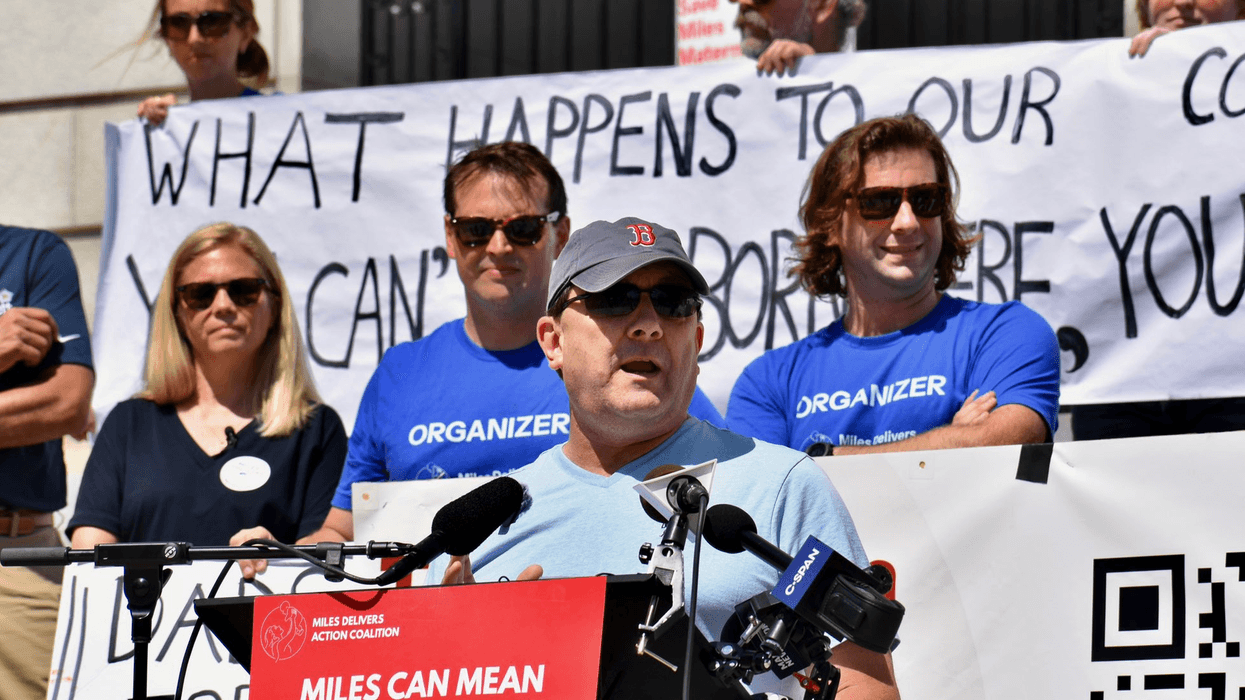
"It's past time that we fix our broken, profit-centered healthcare system that leaves many of us struggling to get care, and most of us struggling to pay for it when we do," said the US Senate candidate.
Democratic US Senate candidate Troy Jackson on Friday was among the Maine leaders expressing anger over the decision by MaineHealth, the state's largest nonprofit healthcare system, to close a labor and delivery unit that's crucial to families in three counties after local residents organized a monthslong grassroots effort to keep the department open.
"I'm angry," said Jackson, the former state Senate president who officially became the Democratic candidate last month. "This marks the 12th labor and delivery ward we've lost in this state since 2015."
With rural hospitals across Maine expected to continue closing—partially due to nearly $3 billion in Medicaid cuts over the next decade, which were included in President Donald Trump's One Big Beautiful Bill Act along with tax cuts for the wealthy—Jackson repeated his call for a government-funded universal healthcare system.
"It's past time that we fix our broken, profit-centered healthcare system that leaves many of us struggling to get care, and most of us struggling to pay for it when we do," said Jackson. "We must pass Medicare for All."
MaineHealth's Board of Trustees voted Thursday in favor of closing the labor and delivery unit at Lincoln Hospital on the health network's Miles Campus in the coastal town of Damariscotta. The decision leaves Lincoln, Waldo, and Sagadahoc counties without any labor and delivery units, and leaves half of the state's 34 hospitals without birthing wards.
The hospital system said it had reached the decision because it cannot "continue providing safe, reliable care for every mother and every baby, every day and every night," according to CEO Andrew Mueller.
Labor and delivery "requires highly specialized teams that are available around the clock and prepared to respond immediately to routine deliveries and unexpected emergencies," said Mueller. "We concluded that we could no longer consistently ensure that level of staffing and clinical coverage at Lincoln Hospital over the long term.”
Cindy Wade, president of Lincoln Hospital, told community members ahead of the vote that the potential closure was "not driven by finance," while acknowledging that staffing is a problem for the facility.
The day before the decision was announced, a woman named Corinna Stum, who had been set to deliver her baby at Miles in January—a month after the unit is set to close—filed a lawsuit in an effort to stop the closure. Stum requested an emergency injunction while the court determines whether MaineHealth violated its obligation to serve the public and be transparent in its review process
A grassroots organization called Miles Delivers Action Coalition, started by three women from the area, has held rallies alongside Jackson, Democratic gubernatorial candidate Hannah Pingree, and other local leaders, as well as working with clinicians to determine how the Miles Campus could deliver sustainable care for parents and babies and finding obstetricians who would be willing to work at the hospital.
The group also examined the finances of the $4 billion healthcare network, finding that the Miles Campus outperformed its parent system in terms of profitability and that deliveries at the hospital are on the rise, despite declining birth rates nationwide.
"A CEO paid $2.2 million should be expected to find solutions, not simply eliminate services," said the coalition as it rallied 10,000 supporters in a matter of months to help convince the hospital to keep the unit open.
When the coalition reached out to MaineHealth with its ideas for continuing to provide maternity services, the company argued that pregnant patients will be able to travel to Mid Coast Hospital for their deliveries—a 26-mile, 43-minute drive from Damariscotta.
When announcing the closure, MaineHealth also suggested families could also transfer their obstetrical care to Pen Bay Hospital, which is roughly the same distance from the town.
Dr. Tim Goltz, a family physician at Miles, told NPR earlier this week: "There's no doubt in my mind that if OB goes away at Miles, that there will be mothers and babies who die because of that decision. The literature is very clear that the further you have to travel to deliver a baby, the higher the risk is of serious complications and death. "
Miles Delivers Action Coalition said the vote on Thursday resulted in "one of the most harmful decisions our community will ever see," and accused MaineHealth of "cowardice."
“They have ignored the voice of our governor, politicians on all sides, the local ambulance service, businesses, far and wide, and they are creating a maternity desert in Lincoln County,” the group said. “This isn’t a hospital, it’s a morgue.”
Former US Senate candidate and organizer Jordan Wood, also an advocate for Medicare for All, said decisions like MaineHealth's would lead Mainers to "lose trust and faith in democracy."
"Millennials, women, moms, young moms, pregnant women organized in our community the minute that news broke that there was a possibility that Miles would close," said Wood. "It can feel like a failure, but it's not... We will fix this problem. This is a setback, it's not a failure."
MaineHealth just voted to close labor and delivery at Miles. The last birthing unit in Lincoln County. You can't make a birth profitable. So this system cuts it. Every time.
This isn’t the end of our fight. pic.twitter.com/fpXLzkAYKi
— Jordan Wood (@JordanWood) August 7, 2026
"There is no way to make labor and delivery profitable," said Wood. "We are living in an absolutely broken healthcare system by profit. By for-profit health insurance companies and pharmaceutical companies that only make money off of us being sick... This is the reminder for so many of us about why this healthcare system is so corrupt and broken and in need of a total overhaul."
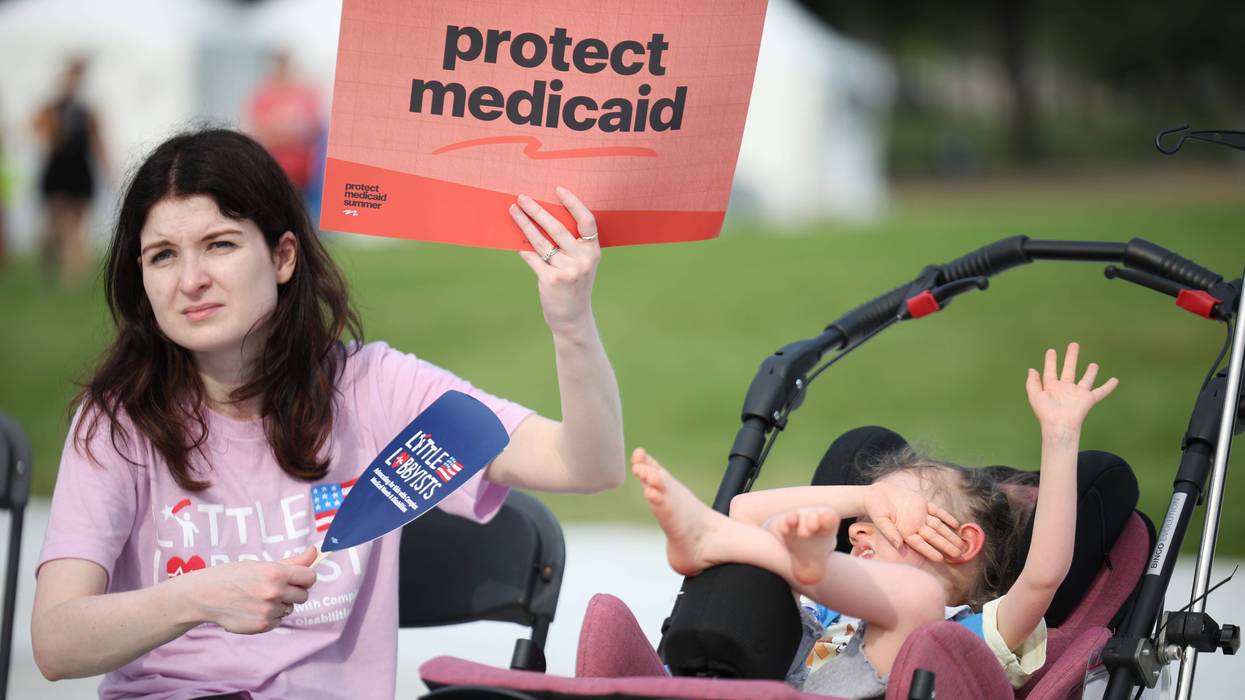
"Pregnant woman disenrolled by mistake. Long waits to get through to the call center for help. No clarity on the rules. Medicaid work reporting requirements don’t work."
A growing chorus of Democratic lawmakers, policy experts, and advocacy organizations is calling on the Trump administration to immediately rescind a rule imposing more strict work reporting requirements on Medicaid recipients, a demand that came as Nebraska began kicking people off the healthcare program for not complying with the new mandates.
Under the expanded requirements, which were established by a 2025 Republican budget package that President Donald Trump signed into law, certain Medicaid recipients must document at least 80 hours per month of work or another qualifying activity to continue receiving assistance. In a statement late last week, Families USA executive director Anthony Wright warned that "these new paperwork requirements will push patients off coverage—not because they aren’t working or not eligible, but because of bureaucratic burdens."
Wright noted that under new rules stemming from the 2025 GOP budget law, even people with terminal cancer and other serious illnesses aren't necessarily exempt from the work reporting requirements, which apply to people between the ages of 19 and 64 who don't have a disability and aren't pregnant, in states that expanded Medicaid under the Affordable Care Act.
"The requirement that a patient doesn’t just need to have cancer or another condition but must produce the equivalent of a doctor’s note with a finding that the conditions leave them unable to work," said Wright, "is nowhere in the underlying statute, and unworkable."
A pair of Democratic lawmakers, Sen. Ron Wyden (D-Ore.) and Rep. Frank Pallone Jr. (D-NJ), similarly warned in a letter late last week that the Trump administration's implementation of the new work requirements "transforms Medicaid from a healthcare program into a bureaucratic maze that will fail eligible Americans, by design."
"It will strip coverage from people not because they are not already working or refuse to work, but because they cannot navigate a complex web of forms, passwords, and deadlines," the lawmakers wrote. "Implementing ineffective, exclusionary work reporting requirements will create costly administrative barriers and deny Americans access to health care, resulting in poorer health, higher mortality, and reduced financial security."
Wyden and Pallone urged the Trump administration to withdraw what the lawmakers described as a "disenrollment scheme" as Nebraska became the first in the US to disenroll Medicaid recipients for failing to comply with the reporting mandates.
The advocacy group Nebraska Appleseed has warned that the work requirements could put 40,000 Nebraskans at risk of losing Medicaid coverage. The requirements took effect in Nebraska on May 1—eight months ahead of schedule—and the state began disenrolling people for purported noncompliance on August 1.
In a blog post published last week, Nebraska Appleseed observed that the three months between the start of the work requirements and the first round of disenrollments was marked by "mass confusion," with Medicaid recipients experiencing "long call center waits, inoperable language lines, understaffed and undertrained caseworkers, policy questions gone long-unanswered, and the lack of public state data."
Joan Alker, executive director of the Center for Children and Families at Georgetown University, pointed with alarm to local reporting about the early impacts of the work reporting mandates in Nebraska.
"So it begins," Alker wrote in a social media post on Monday. "Pregnant woman disenrolled by mistake. Long waits to get through to the call center for help. No clarity on the rules. Medicaid work reporting requirements don’t work."
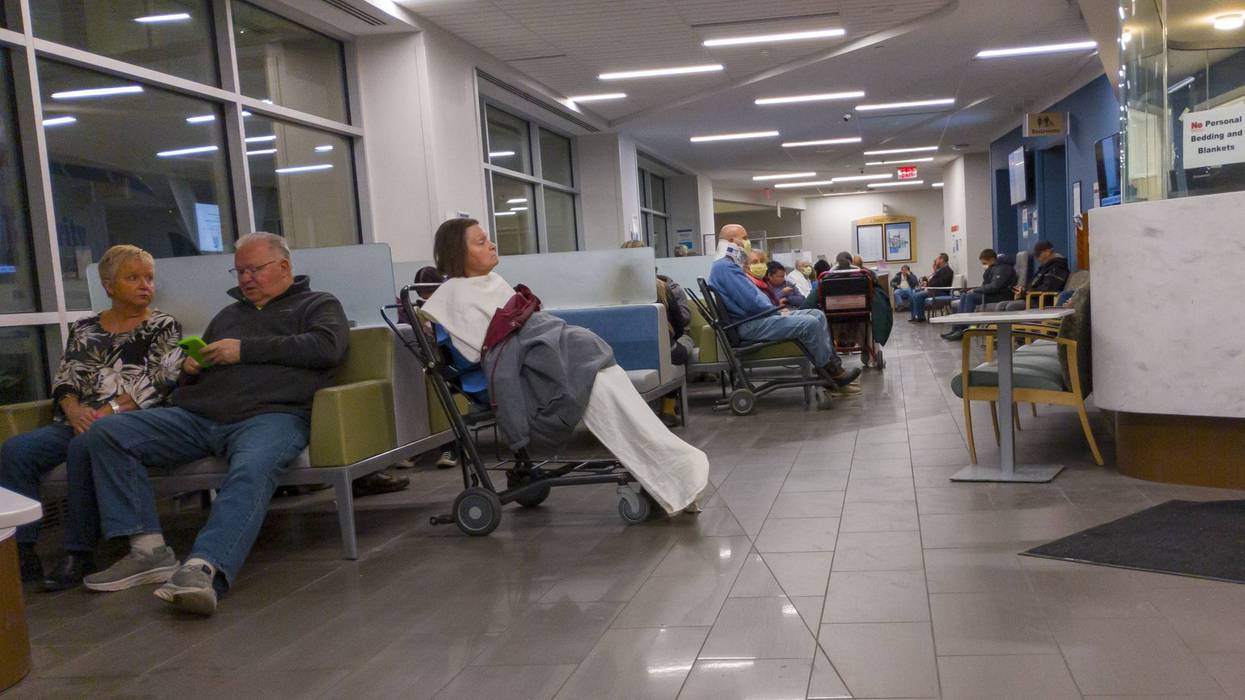
"We’re really crushing people who are desperately trying to pay their bills," said a chief executive at a nonprofit hospital group.
Months after congressional Republicans refused to extend enhanced subsidies for Americans who receive their health insurance through the Affordable Care Act, hospitals across the US are seeing a surge in uninsured patients seeking emergency medical care.
According to a Thursday report in The New York Times, executives at large hospital systems have been raising alarms over "the unexpectedly sharp rise in uninsured patients and the costs associated with treating them."
With many uninsured patients unable to pay their hospital bills, the Times noted, hospitals are seeing "lost revenues amounting to hundreds of millions of dollars across the country's vast health systems."
The Times linked this surge in uninsured patients directly to the Republican-controlled Congress allowing more generous subsidies for plans purchased through the ACA to lapse at the end of 2025. Enrollment in the program has fallen by about 3 million people since last year.
"What that tells me is that there are patients who are completely unable to pay," Laura Kaiser, chief executive of Catholic nonprofit hospital group SSM Health, told the Times. "We’re really crushing people who are desperately trying to pay their bills."
Executives at Universal Health Services (UHS), a for-profit hospital operator, said during an earnings call on Tuesday that the losses they expect to incur from treating uninsured patients have been significantly higher than their initial projects.
As reported by Healthcare Dive on Wednesday, UHS had initially projected that some patients who dropped their coverage provided by the ACA would find another way to get health insurance.
However, UHS CFO Steve Filton told investors that "it felt like virtually everyone who lost their exchange coverage became an uninsured patient."
UHS is hardly alone in suffering losses due to lapsed ACA subsidies, as Axios reported on Tuesday that HCA Healthcare, the largest for-profit hospital chain in the US, is projecting a $400 million hit to revenue that is tied partially to "an influx of uninsured patients."
HCA CEO Sam Hazen said the increase in uninsured patients was a direct consequence of the GOP's refusal to extend the ACA subsidies.
"The effects, as expected, were that many people became uninsured and still needed emergency care from hospitals," Hazen said. "As we look at the first half of the year, our expectations proved accurate, although the impact was greater than our estimates."
An increase in uninsured patients is bad both for hospitals' finances and patients themselves.
As KFF explained in a June report, people without insurance are more likely to avoid seeking medical treatment until their situation becomes too dire to ignore.
"People without health coverage are more likely to be hospitalized for avoidable health problems," KFF wrote, "and to experience declines in their overall health as a consequence of having undiagnosed conditions and a lower likelihood of receiving preventive and chronic disease management care. When they are hospitalized, uninsured people receive fewer diagnostic and therapeutic services and also have higher mortality rates than those with insurance."
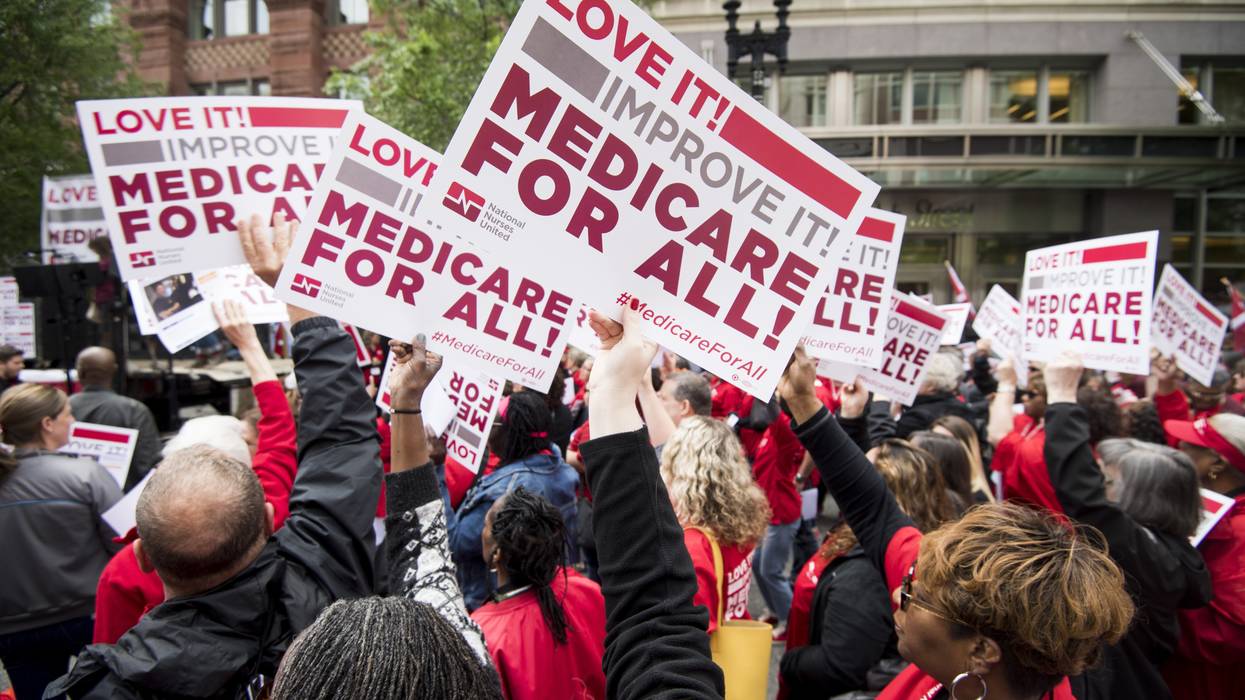
Medicare has become living proof that public, universal health insurance is superior to private insurance in every way.
Sixty one years ago, July 30, 1965, Congress enacted Medicare to provide health insurance for people ages 65 and older and the disabled regardless of income or medical history. At the Harry S. Truman Presidential Library in Independence, Missouri, former President Harry S. Truman and his wife, former First Lady Bess Truman, became the first recipients of the new Medicare health insurance program. President Lyndon Johnson and the US Congress enacted Medicare under Title XVIII of the Social Security Act.
Medicare was a momentous act because it provided new health insurance for people ages 65 and older and the disabled regardless of income or medical history. In the years since, Medicare has become living proof that public, universal health insurance is superior to private insurance in every way. Medicare is more efficient than private health insurance and is administered at a cost of 3-4%, as opposed to private, for-profit health insurance, which has administrative costs above 15%.
Following the successful 1965 grassroots campaign to enact Medicare, many also believed that the dream of a full national, single-payer health insurance system that included all age groups, “Medicare for All,” was right around the corner. Unfortunately decades later, Medicare still has not been expanded. Most of the changes have been contractions with higher out-of-pocket costs for beneficiaries and repeated attempts at privatization by Big Pharma, Big health insurance industry companies-oligarchs-profiteers, and their champions in the White House and Congress.
Big insurance and Big Pharma continue opposing legislation for the new, improved Medicare for All because these resistant, self-serving industries have the most to lose if their huge profits are redirected to direct patient care for all. Individual and corporate predators regard democracy, government, and community as obstacles to their greed and avarice, always placing profits over individual patients, families, and public health. It’s no wonder so many beholden members of Congress want to protect the interests of Big Insurance and Big Pharma, industries that spent $371 million on lobbying in 2017 alone.
The Heritage Foundation’s Project 2025, framed by former Trump administration staffers and secretly endorsed by President Donald Trump himself, proposes changes in Medicare benefits that could destroy Medicare as we know it. Instead, we must fight back and expand Medicare. Although health insurance affordability for the majority of US citizens still remains elusive, President Trump’s health insurance plan still wants to shift many more dollars into private, Wall Street insurance industry hands. The takeover of public health insurance, as with Medicare Advantage plans and others, by private Wall Street entities continues apace as Republicans and Trump propose to increase taxes and give it to the private profit insurance industry—the basic source of our profound administrative waste, along with the costly administrative burdens they place on the delivery system that requires large profits. Profiteering continues unabated as private insurance sells us services we don’t need or want, such as deductibles and other cost sharing and maintenance of narrow networks, requiring prior authorization with increased administrative costs, excessive ongoing paperwork, and documentation requirements, all while avoiding paying for surprise bills and other denied benefits.
No greater disconnect exists between the public good and private interests than in the voracious US system of for-profit Big Insurance and Big Pharma.
Dealing with Covid-19 could have been more lifesaving if Medicare for All had been in place. A New York Times editorial, "Health Care for Some is a Recipe for Disaster," stresses the importance of covering everyone. Even before Covid-19 was known to humans, Northeastern University professor of public health, Wendy Parmet, presciently warned that the push to exclude immigrants from access to healthcare services would be both dangerous and quixotic. “None of us can be self-sufficient in the face of a widespread epidemic,” she wrote in 2018. “That is just as true for noncitizen immigrants as everyone.” In any pandemic, self-sufficiency can be self-deluding; everyone’s health, citizens, immigrants, etc. alike is only as good as our most vulnerable neighbor’s.
Truly a recipe for disaster, vested interests reject the science of public health epidemiology by asserting that only a slow, incremental approach to health insurance reform is possible or acceptable. So, what are we willing to settle for, should we just settle for what we can get? Lower the expectations, turn down the public heat, and keep waiting?. Gradualism, baby steps, extending health insurance coverage to some, but not all, is the mantra of the day; "Medicare for Some," but not "Medicare for All," is fawned over by politicians, profiteers, and advocacy groups alike while reducing communities resources to deal with dangerous epidemics and other health problems.
Virtually all the risky gradual reforms being touted would reinforce a dysfunctional health insurance system with as many standards of insurance as there are dollars to purchase them. It would further lock us into an obsolete private insurance-based model that holds everyone's health hostage to profiteering HMOs and unaccountable big insurance companies for years to come. For these proponents of political expediency, the question remains: Who will be left behind while we wait? Every year many unnecessary deaths are linked to lack of health insurance coverage. Pandemics can quickly increase these numbers.
Big Insurance and Big Pharma dominate our government, and public health takes a back seat to the need for private profit. Many government leaders from both political parties share the same "profits over public health" ideology, even though the Covid-19 pandemic clearly showed how our economic system failed to serve our citizens by allowing these groups to privatize, sabotage, fragment, and cripple our health, public health, and other social services. Many of the changes in traditional Medicare have been contractions with higher out-of-pocket costs for beneficiaries and repeated attempts at privatization by Big Pharma, and Big Health insurance. No greater disconnect exists between the public good and private interests than in the voracious US system of for-profit Big Insurance and Big Pharma and their inherent tendency to invent new needs, disregard all boundaries, and turn everything into an object for sale and big profit.
Medicare for All Act (M4A)-2026 is best solution because it meets eight basic standards:
To continue our 61 years of progress, it’s time to upgrade Medicare by establishing a 21st century improved “Medicare for All” health insurance system that covers all age groups, cradle to grave. Newborns will leave the hospital with their new Medicare card, and drop it off years later at life’s end. Two comprehensive M4A bills now filed in Congress, H.R. 3069 and S.1506, propose to insure or cover all medically necessary services. Patients have their choice of physicians, mental health professionals, other healthcare professionals, hospitals, and clinics.
M4A insured health services include:Because our government, instead of private profit health insurance companies, serves us as the health insurance financing authority, co-pays and deductibles paid at health professionals' offices are ended because payment for health insurance is fully prepaid directly into Medicare, much like Social Security, and covered at first dollar amounts. This means the obsolete 80%-20% payment split between private health insurance companies and Medicare is eliminated, with Medicare for All covering 100%.
The major reason private health insurers are more expensive than government health programs in the US is due to profiteering and administrative costs. Those extra taxpayer funds going to private insurers include costs such as advertising and marketing of their plans, costs of contracting for restrictive provider networks, administering prior authorization requirements, complex systems of processing claims including denial of benefits, simple administrative costs of operating large corporate entities, and distributing generous profits to their executives and passive high profiteering by Wall Street investors.
The Medicare for All Act-2026, now filed in Congress, would much better fill our healthcare financing needs without wasting hundreds of billions of dollars on superfluous administrative costs and end immense profiteering by private insurers and Big Pharma. The USA is a country where health insurance for medical and mental healthcare is a function of socioeconomic status. Everyone knows that this inhumane system should have been corrected long ago.
Please tell your legislators that it’s time to end inadequate and dangerous health insurance programs. Insist on real health insurance reform essential for individuals and families. American history is filled with examples of fundamental, democratic change brought about by successful mass action and public pressure against the counseling of the go-slow, vested-interest crowd. No more waiting! Ask your legislators to fully support Medicare For All 2026 now: H.R. 3069 and S. 1506

The organization has "provided affordable sexual and reproductive healthcare, including birth control, STI testing and treatment, cancer screenings, and wellness exams to millions of people through Title X."
Planned Parenthood Federation of America on Wednesday sued over the Trump administration's attempt to abuse a federal program "for an overtly political and ideological agenda that is at odds with Title X's statutory purpose of funding comprehensive family planning care for those who cannot afford it."
"Title X of the Public Health Service Act is the only domestic federal program devoted solely to family planning for uninsured, underinsured, and low-income people," notes the complaint, filed in federal court in Washington, DC by lawyers at PPFA, Democracy Forward, and Wilmer Cutler Pickering Hale and Dorr.
After the US Department of Health and Human Services' Office of Population Affairs in April announced changes to how it chooses Title X grantees for the 2027-32 cycle, the National Family Planning and Reproductive Health Association and the Family Health Council of Central Pennsylvania sued last month, backed by the ACLU.
The office then updated the policy earlier this month. However, as Wednesday's complaint explains, the updated version still says that "in evaluating and awarding Title X grants," the office "will consider the extent to which applicants 'advance' and 'align with' a series of political priorities."
PPFA's attorneys argued that the administration's approach is unlawful and puts the group's members "at a competitive disadvantage," which could ultimately impact people seeking care, from contraception to testing for sexually transmitted infections (STIs).
Democracy Forward president and CEO Skye Perryman—whose organization has repeatedly sued over Trump policies—said in a statement that "people should be able to receive the healthcare that is right for them, their lives, and their values, and that requires support for providing critically needed family planning services for people who cannot afford it."
Accusing the administration of "once again putting politics over people," she said that "the unlawful, ideologically driven changes to Title X threaten devastating consequences for lower income Americans nationwide who rely on the program for essential healthcare, including birth control, cancer screenings, and STI testing."
"Title X was created so a person's income would never determine whether they could access the medically appropriate family planning care that is right for them," Perryman emphasized. "We will aggressively pursue legal action on behalf of our clients until the administration stops undermining that promise and follows the law."
Highlighting the potential impact of the administration's policy for people throughout the United States, PPFA pointed out that from October 2024 through September 2025, its health centers provided over 1.3 million Title X visits across 33 states.
"Planned Parenthood health centers have provided affordable sexual and reproductive healthcare, including birth control, STI testing and treatment, cancer screenings, and wellness exams to millions of people through Title X," said PPFA president and CEO Alexis McGill Johnson. "We are suing the Trump administration because, yet again, it is trying to make it harder for people to get the vital care they need at Planned Parenthood."
The new lawsuit comes after Planned Parenthood and other reproductive health clinics regained access to Medicaid funding earlier this month, following the expiration of a provision in the One Big Beautiful Bill Act, which President Donald Trump signed last July.
The passage of that provision was a victory for forced pregnancy advocates, who have long targeted Planned Parenthood for providing abortion care. An analysis from the organization found that the "defunding" effort led to the closure of nearly 30 health centers, all of which were located in "contraceptive deserts" and two-thirds of which were in areas defined as rural, medically underserved, or experiencing health professional shortages.
The group also called the Medicaid provision a "backdoor abortion ban," noting that 64% of Planned Parenthood health center closures were in states where such care is legal, and the shuttered facilities had previously served over 10,000 abortion patients annually.
"By deliberately targeting Planned Parenthood, President Trump and his allies in Congress worsened a public health crisis, making it harder for people to get the essential and lifesaving care they needed at their trusted provider," McGill Johnson said in early July.
"Still, anti-abortion lawmakers are trying to make 'defund' permanent because Planned Parenthood health centers provide abortion care where it's legal," she stressed. "They are willing to sacrifice the lives and health of people across the country if it gets them closer to their goal of banning abortion everywhere and shutting down Planned Parenthood."
"We're in a fight for survival—not just for Planned Parenthood health centers, but for everyone to get high-quality, affordable healthcare from their trusted provider," she added. "And know this: Planned Parenthood will never stop fighting to ensure everyone can get the care they need."
"Donald Trump and Republicans are making healthcare more expensive for seniors at every turn."
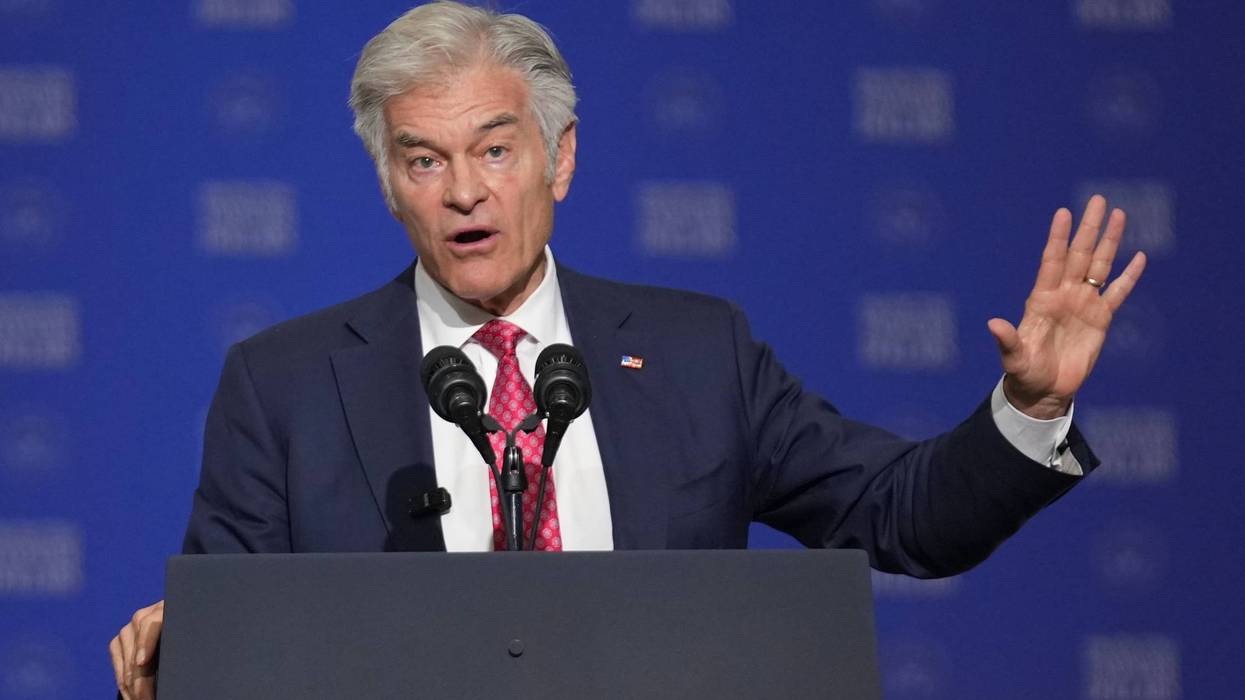
The Trump administration on Tuesday said it would end a subsidy program that helped lower premiums for seniors enrolled in Medicare Part D prescription drug plans, a move that's expected to increase monthly costs for millions of Americans amid a broader affordability crisis.
The Centers for Medicare and Medicaid Services (CMS), headed by Mehmet Oz, announced "the conclusion of the Part D Premium Stabilization Demonstration" for the coming year, just months before the start of Medicare open enrollment. Oz characterized the subsidy program as a "bailout" for insurance companies and said that "premiums will go up by less than $10 for most Medicare recipients."
But The Wall Street Journal, which reported the administration's move ahead of the public announcement, noted that nearly half of Medicare Part D plan enrollees would likely see increases "largely in the $11 to $20 range a month." The subsidy program, established in the wake of the Biden-era Inflation Reduction Act, cut the average Part D premium by more than 25% this year.
Leslie Dach, chair of the advocacy group Protect Our Care, said in a statement that President Donald Trump and his Republican allies "continue to force seniors to pay more while handing tax breaks to billionaires and big corporations."
"Trump and Republicans are making healthcare more expensive for seniors at every turn," said Dach. "In the middle of a GOP-induced affordability crisis, they are eliminating a key program that helps seniors afford their medications, meaning countless seniors will soon pay more just to get the lifesaving prescriptions they need. For older Americans living on fixed incomes, even an extra ten or twenty dollars a month can mean choosing between filling their prescription, paying the electric bill, or buying groceries. Seniors deserve lower prescription drug costs and affordable healthcare."
Around 25 million Americans are enrolled in standalone prescription drug plans through Medicare Part D, which is offered by private, Medicare-approved companies. Another 31 million Americans are enrolled in Medicare Part D via privatized Medicare Advantage plans.
Juliette Cubanski, vice president and director of the Program on Medicare Policy at the nonprofit research group KFF, wrote that standalone Medicare Part D prescription drug plans "may soon seem even less affordable" following the Trump administration's change, "leading to further enrollment growth in Medicare Advantage." (Prior to becoming head of CMS, Oz was a prominent booster of Medicare Advantage.)
Each year, millions of people across the US are forced to forgo or ration prescription medications due to high costs.
Kendall Witmer, rapid response director at the Democratic National Committee, said the Trump administration's decision to terminate the Medicare Part D subsidy program shows that the president and his party "are doing everything they can to make healthcare unaffordable for Americans, especially for seniors."
"Trump and Republicans’ massive healthcare cuts have pushed working families to the brink as they grapple with skyrocketing insurance premiums, even bigger medical bills, and rising prescription drug costs," said Witmer. "Americans are taking on record amounts of medical debt just to make ends meet—all while Trump and his family get even richer and his wealthy donors rake in tax cuts."