

SUBSCRIBE TO OUR FREE NEWSLETTER
Daily news & progressive opinion—funded by the people, not the corporations—delivered straight to your inbox.
5
#000000
#FFFFFF
To donate by check, phone, or other method, see our More Ways to Give page.
Daily news & progressive opinion—funded by the people, not the corporations—delivered straight to your inbox.
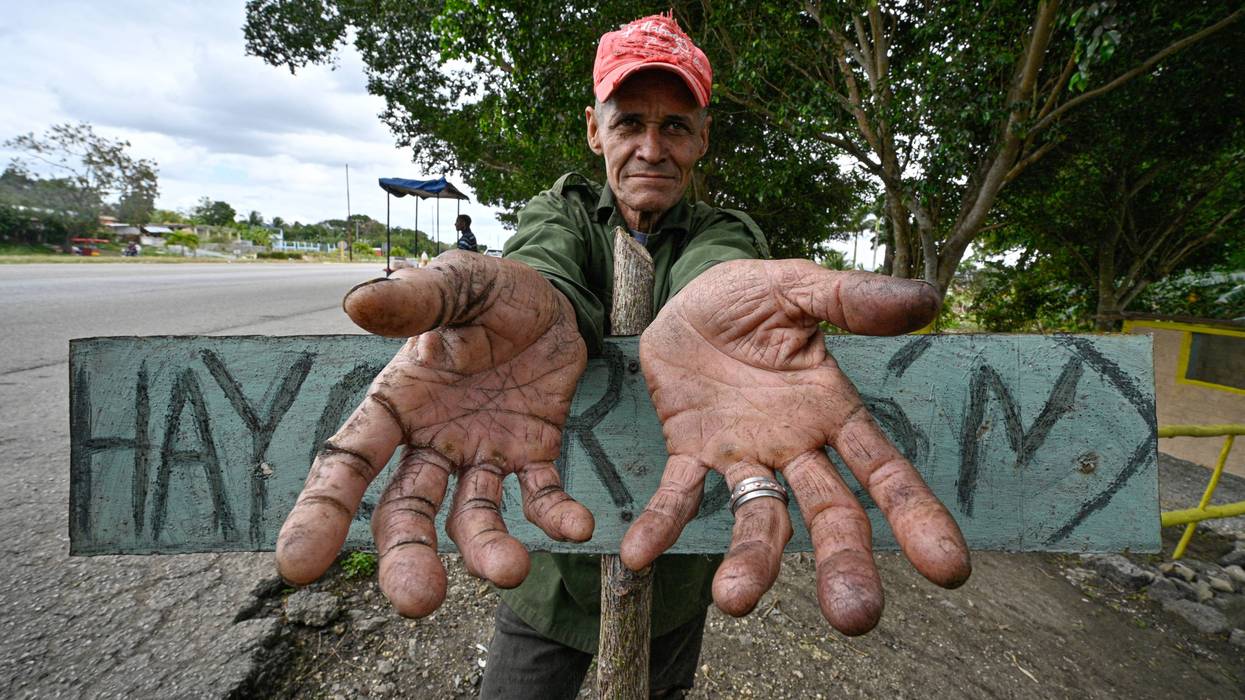
Life in Cuba is full of suffering not because of socialism but because of a 67-year-long blockade by the world’s largest superpower.
Recently, while listening to an NPR interview with Cuban-American musician Arturo Sandoval, I was reminded of the late political scientist Michael Parenti’s classic text, "Inventing Reality: The Politics of the Mass Media."
In his 1986 book, Parenti described a situation that is still relevant 40 years later—when the US fears that another country’s non-capitalistic political model (and its attendant advances in social justice and quality of life) could cause US citizens to question their own system, it regularly imposes an embargo and sanctions against the country. Next, the news media reports on the suffering caused by these policies while, at the same time, avoiding any mention of the embargo and sanctions. Finally, when after years or decades of suffering, the people of this blockaded country take out their anger on the closest target and begin protesting against their government, the US steps in. It places a puppet president in power and pours into the country the money it had withheld throughout the embargo. Then, the media reports on how well everyone is now doing without, once more, acknowledging the oversized role the embargo played in the prior devastation.
In the aforementioned NPR interview, host Scott Simon perfectly perpetuated this model of media complicity by announcing towards the interview’s conclusion, “Arturo Sandoval, I’ve got to put you on the spot a little. You’ve been pretty quiet about politics over the years, but obviously you fled Cuba. When Fidel Castro died, you spoke out about your disdain for his regime. It was ten years ago.” Then, with no historical or even recent context, Simon concluded with, “Cuba seems to be almost worse than ever now.”
With this final declaration in which he erroneously implied a connection between Cuba’s current immiseration and Fidel Castro’s rule, Simon led Sandoval into his response: “Sixty-seven and a half years is way too long, man… The people in Cuba are desperate and hopeless.”
Citizens who are not given the context of the news cannot be engaged participants in the democratic process.
Simon allowed his guest to say this unchallenged as if these decades of desperation and hopelessness are the result of Cuba’s 1959 revolution. To the contrary, in addition to footing the bill for Sandoval’s musical education (he attended the free Cuban National Art School, founded by Fidel Castro), the Cuban Revolution redefined human rights as access for all to free education, free healthcare, low-cost daycare centers, and highly subsidized housing.
The desperation Sandoval referred to is the direct result of the 67-year-old embargo against Cuba imposed by the United States, the longest embargo in the history of the world. Combined with its multitude of supplementary sanctions (more than 200 of which were enacted during Trump’s first term in office), these punitive measures prohibit Cuba from purchasing products, including medicine, manufactured abroad if they contain more than 10% of US-origin components. They restrict US residents’ ability to travel to Cuba. They hinder Cubans residing in the US from wiring money to their families, a common way for immigrants from all parts of the world to supplement the income of relatives back home.
The Cuban embargo has received worldwide condemnation. For more than three decades now, the UN General Assembly has annually presented its members with a resolution to denounce the embargo. Year after year, its 193 member states cast a near-unanimous vote affirming the resolution. The only two countries that consistently vote against it—and in favor of the embargo— are, unsurprisingly, the US and Israel.
Unfortunately, the UN resolution, while a significant show of solidarity, has no authority to end the embargo. As codified by US law, only the US Congress has this power.
In addition and sadly, the suffering caused by the embargo is not a mere result of the blockade but the explicit objective of it as stated in a declassified 1960 government document posted on the National Security Archive’s website and abstracted as follows: “This memo, written by Deputy Assistant Secretary of State for Inter-American Affairs Lestor Mallory, provides the original, unvarnished, policy rationale for imposing trade restrictions on Cuba. Fidel Castro’s revolution is quite popular in Cuba, Mallory points out; since there is no effective opposition against him, the only way to undercut Castro’s support is ‘through disenchantment and disaffection based on economic dissatisfaction and hardship.’ Mallory advocates a set of punitive economic actions designed to deny ‘money and supplies to Cuba, to decrease monetary and real wages, to bring about hunger, desperation, and the overthrow of [the] government.’”
Beyond the embargo and its sanctions, the US designation of Cuba as a State Sponsor of Terrorism (SSOT) contributes to what Sandoval referred to as the Cuban people’s hopelessness and desperation. The partisan political boomerang of the SSOT was initiated by President Ronald Reagan in 1982 for Cuba’s support of Latin American leftist groups. It was removed by Obama in 2015, reinstated by Trump in 2021, symbolically removed by Biden on January 14th, 2025, at the end of his presidency, and again reinstated by Trump on January 20th, 2025, at the start of his second term.
Along with other restrictions, the sponsor-of-terrorism status forbids US international aid organizations, including Food for Peace and the Peace Corps, from offering humanitarian assistance to Cuba. It prohibits Cuba from receiving loans from the World Bank and other international financial institutions. These are loans which could be used for much-needed projects such as an overhaul of the island’s aging electrical grid, which has caused multiple nationwide blackouts over the past two years.
Furthermore, as described by the Washington Office on Latin America, the SSOT “has a chilling effect on businesses, including banking or telecommunications investments that are crucial to promoting the type of transformation essential to expanding freedom on the island.” Ironically, this freedom (ie: the opening of business and economic opportunities) is precisely what the US purports to desire for the Cuban people. And it is this lack of this freedom, which Sandoval said in the somber closing statement of his NPR interview, that prevents him from returning to Cuba and will leave him to “die dreaming” of a homecoming.
At this point in the interview, what Scott Simon didn’t say becomes as, if not more, significant than what he did. It is that, in Fidel Castro’s final two years of life, a sense of hope and a feeling of, yes, freedom pervaded Cuba.
Hope came to Cubans with Obama’s 2014 détente, which, while not a revocation of the embargo [only able to be repealed by Congress], still enabled the US Embassy in Cuba and the Cuban Embassy in the US to reopen for the first time in 50 years. Washington’s rapprochement permitted commercial and direct mail flights between the two countries to be reinstated and for restrictions on remittances to be loosened. This, in turn, allowed Cuban-Americans, like immigrants from other countries, to now easily send money to their families on the island.
Freedom came from an opening of the Cuban economy, from the government’s expanded opportunities for private businesses. Cubans responded enthusiastically, opening record numbers of cafés and restaurants and music and art venues, among other enterprises to which their new American friends, now able to travel freely to Cuba, flocked in record numbers.
It was a boon for both sides—and evidence that another way of engaging with Cuba was possible. Until, that is, Trump was elected at the end of 2016 and, soon thereafter, began systematically shutting everything down once more.
If not for the very real damage it inflicts on the country, the SSOT designation could be considered laughable, as, during all these decades as a supposed sponsor of terrorism, Cuba has remained steadfast in its commitment to a peaceful coexistence with its neighbors near and far. For the past quarter of a century, Cuba’s Latin American Medical School, esteemed for both its size (enrollment-wise, it is considered the largest medical school in the world) and its focus on preventative healthcare, has offered a full-ride, plus a monthly living stipend, for students from low-income communities around the world, including the US.
Additionally, in the wake of Hurricane Katrina, Cuba offered aid workers to the US, although President Bush rebuffed this overture. In the early days of COVID-19, Cuba sent medical brigades to help Italy contain its outbreak. And this was in addition to the doctors Cuba regularly sent to countries in need from Algeria to Honduras to Sri Lanka. Until, that is, in 2025 the US began threatening to deny visas to the leaders of countries accepting assistance from Cuban doctors; and the targeted countries, fearing retribution, terminated their contracts with Cuba.
This past March, as Jamaica’s Cuban doctors headed home following one such termination, hundreds of Jamaicans took to the streets for what they called a “Gratitude Walk.” For three miles, they marched wearing t-shirts reading, “Thank you Cuba for 50 years of medical service” and chanting, “We love Cuba” and “Bring back the doctors.”
Walk participant Rupert Walters, President of the Jamaica-Cuba Friendship Association’s St. Catherine’s chapter and a beneficiary of Cuban care for his prostate cancer, called his government’s decision to cave to US pressure “crazy.” Walters told the Jamaica Observer that he wished the government had “allowed the Cubans to support and give their services to the hundreds of thousands of Jamaicans who can’t afford it,” and warned that, as a result of the medical program termination, Jamaicans would die.
Rather than supporting terrorism, Cuba has long been the target of terrorist attacks by the US government. There was the CIA’s half-century of documented assassination attempts against Fidel Castro, involving everything from poison pens to exploding cigars.
Less comical and more lethal were terrorist attacks led by Luis Posada Carriles, a Cuban exile and CIA operative. In 1976, 35 years before September 11th, Posada Carriles masterminded the Western Hemisphere’s first act of political terrorism against a civilian flight. His bombing of a Cubana de Aviación airplane killed all 73 passengers, 24 of whom comprised the entirety of the Juvenile Cuban National Fencing team. In the summer of 1997, Posada Carrilles began another bombing campaign, this time targeting Havana hotels, restaurants, and discotheques—and killing an Italian tourist. Finally arrested in Panama in 2000 for attempting to assassinate Fidel Castro at a conference he was attending there, Posada Carrilles later fled to the US, where he was detained for illegal entry and then pardoned by President Bush. In 2018, he died a free man in Miami.
Although Scott Simon didn’t say this in his interview with Arturo Sandoval, the current “worse-than-ever” situation he referenced is due to the US’s oil blockade, initiated by an Executive Order from Trump in January. Under this latest act of economic warfare, tankers trying to deliver petroleum to the island are threatened with tariffs and, if they still attempt to do so, they are chased away by US Coast Guard vessels.
Like the embargo, like the sanctions, like the SSOT status, the fuel blockade has caused widespread suffering for the Cuban people. It impedes access to electricity and also to water, which arrives at most houses in Cuba via an electric pump. It prevents the preservation of not just food but also of medicines that need refrigeration.
Many Cubans now sleep outside, on rooftops or on the Malecón seawall, to escape the sweltering summer heat, made all the more unbearable without the electricity to run their fans. Because electricity (which has been prioritized for hospitals and schools) is now available in most houses for just two hours per day, Cubans must wake up whenever it arrives (even if it is at 3 AM) to do all they couldn’t without it—wash clothes and dishes, cook and bathe. And collect water for the next outage. So, sleep too, has become a casualty of this US-provoked humanitarian crisis, referred to by a group of US Representatives who visited the island in July as a “silent Gaza.”
By engaging in de-contextualized reporting rather than shedding light on the reasons why the current situation is as it is, mainstream US media outlets like NPR do their listeners a grave and dangerous disservice. For, as The Washington Post’s motto warns us, albeit a little more ironically after Jeff Bezos’ purchase of it, “Democracy dies in darkness.”
Citizens who are not given the context of the news cannot be engaged participants in the democratic process. Without the full story as to why what is happening in our world is happening, we are rendered powerless to change it. Without our consent, we become cogs in the bulldozer of US interventionism and imperialism.
Life in Cuba is full of suffering not because of socialism but because of a 67-year-long blockade by the world’s largest superpower. In a government now absent of checks and balances, we need to call out the offending media. We need to let them know that we’re paying attention, that we hold them accountable for their lies of omission— and that we demand better.
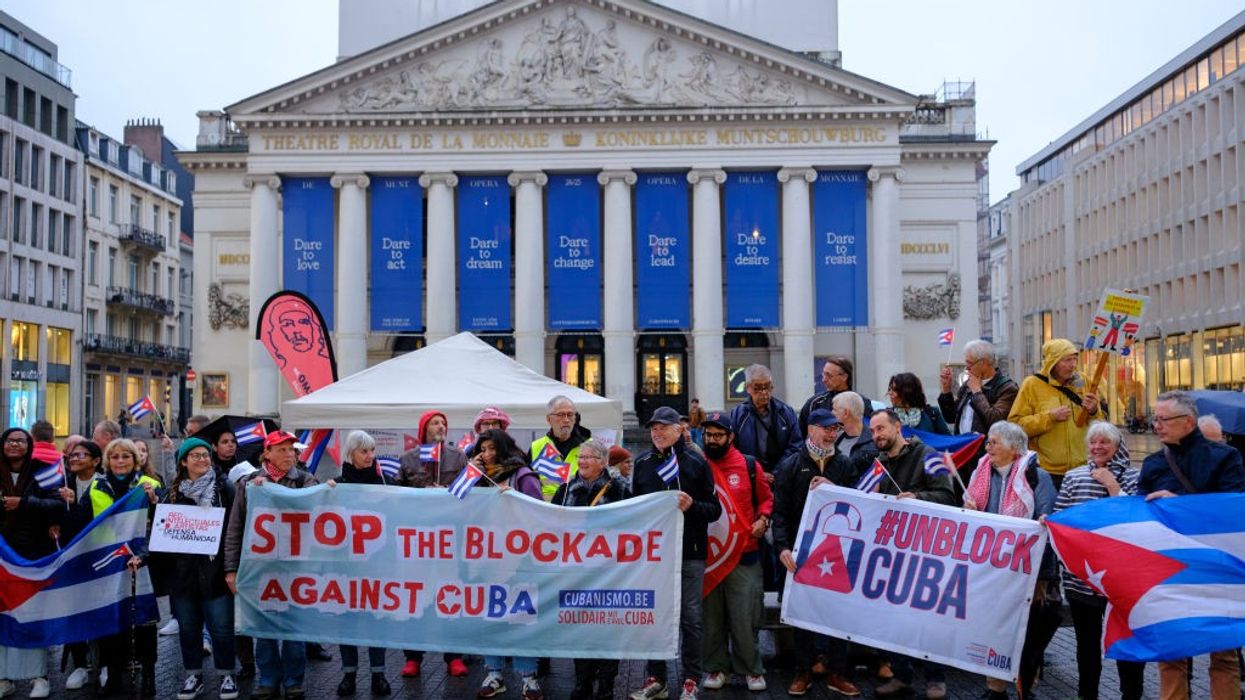
"It is well past time that the U.S., E.U., and other powerful actors in the international community seriously reconsider this cruel and often counterproductive mechanism," said one of the study's authors.
A study published this week in the British medical journal The Lancet Global Health revealed that unilateral economic sanctions cause more than 500,000 excess deaths annually, prompting renewed calls for the United States to end its use of a form of collective punishment that claims roughly as many lives as all the world's current wars combined.
The study, authored by Francisco Rodríguez, Silvio Rendón, and Mark Weisbrot of the Center for Economic and Policy Research (CEPR), is the first to examine the "effects of sanctions on age-specific mortality rates in cross-country panel data using methods designed to address causal identification in observational data."
Studying the effects of sanctions on 152 countries between 1971 and 2022, the researchers "showed a significant causal association between sanctions and increased mortality," with "the strongest effects for unilateral, economic, and U.S. sanctions."
"We estimated that unilateral sanctions were associated with an annual toll of 564,258 deaths," the study's authors noted, "similar to the global mortality burden associated with armed conflict."
🚨 NEW REPORT: The myth that sanctions are a humane alternative to war is shattered. Sanctions imposed by single countries cause massive civilian deaths, with children under 5 hit hardest. bit.ly/Sanctions_Study
[image or embed]
— Center for Economic and Policy Research (@ceprdc.bsky.social) July 23, 2025 at 6:14 AM
Weisbrot, CEPR's co-director, said in a statement: "It is immoral and indefensible that such a lethal form of collective punishment continues to be used, let alone that it has been steadily expanded over the years. And sanctions are widely misunderstood as being a less lethal, almost nonviolent, policy alternative to military force."
The researchers found that children younger than 5 years old made up 51% of all sanctions deaths during the three-decade study period. More than three-quarters of all sanctions deaths between 1971-2022 were of children under age 15 and people over 60.
The study also noted the repeated failure of U.S. sanctions to deliver policy goals like regime change. However, such measures have caused economies to collapse, harming everyday people far more than ostensibly targeted leaders, who have the power and resources to shield themselves from the worst effects of sanctions.
"Sanctions often fail to achieve their stated objectives and instead only punish the civilian populations of the targeted countries," said Rodríguez. "It is well past time that the U.S., [European Union], and other powerful actors in the international community seriously reconsider this cruel and often counterproductive mechanism."
For six decades, the U.S. has imposed a crippling economic embargo on Cuba that has adversely affected all sectors of the socialist island's economy and severely limited Cubans' access to basic necessities including food, fuel, and medicines. The Cuban government claims the blockade cost the country's economy nearly $5 billion in just one 11-month period in 2022-23 alone. United Nations member states have perennially—and overwhelmingly—condemned the embargo.
In Venezuela, as many as 40,000 people died in 2017-18 due to U.S. sanctions, CEPR researchers found.
Some critics have noted that civilian suffering appears to be more than an incidental cost of U.S. sanctions—it is apparently often their very intent. Historian Arthur Schlesinger Jr.—a confidant of former President John F. Kennedy—claimed that JFK sought to unleash "the terrors of the Earth" on Cuba following Fidel Castro's successful overthrow of a U.S.-backed dictatorship, because "Castro was high on his list of emotions."
While the new study "found no statistical evidence of an effect" for United Nations sanctions, Mary Smith Fawzi and Sarah Zaidi conducted research for the U.N. Food and Agriculture Organization that was published in The Lancet in 1995 and revealed that as many as 576,000 Iraqi children died prematurely as a result of sanctions imposed by the U.N. Security Council—whose sanctioning capacity was heavily influenced by the United States—to target the regime of longtime Iraqi leader Saddam Hussein.
"Discussions in the 1990s on the effects on child mortality of sanctions on Iraq strongly influenced policy debates and were one of the main drivers of the subsequent redesign of sanctions on the government of Saddam Hussein," the authors of the new study wrote, citing Fawzi and Zaidi's research.
With Hussein's regime unmoved by the sanctions, Madeleine Albright, then U.S. secretary of state under President Bill Clinton, was asked if the human cost was too high. Albright infamously replied that "the price is worth it."
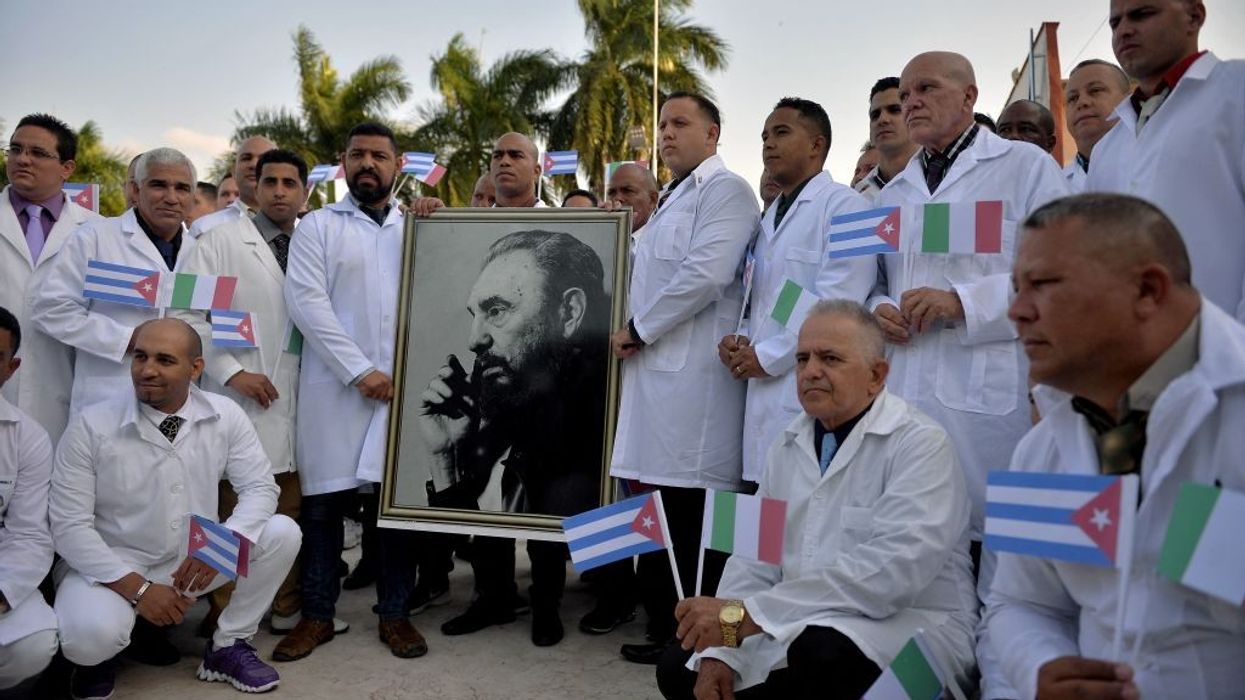
"The U.S. State Department should explain to Americans and the international community how the attack on Cuban medical services, on which the health of millions of people in dozens of countries depends, enhances their country," said Cuba's president.
The Trump administration is under fire this week for expanding a visa restriction policy that targets Cuba's medical missions around the world—which U.S. Secretary of State Marco Rubio described as "forced labor," a characterization Cuban officials reject.
"This expanded policy applies to current or former Cuban government officials, and other individuals, including foreign government officials, who are believed to be responsible for, or involved in, the Cuban labor export program, particularly Cuba's overseas medical missions," Rubio, the son of Cuban immigrants, said Tuesday. "This policy also applies to the immediate family of such persons."
Social media users called the Trump administration's move " depraved," "beyond cruel," and "absolutely repulsive," and warned of the impact it could have on patients across the globe.
Medea Benjamin, co-founder of the U.S.-based peace group CodePink, said that "this is PURE EVIL. Punishing people who help provide healthcare to poor people around the world."
As Reuters reported Wednesday:
Since its 1959 leftist revolution, Cuba has dispatched an "army of white coats" to disaster sites and disease outbreaks around the world in the name of solidarity. In the last decade, they have fought cholera in Haiti and Ebola in West Africa.
But Cuba has also exported doctors on more routine missions in exchange for cash or goods in recent decades, an increasingly critical source of hard currency in a nation suffering a deep economic crisis.
Venezueanalysis noted Wednesday that "according to official figures, Cuban doctors in Venezuela numbered as many as 30,000, with approximately 255,000 serving in the country since the start of the program following a deal signed by Venezuelan President Hugo Chávez and Cuban President Fidel Castro in the year 2000, primarily working in low-income barrios. Havana's support was key during the Covid-19 pandemic, supplying vaccines that Caracas found hard to secure due to wide-reaching U.S. sanctions."
Cuba has been targeted by U.S. sanctions for decades—and although former President Joe Biden notified Congress of his intent to remove the island nation from the State Sponsors of Terrorism list shortly before leaving office last month, President Donald Trump swiftly reversed that decision and restored a list of "restricted entities" created during the Republican's first term.
Cuban President Miguel Díaz-Canel and Foreign Minister Bruno Rodriguez denounced those decisions and the visa policy.
Rodriguez took aim at the U.S. secretary of state on Tuesday, saying in English and Spanish social media posts that "once again, Marco Rubio puts his personal agenda before the U.S. interests. The suspension of visas associated to Cuba's international medical cooperation is the seventh unjustified aggressive measure against our population within a month."
"The decision announced today, based on falsehoods and coercion, is intended to affect health services of millions in Cuba and the world, to benefit special groups of interest for which Rubio... guarantees the squandering of the U.S. taxpayers' money," he said.
Díaz-Canel said that "the U.S. State Department should explain to Americans and the international community how the attack on Cuban medical services, on which the health of millions of people in dozens of countries depends, enhances their country."
The new sanctions against Cuba notably come as Republicans in the U.S. Congress work to gut healthcare programs that serve low-income Americans, who have to contend with a for-profit healthcare system dominated by corporate greed.
Every person living in Cuba has access to its universal healthcare system, which is free at the point of service and government-run.
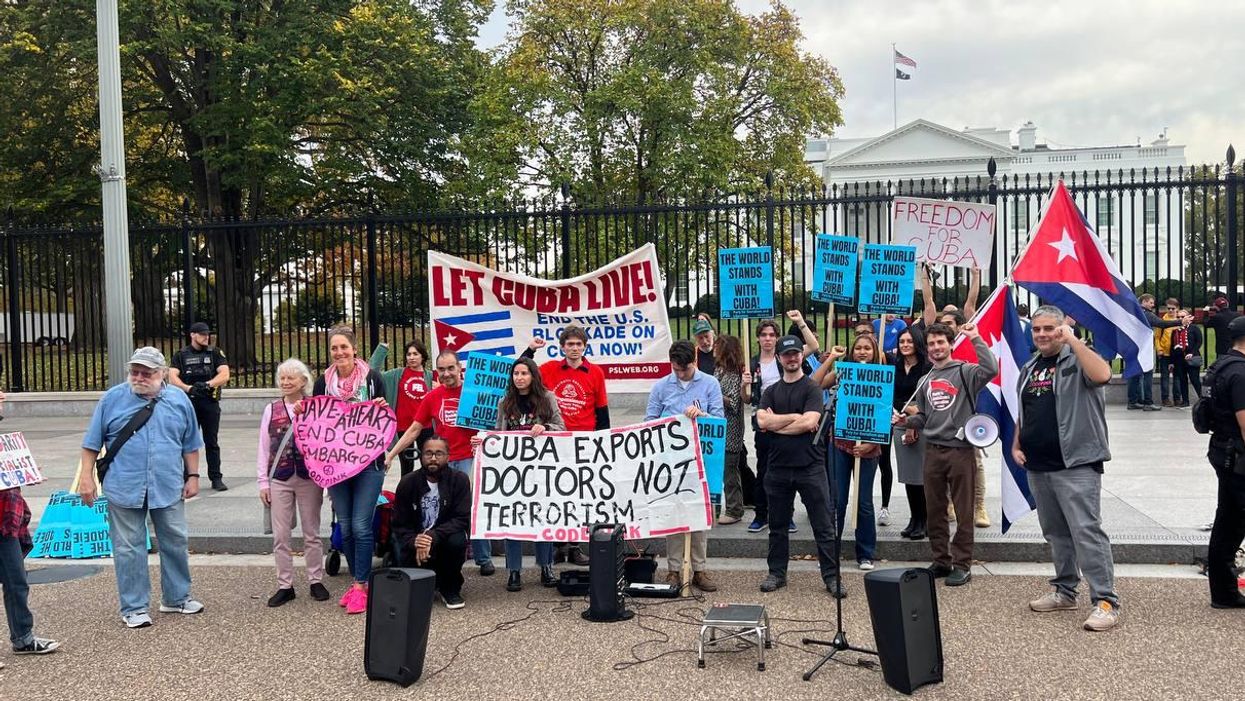
Peace advocates on Thursday said that the near-unanimous vote by United Nations member states to demand an end to the U.S. economic embargo of Cuba underscores the imperative for the Biden administration to lift the crippling 60-year blockade.
"What would Cuba be like today, if the blockade didn't hinder its development?"
For the 30th straight year, U.N. General Assembly members voted in favor of a Cuban resolution condemning the embargo, first enacted during the administration of then-President John F. Kennedy, who according to close confidant and historian Arthur M. Schlesinger Jr., wanted to unleash "the terrors of the Earth" on Cuba following Fidel Castro's successful overthrow of a brutal U.S.-backed dictatorship.
Thursday's vote was 185-2, with only the United States and Israel dissenting, and Ukraine and Brazil abstaining.
"The Biden administration talks about the need for a rules-based international order. Today's U.N. vote clearly shows that the global community is calling on the U.S. to lift its brutal embargo on Cuba," CodePink co-founder Medea Benjamin said in a statement.
Benjamin added that U.S. President Joe Biden "should respect global opinion" and return to former President Barack Obama's "policy of normalizing relations with Cuba."
Manolo De Los Santos, co-executive chair of the People's Forum, wondered, "What would Cuba be like today, if the blockade didn't hinder its development?"
"It is impossible to quantify the pain generated by power cuts, long queues to purchase food, the obstacles to the life projects of families, particularly young people," he added. "Cuba has a right to live!"
Speaking before the U.N. General Assembly Thursday, Cuban Minister of Foreign Affairs Bruno Rodriguez Parrilla noted that "more than 80% of the current Cuban population was born under the blockade," which he called a "deliberate act of economic war" akin to "a permanent pandemic, a constant hurricane."
Rodriguez said that since then-President Donald Trump rolled back most of the reforms set in motion by Obama, the United States "has escalated the siege around our country, taking it to an even crueler and more inhuman dimension, with the purpose of deliberately inflicting the biggest possible damage on Cuban families."
Taking aim at Biden, Rodriguez added that "the current U.S. administration does not have a policy of its own toward Cuba. It acts out of inertia and continues the inhuman policy of maximum pressure instituted during the presidency of Donald Trump."
Rodriguez said the embargo has cost Cuba more than $6.3 billion during the first 14 months of the Biden administration, or more than $15 million per day. In 2018 a United Nations commission estimated the total cost to the Cuban economy of the 60-year blockade was at least $130 billion.
Members of CodePink plan to rally against the embargo Thursday afternoon in San Francisco. This follows CodePink protests to #LetCubaLive in cities including New York, Los Angeles, Chicago, and Washington, D.C. over the past several days.
CodePink is set to cap a week of action Saturday by joining with the Cuban-American group Puentes de Amor to send a plane loaded with 8.5 tons of food and medicines to the besieged island.
"Unfortunately," said CodePink Latin American coordinator Samantha Wherry, the shipment "represents a tiny gesture compared to the billions of dollars of harm caused by the U.S. blockade."
The peace activists have three demands: An end to the U.S. blockade, lifting of all travel and economic restrictions on Cuba, and removal of Cuba from the U.S. list of state sponsors of terrorism.
Successive U.S. administrations backed a decadeslong campaign of exile terrorism against Cuba, attempted subversion, failed assassination attempts, economic warfare, and covert operations large and small in a fruitless policy of regime change.
Meanwhile, a dozen U.S. administrations have come and gone since the triumph of the Cuban revolution in 1959.

As United Nations member states prepare to condemn the U.S. economic embargo of Cuba for the 30th straight year, peace groups on Saturday launched a series of rallies that will take place across the nation in the coming days to demand an end to the crippling 60-year blockade.
"From L.A. to NYC we're demanding that the U.S. #UnblockCuba!"
Members of groups including CodePink, Black Alliance for Peace, Party for Socialism and Liberation, Democratic Socialists of America, and others rallied in New York City, Los Angeles, and Portland on Saturday, with further demonstrations planned on November 2 in Washington, D.C. and Chicago, and on November 3 in San Francisco. Activists from Australia to Argentina also held demonstrations of solidarity with Cuba.
The protesters have three demands: End the U.S. blockade, remove Cuba from the U.S. list of state sponsors of terrorism, and lift all travel and economic restrictions on Cuba.
Cuba will present a draft resolution to end the U.S. embargo at the United Nations General Assembly on November 2-3. The United States--usually along with Israel and a tiny handful of small, dependent nations--perennially votes against such resolutions, which pass overwhelmingly each year. Last year's vote was 184-2, with the U.S. and Israel dissenting and Brazil, Colombia, and Ukraine abstaining.
In Los Angeles, Carlos Sirah of Black Alliance for Peace noted what activists call the absurdity of the U.S. including Cuba on its list of terror sponsors.
"Imagine the United States putting someone on the terrorist list--the biggest terrorist in the Western Hemisphere, the biggest terrorist in the world--has put Cuba on the [terror list], which has effectively and materially put a burden on Cuba in terms of limiting the amount of resources it can bring in," Sirah told Kawsachun News.
This "has the effect of not only impoverishing the island, but also the added effect of keeping people from their families," Sirah added. "Who has Cuba bombed? Who has Cuba invaded, versus who has the U.S. bombed? How many bases does the United States have in the world?"
Medea Benjamin, co-founder of CodePink, was among the activists who delivered a petition with the groups' demands signed by more than 10,000 people and over 100 organizations to the U.S. State Department. CodePink is asking the Biden administration to take a big step toward normalizing relations with Cuba--which, after progress during the Obama era, were rolled back under former President Donald Trump--by abstaining from the resolution vote.
Having lost effective economic control of the island in 1959 following the successful revolution led by Fidel Castro against a brutal U.S.-backed dictatorship, successive U.S. administrations waged a decadeslong campaign of state-sanctioned exile terror, attempted subversion, failed assassination attempts, economic warfare, and covert operations large and small in a fruitless policy of regime change. There have been 13 U.S. administrations since the triumph of the Cuban revolution.
The United Nations estimated in 2018 that the U.S. embargo has cost Cuba's economy at least $130 billion.
"The Black Alliance for Peace along with this coalition calls for the immediate end of the blockade, but further than that, calls for the demilitarization of the whole hemisphere," said Sirah. "We call for the end to [United States Southern Command]. We call for the end of militarization. We call for the end of the constant meddling in the affairs of Latin America, the Caribbean--and Haiti."

For the first time since the 1950s, Cuba will have a leader whose name is not Castro, as Raul Castro announced Friday that he will step down as first secretary of the country's ruling Communist Party just ahead of the 10th anniversary of his appointment.
"As long as I live I will be ready with my foot in the stirrups to defend the fatherland, the revolution, and socialism."
--Raul Castro
Castro--who has ruled Cuba since his brother Fidel resigned from the Communist Party central committee on April 19, 2011--announced his retirement during the 8th Party Conference in Havana, teleSUR reports.
"I believe fervently in the strength and exemplary nature and comprehension of my compatriots," he told the conference, "and as long as I live I will be ready with my foot in the stirrups to defend the fatherland, the revolution, and socialism."
The 89-year-old--who played a key role as a military commander in the revolution that overthrew the brutal U.S.-backed Fulgencio Batista regime in 1959--said that he has fulfilled his mission and "is confident in the future of the fatherland."
Castro leaves office after having implemented significant economic reforms, with the government recently allowing private businesses to operate in most sectors of the economy. While the government continues to repress political freedom, Cubans still enjoy social benefits unheard of in the United States, including free cradle-to-grave healthcare and education.
Under Castro, Cuba continued its globally renowned policy of international humanitarian assistance, which drew praise from then-U.S. President Barack Obama during his historic March 2016 visit to Havana. Last year, the Cuban government sent 2,000 doctors and nurses abroad to nearly two dozen nations during the coronavirus pandemic.
This year's party conference coincides with the 60th anniversary of the Bay of Pigs invasion, a failed attempt by CIA-backed Cuban exiles to destroy the revolution that ended half a century of U.S. domination. In 1898, the U.S. conquered Cuba from Spain and directly ruled the island as a colony for years before backing a series of dictators friendly to Washington and Wall Street interests.
The U.S. repeatedly tried to murder the Castros, with Raul becoming the target of the earliest-known CIA assassination plot against the brothers. The Castros survived more than 600 often outrageously outlandish assassination attempts against them, and outlasted 12 U.S. presidents. They also defiantly endured 60 years of internationally condemned U.S. economic embargo and a decades-long campaign of terror against the Cuban people.
It is widely believed that Miguel Diaz-Canal, the 60-year-old president, will replace Castro. The next Cuban leader will face an ongoing pandemic and concurrent economic crisis exacerbated by the continuing U.S. embargo, and will face internal and external pressure to enact further reforms while remaining faithful to the ideals of the revolution.

Entering office as Cuba's new president, Miguel Diaz-Canel said Thursday that he would focus his leadership on ensuring that "the revolution continues its course"--promising the modernization of the island nation's economy but making clear that he would fiercely defend its socialist system from outsiders who have pressured Cuba to change.
"In Cuba there is no space for those who aspire for a restoration of capitalism," Diaz-Canel told the National Assembly in his inauguration speech. "The mandate given by the people to this house is to give continuity to the Cuban revolution in a crucial historic moment."
Diaz-Canel, who was born a year after the revolution led by Fidel Castro which overthrew the U.S.-backed dictator Fulgencio Batista, has risen in the Communist Party's ranks over the last three decades. He served as vice president for five years under Raul Castro, Fidel's brother, after Fidel handed over power to him due to poor health.
The inauguration, following Castro's reported selection of Diaz-Canel as his successor and an almost-unanimous vote by the National Assembly, marks the first time since 1959 that the country will be led by a president who is not in the Castro family.
Raul Castro resigned Thursday but will remain the head of Cuba's Communist Party. His presidency was marked by market reforms made in the hopes that they would strengthen the island's economy, and the opening of diplomatic relations with the U.S. in 2014.
Since President Donald Trump's administration began last year, the relationship has chilled again as Trump has reinstated some restrictions on U.S. travel to Cuba. Despite the widely-celebrated thawing of relations between the two countries since, Trump denounced the agreement forged by President Barack Obama in 2014 decision as a "terrible and misguided deal."
Diaz-Canel said in his inauguration speech that he would not move to change the island's foreign policy, saying "he would hold dialogue with anybody who treated Cuba as an equal," according to Reuters.
When Fidel Castro died on Nov. 25 at the age of 90, we lost one of the most remarkable leaders of the 20th century. No other head of state has so steadfastly stood up to the United States and survived.
In 1959, the Cuban Revolution, led by Castro and Ernesto "Che" Guevara, overthrew the ruthless Fulgencio Batista, who had come to power in a coup d'etat. Batista's government had protected the interests of the wealthy landowners. In order to control the populace, Batista had carried out torture and public executions, killing as many as 20,000 people. During his regime, Batista was supported--financially and militarily--by the United States. Indeed, the U.S. Mafia's gambling, drug and prostitution operations flourished under Batista's government.
Led by Castro, the new Cuban government expropriated U.S.-owned property, companies and holdings in Cuba. The United States responded with a punishing economic embargo, which later became a blockade. The CIA attempted unsuccessfully to overthrow the revolution in the disastrous 1961 Bay of Pigs invasion.
Since 1959, the U.S. government and the expatriated Cuban-Americans who fled Cuba after the revolution have tried mightily to topple the Castro government, without success. Castro survived more than 630 assassination attempts.
The Legacy of Fidel Castro
"What's amazing here is you've got a country that's suffered an illegal economic blockade by the United States for almost half a century and yet it's been able to give its people the best standard of health care, brilliant education," Ken Livingstone, former mayor of London, said in 2006. "To do this in the teeth of an almost economic war is a tribute to Fidel Castro."
Castro practiced a unique form of internationalism. Nelson Mandela credited Cuba with helping to bring down the system of apartheid in South Africa. Cuba fought with the revolutionaries in Angola. And Cuba regularly sends doctors to other countries and provides foreign nationals with free medical education.
As Nelson Valdes noted in 2013, Castro, together with others, "shaped a foreign policy and national movement around the fundamental concept of national sovereignty, yet devoid of any self-centered nationalism." He added, "This unique form of national self-determination incorporated other countries on an equal footing. In fact, national sovereignty and solidarity had precedence over ideology." Thus, Valdes wrote, "Cuba has aided countries, despite the economic and political differences they may have."
In 1953, in what is considered the beginning of the Cuban Revolution, Castro, his brother Raul and more than 100 other rebels mounted a failed attack against the Batista regime at the Moncada Barracks. Castro was arrested, tried, sentenced to 15 years in prison and released in an amnesty deal two years later.
At his trial, Castro famously said in his defense, "Condemn me, it does not matter. History will absolve me."
A History of U.S. Inference in Cuba
The U.S. economic embargo was initiated in 1960 by President Dwight D. Eisenhower in response to a memorandum written by L.D. Mallory, a senior State Department official. Mallory proposed "a line of action that makes the greatest inroads in denying money and supplies to Cuba, to decrease monetary and real wages, to bring about hunger, desperation and the overthrow of the government."
Cuba turned to the U.S.S.R. for assistance, which supported the Cuban Revolution until the collapse of the Soviet Union in 1991. In 1962, in response to the stationing of U.S. nuclear missiles in Turkey, Soviet leader Nikita Khrushchev placed nuclear missiles in Cuba. After a tense standoff, Khrushchev and U.S. President John F. Kennedy negotiated a withdrawal of the missiles from both Cuba and Turkey.
The economic blockade continues to this day. It is an illegal interference in the affairs of the Cuban people, in violation of the International Covenant on Civil and Political Rights and the Charter of the Organization of American States. Every year for 26 consecutive years, the United Nations General Assembly has called on the United States to lift the blockade, which has cost Cuba in excess of $ 1 trillion.
U.S. meddling in Cuban affairs did not start in 1959. Since 1898, when the United States intervened in Cuba's war for independence, the U.S. government has tried to dominate Cuba. The United States gained control of Guantanamo Bay in 1903, when Cuba was occupied by the U.S. Army after its intervention in Cuba's war of independence against Spain.
Cuba was forced to accept the Platt Amendment to its constitution as a prerequisite for the withdrawal of U.S. troops from Cuba. That amendment provided the basis for a treaty granting the United States jurisdiction over Guantanamo Bay. The 1903 agreement gave the United States the right to use Guantanamo Bay "exclusively as coaling or naval stations, and for no other purpose." A 1934 treaty maintained U.S. control over Guantanamo Bay in perpetuity until the United States abandons it or until both Cuba and the United States agree to modify it. That treaty also limits its uses to "coaling and naval stations."
None of these treaties or agreements gives the United States the right to use Guantanamo Bay as a prison, or to subject detainees to arbitrary detention or torture, cruel, inhuman or degrading treatment, which have been documented at the prison.
Castro, who called the Guantanamo base "a dagger plunged into the heart of Cuban soil," refused to cash the rent checks the U.S. government sends annually. "An elemental sense of dignity and absolute disagreement with what happens in that portion of our national territory has prevented Cuba from cashing those checks," he noted. The United States, according to Castro, transformed the Guantanamo base into a "horrible prison, one that bears no difference with the Nazi concentration camps."
It is no accident that President George W. Bush chose Guantanamo Bay as the site for his illegal prison camp. His administration maintained that Guantanamo Bay is not a U.S. territory, and thus, U.S. courts were not available to the prisoners there. But, as the Supreme Court later affirmed, the United States, not Cuba, exercises exclusive jurisdiction over Guantanamo Bay, so habeas corpus is available to prisoners there.
Amnesty International aptly described the irony: "Given the USA's criticism of the human rights record of Cuba, it is deeply ironic that it is violating fundamental rights on Cuban soil, and seeking to rely on the fact that it is on Cuban soil to keep the U.S. courts from examining its conduct."
Since the revolution, anti-Cuba organizations based in Miami have engaged in countless terrorist activities against Cuba and anyone who advocated normalization of relations between the U.S. and Cuba. These terrorist groups have operated with impunity in the United States with the knowledge and support of the FBI and CIA.
For example, Ruben Dario Lopez-Castro, associated with several anti-Castro organizations, and Orlando Bosch, who planted a bomb on a Cubana airliner in 1976, killing all 73 people aboard, "planned to ship weapons into Cuba for an assassination attempt on [Fidel] Castro."
In the face of this terrorism, the Cuban Five came from Cuba to gather intelligence in Miami in order to prevent future terrorist acts against Cuba. The men peacefully infiltrated criminal exile groups. The Five turned over the results of their investigation to the FBI. But instead of working with Cuba to fight terrorism, the U.S. government arrested and convicted the five men of unfounded charges.
Human Rights in Cuba
The International Covenant on Civil and Political Rights and the International Covenant on Economic, Social and Cultural Rights contain two different sets of human rights, respectively.
Civil and political rights include the rights to life, free expression, freedom of religion, fair trial, self-determination; and to be free from torture, cruel treatment and arbitrary detention.
Economic, social and cultural rights comprise the rights to education, health care, social security, unemployment insurance, paid maternity leave, equal pay for equal work, reduction of infant mortality; prevention, treatment and control of diseases, as well as the rights to form and join unions and strike.
The U.S. government criticizes civil and political rights in Cuba while disregarding Cubans' superior access to universal housing, health care, education and its guarantee of paid maternity leave and equal-pay rates.
Unlike in the United States, health care is considered a right in Cuba. Universal health care is free to all. Cuba has the highest ratio of doctors to patients in the world, at 6.7 per 1,000 people. The 2014 infant mortality rate was 4.2 per 1,000 live births--one of the lowest in the world.
Free education is a universal right, up to and including higher education. Cuba spends a larger proportion of its gross domestic product on education than any other country in the world.
Cuban law guarantees the right to voluntarily form and join trade unions. Unions are legally independent and financially autonomous, independent of the Communist Party and the state. Unions have the right to stop work they consider dangerous. They have the right to participate in company management, to receive management information, to office space and materials, and to facility time for representatives. Union agreement is required for layoffs, changes in patterns of working hours and overtime, and for input on the annual safety report.
As of 2018, the date of the next Cuban general election and the date Raul Castro has promised to step down from the presidency, there will be a limit of no more than two five-year terms for all senior elected positions, including the president. Anyone can be nominated to be a candidate. It is not required that one be a member of the Communist Party. No money can be spent promoting candidates and no political parties (including the Communist Party) are permitted to campaign during elections. Military personnel are not on duty at polling stations; school children guard the ballot boxes.
In 2006, the World Wildlife Fund, a leading global environmental organization, determined that Cuba was the only country in the world to have achieved sustainable development.
Meanwhile, the U.S. government has committed serious human rights violations on Cuban soil, including torture, cruel treatment and arbitrary detention at Guantanamo. And since 1960, the United States has expressly interfered with Cuba's economic rights and its right to self-determination through the economic embargo.
Cuba is criticized for its restrictions on freedom of expression. Castro learned from the Guatemalan experience what would happen if he did not keep a tight rein on his revolutionary government. Jacobo Arbenz, a democratically elected president of Guatemala, carried out agrarian land reform, which expropriated uncultivated lands, compensated the owners and redistributed them to the peasantry. This program raised the hackles of the United Fruit Company, which enlisted the U.S. government to overthrow Arbenz. The CIA and the State Department obliged.
Stephen Kinzer wrote in his biography of the Dulles brothers that Guevara "told Castro why [the CIA coup in Guatemala] succeeded. He said Arbenz had foolishly tolerated an open society, which the CIA penetrated and subverted, and also preserved the existing army, which the CIA turned into its instrument. Castro agreed that a revolutionary regime in Cuba must avoid those mistakes. Upon taking power, he cracked down on dissent and purged the army."
Obama Opens the Door to Normalization
In 2006, Castro suffered a serious illness and turned over the reins of power in Cuba to his brother Raul, who became president in 2008.
On March 21, 2016, President Obama and Raul Castro held a joint press conference at the Palace of the Revolution in Havana. Obama notably declared, "Perhaps most importantly, I affirmed that Cuba's destiny will not be decided by the United States or any other nation. Cuba is sovereign and, rightly, has great pride. And the future of Cuba will be decided by Cubans, not by anybody else." Unlike all prior U.S. presidents, Obama understands the significance of treating Cuba with respect.
This is a lesson Donald Trump will hopefully learn. The president-elect has sent mixed signals about whether he will continue Obama's steps toward normalization of relations between the U.S. and Cuba. The businessman in him will be receptive to investment, and, indeed, hotel building, in Cuba.
But, pandering to Cuban-Americans in Florida during the election, Trump talked tough against Cuba's government. "Many of our leaders seem to view Florida's Cuban conservatives, including the assassins and terrorists among them, as People Who Vote," Alice Walker wrote in "The Sweet Abyss."
On the Cuban side, Raul Castro has made it clear that normalization cannot occur until the blockade is lifted and the United States returns Guantanamo to Cuba. In an op-ed in The New York Times, Harvard lecturer Jonathan Hansen wrote, "It is past time to return this imperialist enclave to Cuba," adding, "It has served to remind the world of America's long history of interventionist militarism."
Normalization of relations will not happen overnight, Rene Gonzalez, one of the Cuban Five, told me when I visited Cuba last year. "We have to remember that relations between the countries have never been normal." Antonio Guerrero, another member of the Five, added that normalization will require "the dismantling of the whole system of aggression against Cuba, especially the blockade."
Castro survived 90 years. And Castro's revolution survives, notwithstanding 57 years of aggression and assassination attempts by the United States.
"Fidel Castro was an authoritarian. He ruled with an iron fist. There was repression and is repression in Cuba. In Fidel's kind of argument, he did it in the name of a different kind of democracy, a different kind of freedom--the freedom from illness, the freedom from racism, the freedom from social inequality," Peter Kornbluh, director of the Cuba Documentation Project, told Amy Goodman on Democracy Now! "And Cuba has a lot of very positives that all the other countries that we don't talk about don't have. There isn't gang violence in Cuba. People aren't being slaughtered around the streets by guns every day. They defeated the Zika virus right away. There is universal health care and universal education."
In a 1998 NBC interview with Maria Shriver, Castro wryly noted, "For a small country such as Cuba to have such a gigantic country as the United States live so obsessed with this island, it is an honor for us."
History has absolved, and promises to continue to absolve, "El Comandante" Fidel Castro.
Hundreds of thousands of Cubans gathered in Havana's Revolution Squre on Monday to pay homage to revolutionary leader and former President Fidel Castro.
Castro, who is said to have survived over 600 assassination attempts, died Friday at the age of 90.
"It was Fidel that led the Revolution and took important steps to eradicate illiteracy, promote health and education," said Guantanamo resident Manuel de Jesus Catala Balon to Cuban state publication Granma. "Today will be remembered with sadness," he said.
The memorial comes as the first regularly scheduled commercial fight departed from Miami to the Cuban capital, and as President-elect Donald Trump threatens to "terminate" the Obama administration's thawed relations with the island nation.
The Associated Press reports that "[a] nine-story image of a young Castro joined the towering images of fallen guerrillas overlooking the massive square. The government also said Cubans would 'sign a solemn oath to carry out the concept of the revolutionary' as expressed by the late leader, but that activity did not appear to be taking at the site of the tribute of Fidel."
The Wall Street Journal adds:
On Wednesday, his ashes are to begin a slow procession that will wind its way from Havana to Santiago de Cuba 750 miles to the east, reversing the route he and his bearded guerrillas took in late 1958 as they closed in on Fulgencio Batista's government. The remains will be interred in the Santa Ifigenia cemetery there, in the city where the revolution began. Mr. Castro's final resting place will be close to where Cuban independence hero Jose Marti is buried.
His fans, as Al Jazeera reports,
will mourn a man many here saw as a visionary who stood up to U.S. domination of Latin America, brought healthcare and education to the poor, and inspired socialist movements across the world.
But critics, including exiles concentrated largely in Miami, have celebrated Castro's death, saying he was a tyrant who jailed his opponents, banned opposition parties, and wrecked Cuba's economy with a failed socialist experiment.
"He's going to have a very controversial legacy," said Peter Kornbluh, director of the Cuba Documentation Project and co-author of Back Channel to Cuba: The Hidden History of Negotiations Between Washington and Havana, but it is indisputable that he took a small Caribbean island and transformed it into a major actor on the world stage, far beyond its geographic size."
Castro, Kronbluh told Democracy Now! on Monday, "stood up to the United States. He became the David versus Goliath, withstood all of the efforts to kill him, overthrow him. And that is what he will go down in history for, in many ways."
Although he was ninety years old and had stepped away from all official duties in 2008 due to ill health, the death of Fidel Castro on November 25 came as a surprise to many to whom it seemed he would never die.
Called simply "Fidel" by supporters and detractors alike, the Cuban president had been mostly out of the public eye for the past ten years following a hospitalization in 2006 that forced him to hand over presidential duties to his brother Raul.
Journalist Carleton Beals covered the early days of the Cuban revolution for The Progressive. In 1959, he wrote presciently:
"The tea-leaves read that Cuban needs are great; the revolutionary trend is likely to deepen. Castro, if impulsive and capricious, has stubborn persevering purpose, depth as well as surface volubility. Terrific pressures will be put on him by the United States...but apparently Castro is a fanatic patriotic nationalist not to be coerced by threats or arrogance . . . nothing in Cuba will ever be as bad as the Batista dictatorship. It has been a lesson Cubans will not soon forget. Just now it is 'the people's government,' and there is a real chance that there will be fundamental beneficial changes in the economic life of the island which will make possible an enduring democratic system."
The Progressive continued to cover Cuba and the role of the U.S. government in trying to influence and control the island's destiny. In June 1990, journalist and activist Sam Day wrote of his trip to Cuba:
"In replacing private capital (especially foreign capital) as the driving force of the economy, the government has channeled Cuba's resources and human energy toward improvements in basic living standards. Although Cuba is still a poor Third World country of barely ten million people not overly endowed with natural resources, it has become a First World power by such measurements as literacy, human longevity, and infant mortality. In a week of roaming through Havana and the nearby countryside, I sought but failed to find a single beggar, a single bloated belly, a single cardboard shack . . . . Our 'enemy,' I thought, has something to teach us about ourselves."
A decade and a half later, following the recent steps toward normalization of U.S.-Cuba relations under U.S. President Barack Obama, sports columnist Dave Zirin described how the game of baseball tied the two nations together for two-thirds of the twentieth century:
"Imagine if, instead of decades of hostility, baseball had been able to remain a bridge between the two countries, aided by a failed pitcher named Fidel Castro and a Red Sox fanatic named John Kennedy. Instead we had isolation and, for us, an inability to learn from the world of beisbol. To watch a baseball game in Cuba is to see a level of excitement and flair from which the drudgerous Major Leagues could learn a great deal."
Not all coverage of Cuba published in The Progressive was positive. In February 1963, New York Post editorial page editor James A. Wechsler wrote:
"There may be no great gain in rehearsing Castro's past. Yet it may be well to remind ourselves that too many Americans initially condemned Castro for the wrong reasons--for his radical economic slogans rather than his destruction of the hard-won Cuban liberties. Whether he fell into the arms of the Communists, or whether he was pushed, may long be debated; it is my own feeling that the process was complicated, and that our Rightists are too often as guilty of oversimplifying history as are the Marxist dogmatists."
Longtime Cuba scholar and filmmaker Saul Landau noted in 1992:
"Cubans want to see a free press that informs them, not one that offers them slogans about how magnificently the workers in Tunas Province meet their production plan."
Landau went on to reference the oft-repeated story of a Cuban dissident forced to literally eat her words in the form of a piece of paper on which she had penned an "Open Letter to Fidel Castro." Her letter reportedly called for more openness in Cuba. The writer, Maria Elena Cruz Varela, served a two-year prison sentence for signing a petition calling for "free elections and amnesty for political prisoners." Landau wrote,
"Fidel still believes that at a certain stage of development, classes can be eliminated along with the state itself. He clings to the thread of his dream that through the perfection of people in a system of good values, a better social order will emerge. It was that dream that made Cubans reach out and struggle and sacrifice. The 'new man' was what Castro called the austere, sacrificing, humble, modest revolutionary who gave his all, his life for the greater good, for the making of a new history."
In March 2004, poet Rafael Campo described his feelings after a visit to his Cuban homeland:
"What seems ultimately so discouraging about this not-so-terrible place is just that: its disappointment of the imagination, its failure to uphold its self-proclaimed ideals, its inability to be perfect, its betrayal of the dream of social justice that is dearer to me than any political system. While no one could ever truly believe in the socialist model espoused by the now-defunct Soviet Union after the utterly unconscionable atrocities of the Stalin era, Cuba has doggedly remained a possibility, however remote, for the existence of that elusive utopia, the genuinely more egalitarian alternative to brute majority rule, the imagined repository of our unquenchable thirst to be better than ourselves."
I travelled through rural Cuba in 1991, during the country's economic crisis following the breakup of the Eastern Bloc and its trading alliances. The time was officially called by the Cubans el periodo especial en tiempos de paz, or "Special Period" for short, and it created great burdens for the people of Cuba. The country had been forced into a strong economic relationship with countries 5,000 miles away because of a trade embargo, at that time already thirty years old, imposed by the United States. The Special Period created shortages and long lines, but it also stimulated innovations that helped make Cuba a leader in sustainable agriculture and pesticide-free gardening.
I remember a joke then making the rounds on the island that went something like this: President George H.W. Bush had fallen asleep for twenty-years. When he awoke, aides were briefing him on the status of various world leaders and the end of the cold war. When they got to the end of the list, President Bush asked about Fidel Castro. "Oh," they assured him, "don't worry, he will fall any day now."
Well, the man who outlasted ten, and nearly eleven, U.S. presidents has finally passed on. But his legend, and his legacy, will survive on the Caribbean island he helped to transform.