

SUBSCRIBE TO OUR FREE NEWSLETTER
Daily news & progressive opinion—funded by the people, not the corporations—delivered straight to your inbox.
5
#000000
#FFFFFF
To donate by check, phone, or other method, see our More Ways to Give page.
Daily news & progressive opinion—funded by the people, not the corporations—delivered straight to your inbox.
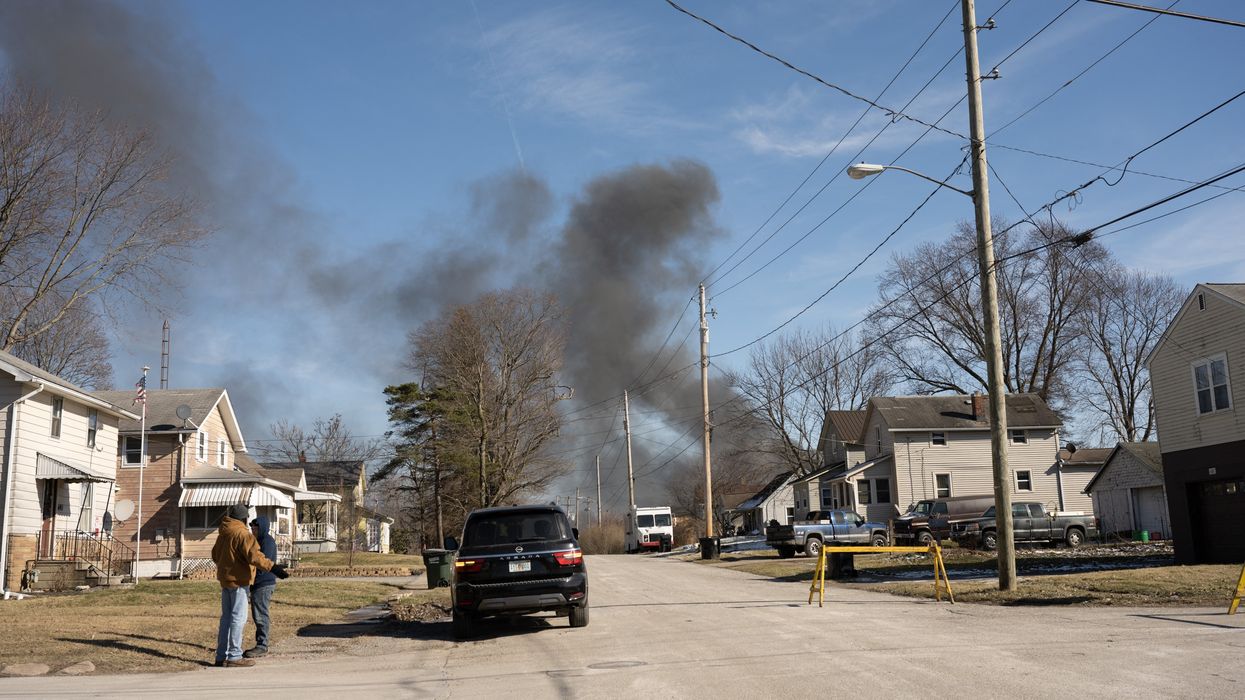
"It's inconceivable that there wouldn't have been someone from the enforcement office, or general counsel, saying, 'Oh, Norfolk Southern wants to do an uncontrolled burn—that's illegal, you cannot do that," said a former EPA official.
A day after the head of the National Transportation Safety Board told Congress that the deliberate burning of toxic chemicals in five crashed train cars in East Palestine, Ohio last year was unnecessary, a former Environmental Protection Agency official said the so-called "controlled burn" also likely went against EPA regulations.
Kevin Garrahan, who worked for the agency for 40 years and focused on environmental risk assessment and hazardous waste cleanup, told HuffPost that soon after a Norfolk Southern train derailed in the town of 4,700 people, he alerted a former EPA colleague to a 2022 memo on the open burning and open detonation of waste explosives.
The memo described when local EPA officials can issue permits for the pre-planned combustion of waste explosives, and said the open burning of hazardous waste should be a last resort.
Because the EPA determined in 1987 that "open burning of nonexplosive waste could not be conducted in a manner that was protective of human health and the environment," the memo says, the method "is generally the least environmentally preferred treatment technology and, consistent with existing requirements, should only be available where there are no safe modes of treatment."
Considering laws banning the open burning of chemicals and the EPA's knowledge of the danger that was spelled out in the memo, the decision to allow emergency crews to blast holes in five train cars, drain the toxic vinyl chloride they were carrying into pits, and set the chemicals on fire seemed "incredibly stupid and reckless," Garrahan wrote to his colleague.
"Am I missing something?" he asked.
"The big question is if there is another train derailment involving toxic chemicals—and there will be—would EPA sit idly by and allow a state and a polluter to decide to do an open burn again?"
Garrahan's former colleague agreed that there were concerns about "OB/OD," or open burning and open detonation, but did not reply to Garrahan's later emails about the safety of the operation.
In a case of a private company directing a public official regarding their response to a potential public safety threat, East Palestine fire chief Keith Drabick told the NTSB that Norfolk Southern and its contractors pushed him to approve the deliberate burning of the vinyl chloride, a known carcinogen that has been linked to liver, brain, lung, and blood cancers as well as neurological damage. Drabick said railroad officials gave him just 13 minutes to make the decision.
Garrahan told HuffPost that the EPA, which deployed state and federal officials to the crash site, should have stepped in and cited the 2022 memo as proof that the so-called "controlled burn" that Norfolk Southern was suggesting actually fit the definition of open detonation.
"It's inconceivable that there wouldn't have been someone from the enforcement office, or general counsel, saying, 'Oh, Norfolk Southern wants to do an uncontrolled burn—that's illegal, you cannot do that," Garrahan said, calling the memo a "bombshell."
Instead, the EPA to this day has referred to the operation, which sent huge plumes of black smoke into the surrounding area and forced an evacuation of East Palestine, as a "controlled burn," suggesting any damage would have been contained.
The incineration of the vinyl chloride raised concerns about the release of dioxins, another class of toxic compounds that are linked to reproductive and developmental harms and are also carcinogenic. HuffPost reported that an EPA dioxin expert was not consulted about the Norfolk Southern derailment and its aftermath until a month after the accident.
Judith Enck, a former EPA regional administrator, told the outlet that the EPA went against their previous protocols, which were in place in 2012 when a train carrying vinyl chloride derailed in Paulsboro, New Jersey.
Officials in that case sealed off the affected cars and vacuumed the hazardous materials before taking it to a facility for safe disposal.
As Jennifer Homendy, chair of the NTSB, testified at a congressional hearing on Wednesday, Drabick and other officials tasked with approving the deliberate burn were not given all the relevant information they needed from Norfolk Southern about a potential spontaneous explosion.
The maker of the vinyl chloride in the cars, Oxy Vinyls, told the rail company that there was no hazardous chemical reaction happening in the crashed train.
"They believed polymerization was not occurring, and there was no justification to do a vent and burn," Homendy said. "There was another option: let it cool down."
Oxy Vinyls' input was not passed along to Ohio Gov. Mike DeWine, Drabick, or other local authorities who proceeded with the incineration that allowed Norfolk Southern to reopen the railroad the following day.
"Meanwhile," said Plain Dealer reporter Jake Zuckerman, "some of the locals are still stuck in hotels, that Norfolk Southern is no longer paying for. And they say they're suffering symptoms of chemical exposure, which the EPA and Norfolk Southern deny."
The EPA's decision-making in the case of East Palestine raises questions about the future safety of other American communities if a similar accident happens.
"EPA sat idly by when a major bad decision was made," Enck told HuffPost. "The big question is if there is another train derailment involving toxic chemicals—and there will be—would EPA sit idly by and allow a state and a polluter to decide to do an open burn again?"
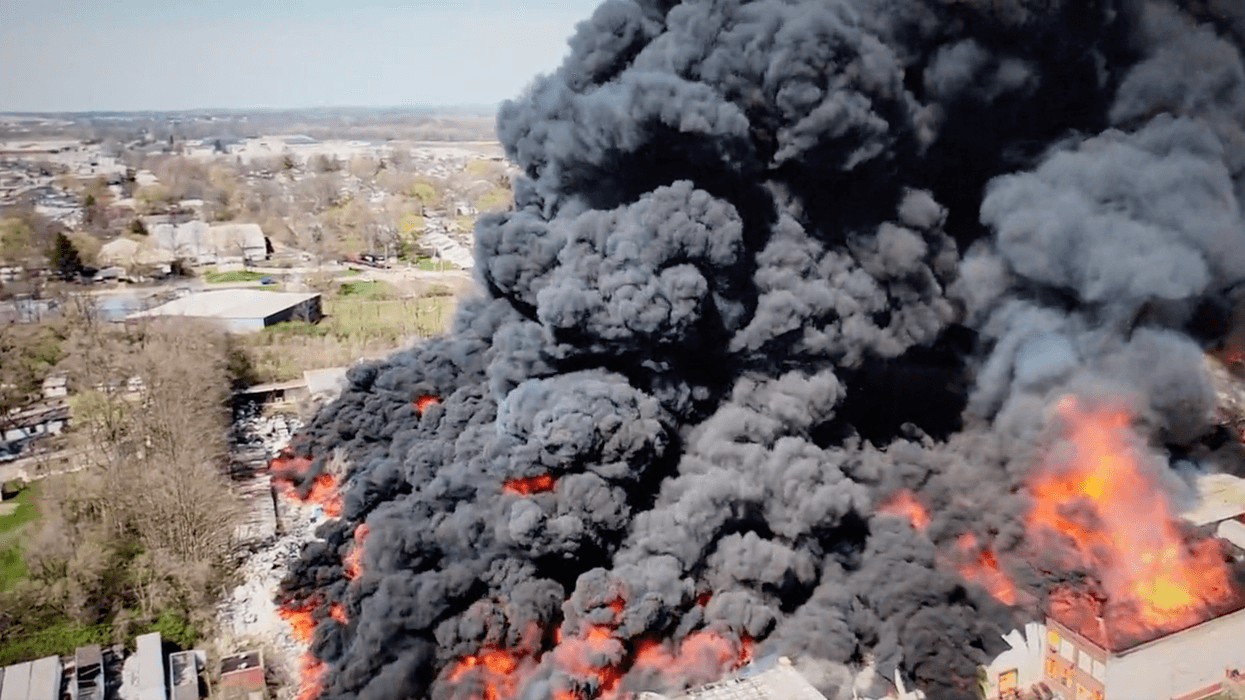
"There is a host of different chemicals that plastics give off when they're on fire, and it's concerning," said the state fire marshal.
Officials in the city of Richmond, Indiana said Wednesday that a fire that broke out at a plastics facility Tuesday is expected to continue burning for several days, sending huge plumes of black smoke—that doubtlessly contain toxins—into the environment there.
Authorities have not released the name of the business owner or company, but The New York Times reported that the complex was formerly owned by Hoffco/Comet Industries, which produced garden and lawn motors before closing in 2009. The facility is now used to store large amounts of plastic for resale and recycling.
"The smoke is definitely toxic," said Indiana State Fire Marshal Steve Jones in a news briefing on Tuesday. "There is a host of different chemicals that plastics give off when they're on fire, and it's concerning."
About 2,000 people in a half-mile radius of the blaze were ordered to evacuate the area Tuesday, and officials don't know when the order will be lifted. The Richmond Community School District cancelled classes for the entire town on Wednesday.
The smoke was drifting toward the east and northeast on Tuesday, and Richmond residents whose homes are in the path of the smoke were advised to "shelter in place, turn off HVAC units, keep windows and doors closed, and bring pets inside."
The U.S. Environmental Protection Agency (EPA) and Indiana Department of Environmental Management began taking air samples in the area on Tuesday to help determine what toxins have been released from the fire.
Chemicals that can be released from plastic when it burns include dioxins, furans, mercury, and polychlorinated biphenyls (PCBs). Dioxins, furans, and PCBs have similar toxicity levels, according to the Centers for Disease Control and Prevention (CDC), which says that "people who have been unintentionally exposed to large amounts of these chemicals have developed a skin condition called chloracne, liver problems, and elevated blood lipids."
Animals exposed to the chemicals in lab studies have developed cancers and reproductive problems.
Exposure to high amounts of mercury can rapidly cause serious lung damage, and low concentrations can cause "neurological disturbances, memory problems, skin rash, and kidney abnormalities," according to the CDC.
Richmond Fire Chief Tim Brown told CNN that firefighters who arrived at the scene Tuesday afternoon found a semitrailer behind the facility engulfed in flames that spread to piles of plastic on the property and to several buildings in the 14-acre complex.
"We knew it wasn't a matter of if, it was a matter of when this was going to happen," he said at the press briefing.
Richmond Mayor Dave Snow told the Associated Press that the owner had been "under a city order to clean up and remediate that site," but had not obeyed the order.
Philadelphia Inquirer columnist Will Bunch argued that the disaster would not have happened without the fossil fuel industry "foisting plastics on the world as its 'Plan B' to sustain its profitability."
"Worldwide production of plastic has nearly doubled since the start of the 21st century, as oil and gas giants look for profitable uses of their fossil fuels while a climate-change-weary world looks increasingly to transition toward wind or solar power or electric cars," Bunch wrote late last month after several environmental disasters threatened drinking water and the environment in communities across Pennsylvania.
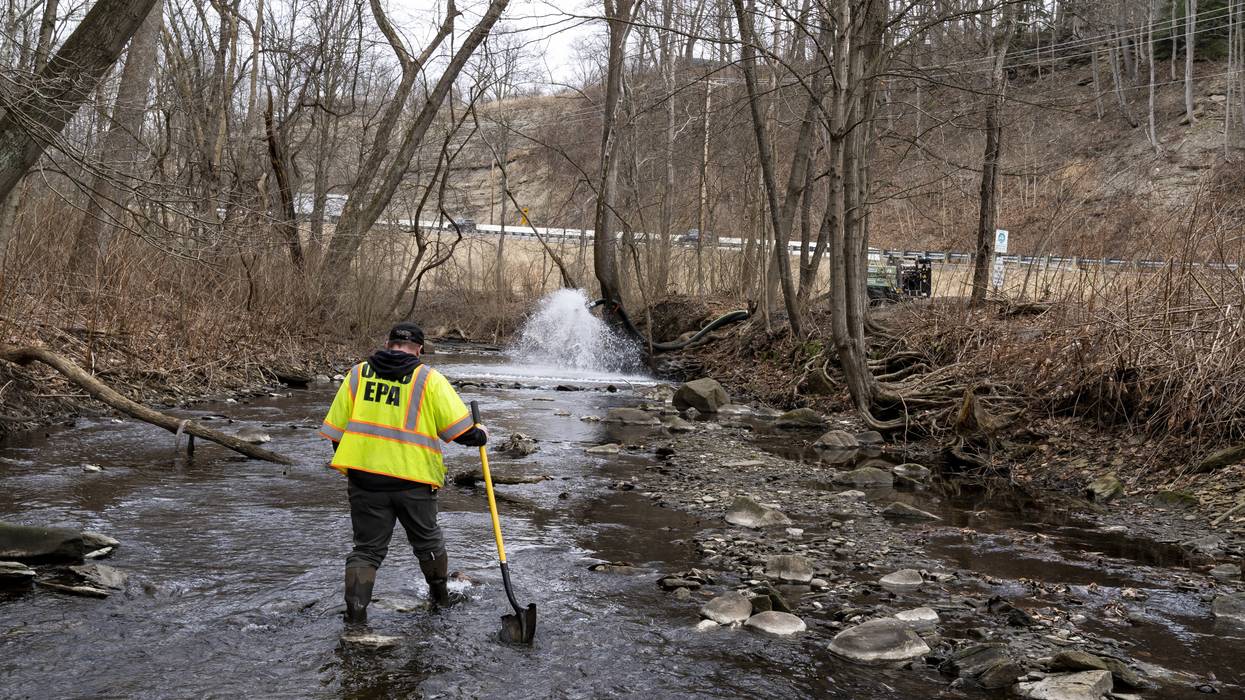
"It's important for the residents of East Palestine that accurate and transparent testing for dioxin be done at the lowest levels possible, so that the residents can begin to understand the risks they face and can make informed decisions to protect their health," said one expert.
While welcoming a federal order that Norfolk Southern test for dioxins near a derailed train that was carrying hazardous materials through East Palestine, Ohio, over 100 groups on Monday shared "recommendations on how this testing should be conducted to improve transparency, rebuild public trust, and comprehensively address possible releases."
The U.S. Environmental Protection Agency (EPA) told the rail company to develop a plan to test for dioxins—carcinogenic chemical compounds that persist in the environment and human body and are tied to developmental, reproductive, and immune system problems—only after nearly a month of pressure from residents across Ohio and Pennsylvania.
River Valley Organizing (RVO), Toxic-Free Future, and other organizations signed the letter sent on Monday to agency leaders including EPA Administrator Michael Regan—which states that "to date, Norfolk Southern has done an extremely poor job of building trust with the community of East Palestine and other communities impacted by the disaster."
"We strongly recommend the U.S. EPA itself conduct the dioxin sampling or hire its own consultants to conduct the testing."
"To ensure this testing is adequately conducted, and to rebuild public trust, we strongly recommend the U.S. EPA itself conduct the dioxin sampling or hire its own consultants to conduct the testing," the letter continues. "Norfolk Southern should not be in charge of the dioxin sampling. This testing must be paid for by the responsible parties, not taxpayers."
Along with laying out what the groups believe should be detailed in the dioxin sampling plan—including goals, locations, detection limits, procedures, and laboratories used—the letter calls for allowing residents to weigh in before testing begins.
"All sampling data and test results should be made available to the public for review in a transparent and easily accessible format," the organizations argued. "This information must be accessible for review, given the need for results to be meaningful to impacted communities as well as to build trust through transparent action."
While the EPA has said that its own "monitoring for indicator chemicals has suggested a low probability" that dioxins were released as a result of the February 3 derailment and subsequent "controlled burn" of vinyl chloride, as the letter says:
Responders reportedly punctured and burned more than 115,000 gallons of vinyl chloride in uncontrolled conditions for numerous days, making it likely that dioxins and related chlorinated substances were formed and released into the communities surrounding the disaster site. Four train cars of polyvinyl chloride plastic also burned, also likely forming dioxins. There have been elevated levels of dioxins released in other major accidents involving chlorinated chemicals—from the 2004 explosion at the PVC plant in Illiopolis, Illinois, to the 1997 Plastimet PVC recycling fire in Ontario, to the 2001 World Trade Center attacks.
The organizations also recommended that "the EPA work with other agencies to provide medical monitoring for impacted communities, especially East Palestine and those in the combustion plume, that desire it."
"Communities surrounding and downwind of the derailment have a right to know whether the fire resulted in elevated concentrations of dioxins. The testing must be transparent and comprehensive," the letter asserts. "This would help demonstrate EPA's commitment to comprehensively responding to this disaster, rebuilding trust with East Palestine and other impacted communities, and advancing environmental justice."
Leaders and experts at groups that signed the letter echoed its key messages in a statement Monday—including RVO co-executive director Amanda Kiger, who declared that "this community deserves to know what potential toxic chemicals they will have to live with for years to come due to Norfolk Southern's greed."
Just like per- and polyfluoroalkyl substances (PFAS), often called forever chemicals, "dioxins are toxic even at very low levels of exposure," noted Mike Schade, director of Mind the Store, a program of Toxic-Free Future.
Stephen Lester, science director of the Center for Health, Environment & Justice, highlighted that "exposure to dioxins can cause cancer, reproductive damage, developmental problems, immune effects, skin lesions, and other adverse effects."
"It's important for the residents of East Palestine that accurate and transparent testing for dioxin be done at the lowest levels possible, so that the residents can begin to understand the risks they face and can make informed decisions to protect their health," Lester said.
Others took aim at Norfolk Southern, which since the derailment has faced intense scrutiny for its safety culture and practices.
Given that "Norfolk Southern has obvious financial conflicts of interest in the outcomes of all environmental testing and public health evaluations," Dr. Ted Schettler, science director at the Science and Environmental Health Network, stressed the need for "rigorous oversight of the U.S. EPA, including strict quality control measures and split-sample testing."
Judith Enck, a former U.S. EPA regional administrator who is now president of Beyond Plastics, said that "it is unfortunate that the EPA took a month to decide to test for dioxins, and then rather than doing it itself, is having Norfolk Southern consultants to do the actual testing."
"The testing plan is too limited and should be revised to require some testing inside people's homes, at schools, and air filters in schools and buildings and cars should be tested, not just soil," she added. "Rain has likely driven contaminants toward groundwater and that water should be tested over a period of months and year[s]."
Enck's comments came after she wrote in a New York Times opinion piece last week that the EPA should have "ordered comprehensive testing the very day of the burn" and "told residents, especially pregnant women and families with young children, not to return home until it was safe to do so."
"Instead, it timidly stood back, leaving local authorities, corporate interests, and rumors to fill the void," she charged. "In lieu of a comprehensive plan, the EPA appears to be playing a game of crisis whack-a-mole, waiting and then responding to the news cycle. This is no way to safeguard our communities."

"The farmer shouldn't be penalized for this unfortunate and unique situation," said John Stock of the Ohio Ecological Food and Farm Association. "It's going to have an impact on these farms, and it's a reality that impacts all of us."
Just over a month after a Norfolk Southern train derailed in near the Ohio-Pennsylvania border, a trio of U.S. senators on Wednesday wrote to a pair of Biden administration leaders that "we are hearing from farmers and agricultural producers who are concerned about the impacts of the derailment and associated release of hazardous materials on their livelihoods."
After train cars derailed and caught fire in East Palestine, Ohio on February 3, the rail giant conducted a controlled release of vinyl chloride to prevent an explosion. The U.S. Environmental Protection Agency on February 21 ordered Norfolk Southern to identify and clean up contaminated soil and water; facing local pressure, the EPA on Friday told the company to test for dioxins, while maintaining the position that based on agency testing, it is unlikely those toxic chemical compounds were released.
"Dioxins are some of the most potent carcinogens on Earth—there's no 'safe' dose for humans, and pregnant women and young children are especially vulnerable to their effects," Judith Enck, a former EPA regional administrator now on the Bennington College faculty and president of the group Beyond Plastics, noted in a New York Times opinion piece Wednesday. In addition to cancer, dioxins—which persist in the environment for long periods—are tied to developmental, reproductive, and immune system issues.
However, so far, despite fears of various pollutants, neither the EPA nor the U.S. Department of Agriculture (USDA) "or any other federal or state agencies have provided clear guidance to either our agricultural producers in the region or consumers of those products," according to the letter from Sens. Sherrod Brown (D-Ohio), Bob Casey (D-Pa.), and John Fetterman (D-Pa.).
"As these farmers prepare for planting and marketing efforts, they are left wondering what impacts the derailment and chemical release will have on the safety of their products and the viability of their farms."
"The 2023 planting season is quickly approaching, followed by spring harvest of overwintered crops, such as alfalfa and winter wheat, that are typically sold as feed to dairies in the region," they wrote to EPA Administrator Michael Regan and Secretary of Agriculture Tom Vilsack. "As these farmers prepare for planting and marketing efforts, they are left wondering what impacts the derailment and chemical release will have on the safety of their products and the viability of their farms."
"Producers are concerned not only over the lack information about the safety of their crops and livestock but also whether they will be able to market them due to market and consumer concerns about the safety of their products," the senators continued, noting that "farmers in the region are already reporting receiving requests to cancel orders due to these very concerns."
The lawmakers are calling on the EPA and USDA to work with state agricultural departments and academics to provide farmers with relief, including the rapid deployment of resources for "any necessary testing of their soils, plant tissue, and livestock and to interpret the results of those tests as they pertain to the safety and marketability of their crops and products."
Given that some consumers will likely be nervous about buying from the region regardless of test results, the senators are also requesting a review of disaster assistance that can be deployed as well as technical assistance for language to include in the next farm bill to expand aid for "producers who have been impacted by man-made disasters, including chemicals spills."
Alarm about the pontential impact on local farming as well as criticism of how Norfolk Southern and various government figures and agencies have handled the environmental and public health disaster have mounted since the derailment last month.
"I have a part ownership in a farm, so I'm concerned about that," Eloise Harmon, of East Palestine, told WHIO on Friday. "The soil at the farm: Can we plant? Can we not plant? Will anybody buy it, if we do plant?"
"We could, of course... probably go find some grass somewhere else, but why should we have to because of something that was not our fault?"
Rachel Wagoner—whose family's Tall Pines Farms in Darlington, Pennsylvania specializes in grass-fed beef and lamb—told WTEA in late February that "it feels like you don't have a lot of options, so you've just gotta deal with it."
"In farming, you're tied to the land," she said. "We could, of course... probably go find some grass somewhere else, but why should we have to because of something that was not our fault?"
Since the train derailed just a few miles away, the family has not had any issues with their animals. Wagoner said that "it's been fairly normal, which feels sort of weird for how everyone in the community is experiencing things."
However, Wagoner—like so many other farmers and other residents of the region—is worried about pollutants including dioxins. She also expressed frustration with the difficulty in accessing information, including about testing.
If soil testing reveals contaminants, "the door opens to another question," as Lancaster Farming pointed out Friday:
"What happens is these people can no longer make a living from that farm. Will these farms be bought out at a fair price?" asked John Stock, sustainable agriculture educator with the Ohio Ecological Food and Farm Association. "It would be great to have transparency with testing, but a lot of farms don't have a baseline for these contaminants."
If airborne contaminants are found in a soil test, Stock said it's unlikely the finding would jeopardize organic certification standards. The farmer didn't intentionally apply the contaminants, he said, and the occurrence was out of their control.
As for contaminated water used for irrigation, Stock said an affected farmer may have to change water sources or use filtration.
"The farmer shouldn't be penalized for this unfortunate and unique situation," Stock said. "It's going to have an impact on these farms, and it's a reality that impacts all of us."
Another issue is a lack of trust. Slate's Ellin Youse, who grew up not far from the derailment site, explained Tuesday that "so many people affected by this accident feel distrust toward the agencies in charge of dealing with the situation, toward the transportation companies responsible, and toward the national reporters who only seem to come around for close national elections and disasters, that it quickly felt almost impossible to communicate accurately."
After speaking with Jason Blinkiewicz, who owns a trucking company and repair shop just over a mile from where the train derailed, Grist's Eve Andrews wrote last week that "he, like most of his neighbors and employees, doesn't trust Norfolk Southern and assurances from the Environmental Protection Agency that the air and water have been safe to breathe and drink."
According to Andrews:
"It's normalized to some degree because there's already low air quality in the area," Blinkiewicz said. "The cracker plant is putting out volatile organic compounds, or what's the nuclear power plant doing, or how about the coal plant right behind it that they shut down not that long ago? What about the mills in Midland and the steel plant in Koppel?"
But all of those facilities are far enough from Blinkiewicz's home and workplace that he hasn't felt their impacts nearly as acutely as those of the derailment. "I think it's the first time, in my 46 years on this planet, in this area, that it gives you an uneasy feeling about everything," he said.
"And as much as it pains me to say, my trust has to lie in our government. Which is hard to do, right? But we have to rely on those government agencies to protect us. That's what they're there for."
The EPA administrator said Friday that "over the last few weeks, I've sat with East Palestine residents and community leaders in their homes, businesses, churches, and schools. I've heard their fears and concerns directly, and I've pledged that these experiences would inform EPA's ongoing response efforts."
"In response to concerns shared with me by residents, EPA will require Norfolk Southern to sample directly for dioxins under the agency's oversight and direct the company to conduct immediate cleanup if contaminants from the derailment are found at levels that jeopardize people's health," Regan continued. "This action builds on EPA's bipartisan efforts alongside our local, state, and federal partners to earn the trust of this community and ensure all residents have the reassurances they need to feel safe at home once again."
The EPA's statement added that the agency "will also continue sampling for 'indicator chemicals,' which based on test results to date, suggest a low probability for release of dioxin from this incident."
As The Washington Post reported:
Asked why EPA is delegating dioxin testing to Norfolk Southern, as opposed to conducting the sampling itself, agency officials said the railroad is required to submit its plans to the government and that EPA can modify them or step in and complete the work itself...
Railroad officials said in a statement Friday they are aware of EPA's directive on dioxin testing and "are committed to working with the agency to do what is right for the residents of East Palestine."
"We will continue to listen to the concerns of the community as restoration work moves forward," the statement continued.
It was not immediately clear how widely the railroad would be required to test for dioxins. EPA officials said more details would become available once the railroad submits its work plans.
In her piece for the Times, Enck argued that the EPA "should have ordered comprehensive testing the very day of the burn. It should have told residents, especially pregnant women and families with young children, not to return home until it was safe to do so. Instead, it timidly stood back, leaving local authorities, corporate interests, and rumors to fill the void."
Now, the EPA "needs to conduct comprehensive environmental testing for dioxins in and around East Palestine," wrote Enck, who was a regional director during the Obama administration. The agency also "needs to establish federally funded medical monitoring for everyone along the plume. Even those who appear healthy now should be offered baseline testing."
Additionally, she said, "for effective enforcement of our environmental laws, Congress needs to approve more funding for this crucial agency."
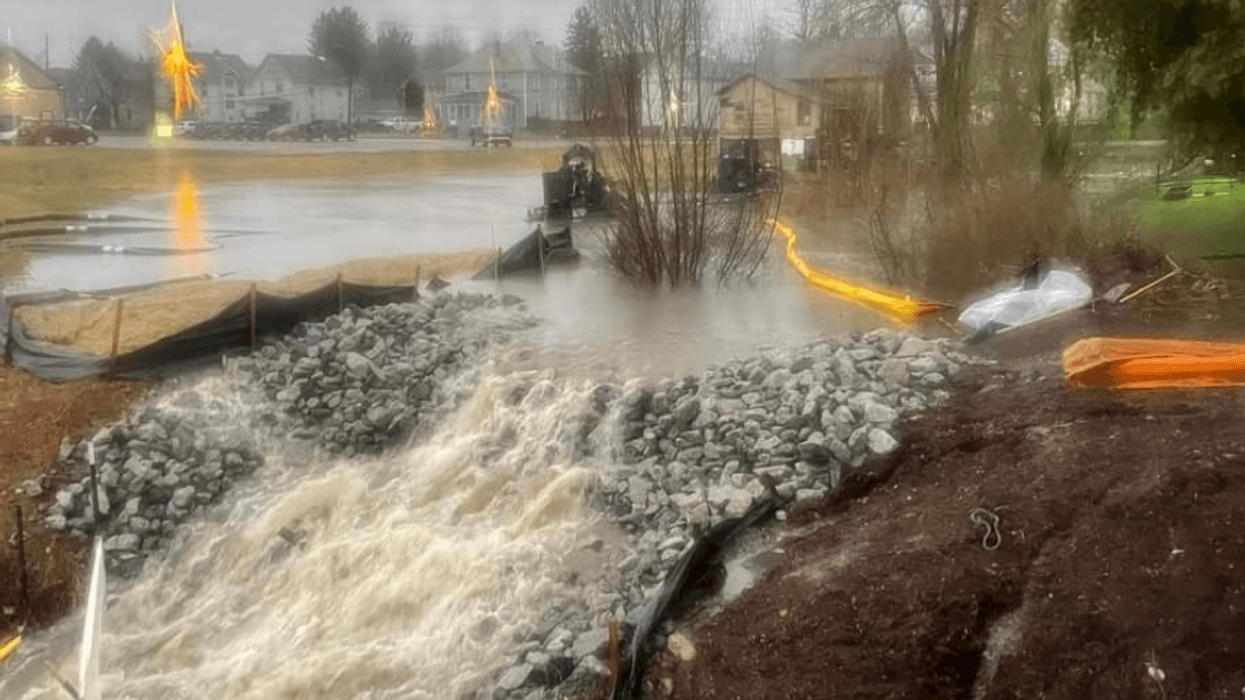
"I've had fear and now this just put the anxiety over the top," said one local resident.
The collapse Friday night of a makeshift dam designed to hold back wastewater and new concerns by local groups and residents about the nearby incineration of contaminated soil from last month's train derailment are the latest anxiety-producing woes to beset the community of East Palestine, Ohio.
Watchdogs on the ground reported that the dam broke after heavy rains in the area on Friday.
According to local Channel 19 News:
Residents tell 19 News heavy rain has caused Leslie Run Creek to rise, and spill over the makeshift dam, near the derailment sight. 19 News was able to obtain several photos of water from that manmade dam covering the Main Street area of town.
Residents fear the contaminated water may seep into homes or businesses—causing another level of fear for those who live in the area.
Local resident Eric Cozza told the news outlet he was scared of what the released waters could do to the community. "I fear that now the chemical is in the ground, it's going to leech towards the water ducts, our aquifer for drinking water," Cozza said. "I'm concerned that the park is now contaminated. Kids won't be able to play there or walk through there on their way to school."
Status Coup News, which has been reporting from East Palestine and speaking with residents since the disaster occurred, reported Friday night that flooding from the breached dam was going "into The Original Roadhouse restaurant parking lot where a lot of locals eat and drink."
The outlet also reported that the pictures of the broken dam posted to social media were taken by local resident Neko Figley, who was told by contractors to leave the area because it was "super dangerous to be here right now.”
River Valley Organizing, a multi-racial, working-class group active in the Ohio River Valley region, said in a statement Friday that residents of East Palestine are still being ignored a month after 38 rail cars of a Norfolk Southern train went off the tracks on February 3.
"It's been one month since our lives were turned upside down," the group said, "but we still aren't getting what we need from the government or Norfolk Southern. We heard the people of this community loud and clear: they want safe homes, and independent environmental and health testing—now."
On Saturday, The Guardian reported on fresh fears over the incineration of contaminated soil that was taken from the crash site, not least because one of the nearby facilities where the material is being taken has a history of EPA violations. According to the Guardian:
The new plan is "horrifying," said Kyla Bennett, a former [EPA] official now with the Public Employees for Environmental Responsibility non-profit. She is one among a number of public health advocates and local residents who have slammed Norfolk Southern and state and federal officials over the decision. [...]
Incinerating the soil is especially risky because some of the contaminants that residents and independent chemical experts fear is in the waste, like dioxins and PFAS, haven't been tested for by the EPA, and they do not incinerate easily, or cannot be incinerated.
"Why on earth would you take this already dramatically overburdened community and ship this stuff a few miles away only to have it deposited right back where it came from?" Bennett asked.
She further told the Guardian that the "most important thing in my mind is the human health and health of the environment" and that burning this toxic material under such conditions flies "in the face of basic human decency and science."
Penn Future, a watchdog for air and water quality in neighboring Pennsylvania, said the incineration plans are very worrying.
"The plan to incinerate dioxin and PFAS contaminated soil from Norfolk Southern's toxic spill deeply troubles us and will continue to build distrust and anxiety," the group said. "It's not clear the plan will work and puts communities down wind at risk of contamination."
According to an update from the office of Ohio's Republican Gov. Mike DeWine, the Ohio EPA has reported that approximately 1,700 tons of solid waste have been removed from the disaster site in East Palestine as of Friday.
Of that waste, reports The Chronicle-Telegram, 660 tons has gone to Heritage Thermal Services—the company with a litany of past violations—in East Liverpool, Ohio, which is in Columbiana County not far from East Palestine. Another 190 tons was hauled to the Giles incinerator for in-state burning and 880 tons of the solid waste was shipped out of state to landfills in Michigan and Indiana.
Meanwhile, 3.2 million gallons of liquid wastewater have been collected in the area with the large majority going out of state, to facilities in Michigan and Texas, for deep-well injection.
Amanda Kiger, director of River Valley Organizing, said one of her concerns was the incineration of toxin-laden materials so close to the residents still reeling in East Palestine.
EPA and other government officials, she told the Guardian, "are just dumping more shit on Columbiana county,” Kiger said."They say, 'We already poisoned them so it doesn't matter if we poison them more.'"
As for Cozza, who spoke with 19 News about the dam breach and whose family has already been diagnosed with skin irritations, he said the odor of chemicals is now back in the area.
"I have fear," he said. "I've had fear and now this just put the anxiety over the top."