

SUBSCRIBE TO OUR FREE NEWSLETTER
Daily news & progressive opinion—funded by the people, not the corporations—delivered straight to your inbox.
5
#000000
#FFFFFF
To donate by check, phone, or other method, see our More Ways to Give page.
Daily news & progressive opinion—funded by the people, not the corporations—delivered straight to your inbox.
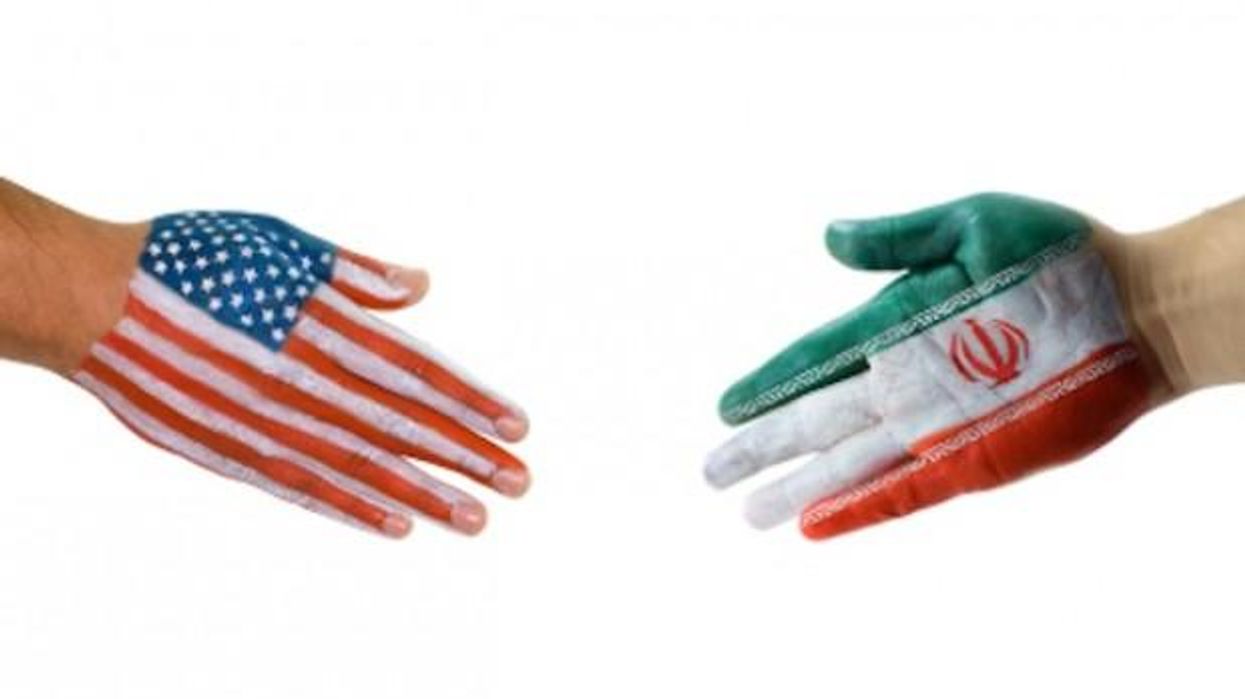
Editor's note: The National Iranian-American Council has released a letter, signed by 30 foreign policy practitioners, calling on the U.S., Europe, and Iran to take steps to reduce tensions in the Persian Gulf.
July 30, 2019
As foreign-policy practitioners with decades of collective experience in national security and diplomacy, we write to warn that U.S.-Iran tensions have entered a dangerous new phase that has put us on the brink of a disastrous and avoidable war. The administration's decision to violate the Iran nuclear agreement in pursuit of a so-called maximum pressure strategy is damaging the accord and U.S. interests in ways that could be difficult to reverse. There remains a narrow path for the U.S. and Iran to avoid military conflict and resolve ongoing disputes through negotiations. Doing so, however, will require bold action and constructive steps from all sides, as outlined below.
The U.S. Should Suspend Recent Sanctions to Provide Space for Diplomacy
Iran Should Return to Full Compliance with the Nuclear Accord
The U.S. and Iran Should Pursue a Prisoner Swap
Europe Must Take More Serious Steps to Address Challenges in Meeting Its Sanctions Relief Obligations
The U.S. and Iran Must Reestablish Communication Channels
The U.S. Should Appoint a Credible and Empowered Iran Envoy
Pursue an Agreement to Avoid Confrontations in the Persian Gulf
U.S. Congress Should Pass Legislation to Prevent War
Signatories:
Jamal Abdi, President, National Iranian Amerian Council
Arshin Adib-Moghaddam, Professor in Global Thought and Comparative Philosophies at SOAS, University of London and Fellow of Hughes Hall, University of Cambridge
Sanam Naraghi Anderlini, Founder and CEO, International Civil Society Action Network (ICAN)
Andrew Bacevich, Co-founder, Quincy Institute for Responsible Statecraft
Juan Cole, Richard P. Mitchell Collegiate Professor of History at the University of Michigan
Michael C. Desch, Packey J. Dee Professor of International Relations, University of Notre Dame
Dina Esfandiary, Fellow, International Security Program, Belfer Center for Science and Security Studies, Harvard University; Fellow, The Century Foundation
John L. Esposito, Professor of Religion & International Affairs and Islamic Studies at Georgetown University
Farideh Farhi, Affiliate Graduate Faculty of Political Science, University of Hawai'i at Manoa
Nancy W. Gallagher, Director, Center for International and Security Studies at Maryland and Research Professor of Public Policy, University of Maryland
Mark Gasiorowski, Professor, Department of Political Science, Tulane University
Kevan Harris, Assistant Professor of Sociology studying development and social change in the global South, UCLA
Rula Jebreal, Professor, American University of Rome
Peter Jenkins, Former UK Ambassador to the IAEA
Bijan Khajehpour, Managing partner at Vienna-based Eurasian Nexus Partners, a strategy consulting firm focused on the Eurasian region
Lawrence Korb, Senior Fellow at the Center for American Progress, former Assistant Secretary of Defense (1981-1985)
Peter Kuznick, Professor of History and Director, Nuclear Studies Institute, American University
Joshua Landis, Sandra Mackey Professor of Middle East Studies and Director of the Center for Middle East Studies at the University of Oklahoma
Daniel Larison, Senior Editor, The American Conservative
John J. Mearsheimer, R. Wendell Harrison Distinguished Service Professor of Political Science, University of Chicago
Francois Nicoullaud, Former French Ambassador to Iran
Rouzbeh Parsi, Visiting Research Scholar, Sharmin and Bijan Mossavar-Rahmani Center for Iran and Persian Gulf Studies, Princeton University; Head of the Middle East and North Africa Programme at the Swedish Institute of International Affairs-Stockholm; Senior Lecturer, Human Rights Studies, Lund University
Trita Parsi, Co-founder, Quincy Institute for Responsible Statecraft; Adjunct Associate Professor, Georgetown University
Thomas R. Pickering, former Under Secretary of State and Ambassador to Russia, India, the United Nations and Israel
Paul Pillar, Nonresident Senior Fellow at the Center for Security Studies at Georgetown University and Nonresident Senior Fellow in Foreign Policy at the Brookings Institution
Edward Price, Director of Policy and Communications, National Security Action; former National Security Council Spokesperson; Former Special Assistant to President Obama for National Security Affairs
Barbara Slavin
John F. Tierney, former Member of Congress and Executive Director of Center for Arms Control and Non-Proliferation and of Council for a Livable World
Stephen Walt, Robert and Renee Belfer Professor of International Affairs, Harvard Kennedy School
Lawrence Wilkerson, Visiting Professor of Government and Public Policy at the College of William & Mary and former chief of staff to Secretary of State Colin Powell
Although the U.S. peace movement has been on the wane for about a decade, it remains a viable force in American life. Organizations like Peace Action, the American Friends Service Committee, Physicians for Social Responsibility, the Fellowship of Reconciliation, Jewish Voice for Peace, and numerous others have significant memberships, seasoned staff, and enough financial resources to sustain their agitation in communities around the country. If they currently lack the power to mobilize the mass demonstrations that characterized some of their past struggles, they continue to educate Americans about the dangers of militarism and influence a portion of Congress.
Even as the movement declined during the Obama presidential years, it managed to eke out some occasional victories, most notably a treaty (New START) reducing the number of U.S. and Russian strategic nuclear weapons, modest cutbacks in the U.S. military budget, the Iran nuclear deal, and the normalization of U.S. diplomatic relations with Cuba.
But the total takeover of the U.S. government by the Republican Party, occasioned by the GOP sweep in the 2016 elections, has produced a disaster for the peace movement--and for anyone concerned about building a peaceful world. In less than a year in office, the Trump administration has escalated U.S. military intervention across the globe, secured a massive increase in U.S. military spending, issued reckless threats of war (including nuclear war) against North Korea, and forged close partnerships with some of the world's most repressive regimes. Nor is the peace movement growing significantly in response to this disaster--probably because progressive activists, the peace movement's major constituency, are so overwhelmed by the government's sweeping rightwing assault that they are preoccupied with desperately defending social and economic justice, civil liberties, and environmental sustainability.
As long as this situation continues, it seems unlikely that the peace movement is going to win many victories. With hawkish, rightwing Republicans controlling the federal government, the peace movement's educational campaigns, small-scale demonstrations, and Congressional lobbying will probably have little effect on U.S. public policy.
But there is a promising way to change the federal government. A likely outcome of the November 2018 Congressional elections is that the Republicans will retain control of the U.S. Senate, thanks to the large number of Democratic incumbents running for the 33 contested seats. Even so, the Democrats have a good chance to retake control of the House of Representatives, where every seat is up for grabs. For over 6 months, generic ballot polls about the House elections have shown Democrats with a lead ranging between 8 and 12 points over their Republican opponents. Many analysts believe that this significant a lead will produce a "wave election"--one that will sweep the Democrats into power. And with one branch of Congress in the hands of the Democrats, U.S. foreign and military policy could shift substantially.
Would it, though? After all, despite significant differences with the GOP on domestic policy, aren't Congressional Democrats just as hawkish as the Republicans on foreign and military policy?
There are numerous indications that they are not. Although, in some cases during the Trump era, Congressional Democrats have joined their Republican counterparts in voting for hawkish legislation, representatives from the two parties have diverged dramatically on key foreign and military policy issues. In July 2017, the House took up a bill reducing U.S. government spending on nuclear nonproliferation programs but increasing spending on nuclear weapons programs by 10.7 percent. The bill passed by a vote of 235 to 192, with only 5 Democrats voting for it and only 5 Republicans voting against it. Similarly, in October 2017, when the House voted on the People's Budget--a measure drawn up by the Congressional Progressive Caucus that boosted social spending and cut military spending--Democratic members of the House supported it by a vote of 108 to 79. By contrast, the Republican vote on it was 0 in favor and 235 opposed.
Sharp party divisions on foreign and military policy have also occurred in the U.S. Senate, with the most dramatic of them focused on a proposal to repeal the Authorization for the Use of Military Force--a loose measure, passed in 2001, that has been used subsequently by U.S. Presidents to justify 37 U.S. military operations in 14 countries. Coming to a vote in September 2017, the proposal to repeal the Authorization was defeated, 61 to 36. Only 3 Republicans (out of 52) voted for repeal. But repeal was supported by 31 Democrats (out of 46) and 2 Independents.
With the 2018 Congressional elections occurring in less than a year, the peace movement has the opportunity to enhance its leverage over U.S. public policy by helping to flip the House to Democratic control. In addition, playing a role in the election campaign would strengthen the movement's ties with progressive organizations, which, horrified by the rightwing onslaught, will be working zealously toward that same goal. At the least, peace and progressive activists should be able to unite behind the provisions of the People's Budget--cutting military programs and increasing spending on public education, health, and welfare.
But how can the peace movement become an effective player in the 2018 Congressional election campaign, supporting peace-oriented Democrats against their hawkish Republican (and sometimes hawkish Democratic) opponents? Some groups, like the Council for a Livable World, Peace Action, and Progressive Democrats of America, already raise money for peace candidates in Democratic primaries and general elections. Others could do so as well. Also, to make their support more visible to politicians, peace groups could play a more prominent role in election campaigns--volunteering to distribute flyers on specific dates, staff phone banks for specific periods, and engage in door-to-door canvassing at specific times.
Of course, the peace movement need not drop all its other activities. But the 2018 elections do offer it a particularly useful opportunity to help steer the U.S. government away from militarism and war.
America's longest war continues to drag on with no end in sight. More than 14 years since the invasion of Afghanistan, our highly capable men and women in uniform have gone above and beyond the call of duty. They have done enough; it's past time to bring them home.
On 15 October, we saw the ramifications of Congress's blank check for endless war when President Obama announced that thousands of US troops would remain in Afghanistan through the end of his term and into 2017.
This war has already cost our nation so much: 2,350 of our brave servicemen and women have made the ultimate sacrifice, more than 20,000 have been wounded, and thousands more bear invisible scars. This war has also taken the lives of thousands of Afghans and soldiers from our coalition partners and Nato allies.
Continuing this war has not made us any safer. Our protracted engagement in Afghanistan undermines our national security by sparking global resentment against the US and spurring unsustainable Pentagon spending. The war's price tag totals more than $716bn, which continues to prevent much-needed investments in critical domestic priorities.
It's time to bring our armed forces home to their families and keep our nation's sacred promise to care for them. The American people agree: a December Washington Post-ABC News poll found that a 56% majority of Americans believe this war has not been worth fighting, a trend that dates back to 2010. Yet despite the strong objections of the American people, this war continues with no end in sight.
In the dark days following the attacks on September 11, I cast Congress's sole vote against the authorization for military force (AUMF) that started the war in Afghanistan. I voted against the AUMF because it was so broadly written that it empowered any president to wage endless war in any place at any time without congressional oversight.
In addition to starting the longest war in US history, the 2001 AUMF has emboldened presidential administrations to intervene around the world without a debate in Congress. According to a report from the Congressional Research Service, the 2001 AUMF has been used more than 30 times to justify military action, troop deployments, drone strikes, and indefinite detentions at Guantanamo Bay. And that count only includes unclassified uses - meaning there could be many other instances where Congress has been left in the dark.
Since that lonely vote in 2001, many members of Congress have realized that the blanket war authorization opened a Pandora's box. My bill, HR 1303, would repeal the limitless AUMF, end this war on a reasonable timeline, and restore Congress's constitutional responsibility to debate future wars; it has supporters on both sides of the aisle.
As members of Congress, we take an oath to protect and uphold the US Constitution. Yet, for too long, Congress has abdicated its vital role to authorize and supervise our nation's military actions. The American people deserve a vote, through their congressional representatives, on matters of war and peace.
While Afghanistan and the region still face significant challenges, history has shown that there is no effective military solution. As John Isaacs, a senior fellow at Council for a Livable World, wrote: "More troops, more time, more money, more casualties will simply not bring the war to a close."
Only an inclusive political solution can bring peace, stability, and prosperity to Afghanistan and the region. The future of Afghanistan must be in the hands of the Afghan people. It's time to bring America's longest war to a close.
If you don't see yourself as the sort of person who calls your representatives in Congress and urges them to vote to end the war in Afghanistan, stand up and take a bow. This is your moment of special recognition. The American peace movement is calling on you - you - to call your representatives in Congress now to urge votes against the wars, and we want you to do this so badly that the Friends Committee on National Legislation has established a toll-free number for you to reach your Representative: 1-888-231-9276.

The 2012 National Defense Authorization Act is expected on the floor of the House this week, and the House is expected to consider, among others, amendments to limit and end the war in Afghanistan, to limit and end the war in Libya, and to strip from the bill the "permanent war" authorization inserted by Rep. McKeon. Voting on these amendments may happen as early as Wednesday afternoon, eastern time.
A suggested call script, with information on many proposed amendments, is here. If your schedule doesn't permit you to call, you can write here.
Polls show that America - Blue America, Red America, and Purple America - is done with these wars. But the wars grind on.
One reason that these wars grind on is that while Members of Congress do obviously care about polls, polls are not all they look at to gauge public opinion. They want to know what people in their particular district think, and they want to know not only where the majority of opinion lies, but the intensity with which people hold their views. It's one thing to say that the majority wants to end the wars; it's another thing to say that the majority wants to end the wars, and furthermore, people in my district see this as a priority.
And a key way that Members of Congress gauge whether people in their district not only want to end the wars, but see it as a priority, is whether the phone is ringing off the hook in their office. It's a striking fact, that even as polls register more and more public opposition to the wars, some Members of Congress say: people aren't calling us about this.
And that's why peace groups collaborate to organize call-in days to Congress. Judging from a quick scan of my email, this one includes, among others: Peace Action, the Friends Committee on National Legislation, the Council for a Livable World, Win Without War, USAction/TrueMajority, the Fellowship of Reconciliation, Progressive Democrats of America, Veterans for Peace, United for Peace and Justice, Voices for Creative Nonviolence, and Just Foreign Policy.
That's a range of groups, in terms of their philosophies of social change. They all agree on one thing: you need to call your representatives now and urge them to vote against the wars. If you can't call, you can write.
The most important thing right now is not how you feel about your Representative, or how you think the vote is going to turn out. The most important thing right now is how many calls there are. An opinion poll is being conducted right now: how do you really feel about the wars? Stand up and be counted. Call your Representative now: 1-888-231-9276.
In a
letter to President Barack Obama date June 17, 329
out of 435 members of the U.S. House of Representatives referred to
Israel's May 31 attack on a humanitarian aid flotilla in international
waters, which resulted in the deaths of nine passengers and crew and
injuries
to scores of others, as an act of "self-defense" which they
"strongly support." Similarly, a June 21 Senate
letter -- signed
by 87 out of 100 senators -- went on record "fully"
supporting what it called "Israel's right to self-defense,"
claiming that the widely supported effort to relieve critical shortages
of food
and medicine in the besieged Gaza Strip was simply part of a "clever
tactical and diplomatic ploy" by "Israel's opponents"
to "challenge its international standing."
The House letter urged President Obama "to remain steadfast in
defense
of Israel" in the face of the near-universal international condemnation
of this blatant violation of international maritime law and other legal
statutes,
which the signatories referred to as "a rush to unfairly judge and
defend
Israel." The Senate letter condemned the near-unanimous vote of the UN
Human Rights Council for what it called "singling out" Israel, even
though no other country in recent memory has attacked a humanitarian aid
flotilla in international waters. Both letters called upon the United
States to
veto any resolution in the UN Security Council criticizing the Israeli
attack.
What is perhaps most disturbing is that many of the key arguments in
the
letters were misleading and, in some cases, factually inaccurate.
The Israeli government had acknowledged prior to the writing of the
letter
that the extensive blockade of humanitarian goods was not necessary for
their
security, but as a means of pressuring the civilian population to end
their
support for Hamas, which won a majority of legislative seats in the most
recent
Palestinian election. In addition, the Israeli government announced a
significant relaxation of the embargo two days after the letter was
written.
Despite this, the House letter claimed that the purpose of the blockade
was
"to stop terrorists from smuggling weapons to kill innocent
civilians," thereby placing this large bipartisan majority of the House
even further to the right than Israeli Prime Minister Benyamin
Netanyahu's rightist coalition.
There was no mention in the letter than no such weapons were found on
board
any of the six ships hijacked by the Israelis nor on the previous eight
ships
the Free Gaza Campaign had sailed or attempted to sail to the Gaza
Strip. In
addition, even though the ships had been thoroughly inspected by customs
officials prior to their disembarkation, the House letter claimed that
had the
Israelis not hijacked the ships, they would have "sailed unchecked into
Gaza."
Similarly, according to the Senate letter, Israel's naval blockade
was
necessary "to keep dangerous goods from entering Gaza by sea" and
falsely claimed that the intent of the Israeli blockade was "to protect
Israel, while allowing humanitarian aid into Gaza." Particularly
striking
is the fact that, despite that the International
Committee on the Red Cross and a broad consensus of international
legal
experts recognize that the Israeli blockade of humanitarian goods is
illegal,
the Senate letter insisted that the blockade "is legal under
international law."
The House letter insisted, despite the fact that several of those
killed on
the Mavi Marmara were shot
at point blank range in the back or the back of the head and a video
showing a 19-year old U.S. citizen shot execution style on the ground,
that
"Israeli forces used necessary force as an act of self-defense and of
last resort." Similarly, the Senate letter refers to the murders of
passengers and crew resisting the illegal boarding of their vessel in
international waters as a situation where the Israeli raiders were
"forced to respond to that attack" when they "arrived"
on the ship.
The House letter also claimed that the other ships were "commandeered
peacefully and without incident," even though on the other ships,
despite
completely nonviolent resistance, passengers were tasered and brutally
beaten
and were attacked with tear gas and rubber bullets. Similarly, the
Senate
letter insisted that, in spite of these potentially fatal beatings and
other
assaults, "Israeli forces were able to safely divert five of the six
ships challenging the blockade."
Even though the Israeli government has never entered Gaza to disperse
aid to
the people of that territory since the start of the siege years earlier
and
reputable relief organizations have documented that the Israelis had
routinely
refused to allow humanitarian aid to enter the Gaza Strip, these House
members
claimed that Israel had offered to "disperse the aid . . . directly to
the people of Gaza." And, despite the fact that the five aid ships that
Israel had allowed to dock in Gaza in previous months had distributed
their
humanitarian cargo directly to those in need, the senators claimed that
it
would have otherwise gone "into the hands of corrupt Gaza officials."
Learning what actually transpired in the tragic incident was
apparently of
little interest to the 87 senators who signed the letter defending the
attack.
Despite the apparent whitewash
forthcoming in the internal Israeli investigation, the senate letter
supported
Israel's alleged intention to carry out "a thorough investigation
of the incident," insisting that Israel "has the right to determine
how its investigation is conducted." This comes in spite of a recent public opinion poll shows a clear majority
of
Americans -- including 65 percent of Democrats -- favor an
international inquiry over allowing Israel alone to investigate the
circumstances of the attack.
Ironically, a number of progressive organizations, web sites and list
serves
have called on the peace and human rights community to support the re-
election
of some of the very senators who signed this letter, including Barbara
Boxer,
Ron Wyden, and Russell Feingold. MoveOn, Council for a Livable World,
and other
progressive groups with PAC money have been are calling on their
members, many
of whom are peace and human rights activists, to donate their money to
these
right-wing Democrats who defend attacking peace and human rights
activists and
lie about the circumstances to justify it. They have no problems with
supporting the re-election of those who lie and mislead their
constituents in
order to defend illegal actions by allied right-wing governments, even
when
they kill and injure participants in a humanitarian flotilla on the high
seas.
There may be an underlying current of racism at work here. It is
unlikely
MoveOn, Council for a Livable World and other groups would defend such
actions
if, for example, the activists were helping those under siege in
Sarajevo in
the 1990s or West Berlin in the late 1940s, who happened to be white
Europeans.
It is important to
remember that the
majority of Democrats joined in with Republicans in supporting the
Salvadoran
junta in the early 1980s and the Suharto regime in the 1990s until
voters made
clear they would withdraw their support from them if they did not change
their
policy. AIPAC and other right-wing "pro-Israel" groups are only as
powerful as the absence of counter-pressure from the peace and human
rights
community. Letters like these will continue to be supported by most
Democrats
only as long they know they can get away with it.
MoveOn.org became a meaningful force in American politics when it
emerged as a muscular network of activists that was willing to
challenge not just Republicans but Democrats when they were wrong about
foreign policy.
Democratic leaders in Congress might have been willing to compromise
with the Bush administration on Iraq back in 2002. But MoveOn said
"no."
And MoveOn was right.
Now, more than ever, we need MoveOn to remain true to its historic mission.
We need MoveOn to be right about Afghanistan.
For that reason, I certainly hope that Justin Ruben, the new MoveOn executive director, was wrong when he told my colleague Ari Melber
that he did not think the group would be letting President Obama know
he is wrong to be surging more U.S. troops into Afghanistan.
Here's what Ruben said about MoveOn's agenda for the coming months:
And while MoveOn loudly led the battle against the
Iraq "surge," Ruben said he not expect ending the war Afghanistan,
where Obama is deploying additional troops, to make the priority list.
The "overwhelming priority" is still Iraq, Ruben explains, and while
his members are concerned about Afghanistan, they tend to 'differ on
what ought to be done about it.'
Unless the MoveOn membership has lost touch with its values and its
former allies, I am going to bet that they are a lot more concerned
about Afghanistan than Ruben thinks.
Here's what Peace Action says:
Yesterday, President Obama announced his decision to
send 17,000 additional U.S. troops to Afghanistan, on the grounds that
'the situation in Afghanistan and Pakistan demands urgent attention'.
Peace Action strongly opposes Obama's recent announcement and urges
people to immediately call on Obama to choose diplomacy, not
escalation.More troops won't solve our problems in Afghanistan...
We have seen the disastrous consequences of heading into war without
a plan in Iraq. We are still mourning American and Iraqi lives lost,
and struggling to rehabilitate our economy while spending billions of
dollars on war.Peace Action calls for the 'rapid withdrawal' of U.S. troops from
Afghanistan and a new commitment to a negotiated diplomatic solution
involving all regional players.The Obama Administration should:
-- De-escalate troop levels in Afghanistan and to reject the idea that there is a military solution to the region's problems;
-- Immediately stop military activities that indiscriminately impact civilians such as air and drone strikes;
-- Rapidly withdraw U.S. troops from Afghanistan;
-- Commit to negotiated diplomatic talks involving all major
regional players, including major international peace-keeping bodies;-- Address the real needs of Afghans, which include health-care, clean water, education, and security.
Here's what the new www.stateupcongress.org
network -- which has been organized by the group Win Without War and is
backed by TrueMajority.org, the Council for a Livable World, Working
Assets, Women's Action for New Directions, Faithful America, 2020
Vision, the American Friends Service Committee, the Unitarian
Universalist Service Committee, the Unitarian Universalist Association
and NETWORK (the National Catholic Social Justice Lobby) -- says:
President Obama has announced a plan to send 17,000
additional troops to Afghanistan this spring and summer. In the absence
of a clear mission or exit plan, this troop escalation is more likely
to fuel anti-American sentiment and the Taliban-led insurgency than
provide any meaningful improvement in security.
Here's the Afghanistan assessment of California Congresswoman Maxine Waters, the driving force behind the Congressional Out of Iraq Caucus:
We don't want to substitute Afghanistan for Iraq.
Wisconsin Senator Russ Feingold, the member of the Senate Foreign
Relations Committee with the steadiest track record of challenging
presidents of both parties when they make wrong moves on the
international stage, adds:
After years of a failed foreign policy which distracted
us from our top national security priority of defeating al Qaeda and
its affiliates, I am encouraged by President Obama's focus on
Afghanistan where the 9/11 attacks originated. But we need to make sure
we have a strategy in place for Afghanistan that will actually work
before we commit thousands more U.S. troops. A military escalation
without a strategy to address the complex problems facing Afghanistan
and the region could alienate the Afghan people and make it much more
difficult to achieve our top national security goal of defeating al
Qaeda.
Is MoveOn really out of synch with Peace Action, Win Without War and
other major anti-war and religious groups and congressional allies of
the peace movement?
Let's hope not.
SAN FRANCISCO - If John McCain is
elected the next U.S. president, wounded veterans could be in for a
world of hurt.
On the campaign trail, the Republican's
presumptive nominee has talked of a new mission for the Department of
Veterans Affairs (VA) and argued that veterans with non-combat medical
problems should be given vouchers to receive care at private,
for-profit hospitals -- in other words, an end to the kind of universal
health care the government has guaranteed veterans for generations.
"We need to relieve the burden on the VA from routine health
care," McCain told the National Forum on Disability Issues last month.
"If you have a routine health care need, take it wherever you want,
whatever doctor or health care provider and get the treatment you need,
while we at the VA focus our attention, our care, our love, on these
grievous wounds of war."
The Republican senator argues that giving veterans a VA card
that they can use at private doctors would shorten the long wait times
many veterans face in seeing government doctors, who are nearly
universally viewed as among the best in the world.
A recent study by the RAND Corporation found that "VA patients
were more likely to receive recommended care" and "received
consistently better care across the board, including screening,
diagnosis, treatment and follow up" than that delivered by other U.S.
health care providers.
Virtually all veterans groups oppose McCain's plan. The
Veterans of Foreign Wars' national legislative director has said the VA
card would "undermine the entire system".
According to the Centre for Responsive Politics, Democrat Barack Obama
has received nearly six times as much money from troops deployed
overseas at the time of their contribution than has Republican John
McCain.
This may seem odd to some since McCain is a former naval officer, prisoner of war, and Vietnam War veteran.
However, Paul Sullivan, a Gulf War veteran and executive
director of the non-partisan Veterans for Common Sense, says that for
McCain, free market ideology is more important than providing care for
former soldiers.
"Ideologues like John McCain and George Bush hate the fact
that the VA exists," Sullivan told IPS, noting that the Republican
candidate also wants to partially privatise social security and offer
private school vouchers to students currently enrolled in public
schools.
"They hate the fact that there's a functional example out
there of the government providing better care at a lower cost than the
private sector," Sullivan said. "The problem that the VA faces now is
that the Bush administration failed to hire enough doctors and
disability claims adjusters when they chose to go to war with Iraq. If
these doctors had been hired, the VA would be an example of the
government doing good work. Bush and McCain don't want the public to
see that."
McCain has also never spelled out what he means by a "combat
injury", leading many veterans worried they could be left out in the
cold.
"If I'm driving a Humvee in Iraq and a roadside bomb explodes
and I veer off the road and crush my arm and end up losing it and
needing a prosthetic, is that a combat wound according to Sen. McCain?"
asked retired Air Force Colonel Richard Klass, the president of the
Council for a Livable World's VETPAC, which has endorsed Obama.
Official Pentagon policy calls such an incident a non-combat
injury. Technically speaking, the only soldiers "wounded" in combat are
those hit by direct enemy fire. As of Aug. 5, Department of Defence
statistics showed 32,799 U.S. soldiers had been "wounded" in Iraq and
Afghanistan. Another 10,685 had sustained "non-hostile" injuries which
required a medical evacuation, while 29,881 were classified as "ill"
enough to be airlifted out of the war-zone.
Veterans are also sceptical of McCain's plans because as a
senator, he has repeatedly voted against fully funding veterans' health
care. In 2005 and 2006, McCain voted against expanding mental health
care and readjustment counseling for service members returning from
Iraq and Afghanistan, efforts to expand inpatient and outpatient
treatment for injured veterans, and proposals to lower co-payments and
enrollment fees veterans must pay to obtain prescription drugs.
McCain's vote also helped defeat a proposal by Democratic Sen.
Debbie Stabenow that would have made veterans' health care an
entitlement programme like social security, so that medical care would
not become a political football to be argued over in Congress each
budget cycle.
Iraq and Afghanistan Veterans of America (IAVA) gave him a D+
when they scored his voting record (whereas Obama got a B+). He's voted
with the interests of Disabled American Veterans only 20 percent of the
time.
"If McCain would work to properly fund VA care, there would be no issue
about a VA card," said Larry Scott, who edits the website
VAWatchdog.org. "McCain, by wanting to give vets private care, is
walking away from the VA and ignoring the problem. He is admitting that
he will not properly fund the VA to the level where it can care for all
qualified vets. "
Scott is sharply critical of the VA's often cumbersome and
ineffective bureaucracy, but like most veterans' advocates, believes
the VA system needs to be strengthened. He sees McCain's plan as a way
to phase out the government's commitment to those who've served.
"For every vet who would get a VA card, that would be one less
vet using the VA," he wrote in an e-mail to IPS. That "would mean, in a
short period of time, a smaller budget, fewer locations...and the
eventual dismantling of the best health care system in the country."
IPS Correspondent Aaron Glantz is author of the upcoming book
"The War Comes Home: Washington's Battle Against America's Veterans".
Listen up. Can you hear the drums beating for a third war?
The neocons are in a bubbling rage over Iranian President Mahmoud Ahmadinejad's visit to Columbia University. The pro-surge propagandists at Freedom Watch labeled the Iranian leader a "terrorist" in--of all places--a New York Times ad. Neocon godfather, Giuliani advisor and "World War IV" author Norman Podharetz went to the White House recently to urge President Bush to bomb Iran's nuclear facilities.
And now Senators Jon Kyl and Joe Lieberman, who's already advocated attacking the country, are introducing a sense of the Senate resolution, possibly up for a vote today, that accuses Iran of fighting "a proxy war against the Iraqi state and coalition forces in Iraq." The resolution states that "it is a vital national interest of the United States" to prevent Iran from turning Iraq's Shiite militias into a "Hezbollah-like force" and says that US policy should "combat, contain and roll back the violent activities and destabilizing influence inside Iraq of the Government of the Islamic Republic of Iran, its foreign facilitators such as Lebanese Hezbollah, and its indigenous Iraqi proxies." To accomplish this task, Kyl and Lieberman advocate "the prudent and calibrated use of all instruments of United States national power in Iraq." Finally, the resolution dubs Iran's largest military branch, the Iranian Revolutionary Guards Corps, "a foreign terrorist organization."
It's clear where this resolution is going. The Council for a Livable World, one of the more astute peace groups in Washington, says it "could wind up being another in a long line of blank checks provided to the Executive Branch in the mold of the Gulf of Tonkin Resolution and the authorization to use force in Iraq." The line advocating the "prudent and calibrated" use of US power is "a loophole is big enough to drive an aircraft carrier or a fleet of planes through."
Moreover, the case for the next war is as shaky as the last one. "The Kyl-Lieberman amendment is a resolution based almost entirely on false premises," the Council states. "The resolution only quotes questionable and unsubstantiated assertions provided by the US military about Iranian involvement in Iraq."
The Council warns that actions like these from the US Senate, while still only symbolic, could lead to serious blowback of the worst kind. "Provocative measures such as the Kyl-Lieberman amendment can lead to a tit-for-tat escalation resulting in military confrontation between the US and Iran. There are no good military options for solving our disagreements with Iran. Military action would only result in disastrous and unintended consequences for U.S. and Israeli interests. If we have learned nothing else from Iraq, it is that there are limitations to the use of military force."
The only thing that neocons have learned from Iraq is that Joe Lieberman should be secretary of state.
Ari Berman, based in Washington, DC, is a contributing writer for The Nation, a contributor to The Notion and a Puffin Foundation writing fellow at The Nation Institute.
(c) 2007 The Nation