SUBSCRIBE TO OUR FREE NEWSLETTER
Daily news & progressive opinion—funded by the people, not the corporations—delivered straight to your inbox.
5
#000000
#FFFFFF
To donate by check, phone, or other method, see our More Ways to Give page.
Daily news & progressive opinion—funded by the people, not the corporations—delivered straight to your inbox.
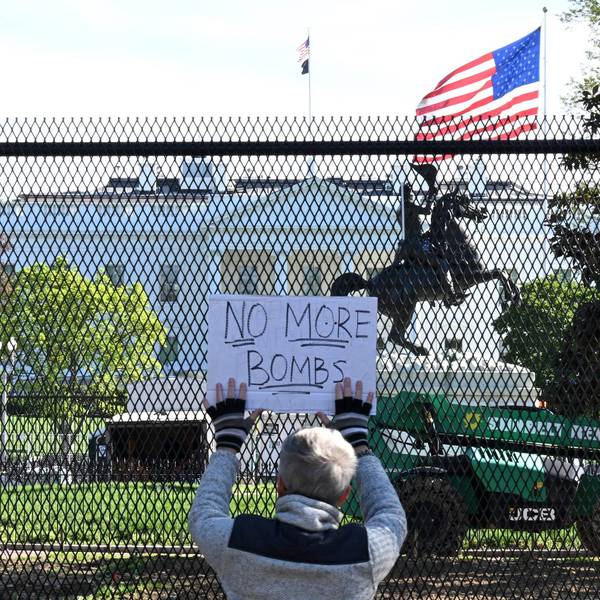
America's longest war continues to drag on with no end in sight. More than 14 years since the invasion of Afghanistan, our highly capable men and women in uniform have gone above and beyond the call of duty. They have done enough; it's past time to bring them home.
On 15 October, we saw the ramifications of Congress's blank check for endless war when President Obama announced that thousands of US troops would remain in Afghanistan through the end of his term and into 2017.
This war has already cost our nation so much: 2,350 of our brave servicemen and women have made the ultimate sacrifice, more than 20,000 have been wounded, and thousands more bear invisible scars. This war has also taken the lives of thousands of Afghans and soldiers from our coalition partners and Nato allies.
Continuing this war has not made us any safer. Our protracted engagement in Afghanistan undermines our national security by sparking global resentment against the US and spurring unsustainable Pentagon spending. The war's price tag totals more than $716bn, which continues to prevent much-needed investments in critical domestic priorities.
It's time to bring our armed forces home to their families and keep our nation's sacred promise to care for them. The American people agree: a December Washington Post-ABC News poll found that a 56% majority of Americans believe this war has not been worth fighting, a trend that dates back to 2010. Yet despite the strong objections of the American people, this war continues with no end in sight.
In the dark days following the attacks on September 11, I cast Congress's sole vote against the authorization for military force (AUMF) that started the war in Afghanistan. I voted against the AUMF because it was so broadly written that it empowered any president to wage endless war in any place at any time without congressional oversight.
In addition to starting the longest war in US history, the 2001 AUMF has emboldened presidential administrations to intervene around the world without a debate in Congress. According to a report from the Congressional Research Service, the 2001 AUMF has been used more than 30 times to justify military action, troop deployments, drone strikes, and indefinite detentions at Guantanamo Bay. And that count only includes unclassified uses - meaning there could be many other instances where Congress has been left in the dark.
Since that lonely vote in 2001, many members of Congress have realized that the blanket war authorization opened a Pandora's box. My bill, HR 1303, would repeal the limitless AUMF, end this war on a reasonable timeline, and restore Congress's constitutional responsibility to debate future wars; it has supporters on both sides of the aisle.
As members of Congress, we take an oath to protect and uphold the US Constitution. Yet, for too long, Congress has abdicated its vital role to authorize and supervise our nation's military actions. The American people deserve a vote, through their congressional representatives, on matters of war and peace.
While Afghanistan and the region still face significant challenges, history has shown that there is no effective military solution. As John Isaacs, a senior fellow at Council for a Livable World, wrote: "More troops, more time, more money, more casualties will simply not bring the war to a close."
Only an inclusive political solution can bring peace, stability, and prosperity to Afghanistan and the region. The future of Afghanistan must be in the hands of the Afghan people. It's time to bring America's longest war to a close.
Dear Common Dreams reader, It’s been nearly 30 years since I co-founded Common Dreams with my late wife, Lina Newhouser. We had the radical notion that journalism should serve the public good, not corporate profits. It was clear to us from the outset what it would take to build such a project. No paid advertisements. No corporate sponsors. No millionaire publisher telling us what to think or do. Many people said we wouldn't last a year, but we proved those doubters wrong. Together with a tremendous team of journalists and dedicated staff, we built an independent media outlet free from the constraints of profits and corporate control. Our mission has always been simple: To inform. To inspire. To ignite change for the common good. Building Common Dreams was not easy. Our survival was never guaranteed. When you take on the most powerful forces—Wall Street greed, fossil fuel industry destruction, Big Tech lobbyists, and uber-rich oligarchs who have spent billions upon billions rigging the economy and democracy in their favor—the only bulwark you have is supporters who believe in your work. But here’s the urgent message from me today. It's never been this bad out there. And it's never been this hard to keep us going. At the very moment Common Dreams is most needed, the threats we face are intensifying. We need your support now more than ever. We don't accept corporate advertising and never will. We don't have a paywall because we don't think people should be blocked from critical news based on their ability to pay. Everything we do is funded by the donations of readers like you. When everyone does the little they can afford, we are strong. But if that support retreats or dries up, so do we. Will you donate now to make sure Common Dreams not only survives but thrives? —Craig Brown, Co-founder |
America's longest war continues to drag on with no end in sight. More than 14 years since the invasion of Afghanistan, our highly capable men and women in uniform have gone above and beyond the call of duty. They have done enough; it's past time to bring them home.
On 15 October, we saw the ramifications of Congress's blank check for endless war when President Obama announced that thousands of US troops would remain in Afghanistan through the end of his term and into 2017.
This war has already cost our nation so much: 2,350 of our brave servicemen and women have made the ultimate sacrifice, more than 20,000 have been wounded, and thousands more bear invisible scars. This war has also taken the lives of thousands of Afghans and soldiers from our coalition partners and Nato allies.
Continuing this war has not made us any safer. Our protracted engagement in Afghanistan undermines our national security by sparking global resentment against the US and spurring unsustainable Pentagon spending. The war's price tag totals more than $716bn, which continues to prevent much-needed investments in critical domestic priorities.
It's time to bring our armed forces home to their families and keep our nation's sacred promise to care for them. The American people agree: a December Washington Post-ABC News poll found that a 56% majority of Americans believe this war has not been worth fighting, a trend that dates back to 2010. Yet despite the strong objections of the American people, this war continues with no end in sight.
In the dark days following the attacks on September 11, I cast Congress's sole vote against the authorization for military force (AUMF) that started the war in Afghanistan. I voted against the AUMF because it was so broadly written that it empowered any president to wage endless war in any place at any time without congressional oversight.
In addition to starting the longest war in US history, the 2001 AUMF has emboldened presidential administrations to intervene around the world without a debate in Congress. According to a report from the Congressional Research Service, the 2001 AUMF has been used more than 30 times to justify military action, troop deployments, drone strikes, and indefinite detentions at Guantanamo Bay. And that count only includes unclassified uses - meaning there could be many other instances where Congress has been left in the dark.
Since that lonely vote in 2001, many members of Congress have realized that the blanket war authorization opened a Pandora's box. My bill, HR 1303, would repeal the limitless AUMF, end this war on a reasonable timeline, and restore Congress's constitutional responsibility to debate future wars; it has supporters on both sides of the aisle.
As members of Congress, we take an oath to protect and uphold the US Constitution. Yet, for too long, Congress has abdicated its vital role to authorize and supervise our nation's military actions. The American people deserve a vote, through their congressional representatives, on matters of war and peace.
While Afghanistan and the region still face significant challenges, history has shown that there is no effective military solution. As John Isaacs, a senior fellow at Council for a Livable World, wrote: "More troops, more time, more money, more casualties will simply not bring the war to a close."
Only an inclusive political solution can bring peace, stability, and prosperity to Afghanistan and the region. The future of Afghanistan must be in the hands of the Afghan people. It's time to bring America's longest war to a close.
America's longest war continues to drag on with no end in sight. More than 14 years since the invasion of Afghanistan, our highly capable men and women in uniform have gone above and beyond the call of duty. They have done enough; it's past time to bring them home.
On 15 October, we saw the ramifications of Congress's blank check for endless war when President Obama announced that thousands of US troops would remain in Afghanistan through the end of his term and into 2017.
This war has already cost our nation so much: 2,350 of our brave servicemen and women have made the ultimate sacrifice, more than 20,000 have been wounded, and thousands more bear invisible scars. This war has also taken the lives of thousands of Afghans and soldiers from our coalition partners and Nato allies.
Continuing this war has not made us any safer. Our protracted engagement in Afghanistan undermines our national security by sparking global resentment against the US and spurring unsustainable Pentagon spending. The war's price tag totals more than $716bn, which continues to prevent much-needed investments in critical domestic priorities.
It's time to bring our armed forces home to their families and keep our nation's sacred promise to care for them. The American people agree: a December Washington Post-ABC News poll found that a 56% majority of Americans believe this war has not been worth fighting, a trend that dates back to 2010. Yet despite the strong objections of the American people, this war continues with no end in sight.
In the dark days following the attacks on September 11, I cast Congress's sole vote against the authorization for military force (AUMF) that started the war in Afghanistan. I voted against the AUMF because it was so broadly written that it empowered any president to wage endless war in any place at any time without congressional oversight.
In addition to starting the longest war in US history, the 2001 AUMF has emboldened presidential administrations to intervene around the world without a debate in Congress. According to a report from the Congressional Research Service, the 2001 AUMF has been used more than 30 times to justify military action, troop deployments, drone strikes, and indefinite detentions at Guantanamo Bay. And that count only includes unclassified uses - meaning there could be many other instances where Congress has been left in the dark.
Since that lonely vote in 2001, many members of Congress have realized that the blanket war authorization opened a Pandora's box. My bill, HR 1303, would repeal the limitless AUMF, end this war on a reasonable timeline, and restore Congress's constitutional responsibility to debate future wars; it has supporters on both sides of the aisle.
As members of Congress, we take an oath to protect and uphold the US Constitution. Yet, for too long, Congress has abdicated its vital role to authorize and supervise our nation's military actions. The American people deserve a vote, through their congressional representatives, on matters of war and peace.
While Afghanistan and the region still face significant challenges, history has shown that there is no effective military solution. As John Isaacs, a senior fellow at Council for a Livable World, wrote: "More troops, more time, more money, more casualties will simply not bring the war to a close."
Only an inclusive political solution can bring peace, stability, and prosperity to Afghanistan and the region. The future of Afghanistan must be in the hands of the Afghan people. It's time to bring America's longest war to a close.