
SUBSCRIBE TO OUR FREE NEWSLETTER
Daily news & progressive opinion—funded by the people, not the corporations—delivered straight to your inbox.
5
#000000
#FFFFFF
To donate by check, phone, or other method, see our More Ways to Give page.


Daily news & progressive opinion—funded by the people, not the corporations—delivered straight to your inbox.
"Governments know fossil fuels are the cause of climate breakdown, yet they keep stalling on the transition."
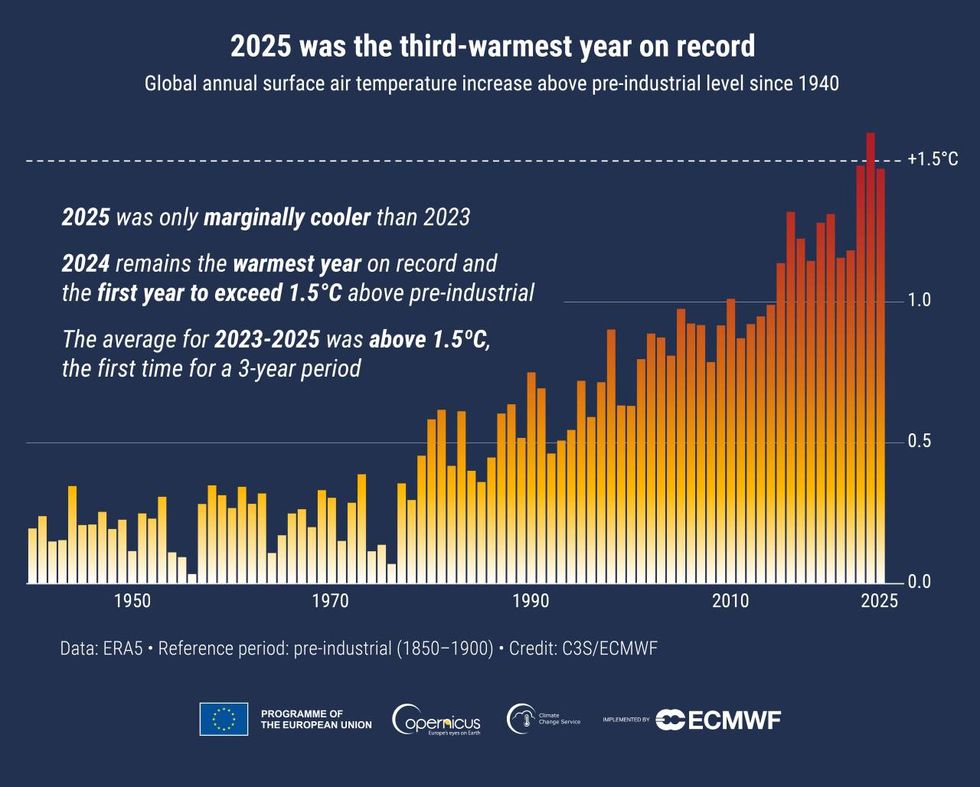
Increasing fossil fuel extraction helped make 2025 the third-hottest year on record and marked the third straight year of “extraordinary global temperatures,” according to a major new report on the climate crisis.
On Wednesday, the European Union's Copernicus climate agency published a report based on data from climate-monitoring organizations, including NASA and the World Meteorological Organization.
Based on billions of weather readings from satellites, ships, aircraft, and weather stations, the report found that, for the first time in recorded history, global temperatures over a three-year period have exceeded the critical threshold of 1.5°C above preindustrial levels.
At current rates of heating, the report found, the Earth could surpass the Paris Climate Accord’s target of 1.5°C on a long-term basis by 2030, more than a decade sooner than scientists' projection when nations negotiated the pledge to reduce emissions back in 2015.
“Atmospheric data from 2025 paints a clear picture: Human activity remains the dominant driver of the exceptional temperatures we are observing,” said Laurence Rouil, the director of Copernicus’ Atmosphere Monitoring Service. “Atmospheric greenhouse gases have steadily increased over the last 10 years.”

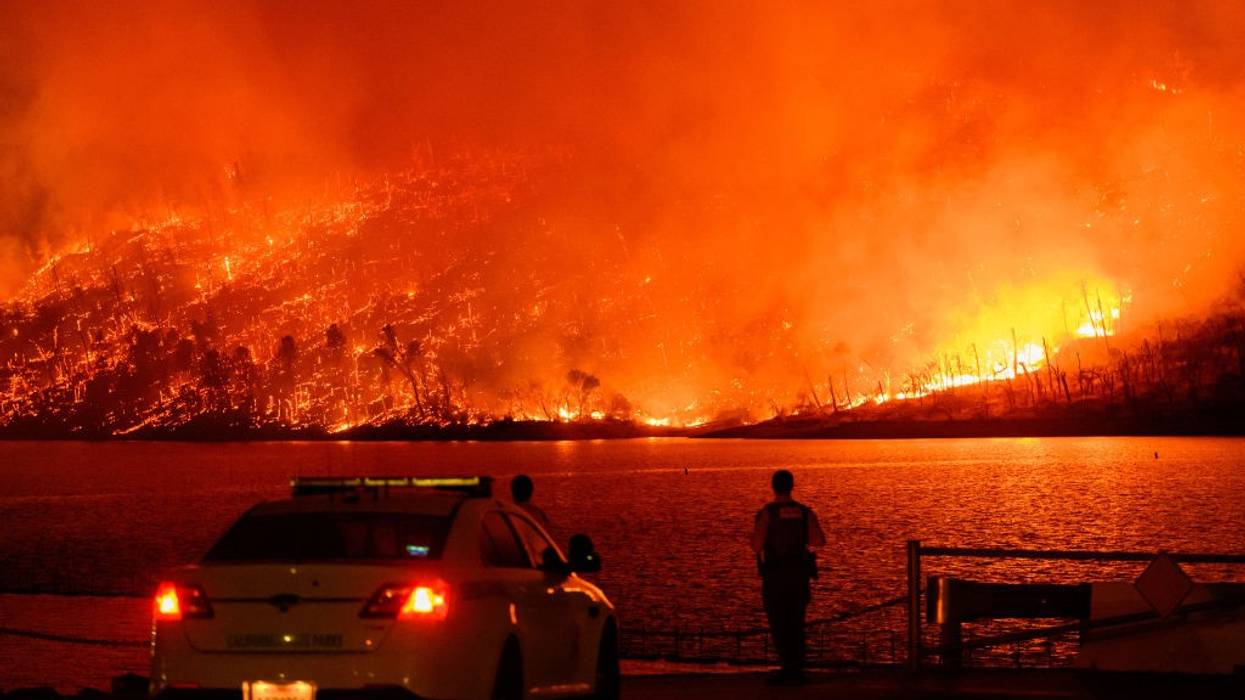
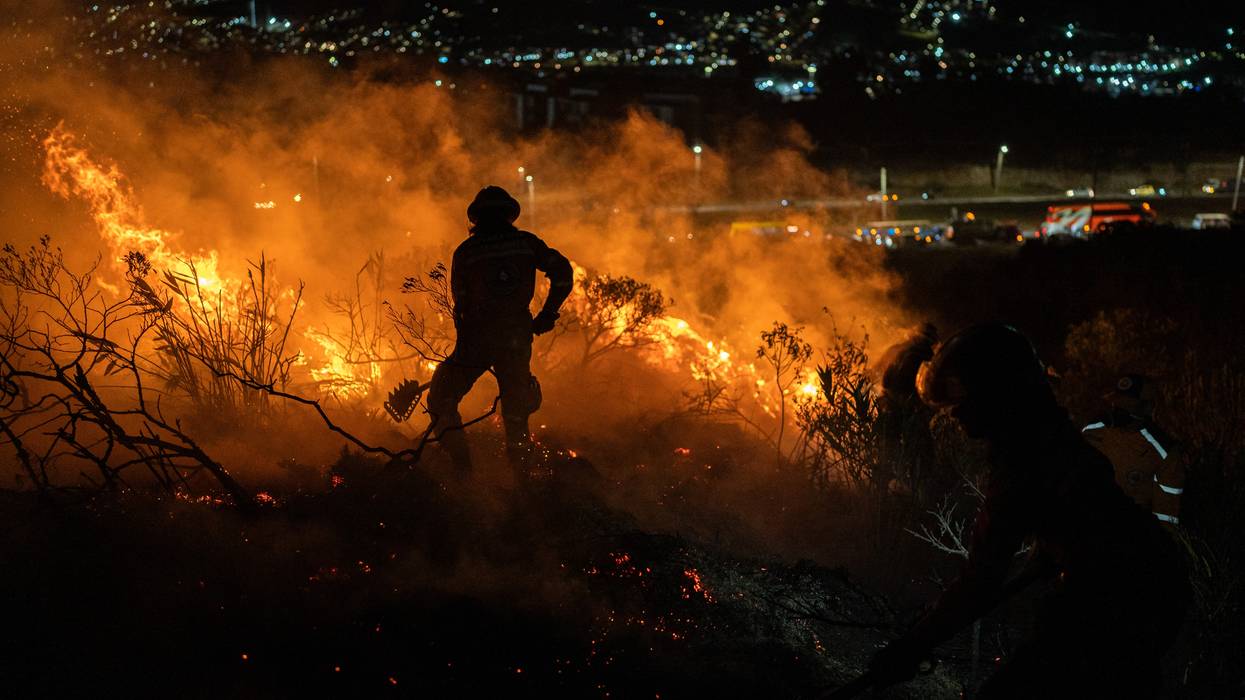
As with previous years, 2025 was marked by a series of disasters fueled by rising temperatures: From a historic heatwaves that killed an estimated 24,000 people in Europe, to typhoons across Asia that displaced millions, to the wildfires that ravaged the Los Angeles area roughly a year ago and were one of a record 23 disasters in the US that exceeded more than a billion dollars in damage.
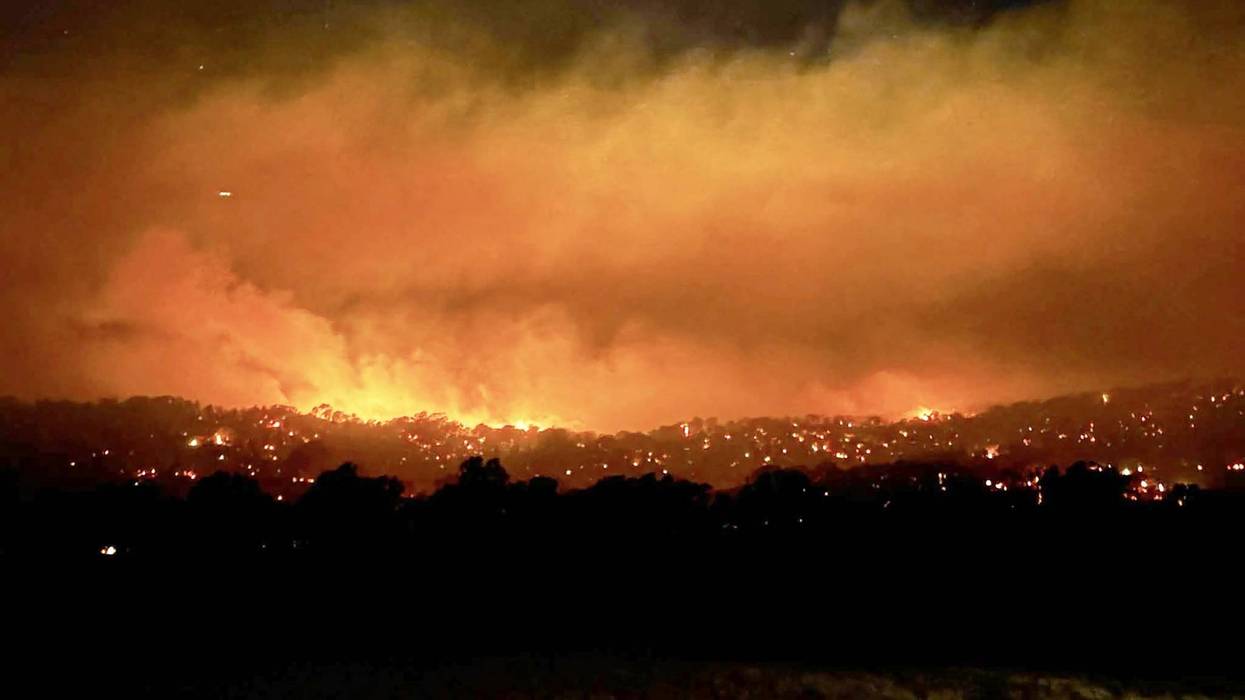
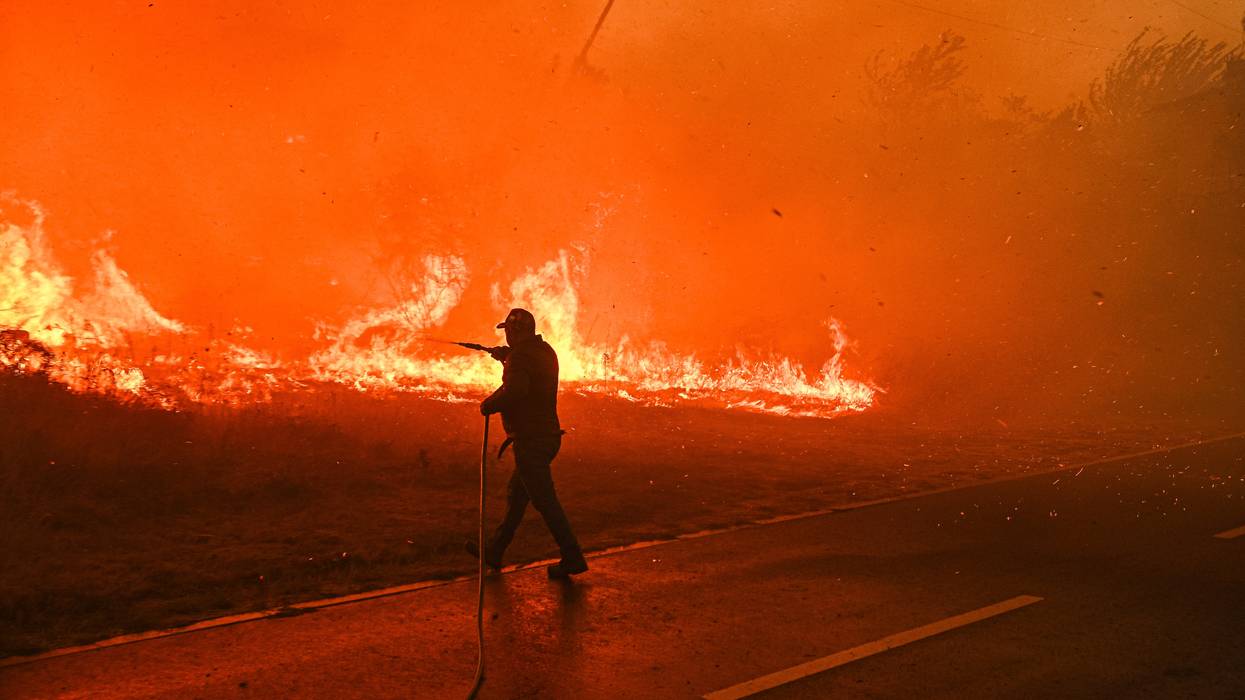
The Copernicus report was released as Australia suffered what DW News called possibly its "first megafire of the climate change age" in Victoria, which had charred over 350,000 hectares (more than 864,000 acres) of land as of Sunday and forced thousands to flee their homes.
(Video: Sky News Australia)
"Extreme weather isn’t rare anymore—it’s driving up food prices, insurance premiums, water shortages, and upending daily life across the globe," said Savio Carvalho, the managing director for campaigns and networks for the climate activist group 350. "Governments know fossil fuels are the cause of climate breakdown, yet they keep stalling on the transition. We don’t have the luxury of wasting time or taking side paths—we are running out of time."
The past year was marked by yet more disappointment for those hoping to see collective global action to reduce carbon emissions.
The most glaring setbacks occurred in the United States—the globe's largest historic polluter—where President Donald Trump has virtually halted renewable energy expansion, pushed to crank up fossil fuel extraction, and sought to end the "endangerment finding" that allows carbon emissions to be regulated on the basis of their harm to the climate.
But even in the absence of Trump, the past year's global climate summit in Brazil, COP30, once again fell well short of a cohesive international action plan, ending with no global agreement to wind down the use of oil, gas, and coal. Eighty nations failed to submit global emissions pledges, and many of those that did failed to make commitments that would likely bend the global temperature curve in a favorable direction.
Where scientists once urged nations to take swift action in the hope of passing the 1.5°C tipping point, Carlo Buontempo, the director of Copernicus, said following Wednesday's report that "we are bound to pass it."
He said, "The choice we now have is how to best manage the inevitable overshoot and its consequences on societies and natural systems."
But an overshoot is intolerable to many on the front lines of the crisis.
"In the Pacific, climate disasters are costing us billions of dollars in recovery and rebuilding," said Fenton Lutunatabua, 350's program manager for the Pacific and Caribbean. "A world beyond 1.5°C would devastate our resources even more."
"Entire villages in Fiji are being uprooted and relocated, losing connection to traditional lands and fishing grounds," he added. "Atoll nations like Tuvalu and the Marshall Islands are grappling with both adaptation and addressing the reality of potential forced migration. To give up on 1.5°C is to say that any of these realities is acceptable."
In Indonesia, where unprecedented flash floods in November killed 1,100 people, Suriadi Darmoko, an activist in Bali who is suing his government following an International Court of Justice ruling allowing states to be held legally accountable over climate harms, agreed that complacency is not an option.
“Entire communities are still buried in mud. Thousands of families are still grieving and struggling to have their basic needs met. We refuse to be treated as mere climate disaster victims," he said. "Our leaders have kept the world hooked on fossil fuels even as they knew decades ago it would lead to such tragedies."
Carvalho, too, rejected the notion that extreme warming is something the Earth must accept. Despite setbacks to collective action, 2025 also saw certain actors on the global stage make great strides toward a renewable future.
In large part due to massive investments by China, renewable sources generated more power worldwide than coal for the first time, and solar energy generation grew by 31% in the first half of the year, outpacing demand growth.
"We need to do what’s right now: a global phase out of fossil fuels is urgent," said Carvalho. "We already have the renewable energy solutions we need—what’s missing is the political will. We can prevent the worst if we act now."
"The environment does not care about politics. Keep spewing greenhouse gases and face the consequences."
European Union officials said the Copernicus Climate Change Service had issued its latest "stark reminder of why climate action is urgent" when the bloc's program announced that it observed less sea ice covering the Earth's oceans last month than at any other point in recorded history.
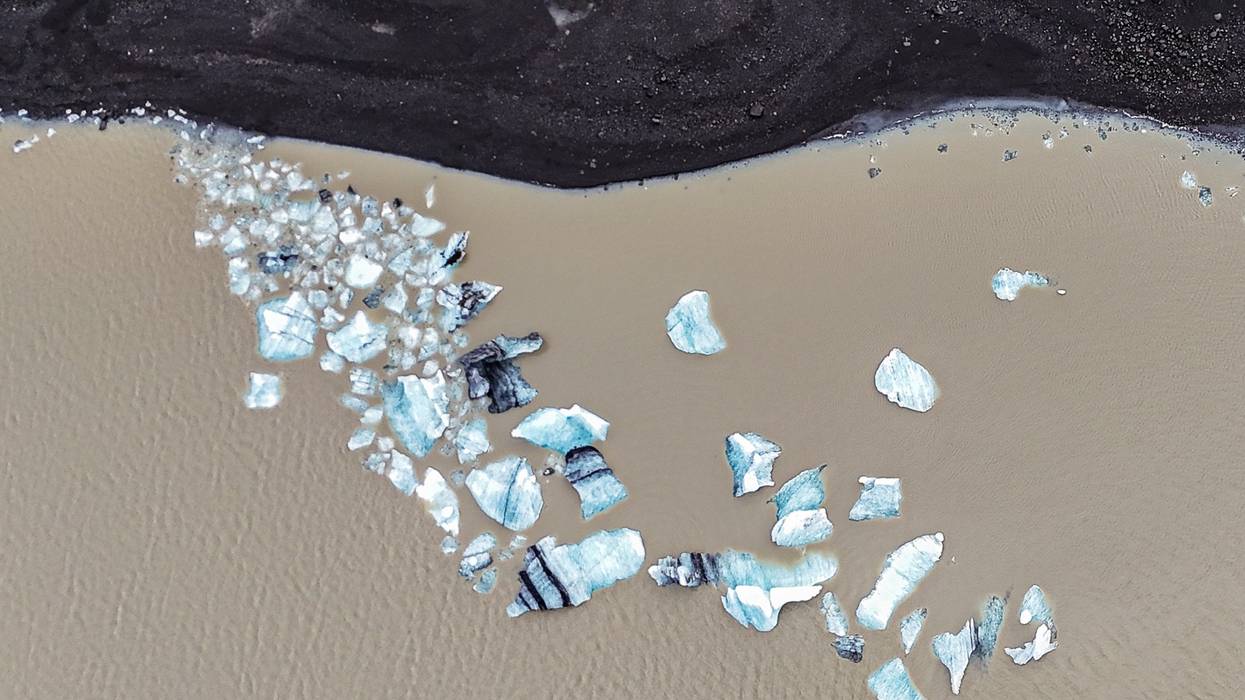
In the Arctic, sea ice reached its lowest monthly extent on record, at 8% below average, in early February, and it remained below the previous record for the rest of the month.
The oceans were missing an area of ice roughly the size of the United Kingdom last month, according to Copernicus (C3S), and the finding was not an anomaly in recent sea ice observations.
February marked the third consecutive month in which record low sea ice levels for the corresponding month were observed in the Arctic.
C3S reported that in the Antarctic, sea ice levels have rapidly declined in 2025 after appearing to recover to near-record levels in December 2024.
Last month, sea ice near the South Pole reached its fourth-lowest monthly extent, at 26% below average.
C3S said the daily sea ice extent in the Antarctic may have also reached its annual minimum toward the end of the month, which will be confirmed later in March; if confirmed, it would be the second-lowest annual minimum in the satellite record.
"February 2025 continues the streak of record or near-record temperatures observed throughout the last two years," said Samanatha Burgess, strategic lead for climate at the European Center for Medium-Range Weather Forecasts. "One of the consequences of a warmer world is melting sea ice, and the record or near-record low sea ice cover at both poles has pushed global sea ice cover to an all-time minimum."
The melting sea ice was recorded as global average temperatures rose 1.59°C (2.8°F) above the pre-industrial average last month, making it the third-warmest February on record.
In Europe, the temperatures that most exceeded averages were recorded last month in parts of Scandinavia, Iceland, and the Alps. Outside of Europe, "temperatures were most above average over large parts of the Arctic."
The low extent of sea ice will lead to "more solar heat absorbed by the darker oceans," and "faster warming," said Simon Oldridge, a climate campaigner.
The loss of sea ice can also lead to the collapse of ocean currents that are crucial for marine life to thrive.
C3S reported on the record-low sea ice levels as campaigners in the U.S. and around the world condemned recent anti-climate actions taken by U.S. President Donald Trump and the Republican Party, including the country's exit from the Paris climate agreement, the GOP's passing of a bill to end a federal program aimed at reducing planet-heating methane emissions, and Trump's push to fast-track fossil fuel projects—as scientists warn that new extractive projects have no place on a pathway to limiting planetary heating and avoiding its worst impacts.
"The environment does not care about politics," said public health expert Ali Khan. "Keep spewing greenhouse gases and face the consequences."
"No surprise at all, but still shocking news. Will temperatures drop below 1.5°C again? I have my doubts," said one climate scientist.
Data from the first 11 months of 2024 reaffirmed that the globe is set to pass a grim milestone this year, according to the European Union's earth observation program.
The E.U.'s Copernicus Climate Change Service (C3S) said in a report Monday that November 2024 was 1.62°C above the preindustrial level, making it the 16th month in a 17-month stretch during which global-average surface air temperature breached 1.5°C. November 2024 was the second-warmest November, after November of last year, according to C3S.
"At this point, it is effectively certain that 2024 is going to be the warmest year on record and more than 1.5°C above the pre-industrial level," according to a Monday statement from C3S. With data for November in hand, the service estimates that global temperature is set to be 1.59°C above the pre-industrial level for 2024, up from 1.48°C last year.
C3S announced last month that 2024 was "virtually certain" to be the hottest year on record after October 2024 hit 1.65°C higher than preindustrial levels.
"This does not mean that the Paris Agreement has been breached, but it does mean ambitious climate action is more urgent than ever," said Samantha Burgess, deputy director of C3S.
Under the 2015 Paris agreement, signatory countries pledged to reduce their global greenhouse gas emissions with the aim of keeping global temperature rise this century to 1.5ºC, well below 2°C above preindustrial levels. According to the United Nations, going above 1.5ºC on an annual or monthly basis doesn't constitute failure to reach the agreement's goal, which refers to temperature rise over decades—however, "breaches of 1.5°C for a month or a year are early signs of getting perilously close to exceeding the long-term limit, and serve as clarion calls for increasing ambition and accelerating action in this critical decade."
Additionally, a recent paper in the journal Nature warned of irreversible impacts from overshooting the 1.5ºC target, even temporarily.
Climate scientist and volcanologist Bill McGuire reacted to the news Monday, saying: "Average temperature for 2024 expected to be 1.60°C. A massive hike on 2023, which itself was the hottest year for probably 120,000 years. No surprise at all, but still shocking news. Will temperatures drop below 1.5°C again? I have my doubts."
The update comes on the heels of COP29, the most recent U.N. climate summit, which many climate campaigners viewed as a disappointment. During the summit, attendees sought to reach a climate financing agreement that would see rich, developed countries contribute money to help developing countries decarbonize and deal with the impacts of the climate emergency. The final dollar amount, according to critics, fell far short of what developing countries need.