SUBSCRIBE TO OUR FREE NEWSLETTER
Daily news & progressive opinion—funded by the people, not the corporations—delivered straight to your inbox.
5
#000000
#FFFFFF
To donate by check, phone, or other method, see our More Ways to Give page.
Daily news & progressive opinion—funded by the people, not the corporations—delivered straight to your inbox.
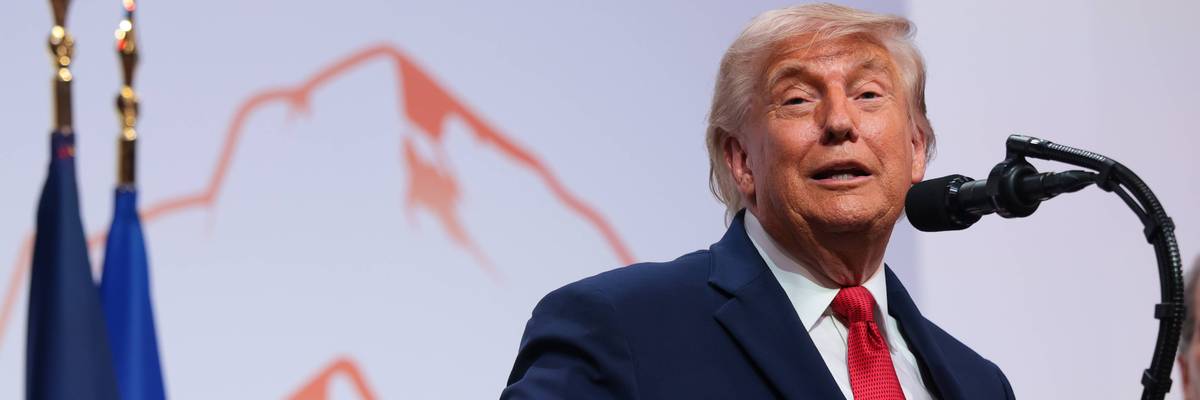
US President Donald Trump speaks at a press conference during the G7 Leaders' Summit on June 17, 2026 in Evian-les-Bains, France.
110 days of a war that went nowhere to get here. And for what?
There are many lessons to be learned from the lates made-for-Israel war on Iran. The first and most damning is that the war resolved the very crisis it created. Donald Trump celebrated the reopening of the Strait of Hormuz and the lifting of the blockade against Iran. Two conditions that were fully in place before Benjamin Netanyahu dog walked Trump into this war. The agreement that concluded the war took us back to exactly where we stood before America spent $200 billion, and where Americans continue to pay Israeli surcharge tax at the pump and grocery stores.
As for Iran's nuclear program, the arithmetic does not lie. The 400 kilograms of 60-percent enriched uranium that Iran possessed were zero before Trump — pressured by his largest Israel-first donors — tore up the Joint Comprehensive Plan of Action (JCPOA) in May 2018. According to the International Atomic Energy Agency, Iran had fully complied not only with the IAEA non-proliferation agreement, which Israel has never signed nor accepted, but with the additional protocols governing verification and monitoring of its civilian nuclear program. Trump canceled the deal anyway, not because it failed America, but because it did not satisfy Israel’s veto.
The deepest irony is that Iran's nuclear knowledge and capabilities are more advanced today than when Trump discarded the JCPOA. Any new agreement—even one stricter in structure than the original—is therefore being negotiated from a fundamentally weaker position than the one that existed in 2018. No treaty can unlearn what Iran already knows.
On Monday, June 15, Trump heralded the end of war bragging that Iran agreed not to develop nuclear weapons. Item 8 of the Memorandum of Understanding (MoU), signed Wednesday, states: “The Islamic Republic of Iran reaffirms that it shall not procure or develop nuclear weapons.” The word reaffirms is not incidental. It is a direct reference to Article III of the 2015 JCPOA, which Trump most likely never read, where Iran had already affirmed: “… that under no circumstances will Iran ever seek, develop or acquire any nuclear weapons.” Same commitment. Same language. Different signatures. Twelve weeks of a war that went nowhere to get here.
From “There will be no deal with Iran except UNCONDITIONAL SURRENDER!” to celebrate an MoU to reopen a Strait that was open before $200 billion and countless American and Iranian lives were squandered. Trump's triumph is much ado about nothing. He canceled an existing deal that took years to negotiate, inflicted economic hardship on ordinary Iranians, and allowed Iran's nuclear advancement to leap forward. It is, in the most literal sense, like redefining water as H2O. The molecule did not change. Only the dressing did. Israel’s war took Trump back to the starting point, at twice the cost to American taxpayers.
The same special-interest group that pushed Trump to cancel the JCPOA, lobbied him long before the 2024 election. Israel-first donors poured hundreds of million into his campaign as a down payment for this war. Netanyahu visited Trump seven times in 13 months, manipulating, and scheming for another made-for-Israel war.
This war should also carry a lesson for the Arab Gulf states that long believed American military bases were a guarantee of their security. Instead, they found themselves sidelined and never consulted on a war waged, directly or indirectly, from their own soil, ultimately in service of an Israeli agenda. Foreign military presence does not deliver security. It delivers dependency. Lasting regional stability is built through regional cooperation, on terms beneficial to the region.
Foreign military presence does not deliver security. It delivers dependency.
More importantly, the region must now reckon with a pattern it can no longer afford to ignore: wherever Israel goes, instability follows. The so-called Abraham Accords brought Israel into the Gulf. What followed was bombs, drones and economic ruin not seen since the Second World War. I have lived in the Gulf. The only pop people could hear was the backfire of an aging car exhaust. In the last three months, friends shared recordings of ballistic missiles splitting the sky and drones buzzing overhead. Israel did not bring a defense shield; it brought a target. Its presence is a magnet for unrest. It is a carcass attracting wasps.
In fact, Israel is an agent of disorder and a parasite nurtured by chaos. It wraps itself in the language of partnership, mutual benefit, and shared values, deceiving others into believing the arrangement is reciprocal when it is entirely one-directional.
Israel record speaks for itself: a genocide in Gaza, ethnic cleansing across the West Bank, 1.3 million internal refugees in Lebanon, the occupation of Syrian land following Assad's fall, destabilization operations in northern Iraq and Sudan.
In Iraq, the American invasion and regime change did not satisfy Israel’s insatiable lust for total chaos. It targeted Iraqi scientists and waged war against knowledge itself. The blueprint, in this view, has not changed for Iran. Israel’s dissatisfaction over the MoU with Tehran is not that it fails to produce a non-nuclear Iran, but that it fails to wipe out knowledge. Its broader objective is the suppression of scientific and technological development across the region. Israel seeks neighbors unable to think independently. it wants consumers, not producers. It wants importers rather than innovators. It wants to maintain a monopoly over nuclear capabilities and control over regional scientific advancement.
Israel brought ruins to the US, too. The made-for-Israel Iraq war helped detonate the financial crisis of 2008, saddling future American generations with trillions in accumulated debt that has never been fully reckoned with. A war that Trump condemned, criticizing Democratic leadership for failing to impeach George W. Bush who “got us into the war with lies.”
The cost of Trump's made-for-Israel war on Iran requires no economist to explain. It arrives uninvited in every American home, at the meat counter, in every grocery bill, every gas receipt, every price that keeps rising without explanation. They may not realize its extent—not yet anyway. By the time they do, the damage to the US economy, as in 2008, will be too deep to reverse.
To undermine potential peace with Iran, the ungrateful Israel-first loyalists like Ben Shapiro, Mark Levin are already panicking and challenging Trump’s MoU. Israel will activate the constellation of media outlets controlled by Israel-first billionaires to shape what Americans see, read, and are permitted to question. The once-respected "60 Minutes," under a new Israel-first boss, Bari Weiss, allows Netanyahu to handpick his own interviewer. Who knows, maybe he submits his own questions, too.
Now, Netanyahu and American Zionists have 60 days to sabotage a final deal with Iran. Israel will mobilize its donors, lobby Congress, and if that fails, resort to what it has perfected. A false flag operation against American forces in the region, or another assassination in Lebanon. A conflagration ensues, and once again, it will be fought with American money and American lives. Because a Middle East free of American military entanglement is the one outcome Israel cannot tolerate—a prospect more threatening than any Iranian nuclear centrifuge.
Dear Common Dreams reader, It’s been nearly 30 years since I co-founded Common Dreams with my late wife, Lina Newhouser. We had the radical notion that journalism should serve the public good, not corporate profits. It was clear to us from the outset what it would take to build such a project. No paid advertisements. No corporate sponsors. No millionaire publisher telling us what to think or do. Many people said we wouldn't last a year, but we proved those doubters wrong. Together with a tremendous team of journalists and dedicated staff, we built an independent media outlet free from the constraints of profits and corporate control. Our mission has always been simple: To inform. To inspire. To ignite change for the common good. Building Common Dreams was not easy. Our survival was never guaranteed. When you take on the most powerful forces—Wall Street greed, fossil fuel industry destruction, Big Tech lobbyists, and uber-rich oligarchs who have spent billions upon billions rigging the economy and democracy in their favor—the only bulwark you have is supporters who believe in your work. But here’s the urgent message from me today. It's never been this bad out there. And it's never been this hard to keep us going. At the very moment Common Dreams is most needed, the threats we face are intensifying. We need your support now more than ever. We don't accept corporate advertising and never will. We don't have a paywall because we don't think people should be blocked from critical news based on their ability to pay. Everything we do is funded by the donations of readers like you. When everyone does the little they can afford, we are strong. But if that support retreats or dries up, so do we. Will you donate now to make sure Common Dreams not only survives but thrives? —Craig Brown, Co-founder |
There are many lessons to be learned from the lates made-for-Israel war on Iran. The first and most damning is that the war resolved the very crisis it created. Donald Trump celebrated the reopening of the Strait of Hormuz and the lifting of the blockade against Iran. Two conditions that were fully in place before Benjamin Netanyahu dog walked Trump into this war. The agreement that concluded the war took us back to exactly where we stood before America spent $200 billion, and where Americans continue to pay Israeli surcharge tax at the pump and grocery stores.
As for Iran's nuclear program, the arithmetic does not lie. The 400 kilograms of 60-percent enriched uranium that Iran possessed were zero before Trump — pressured by his largest Israel-first donors — tore up the Joint Comprehensive Plan of Action (JCPOA) in May 2018. According to the International Atomic Energy Agency, Iran had fully complied not only with the IAEA non-proliferation agreement, which Israel has never signed nor accepted, but with the additional protocols governing verification and monitoring of its civilian nuclear program. Trump canceled the deal anyway, not because it failed America, but because it did not satisfy Israel’s veto.
The deepest irony is that Iran's nuclear knowledge and capabilities are more advanced today than when Trump discarded the JCPOA. Any new agreement—even one stricter in structure than the original—is therefore being negotiated from a fundamentally weaker position than the one that existed in 2018. No treaty can unlearn what Iran already knows.
On Monday, June 15, Trump heralded the end of war bragging that Iran agreed not to develop nuclear weapons. Item 8 of the Memorandum of Understanding (MoU), signed Wednesday, states: “The Islamic Republic of Iran reaffirms that it shall not procure or develop nuclear weapons.” The word reaffirms is not incidental. It is a direct reference to Article III of the 2015 JCPOA, which Trump most likely never read, where Iran had already affirmed: “… that under no circumstances will Iran ever seek, develop or acquire any nuclear weapons.” Same commitment. Same language. Different signatures. Twelve weeks of a war that went nowhere to get here.
From “There will be no deal with Iran except UNCONDITIONAL SURRENDER!” to celebrate an MoU to reopen a Strait that was open before $200 billion and countless American and Iranian lives were squandered. Trump's triumph is much ado about nothing. He canceled an existing deal that took years to negotiate, inflicted economic hardship on ordinary Iranians, and allowed Iran's nuclear advancement to leap forward. It is, in the most literal sense, like redefining water as H2O. The molecule did not change. Only the dressing did. Israel’s war took Trump back to the starting point, at twice the cost to American taxpayers.
The same special-interest group that pushed Trump to cancel the JCPOA, lobbied him long before the 2024 election. Israel-first donors poured hundreds of million into his campaign as a down payment for this war. Netanyahu visited Trump seven times in 13 months, manipulating, and scheming for another made-for-Israel war.
This war should also carry a lesson for the Arab Gulf states that long believed American military bases were a guarantee of their security. Instead, they found themselves sidelined and never consulted on a war waged, directly or indirectly, from their own soil, ultimately in service of an Israeli agenda. Foreign military presence does not deliver security. It delivers dependency. Lasting regional stability is built through regional cooperation, on terms beneficial to the region.
Foreign military presence does not deliver security. It delivers dependency.
More importantly, the region must now reckon with a pattern it can no longer afford to ignore: wherever Israel goes, instability follows. The so-called Abraham Accords brought Israel into the Gulf. What followed was bombs, drones and economic ruin not seen since the Second World War. I have lived in the Gulf. The only pop people could hear was the backfire of an aging car exhaust. In the last three months, friends shared recordings of ballistic missiles splitting the sky and drones buzzing overhead. Israel did not bring a defense shield; it brought a target. Its presence is a magnet for unrest. It is a carcass attracting wasps.
In fact, Israel is an agent of disorder and a parasite nurtured by chaos. It wraps itself in the language of partnership, mutual benefit, and shared values, deceiving others into believing the arrangement is reciprocal when it is entirely one-directional.
Israel record speaks for itself: a genocide in Gaza, ethnic cleansing across the West Bank, 1.3 million internal refugees in Lebanon, the occupation of Syrian land following Assad's fall, destabilization operations in northern Iraq and Sudan.
In Iraq, the American invasion and regime change did not satisfy Israel’s insatiable lust for total chaos. It targeted Iraqi scientists and waged war against knowledge itself. The blueprint, in this view, has not changed for Iran. Israel’s dissatisfaction over the MoU with Tehran is not that it fails to produce a non-nuclear Iran, but that it fails to wipe out knowledge. Its broader objective is the suppression of scientific and technological development across the region. Israel seeks neighbors unable to think independently. it wants consumers, not producers. It wants importers rather than innovators. It wants to maintain a monopoly over nuclear capabilities and control over regional scientific advancement.
Israel brought ruins to the US, too. The made-for-Israel Iraq war helped detonate the financial crisis of 2008, saddling future American generations with trillions in accumulated debt that has never been fully reckoned with. A war that Trump condemned, criticizing Democratic leadership for failing to impeach George W. Bush who “got us into the war with lies.”
The cost of Trump's made-for-Israel war on Iran requires no economist to explain. It arrives uninvited in every American home, at the meat counter, in every grocery bill, every gas receipt, every price that keeps rising without explanation. They may not realize its extent—not yet anyway. By the time they do, the damage to the US economy, as in 2008, will be too deep to reverse.
To undermine potential peace with Iran, the ungrateful Israel-first loyalists like Ben Shapiro, Mark Levin are already panicking and challenging Trump’s MoU. Israel will activate the constellation of media outlets controlled by Israel-first billionaires to shape what Americans see, read, and are permitted to question. The once-respected "60 Minutes," under a new Israel-first boss, Bari Weiss, allows Netanyahu to handpick his own interviewer. Who knows, maybe he submits his own questions, too.
Now, Netanyahu and American Zionists have 60 days to sabotage a final deal with Iran. Israel will mobilize its donors, lobby Congress, and if that fails, resort to what it has perfected. A false flag operation against American forces in the region, or another assassination in Lebanon. A conflagration ensues, and once again, it will be fought with American money and American lives. Because a Middle East free of American military entanglement is the one outcome Israel cannot tolerate—a prospect more threatening than any Iranian nuclear centrifuge.
There are many lessons to be learned from the lates made-for-Israel war on Iran. The first and most damning is that the war resolved the very crisis it created. Donald Trump celebrated the reopening of the Strait of Hormuz and the lifting of the blockade against Iran. Two conditions that were fully in place before Benjamin Netanyahu dog walked Trump into this war. The agreement that concluded the war took us back to exactly where we stood before America spent $200 billion, and where Americans continue to pay Israeli surcharge tax at the pump and grocery stores.
As for Iran's nuclear program, the arithmetic does not lie. The 400 kilograms of 60-percent enriched uranium that Iran possessed were zero before Trump — pressured by his largest Israel-first donors — tore up the Joint Comprehensive Plan of Action (JCPOA) in May 2018. According to the International Atomic Energy Agency, Iran had fully complied not only with the IAEA non-proliferation agreement, which Israel has never signed nor accepted, but with the additional protocols governing verification and monitoring of its civilian nuclear program. Trump canceled the deal anyway, not because it failed America, but because it did not satisfy Israel’s veto.
The deepest irony is that Iran's nuclear knowledge and capabilities are more advanced today than when Trump discarded the JCPOA. Any new agreement—even one stricter in structure than the original—is therefore being negotiated from a fundamentally weaker position than the one that existed in 2018. No treaty can unlearn what Iran already knows.
On Monday, June 15, Trump heralded the end of war bragging that Iran agreed not to develop nuclear weapons. Item 8 of the Memorandum of Understanding (MoU), signed Wednesday, states: “The Islamic Republic of Iran reaffirms that it shall not procure or develop nuclear weapons.” The word reaffirms is not incidental. It is a direct reference to Article III of the 2015 JCPOA, which Trump most likely never read, where Iran had already affirmed: “… that under no circumstances will Iran ever seek, develop or acquire any nuclear weapons.” Same commitment. Same language. Different signatures. Twelve weeks of a war that went nowhere to get here.
From “There will be no deal with Iran except UNCONDITIONAL SURRENDER!” to celebrate an MoU to reopen a Strait that was open before $200 billion and countless American and Iranian lives were squandered. Trump's triumph is much ado about nothing. He canceled an existing deal that took years to negotiate, inflicted economic hardship on ordinary Iranians, and allowed Iran's nuclear advancement to leap forward. It is, in the most literal sense, like redefining water as H2O. The molecule did not change. Only the dressing did. Israel’s war took Trump back to the starting point, at twice the cost to American taxpayers.
The same special-interest group that pushed Trump to cancel the JCPOA, lobbied him long before the 2024 election. Israel-first donors poured hundreds of million into his campaign as a down payment for this war. Netanyahu visited Trump seven times in 13 months, manipulating, and scheming for another made-for-Israel war.
This war should also carry a lesson for the Arab Gulf states that long believed American military bases were a guarantee of their security. Instead, they found themselves sidelined and never consulted on a war waged, directly or indirectly, from their own soil, ultimately in service of an Israeli agenda. Foreign military presence does not deliver security. It delivers dependency. Lasting regional stability is built through regional cooperation, on terms beneficial to the region.
Foreign military presence does not deliver security. It delivers dependency.
More importantly, the region must now reckon with a pattern it can no longer afford to ignore: wherever Israel goes, instability follows. The so-called Abraham Accords brought Israel into the Gulf. What followed was bombs, drones and economic ruin not seen since the Second World War. I have lived in the Gulf. The only pop people could hear was the backfire of an aging car exhaust. In the last three months, friends shared recordings of ballistic missiles splitting the sky and drones buzzing overhead. Israel did not bring a defense shield; it brought a target. Its presence is a magnet for unrest. It is a carcass attracting wasps.
In fact, Israel is an agent of disorder and a parasite nurtured by chaos. It wraps itself in the language of partnership, mutual benefit, and shared values, deceiving others into believing the arrangement is reciprocal when it is entirely one-directional.
Israel record speaks for itself: a genocide in Gaza, ethnic cleansing across the West Bank, 1.3 million internal refugees in Lebanon, the occupation of Syrian land following Assad's fall, destabilization operations in northern Iraq and Sudan.
In Iraq, the American invasion and regime change did not satisfy Israel’s insatiable lust for total chaos. It targeted Iraqi scientists and waged war against knowledge itself. The blueprint, in this view, has not changed for Iran. Israel’s dissatisfaction over the MoU with Tehran is not that it fails to produce a non-nuclear Iran, but that it fails to wipe out knowledge. Its broader objective is the suppression of scientific and technological development across the region. Israel seeks neighbors unable to think independently. it wants consumers, not producers. It wants importers rather than innovators. It wants to maintain a monopoly over nuclear capabilities and control over regional scientific advancement.
Israel brought ruins to the US, too. The made-for-Israel Iraq war helped detonate the financial crisis of 2008, saddling future American generations with trillions in accumulated debt that has never been fully reckoned with. A war that Trump condemned, criticizing Democratic leadership for failing to impeach George W. Bush who “got us into the war with lies.”
The cost of Trump's made-for-Israel war on Iran requires no economist to explain. It arrives uninvited in every American home, at the meat counter, in every grocery bill, every gas receipt, every price that keeps rising without explanation. They may not realize its extent—not yet anyway. By the time they do, the damage to the US economy, as in 2008, will be too deep to reverse.
To undermine potential peace with Iran, the ungrateful Israel-first loyalists like Ben Shapiro, Mark Levin are already panicking and challenging Trump’s MoU. Israel will activate the constellation of media outlets controlled by Israel-first billionaires to shape what Americans see, read, and are permitted to question. The once-respected "60 Minutes," under a new Israel-first boss, Bari Weiss, allows Netanyahu to handpick his own interviewer. Who knows, maybe he submits his own questions, too.
Now, Netanyahu and American Zionists have 60 days to sabotage a final deal with Iran. Israel will mobilize its donors, lobby Congress, and if that fails, resort to what it has perfected. A false flag operation against American forces in the region, or another assassination in Lebanon. A conflagration ensues, and once again, it will be fought with American money and American lives. Because a Middle East free of American military entanglement is the one outcome Israel cannot tolerate—a prospect more threatening than any Iranian nuclear centrifuge.