

5
#000000
#FFFFFF
To donate by check, phone, or other method, see our More Ways to Give page.
Daily news & progressive opinion—funded by the people, not the corporations—delivered straight to your inbox.
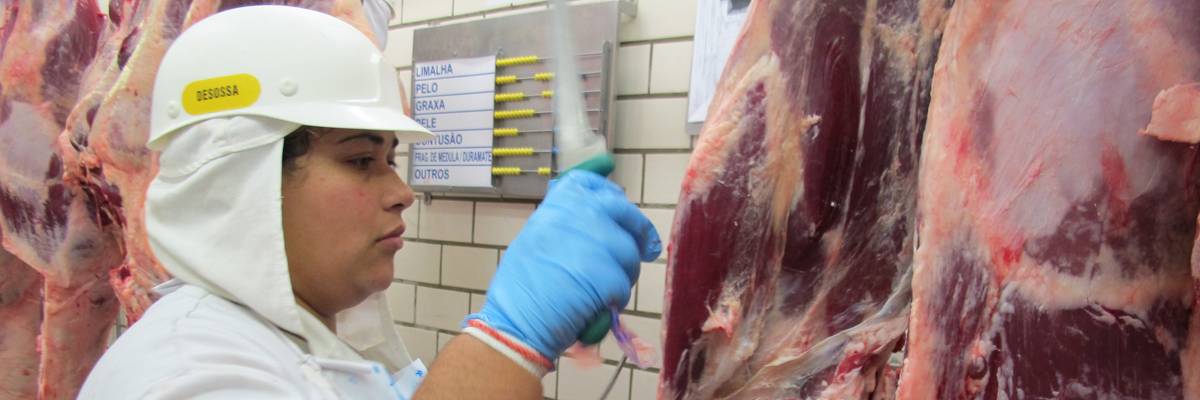
At the JBS meat plant in Lins, Brazil, workers with sharp knives carefully take apart what was once a 1,000-pound steer, making sure to cut along the correct anotomical divisions in the search for the best cuts of beef.
Governments across the globe have the choice at COP31 to unleash its power of agroecology and divert funds to a food system that nourishes people, supports fair livelihoods, and gives animals better lives while protecting the planet.
At COP 31, governments will be talking about tackling climate change and food system resilience, but unless they tackle their own contradictions, this is just hot air.
The contradictions are stark. This year, the African Development Bank warned that El Niño could cost the continent up to $20 billion. Despite a football field-sized field of tropical rainforest being destroyed every day by farms supplying industrial agriculture giant JBS, the Nigerian government has approved major expansion into Nigeria by JBS.
Nigerians needs answers about the real consequences of JBS' expansion. Corporations like JBS concentrate power in the hands of a few, very rich people, such as Brazilian billionaire Joesely Batista whose shares control JBS and who met with US President Donald Trump just a day before Trump set out reduced tariffs on beef imports.
The opportunity to have a food system that is equitable, humane, and sustainable is truly exciting and a tangible prospect.
These giant industrial agriculture corporations also put pressure on precious nature resources; 1 kilogram of animal protein requires roughly 100 times more water than 1 kg of grain protein. They threaten livelihoods and how families support and feed themselves; when smallholder farmers already produce over 90% of the nation’s food—what will happen to them? Then the job creation narrative pushed by JBS needs questioning. Why not ask JBS workers in Colorado, who this year walked out in protest about labor rights abuses?
In Europe during unprecedented summer heat, the UK government set out increased support for chicken production in the name of food security, despite previously acknowledging that in the UK “animal farming at its current scale is unsustainable without a reliance on imports,” With South American soy providing 18% of produced animal feed.
Just two months earlier, the UK saw its biggest ever environmental lawsuit being brought to the High Court in London, by over 4,000 people, against Welsh Water and Avara Foods. Avara Foods are allegedly raising an estimated 24 million chickens in the catchment area. Litigants cited damage to three rivers, including the iconic River Wye, with impact on local ecosystems, communities, and tourism reliant businesses on these once thriving rivers.
Industrial agriculture is not the answer to hunger either. An estimated 766 million tonnes of grain is diverted annually to feed farmed animals rather than people. Nor is this a food system that provides food security. Quite the opposite, this is a teetering system that relies on synthetic fertilizers, imported animal feed, and fossil fuels. It’s hugely vulnerable to climate change, supply chain shocks, and geopolitical instability, including the conflicts involving Russia and Ukraine and Iran and the US.
Industrial agriculture even threatens the effectiveness of vital medicines. Antibiotic overuse in industrial agriculture has been linked to nearly 2,000 premature deaths in the UK alone. Antibiotics are given to animals to aid their survival and growth in the harsh conditions in which they are forced to live. Let’s be clear, we are risking antimicrobial resistance so that a few people can continue to put profit before animal welfare.
But central to this failing system is injustice. This is injustice not only for people and the planet, but for the over 90 billion animals trapped right now in the system. This cannot be overlooked in talk of climate change and food security. Every cow, sheep, pig, chicken, and goat is a sentient being capable of feeling pain and fear. Mother pigs are kept so confined that they cannot turn around. Chickens buckle under the weight of their selectively bred bodies. Baby animals are routinely mutilated without pain relief. Industrial agriculture is a horror system for animals.
The good news is, there is a better food system, called agroecology. Evidence increasingly demonstrates it has the power to provide long-term food and reduce animal suffering. Agroecology works with nature not against it. It adapts to climate change and offers resilience against market shocks. It connects how we grow food with how we treat animals, protect ecosystems, and support livelihoods. The opportunity to have a food system that is equitable, humane, and sustainable is truly exciting and a tangible prospect.
Governments across the globe have the choice at COP31 to unleash its power. They have the choice to stop using our money to prop up an unjust, cruel, and failing food system and divert to a food system that nourishes people, supports fair livelihoods, and gives animals better lives while protecting the planet. They must aid businesses to pursue the opportunities needed here alongside increased plant rich food production.
In Africa, how we produce our food must be shaped by the knowledge and insight of the people who grow it now and by the communities who depend on it. The government must also make finance and practical support accessible to them.
Factory farming grew following the Second World War, when maximizing food production was an urgent priority. Today we must judge success by more than volume. Our world has changed; we know more about animal sentience, ecological limits, and the fragility of supply chains,
That is what we do at World Animal Protection, we work to protect animals from cruelty and suffering. Governments must stop funding relentless cruelty to animals. At COP31, we don't need more contradictions and hot air from governments. We need meaningful change.
This country and this world are at a monumental crossroads. US voters have an opportunity to beat back the forces of fascism and confront the billionaires who are rigging the economy, our media system, and our democracy, making it increasingly impossible for ordinary people to get by. We’re not just talking about the election. We’re talking about what must be done once these fascist elements are vanquished from power. We need a bolder set of solutions than what either major party has so far been willing to offer and a working-class movement ready to fight like hell for it. Trump didn't emerge from nowhere. The conditions that fueled MAGA authoritarianism were created by decades of radical neoliberal economic policies and a corrupt political system dominated by corporate interests. They slashed taxes on the super-rich, promising that the benefits would trickle down. They said giveaways to the corporate titans would make life more affordable for the rest of us. It was all bullshit. And when a bitter, betrayed populace searches for someone to blame, right-wing demagogues have little trouble finding scapegoats. People know when they're being lied to, but you won't hear any of this from the corporate media. Only independent journalism—powered and funded by people who believe in building a better world—can deliver truly trustworthy daily news. If you share our vision, please contribute whatever you can to sustain our work. |
At COP 31, governments will be talking about tackling climate change and food system resilience, but unless they tackle their own contradictions, this is just hot air.
The contradictions are stark. This year, the African Development Bank warned that El Niño could cost the continent up to $20 billion. Despite a football field-sized field of tropical rainforest being destroyed every day by farms supplying industrial agriculture giant JBS, the Nigerian government has approved major expansion into Nigeria by JBS.
Nigerians needs answers about the real consequences of JBS' expansion. Corporations like JBS concentrate power in the hands of a few, very rich people, such as Brazilian billionaire Joesely Batista whose shares control JBS and who met with US President Donald Trump just a day before Trump set out reduced tariffs on beef imports.
The opportunity to have a food system that is equitable, humane, and sustainable is truly exciting and a tangible prospect.
These giant industrial agriculture corporations also put pressure on precious nature resources; 1 kilogram of animal protein requires roughly 100 times more water than 1 kg of grain protein. They threaten livelihoods and how families support and feed themselves; when smallholder farmers already produce over 90% of the nation’s food—what will happen to them? Then the job creation narrative pushed by JBS needs questioning. Why not ask JBS workers in Colorado, who this year walked out in protest about labor rights abuses?
In Europe during unprecedented summer heat, the UK government set out increased support for chicken production in the name of food security, despite previously acknowledging that in the UK “animal farming at its current scale is unsustainable without a reliance on imports,” With South American soy providing 18% of produced animal feed.
Just two months earlier, the UK saw its biggest ever environmental lawsuit being brought to the High Court in London, by over 4,000 people, against Welsh Water and Avara Foods. Avara Foods are allegedly raising an estimated 24 million chickens in the catchment area. Litigants cited damage to three rivers, including the iconic River Wye, with impact on local ecosystems, communities, and tourism reliant businesses on these once thriving rivers.
Industrial agriculture is not the answer to hunger either. An estimated 766 million tonnes of grain is diverted annually to feed farmed animals rather than people. Nor is this a food system that provides food security. Quite the opposite, this is a teetering system that relies on synthetic fertilizers, imported animal feed, and fossil fuels. It’s hugely vulnerable to climate change, supply chain shocks, and geopolitical instability, including the conflicts involving Russia and Ukraine and Iran and the US.
Industrial agriculture even threatens the effectiveness of vital medicines. Antibiotic overuse in industrial agriculture has been linked to nearly 2,000 premature deaths in the UK alone. Antibiotics are given to animals to aid their survival and growth in the harsh conditions in which they are forced to live. Let’s be clear, we are risking antimicrobial resistance so that a few people can continue to put profit before animal welfare.
But central to this failing system is injustice. This is injustice not only for people and the planet, but for the over 90 billion animals trapped right now in the system. This cannot be overlooked in talk of climate change and food security. Every cow, sheep, pig, chicken, and goat is a sentient being capable of feeling pain and fear. Mother pigs are kept so confined that they cannot turn around. Chickens buckle under the weight of their selectively bred bodies. Baby animals are routinely mutilated without pain relief. Industrial agriculture is a horror system for animals.
The good news is, there is a better food system, called agroecology. Evidence increasingly demonstrates it has the power to provide long-term food and reduce animal suffering. Agroecology works with nature not against it. It adapts to climate change and offers resilience against market shocks. It connects how we grow food with how we treat animals, protect ecosystems, and support livelihoods. The opportunity to have a food system that is equitable, humane, and sustainable is truly exciting and a tangible prospect.
Governments across the globe have the choice at COP31 to unleash its power. They have the choice to stop using our money to prop up an unjust, cruel, and failing food system and divert to a food system that nourishes people, supports fair livelihoods, and gives animals better lives while protecting the planet. They must aid businesses to pursue the opportunities needed here alongside increased plant rich food production.
In Africa, how we produce our food must be shaped by the knowledge and insight of the people who grow it now and by the communities who depend on it. The government must also make finance and practical support accessible to them.
Factory farming grew following the Second World War, when maximizing food production was an urgent priority. Today we must judge success by more than volume. Our world has changed; we know more about animal sentience, ecological limits, and the fragility of supply chains,
That is what we do at World Animal Protection, we work to protect animals from cruelty and suffering. Governments must stop funding relentless cruelty to animals. At COP31, we don't need more contradictions and hot air from governments. We need meaningful change.

