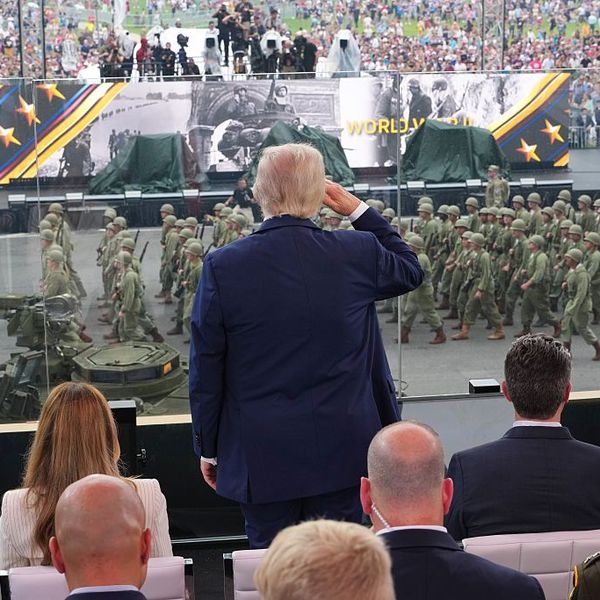
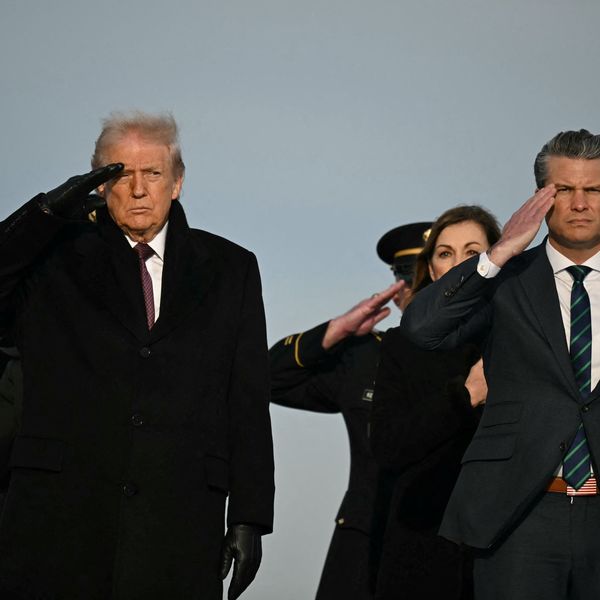
Earlier this month, the Trump administration released its new National Security Strategy, or NSS. Normally, such documents are poor predictors of what’s likely to happen in the real world. They are more like branding tools that communicate the attitudes of a given administration while rarely offering a detailed or accurate picture of its likely policies.
The reason documents like the NSS are of limited import is simple enough: foreign and military policies aren’t set by documents but by power and ideology. Typically enough, the current U.S. approach to the world flows from struggles among representatives of contending interest groups, some of which, like the military-industrial complex (MIC), have a significant advantage in the fight. The weapons industry and its allies in the Pentagon and Congress wield a wide array of tools of influence, including tens of millions of dollars in campaign contributions, more than 1,000 lobbyists, and jobs tied to military-related facilities in the states and districts of key members of Congress. The MIC — which my colleague Ben Freeman and I refer to in our new book as the trillion-dollar war machine — also has considerable influence over the institutions that shape our view of the world, from the media to DC think tanks, Hollywood, the gaming industry, and our universities.
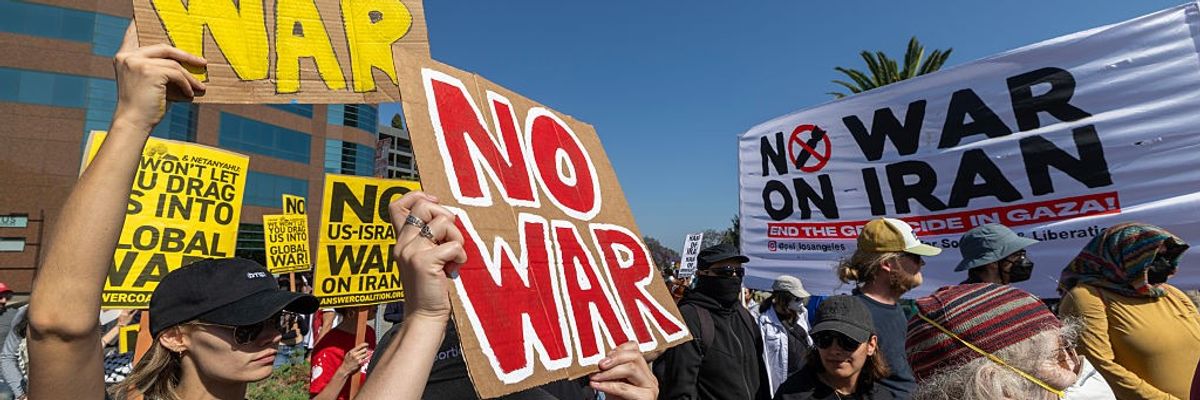
But the power and influence of the war machine are not going completely unchallenged. The grip of militarism and the institutions that profit from it are indeed being challenged by organizations like The Poor People’s Campaign: A Call for Moral Revival; Dissenters, a youth antimilitarism group based in Chicago; antiwar veterans organizations like About Face, Common Defense, and Veterans for Peace; longstanding peace groups like the Friends Committee on National Legislation and Peace Action; networks like People Over Pentagon and Dismantle the Military-Industrial Complex; the ceasefire and Palestinian rights movements on U.S. campuses and beyond; and groups working for racial and economic justice, gay and trans rights, immigration reform, the demilitarization of the police, or compensation for environmental damage caused by nuclear weapons testing and other military activities. As such organizations coalesce, bringing together tens of millions of us whose lives and prospects are impacted by this country’s ever-growing war machine, let’s hope it might be possible to create the power needed to build a better, more tolerant, and more peaceful world, one that meets the needs of the majority of its people, rather than endlessly squandering precious resources on war and preparations for more of it.
So why pay attention to that new strategy document if what really determines our safety and security lies elsewhere? There are several reasons to do so.
 First, the NSS has prompted discussion in the mainstream media and elite circles of what U.S. priorities in the world should actually be — and such a discussion needs to be expanded to include the perspectives of people and organizations actually suffering the consequences of our militarized domestic and foreign policies.
Second, that strategy paper reflects the unnerving intentions and worldview of the current administration, which, of course, has the power to determine whether this country is at war or peace.
Finally, it suggests just how the Trump administration would like to be perceived. As such, it should be considered a weapon in the debate over what kind of country the United States should be.
Touting the “President of Peace”
From the start, the submission letter that accompanies the new strategy document is pure Donald Trump. In case you hadn’t noticed, the current occupant of the Oval Office would have us believe that everything — every single thing! — he does is bigger, better, and more beautiful than anything that ever came before it. And that’s definitely the case, in the first year of his second term, when it comes to his view of what this country’s national security policies should actually be. As the letter puts it:
“Over the past nine months, we have brought our nation — and the world — back from the brink of catastrophe and disaster. After four years of weakness, extremism, and deadly failures, my administration has moved with urgency and historic speed to restore American strength at home and abroad, and bring peace and stability to our world.
“No administration in history has brought about such a dramatic turnaround in so short a time.”
Needless to say, we’re expected to attribute that alleged American revival to the brilliance and tough-guy attitudes of the president and his team. But any reasonable American should instantly have doubts about that. After all, one of the Trump administration’s proudest accomplishments, as the new document notes, has been getting “radical gender ideology and woke lunacy out of our military.” Or, to put it slightly differently, under the guise of its crusade against DEI (diversity, equity, and inclusion), the administration has effectively dismantled programs designed to reduce racism, misogyny, and anti-gay and anti-trans violence in the ranks of the military.
Whether the programs aimed at reducing entrenched discrimination in those ranks were ever sufficient is certainly doubtful, but that discrimination in the military needs to be addressed should have been and should still be beyond question. To cite just one example, a 2024 study by political geographer Jennifer Greenberg conducted for the Costs of War Project at Brown University found that there were more than 70,000 cases of sexual assault in the U.S. military in 2021 and 2023 (the years covered by her analysis). Her report also noted that, “on average, over the course of the war in Afghanistan, 24 percent of active-duty women and 1.9 percent of active-duty men experienced sexual assault.” Pretending that widespread sexual violence doesn’t exist in the U.S. military or dismissing it as an example of “radical gender ideology and woke lunacy” should be considered, at best, a policy equivalent of criminal negligence. And it’s certainly not a great look for the person who desperately wants to be known as the “president of peace.”
But our commander-in-chief is nothing if not persistent (and predictable). In his introduction to the new strategy document, I’m sure you won’t be shocked to learn that President Trump takes the opportunity to pat himself on the back for allegedly ending “eight raging conflicts” in his first eight months in office — including those between Cambodia and Thailand, Kosovo and Serbia, Armenia and Azerbaijan, India and Pakistan, and Israel and Iran.
Of course, residents of many of those countries can be forgiven for not being aware of President Trump’s purported role in bringing relative peace to their regions or, in some of those cases, for failing to note that the peaceful situations he claims to have brought about don’t even exist. And they would be right to be skeptical. After all, this is the same president who has decimated the U.S. diplomatic corps and dismantled Washington’s main economic and humanitarian aid organization, the U.S. Agency for International Development — hardly the actions of a president of global peace.
Trump’s rhetoric in his introductory letter contrasts with some of the more sober passages in the document itself. His ranting and self-praise, however, are undoubtedly of more relevance when it comes to understanding the world that we’re actually in than the words in the body of that strategy’s blueprint. If his time in office tells us anything, it’s that his administration’s policies are heavily influenced by his personal desires and resentments, whether or not they square with existing laws, procedures, or policy pronouncements.
The Donroe Doctrine: A 19th Century Strategy for the 21st Century World
The aspect of the newly announced military strategy that has gotten the most attention (and may be the closest to the president’s heart) is its focus not on the rest of the world but on the Western Hemisphere, including what the president has called the “Trump Corollary” to the Monroe Doctrine, or what’s come to be known as the “Donroe Doctrine.”
The hemispheric focus includes the administration’s harsh immigration crackdown. Immigration and Customs Enforcement (ICE) is now literally kidnapping people off the city streets of this country, often regardless of their actual immigration status and absent the alleged criminal histories that have been used to justify its activities. President Trump sees this wave of repression as a badge of honor, arguing that “starting on my first day in office, we restored the sovereign borders of the United States and deployed the military to stop the invasion of our country.”
The hyper-militarization of the border has been paralleled by a wildly more aggressive posture in the hemisphere as a whole, most notably in the repeated attacks on alleged drug-trafficking boats in the Caribbean Sea, the waters off of Venezuela, and even the eastern Pacific Ocean, and the preparations for what could become a regime-change war against the government of Venezuelan President Nicolás Maduro. No matter that his country poses no direct threat whatsoever to the United States. And Republican calls for a full-scale war against that nation are occurring despite the disastrous results of this country’s regime-change policies in Afghanistan, Iraq, Libya, and beyond in this century.
The attacks on those defenseless ships, targeting individuals who pose no direct threat to the United States and haven’t even been proven to be involved in drug trafficking, violate international law and are being carried out without the approval of Congress. That was no less true of the recent seizure of a Venezuelan cargo ship transporting oil to Asia and the imposition of sanctions on six more oil-carrying ships.
Unfortunately, waging war without input from Congress has been the norm in U.S. military interventions of this century. Data generated by the Military Intervention Project at Tufts University indicates that the United States has used military force or engaged in outright warfare 30 times since 2001, with Congress largely on the sidelines. And rarely have those interventions achieved anything like their stated objectives, as documented by the Costs of War Project, which has shown that America’s post-9/11 war on terror has cost at least $8 trillion, involved the deaths of hundreds of thousands of civilians, and left a huge cohort of U.S. veterans with physical and psychological injuries, all without faintly achieving the stated goals of promoting democracy or stability in the targeted nations.
Can the Trump Administration End Endless Wars?
Despite its increasingly aggressive posture in the Western Hemisphere (and on U.S. soil), some analysts hold out hope that the Trump administration will ultimately reduce the frequency of U.S. military intervention globally and perhaps even “end endless wars.” There is rhetoric in the new strategy document that could support such a notion, but the real question is whether the president will act on it in any meaningful way.
Judging by its rhetoric alone, the administration’s strategy document would seem to suggest at least an implicit reduction in the use of force overseas, as evidenced in its discussion of strategy:
“A strategy must evaluate, sort, and prioritize. Not every country, region, issue, or cause — however worthy — can be the focus of American strategy…American strategies since the end of the Cold War have fallen short — they have been laundry lists of wishes or desired end states; have not clearly defined what we want but instead stated vague platitudes.”
The document then goes further, seeming to denounce the American war machine and the drive for U.S. military dominance globally:
“After the end of the Cold War, American foreign policy elites convinced themselves that permanent American domination of the entire world was in the best interests of our country… Our elites badly miscalculated America’s willingness to shoulder forever global burdens to which the American people saw no connection to the national interest. They overestimated America’s ability to fund, simultaneously, a massive welfare-regulatory-administrative state alongside a massive military, diplomatic, intelligence, and foreign aid complex.”
Secretary of Defense Pete Hegseth reinforced such themes in a December 6th speech at the Reagan National Defense Forum, while highlighting the administration’s usual condemnations of efforts to reduce discrimination in the military or this country or address climate change. As he summed it up, “The War Department will not be distracted by democracy building, interventionism, undefined wars, regime change, climate change, moralizing and feckless nation building.”
Taken seriously, such observations would lead to a sharp reduction in the American global military footprint of 750 foreign bases, more than 170,000 troops deployed overseas, a Navy designed to support combat anywhere in the world, dozens of ongoing “counterterror” operations globally from Somalia to Yemen, and arms-supplying relationships with more than half the nations on earth.
Needless to say, so far that hasn’t happened, whether a Republican or a Democrat was at the helm of the administration. But as with President Trump’s professions of being a peacemaker or his occasional rhetorical jabs at “war profiteers” and “warmongers,” the anti-interventionist language in some of the administration’s new National Security Strategy is clearly aimed mainly at those parts of the president’s base here at home who are indeed sick of war and skeptical of large corporations and the “deep state.”
All too sadly, President Donald Trump, Secretary of “War” Pete Hegseth, and the rest of the crew seem all too willing to make war in the Western Hemisphere in a significant fashion, while essentially ignoring the U.S. military’s other warring activities elsewhere on the planet. (Only recently, for instance, U.S. Africa Command confirmed that it had launched 111 airstrikes in Somalia in 2025.) And whether Trump supporters here at home are willing or in any fashion able to hold Trump to his antiwar rhetoric and blunt his penchant for using military force remains to be seen.
The Fight for Peace
To resist and reverse the militarization of American foreign policy will mean speaking truth to power, while working to debunk the myths that rationalize this country’s permanent war footing. But it will also require confronting power with power by generating a broad people’s movement against militarism in all its manifestations, including the militarization of foreign policy, immigration enforcement, and policing in this country, as well as the military’s role in generating staggering amounts of greenhouse gases and so accelerating climate change and threatening public health.
There are people and organizations fighting on all those fronts. Building a network of resistance that respects the priorities of each of them will take dedicated organizing and relationship-building. Much of that work is already underway. But the question remains: Can the public interest overcome the special interests and bankrupt ideologies that continue to make war and the threat of more war America’s face to the world? It’s a question on which none of us can afford to remain neutral.
© 2023 TomDispatch.com
Earlier this month, the Trump administration released its new National Security Strategy, or NSS. Normally, such documents are poor predictors of what’s likely to happen in the real world. They are more like branding tools that communicate the attitudes of a given administration while rarely offering a detailed or accurate picture of its likely policies.
The reason documents like the NSS are of limited import is simple enough: foreign and military policies aren’t set by documents but by power and ideology. Typically enough, the current U.S. approach to the world flows from struggles among representatives of contending interest groups, some of which, like the military-industrial complex (MIC), have a significant advantage in the fight. The weapons industry and its allies in the Pentagon and Congress wield a wide array of tools of influence, including tens of millions of dollars in campaign contributions, more than 1,000 lobbyists, and jobs tied to military-related facilities in the states and districts of key members of Congress. The MIC — which my colleague Ben Freeman and I refer to in our new book as the trillion-dollar war machine — also has considerable influence over the institutions that shape our view of the world, from the media to DC think tanks, Hollywood, the gaming industry, and our universities.
But the power and influence of the war machine are not going completely unchallenged. The grip of militarism and the institutions that profit from it are indeed being challenged by organizations like The Poor People’s Campaign: A Call for Moral Revival; Dissenters, a youth antimilitarism group based in Chicago; antiwar veterans organizations like About Face, Common Defense, and Veterans for Peace; longstanding peace groups like the Friends Committee on National Legislation and Peace Action; networks like People Over Pentagon and Dismantle the Military-Industrial Complex; the ceasefire and Palestinian rights movements on U.S. campuses and beyond; and groups working for racial and economic justice, gay and trans rights, immigration reform, the demilitarization of the police, or compensation for environmental damage caused by nuclear weapons testing and other military activities. As such organizations coalesce, bringing together tens of millions of us whose lives and prospects are impacted by this country’s ever-growing war machine, let’s hope it might be possible to create the power needed to build a better, more tolerant, and more peaceful world, one that meets the needs of the majority of its people, rather than endlessly squandering precious resources on war and preparations for more of it.
So why pay attention to that new strategy document if what really determines our safety and security lies elsewhere? There are several reasons to do so.
First, the NSS has prompted discussion in the mainstream media and elite circles of what U.S. priorities in the world should actually be — and such a discussion needs to be expanded to include the perspectives of people and organizations actually suffering the consequences of our militarized domestic and foreign policies.Second, that strategy paper reflects the unnerving intentions and worldview of the current administration, which, of course, has the power to determine whether this country is at war or peace.
Finally, it suggests just how the Trump administration would like to be perceived. As such, it should be considered a weapon in the debate over what kind of country the United States should be.
Touting the “President of Peace”
From the start, the submission letter that accompanies the new strategy document is pure Donald Trump. In case you hadn’t noticed, the current occupant of the Oval Office would have us believe that everything — every single thing! — he does is bigger, better, and more beautiful than anything that ever came before it. And that’s definitely the case, in the first year of his second term, when it comes to his view of what this country’s national security policies should actually be. As the letter puts it:
“Over the past nine months, we have brought our nation — and the world — back from the brink of catastrophe and disaster. After four years of weakness, extremism, and deadly failures, my administration has moved with urgency and historic speed to restore American strength at home and abroad, and bring peace and stability to our world.
“No administration in history has brought about such a dramatic turnaround in so short a time.”
Needless to say, we’re expected to attribute that alleged American revival to the brilliance and tough-guy attitudes of the president and his team. But any reasonable American should instantly have doubts about that. After all, one of the Trump administration’s proudest accomplishments, as the new document notes, has been getting “radical gender ideology and woke lunacy out of our military.” Or, to put it slightly differently, under the guise of its crusade against DEI (diversity, equity, and inclusion), the administration has effectively dismantled programs designed to reduce racism, misogyny, and anti-gay and anti-trans violence in the ranks of the military.
Whether the programs aimed at reducing entrenched discrimination in those ranks were ever sufficient is certainly doubtful, but that discrimination in the military needs to be addressed should have been and should still be beyond question. To cite just one example, a 2024 study by political geographer Jennifer Greenberg conducted for the Costs of War Project at Brown University found that there were more than 70,000 cases of sexual assault in the U.S. military in 2021 and 2023 (the years covered by her analysis). Her report also noted that, “on average, over the course of the war in Afghanistan, 24 percent of active-duty women and 1.9 percent of active-duty men experienced sexual assault.” Pretending that widespread sexual violence doesn’t exist in the U.S. military or dismissing it as an example of “radical gender ideology and woke lunacy” should be considered, at best, a policy equivalent of criminal negligence. And it’s certainly not a great look for the person who desperately wants to be known as the “president of peace.”
But our commander-in-chief is nothing if not persistent (and predictable). In his introduction to the new strategy document, I’m sure you won’t be shocked to learn that President Trump takes the opportunity to pat himself on the back for allegedly ending “eight raging conflicts” in his first eight months in office — including those between Cambodia and Thailand, Kosovo and Serbia, Armenia and Azerbaijan, India and Pakistan, and Israel and Iran.
Of course, residents of many of those countries can be forgiven for not being aware of President Trump’s purported role in bringing relative peace to their regions or, in some of those cases, for failing to note that the peaceful situations he claims to have brought about don’t even exist. And they would be right to be skeptical. After all, this is the same president who has decimated the U.S. diplomatic corps and dismantled Washington’s main economic and humanitarian aid organization, the U.S. Agency for International Development — hardly the actions of a president of global peace.
Trump’s rhetoric in his introductory letter contrasts with some of the more sober passages in the document itself. His ranting and self-praise, however, are undoubtedly of more relevance when it comes to understanding the world that we’re actually in than the words in the body of that strategy’s blueprint. If his time in office tells us anything, it’s that his administration’s policies are heavily influenced by his personal desires and resentments, whether or not they square with existing laws, procedures, or policy pronouncements.
The Donroe Doctrine: A 19th Century Strategy for the 21st Century World
The aspect of the newly announced military strategy that has gotten the most attention (and may be the closest to the president’s heart) is its focus not on the rest of the world but on the Western Hemisphere, including what the president has called the “Trump Corollary” to the Monroe Doctrine, or what’s come to be known as the “Donroe Doctrine.”
The hemispheric focus includes the administration’s harsh immigration crackdown. Immigration and Customs Enforcement (ICE) is now literally kidnapping people off the city streets of this country, often regardless of their actual immigration status and absent the alleged criminal histories that have been used to justify its activities. President Trump sees this wave of repression as a badge of honor, arguing that “starting on my first day in office, we restored the sovereign borders of the United States and deployed the military to stop the invasion of our country.”
The hyper-militarization of the border has been paralleled by a wildly more aggressive posture in the hemisphere as a whole, most notably in the repeated attacks on alleged drug-trafficking boats in the Caribbean Sea, the waters off of Venezuela, and even the eastern Pacific Ocean, and the preparations for what could become a regime-change war against the government of Venezuelan President Nicolás Maduro. No matter that his country poses no direct threat whatsoever to the United States. And Republican calls for a full-scale war against that nation are occurring despite the disastrous results of this country’s regime-change policies in Afghanistan, Iraq, Libya, and beyond in this century.
The attacks on those defenseless ships, targeting individuals who pose no direct threat to the United States and haven’t even been proven to be involved in drug trafficking, violate international law and are being carried out without the approval of Congress. That was no less true of the recent seizure of a Venezuelan cargo ship transporting oil to Asia and the imposition of sanctions on six more oil-carrying ships.
Unfortunately, waging war without input from Congress has been the norm in U.S. military interventions of this century. Data generated by the Military Intervention Project at Tufts University indicates that the United States has used military force or engaged in outright warfare 30 times since 2001, with Congress largely on the sidelines. And rarely have those interventions achieved anything like their stated objectives, as documented by the Costs of War Project, which has shown that America’s post-9/11 war on terror has cost at least $8 trillion, involved the deaths of hundreds of thousands of civilians, and left a huge cohort of U.S. veterans with physical and psychological injuries, all without faintly achieving the stated goals of promoting democracy or stability in the targeted nations.
Can the Trump Administration End Endless Wars?
Despite its increasingly aggressive posture in the Western Hemisphere (and on U.S. soil), some analysts hold out hope that the Trump administration will ultimately reduce the frequency of U.S. military intervention globally and perhaps even “end endless wars.” There is rhetoric in the new strategy document that could support such a notion, but the real question is whether the president will act on it in any meaningful way.
Judging by its rhetoric alone, the administration’s strategy document would seem to suggest at least an implicit reduction in the use of force overseas, as evidenced in its discussion of strategy:
“A strategy must evaluate, sort, and prioritize. Not every country, region, issue, or cause — however worthy — can be the focus of American strategy…American strategies since the end of the Cold War have fallen short — they have been laundry lists of wishes or desired end states; have not clearly defined what we want but instead stated vague platitudes.”
The document then goes further, seeming to denounce the American war machine and the drive for U.S. military dominance globally:
“After the end of the Cold War, American foreign policy elites convinced themselves that permanent American domination of the entire world was in the best interests of our country… Our elites badly miscalculated America’s willingness to shoulder forever global burdens to which the American people saw no connection to the national interest. They overestimated America’s ability to fund, simultaneously, a massive welfare-regulatory-administrative state alongside a massive military, diplomatic, intelligence, and foreign aid complex.”
Secretary of Defense Pete Hegseth reinforced such themes in a December 6th speech at the Reagan National Defense Forum, while highlighting the administration’s usual condemnations of efforts to reduce discrimination in the military or this country or address climate change. As he summed it up, “The War Department will not be distracted by democracy building, interventionism, undefined wars, regime change, climate change, moralizing and feckless nation building.”
Taken seriously, such observations would lead to a sharp reduction in the American global military footprint of 750 foreign bases, more than 170,000 troops deployed overseas, a Navy designed to support combat anywhere in the world, dozens of ongoing “counterterror” operations globally from Somalia to Yemen, and arms-supplying relationships with more than half the nations on earth.
Needless to say, so far that hasn’t happened, whether a Republican or a Democrat was at the helm of the administration. But as with President Trump’s professions of being a peacemaker or his occasional rhetorical jabs at “war profiteers” and “warmongers,” the anti-interventionist language in some of the administration’s new National Security Strategy is clearly aimed mainly at those parts of the president’s base here at home who are indeed sick of war and skeptical of large corporations and the “deep state.”
All too sadly, President Donald Trump, Secretary of “War” Pete Hegseth, and the rest of the crew seem all too willing to make war in the Western Hemisphere in a significant fashion, while essentially ignoring the U.S. military’s other warring activities elsewhere on the planet. (Only recently, for instance, U.S. Africa Command confirmed that it had launched 111 airstrikes in Somalia in 2025.) And whether Trump supporters here at home are willing or in any fashion able to hold Trump to his antiwar rhetoric and blunt his penchant for using military force remains to be seen.
The Fight for Peace
To resist and reverse the militarization of American foreign policy will mean speaking truth to power, while working to debunk the myths that rationalize this country’s permanent war footing. But it will also require confronting power with power by generating a broad people’s movement against militarism in all its manifestations, including the militarization of foreign policy, immigration enforcement, and policing in this country, as well as the military’s role in generating staggering amounts of greenhouse gases and so accelerating climate change and threatening public health.
There are people and organizations fighting on all those fronts. Building a network of resistance that respects the priorities of each of them will take dedicated organizing and relationship-building. Much of that work is already underway. But the question remains: Can the public interest overcome the special interests and bankrupt ideologies that continue to make war and the threat of more war America’s face to the world? It’s a question on which none of us can afford to remain neutral.
Earlier this month, the Trump administration released its new National Security Strategy, or NSS. Normally, such documents are poor predictors of what’s likely to happen in the real world. They are more like branding tools that communicate the attitudes of a given administration while rarely offering a detailed or accurate picture of its likely policies.
The reason documents like the NSS are of limited import is simple enough: foreign and military policies aren’t set by documents but by power and ideology. Typically enough, the current U.S. approach to the world flows from struggles among representatives of contending interest groups, some of which, like the military-industrial complex (MIC), have a significant advantage in the fight. The weapons industry and its allies in the Pentagon and Congress wield a wide array of tools of influence, including tens of millions of dollars in campaign contributions, more than 1,000 lobbyists, and jobs tied to military-related facilities in the states and districts of key members of Congress. The MIC — which my colleague Ben Freeman and I refer to in our new book as the trillion-dollar war machine — also has considerable influence over the institutions that shape our view of the world, from the media to DC think tanks, Hollywood, the gaming industry, and our universities.
But the power and influence of the war machine are not going completely unchallenged. The grip of militarism and the institutions that profit from it are indeed being challenged by organizations like The Poor People’s Campaign: A Call for Moral Revival; Dissenters, a youth antimilitarism group based in Chicago; antiwar veterans organizations like About Face, Common Defense, and Veterans for Peace; longstanding peace groups like the Friends Committee on National Legislation and Peace Action; networks like People Over Pentagon and Dismantle the Military-Industrial Complex; the ceasefire and Palestinian rights movements on U.S. campuses and beyond; and groups working for racial and economic justice, gay and trans rights, immigration reform, the demilitarization of the police, or compensation for environmental damage caused by nuclear weapons testing and other military activities. As such organizations coalesce, bringing together tens of millions of us whose lives and prospects are impacted by this country’s ever-growing war machine, let’s hope it might be possible to create the power needed to build a better, more tolerant, and more peaceful world, one that meets the needs of the majority of its people, rather than endlessly squandering precious resources on war and preparations for more of it.
So why pay attention to that new strategy document if what really determines our safety and security lies elsewhere? There are several reasons to do so.
First, the NSS has prompted discussion in the mainstream media and elite circles of what U.S. priorities in the world should actually be — and such a discussion needs to be expanded to include the perspectives of people and organizations actually suffering the consequences of our militarized domestic and foreign policies.Second, that strategy paper reflects the unnerving intentions and worldview of the current administration, which, of course, has the power to determine whether this country is at war or peace.
Finally, it suggests just how the Trump administration would like to be perceived. As such, it should be considered a weapon in the debate over what kind of country the United States should be.
Touting the “President of Peace”
From the start, the submission letter that accompanies the new strategy document is pure Donald Trump. In case you hadn’t noticed, the current occupant of the Oval Office would have us believe that everything — every single thing! — he does is bigger, better, and more beautiful than anything that ever came before it. And that’s definitely the case, in the first year of his second term, when it comes to his view of what this country’s national security policies should actually be. As the letter puts it:
“Over the past nine months, we have brought our nation — and the world — back from the brink of catastrophe and disaster. After four years of weakness, extremism, and deadly failures, my administration has moved with urgency and historic speed to restore American strength at home and abroad, and bring peace and stability to our world.
“No administration in history has brought about such a dramatic turnaround in so short a time.”
Needless to say, we’re expected to attribute that alleged American revival to the brilliance and tough-guy attitudes of the president and his team. But any reasonable American should instantly have doubts about that. After all, one of the Trump administration’s proudest accomplishments, as the new document notes, has been getting “radical gender ideology and woke lunacy out of our military.” Or, to put it slightly differently, under the guise of its crusade against DEI (diversity, equity, and inclusion), the administration has effectively dismantled programs designed to reduce racism, misogyny, and anti-gay and anti-trans violence in the ranks of the military.
Whether the programs aimed at reducing entrenched discrimination in those ranks were ever sufficient is certainly doubtful, but that discrimination in the military needs to be addressed should have been and should still be beyond question. To cite just one example, a 2024 study by political geographer Jennifer Greenberg conducted for the Costs of War Project at Brown University found that there were more than 70,000 cases of sexual assault in the U.S. military in 2021 and 2023 (the years covered by her analysis). Her report also noted that, “on average, over the course of the war in Afghanistan, 24 percent of active-duty women and 1.9 percent of active-duty men experienced sexual assault.” Pretending that widespread sexual violence doesn’t exist in the U.S. military or dismissing it as an example of “radical gender ideology and woke lunacy” should be considered, at best, a policy equivalent of criminal negligence. And it’s certainly not a great look for the person who desperately wants to be known as the “president of peace.”
But our commander-in-chief is nothing if not persistent (and predictable). In his introduction to the new strategy document, I’m sure you won’t be shocked to learn that President Trump takes the opportunity to pat himself on the back for allegedly ending “eight raging conflicts” in his first eight months in office — including those between Cambodia and Thailand, Kosovo and Serbia, Armenia and Azerbaijan, India and Pakistan, and Israel and Iran.
Of course, residents of many of those countries can be forgiven for not being aware of President Trump’s purported role in bringing relative peace to their regions or, in some of those cases, for failing to note that the peaceful situations he claims to have brought about don’t even exist. And they would be right to be skeptical. After all, this is the same president who has decimated the U.S. diplomatic corps and dismantled Washington’s main economic and humanitarian aid organization, the U.S. Agency for International Development — hardly the actions of a president of global peace.
Trump’s rhetoric in his introductory letter contrasts with some of the more sober passages in the document itself. His ranting and self-praise, however, are undoubtedly of more relevance when it comes to understanding the world that we’re actually in than the words in the body of that strategy’s blueprint. If his time in office tells us anything, it’s that his administration’s policies are heavily influenced by his personal desires and resentments, whether or not they square with existing laws, procedures, or policy pronouncements.
The Donroe Doctrine: A 19th Century Strategy for the 21st Century World
The aspect of the newly announced military strategy that has gotten the most attention (and may be the closest to the president’s heart) is its focus not on the rest of the world but on the Western Hemisphere, including what the president has called the “Trump Corollary” to the Monroe Doctrine, or what’s come to be known as the “Donroe Doctrine.”
The hemispheric focus includes the administration’s harsh immigration crackdown. Immigration and Customs Enforcement (ICE) is now literally kidnapping people off the city streets of this country, often regardless of their actual immigration status and absent the alleged criminal histories that have been used to justify its activities. President Trump sees this wave of repression as a badge of honor, arguing that “starting on my first day in office, we restored the sovereign borders of the United States and deployed the military to stop the invasion of our country.”
The hyper-militarization of the border has been paralleled by a wildly more aggressive posture in the hemisphere as a whole, most notably in the repeated attacks on alleged drug-trafficking boats in the Caribbean Sea, the waters off of Venezuela, and even the eastern Pacific Ocean, and the preparations for what could become a regime-change war against the government of Venezuelan President Nicolás Maduro. No matter that his country poses no direct threat whatsoever to the United States. And Republican calls for a full-scale war against that nation are occurring despite the disastrous results of this country’s regime-change policies in Afghanistan, Iraq, Libya, and beyond in this century.
The attacks on those defenseless ships, targeting individuals who pose no direct threat to the United States and haven’t even been proven to be involved in drug trafficking, violate international law and are being carried out without the approval of Congress. That was no less true of the recent seizure of a Venezuelan cargo ship transporting oil to Asia and the imposition of sanctions on six more oil-carrying ships.
Unfortunately, waging war without input from Congress has been the norm in U.S. military interventions of this century. Data generated by the Military Intervention Project at Tufts University indicates that the United States has used military force or engaged in outright warfare 30 times since 2001, with Congress largely on the sidelines. And rarely have those interventions achieved anything like their stated objectives, as documented by the Costs of War Project, which has shown that America’s post-9/11 war on terror has cost at least $8 trillion, involved the deaths of hundreds of thousands of civilians, and left a huge cohort of U.S. veterans with physical and psychological injuries, all without faintly achieving the stated goals of promoting democracy or stability in the targeted nations.
Can the Trump Administration End Endless Wars?
Despite its increasingly aggressive posture in the Western Hemisphere (and on U.S. soil), some analysts hold out hope that the Trump administration will ultimately reduce the frequency of U.S. military intervention globally and perhaps even “end endless wars.” There is rhetoric in the new strategy document that could support such a notion, but the real question is whether the president will act on it in any meaningful way.
Judging by its rhetoric alone, the administration’s strategy document would seem to suggest at least an implicit reduction in the use of force overseas, as evidenced in its discussion of strategy:
“A strategy must evaluate, sort, and prioritize. Not every country, region, issue, or cause — however worthy — can be the focus of American strategy…American strategies since the end of the Cold War have fallen short — they have been laundry lists of wishes or desired end states; have not clearly defined what we want but instead stated vague platitudes.”
The document then goes further, seeming to denounce the American war machine and the drive for U.S. military dominance globally:
“After the end of the Cold War, American foreign policy elites convinced themselves that permanent American domination of the entire world was in the best interests of our country… Our elites badly miscalculated America’s willingness to shoulder forever global burdens to which the American people saw no connection to the national interest. They overestimated America’s ability to fund, simultaneously, a massive welfare-regulatory-administrative state alongside a massive military, diplomatic, intelligence, and foreign aid complex.”
Secretary of Defense Pete Hegseth reinforced such themes in a December 6th speech at the Reagan National Defense Forum, while highlighting the administration’s usual condemnations of efforts to reduce discrimination in the military or this country or address climate change. As he summed it up, “The War Department will not be distracted by democracy building, interventionism, undefined wars, regime change, climate change, moralizing and feckless nation building.”
Taken seriously, such observations would lead to a sharp reduction in the American global military footprint of 750 foreign bases, more than 170,000 troops deployed overseas, a Navy designed to support combat anywhere in the world, dozens of ongoing “counterterror” operations globally from Somalia to Yemen, and arms-supplying relationships with more than half the nations on earth.
Needless to say, so far that hasn’t happened, whether a Republican or a Democrat was at the helm of the administration. But as with President Trump’s professions of being a peacemaker or his occasional rhetorical jabs at “war profiteers” and “warmongers,” the anti-interventionist language in some of the administration’s new National Security Strategy is clearly aimed mainly at those parts of the president’s base here at home who are indeed sick of war and skeptical of large corporations and the “deep state.”
All too sadly, President Donald Trump, Secretary of “War” Pete Hegseth, and the rest of the crew seem all too willing to make war in the Western Hemisphere in a significant fashion, while essentially ignoring the U.S. military’s other warring activities elsewhere on the planet. (Only recently, for instance, U.S. Africa Command confirmed that it had launched 111 airstrikes in Somalia in 2025.) And whether Trump supporters here at home are willing or in any fashion able to hold Trump to his antiwar rhetoric and blunt his penchant for using military force remains to be seen.
The Fight for Peace
To resist and reverse the militarization of American foreign policy will mean speaking truth to power, while working to debunk the myths that rationalize this country’s permanent war footing. But it will also require confronting power with power by generating a broad people’s movement against militarism in all its manifestations, including the militarization of foreign policy, immigration enforcement, and policing in this country, as well as the military’s role in generating staggering amounts of greenhouse gases and so accelerating climate change and threatening public health.
There are people and organizations fighting on all those fronts. Building a network of resistance that respects the priorities of each of them will take dedicated organizing and relationship-building. Much of that work is already underway. But the question remains: Can the public interest overcome the special interests and bankrupt ideologies that continue to make war and the threat of more war America’s face to the world? It’s a question on which none of us can afford to remain neutral.