SUBSCRIBE TO OUR FREE NEWSLETTER
Daily news & progressive opinion—funded by the people, not the corporations—delivered straight to your inbox.
5
#000000
#FFFFFF
To donate by check, phone, or other method, see our More Ways to Give page.
Daily news & progressive opinion—funded by the people, not the corporations—delivered straight to your inbox.
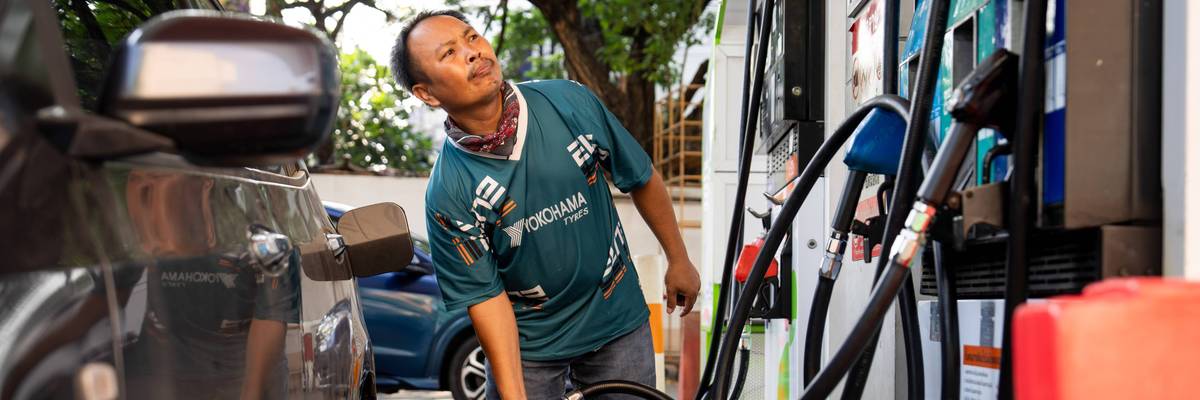
A man refills a small container of gas at a Bangchak Corporation Public Company Limited station in Bangkok, Thailand, on March 26, 2026.
It is time to count the true cost of the climate crisis, and for those responsible to pay their fair share.
Big Oil and Gas CEOs are raking in obscene profits from the energy shock triggered by the war in Iran, in some cases rivaling the GDP of entire African nations. Meanwhile, ordinary people are left to shoulder the consequences: soaring energy bills, rising food prices, higher costs for medicine, and even the closure of schools. If this crisis does not expose who truly benefits from the world’s dependence on fossil fuels, nothing will.
Wealthy countries justify cutting aid budgets by pointing to fiscal constraints, yet continue to pour vast sums into supporting fossil fuel production. In 2024 alone, implicit fossil fuel subsidies amounted to an estimated $6.7 trillion. But when communities on the frontlines of climate impacts call for reparations or compensation for the losses and damages they have suffered, the conversation suddenly becomes politically contentious and financially unthinkable. The irony is not lost on ordinary people.
This double standard is at the heart of the climate justice debate. It is time to count the true cost of the climate crisis, and for those responsible to pay their fair share.
The International Court of Justice’s (ICJ) recent advisory opinion on climate change offers hope for environmental justice. The world's highest court affirmed what communities have said for decades: Countries have a legal obligation—not just a moral one—to prevent environmental harm, and those harmed may be entitled to reparations. It is telling that some leaders needed the ICJ to remind them of their duty to care for our common home. After 30 climate conferences relying on voluntary, unaccountable processes, we hope this opinion brings real accountability to the United Nations Framework Convention on Climate Change.
Reparations are not charity; they are a necessary investment in the future of people historically harmed by environmental destruction.
As the negotiations in Bonn continue, amid political tensions, a standing agenda item on loss and damage, a theme which has been missing from the majority of the negotiations, will ensure compliance with legal obligations, including on climate reparations, as clarified by the ICJ.
Developing countries must stand their ground. We need an honest, collective reckoning about who causes the harm, who is most affected, and who must pay for the damage. These principles underpin any fair legal system, and there is no justification for treating them as optional
I, along with many others, have argued that dependence on fossil fuels drives rising inequality. Just as importantly, climate change—caused by burning those same fuels—disproportionately devastates vulnerable communities. What happens in the Strait of Hormuz doesn't end there; it ripples through our global energy security. As the war looms in Iran, frontline communities worry about the impending fossil fuel crisis.
The world’s energy dependency is built on extraction, profit, and vulnerability. But who pays the price? It is always the same people on the losing end of this broken system—the very same communities brutally affected by the climate crisis. Those least responsible for conflict pay the price for disruptions to the fossil fuel supply chain, threatening agricultural access and food security. Similarly, those who contribute the least to the climate crisis pay the highest price for its impacts. The system thrives on their vulnerability.
Fossil fuels account for about 86% of global carbon emissions. They are not just an insecure energy source vulnerable to weaponized interdependence; they are the primary driver of climate breakdown. They have disrupted weather patterns and accelerated disasters like intense droughts and devastating floods, harming food systems, cultural heritage, water access, and critical infrastructure like hospitals. This continuous burning has escalated climate injustice in the Global South, Indigenous territories, and Black communities in the United States.
This unequal distribution of burdens is unconscionable. According to Oxfam, a person from the richest 0.1% produces more carbon pollution in a day than someone in the bottom 50% produces all year. Developed countries have already exhausted their carbon budgets, yet they continue expanding extraction. Nations like the US—responsible for over 20% of historical CO2 emissions—carry a massive climate debt that must be repaid.
Meanwhile, developing countries are paying a devastating price for a crisis they did little to cause. Africa is responsible for less than 4% of global historical emissions, yet a single climate disaster can wipe out 5-15% of an African nation’s annual GDP, leaving communities to rebuild alone. This devastation is a lived reality in the Horn of Africa, where millions face climate-induced malnutrition, and in Southern Africa, which is battered by an unending pattern of floods and cyclones.
At the same time, these nations are trapped under mounting debt burdens as they confront escalating impacts with little financial support. It is a harsh reminder that not everyone reaps what they sow. Those on the winning side often do not care, so long as the harm stays far from their doorstep. Someone once asked me if the world would respond to the climate crisis if there was a "major tragedy." My instant thought was that major tragedies are already unfolding in Indigenous territories and the Global South.
The question of reparations remains highly contested because it speaks truth to power and demands true justice. Climate harm has been primarily driven by corporations and Global North governments. The rich nations that benefited from burning coal, oil, and gas must pay their fair share for repair. Through movement assembly work led by Taproot Earth, frontline communities defined what climate reparations must entail: the restoration of healthy relationships, debt cancellation, and accountable systems grounded in Black and Indigenous sovereignty.
Reparations are not charity; they are a necessary investment in the future of people historically harmed by environmental destruction. Current climate finance systems perpetuate injustice by offering loans instead of grants. True climate reparations demand both the abolition of debt and the provision of grant-based finance.
Dear Common Dreams reader, It’s been nearly 30 years since I co-founded Common Dreams with my late wife, Lina Newhouser. We had the radical notion that journalism should serve the public good, not corporate profits. It was clear to us from the outset what it would take to build such a project. No paid advertisements. No corporate sponsors. No millionaire publisher telling us what to think or do. Many people said we wouldn't last a year, but we proved those doubters wrong. Together with a tremendous team of journalists and dedicated staff, we built an independent media outlet free from the constraints of profits and corporate control. Our mission has always been simple: To inform. To inspire. To ignite change for the common good. Building Common Dreams was not easy. Our survival was never guaranteed. When you take on the most powerful forces—Wall Street greed, fossil fuel industry destruction, Big Tech lobbyists, and uber-rich oligarchs who have spent billions upon billions rigging the economy and democracy in their favor—the only bulwark you have is supporters who believe in your work. But here’s the urgent message from me today. It's never been this bad out there. And it's never been this hard to keep us going. At the very moment Common Dreams is most needed, the threats we face are intensifying. We need your support now more than ever. We don't accept corporate advertising and never will. We don't have a paywall because we don't think people should be blocked from critical news based on their ability to pay. Everything we do is funded by the donations of readers like you. When everyone does the little they can afford, we are strong. But if that support retreats or dries up, so do we. Will you donate now to make sure Common Dreams not only survives but thrives? —Craig Brown, Co-founder |
Big Oil and Gas CEOs are raking in obscene profits from the energy shock triggered by the war in Iran, in some cases rivaling the GDP of entire African nations. Meanwhile, ordinary people are left to shoulder the consequences: soaring energy bills, rising food prices, higher costs for medicine, and even the closure of schools. If this crisis does not expose who truly benefits from the world’s dependence on fossil fuels, nothing will.
Wealthy countries justify cutting aid budgets by pointing to fiscal constraints, yet continue to pour vast sums into supporting fossil fuel production. In 2024 alone, implicit fossil fuel subsidies amounted to an estimated $6.7 trillion. But when communities on the frontlines of climate impacts call for reparations or compensation for the losses and damages they have suffered, the conversation suddenly becomes politically contentious and financially unthinkable. The irony is not lost on ordinary people.
This double standard is at the heart of the climate justice debate. It is time to count the true cost of the climate crisis, and for those responsible to pay their fair share.
The International Court of Justice’s (ICJ) recent advisory opinion on climate change offers hope for environmental justice. The world's highest court affirmed what communities have said for decades: Countries have a legal obligation—not just a moral one—to prevent environmental harm, and those harmed may be entitled to reparations. It is telling that some leaders needed the ICJ to remind them of their duty to care for our common home. After 30 climate conferences relying on voluntary, unaccountable processes, we hope this opinion brings real accountability to the United Nations Framework Convention on Climate Change.
Reparations are not charity; they are a necessary investment in the future of people historically harmed by environmental destruction.
As the negotiations in Bonn continue, amid political tensions, a standing agenda item on loss and damage, a theme which has been missing from the majority of the negotiations, will ensure compliance with legal obligations, including on climate reparations, as clarified by the ICJ.
Developing countries must stand their ground. We need an honest, collective reckoning about who causes the harm, who is most affected, and who must pay for the damage. These principles underpin any fair legal system, and there is no justification for treating them as optional
I, along with many others, have argued that dependence on fossil fuels drives rising inequality. Just as importantly, climate change—caused by burning those same fuels—disproportionately devastates vulnerable communities. What happens in the Strait of Hormuz doesn't end there; it ripples through our global energy security. As the war looms in Iran, frontline communities worry about the impending fossil fuel crisis.
The world’s energy dependency is built on extraction, profit, and vulnerability. But who pays the price? It is always the same people on the losing end of this broken system—the very same communities brutally affected by the climate crisis. Those least responsible for conflict pay the price for disruptions to the fossil fuel supply chain, threatening agricultural access and food security. Similarly, those who contribute the least to the climate crisis pay the highest price for its impacts. The system thrives on their vulnerability.
Fossil fuels account for about 86% of global carbon emissions. They are not just an insecure energy source vulnerable to weaponized interdependence; they are the primary driver of climate breakdown. They have disrupted weather patterns and accelerated disasters like intense droughts and devastating floods, harming food systems, cultural heritage, water access, and critical infrastructure like hospitals. This continuous burning has escalated climate injustice in the Global South, Indigenous territories, and Black communities in the United States.
This unequal distribution of burdens is unconscionable. According to Oxfam, a person from the richest 0.1% produces more carbon pollution in a day than someone in the bottom 50% produces all year. Developed countries have already exhausted their carbon budgets, yet they continue expanding extraction. Nations like the US—responsible for over 20% of historical CO2 emissions—carry a massive climate debt that must be repaid.
Meanwhile, developing countries are paying a devastating price for a crisis they did little to cause. Africa is responsible for less than 4% of global historical emissions, yet a single climate disaster can wipe out 5-15% of an African nation’s annual GDP, leaving communities to rebuild alone. This devastation is a lived reality in the Horn of Africa, where millions face climate-induced malnutrition, and in Southern Africa, which is battered by an unending pattern of floods and cyclones.
At the same time, these nations are trapped under mounting debt burdens as they confront escalating impacts with little financial support. It is a harsh reminder that not everyone reaps what they sow. Those on the winning side often do not care, so long as the harm stays far from their doorstep. Someone once asked me if the world would respond to the climate crisis if there was a "major tragedy." My instant thought was that major tragedies are already unfolding in Indigenous territories and the Global South.
The question of reparations remains highly contested because it speaks truth to power and demands true justice. Climate harm has been primarily driven by corporations and Global North governments. The rich nations that benefited from burning coal, oil, and gas must pay their fair share for repair. Through movement assembly work led by Taproot Earth, frontline communities defined what climate reparations must entail: the restoration of healthy relationships, debt cancellation, and accountable systems grounded in Black and Indigenous sovereignty.
Reparations are not charity; they are a necessary investment in the future of people historically harmed by environmental destruction. Current climate finance systems perpetuate injustice by offering loans instead of grants. True climate reparations demand both the abolition of debt and the provision of grant-based finance.
Big Oil and Gas CEOs are raking in obscene profits from the energy shock triggered by the war in Iran, in some cases rivaling the GDP of entire African nations. Meanwhile, ordinary people are left to shoulder the consequences: soaring energy bills, rising food prices, higher costs for medicine, and even the closure of schools. If this crisis does not expose who truly benefits from the world’s dependence on fossil fuels, nothing will.
Wealthy countries justify cutting aid budgets by pointing to fiscal constraints, yet continue to pour vast sums into supporting fossil fuel production. In 2024 alone, implicit fossil fuel subsidies amounted to an estimated $6.7 trillion. But when communities on the frontlines of climate impacts call for reparations or compensation for the losses and damages they have suffered, the conversation suddenly becomes politically contentious and financially unthinkable. The irony is not lost on ordinary people.
This double standard is at the heart of the climate justice debate. It is time to count the true cost of the climate crisis, and for those responsible to pay their fair share.
The International Court of Justice’s (ICJ) recent advisory opinion on climate change offers hope for environmental justice. The world's highest court affirmed what communities have said for decades: Countries have a legal obligation—not just a moral one—to prevent environmental harm, and those harmed may be entitled to reparations. It is telling that some leaders needed the ICJ to remind them of their duty to care for our common home. After 30 climate conferences relying on voluntary, unaccountable processes, we hope this opinion brings real accountability to the United Nations Framework Convention on Climate Change.
Reparations are not charity; they are a necessary investment in the future of people historically harmed by environmental destruction.
As the negotiations in Bonn continue, amid political tensions, a standing agenda item on loss and damage, a theme which has been missing from the majority of the negotiations, will ensure compliance with legal obligations, including on climate reparations, as clarified by the ICJ.
Developing countries must stand their ground. We need an honest, collective reckoning about who causes the harm, who is most affected, and who must pay for the damage. These principles underpin any fair legal system, and there is no justification for treating them as optional
I, along with many others, have argued that dependence on fossil fuels drives rising inequality. Just as importantly, climate change—caused by burning those same fuels—disproportionately devastates vulnerable communities. What happens in the Strait of Hormuz doesn't end there; it ripples through our global energy security. As the war looms in Iran, frontline communities worry about the impending fossil fuel crisis.
The world’s energy dependency is built on extraction, profit, and vulnerability. But who pays the price? It is always the same people on the losing end of this broken system—the very same communities brutally affected by the climate crisis. Those least responsible for conflict pay the price for disruptions to the fossil fuel supply chain, threatening agricultural access and food security. Similarly, those who contribute the least to the climate crisis pay the highest price for its impacts. The system thrives on their vulnerability.
Fossil fuels account for about 86% of global carbon emissions. They are not just an insecure energy source vulnerable to weaponized interdependence; they are the primary driver of climate breakdown. They have disrupted weather patterns and accelerated disasters like intense droughts and devastating floods, harming food systems, cultural heritage, water access, and critical infrastructure like hospitals. This continuous burning has escalated climate injustice in the Global South, Indigenous territories, and Black communities in the United States.
This unequal distribution of burdens is unconscionable. According to Oxfam, a person from the richest 0.1% produces more carbon pollution in a day than someone in the bottom 50% produces all year. Developed countries have already exhausted their carbon budgets, yet they continue expanding extraction. Nations like the US—responsible for over 20% of historical CO2 emissions—carry a massive climate debt that must be repaid.
Meanwhile, developing countries are paying a devastating price for a crisis they did little to cause. Africa is responsible for less than 4% of global historical emissions, yet a single climate disaster can wipe out 5-15% of an African nation’s annual GDP, leaving communities to rebuild alone. This devastation is a lived reality in the Horn of Africa, where millions face climate-induced malnutrition, and in Southern Africa, which is battered by an unending pattern of floods and cyclones.
At the same time, these nations are trapped under mounting debt burdens as they confront escalating impacts with little financial support. It is a harsh reminder that not everyone reaps what they sow. Those on the winning side often do not care, so long as the harm stays far from their doorstep. Someone once asked me if the world would respond to the climate crisis if there was a "major tragedy." My instant thought was that major tragedies are already unfolding in Indigenous territories and the Global South.
The question of reparations remains highly contested because it speaks truth to power and demands true justice. Climate harm has been primarily driven by corporations and Global North governments. The rich nations that benefited from burning coal, oil, and gas must pay their fair share for repair. Through movement assembly work led by Taproot Earth, frontline communities defined what climate reparations must entail: the restoration of healthy relationships, debt cancellation, and accountable systems grounded in Black and Indigenous sovereignty.
Reparations are not charity; they are a necessary investment in the future of people historically harmed by environmental destruction. Current climate finance systems perpetuate injustice by offering loans instead of grants. True climate reparations demand both the abolition of debt and the provision of grant-based finance.