SUBSCRIBE TO OUR FREE NEWSLETTER
Daily news & progressive opinion—funded by the people, not the corporations—delivered straight to your inbox.
5
#000000
#FFFFFF
To donate by check, phone, or other method, see our More Ways to Give page.
Daily news & progressive opinion—funded by the people, not the corporations—delivered straight to your inbox.
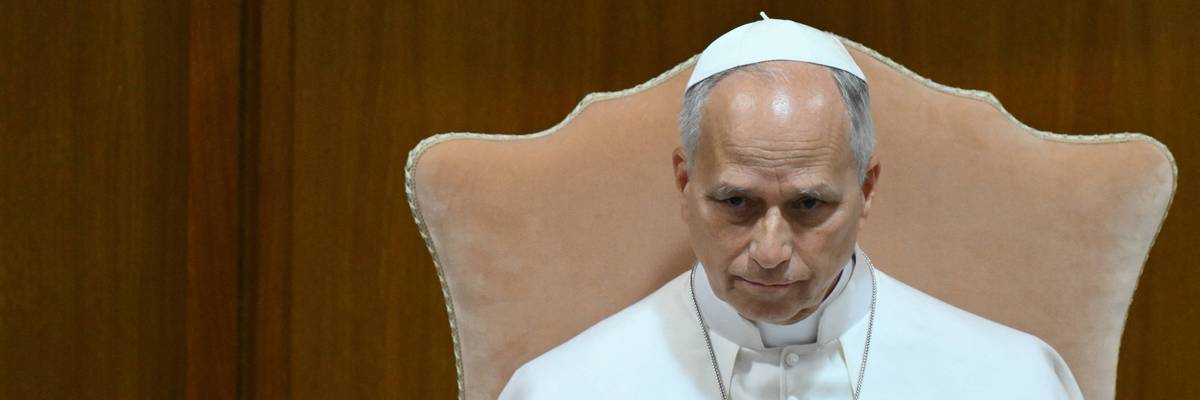
Pope Leo XIV attends the presentation of his first encyclical, "Magnifica Humanitas," at The Vatican on May 25, 2026.
"The pursuit of greater profits cannot justify choices that systematically sacrifice jobs, because the human person is an end, not a means."
Pope Leo XIV on Monday released a 42,000-word encyclical calling for government regulation of artificial intelligence and implored world leaders to ensure the burgeoning technology is used for the benefit of all humankind—not concentrated in the hands of a powerful, profit-seeking few.
Leo warned in the first major theological document of his papacy that unrestrained AI and its potentially far-reaching impacts—including mass job loss, environmental degradation, and increasingly catastrophic warfare—heightens the "risk of dehumanization," subjugating much of humanity in the name of "greater efficiency" and technological advancement.
"As with every major technological shift, AI tends to amplify the power of those who already possess economic resources, expertise, and access to data," Leo wrote in the document, titled Magnifica Humanitas. "In light of the common good and the universal destination of goods, this raises serious concerns, since small but highly influential groups can shape information and consumption patterns, influence democratic processes, and steer economic dynamics to their own advantage, undermining social justice and solidarity among peoples."
Leo warned that eliminating jobs en masse by replacing human beings with robots—an aim of some of the most powerful companies in the world, including the e-commerce behemoth Amazon—without adequate protections and compensation for impacted workers would be morally obscene and calamitous to social order.
"A society that guarantees employment to only a small fraction of the population, despite having a high level of technical development, risks exposing many to forced inactivity, a lack of responsibility, and the absence of daily tasks and stimuli, resulting in human and cultural impoverishment," the pope wrote. "This creates a paradox of material progress and anthropological regression that undermines the foundations of a just and stable social peace."
In the era of #ArtificialIntelligence, when human dignity is threatened by new forms of dehumanization, ours is the pressing duty to remain profoundly human. We must lovingly safeguard the grandeur of humanity bestowed upon us and revealed in its fullness in Christ, the splendor…
— Pope Leo XIV (@Pontifex) May 25, 2026
Leo cautioned against the growing use of AI in military conflict, a warning delivered alongside the CEO of the artificial intelligence firm Anthropic, which was embroiled in a tense and public dispute with the Trump administration earlier this year over the use of the company's technology for military purposes and mass surveillance. The pontiff has also clashed with the Trump administration, which has attacked Leo for publicly criticizing the US-Israeli war on Iran.
"No algorithm can make war morally acceptable," reads the pope's encyclical. "AI does not remove the intrinsic inhumanity of conflict; indeed it can only bring about conflict more quickly and render it more impersonal, lowering the threshold for resorting to violence, transforming defense into threat prediction and thus reducing victims to data. In this way, it will accustom us to the idea that violence is inevitable and needs only to be optimized."
Leo, whose warnings about the implications of rapid advancements in AI technology echoed concerns expressed by progressive lawmakers in the US and around the world, made clear that he doesn't view new technology, including AI, as inherently "antagonistic to humanity," noting that "technological development has significantly improved the living conditions of humanity."
"At the same time, each phase of progress has also revealed the ambiguity of tools that can cause harm when not oriented toward the good," Leo wrote. "It is necessary to establish adequate regulatory tools capable of upholding justice and curbing the distorting effects of technological power."
"Crucial questions impose themselves on our conscience," he added, "and can no longer be avoided: Where are we going? Toward what goal do we wish to orient ourselves? What direction should we choose as a people and as a human community?"
Dear Common Dreams reader, It’s been nearly 30 years since I co-founded Common Dreams with my late wife, Lina Newhouser. We had the radical notion that journalism should serve the public good, not corporate profits. It was clear to us from the outset what it would take to build such a project. No paid advertisements. No corporate sponsors. No millionaire publisher telling us what to think or do. Many people said we wouldn't last a year, but we proved those doubters wrong. Together with a tremendous team of journalists and dedicated staff, we built an independent media outlet free from the constraints of profits and corporate control. Our mission has always been simple: To inform. To inspire. To ignite change for the common good. Building Common Dreams was not easy. Our survival was never guaranteed. When you take on the most powerful forces—Wall Street greed, fossil fuel industry destruction, Big Tech lobbyists, and uber-rich oligarchs who have spent billions upon billions rigging the economy and democracy in their favor—the only bulwark you have is supporters who believe in your work. But here’s the urgent message from me today. It's never been this bad out there. And it's never been this hard to keep us going. At the very moment Common Dreams is most needed, the threats we face are intensifying. We need your support now more than ever. We don't accept corporate advertising and never will. We don't have a paywall because we don't think people should be blocked from critical news based on their ability to pay. Everything we do is funded by the donations of readers like you. When everyone does the little they can afford, we are strong. But if that support retreats or dries up, so do we. Will you donate now to make sure Common Dreams not only survives but thrives? —Craig Brown, Co-founder |
Pope Leo XIV on Monday released a 42,000-word encyclical calling for government regulation of artificial intelligence and implored world leaders to ensure the burgeoning technology is used for the benefit of all humankind—not concentrated in the hands of a powerful, profit-seeking few.
Leo warned in the first major theological document of his papacy that unrestrained AI and its potentially far-reaching impacts—including mass job loss, environmental degradation, and increasingly catastrophic warfare—heightens the "risk of dehumanization," subjugating much of humanity in the name of "greater efficiency" and technological advancement.
"As with every major technological shift, AI tends to amplify the power of those who already possess economic resources, expertise, and access to data," Leo wrote in the document, titled Magnifica Humanitas. "In light of the common good and the universal destination of goods, this raises serious concerns, since small but highly influential groups can shape information and consumption patterns, influence democratic processes, and steer economic dynamics to their own advantage, undermining social justice and solidarity among peoples."
Leo warned that eliminating jobs en masse by replacing human beings with robots—an aim of some of the most powerful companies in the world, including the e-commerce behemoth Amazon—without adequate protections and compensation for impacted workers would be morally obscene and calamitous to social order.
"A society that guarantees employment to only a small fraction of the population, despite having a high level of technical development, risks exposing many to forced inactivity, a lack of responsibility, and the absence of daily tasks and stimuli, resulting in human and cultural impoverishment," the pope wrote. "This creates a paradox of material progress and anthropological regression that undermines the foundations of a just and stable social peace."
In the era of #ArtificialIntelligence, when human dignity is threatened by new forms of dehumanization, ours is the pressing duty to remain profoundly human. We must lovingly safeguard the grandeur of humanity bestowed upon us and revealed in its fullness in Christ, the splendor…
— Pope Leo XIV (@Pontifex) May 25, 2026
Leo cautioned against the growing use of AI in military conflict, a warning delivered alongside the CEO of the artificial intelligence firm Anthropic, which was embroiled in a tense and public dispute with the Trump administration earlier this year over the use of the company's technology for military purposes and mass surveillance. The pontiff has also clashed with the Trump administration, which has attacked Leo for publicly criticizing the US-Israeli war on Iran.
"No algorithm can make war morally acceptable," reads the pope's encyclical. "AI does not remove the intrinsic inhumanity of conflict; indeed it can only bring about conflict more quickly and render it more impersonal, lowering the threshold for resorting to violence, transforming defense into threat prediction and thus reducing victims to data. In this way, it will accustom us to the idea that violence is inevitable and needs only to be optimized."
Leo, whose warnings about the implications of rapid advancements in AI technology echoed concerns expressed by progressive lawmakers in the US and around the world, made clear that he doesn't view new technology, including AI, as inherently "antagonistic to humanity," noting that "technological development has significantly improved the living conditions of humanity."
"At the same time, each phase of progress has also revealed the ambiguity of tools that can cause harm when not oriented toward the good," Leo wrote. "It is necessary to establish adequate regulatory tools capable of upholding justice and curbing the distorting effects of technological power."
"Crucial questions impose themselves on our conscience," he added, "and can no longer be avoided: Where are we going? Toward what goal do we wish to orient ourselves? What direction should we choose as a people and as a human community?"
Pope Leo XIV on Monday released a 42,000-word encyclical calling for government regulation of artificial intelligence and implored world leaders to ensure the burgeoning technology is used for the benefit of all humankind—not concentrated in the hands of a powerful, profit-seeking few.
Leo warned in the first major theological document of his papacy that unrestrained AI and its potentially far-reaching impacts—including mass job loss, environmental degradation, and increasingly catastrophic warfare—heightens the "risk of dehumanization," subjugating much of humanity in the name of "greater efficiency" and technological advancement.
"As with every major technological shift, AI tends to amplify the power of those who already possess economic resources, expertise, and access to data," Leo wrote in the document, titled Magnifica Humanitas. "In light of the common good and the universal destination of goods, this raises serious concerns, since small but highly influential groups can shape information and consumption patterns, influence democratic processes, and steer economic dynamics to their own advantage, undermining social justice and solidarity among peoples."
Leo warned that eliminating jobs en masse by replacing human beings with robots—an aim of some of the most powerful companies in the world, including the e-commerce behemoth Amazon—without adequate protections and compensation for impacted workers would be morally obscene and calamitous to social order.
"A society that guarantees employment to only a small fraction of the population, despite having a high level of technical development, risks exposing many to forced inactivity, a lack of responsibility, and the absence of daily tasks and stimuli, resulting in human and cultural impoverishment," the pope wrote. "This creates a paradox of material progress and anthropological regression that undermines the foundations of a just and stable social peace."
In the era of #ArtificialIntelligence, when human dignity is threatened by new forms of dehumanization, ours is the pressing duty to remain profoundly human. We must lovingly safeguard the grandeur of humanity bestowed upon us and revealed in its fullness in Christ, the splendor…
— Pope Leo XIV (@Pontifex) May 25, 2026
Leo cautioned against the growing use of AI in military conflict, a warning delivered alongside the CEO of the artificial intelligence firm Anthropic, which was embroiled in a tense and public dispute with the Trump administration earlier this year over the use of the company's technology for military purposes and mass surveillance. The pontiff has also clashed with the Trump administration, which has attacked Leo for publicly criticizing the US-Israeli war on Iran.
"No algorithm can make war morally acceptable," reads the pope's encyclical. "AI does not remove the intrinsic inhumanity of conflict; indeed it can only bring about conflict more quickly and render it more impersonal, lowering the threshold for resorting to violence, transforming defense into threat prediction and thus reducing victims to data. In this way, it will accustom us to the idea that violence is inevitable and needs only to be optimized."
Leo, whose warnings about the implications of rapid advancements in AI technology echoed concerns expressed by progressive lawmakers in the US and around the world, made clear that he doesn't view new technology, including AI, as inherently "antagonistic to humanity," noting that "technological development has significantly improved the living conditions of humanity."
"At the same time, each phase of progress has also revealed the ambiguity of tools that can cause harm when not oriented toward the good," Leo wrote. "It is necessary to establish adequate regulatory tools capable of upholding justice and curbing the distorting effects of technological power."
"Crucial questions impose themselves on our conscience," he added, "and can no longer be avoided: Where are we going? Toward what goal do we wish to orient ourselves? What direction should we choose as a people and as a human community?"