

SUBSCRIBE TO OUR FREE NEWSLETTER
Daily news & progressive opinion—funded by the people, not the corporations—delivered straight to your inbox.
5
#000000
#FFFFFF
To donate by check, phone, or other method, see our More Ways to Give page.
Daily news & progressive opinion—funded by the people, not the corporations—delivered straight to your inbox.
Israeli security forces have used repeated, unwarranted and excessive force against Palestinian protesters in occupied East Jerusalem following four days of violence in which 840 Palestinians were injured, Amnesty International said today. At least 21 Israeli police officers and seven Israeli civilians were also injured, according to Israeli police.
The organization calls on Israeli authorities to immediately halt forced evictions in the neighborhood of Sheikh Jarrah and end the ongoing forced displacement of Palestinians from East Jerusalem.
In the latest escalation, Palestinian armed groups have fired rockets and missiles into Israel injuring at least one Israeli and there have been reports of several people killed in Gaza from retaliatory attacks by Israel.
Amnesty International calls on all parties to respect international humanitarian law and take all feasible precautions to avoid harming civilians.
"Evidence gathered by Amnesty International reveals a chilling pattern of Israeli forces using abusive and wanton force against largely peaceful Palestinian protesters in recent days. Some of those injured in the violence in East Jerusalem include bystanders or worshippers making Ramadan prayers," said Saleh Higazi, Deputy Director for the Middle East and North Africa at Amnesty International.
"The latest violence brings into sharp focus Israel's sustained campaign to expand illegal Israeli settlements and step up forced evictions of Palestinian residents- such as those in Sheikh Jarrah - to make way for Israeli settlers. These forced evictions are part of a continuing pattern in Sheikh Jarrah, they flagrantly violate international law and would amount to war crimes."
Eyewitness testimonies - as well as videos and photographs taken by Amnesty International's researchers on the ground in East Jerusalem -show how Israeli forces have repeatedly deployed disproportionate and unlawful force to disperse protesters during violent raids on al-Aqsa mosque and carried out unprovoked attacks on peaceful demonstrators in Sheikh Jarrah.
Since the beginning of Ramadan on April 13, tensions have been steadily rising as Palestinians protested against Israeli restrictions limiting their access to Damascus Gate, a main entrance to the Old City of Jerusalem. On April 26, Israeli authorities removed the restrictions in response to the continuous demonstrations. Anger has also been rising over the imminent plans to forcibly evict four Palestinian families from Sheikh Jarrah to make way for Israeli settlers.
Unlawful use of force
Tensions reached boiling point on May 7, when more than 170 Palestinians were injured as Israeli forces stormed the al-Aqsa mosque compound in dispersing worshippers along with protesters, firing 40mm kinetic impact projectiles (KIPs) and concussion grenades into crowds gathered there for prayers on the last Friday of Ramadan.
A Palestinian journalist present at the scene described how Israeli forces went on the rampage firing projectiles and tear gas. He also said they stormed the clinic at the mosque and beat protesters. He told Amnesty International: "I've been covering events taking place in Jerusalem for the past 10 years... and I've never been this scared in my life. Everyone was a target, I want to say that the shooting was random, but that would be a lie. They knew exactly who and where they were aiming their bullets and grenades at. Most of the people were targeted in their upper bodies (eyes, face, and chest)."
He was also shot in the back while holding up his camera and attempting to leave the area.
In response, protesters at al-Aqsa threw stones and lit fires as Israeli forces on horseback and in riot gear used stun grenades to repel them.
On May 10, more than 300 Palestinian protesters were injured when Israeli forces stormed the al-Aqsa compound for the second time in days. A Red Crescent spokesperson told Amnesty International that the violence led to the hospitalization of at least 250 Palestinians, with seven in a critical condition.
One eyewitness said Israeli forces began breaking windows and firing tear gas and stun grenades, leaving many people inside struggling to breathe.
Another witness on the scene said Israeli forces started firing tear gas from rooftops before more forces stormed al-Haram square from al Magharbeh gate. "They kept moving in pushing people into al-Aqsa mosque, locking [the doors] with metal chains... and then breaking a window to throw in tear gas at people literally locked up with not much room to breathe or get medical assistance... on top of it they started to shoot rubber bullets at worshippers inside," he said.
He also reported seeing Israeli forces beating passers-by and stopping cars evacuating the wounded to photograph the injured before letting them go. He himself was shot in the chest while he approached a medic on the scene who had been injured.
Sheikh Jarrah
Over the past week, Palestinians in the Sheikh Jarrah neighborhood have held nightly demonstrations in response to the imminent threat of forced eviction. Amnesty International has documented arbitrary arrests of peaceful demonstrators, the use of excessive force, arbitrary use of sound and stun grenades as well as the arbitrary spraying of malodorant (skunk) water cannons at demonstrators and homes in Sheikh Jarrah.
Four Palestinian families in the neighborhood are under imminent threat of forced eviction after a Jerusalem court rejected their appeal against an eviction order. Nahalat Shimon International, a settler company, has filed lawsuits to seize the homes of dozens of families in Sheikh Jarrah using inherently discriminatory laws, such as the Legal and Administrative Matter Laws as well as the Absentee Property Law of 1950, to confiscate Palestinian land or property and transfer it to settler groups. Forcible transfer of the occupied population is prohibited under international humanitarian law and constitutes a war crime according to the Rome Statute of the International Criminal Court.
Amnesty International researchers witnessed an unprovoked attack by Israeli forces against a group of peaceful demonstrators in Sheikh Jarrah on May 9. Israeli forces arrived shortly before iftar, the evening Ramadan meal. After the meal a tens of peaceful protesters formed a circle and began chanting against the imminent plans to evict Palestinian families from their homes. The demonstrators were at least 10 meters away from the Israeli forces who were stationed by a nearby Israeli settlers' home. A short while later Israeli forces launched a coordinated attack to disperse the crowd of Palestinian protesters. Israeli forces on horseback began to sprint towards the crowd. One man limping in pain said he was trampled on by police horses as he tried to run away from the area. Residents were pushed into the walls of their homes and five men were arbitrarily arrested.
Israeli forces began to shove and hit the group -including an Amnesty researcher observing the protest. At around 10pm they brought the skunk water canons and sound grenades and began to arbitrarily fire at demonstrators.
Osama Dweik, was arrested during a nightly demonstration in Sheikh Jarrah on May 6 when Israeli police suddenly charged at the group of protesters and immediately detained him. At the police station he saw Israeli police kicking and beating with batons four Palestinians detained during the Damascus Gate clashes and Sheikh Jarrah protests. Seven other people were arrested at Sheikh Jarrah that night alone.
Gil Hammerschlag, an Israeli activist demonstrating against the forced evictions at Sheikh Jarrah on May 7, was shoved and kicked by Israeli forces who threw sound grenades at peaceful demonstrators from less than 10 meters away.
On the same day, a middle-aged Palestinian man was left badly bruised in the leg when Israeli forces threw a stun grenade that struck him in the thigh. A photographer also on the scene told how Israeli forces, including police on horseback, charged towards a crowd peacefully chanting after one of the protesters threw a plastic water bottle at them.
"Amnesty International researchers witnessed deplorable conduct by security forces at Sheikh Jarrah including entirely unprovoked attacks on peaceful protesters standing up for rights and calling for respect of international law. Instead of further violating the rights of Sheikh Jarrah's residents and solidarity activists, Israeli authorities must immediately scrap planned forced evictions," said Saleh Higazi.
Amnesty International is calling on the international community to hold Israel accountable for its systematic violations under international law.
"Israel must not be allowed to continue its rampage against Palestinians who are simply defending their right to exist and protesting against their forced displacement. Mere expressions of concerns about Israel's utter disregard for its obligations under international law are not sufficient. There must be clear and strong denunciations of the flagrant violations, including forced displacement, the expansion of illegal settlements and the brutal repression of people protesting against such grave violations," said Saleh Higazi.
"As an immediate step we call on the United Nations Security Council members to convene an open session and for the Special Coordinator for the Middle East Peace Process to brief member states."
Nabil el-Kurd, one of the residents under threat of forced eviction in Sheikh Jarrah, told Amnesty International:
"Sheikh Jarrah is sending a message to the whole world, including the US Congress, the UK Parliament, the French Parliament, the EU Parliament, the International Criminal Court, that what is happening to us is a war crime. It is not just an eviction, but a war crime. Remember that. I do not know why the entire world is watching what is happening and letting Israel get away with it. It is time they stopped spoiling Israel."
This statement is available online at: https://www.amnestyusa.org/press-releases/end-brutal-repression-of-palestinians-protesting-forced-displacement-in-occupied-east-jerusalem
Amnesty International is a global movement of millions of people demanding human rights for all people - no matter who they are or where they are. We are the world's largest grassroots human rights organization.
(212) 807-8400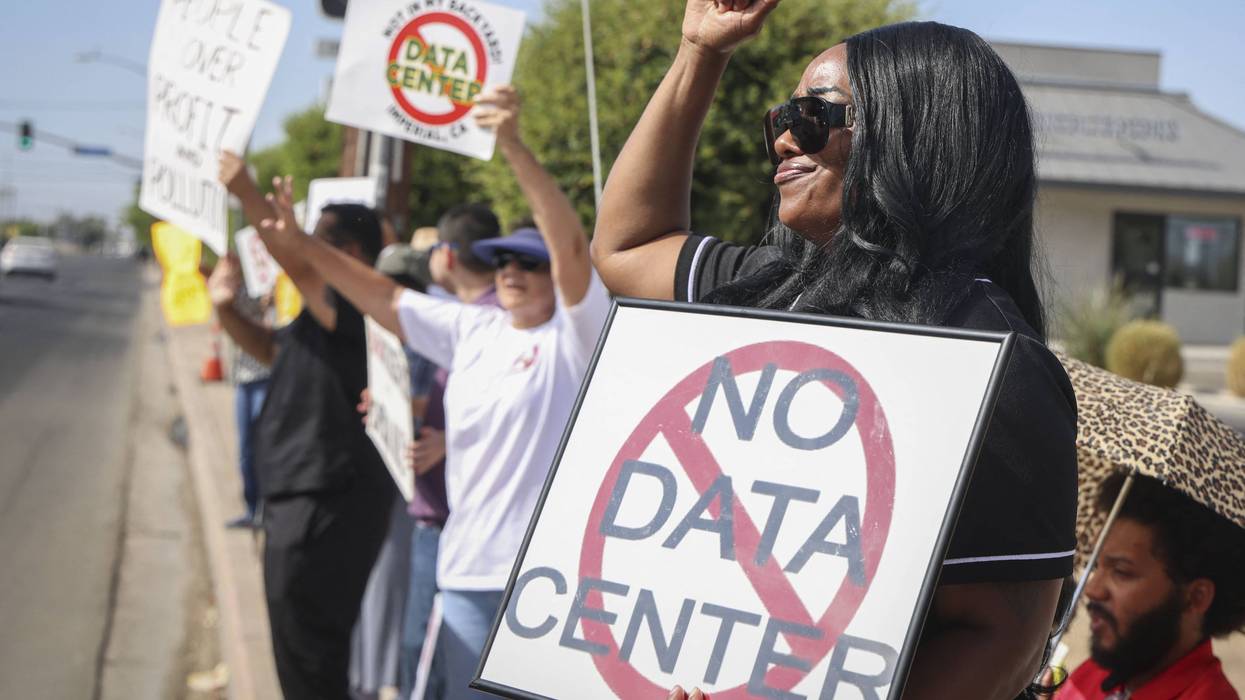
"If voters' perceptions of data centers are not fixed quickly, the campaign against them will expand far beyond Ohio."
A leaked memo written by the National Republican Senatorial Committee is warning Silicon Valley that its artificial intelligence data firms are becoming a massive political liability.
Axios reported on Wednesday that the GOP memo centers on the US Senate race in Ohio, where former Democratic Sen. Sherrod Brown has made opposition to data centers central to his campaign against incumbent Republican Sen. Jon Husted.
The memo argues that if Brown's campaign is successful in a state that President Donald Trump won by double digits in 2024, it will send a signal that support for data centers is a losing position across the US.
"If he loses and data centers get the blame, politicians across the country will take notice—and they will not go near the next one," the memo says. "This has become a sleeper issue for the entire election cycle."
The memo goes on to argue that the tech industry needs to do more to show Americans the benefits they will get from data centers, which have been criticized for raising people's utility bills and generating large amounts of pollution.
"If voters' perceptions of data centers are not fixed quickly," the memo cautions, "the campaign against them will expand far beyond Ohio."
According to Axios, AI CEOs and GOP insiders have become unnerved by internal polls showing that "data centers are as popular as spent nuclear waste, and more broadly have become a proxy for feelings about AI."
A poll released in June by Echelon Insights found that only 27% of Americans said they would want an AI data center built in their nieghborhood, with 62% opposed. This made data centers even less popular than nuclear power plants, which 34% of Americans said they would welcome in their neighborhoods.
A separate Axios report published Wednesday described AI CEOs being in "full panic mode" over the backlash to data centers. What's more, reported Axios, tech insiders privately acknowledge that "they can't find a compelling message to shift opinion fast enough" ahead of the 2026 midterm elections.
In fact, noted Axios, Wisconsin Republican gubernatorial nominee Tom Tiffany has even come out against AI data center construction in his state, which the report described as "a striking crack" in President Donald Trump's "pro-AI coalition."
In a Wednesday social media post, pollster Adam Carlson predicted that any Big Tech public relations campaign to change Americans' minds about data centers was likely doomed.
"Charm offensives from tech firms... would’ve been more effective if they did them proactively instead of in response to (very predictable) local backlash," Carlson explained. "They got greedy. Now they’re trying to play catch-up and it's probably too late. No one to blame but themselves."

Bolivian Vice President Edmand Lara said the attack "threatens life, democracy, and freedom of expression."
Fernando Cerimedo, an Argentine political operative who has worked on right-wing campaigns across Latin America, was arrested in Bolivia this week in connection with the attempted murder of a woman with whom he reportedly had a romantic relationship.
Cerimedo was arrested Tuesday morning at Viru Viru Airport after an attack on Bolivian lawyer and activist Nadia Beller.
Video footage circulating online shows two people dressed as delivery workers approaching Beller outside of a hotel in Santa Cruz de la Sierra and shooting her at close range. The 33-year-old was taken to a hospital and survived.
Cerimedo has connections to Argentina's President Javier Milei, former Brazilian President Jair Bolsonaro, and Bolivian President Rodrigo Paz.
As Drop Site News pointed out, he is business partners with President Donald Trump's former campaign manager Brad Parscale, and The Economist has called him "MAGA's man in LatAm" for "forging close ties" to the US leader's right-wing movement.
The 42-year-old operative is "credited with helping secure the US president's endorsement of the right-wing Nasry 'Tito' Asfura, who won Honduras' presidential election in December," The Guardian noted Wednesday.
The newspaper also reported that "Cerimedo's lawyer, Ernesto Giraldes, said his client had not been... trying to flee to Argentina and had traveled to Santa Cruz de la Sierra specifically to visit Beller in hospital, and denied he was behind the attack."
According to Al Jazeera, "Beller, who was four weeks pregnant, believes she was targeted for her opposition to a pack of unconstitutional laws under Decree 5503, which were being prepared by Cerimedo and the government, and for witnessing high-level corruption."
As the outlet detailed:
Decree 5503 introduces radical economic reforms, such as eliminating state fuel subsidies, that target policies put in place under Bolivia's former socialist government.
Beller is also understood to have had a romantic relationship with Cerimedo. She admitted to her relationship with him in a video appearance from her hospital bed, and highlighted Cerimedo's significant political influence.
She said she decided to speak out as she believes that "until I speak directly to the Bolivian people, they are going to finish what they attempted to do. They are going to end up taking my life."
The arrest is not the first time Cerimedo has attracted negative attention in Bolivia. Reuters reported that "in May, the vice presidency accused him of interfering in the country's internal affairs over a social media post, an allegation he denied," and last month, "Cerimedo said on X that he was being wrongfully accused on the internet of domestic violence."
Bolivian Vice President Edmand Lara said that the attack on Beller "threatens life, democracy, and freedom of expression," while the president, Paz, wrote in Spanish on X that "acts of violence are reaching unprecedented extremes, with repercussions at both national and international levels. As president and on behalf of the government, we are deeply dismayed by these events and are calling for cooperation at all levels—both national and international—to address this situation."
"I wish to express my solidarity with Ms. Nadia Beller regarding these events," he said. "I have instructed the relevant authorities to conduct a thorough, transparent, and exhaustive investigation until the facts are fully clarified. Ms. Beller must be provided with all necessary security and guarantees, as must the investigation itself, which must be conducted with absolute transparency and independence. The truth must come above all else so that justice prevails and is served—without exceptions and regardless of the circumstances."
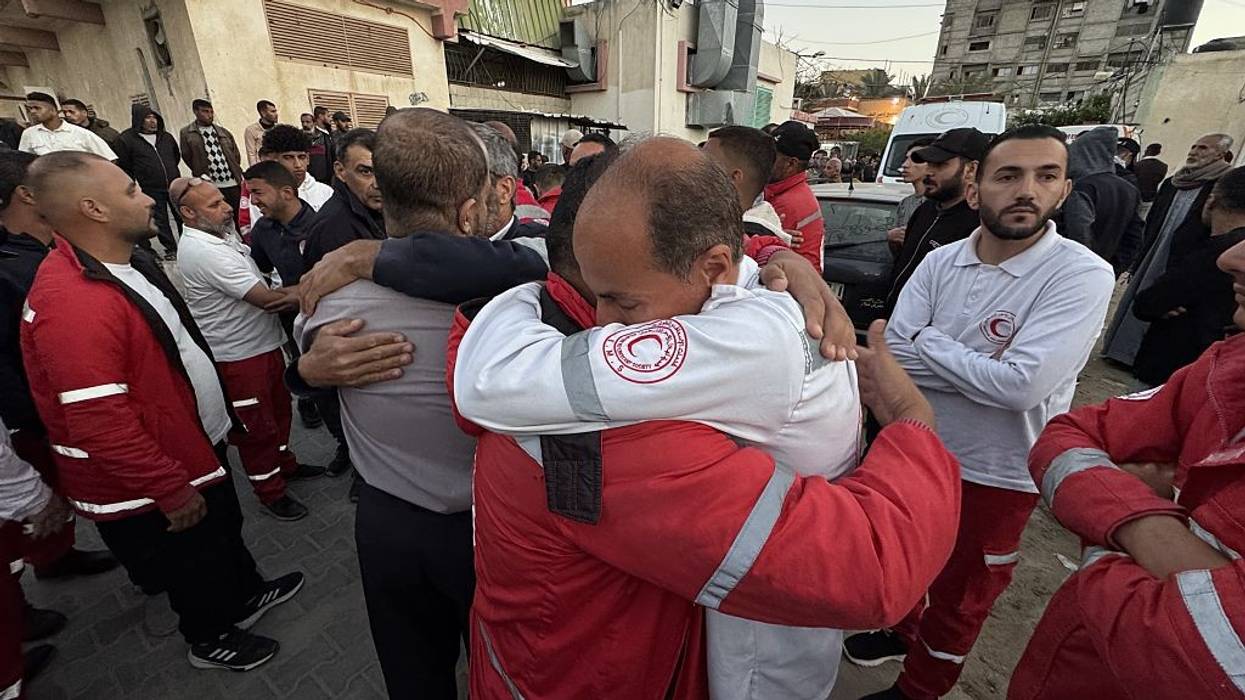
A majority of aid workers who were killed last year died in attacks in Gaza, despite a ceasefire that was reached last October.
"The technology may change, but the laws of war do not," said the United Nations' top humanitarian official on Wednesday as the international community marked World Humanitarian Day—and a record number of violent attacks against aid workers in 2025, with the expanded use of drones partially driving the increased threat to workers' safety.
According to the Aid Worker Security Database and the UN Office for the Coordination of Humanitarian Affairs (OCHA), 907 aid workers were killed, injured, or kidnapped last year.
Nearly 300 more were detained or arrested, said OCHA.
The number of humanitarians who were killed dropped slightly from the previous year, down to 350 from 387. But the death toll was the second highest ever recorded, and a majority of those killed—186—were attacked in Gaza, despite a "ceasefire" agreement that was reached last October.
More than two-thirds of those killed in Gaza were victims of aerial bombardment.
OCHA noted that "cheap and adaptable armed drones are putting lethal capabilities into more hands," with armies now able to wage more explosive attacks from afar and reach "deeper into towns and cities."
The prevalence of armed drones has been linked to 80% of civilian deaths in Sudan in the first four months of this year, while in Colombia, weaponized drone attacks quadrupled between 2024-25.
As the technology of war changes, said OCHA, "our humanity must not... Civilians, including humanitarians, must be protected."
One aid worker was killed in March in the Democratic Republic of Congo when a drone struck a residential building, while four humanitarian convoys were attacked by drones in a single week in May in Ukraine.
"Weaponized drones have become the new face of an old danger: the deliberate or reckless destruction of civilian life,” said Tom Fletcher, the UN humanitarian chief.
“But just calling it out will not protect the next aid worker," Fletcher added. "States must uphold international humanitarian law and use every tool to protect civilians and our colleagues. And for those who break the rules, there must be real consequences."
So far in 2026, 82 aid workers have already been killed, while 322 have been injured and 235 have been kidnapped.
"On World Humanitarian Day, we honor humanitarian workers everywhere, and the courage and sacrifices they make every day to help others," said the global humanitarian group Oxfam. "We stand in solidarity with our staff and partners on the frontlines, often working at immense personal risk, and urge governments to uphold their obligations to protect them."
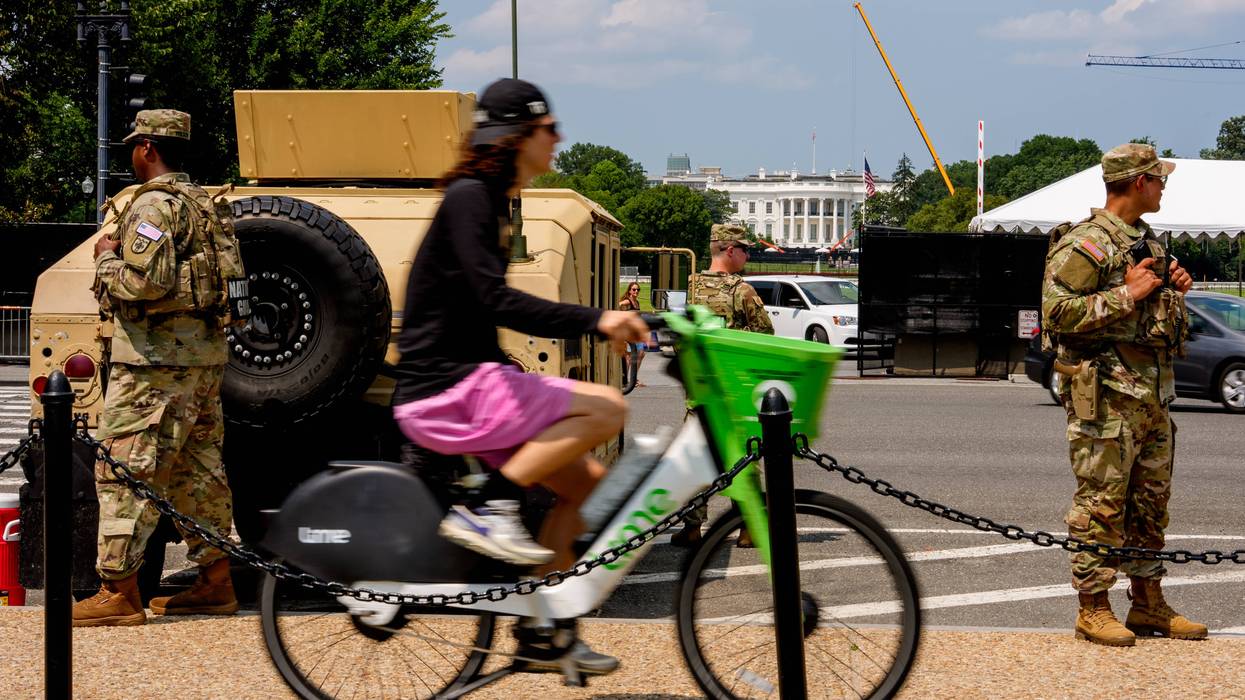
Though National Guard troops now outnumber police officers in the capital, Reuters found they’ve been involved in just over 1% of criminal cases in the city, and most of them have been for minor offenses.
It's been about a year since President Donald Trump began his military occupation of Washington, DC. But while costing taxpayers millions of dollars per day, a new investigation reveals that his National Guard deployments have done almost nothing to stop violent crime.
Crime in DC was already at its lowest level in decades when Trump sent in the troops last August, as was the case in many of the cities that came under unprecedented federal occupation.
But while Trump claimed that these soldiers—who can only detain suspects but must call police officers to make arrests—were the only force capable of saving DC from "crime, bloodshed, bedlam, and squalor," a Reuters investigation out Wednesday found that they’ve had a role in responding to only a tiny fraction of criminal cases.
Since their arrival last August, National Guard members have been mentioned in only about 1.3% of the criminal cases filed in the Superior Court of the District of Columbia, which handles nearly all the city's criminal prosecutions.
And though Trump has repeatedly credited his troops with protecting residents from being murdered and mugged, charging documents show that his soldiers "mostly responded to minor incidents in neighborhoods that are wealthier, whiter, and less dangerous than the rest of the capital."
Many of the cases where troops intervened, Reuters found, were to stop offenses like subway fare evasion and shoplifting.
Reuters said it "could find no reference in court records to soldiers doing any kind of law enforcement in the neighborhoods where about 82% of the city’s 859 murders occurred over the past five years."
The investigation describes a pattern of soldiers simply standing around while crimes occurred and waiting for police to arrive. In one instance, police officers arrived to arrest a man stomping on a woman outside a nightclub.
According to one of the officers who responded to the scene, "There was approximately 15 National Guard members in the area on routine patrol who did not take any action.”
In another case, soldiers called emergency services after finding a man who'd been stabbed in an upscale waterfront area. But believing him to have only been intoxicated, they left him lying on the ground without performing emergency measures.
They only realized once the police arrived that he'd been "stabbed so severely his intestines were spilling out." He died two hours later after being brought to the hospital.
The administration has portrayed the mere presence of troops as a "deterrent" against crime. But violent crime in the city has actually risen slightly in the year since they arrived. Data from the Metropolitan Police Department (MPD) shows 1,712 violent crimes in 2026 versus 1,645 at the same point in 2025—a 4% increase.
Meanwhile, the grassroots group Free DC has been documenting hostile encounters between guard troops and city residents. The group has cataloged several instances in which troops have detained people, including those protesting their presence, with what it says was “absolutely no cause.”
"They harass people a lot more than they are actually doing police work,” said the Rev. Norman Nixon, the pastor of the Union Temple Baptist Church, who spoke with Reuters.
DC now has over 4,500 troops patrolling the streets. Despite lacking the ability to perform many ordinary police functions, they now outnumber the city’s police force, and maintaining the National Guard's presence is costing more each day.
According to a report from the nonpartisan Niskanen Center, a deployed Guard member costs around $607 per day, compared with about $384 for an MPD officer. The Trump administration has estimated that keeping the Guard deployed until the end of Trump's term in 2029 will cost about $1.4 billion.
The troops also played a role in the administration’s campaign to remove homeless people from DC and help federal agents dismantle encampments last summer as part of what Trump described as a war against “vagrancy.”
Last year, researcher Hanna Homestead of the National Priorities Project estimated that the deployments, which then cost an estimated $1.1 million per day, was costing four times as much as it would to provide an affordable housing unit for every homeless person in the city, which was pegged at about $257,000 per day.
The Defense Department has since estimated that the cost of the deployments was nearly $1.7 million per day. But that was before the number of troops doubled.
Applying Homestead's methodology today would mean that deploying the National Guard is now nearly 9-10 times as costly as providing housing for the Washington, DC's homeless population, all while providing little apparent benefit to public safety.
"I can think of many other ways that federal resources could have been invested to make the nation’s capital safer," said Clinique Chapman, the CEO of the DC Justice Lab, in a letter to the editor of the Washington Post earlier this summer.
“For what it costs to deploy the Guard in [the] US for just six days,” Chapman said, taxpayers could have instead paid for the annual cost of running trauma recovery centers in each ward to help crime survivors heal and connect them to treatment and support.
For five days of the expenditure, the US could fund a mental health crisis response program like Denver's, which responds to hundreds of calls for service each month and reduces arrests, for one year.
For 41 days of what the National Guard deployment costs, the District could fund a year of living-wage jobs and pay the rent on a one-bedroom unit for every US resident returning home from the Bureau of Prisons.
ACLU-DC executive director Monica Hopkins emphasized that the point of the deployments was never to improve the lives of DC residents or enhance public safety, but a “political prop.”
"The Pentagon’s acknowledgment that the deployment will continue until 2029 confirms what we’ve said all along—there is no real emergency here," she said in a statement to mark the one-year anniversary of the deployment. "As was true one year ago, armed military troops are not needed and are not wanted on our streets."
"Because the nation's capital is not legally recognized as a state, extremist politicians have used DC as a testing ground for anti-democratic orders," she added. "We cannot let military deployment on the streets of the United States become normal or acceptable as a part of daily life here or anywhere else."
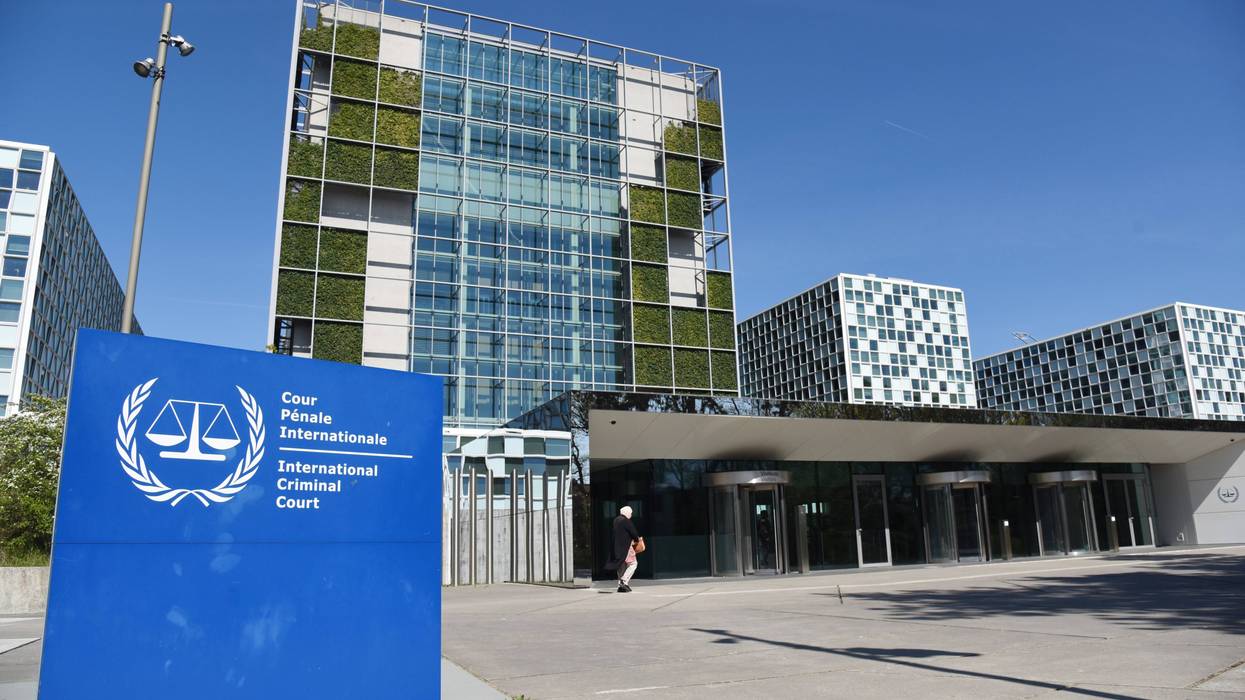
"When judicial actors are threatened for applying the law, it is the international legal order itself that is placed at risk."
The International Criminal Court on Wednesday hit back at the Trump administration one day after US Secretary of State Marco Rubio announced new sanctions against ICC officials.
The ICC described the new sanctions, which target President Tomoko Akane and senior trial lawyer Abdoulaye Saye, as "a flagrant attack against the independence of an impartial judicial institution."
"When judicial actors are threatened for applying the law, it is the international legal order itself that is placed at risk," the ICC said. "Threats and coercive measures also impact the ability of victims to seek justice, as they turn to the court when all other avenues have been exhausted."
However, the court said that it is "undeterred" from pursuing its mission, while pledging to stand "firmly behind its personnel and behind victims of unimaginable atrocities."
In total, the US has now sanctioned half of the ICC's 18 judges, as well as both of the court's deputy prosecutors, a former prosecutor, and a staff member.
The sanctions on the ICC also drew condemnation from the government of the Netherlands, where the court is physically located.
In a social media post, Dutch Foreign Minister Tom Berendsen insisted that "international courts and tribunals must be able to freely carry out their mandates," and pledged to "fully support the court and its staff."
Balkees Jarrah, the Middle East and North Africa director at Human Rights Watch, said the sanctions were "just the latest example of the Trump administration’s utter contempt for international law and a naked attempt to shield American and Israeli officials implicated in serious crimes from justice."
Although no American is currently under investigation or being tried by the ICC, the Trump administration has been targeting ICC officials who have been investigating alleged war crimes committed by Israel with the backing of the US government.
Saye, a target of Tuesday's US sanctions, was charged with investigating war crimes allegedly committed by Israel during its yearslong assault on Gaza.
The Trump administration also sanctioned then-ICC prosecutor Karim Khan, who obtained arrest warrants for Israeli Prime Minister Benjamin Netanyahu and former Israeli Defense Minister Yoav Gallant for alleged war crimes and crimes against humanity in Gaza, last year.
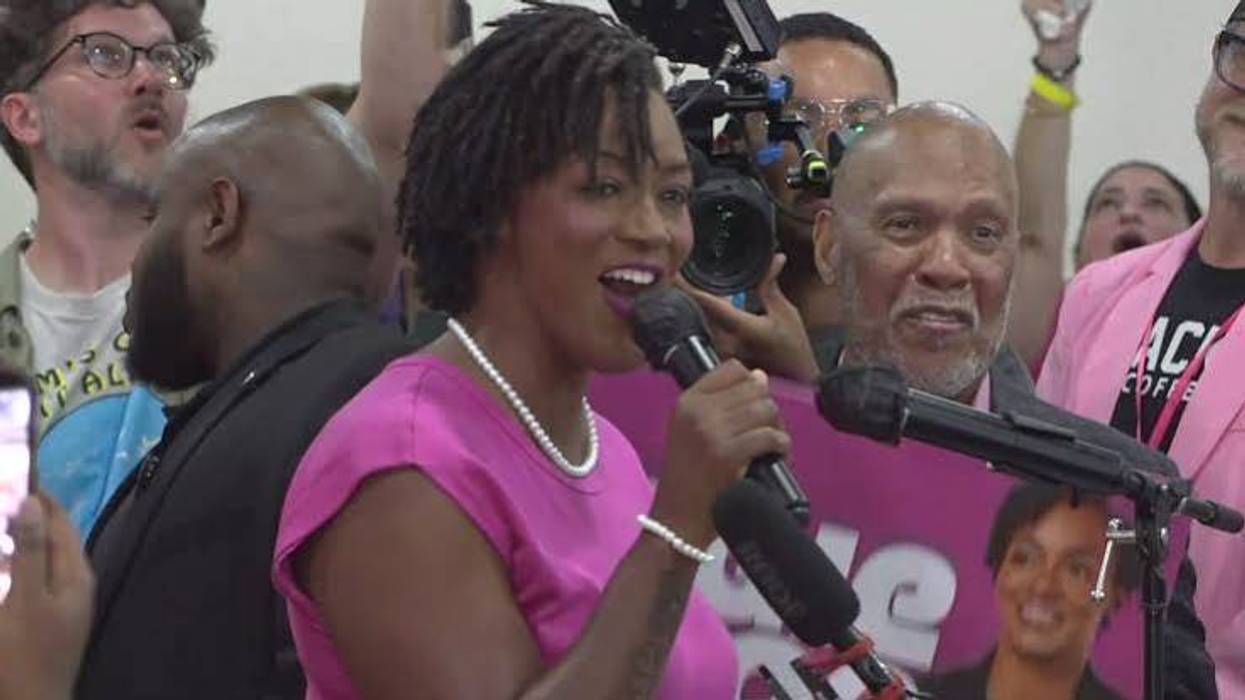
“I don’t care about corporations’ bottom lines. I care about people."
In a surprise upset described variously as "stunning" and "a shocker" in headlines, State Rep. Angie Nixon won the Democratic primary for the open US Senate seat in Florida on Tuesday, defeating Lt. Col. Alex Vindman, the former national security official who many presumed would sail to victory with the support of the party establishment and a massive cash advantage.
Nixon, a former union organizer and a member of the Democratic Socialists of America, will now face Sen. Ashley Moody, whom Republican Gov. Ron DeSantis appointed to the seat after former Sen. Marco Rubio became Secretary of State, in the general election.
In her victory speech, Nixon said the win "showed the world what organized people can accomplish," and vowed to continue her surprise run by defeating Moody, the heavy favorite in a state dominated by Republicans over recent years, in the general election.
“I don’t know about you but I was taught to love my neighbors… They call me extreme but these things are not radical. They are not extreme… So Ashley Moody can call us whatever she wants. But in November she will call me Senator.”
— Progressive Angie Nixon, after pulling off a… pic.twitter.com/kXIq15uCMA
— Drop Site (@DropSiteNews) August 19, 2026
Outspent by Vindman by an estimated 13-to-1 advantage—raising just $975,000 overall compared to the more than $16 million he had on hand—Nixon was credited with channeling growing voter frustration with the Democratic Party elites who have failed to deliver for working people.
In a Monday night campaign interview on the eve of the election, Nixon told CNN that too many corporate establishment Democrats are standing in the way of real progress on key issues like healthcare as families struggle with an exploding cost of living.
“I don’t care about corporations’ bottom lines," Nixon said. "I care about people."
Angie Nixon said Democratic leaders Hakeem Jeffries and Chuck Schumer should face scrutiny as too many “corporate-established Democrats” are beholden to companies rather than ordinary people. “I don’t care about corporations’ bottom lines; I care about people,” Nixon said.… pic.twitter.com/K9jfShul7g
— Drop Site (@DropSiteNews) August 19, 2026
Prominent national progressives championed Nixon's win.
"Democratic Socialist State Representative Angie Nixon, outspent more than 16 to 1, pulled off a HUGE upset to win the Democratic nomination for the US Senate in Florida," said Sen. Bernie Sanders (I-Vt.). "Congratulations, Angie!"
"Tonight Floridians sent a strong message that they need real progressive leadership to lower costs and protect our rights," declared Rep. Ayanna Pressley (D-Mass.). "Congratulations on your primary victory, Angie Nixon; let's keep up the momentum and send her to Washington in November!"
Noting her strong support for Palestinian rights, the advocacy group Jewish Voice for Peace Action heralded the importance of Nixon's willingness to speak out against US complicity in Israeli abuses when too many in the Democratic Party have remained silent.
“The people are rising up against the political establishment that has failed them," said Stefanie Fox, the group's executive director. "The time is now for candidates like Nixon who champion working people and fight relentlessly to defend the rights of all people from Florida to Palestine."
Ken Martin, chair of the Democratic National Committee, also celebrated Nixon's win.
“As an accomplished state representative and union organizer, Angie Nixon has dedicated herself to fighting for working families," said Martin. "AngiFloridians have chosen a proven leader with the experience and vision to lower costs, expand access to healthcare, make childcare and housing more affordable, fight for workers, protect public education, and deliver results for families across the Sunshine State. The DNC is ready to help elect Angie and work together to flip this seat, win the Senate majority, and deliver for all Floridians.”
While the celebrations poured in, Florida remains a deeply red state, and Nixon faces an incredibly tough uphill climb to defeat Moody in November.
In a social media post Tuesday night, Nixon told supporters: "We did it ya'll. Thank you to every person that put their heart into this campaign."
But "get ready," she added, "the fight has just begun."
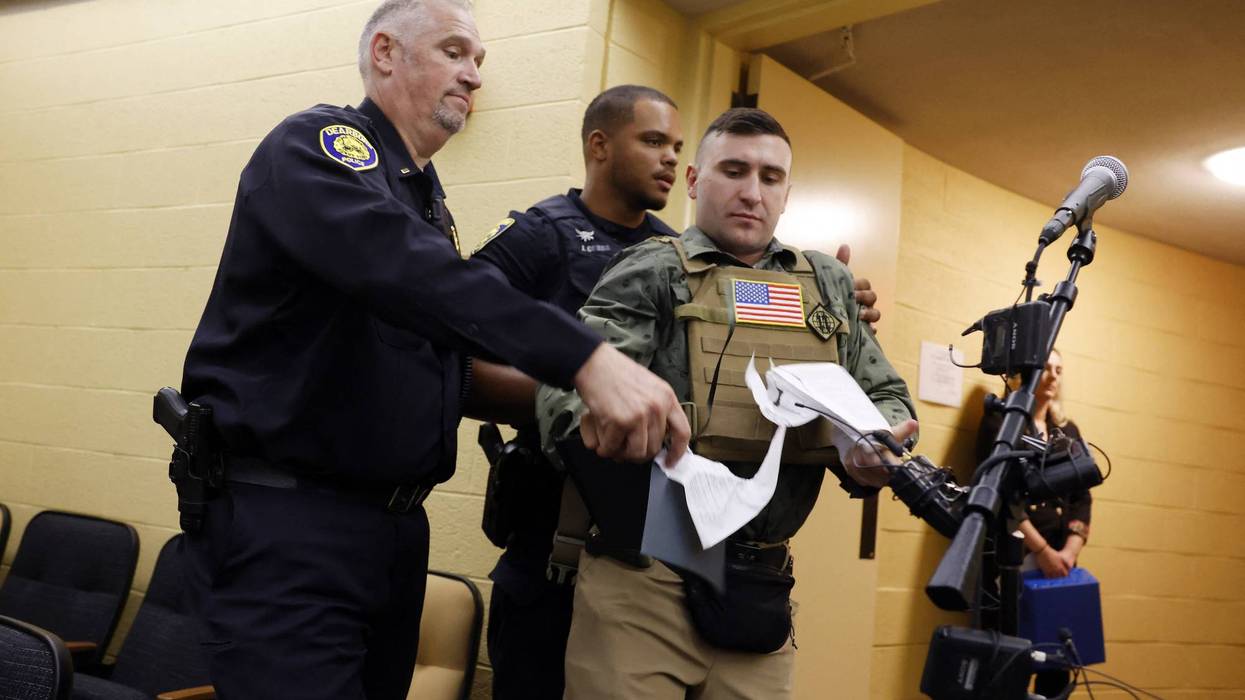
"Our families do not deserve to be subjected to such hate and bigotry," said Tlaib before thousands of self-described "Christian crusaders" descended upon the majority-Muslim city.
Congresswoman Rashida Tlaib, clergy of various faiths, and state and local Democratic officials are among those condemning Tuesday's far-right rally in Dearborn, Michigan as an intimidation campaign against the city’s Muslim community, and warning that the so-called “Christian Crusader March” is part of a broader resurgence of Islamophobic bigotry during President Donald Trump’s second term.
Thousands of anti-Muslim demonstrators, many of them traveling on motorcycles, descended upon Dearborn, a majority-Muslim suburb of Detroit, for the rally organized by racist provocateur Jake Lang and Detroit pastor Lorenzo Sewell. Video footage showed an overwhelmingly male crowd marching aggressively on Dearborn's City Hall Complex.
Area residents also marched, with a large crowd chanting "Allahu akbar"—meaning "God is great" in Arabic—while chasing some of the outsiders down a street.
A protest to showcase the Islamic takeover of Michigan has formed outside the Henry Ford Centennial Library in Dearborn. Videos of Antifa armed with AR15s are circulating, with one leftist being arrested for apparently pointing his gun at a protestor.pic.twitter.com/OdNbKXQmq8
— Dennis Michael Lynch (@TrustDML) August 18, 2026
Tlaib (D-Mich.), whose district includes Dearborn and who is the only Palestinian American in Congress, warned Tuesday that the city of approximately 105,000 residents "is being targeted by Islamophobic white supremacists and Christian nationalists."
“Islamophobic racists are yet again marching in Dearborn to terrorize a whole faith community," Tlaib said in a statement. "Dearborn is a beautifully diverse place, home to a vibrant, loving Muslim community, and our families do not deserve to be subjected to such hate and bigotry."
"Families are told to stay home for their own safety, unable to go back-to-school shopping, get groceries, or even walk outside," she continued. "To all our Dearborn families and residents: I have your back. I wish I could take away this pain, but know that you are not alone."
"To our interfaith community that’s standing in solidarity with their Muslim neighbors: Thank you for speaking out against this hatred. We need more of this love and compassion," she said.
“More leaders, including local elected officials, must speak out, especially against the local instigators participating in the spread of hatred under the guise of faith," Tlaib continued. "Their silence is complacent and normalizes fearmongering and racism. We know that targeting any community doesn’t allow any of us to be safe."
"People of all faiths and of all backgrounds belong," she added, "and deserve to practice their religion and celebrate their cultures freely without fear.”
Christian leaders joined Dearborn Mayor Abdullah Hammoud and Police Chief Issa Shahin for a press conference earlier to denounce the rally, emphasizing that the Islamophobes' “crusader” rhetoric does not represent Christianity.
"To my residents, keep being you," Hammoud said on social media. "Pray how you’ve always prayed. Keep providing for your families and showing up for your neighbors. We won’t let hate unravel this beautiful tapestry forged throughout generations, with countless hands, in the most noble of American traditions."
Rev. Bob McCabe, pastor of the Church of the Divine Child, said during the press conference that "Dearborn is a place where people can love and draw close to each other and to worship freely. I've experienced that as a Christian, as a Catholic."
Pastor Nathan Hayes of Solid Rock Church told viewers that "I'm asking that our community would come together and say, you know what, ignore the outside voices and just pay attention to the person who lives next to you because they care about you way more than these people who are driving in from other places."
The Dearborn rally comes amid mounting renewed anti-Muslim hostility nationwide. The Associated Press reported last week that anti-Muslim rhetoric has surged alongside the historic US Senate campaign of Michigan Democrat Abdul El-Sayed, the first Muslim nominated by a major party for one of the state's upper chamber seats. Trump and other Republican figures have portrayed Muslim public officials as national security threats, while anti-mosque campaigns have intensified in communities across the country.
The consequences are not merely rhetorical.
In May, a pair of teenagers opened fire at an Islamic center in San Diego, killing three people and further traumatizing a Muslim community already facing heightened threats.
In July, federal prosecutors charged Utah man Peter Larsen with a hate crime after alleging that he went to a shopping mall seeking Muslims to attack. Prosecutors say he asked employees whether they were Muslim before stabbing a Muslim man multiple times, including in the neck. The victim required several surgeries.
Lang served four years behind bars awaiting trial for alleged crimes, including attacking police officers with a baseball bat during the January 6, 2021 attack on the US Capitol by Trump supporters seeking to overturn the 2020 presidential election. He was one of roughly 1,500 January 6 insurrectionists later pardoned by Trump.
He doesn't only hate Muslims; despite being raised Jewish, Lang is rabidly antisemitic and also said that white people "will be replaced, and your children will be Black Muslims if you don't stand up now"—and worse.
Lang was allowed to speak during Tuesday's Dearborn City Council meeting.
"For three years straight, the number one name in the country of England for newborn babies is Muhammad," he said, beginning a nearly four-minute tirade that was equal parts Muslim hate and pure fantasy.
🚨 Jake Lang addresses the Dearborn, Michigan City Council. 🇺🇸 MIGA pic.twitter.com/WRRgQJElnt
— Chad Ledger (@TheChadLedger) August 18, 2026
"Tell me that white Christians are not being invaded," he continued. "This is an invasion!"
"These people are trying to destroy us," Lang argued without any evidence. The Muslims have not come here to assimilate. They have come here to steal the wealth of this land, to rape our women."
"The Muslims are being used by the Democrats to instill socialism in America," he asserted. "We know it."
"You're just using the Democrats, these woke liberal idiots, the women in New York, to gain power, and once the Muslims have power in this country, then they will start throwing the homosexuals off the roofs, just like they do in Palestine," he falsely claimed.
"Our founding fathers gave this country to their posterity, white Christians, and they brought along with them their Black friends," Lang said, apparently referring to the Africans they enslaved. "We will not allow these Third World mongrels to run roughshod over us without a fight. The body of Christ is one!"
"We have cruise ships, we have planes, we have trains, and we're going to pack them out with all of the Arabs. You have to go home. We don't want you here," Lang continued.
"If you stand against Islam, you are my brother. If you are willing to stand up and take this country back, you are my brother. Join the crusades and extricate this filth from our country," he concluded. "We will have our way! Come blood or sweat, we will have our way! This is a Christian land! Christ is king!"
Lang then began tearing up a Quran before being forcibly removed from the council chamber.
Some Democratic social media users—including many backing former Vice President Kamala Harris, whose complicity in Israel's Gaza genocide is part of why she was narrowly defeated by Trump in Dearborn in the 2024 presidential election just four years after former President Joe Biden won the city by 20 points—said the city's residents deserve what is happening to them.
However, elected Democrats—who have often been slow to condemn anti-Muslim bigotry—were quick to condemn the rally.
"The people of Dearborn are once again under attack from an out-of-state influencer looking for controversy," US Sen. Elissa Slotkin (D-Mich.) said on social media. "[Mayor Hammoud], the police chief, and religious leaders of all faiths are again showing leadership and demonstrating that Michigan is united against hate and Islamophobia."
Michigan Gov. Gretchen Whitmer said in a statement that "Dearborn is home to one of the most vibrant communities in America."
"Its residents are our friends and our neighbors," the Democrat continued. "Today, a group of agitators is traveling to Dearborn for the sole purpose of intimidating that community and provoking a reaction. Their plan emboldens and contributes to dangerous behavior, and I am asking every person of goodwill to denounce it. Their hate has no place in Michigan."
“My top priority is keeping Michiganders safe," Whitmer added I’ve been in contact with Mayor Hammoud, and I echo Chief Shahin and local officials: Do not confront or engage with demonstrators. Together, we stand united against hate in all its forms.”
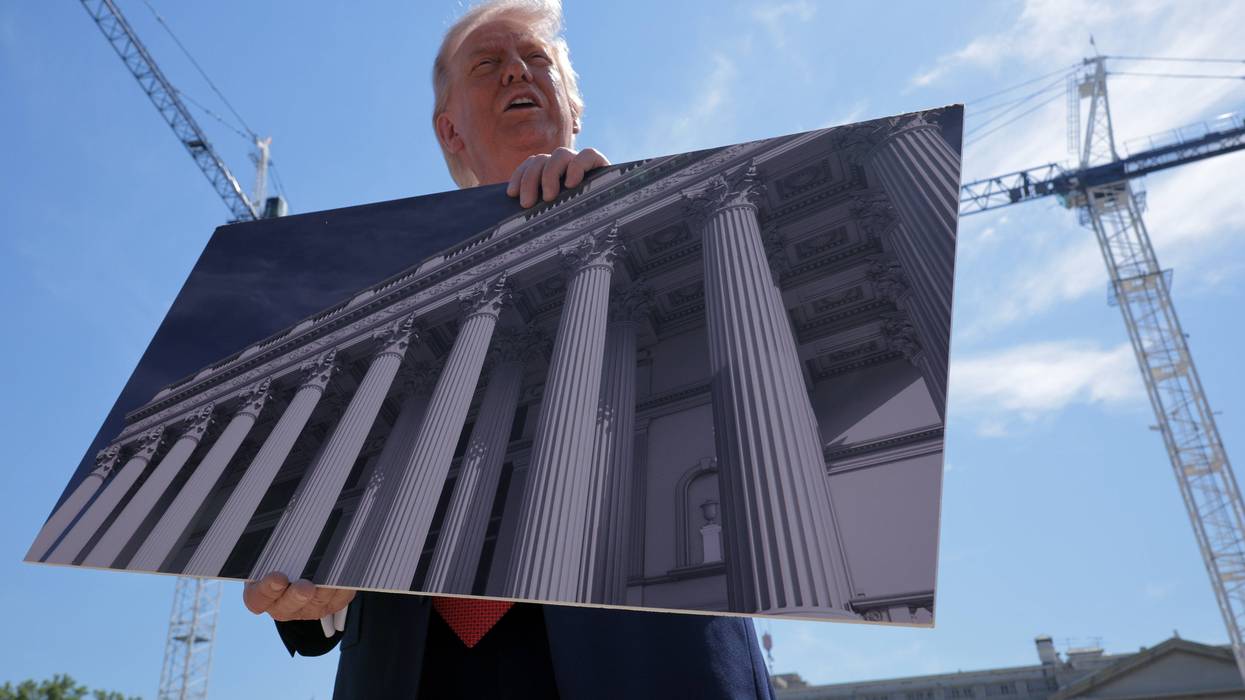
"The Constitution's system of checks and balances ensures that no individual or branch of government holds absolute power," said one legal expert. "The president is ignoring this design."
Just days after President Donald Trump's administration asked the right-wing US Supreme Court to allow construction of a new White House ballroom to continue while a legal challenge plays out, federal lawmakers and advocacy groups on Tuesday urged the justices to block any more work on the project absent congressional approval.
"The Constitution's system of checks and balances ensures that no individual or branch of government holds absolute power," said Trevor Potter, president of the nonpartisan Campaign Legal Center, which filed an amicus brief with Citizens for Responsibility and Ethics in Washington (CREW).
"The president is ignoring this design by unilaterally demolishing the East Wing of the White House and trying to construct a massive ballroom with private funds, raising the risk of corruption that constitutional checks are supposed to prevent," he continued.
Potter stressed that "Congress, not the president, is empowered to raise and spend taxpayer dollars—and it has not authorized the ballroom. The administration's reliance on private donor funding for the ballroom project violates a core principle of separation of powers embedded in our Constitution."
CREW president Donald Sherman highlighted that "President Trump has spent his second term creating pay-to-play opportunities for corporations to curry favor and advance his personal priorities, without regard for the Constitution or the American people's best interests."
Trump kicked off his second term with an inauguration dubbed "a coronation of our country’s descent into oligarchy" because of the billionaires who got prime seating at the event. Since then, according to recent disclosures, he's pocketed at least $2.2 billion, over half of it from his family’s crypto scheming.
Amid alarm over Trump's enrichment of himself and his allies—and his plummeting approval rating—Sherman said that "the Supreme Court should deny the request for a stay and ensure that this administration isn't allowed to run roughshod over the separation of powers and dodge congressional approval for spending taxpayer dollars."
Sherman and Potter's groups were far from alone in filing a brief with that demand; dozens of Democrats who serve as ranking members of various committees across both chambers of Congress as well as the minority leader, whip, and caucus chair in the House of Representatives submitted a similar filing to the nation's top court.
The Democrats "understand that the Constitution empowers Congress—not the President—to control federal property, including
determining whether (and how) parts of the White House should be demolished or constructed," their lawyers wrote, noting that they previously sent a brief to US Court of Appeals for the District of Columbia, which earlier this month upheld a district judge's ruling that halted most construction.
The filing argues that the injunction should remain in place, and "the construction the president seeks should not proceed until Congress authorizes that construction and appropriates the funds for it," an event that is unlikely during this session, even with the GOP's narrow control of both chambers.
Welcoming the lawmakers' brief, Jon Golinger, democracy advocate at the watchdog group Public Citizen, asked, "If President Trump is so proud of his Golden Ballroom, why is he so afraid to ask Congress to approve it?"
"A key reason the Constitution requires Congress to authorize the White House ballroom project is to ensure transparency and oversight of the '$335 million of an expected $400 million' that the White House says it's raised from donors, including corporations who have been awarded billions in government contracts and anonymous donors with secret agendas," Golinger said.
"We agree that by law Congress needs to authorize it and urge the court to reject the White House's desperate 'Hail Mary' pass," he added. "The Supreme Court is expected to decide by this Friday whether to intervene in the ballroom case or to allow the Court of Appeals injunction to take effect, which would block further ballroom construction unless and until Congress authorizes it."
The National Trust for Historic Preservation, which is behind the legal challenge to the project, also sent its arguments against Trump's ballroom on Tuesday. The group's president and CEO, Brent Leggs, noted that "last week, the administration made two audacious claims in asking the US Supreme Court to greenlight continued aboveground construction of the White House ballroom."
"First, that no court in the land has the authority to stop them," he explained. "And second, that because they are using the same indestructible concrete used in nuclear power plants, it would be impossible to remove the ballroom even if ordered to do so. They are working around the clock in an attempt to outrace judicial review."
Leggs said that in its filing, his group "reiterated that the administration has no unilateral legal authority—constitutional, statutory, or otherwise—to build a ballroom on the site of the now-demolished East Wing, unless and until Congress expressly approves. Each court that has reviewed this case has agreed with the National Trust. We hope the Supreme Court will uphold the rule of law by stopping this illegal project."
"Our position was supported by several amicus briefs, including one from the Society for the Rule of Law and former Republican White House lawyers," he added. "These briefs highlight the point the National Trust has made for months: The executive branch lacks unilateral authority to destroy or transform the White House, and cannot use national security as a justification for ignoring the Constitution."
"The hypocrisy is the point," said Rep. Ayanna Pressley.
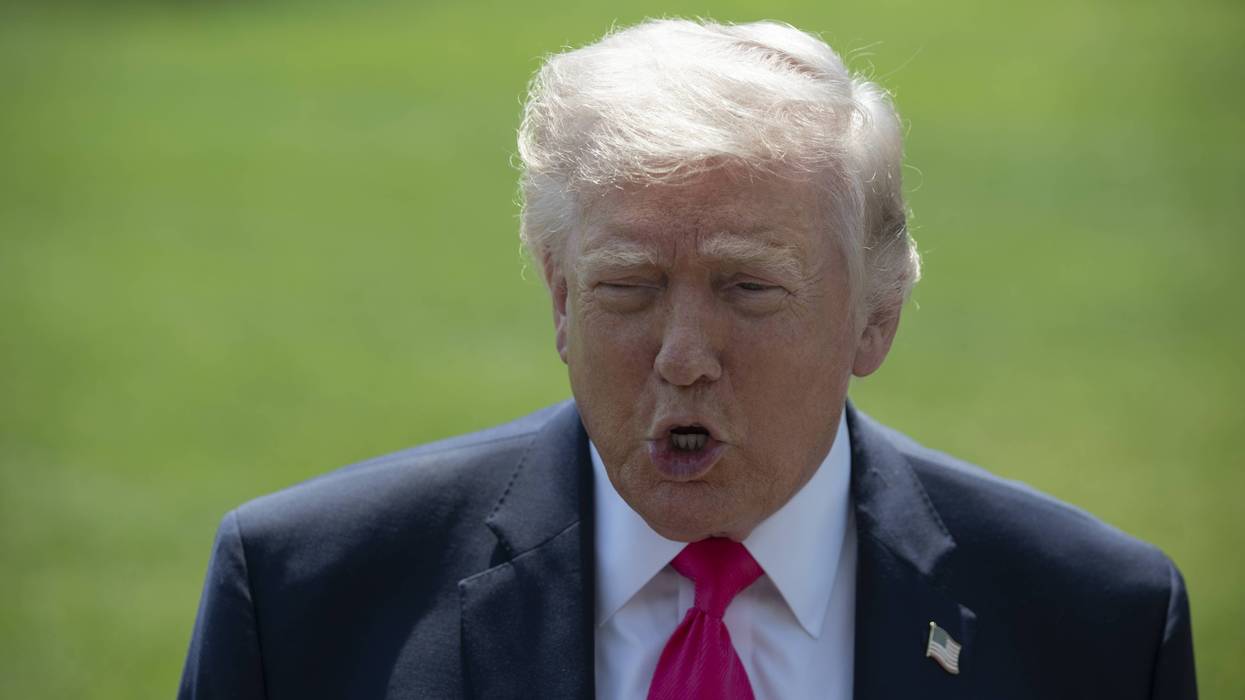
President Donald Trump has pushed to strip millions of Americans of the right to vote by mail. But he doesn't seem to think these restrictions should apply to him.
The White House confirmed to The New York Times that the president voted by mail ahead of Florida's Republican primary on Tuesday, marking at least the third time he has done so since becoming president. He also voted by mail in a state legislative special election earlier this year and in the 2020 Republican primary.
Though Trump has repeatedly characterized mail-in voting itself as a form of "cheating" and pushed to abolish it for most Americans under his proposed SAVE America Act, White House spokesperson Olivia Wales said it was a "non-story" that he chose to participate in the practice himself.
"The SAVE America Act has commonsense exceptions for Americans to use mail-in ballots for illness, disability, military, or travel— but universal mail-in voting should not be allowed because it’s highly susceptible to fraud," she said. "As everyone knows, the president is a resident of Palm Beach and participates in Florida elections, but he obviously primarily lives at the White House in Washington, DC."
Florida notably does not distinguish between absentee and other forms of mail-in voting, allowing residents to cast votes without an excuse—so the system Trump used to vote by mail is the same one he wants to make illegal.
Failing to pass his SAVE America Act through Congress, Trump has attempted to restrict mail-in voting via executive order.
An order he signed in March required states to hand over lists of eligible voters to the federal government and said that the US Postal Service could block residents of states from voting by mail if they refused to comply. The order also directed the Department of Homeland Security (DHS) to create state "citizenship lists" to be sent to election officials.
This order has been blocked in federal court, and Trump has pushed for the Supreme Court to allow it to go into effect before the November 3 midterm election. Voting rights advocates have warned that if the order goes into effect, many eligible voters will be wrongly excluded because their names don't appear on DHS's federal lists.
There is scarce evidence that any form of mail-in balloting is susceptible to fraud anywhere near the levels that would be necessary to swing the result of an election.
An analysis by the Brookings Institution last year, which examined data from the right-wing Heritage Foundation's election fraud database, found that for every 10 million mail ballots cast, about four ballots were associated with voting fraud, though the database is not exhaustive.
It's not clear why voting by mail for convenience would be any more "susceptible to fraud" than doing so for illness, disability, military, or travel, as the White House claims.
In fact, the Brookings study found that states with universal no-excuse mail-in voting have the lowest rates of mail-in fraud, and some states, like Washington, have seen reductions in fraud after transitioning to universal mail-in voting.
Advocates for universal mail-in balloting have emphasized that it makes voting easier and more accessible than when it's restricted to election days at physical polling places. They also say restricting it is especially harmful to voters from racial minority groups who face greater barriers to in-person voting and are more likely to have absentee ballot applications rejected.
Rep. Ayanna Pressley (D-Mass.) rejected the idea that the right of other Americans to vote by mail was any less legitimate than Trump's right to do so.
"Trump just voted by mail AGAIN while trying to take away the right for millions of people to do the same," Pressley wrote in a social media post. "The hypocrisy is the point. We won't let Republicans attack the sacred right to vote, including by mail."
"Is the idea that nothing critical of Israel can ever stand?" asked one critic. "Because the lobby groups keep telling us there’s a difference between prejudice and criticism, but they keep acting like there’s not."
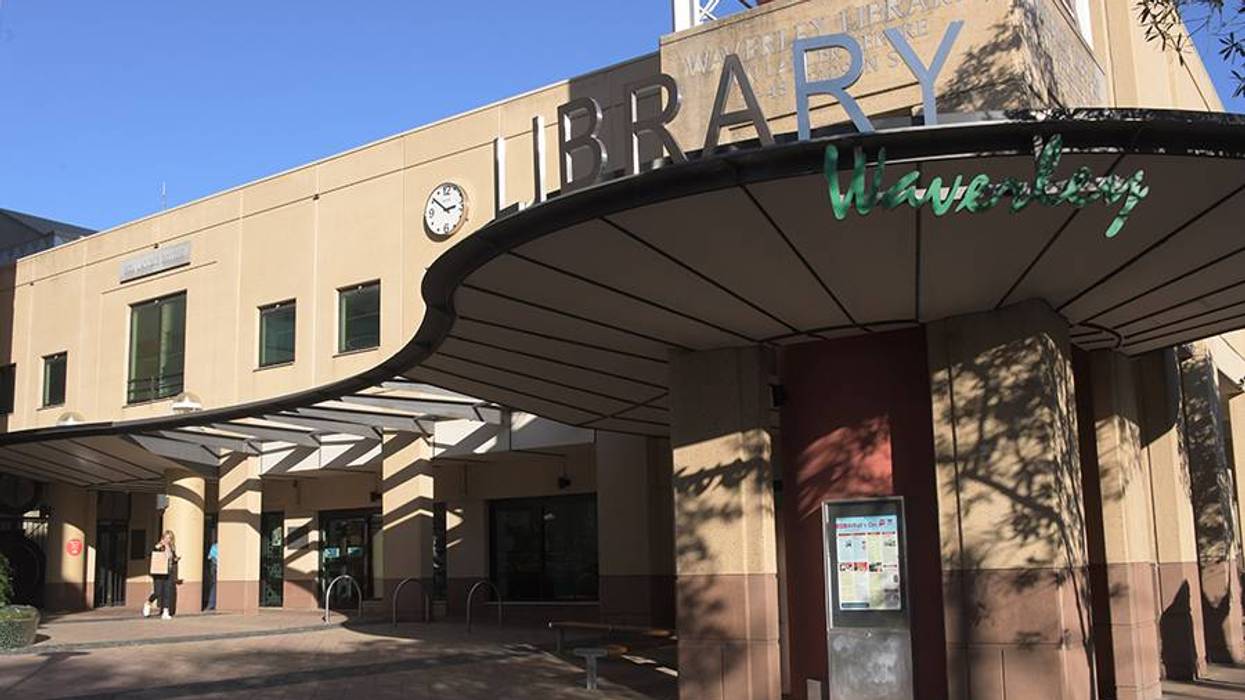
A public library in metropolitan Sydney, Australia confirmed Tuesday that it removed a book critically examining Western media coverage of Israel’s annihilation of Gaza from its shelves, reportedly after a complaint that its prominent display was distressing to a survivor of last year’s mass shooting targeting a Hanukkah celebration in Bondi Beach.
How to Sell a Genocide: The Media’s Complicity in the Destruction of Gaza, by US journalist and media critic Adam Johnson, was pulled from Waverley Library in Bondi Junction and placed under review. JWire reported last week that the Waverley Council removed the book after a Bondi massacre survivor saw it displayed on the library's “New Release/Hot Item” shelf.
However, Johnson said Tuesday on X that "British-Australia media keep buying this line that my book was pulled from the library after a 'complaint from a Bondi attack survivor.' We have no evidence this is true. This is simply the story they’re telling. Has anyone independently verified this chain of events?"
Johnson also noted that the Bondi massacre, in which two gunmen fatally shot 15 victims, "had nothing to do with Palestinians or Gaza."
"There is ZERO link between the two, and it’s false [to] keep implying there was," he added.
Johnson's book, published in April by Pluto Press, argues that US corporate media have helped enable Israel’s devastation of Gaza through sanitizing Israeli actions, obscuring US responsibility, and dehumanizing Palestinians as Israeli forces killed and wounded hundreds of thousands of them in what United Nations experts, human rights groups, a South Africa-led case currently before the International Court of Justice, and many others call a genocide.
Johnson told The Guardian that critics "seem to be objecting largely based on the title using the word ‘genocide.'"
“But ‘genocide’ is not my word, or my finding," he stressed. "The fact of genocide in Gaza is the overwhelming consensus of the human rights world, and it is a wholly mainstream opinion among those tasked with studying and determining such matters."
“That it makes some people upset is unfortunate, but reality is often upsetting," he said. "This particular reality is especially upsetting... to the parents of the over 20,000 children killed by Israel in Gaza since October 2023."
"Do Sydney officials plan on removing pro-Israel books from their libraries because it potentially upsets these community members?” Johnson added.
The Sydney dispute is hardly an isolated case of the silencing of pro-Palestine speech or criticism of Israel's well-documented crimes against humanity and war crimes, for which alleged perpetrator Israeli Prime Minister Benjamin Netanyahu is wanted by the International Criminal Court in The Hague.
In March, Adelaide University canceled a venue booking for a literary event featuring Francesca Albanese, the UN special rapporteur on the occupied Palestinian territories. Organizers accused the university of bowing to political pressure.
In the United States, college campuses were the epicenter of suppression. New York University withheld a graduating student's diploma after he condemned Israel’s actions in Gaza during his commencement speech. New York authorities also violently cracked down on NYU's anti-genocide protests, and the school adopted a definition of antisemitism conflating anti-Zionism and hatred of Jews.
Seven miles uptown, Columbia University suspended its chapters of the nonviolent groups Students for Justice in Palestine and Jewish Voice for Peace.
George Washington University in Washington, DC banned a graduate from campus after she criticized the university’s ties to Israel, while earlier this year the University of Southern Maine withdrew its support for a Palestine conference because it was slated to include remote participation by Albanese. USM officials cited the dubious sanctions imposed on Albanese and her family by the Trump administration.
There has also been widespread censorship and suppression of pro-Palestine speech in countries including Canada, France, Germany, and the United Kingdom.
These incidents are indicative of a wider pattern documented by Irene Khan, the UN special rapporteur on freedom of expression, who in 2024 reported that courses, lectures, and panels on Palestine have been canceled and that institutions in Western Europe and North America have restricted books, art, scholarship, and speech concerning Israel and Palestine.
While some Jewish leaders and groups welcomed the removal of Johnson's book from Waverley Library, others decried the censorship.
“Public libraries belong to all of us, and should host a range of views and topics, be they books about queer families or Israel’s widely condemned war crimes," Bart Shteinman, an executive member of the progressive Jewish Council of Australia, told The Guardian. He also called the decision to pull the book "deeply alarming."
One Palestinian account on Bluesky posted: "Is the idea that nothing critical of Israel can ever stand? Because the lobby groups keep telling us there’s a difference between prejudice and criticism, but they keep acting like there’s not."
Another social media user, this one on X, lambasted what she called the "lily-livered library" for "pandering to the vile zealots who protect Israel, despite the evidence before our eyes."
Rhonda Garad, a researcher at Monash University in Melbourne, bluntly said on X that "we've reached the book-burning stage of the fascist takeover."