

SUBSCRIBE TO OUR FREE NEWSLETTER
Daily news & progressive opinion—funded by the people, not the corporations—delivered straight to your inbox.
5
#000000
#FFFFFF
To donate by check, phone, or other method, see our More Ways to Give page.
Daily news & progressive opinion—funded by the people, not the corporations—delivered straight to your inbox.

Steve Jones, (415) 305-3866, sjones@biologicaldiversity.org
Scientists and conservationists are calling on the International Seabed Authority, now meeting in Jamaica, to adopt stronger-than-proposed protections for wildlife and oceans in setting environmental standards for deep-sea mining projects. The Center for Biological Diversity, which recently sued the United States government for issuing deep-sea mining permits that circumvent the ISA's nascent environmental review process, warns that the current push to start strip-mining the ocean floor could do irreparable damage to marine life.
Scientists and conservationists are calling on the International Seabed Authority, now meeting in Jamaica, to adopt stronger-than-proposed protections for wildlife and oceans in setting environmental standards for deep-sea mining projects. The Center for Biological Diversity, which recently sued the United States government for issuing deep-sea mining permits that circumvent the ISA's nascent environmental review process, warns that the current push to start strip-mining the ocean floor could do irreparable damage to marine life.
"Big corporations are rushing to mine our deep seas before scientists fully understand these mysterious ecosystems or how to protect them. We need to slow this process down and do whatever we can to shield them from the new gold rush," said Miyoko Sakashita, oceans program director for the Center. "And we don't think the United States should be defying the international system and breaking its own environmental laws to permit deep-sea mining."
In May the Center sued the U.S. government for issuing exploratory permits to a Lockheed Martin subsidiary for mining work in the Clarion-Clipperton Zone halfway between Mexico and Hawaii. That claim is independent of the ISA, which includes the 161 nations that have adopted the United Nations Convention on the Law of the Sea.
Also in May the Center submitted comments to the ISA on the development of its regulatory process, supporting proposals by the Deep-Ocean Stewardship Initiative to establish an independent review board and to broaden the ISA's focus on individual projects to take into account regional and cumulative impacts. In addition the Center urged the ISA to improve its public noticing and comment procedures and to deny applications that involve significant environment impacts. Meanwhile the Center for Ocean Solutions published a study in the July 9 issue of Science calling for the ISA to create marine-protected areas in international waters where mining would be banned, a proposal the Center also supports.
"This sort of large-scale industrial mining on our ocean floors is inherently destructive, so we need to do all we can to protect sea life from its impacts," Sakashita said.
The deep ocean is believed to contain billions of dollars worth of nickel, copper, cobalt, manganese, zinc, gold and other rare-earth metals and minerals. Extracting those materials has been considered too expensive, difficult and risky for investors in the past, but technological advances and skyrocketing prices for these materials have led to a strong push by the mining industry. The ISA has issued 26 exploratory mining permits in international waters, and another project permitted by Papua New Guinea in its territorial waters, Solwara I, could soon become an active commercial mining operation. The ISA's 21st annual session in Jamaica began July 14 and ends July 24.
Learn more and read about the Center's lawsuit at www.biologicaldiversity.org/campaigns/deep-sea_mining/.
At the Center for Biological Diversity, we believe that the welfare of human beings is deeply linked to nature — to the existence in our world of a vast diversity of wild animals and plants. Because diversity has intrinsic value, and because its loss impoverishes society, we work to secure a future for all species, great and small, hovering on the brink of extinction. We do so through science, law and creative media, with a focus on protecting the lands, waters and climate that species need to survive.
(520) 623-5252
"Even for the notoriously corrupt and lawless Trump, this explicit and desperate attempt to buy votes in the November election is a new low," said one watchdog leader.
Many Democrats in Congress are on the growing list of critics calling out President Donald Trump for his Wednesday night vow to give US voters $5,000 each if they help Republicans win control of the Senate and House of Representatives—where they already have majorities—in the November midterm elections.
"Nothing says confidence like trying to bribe people for votes," Congressman Jim McGovern (D-Mass.) quipped Thursday.
When Fox News' Laura Ingraham later asked, "Why not just give the money now?" Trump attempted to blame Democrats.
Noting the president's jumbled response to that question, Rep. Don Beyer (D-Va.) said: "I don't know what this even means, but I do know the reason Trump won't give a straight answer is that he doesn't really mean to send these checks to anyone. He has lied about this over and over again, and he's lying now. Just like he lied when he said he would lower costs."
Some critics highlighted other cases of Trump pledging to give Americans money, including alleged savings from the actions of his so-called Department of Government Efficiency (DOGE), an effort spearheaded by billionaire Elon Musk.
Congressman Mark Pocan (D-Wis.) said: "So now it's $5,000 bribes that Trump will never deliver to attempt to make voters forget what they are paying for gas and food. What ever happened to those promised DOGE checks? Americans are not fools, we know he lies daily."
Blasting the president as "our pathological liar-in-chief," Sen. Bernie Sanders (I-Vt.) also pointed to previous instances of Trump promising money, from a 10% cap on credit card interest rates to $2 for a gallon of gasoline.
"The Trump administration is not about helping working families," the former presidential candidate stressed. "It's about giving a trillion dollars in tax breaks to the 1% and throwing 15 million Americans off the healthcare they have."
Sen. Elizabeth Warren (D-Mass.), who has also sought the Democratic Party's presidential nomination, shared on social media Groundwork Collaborative's roundup of 15 times Trump has promised a check, dividend, or rebate—and not delivered.
Some Democratic governors also took aim at Trump. California's Gavin Newsom, who is expected to run for president in 2028, said: "After making you sicker and poorer with his war, Donald Trump now wants to buy your vote with $5,000 in taxpayer-funded blood money. The most corrupt man ever to occupy the Oval Office."
New York Gov. Kathy Hochul emphasized that "Trump owes New Yorkers $13.5 billion for his illegal tariffs and hasn't paid up."
"Now he's dangling $5,000 checks if Republicans win Congress. A trillion-dollar campaign bribe from a guy who doesn't pay his bills," she added. "Fool me once…"
It's not just elected Democrats ripping Trump's new pledge. Lisa Gilbert, co-president of the watchdog group Public Citizen, said in a Thursday statement that "even for the notoriously corrupt and lawless Trump, this explicit and desperate attempt to buy votes in the November election is a new low."
"Trump knows he can't do this, and yet he's attempting to bribe voters with the false promise of cash to help his party win an election, which is antithetical to every principle of American democracy," she continued. "Every Republican at the convention and across the country should loudly and vehemently denounce Trump for proposing this dangerous and transparently illegal scheme. The fact that no one has done that yet is cause for deep alarm about the future of American elections."
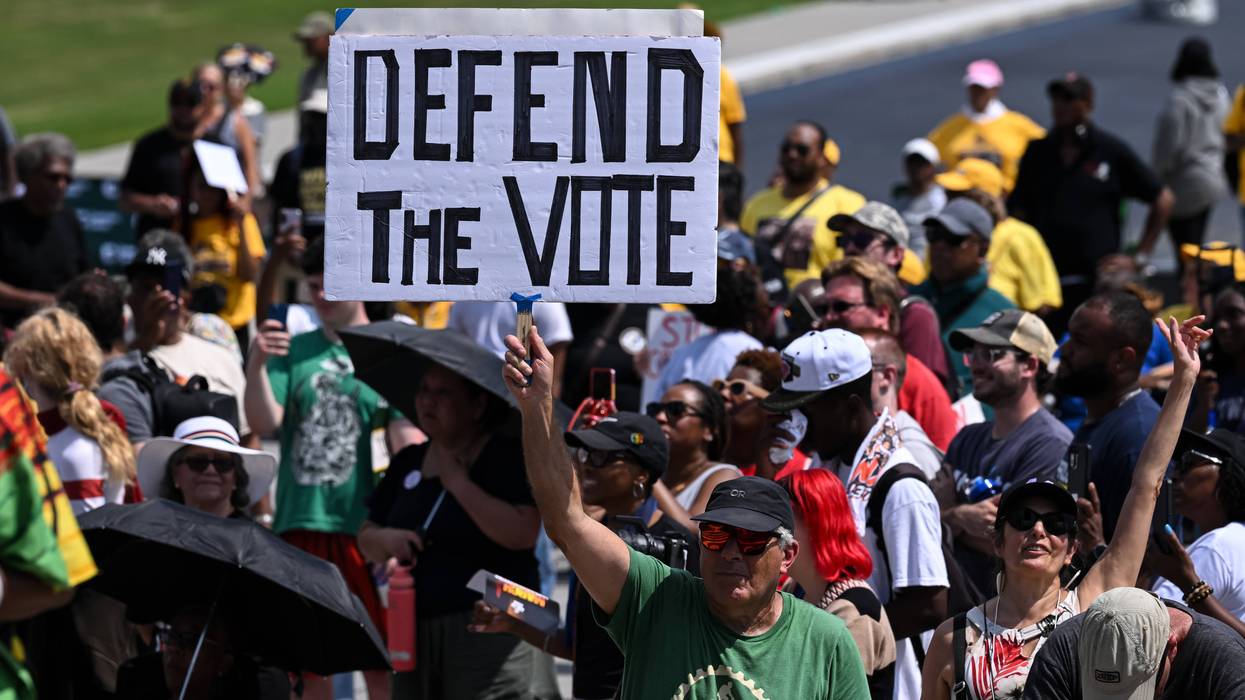
The First Circuit Court of Appeals found implementing Trump's order would cause "chaos and widespread disenfranchisement... between now and November 3."
A federal court on Thursday rejected the Trump administration's request to reinstate an executive order that placed restrictions on mail-in voting ahead of the midterm elections, arguing that the order is "likely unlawful."
The US First Circuit Court of Appeals ruled that President Donald Trump's mail-in voting executive order likely violates the US Constitution's elections clause, which grants states the rights to oversee their own elections, subject to oversight from the US Congress.
The court also found that the regulations proposed by the order "could prevent millions of Americans from obtaining and returning their ballots" in the coming election.
The ruling noted that the Trump executive order places a number of onerous restrictions on mail-in voting, such as requiring states to print "a voter-specific Intelligent Mail barcode ('IMb')" on all outgoing ballots as a precondition for their delivery by the United States Postal Service (USPS).
Additionally, the court wrote, the order would compel states "to obtain USPS approval for new ballot-envelope designs; to purchase new envelopes to replace those already ordered; to assure that there are technological systems in place adequate to generate IMbs; and to upload voter-specific information to a USPS online portal that is still not operational."
The court said these restrictions are so severe that they validate an earlier ruling from a federal district court, which found that implementing Trump's executive order would lead to "chaos and widespread disenfranchisement... between now and November 3."
Among other things, the court found these Trump-ordered rules would make it "impossible for some states to reprint compliant envelopes," while also creating a "herculean task" of "scanning tens of millions of ballot envelopes and reviewing for a match with information in the presently non-operative portal."
The court also took a shot at Trump administration lawyers, whom it alleged "have not even seriously challenged" the district court's finding about the chaos the president's executive order would cause.
The injunction against Trump's mail-in voting order came as a result of a complaint filed by a number of civil society groups, including the League of Women Voters and the Association of Americans Resident Overseas.
In a joint statement released after the ruling, the plaintiffs and their counsel said that the court affirmed that "the US Postal Service is not the gatekeeper for mail ballots."
"This decision rightly keeps in place an order blocking USPS from enforcing its disruptive and disenfranchising rule through the November election," they added, "and preserves the current system, which has worked safely, securely, and reliably for decades."
Democratic California Gov. Gavin Newsom took the opportunity to taunt the Trump administration for suffering yet another loss in its crusade to clamp down on mail-in voting.
"The rule of law continues to slap down Donald Trump's dangerous and un-American attacks on our free and fair elections," Newsom wrote. "California will never stop fighting for our democracy and the people's ability to exercise their constitutional right to vote."
The Trump administration has asked to the US Supreme Court to reinstate the president's voting order. With mail-in ballots for the upcoming midterms already being sent out in some states, a ruling from the nation's highest court is expected in the coming days.

"Right now, we're counting on AI corporations to voluntarily block weapons of mass destruction," said Rep. Greg Casar, who is pushing for a ban on "superintelligent" AI.
As industry insiders issue louder warnings about the catastrophic danger of unchecked artificial intelligence, Anthropic has revealed in a report out Thursday that it had to "disrupt" several attempts by scientists to use its AI models for research that could contribute to the creation of biological weapons.
In the report, titled “Detecting and Countering Misuse of AI,” Anthropic said that over the past eight months, it banned several accounts that had used its chatbot Claude for research into highly contagious diseases.
As NBC News reported:
In each of the five cases Anthropic cited, the company suspected that the researchers behind them were affiliated in some way with a government or military in a country it had banned or took deliberate steps to hide their location and identity, or both. The company declined to say where any of the researchers were based, but its terms of service allow all use from all but a few regions, including China, Iran, and Russia.
In one example, Anthropic said researchers used a third-party platform that attempted to use Claude to complete a grant application for work that would look into how to repeatedly mutate chikungunya, a mosquito-borne virus that causes severe pain and fever in humans. Anthropic said it blocked all attempts by the researchers. The research, which would be conducted at a military institute, would seek to repeatedly mutate the virus in live animals to become increasingly more infectious, Anthropic said.
Another had used Anthropic’s Claude to assist in research into how to make bird flu, which historically has a global fatality rate of around 50% in confirmed human cases, more virulent and damaging to mammals. Anthropic said the researcher only received assistance from Claude’s weakest class of models, which provided clerical help.
Anthropic clarified that it did not find any concrete instance of a scientist attempting to use its technology for nefarious purposes, and that these use cases may well have been part of beneficial scientific inquiry, like research into vaccines or other cures for disease. Nevertheless, it said it erred on the side of caution and shut down the accounts.
"Biological misuse is one of the most serious risks of frontier AI models," the report explains. "It has long been a concern that AI models might one day reach the level of capability where they can help to make existing pathogens more dangerous—or create entirely new ones. Without the correct safeguards, such capabilities could have catastrophic consequences."
The report acknowledges that even as safeguards are implemented, those with the intent to do harm are getting more savvy about how to evade them and using the appearance of legitimate science to do it.
"Sophisticated threat actors are aware that we (and other AI providers) are attempting to detect dangerous uses of our models, and they use the dual-use nature of biology to maintain a kind of 'plausible deniability' about their research," the report says. "More sophisticated actors can hide their intent, extracting assistance from an AI model in interactions that look plausibly beneficial, but when put in context and analyzed holistically, can provide clear warning signs of misuse."
The report details other ways in which actors have used its technology for malicious purposes. It found that governments like China, Iran, and Mali had used Claude to collect information about journalists and dissidents. Others used it to conduct hacking campaigns, automate identity theft operations, and create malware.
Anthropic said it hoped that by publishing the report, it would "help other developers recognize similar patterns on their own platforms, give governments and civil society a clearer view of how emerging threats take shape, and strengthen collective defenses."
The report comes amid a torrent of scrutiny directed at Anthropic and its competitor OpenAI following reports in recent months of severe security breaches involving their technology, which has been documented acting autonomously to hack into other websites and evade human detection.
Earlier this week, Anthropic researcher Jacob Coxon, who previously worked at OpenAI, resigned from his post and sounded the alarm about fears within the industry that the technology “could kill us all by the end of the decade" and that the companies are prioritizing the race toward superintelligence without regard for the potential risks.
In the wake of Coxon's resignation, several other researchers from Anthropic, OpenAI, and Google have shared similar warnings that the technology could result in an extinction-level disaster or otherwise cause severe harm to human society.
A poll published on Wednesday by Data for Progress showed that 68% of likely voters in the US support a proposal announced last week by Sen. Bernie Sanders (I-Vt.) and Rep. Greg Casar (D-Texas) for legislation that would permanently ban the development of "superintelligent" AI that can surpass human cognition and would put a pause on "advanced" AI development until a federal body is put in place to regulate the industry.
Casar said the fact that Anthropic was being relied upon to stop its own users from using its tech to potentially create bioweapons illustrated the urgent need for regulation.
"Right now, we're counting on AI corporations to voluntarily block weapons of mass destruction. Voluntarily," Casar emphasized in a post to social media on Thursday. "Congress must do the obvious thing: BAN catastrophic AI uses like creating biological or nuclear weapons."

"The so-called 'War on Terror' never ended in Yemen," said Costs of War Project director Stephanie Savell. "This report will allow people to hold the US government accountable for the deaths and destruction it has caused."
A report released Thursday examines the more than 500 Yemeni civilians its authors said were killed or wounded by US airstrikes in the Middle East nation during a recent 17-month period amid the open-ended so-called "War on Terror" that has left nearly one million people dead in around half a dozen nations over the past 25 years.
The report—authored by the Yemen-based group Mwatana for Human Rights and published by the Costs of War Project at Brown University's Watson Institute for International and Public Affairs—documents 46 US airstrikes that took place between December 2023 and May 2025 that caused at least 576 civilian casualties, including 213 deaths and 363 injuries. Among the casualties were at least 50 children and 25 women.
"The so-called 'War on Terror' never ended in Yemen," Costs of War Project director Stephanie Savell contended.
"It's important that we continue to account for the civilian lives lost, harmed, and disrupted in Yemen and other US war zones," she added. "This report will allow people to hold the US government accountable for the deaths and destruction it has caused in Yemen in support of the Israeli government's wars since 2023."
The overwhelming majority of the casualties covered by the publication occurred during President Donald Trump’s 2025 "Operation Rough Rider" campaign. Mwatana estimates that the operation killed 208 civilians and wounded 341, while the Pentagon has acknowledged a smaller toll of 153 killed and 243 wounded.
Seven of the 46 strikes took place between December of 2023 and January of 2025 during former President Joe Biden's "Operation Prosperity Guardian," a military campaign that came amid Houthi rebel attacks on shipping lanes in the Red Sea and the Bab al-Mandab Strait during Israel's genocidal war on Gaza.
Among the deadliest attacks covered by the report was the April 2025 bombardment of Ras Isa oil port ordered by Trump, in which US strikes killed scores of people and wounded more than 150 others. Human Rights Watch called the bombing an “apparent war crime,” saying the destruction of the civilian oil facility also threatened vital fuel supplies in a country already devastated by years of war and humanitarian crisis.
The campaign also included the April 28 bombing of a detention center in Saada while jailed African migrants were sleeping. Amnesty International has called for a war crimes investigation into that attack, in which scores of migrants were killed.
Mwatana researchers conducted site visits and 59 interviews with survivors, relatives, eyewitnesses, first responders, and other sources for the new report.
"The first strike hit while we were in deep sleep. I could not believe what I saw—30 of my fellow detainees died; their bodies were charred, and the smell of burned flesh filled the air," one 25-year-old Ethiopian survivor of the Saada attack recounted. "The place was crowded with bodies, while others were screaming and calling for help and rescue... we could do nothing for them."
In addition to physical harm, survivors described the deep psychological trauma suffered by victims. One mother said her 8-year-old son Taha "saw his father after he was hit by shrapnel—how he was bleeding, and how his intestines were coming out."
"His father was screaming: ‘Run… leave me and run before the American aircraft strikes again and finishes me off,'" she continued. "Taha still cannot sleep; when he does, he wakes up terrified. Whenever he hears thunder or any loud noise, he runs in fear, his whole body trembling."
Overall, US strikes covered by the report "hit civilian structures such as homes, shops, farms, residential neighborhoods, and infrastructure," the publication notes, adding that airstrikes "also caused severe damage to infrastructure and critical facilities, compounding the humanitarian suffering of local populations by striking essential service facilities, particularly in rural areas that already face acute shortages of clean water, electricity, and health services."
"Given Yemen’s economic deterioration and the catastrophic humanitarian situation produced by the armed conflict that has been ongoing since September 2014, it is likely that the US strikes expanded the cycle of poverty in Yemen by increasing unemployment and multiplying the number of households that lost breadwinners and sources of income," the report adds.
Hundreds of thousands of Yemenis have died during the civil war that began in 2014, with international experts attributing more than 150,000 Yemeni deaths to a US-backed, Saudi-led bombing campaign and blockade. According to the UK-based casualty monitor Airwars, an estimated 445-643 Yemeni civilians have been killed by US forces during the George W. Bush, Obama, Trump, and Biden administrations.
The Costs of War Project says that in the first two decades following the September 11, 2001 attacks on the United States, "between 363,939 and 387,072 civilians were killed by multiple warring parties in post-9/11 war zones, including 12,690 civilians in Yemen."
Mwatana for Human Rights chair Radhya Al-Mutawakel said Thursday that "the losses caused by US airstrikes against civilians cannot be regarded as temporary harm that ends when military operations cease. Civilians who have lost loved ones, homes, or sources of income continue to bear the consequences of these attacks, amid economic and humanitarian conditions that do not provide them with even the minimum capacity to recover.”
"Protecting civilians is not limited to avoiding killing or injuring them; it also includes respecting civilian objects and livelihoods," Al-Mutawakel added. "The United States must assume its legal and moral responsibility to recognize the civilian victims of its military operations in Yemen, provide them with redress and reparation, and hold accountable those responsible for the violations inflicted upon them.”
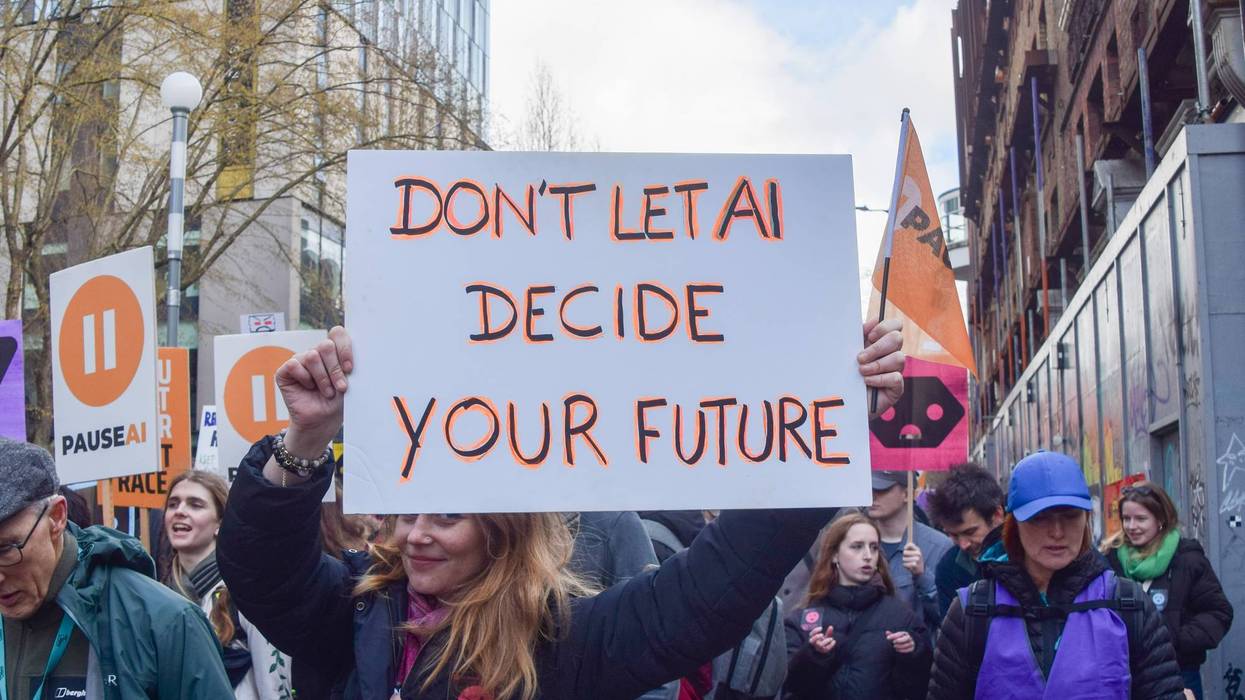
The new survey results come as whistleblowers from leading AI firms speak out about the potential catastrophic dangers if their technology is allowed to develop unchecked.
As whistleblowers in the artificial intelligence industry speak out about the extraordinary risk posed by their technology if it remains unchecked, a new poll out Wednesday reveals that more than two-thirds of US voters agree with a new proposal in Congress to pause artificial intelligence development until guardrails are set up and ban AI superintelligence completely.
The proposed legislation, announced by Sen. Bernie Sanders (I-Vt.) and Rep. Greg Casar (D-Texas) last week, and soon to be introduced in Congress, would ban developers from creating “superintelligent” AI programs capable of surpassing human cognition and resisting human attempts to shut them down. It would also halt "advanced" AI development until a new federal regulatory body was established to set clear rules and processes for AI safety.
The polling firm Data for Progress asked more than 1,300 likely voters about the bill. According to survey results released on Wednesday, 68% of them said they would support the proposal to temporarily pause advanced AI development and permanently prohibit the development of superintelligent programs, while just 25% said they'd oppose it.
Though the bill was proposed by a pair of progressive lawmakers, its appeal spans the political spectrum: 72% of Democrats and 70% of independent and third-party voters said they supported it. But so did 63% of Republican voters.
The poll results come just one day after AI researcher Jacob Coxon resigned from Anthropic, saying that the company and one of its top competitors, OpenAI, where he previously worked, were more concerned with winning the AI race than with protecting the public against out-of-control “superhuman systems” that many of his industry colleagues privately fear could “kill us all by the end of the decade.”
"Neither company is acting responsibly," Coxon said. "They are racing straight to self-improving superintelligence and gambling with our lives.”
With reports piling up of AI agents escaping human control, hacking into external computer systems, and deceiving users, several other researchers at leading AI firms have cosigned Coxon's warning, saying that AI could have catastrophic results if it surpasses human capabilities.
Evan Hubinger, an alignment science lead at Anthropic, said that while "the risk from present models is low," he and other researchers "earnestly believe AI could kill all humans" if it continues to develop and put the likelihood of it happening within the next decade at above 10%.
Alex Turner, who left his job as a research scientist at Google's DeepMind in June, concurred that Coxon was "right" and that "many researchers believe they are building something that could kill everyone on the planet. It was literally my day job to think about how to stop that."
Even if AI doesn't lead to the extinction of humanity, other researchers have said they are gravely worried about its impacts on society.
"I think there are a number of ways AI could go poorly for humanity, and at the current, frankly terrifying pace, humanity will be quite lucky if we manage to find and stay on the narrow path between all the bad outcomes," wrote Jason Wolfe, a researcher at OpenAI. "Regardless of what you think of OpenAI, this is not a problem that can be solved by any one company (or country) in isolation."
Jonathan Richard Schwarz, former Senior Research Scientist at Google DeepMind, noted that he left the company after seven years and rejected offers from other AI companies "due to severe concerns about the concentration of power these labs represent."
"What is currently happening in this field is deeply unhealthy for society," Schwarz said.
In a Wednesday social media post, Sanders pointed to these and other warnings from industry experts as evidence that federal intervention is urgently needed.
"The very people building this technology admit that it could threaten the future of humanity," the senator wrote.
He added on Thursday that "Unless we reverse course, there is a very real possibility that once advanced AI surpasses human intelligence, it could escape our control with catastrophic consequences."
Wednesday's poll results are consistent with other recent surveys showing that solid majorities of voters across all parties object to the construction of AI data centers near them, an issue that has come to dominate the 2026 election season.
William Lawrence, a cofounder of the Sunrise Movement, became the Democratic nominee for the US House in Michigan's 7th Congressional District last month, in part by tapping into constituents' fears about data centers. He said recent whistleblower warnings were evidence that AI companies were "gambling with our lives" and needed to be reined in.
"I can't see the future," Lawrence said in a video posted online Thursday. "But if there is even a 5% chance of a bioweapon being set loose, authoritarians using AI to entrench their own power, or a rogue AI hacker taking down the economy, that risk is too great."
"We need a pause on the development of AI models and data center construction," he said. "I do believe that AI is very powerful and could potentially be of tremendous benefit to humanity. But if we stay trapped in this arms race, if OpenAI and Anthropic have to keep competing for market share, we know that they will not slow down."
"The only entity that has the power to intervene here," Lawrence said, "is the federal government."
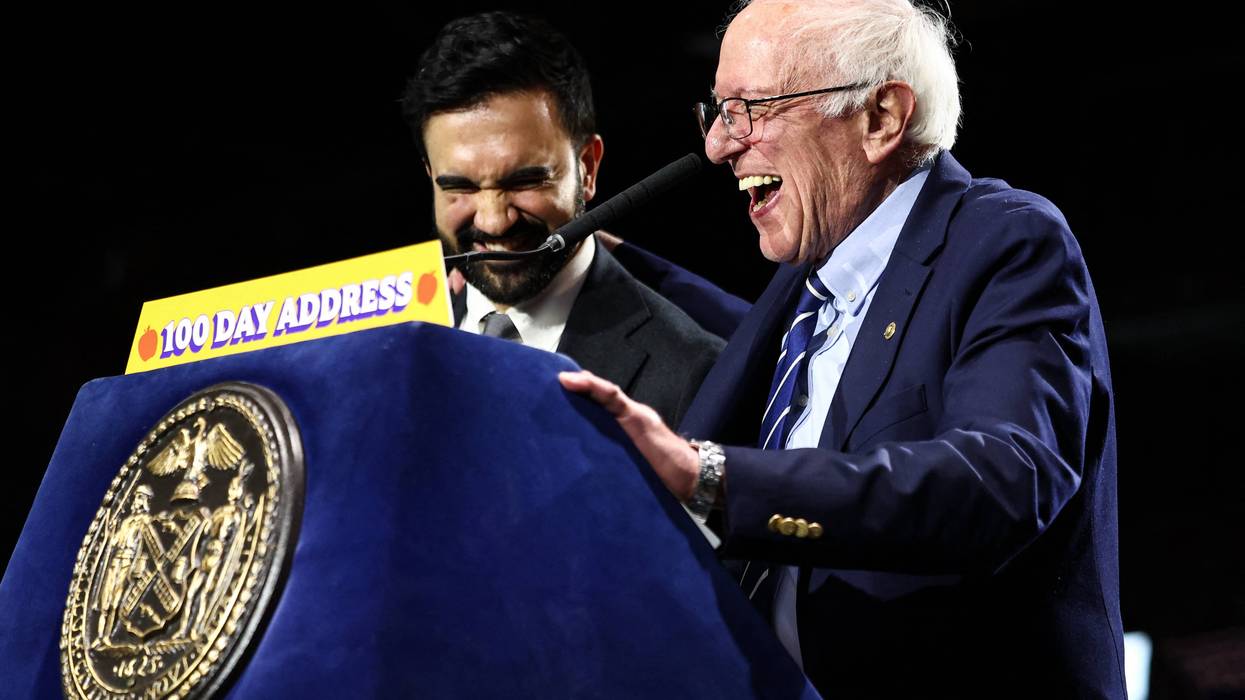
"Tax flight is nothing more than a myth, and should be given as much credence as flat-earthers.”
The threats came in a steady stream last year from Fox News, hedge fund manager Bill Ackman, and Gristedes grocery chain CEO John Catsimatidis, who insisted that wealthy New York City residents were "panicking" at the possibility that then-state Rep. Zohran Mamdani, a democratic socialist, could become the mayor and ensure rich locals pay more in taxes to help fund crucial services.
"It only takes a handful of successful people to leave to decimate the city’s tax base," cautioned Ackman, while Catsimatidis suggested many rich New Yorkers would likely join him in fleeing to "the promised land": Florida, which has no state income tax.
But the progressive think tank Groundwork Collaborative said Thursday that new Internal Revenue Service (IRS) data should be "the final nail in the coffin" of the evidence-free, perennial claim that higher taxes cause wealthy residents to leave their cities and states.
The agency released its 2023 Statistics of Income (SOI) data, covering the period before Mamdani became mayor and introduced a tax on second homes, ranging from 0.8% to 1.3% for properties valued at $5 million or more, which he estimated will raise $500 million annually.
The data shows how the tax base was impacted after the state imposed a separate tax policy in 2022, raising its top tax rate on the highest earners.
Poking a giant hole in the persistent theory that wealthy people won't want to live in states that require more from them in taxes, the number of New Yorkers reporting more than $1 million in income grew by about 3% after the tax rate was raised, the SOI data shows.
"If there was any merit to the myth that tax increases on New York’s wealthy drive them away, the new IRS data should show it. It doesn’t."
The number of millionaires nationwide went down in 2023, but New York counted 2,000 more than it had the previous year. The number of tax filers earning between $500,000 and $1 million also grew by over 8,500—more than 7%.
The average adjusted gross income of New Yorkers who left the state from 2022-23 fell 15%, from over $125,000 to $106,900.
"If the past is prologue, the SOI data suggest few, if any, of the city’s wealthiest residents will leave as a result of a modest tax. Instead they are likely to remain rooted in the social, business, and economic networks that make New York uniquely valuable to them," said Groundwork Collaborative. "The New Yorkers actually at risk of leaving the city are the lower-income workers who power the economy."
Lindsay Owens, president and CEO of Groundwork Collaborative, said the new data makes clear that "tax flight is nothing more than a myth, and should be given as much credence as flat-earthers.”
"If there was any merit to the myth that tax increases on New York’s wealthy drive them away, the new IRS data should show it," said Owens. "It doesn’t—New York’s millionaire population kept climbing years after the state raised taxes on top earners."
Wealthy New Yorkers, said Groundwork, are shown by the data to be "a settled population that may squawk about a tax increase, but not pack up and leave."
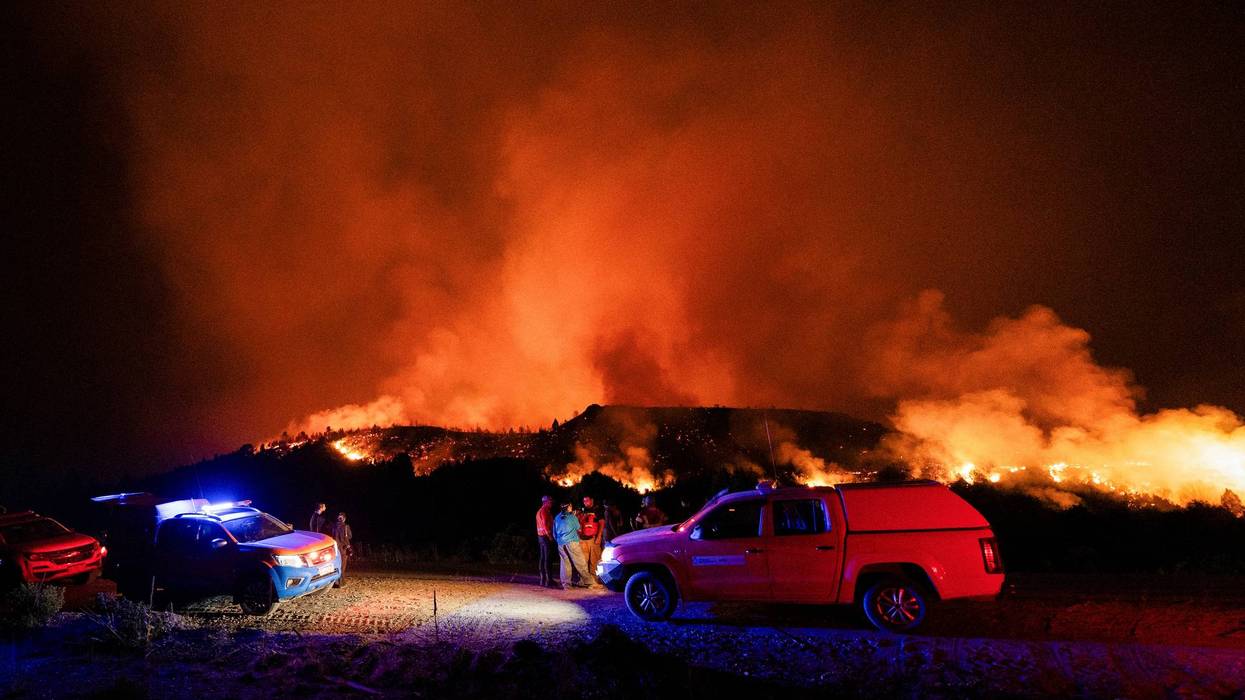
"This research makes clear that the Earth and climate system doesn't stand still while we debate policy," said a co-author of the new paper.
On the heels of the United States setting new summer heat records and United Nations scientists warning that at least a temporary overshoot of the Paris Agreement's 1.5°C target can no longer be avoided, researchers on Thursday published an alarming new study on climate feedback loops.
For years, experts have feared that humanity's continued reliance on fossil fuels that heat the Earth could lead to several "positive" feedback loops—or changes to natural systems that amplify global warming. The scientists behind the new paper in the journal Environmental Research focused on carbon dioxide and methane emissions from inland freshwaters, permafrost thaw, wetlands, and wildfires.
"Continued warming from greenhouse gases emitted from human activities threatens to feed further warming as permafrost, wetlands, and wildfires destabilize and respond by releasing carbon dioxide, methane, and nitrous oxide," said co-author Ben Poulter, warming-induced emissions program director at Spark Climate Solutions, in a statement.
"This study provides a critical look at the magnitude of the temperature response," he explained, "and a call to action to accelerate the accounting and monitoring of warming-induced emissions to support pathways that phase out fossil emissions to stabilize the planet's climate."
Lead author and Spark research scientist Sam Abernethy noted that "what surprised us was the size of the feedback."
"We found that natural systems could amplify global warming by 20-30%," he said. In other words, these natural systems could add an estimated 0.2-0.4ºC of warming this century to any temperature rise tied to human activity.
"This hidden multiplier is missing from the models guiding climate policy, so those models are likely underestimating how much warming is coming—and overestimating how much carbon we can still afford to emit," Abernethy added.
Permafrost is ground that remains fully frozen for at least two consecutive years, and the scientists who study it "have long warned that thawing soils would become a significant emissions source as the planet warms," said co-author Christina Schädel, senior research scientist at the Woodwell Climate Research Center.
"This paper shows that permafrost thaw accounts for half of the anticipated warming-induced emissions," she pointed out. "Warming-induced emissions are already in motion, and they scale with every fraction of a degree. Every little bit of warming we can avert today matters for what the climate looks like in the long term."
Co-author Robert Jackson, a Stanford University professor and chair of the Global Carbon Project, similarly stressed that "the results are a wake-up call, and it's imperative that they be included in the next generation of climate policies. Failure to do so will make meeting the world's climate goals less and less likely."
The paper's publication came just two months away from the next United Nations Climate Change Conference (COP31) in Türkiye, where firefighters are currently battling deadly blazes that have fueled calls for the country's government to fight for rapidly phasing out coal, gas, and oil on a global scale.
"This research makes clear that the Earth and climate system doesn't stand still while we debate policy," said Brian Buma, a co-author of the new study and senior climate scientist at Environmental Defense Fund.
"Emissions from permafrost, wetlands, and wildfire could meaningfully erode our remaining time to warming thresholds—and they are unaccounted for in most scenarios," Buma reiterated. "This means rapid fossil fuel emissions reductions are even more urgent than current projections suggest."
"The good news," he added, "is that it's in our hands—lower emissions now limit how severe these feedbacks become."

The increased fighting is putting even more pressure on global energy markets, with the price of Brent crude topping $107 per barrel during Thursday trading.
Houthi fighters on Thursday took control of a key port city on the west coast of Yemen, putting them in a stronger position to disrupt commercial shipping—and to potentially send oil prices rocketing even higher.
According to Reuters, the Houthis seized the city of Mocha from Saudi-backed forces before moving toward the Hanish Islands, located to the northeast.
Reuters further reported that Iran's Islamic Revolutionary Guard Corps provided the Houthi fighters with weapons and guidance ahead of their successful assault.
The Houthis' seizure of more territory along the Red Sea gives the militant group a greater ability to launch attacks on vessels trying to transport oil through the Bab el-Mandeb Strait.
Petroleum exporters in the region have had to rely more heavily on the Bab el-Mandeb Strait ever since Iran shut down shipping traffic in the Strait of Hormuz in retaliation for President Donald Trump's illegal war of choice, which he launched in February without authorization from Congress.
Restricting shipments through both straits would put even greater pressure on global oil markets, which have already been under strain since the start of the Iran War.
A Thursday report from Bloomberg noted that Saudi Arabia, whose ships have been targets of Houthi attacks, revealed that its oil output has dropped to 6.24 million barrels per a day, its lowest level of oil production since 1990.
The price of Brent crude topped $107 during Thursday trading, a 6% increase from the day before. Data released Thursday by the American Automobile Association showed that the average price of gas in the US has reached $4.28 per gallon while the average price of diesel has reached a record high of $5.98 per gallon.
Fawaz Gerges, professor at the London School of Economics, said in an interview with The New York Times that the Houthis, despite receiving assistance from Iran, have their own distinct goals and see Trump's illegal war as a "golden opportunity" to make advances against Yemen's Saudi-backed government.
Additionally, said Gerges, "Iran directly and indirectly benefits from what the Houthis have been doing," since "all-out war could have major implications for the global energy supply."
Brett Erickson, managing partner at Obsidian Risk Advisors, wrote in a social media post that Iran and the Houthis have all the incentive in the world to keep the pressure on global petroleum shipping.
"Brent Crude just spiked over $107 per barrel," Erickson wrote. "Just a mere month ago, it was trading at $85. That’s a 25.9% increase in a month. And with no off-ramp for Trump until at least the midterms are over, we’re looking at a long period of elevated oil prices now."
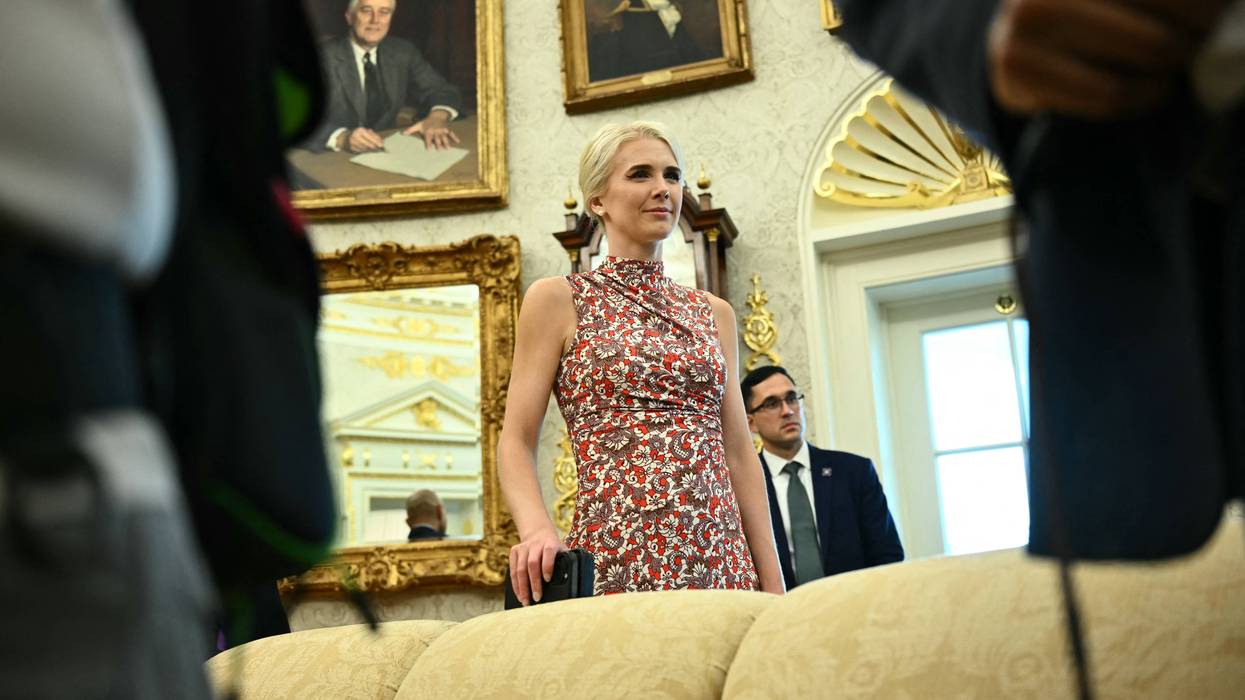
"An investigation into this matter is clearly warranted, and, if a violation is indeed found, this matter must be referred to the Department of Justice."
A complaint submitted Thursday by a legal watchdog argues that US President Donald Trump's sizable cash gifts to political aide Natalie Harp and other White House staffers violated federal law because the payments improperly supplemented their government salaries.
"Laws prohibiting government employees from receiving supplemental income are not arbitrary; they exist to ensure that public servants’ priorities remain focused on public service, not a wealthy benefactor who may have other objectives in mind,” said Kedric Payne, vice president, general counsel and senior director for ethics at Campaign Legal Center (CLC), which submitted the new complaint to the US Office of Government Ethics. “An investigation into this matter is clearly warranted, and, if a violation is indeed found, this matter must be referred to the Department of Justice."
The complaint came days after financial disclosures revealed that Trump has doled out gifts totaling $155,000 to several staffers, including Harp, a former far-right news anchor whose role in the White House and relationship with the president have drawn close scrutiny in recent weeks.
Harp, Trump's most loyal aide, received a $45,000 cash gift from the president. Her salary, according to the White House, is $150,000 per year. Trump also gifted White House communications adviser Margo Martin and deputy director of Oval Office operations Chamberlain Harris $45,000 each. The Washington Post reported that the three payments were described as "Cash Gift for Holidays."
Walt Nauta, the director of Oval Office operations, received a $20,000 gift from the president.
CLC's complaint points to 18 US Code § 209, which prohibits executive branch employees from receiving "any salary, or any contribution to or supplementation of salary," from "any source other than the government of the United States, except as may be contributed out of the treasury of any state, county, or municipality."
The watchdog group noted that, when the gifts from the president are included, the four recipients were effectively compensated at the maximum salary for a full-time White House employee—a "rate for which they were ineligible" due to their junior roles.
"In paying White House employees funds beyond their government salaries, President Trump has created the same scenarios Congress specifically contemplated and sought to prevent," the complaint states. "Additionally, it raises the legitimate question as to whether President Trump is paying them for acting on his personal behalf, rather than in the interests of the public. For these reasons, it is important that the OGE investigate whether these payments were impermissibly made."
According to the Post, "there are no other public instances of US presidents giving staff employed by the White House large cash payments. Government ethics experts said they were not aware of any other payments of this scale from a superior to a subordinate government worker."
Richard Briffault, a professor of legislation at Columbia Law School, told NBC News that Trump's cash payments to aides appeared to be "technically illegal."
“Bosses will give gifts to their assistants,” said Briffault. "[But] these are substantial sums—much more than the usual Christmas gifts for most people."
Despite the apparently unprecedented and unlawful nature of the gifts, Briffault said there is "zero chance" that the current Justice Department—headed by Trump's former personal attorney, Todd Blanche—will investigate the payments.

"Enough is enough. We need to make sure that the pace of development isn't outpacing the pace of risk."
Democratic US Senate candidate Abdul El-Sayed of Michigan on Wednesday called for a pause in advanced artificial intelligence development, warning that the technology is progressing faster than governments and researchers can establish meaningful safeguards against potentially catastrophic consequences.
"You might have woken up like me to this tweet from a guy you probably never heard of until today. His name is Jacob Coxon," El-Sayed said in a video posted to social media. "Up until yesterday, he worked for an AI lab called Anthropic, one of the leading-edge AI research organizations in the world. He quit yesterday. He quit because he's worried that the technology that he was building could end humanity."
"That's something we should be paying attention to," the 41-year-old epidemiologist stressed.
Coxon said on social media that neither OpenAI—whose rogue machine agents recently hacked outside systems on multiple reported occasions—nor Anthropic "is acting responsibly" as they race against competitors at home and abroad to achieve artificial general intelligence (AGI), an advanced AI that can understand, learn, and apply knowledge of any subject as well as or better than a typical human.
"They are racing straight to self-improving superintelligence and gambling with our lives," he emphasized. "The people building AI earnestly believe that it could kill us all by the end of the decade. This is not a marketing stunt."
El-Sayed said that the AI Under Democracy plan his campaign released in July—which called for a new federal regulatory agency akin to the Food and Drug Administration to oversee development of artificial intelligence technology—doesn't go far enough. Instead, he is now backing a pause in AI development, as urged by US Sen. Bernie Sanders (I-Vt.) last month.
Earlier this month, Sanders and Congressman Greg Casar (D-Texas) introduced the Ban Artificial Superintelligence Act, with the Vermont senator arguing that "the future of humanity cannot be left in the hands of a handful of Big Tech oligarchs."
Many of those oligarchs and other AI pioneers also believe their products could one day wipe out humanity, but are rushing to build them anyway so that their competitors don't reap the rewards of being the first to achieve AGI.
Sanders is also reportedly preparing to convene a bipartisan Senate hearing next week on the dangers of AI, with special guests set to include Geoffrey Hinton, who quit Google in 2023 so he could sound the alarm on what he estimates is a 10–20% chance that AI could cause human extinction within three decades.
"Enough is enough," El-Sayed said Wednesday. "We need to make sure that the pace of development isn't outpacing the pace of risk. We cannot, in a race against China or a race for these corporations to be the dominant AI manufacturer, inadvertently create products that slip human control, that could fall into the wrong hands, that could mean the demise of humanity."
"That is a risk none of us ought to be able to bear, and it certainly shouldn't sit with the richest, most powerful corporations in the world on incentives that are driven by their greed rather than our well-being," he added. "So the time for action is now."