September, 22 2014, 01:15pm EDT

For Immediate Release
Contact:
Marta Stoepker, Sierra Club, marta.stoepker@sierraclub.org, 313-977-0054
Shana Lazerow, CEJA, slazerow@cbecal.org, 415-217-9584
California Environmental Justice Alliance & Sierra Club Call on Attorney General to Investigate Collusion between Utilities and the California Public Utilities Commission.
Today, the Sierra Club and California Environmental Justice Alliance (CEJA) called on the Attorney General to conduct a full investigation into the CPUC's possible collusion with utilities after private emails were released showing inappropriate communications between executives at Pacific Gas & Electric (PG&E) and Commissioners staff at the California Public Utilities Commission (CPUC).
SAN FRANCISCO, Calif.
Today, the Sierra Club and California Environmental Justice Alliance (CEJA) called on the Attorney General to conduct a full investigation into the CPUC's possible collusion with utilities after private emails were released showing inappropriate communications between executives at Pacific Gas & Electric (PG&E) and Commissioners staff at the California Public Utilities Commission (CPUC).
Click HERE for the letter.
"Today we are calling on the Attorney General Kamala Harris to conduct a full investigation into the relationship between utilities and the California Public Utilities Commission, and what appears to be a pattern of collusion and abuse of process. Only through a thorough investigation by the Attorney General can reforms be made and public trust restored," said Evan Gillespie, Regional Deputy Director of the Sierra Club
In the emails, PG&E is aggressively requesting a judicial reassignment in its application to increase customer rates for pipeline improvements because the judge that would be assigned to its case "has a history of being very hard on us." Rather than report these improper requests, the two commissioners and the commissioner aide involved in the email exchanges accommodated PG&E's demands.
"For too long, the California Public Utilities Commission has been vulnerable to influences that are not in the public's interest or in the interest of the electrical system as a whole. The emails unearthed this week are just the latest example of the distorted relationship between regulators and the utilities, where special interests call the shots and regulators apologize when they cannot deliver on utility demands," said Strela Cervas, Co-Coordinator of the California Environmental Justice Alliance.
Unfortunately, this most recent disclosure is symptomatic of an agency culture where decisions are based on political influence rather than evidence and impartial decisionmaking. This is especially true in a variety of cases authorizing multi-billion dollar investments in new fossil fuel infrastructure. For example:
- Oakley Generating Station: Earlier this year, the California Court of Appeals unanimously overturned CPUC approval of a contract between PG&E and the proposed Oakley gas plant. The approximately 584 MW plant would cost over $1 billion for its 30-year contract because the need for the facility was based on "uncorroborated hearsay materials, the truth of which is disputed" and that "the remaining evidence in the record fails to support the Commission's finding."
- Hydrogen Energy California coal power plant (HECA): The recent emails show PG&E told the CPUC President's office that PG&E expected to have a "harder time" with the $4 billion HECA project if the Commission did not assign its preferred judge to its pipeline case.
- Carlsbad Energy Center: At a September Pre-Hearing Conference regarding SDG&E's application to approve a contract for the proposed 600 MW Carlsbad gas plant, the assigned Commissioner advised objecting parties that "if I were an intervenor trying to decide how to allocate scarce resources, I would not allocate them to this proceeding." The message was clear. Even before evidence could be presented on whether the plant is needed and the contract was logical, the Commission had predetermined the proceeding's outcome.
The Commission's job is to maintain a safe and reliable grid as well as protect customers and the environment, not cater to special interests. Only through a thorough investigation by the Attorney General can necessary reforms be made and the public trust restored.
The Sierra Club is the most enduring and influential grassroots environmental organization in the United States. We amplify the power of our 3.8 million members and supporters to defend everyone's right to a healthy world.
(415) 977-5500LATEST NEWS
CBS Journalist Says Bari Weiss Spiked Segment on El Salvador Prison for 'Political' Reasons
"When it fails to air without a credible explanation, the public will correctly identify this as corporate censorship," wrote veteran "60 Minutes" correspondent Sharyn Alfonsi.
Dec 22, 2025
A CBS News correspondent on Sunday accused Bari Weiss, the outlet's editor-in-chief, of pulling a "60 Minutes" segment on El Salvador's notorious CECOT prison for "political" reasons, shortly before it was scheduled to air.
Late Sunday afternoon, "60 Minutes" said in an editor's note that the broadcast lineup for the night had been "updated," removing the planned "Inside CECOT" segment. The note said the report on the maximum-security prison—to which the Trump administration sent more than 200 Venezuelan migrants—would "air in a future broadcast," without providing any specifics.
In an internal email obtained by the New York Times, veteran "60 Minutes" correspondent Sharyn Alfonsi, who reported the segment, said she learned on Saturday that "Bari Weiss spiked our story" and did not grant the journalist's request for a phone call to discuss the decision.
"Our story was screened five times and cleared by both CBS attorneys and Standards and Practices," Alfonsi wrote. "It is factually correct. In my view, pulling it now, after every rigorous internal check has been met, is not an editorial decision, it is a political one."
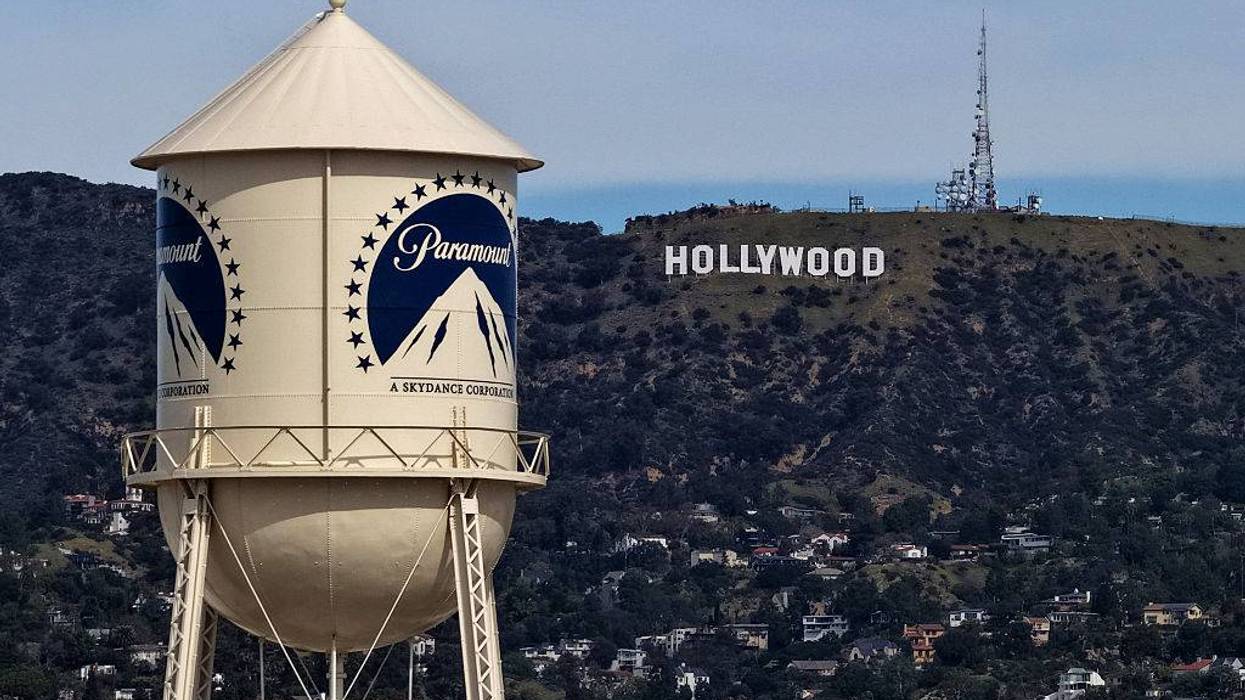
CBS News is owned by Paramount Skydance, a company headed by David Ellison—the son of Trump ally and GOP megadonor Larry Ellison.
Alfonsi went on to note that "60 Minutes" had "been promoting this story on social media for days," and "when it fails to air without a credible explanation, the public will correctly identify this as corporate censorship."
"I care too much about this broadcast to watch it be dismantled without a fight," she added.
Below is a trailer of the shelved segment, which included interviews with people sent to CECOT. Alfonsi said participants "risked their lives to speak with us."
BREAKING: CBS just pulled this episode of 60 Minutes claiming it is “postponed” Here is the trailer that was pulled for the now “postponed” segment.
Make sure everyone sees it.
It’s remarkable how much harm Pro-Trump Bari Weiss has managed to inflict on CBS News in such a… pic.twitter.com/gccW338rFF
— Ed Krassenstein (@EdKrassen) December 22, 2025
In a statement issued late Sunday, Weiss—whose brief tenure at the helm of CBS News has been embroiled in controversy—suggested she pulled the plug on the "Inside CECOT" segment because it lacked "sufficient context" and was "missing critical voices." Unnamed people familiar with internal discussions at CBS News told the Times that Weiss pushed for the inclusion of a "fresh interview" with White House Deputy Chief of Staff Stephen Miller, an architect of President Donald Trump's lawless mass deportation campaign.
But Alfonsi wrote in her email that "we requested responses to questions and/or interviews with [the Department of Homeland Security], the White House, and the State Department," but the requests went unanswered.
"Government silence is a statement, not a VETO," Alfonsi wrote. "If the administration's refusal to participate becomes a valid reason to spike a story, we have effectively handed them a 'kill switch' for any reporting they find inconvenient."
The decision to spike the CECOT segment has further inflamed internal tensions at CBS News over Weiss' leadership. CNN reported that "some employees are threatening to quit" over the move.
"It is unclear when Weiss first viewed the [CECOT] story," CNN noted. "But she has recently become personally involved in '60 Minutes' stories about politics, the CBS sources told CNN."
Keep ReadingShow Less
'Stuck and Confused' Waymo Robotaxis Snarl San Francisco Traffic During Massive Blackout
"During a disaster... Waymos would be blocking evacuation routes. Hard to believe no one asked these questions, until you realize that good governance is suspended when billionaires knock on the door," said one observer.
Dec 21, 2025
A citywide Pacific Gas & Electric power outage Saturday in San Francisco paralyzed Waymo autonomous taxis, exacerbating traffic chaos and prompting a fleet-wide shutdown—and calls for more robust robotaxi regulation.
Around 130,000 San Francisco homes and businesses went dark due to an afternoon fire at a PG&E substation in the city's South of Market neighborhood. While most PG&E customers had their electricity restored by around 9:00 pm, more than 20,000 rate-payers remained without power on Sunday morning, according to the San Francisco Standard.
The blackout left traffic lights inoperable, rendering much of Waymo's fleet of around 300 robotaxis "stuck and confused," as one local resident put it, as cascading failures left groups of as many as half a dozen of the robotaxis immobile. In some cases, the stopped vehicles nearly caused collisions.
On a walk across San Francisco on Saturday night prior to the fleet grounding at around 7:00 pm, this reporter saw numerous Waymos stuck on streets or in intersections, while others seemed to surrender, pulling or even backing out of intersections and parking themselves where they could.
Bad look for Waymo. Lots of reports out of SF where the power outage caused its robotaxis to stop in traffic, causing jams.
On the other side, the Tesla robotaxi fleet (& personal FSD users) continued the service without hiccups.
Not clear if Waymo vehicles themselves are… pic.twitter.com/DexuAh0Bpt
— Jaan of the EVwire.com ⚡ (@TheEVuniverse) December 21, 2025
"There are a lot of unique road scenarios on the roads I can see being hard to anticipate and you just hope your software can manage it. 'What if we lose contact with all our cars due to a power outage' is something you should have a meeting and a plan about ahead of time," Fast Company digital editor Morgan Clendaniel—a self-described "big Waymo guy"—said Sunday on Bluesky.
Clendaniel called the blackout "a predictable scenario [Waymo] should have planned for, when clearly they had no plan, because 'they all just stop' is not a plan and is not viable for city roads in an emergency."
Waymo—which is owned by Alphabet, the parent company of Google—said it is "focused on keeping our riders safe and ensuring emergency personnel have the clear access they need to do their work.”
Oakland Observer founder and publisher Jaime Omar Yassin said on X, "as others have noted, during a disaster with a consequent power outage, Waymos would be blocking evacuation routes. Hard to believe no one asked these questions, until you realize that good governance is suspended when billionaires knock on the door."
"Waymo's problems are known to anyone paying attention," he added. "At a recent anti-[Department of Homeland Security] protest that occurred coincidentally not far from a Waymo depot, vehicles simply left [the] depot and jammed [the] street behind a police van far from [the] protest that wasn't blocking traffic."
Waymo came to dominate the San Francisco robotaxi market after the California Public Utilities Commission suspended the permit of leading competitor Cruise to operate driverless taxis over public safety concerns following an October 2023 incident in which a pedestrian was critically injured when a Cruise car dragged her 20 feet after she was struck by a human-driven vehicle. The CPUC accused Cruise of covering up the details of the accident.
Some California officials have called for more robust regulation of robotaxis like Waymo. But last year, a bill introduced by state Sen. Dave Cortese (D-15) that would have empowered county and municipal governments "to protect the public through local governance of autonomous vehicles" failed to pass after it was watered down amid pressure from industry lobbyists.
In San Francisco, progressive District 9 Supervisor Jackie Fielder said during a press conference last month after a Waymo ran over and killed a beloved Mission District bodega cat named KitKat that while Waymo "may treat our communities as laboratories and human beings and our animals as data points, we in the Mission do not."
Waymo claimed that KitKat "darted" under its car, but security camera video footage corroborated witness claims to Mission Local that the cat had been sitting in front of the vehicle for as long as eight seconds before it was crushed.
Fielder lamented that "the fate of autonomous vehicles has been decided behind closed doors in Sacramento, largely by politicians in the pocket of big tech and tech billionaires."
The first-term supervisor—San Francisco's title for city council members—is circulating a petition "calling on the California State Legislature and [Gov. Gavin Newsom] to give counties the right to vote on whether autonomous vehicles can operate in their areas."
"This would let local communities make decisions that reflect their needs and safety concerns, while also addressing state worries about intercity consistency," Fielder wrote.
Other local progressives pointed to the citywide blackout as more proof that PG&E—whose reputation has been battered by incidents like the 2018 Camp Fire, which killed 85 people in Butte County and led to the company pleading guilty to 84 counts of involuntary manslaughter—should be publicly run, as progressive advocacy groups have urged for years.
The San Francisco power outage is absolutely unacceptable. There are still people & businesses in SF that don’t have power. I can’t imagine what this is like for the elderly & people with disabilities. PG&E should not be a private company.
[image or embed]
— Nadia Rahman 駱雯 (@nadiarahman.bsky.social) December 21, 2025 at 10:35 AM
"Sacramento and Palo Alto don’t have PG&E, they have public power," progressive Democratic congressional candidate Saikat Chakrabarti said Sunday on X. "They pay about half as much as us in utility bills and do not have weekend-long power outages. We could have that in San Francisco."
Keep ReadingShow Less
Israeli Cabinet Approves 19 New Apartheid Colonies in Occupied West Bank
"The ONLY reason Israel gets away with this naked thievery is US military and political support," said one observer.
Dec 21, 2025
Israel's Cabinet on Sunday finalized approval of 19 new Jewish-only settler colonies in the illegally occupied West Bank, a move the apartheid state's far-right finance minister said was aimed at thwarting Palestinian statehood.
Cabinet ministers approved the legalization of the previously unauthorized settler outposts throughout the occupied Palestinian territory, bringing the total number of new settlements in recent years to 69.
The move will bring the overall total number of exclusively or overwhelmingly Jewish settlements—which are illegal under international law—to more than 200, up from around 140 just three years ago.
Included in the new approval are two former settlements—Kadim and Ganim—that were evacuated in compliance with the now effectively repealed 2005 Disengagement Law, under which Israel dismantled all of its colonies in the Gaza Strip and four in the West Bank.
"This is righting a historic injustice of expulsion from 20 years ago," Israeli Finance Minister Bezalel Smotrich—who is a settler—said on Sunday. "We are putting the brakes on the rise of a Palestinian terror state."
"We will continue to develop, build, and settle the inherited land of our ancestors, with faith in the righteousness of our path," Smotrich added.
Following an earlier round of approval for the new settlements last week, Palestinian presidential spokesperson Nabil Abu Rudeineh said, “All Israeli settlement activity is illegal and constitutes a violation of international law and international legitimacy resolutions."
United Nations Secretary-General António Guterres earlier this month denounced Israel's "relentless" settlement expansion.
Such colonization, said Guterres, "continues to fuel tensions, impede access by Palestinians to their land, and threaten the viability of a fully independent, democratic, contiguous, and sovereign Palestinian state."
Israeli Prime Minister Benjamin Netanyahu and other Israeli officials—some of whom, including Smotrich, deny the very existence of the Palestinian people—have vowed that such a state will not be established.
While Netanyahu—who is wanted by the International Criminal Court for alleged war crimes and crimes against humanity in Gaza—is under pressure from right-wing and far-right government officials, settlers, and others to annex all of the West Bank, US President Donald Trump recently said that "Israel would lose all of its support from the United States if that happened."
Some doubted Trump's threat, with Democracy for the Arab World Now (DAWN) executive director Sarah Leah Whitson reacting to the new settlements' approval by posting on X that "the ONLY reason Israel gets away with this naked thievery is US military and political support."
Israel seized and occupied the West Bank including East Jerusalem along with Gaza in 1967, ethnically cleansing around 300,000 Palestinians. Many of these forcibly displaced people were survivors of the Nakba, the Jewish terror and ethnic cleansing campaign that saw more than 750,000 Palestinians flee or be forced from Palestine during the foundation of the modern state of Israel.
Since 1967, Israel has steadily seized more and more Palestinian land in the West Bank while building and expanding colonies there. Settlement population has increased exponentially from around 1,500 colonists in 1970 to roughly 140,000 at the time of the Oslo Accords in 1993—under which Israel agreed to halt new settlement activity—to around 770,000 today.
Settlers often attack Palestinians and their property, including in deadly pogroms, in order to terrorize them into leaving so their land can be stolen. Israeli colonists have also attacked Israel Defense Forces soldiers they view as standing in the way of their expansion.
In July 2024, the International Court of Justice—where Israel is currently facing a genocide case related to the Gaza war—found the occupation of Palestine to be an illegal form of apartheid that must be ended as soon as possible. The ICJ also ruled that Israeli settler colonization of the West Bank amounts to annexation, also a crime under international law. Article 49 of the Fourth Geneva Convention states that an “occupying power shall not deport or transfer parts of its own civilian population into the territory it occupies.”
As the world's attention focused on Gaza during the past two years, Israeli soldiers and settlers have killed at least 1,039 Palestinians—at least 225 of them children—in the West Bank. This year, at least 233 Palestinians, including at least 52 children, have been killed so far, according to the United Nations Relief and Works Agency for Palestinian Refugees in the Near East.
On Saturday, Israeli occupation forces shot and killed two Palestinians in the northern West Bank, including a 16-year-old boy, Rayan Abu Muallah, who the Israel Defense Forces said was shot after he threw an object at its troops.
Keep ReadingShow Less
Most Popular