

SUBSCRIBE TO OUR FREE NEWSLETTER
Daily news & progressive opinion—funded by the people, not the corporations—delivered straight to your inbox.
5
#000000
#FFFFFF
To donate by check, phone, or other method, see our More Ways to Give page.
Daily news & progressive opinion—funded by the people, not the corporations—delivered straight to your inbox.

California voters are more concerned about the drought than any other major issue and an overwhelming majority favor strategies to stretch local water supplies, including recycling, rainwater harvesting and efficiency measures, as the top solution to California's water woes, according to a new poll conducted by Fairbank, Maslin, Maullin, Metz & Associates (FM3) on behalf of the Natural Resources Defense Council (NRDC).
"Californians are united in their desire for concrete long-term solutions to our water needs," said Ann Notthoff, NRDC California Advocacy Director. "It's time to embrace and implement water-smart strategies that ensure we make the most of every drop."
By a margin of 74 percent to 17 percent, Californians think the best way to deal with the drought is to develop local supplies of water rather than expand water imports. Furthermore, 77 percent of voters would be willing to pay more on their water bill in order to increase sustainable local water supplies.
Californians overwhelmingly agree that the crisis is urgent and all water users need to play a part:
"The public is ready to support workable measures to tap sustainable local water supplies and use all water more efficiently," said Steve Fleischli, NRDC Water Program Director. "The current drought is but a preview of conditions that will become increasingly common with a changing climate. Californians expect action and view local supplies and greater water efficiency as the top priorities."
The poll also found that a very strong majority of Californians support - and are willing to pay for - a range of local water resiliency efforts:
Additionally, California voters were polled on the potential scenarios for the Bay Delta Conservation Plan and 85 percent of voters preferred diversified approaches that include water efficiency, conservation and water recycling efforts. Only ten percent favor a tunnel-only approach.
FM3 conducted the survey from February 1-9, 2014. It included 1,000 telephone interviews with California voters likely to cast ballots in November 2014. The margin of sampling error for the full sample is +/- 3.1%.
FM3's memo on drought findings can found here: https://docs.nrdc.org/water/wat_14022501.asp
NRDC works to safeguard the earth--its people, its plants and animals, and the natural systems on which all life depends. We combine the power of more than three million members and online activists with the expertise of some 700 scientists, lawyers, and policy advocates across the globe to ensure the rights of all people to the air, the water, and the wild.
(212) 727-2700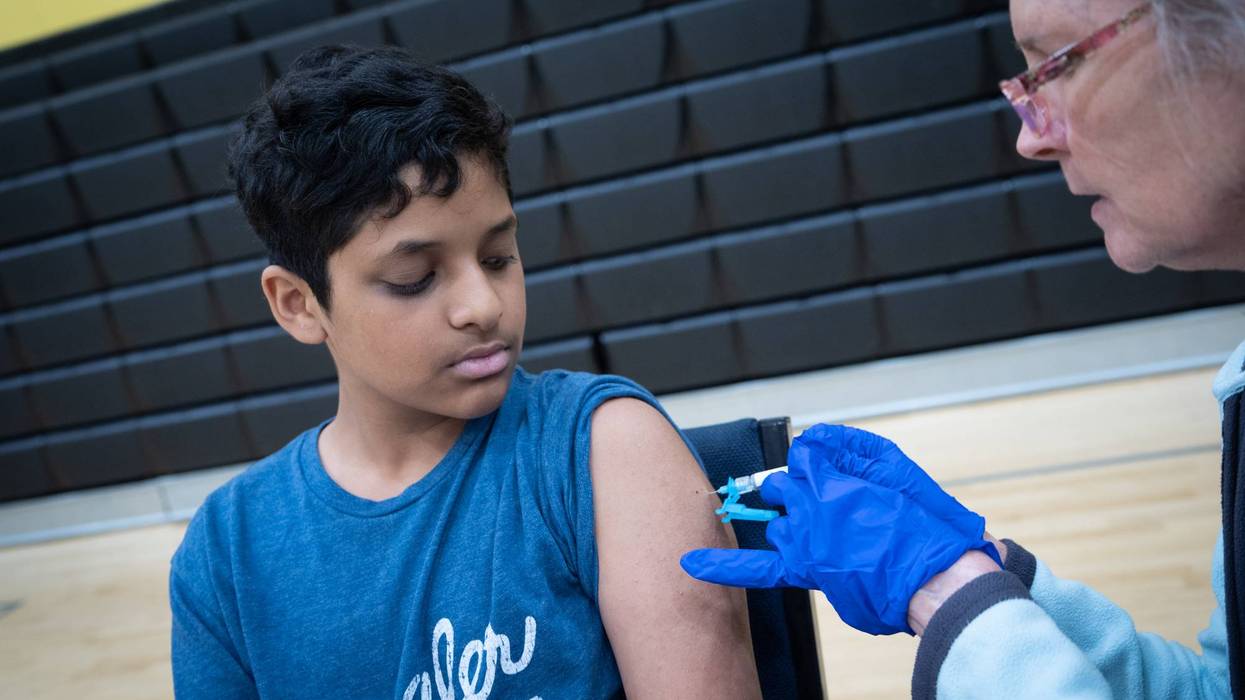
"The United States is experiencing a 35-year high for measles cases as federal officials continue to elevate misleading and disproven information about vaccines," said one medical expert.
Data released by the US Centers for Disease Control and Prevention on Monday showed that the rate of kindergartners with vaccine exemptions hit a record high over the last year as the nation's top health official continued to spread falsehoods about vaccine safety.
In all, CDC reported that 155,000 students, or 4.2% of all kindergartners enrolled in public schools, received vaccination exemptions in the 2025-2026 school year, an increase from the 3.6% of publicly enrolled kindergartners who received such exemptions in the prior school year.
The Washington Post noted in a Monday report on the data that "the biggest factor in the increasing exemption rate came from families seeking nonmedical exemptions," and that exemption rates now exceed 5% in nearly half of all US states.
The jump in vaccine exemptions comes as the US is dealing with the largest outbreak of measles it's experienced in over three decades.
Numbers released by the CDC last month revealed that there have been 2,318 recorded cases of measles this year, the highest number of cases recorded since the virus was declared eliminated in the country more than two decades ago.
Experts have said that this surge in measles cases is largely due to lower uptake of the measles vaccine.
Dr. James Campbell, member of the American Academy of Pediatrics' Committee on Infectious Diseases, told CBS News in an interview published Monday that the primary reason for the drop in vaccinations was the "chaos and confusion in vaccination recommendation systems in the last year or so," since the start of the second Trump administration.
Dr. Andrew Racine, president of the American Academy of Pediatrics, told the Post that it doesn't take a very large decrease in the vaccination rate to give the measles virus an opening.
"For some diseases like measles, even a small decrease in vaccination rates can lead to more outbreaks of disease," Racine explained, "because community immunity requires over 95% of susceptible individuals to be immunized."
"This risk is real," Raccine added. "The United States is experiencing a 35-year high for measles cases as federal officials continue to elevate misleading and disproven information about vaccines, inserting unnecessary fear and confusion into families’ decision making. And we are seeing the results."
The results could get even worse if President Donald Trump's executive order calling for the combined measles, mumps, and rubella (MMR) vaccination be divided into three separate shots gets implemented.
Experts have warned that separating the vaccines means that families will be less likely to have their children get all three shots, and the CDC's own website notes that "no published scientific evidence shows any benefit in separating the combination MMR vaccine into three individual shots."
Brad Woodhouse, president of Protect Our Care, said surging exemptions were a direct result of misinformation about vaccines being pushed by both Trump and US Health and Human Services Secretary Robert F. Kennedy Jr.
"Connect the dots," said Woodhouse. "Donald Trump and RFK Jr. frequently spew anti-vax lies to a national audience, parents get needlessly freaked out, exemptions surge, vaccination rates plummet, outbreaks of preventable diseases shatter records, kids die. Trump’s allergy to science and reality is its own deadly virus."
Dr. Jerome Adams, who served as US surgeon general during Trump's first term, also criticized Kennedy's leadership in a Tuesday social media post.
"You can’t be the leader of all health policy in America, AND claim you’re for childhood vaccinations, AND ignore this trend/not have a clear plan to increase vaccine uptake," Adams wrote, "at least not if you’re serious about improving America’s health."

"Tom Tiffany has put corporate profit ahead of local communities time and again."
The advocacy group Wisconsin Conservation Voters on Monday endorsed Milwaukee County Executive David Crowley in the state's closely watched gubernatorial contest, arguing he is the obvious choice over "extremist pro-corporate polluter" Tom Tiffany, who has recently attempted to posture as anti-data center despite his voting and fundraising record.
“The momentum across Wisconsin is clear—voters are ready for leaders who will hold corporate polluters accountable, stand up to corporate greed, regulate data centers, and protect our natural resources,” said Seth Hoffmeister, deputy director of Wisconsin Conservation Voters (WCV). “David Crowley has proven he understands the struggles of Wisconsin families. From cutting Milwaukee County’s carbon footprint in half to taking a firm stand against predatory data center growth, David is the leader we need to protect our environment and keep energy bills affordable.”
By contrast, according to WCV, Tiffany—who currently represents Wisconsin's 7th Congressional District in the US House—has shown "a consistent pattern of prioritizing corporate interests, out-of-state polluters, and special interests over regular Wisconsinites."
"Tiffany’s record is toxic," the group said. "He took $75,000 from mining interests in exchange for introducing an open-pit mining bill. He voted to defund the Knowles-Nelson Stewardship Program—a popular and effective bipartisan conservation program. He gutted the [Wisconsin Department of Natural Resources'] scientific authority, and he voted for budget legislation that raised healthcare and electricity costs. Tom Tiffany has put corporate profit ahead of local communities time and again."
The conservation group's endorsement of Crowley came on the same day that Tiffany released an ad attacking Crowley's position on data centers, part of a broader effort by the Tiffany campaign to take advantage of widespread voter backlash against the energy-devouring facilities.
But Tiffany's critics and the Crowley campaign say the Republican nominee is obscuring his own record and misrepresenting the views of his Democratic opponent on an issue that has captured the attention of communities in Wisconsin and across the US.
Tiffany—who, like Crowley, opposes a moratorium on new data center construction—has characterized the facilities as "exciting new technology," suggested they are necessary to compete with China, and voted as a member of Congress in favor of budget legislation that included a 10-year ban on state-level artificial intelligence regulations. (The US Senate later stripped the ban from the bill.)
Tiffany pledged on Monday that, if he wins in November, every proposed data center project in Wisconsin would have to meet "strict environmental standards," despite his putrid voting record on environmental issues.
Crowley, unlike Tiffany, devotes a section of his website to data center policy.
"As governor, I will let communities decide for themselves whether they want a data center at all—and if they say no, that decision would be honored," Crowley's website states.
If a local community opts to support new data center construction, Crowley said he would require the developer to eschew non-disclosure agreements that hide the details of the project, fully cover the "costs of infrastructure and grid upgrades," build with union labor, and contribute to a fund aimed at bringing down Wisconsinites' utility costs.
“Wisconsinites are looking for practical solutions to real challenges, like rising utility rates and unsafe drinking water,” Hoffmeister of WCV said Monday. “David Crowley will put our communities first and advocate for policies that make our state cleaner, safer, and more affordable.”

"The Israeli military had no right to take Sama in the first place, let alone repeatedly hold her in such inhumane conditions."
More than 100 faith-based and civil society groups are calling on US Secretary of State Marco Rubio to fulfill one of his department's top obligations—protecting the security of US citizens abroad—by securing the "immediate release" of 20-year-old Sama Safi, an American psychology student who was violently detained by armed Israeli soldiers in the West Bank 77 days ago and has been held in a military prison ever since.
The Institute for Middle East Understanding (IMEU), one of the signatories of a letter sent to Rubio on Monday, emphasized that "The Israeli military had no right to take Sama in the first place, let alone repeatedly hold her in such inhumane conditions" as those she's been subjected to.
Safi, a student at Birzeit University in the West Bank, was abducted from her family's home in the occupied territory at 3:00 am on June 2, after Israeli Defense Forces soldiers broke down the door in a raid.
Safi and three other women who were abducted on the same night have been accused of "hostile terrorist activity and additional terrorist-related activities" due to alleged involvement with a student group, but Safi has not been charged with any crimes.
Despite that, the groups said, "the Israeli military has illegally transferred Sama out of the West Bank to the Damon Israeli military prison near Haifa, which amounts to a grave breach of Article 147 of the 4th Geneva Convention."
Article 147 bans the unlawful transfer, deportation, or confinement of protected persons from an occupied territory to the territory of the occupying power, and constitutes a war crime, wrote the groups, which include the Council on American Islamic Relations, Jewish Voice for Peace, and the Center for Constitutional Rights.
The groups also emphasized that Safi has been arbitrarily detained for nearly three months while suffering a severe chronic complex health condition, putting her "at risk of rapid deterioration without specialized ongoing care abroad."
"Interruption of Sama's specialized care abroad places Sama at high risk of clinical deterioration, severe inflammatory relapse, progressive organ damage, hospitalization, and potentially life-threatening repercussions," said the groups.
Her condition causes "fevers up to 105°F and requires daily medication and a quarterly injection she travels abroad to receive," Drop Site News reported in June.
The letter included a statement from Safi in which she described being "shackled, blindfolded, driven around for several hours" on the night she was abducted.
"I was given no food or water for the first 24 hours," she said. "I was subjected to repeated verbal abuse... I was blindfolded, shackled, and placed in painful stress positions."
Israel's military prisons have been called a "network of torture camps" by the Israeli human rights group B'Tselem, and human rights groups and the United Nations have documented the widespread use of torture against Palestinians in the prisons, including sexual abuse and denial of medical care, food, and water.
According to Drop Site News, a new report released Monday by the Palestinian Prisoners’ Society found that at least 10 Palestinian women at Damon prison have contracted scabies "amid overcrowding, poor ventilation, and shortages of basic supplies.
"Sama has always been fascinated by people, and her deep love for others is what led her to study psychology," reads the letter. "Sama just celebrated her 20th birthday in April. She should be focusing on building her future, not being unjustly abducted by the Israeli military and enduring this nightmare."
Nearly 10,000 "security" inmates are being held in Israeli prisons as of this month, according to the human rights group HaMoKed.
Last week, Israeli forces abducted 46-year-old Hussein Jabarin, a US citizen, from his family's home in the West Bank. He was detained for several days before being released Sunday.
Another American citizen, 16-year-old Mohammed Ibrahim, spent nearly 10 months in an Israeli prison last year after being detained for allegedly throwing rocks at vehicles. He was not permitted to speak to his family the entire time he was imprisoned.
"This is how adversaries, not allies, act," said Anthony Zenkus, a professor at Columbia University, of Safi's abduction.

Lending apps are offering credit to consumers struggling to afford basic necessities, including electricity, broadband, groceries, and more as prices rise.
Companies that provide "buy now, pay later" loans are increasingly offering their products to Americans struggling to afford utilities and other necessities as costs rise across the US economy, with President Donald Trump's illegal war on Iran pushing up energy prices while wage growth slows.
The New York Times reported Monday that "the lending apps Flex and Zip allow customers to take out loans to pay for their broadband, electricity, health insurance, mobile phone service, mortgage, and water bills," while Affirm "has started providing some tenants loans to extend their monthly rent payment for a few weeks." On the homepage of its website, Affirm is currently promoting its product for school supplies as prices for basic items surge.
Despite Trump's pledge to cut household electricity costs in half and "bring down the prices of all goods," federal data shows electricity prices are up 18% since the start of the president's second White House term. On Monday, the average price for a gallon of gas in the US reached $4.06—the highest ever recorded for mid-August.
Recent polling by Data for Progress shows that 38% of "buy now, pay later" users have turned to the product to cover gasoline costs. Nearly half—46%—have used it for groceries, 42% for medical or dental care, 39% for utility bills, and 22% for childcare.
Last month, the advocacy group Protect Borrowers released a detailed report showing that buy now, pay later lenders are "touting shiny and oftentimes deceptive offers of zero-interest, fee-free installment loans to millions of Americans struggling with the rapidly rising costs of groceries, rent, utility bills, takeout, new clothes, medical care, and more."
"Leading BNPL lenders currently include Affirm, Klarna, Afterpay, PayPal, Synchrony, Splitit, Sezzle, and Zip, but more are popping up by the day, largely funded by private equity firms and venture capitalists looking to cash in on families’ financial desperation," the report states. "BNPL loans are packed to the brim with financing fees, late fees, and other junk fees. Many BNPL loans feature late fees of $7 to $8 per missed payment, up to an aggregate cap of 25% of the purchase price. Additional fees may be charged for financing, if the user does not set a bank account as the default method of payment, reschedules an upcoming payment, or has non-sufficient funds or a bounced payment."
The Times pointed to June Federal Reserve research showing that Americans collectively spent $160 billion through buy now, pay later programs last year, nearly twice what US consumers spent in 2023.
"That’s still a fraction of the more than $3 trillion US shoppers spend annually on consumer credit cards," the Times noted. "But the industry continues to expand by double-digit rates each year."
Jennifer Zhang, a policy analyst at Protect Borrowers, has called on the US Congress to enact "sweeping protections" that "end deceptive pricing, bring down the cost of BNPL debt, ban predatory practices that harm consumers, and empower Americans to enforce their rights under the law."
"BNPL loans are expensive and risky, and often worsen financial outcomes for borrowers who come to rely on them to make ends meet. However, millions of Americans are being driven into these debt products just as they’re trying to get by. Prices are soaring and show no signs of coming down anytime soon," Zhang wrote. "Americans need help."
“We need to build a durable and lasting coalition of progressives that can take on the right-wing forces and answer them with the necessary call of the people,” said Congresswoman Pramila Jayapal.
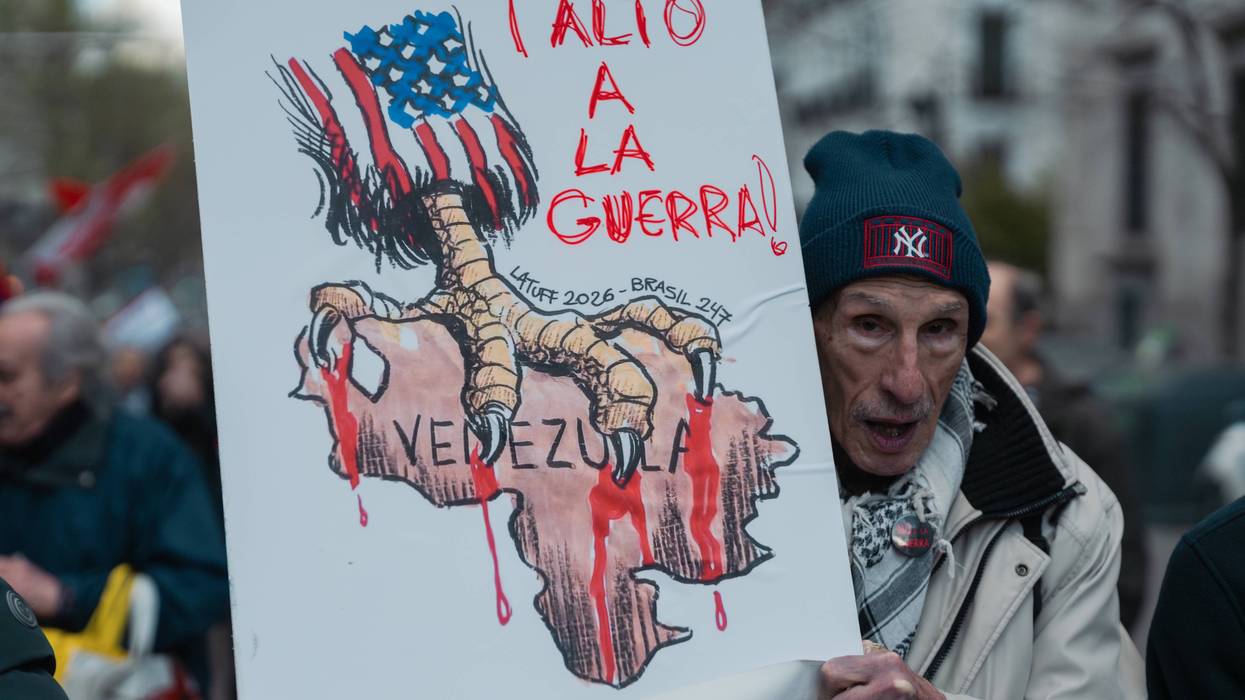
A delegation of progressive congressional lawmakers and candidates is set to head to Uruguay this week to take part in a conference focused on Pan-American solidarity amid the resurgence of both US imperialism and right-wing governments in the hemisphere.
The third Pan-American Congress, to take place in the Uruguayan capital Montevideo, will bring together progressive legislators from North, Central, and South America and the Caribbean to discuss what organizers describe as hemispheric cooperation based on "solidarity between peoples" and "sovereignty among nations"—a vision sharply at odds with what critics have dubbed US President Donald Trump's "Donroe Doctrine" militant imperialism.
The US delegation will be led by Rep. Pramila Jayapal (D-Wash.), joined by Rep. Jesús “Chuy” García (D-Ill.), Democratic congressional candidate Dr. Adam Hamawy of New Jersey, and three members of Democratic Socialists of America also running for Congress: Claire Valdez and Darializa Avila Chevalier of New York and Chris Rabb from Pennsylvania.
"We need to build a durable and lasting coalition of progressives that can take on the right-wing forces and answer them with the necessary call of the people,” Jayapal said in a video posted to social media.
We need a foreign policy based on partnership, exchange, and mutual respect.I spoke with @elpais.com about joining the upcoming Panamerican Congress and the need to fight back against far-right extremism across the globe. Read more here:
[image or embed]
— Congresswoman Pramila Jayapal (@jayapal.house.gov) August 17, 2026 at 12:46 PM
Sen. Bernie Sanders (I-Vt.) is slated to address the conference remotely. Congressional Progressive Caucus Chair Greg Casar (D-Texas) will not attend but expressed his support for “pushing back against right-wing radicalization, tackling the climate crisis, and addressing our joint economic crisis.”
In an interview with El País published over the weekend, Japayal called the conference "an opportunity to hear from our Latin American counterparts about what is happening on the ground: how US foreign policy is affecting them and how we can work together to build a progressive movement and combat far-right disinformation. The United States is doing a lot of pain with our Donroe Doctrine."
Jayapal is leading a letter signed by Sanders, Casar, García, and seven other progressive Democrats asking Secretary of State Marco Rubio "to answer for the regional implications of the 'Trump Corollary' to the Monroe Doctrine, and ground US foreign policy toward the Western Hemisphere on the principles of mutual respect and advancement of human rights."
"The interventions conducted under the banner of the ‘Donroe Doctrine' appear to follow a partisan playbook: the endorsement of favored candidates, the placement of political allies, the weaponization of tariffs and sanctions, and, where those fail, the application of direct military force," the lawmakers wrote. "These are tactics that destabilize our hemisphere and endanger our neighbors."
Before this year's Panamerican Congress, I'm demanding the Trump administration answer for their "Donroe” Doctrine.It follows a partisan playbook of tactics that destabilize our hemisphere and endanger our neighbors.
[image or embed]
— Congresswoman Pramila Jayapal (@jayapal.house.gov) August 17, 2026 at 3:30 PM
Two of the letter's signatories, Reps. Nydia Velázquez (D-NY) and Delia Ramirez (D-Ill.), earlier this year introduced the New Good Neighbor Act, a bill inspired by the short-lived period when the Franklin D. Roosevelt administration pursued policies of nonintervention and improved diplomatic relations with Latin America in the 1930s.
Since returning to the White House just last year, Trump—who campaigned as the "peace president"—has bombed and invaded Venezuela to abduct President Nicolás Maduro and his wife, launched airstrikes against what he claims without evidence are drug-smuggling boats in the Caribbean Sea and Pacific Ocean, and deployed troops to Ecuador as part of a joint campaign against alleged drug gangs dubbed Operation Total Extermination.
Trump has also ordered the military to plan an invasion to seize the Panama Canal, threatened to “take” Cuba, possibly attack Mexico and Colombia, invade and annex Greenland, and somehow make Canada the “51st state.”
That’s just in the Western Hemisphere. Overall, Trump has bombed seven countries around the world since returning to the White House and 10 nations over the course of his two terms—including Iran, where he launched an increasingly protracted illegal war in concert with Israel.
Just last week, Ramirez dismissed as a "cheap piece of imperialist propaganda" a video published by the State Department hailing the Monroe Doctrine, which was cited to justify numerous US wars of aggression, conquest, destabilizing invasions, the overthrow of democratically elected governments, and support for pro-Washington military dictatorships.
Issued in December 1823 by President James Monroe as Spanish colonies in the Americas won their independence, the eponymous doctrine states that European powers should not establish new colonies or interfere politically in the independent states of the Western Hemisphere. While it was partly a response to European attempts to restore colonial rule in Latin America, the Monroe Doctrine also asserted US hegemony over the Americas.
According to John Coatsworth, a historian specializing in Latin America, the US has launched at least 41 interventions that successfully overthrew governments in the Americas since 1898. The number of US military interventions in the region is much higher.
Former Colombian President Ernesto Samper, who is attending the conference, told The Hill on Monday that the resurgence of right-wing leaders, including Abelardo de la Espriella in his country, is “leading us toward a form of neofascism."
Samper said that Trump's "hegemonic aggression" in the Americas shows that the hemisphere "deserves a progressive and sensible response, which I hope will emerge from this forum."
"Nuclear weapons must never be used," said the head of an Iranian American group. "This war must end before its architects drag millions more people, and potentially the entire world, into an even greater catastrophe."
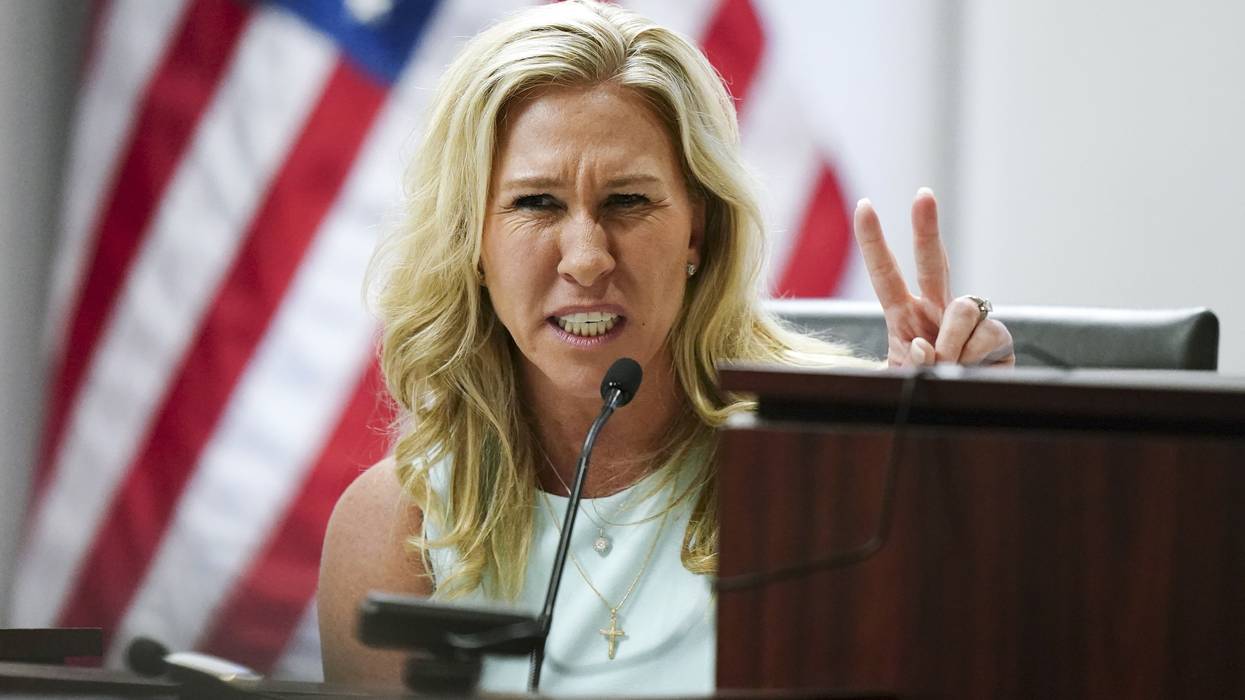
A leading Iranian American organization on Monday responded with alarm after former Congresswoman Marjorie Taylor Greene claimed that members of President Donald Trump's administration "are discussing using nuclear weapons on Iran in strategy meetings."
Jamal Abdi, president of the National Iranian American Council (NIAC), declared that "we must shut the Pandora’s box of the Iran war before more horrors are unleashed—including the possible use of nuclear weapons. The longer this catastrophic war of choice continues, the more horrors we risk unleashing that many of us would have previously found unthinkable."
"It is deeply alarming that we are once again seeing reports that US officials are contemplating using nuclear weapons inside Iran," he said. "The taboo against the use of nuclear weapons has lasted for 81 years thanks to tremendous global efforts to contain a threat that could wipe out all life on Earth. That the taboo would be broken for a 'tactical purpose' in a war that was illegal under US and international law, threatening countless lives and risking a renewed nuclear arms race, is almost too horrifying to imagine."
Abdi's statement came as a 60-day ceasefire deal expired without any indications that an end to the conflict is close, and a day after Greene, a Georgia Republican and erstwhile Trump ally, made the claim about talks behind closed doors, writing on social media Sunday: "It's real. I'm not speculating, I know. And it's pure evil."
Pointing to the only previous use of nuclear weapons—when the United States dropped atomic bombs on Japan's cities of Hiroshima and Nagasaki in 1945—Greene noted that after the immediate deaths from those attacks, "the extreme suffering continued for the Japanese people from radiation sickness, skyrocketing cancer rates, and generational birth defects. Not to mention wiping out all means of their economy. And the suffering was so great that all of humanity vowed, 'never again.'"
Trump and his administration "were told by our own intelligence that Iran was nowhere near creating a nuclear weapon, then Israel said the same line it's repeated for decades, 'Iran is only weeks away.' So we bombed anyways, killed their leaders and innocent little children in a school, and Iran has controlled the Strait of Hormuz ever since and punished the region for their part in it," she wrote. "And now our government is the one actually discussing lowering the nuclear threshold in order to use nuclear weapons against Iran even though Trump claims he's won the war like 40 times and says the US controls the SOH."
Iran's restrictions on ship traffic through the strait have driven US gasoline prices to a record high for mid-August and had various other economic impacts—and the public seems to be giving Trump credit for his "mismanagement" of the economy, with his approval rating hitting a new low and a majority of Americans, including many of his own voters, saying they are worse off financially under his second administration.
"Trump promised no more foreign wars, but may actually be the one who delivers a nuclear holocaust that would likely drag the entire world into major conflict, economic depression, and mass human suffering we've never seen in our lifetimes and maybe throughout history," added Greene, who promoted various conspiracy theories while in office. "People need to speak out and boldly stop this insanity. America is not untouchable. If and when that happens, everyone, and I do mean everyone, will hold ALL of those in leadership right now fully responsible for the rest of human history. Do not use nuclear weapons and stop this war NOW."
Meanwhile, Trump on Monday repeated claims that "the number one Goal is, and always will be, that Iran cannot have, in any way, shape, or form, a Nuclear Weapon," comments that came just days after he pledged to "never apologize" for launching the war.
In addition to bombing an elementary school in Minab on February 28, the first day of the war, US forces have destroyed various other civilian infrastructure across Iran, and the conflict has killed thousands of people throughout the Middle East. Amid difficult negotiations, Trump—who ripped up the Obama administration's Iran nuclear deal during his first term—has overtly threatened to commit more war crimes.
NIAC's Abdi explained just how catastrophic the addition of nuclear weapons could be: "A NUKEMAP simulation of a 15-megaton surface detonation in Isfahan province, the area of Pickaxe Mountain, estimates nearly 1.9 million people killed and more than 523,000 injured from the immediate effects alone, and those estimates deliberately exclude casualties from radioactive fallout. Even entertaining this option takes us farther than any government should ever be willing to go."
"This war is already eviscerating any notion of America's moral standing in the world and, like the Israeli genocide in Gaza, is systematically disintegrating the international norms over the use of state violence that we take for granted," he said. "Already, we have the US president constantly threatening to destroy Iranian civilization and boasting about conducting war crimes like attacking civilian bridges and water plants and civilian infrastructure. His Pentagon is stonewalling the American people regarding its use of AI to conduct strikes like the double-tap bombings of the Minab girls school."
"Now, amidst increasing advocacy from pro-war voices hyping 'Pickaxe Mountain' as a necessary target in the war, Trump has vowed to target it and hit it hard. Additional commentary has suggested that nuclear weapons might be the most likely to damage or destroy the underground facility, which is deeper than the facilities President Trump severely damaged in June 2025 military operations, and Trump could drop the bomb and then declare victory," he continued. "The Defense Department has also recently begun drafting a new nuclear doctrine that envisions the possible use of tactical nuclear weapons in a war with Russia or China."
Abdi added that "if nuclear use against Iran is being discussed inside this administration, our lawmakers must demand answers immediately and every policymaker must unequivocally reject it. There can be no hedging and no debate over circumstances in which this could become 'necessary.' Nuclear weapons must never be used. This war must end before its architects drag millions more people, and potentially the entire world, into an even greater catastrophe."
"The people of the DRC deserve the world’s attention, resources, care, and solidarity," said one advocate.
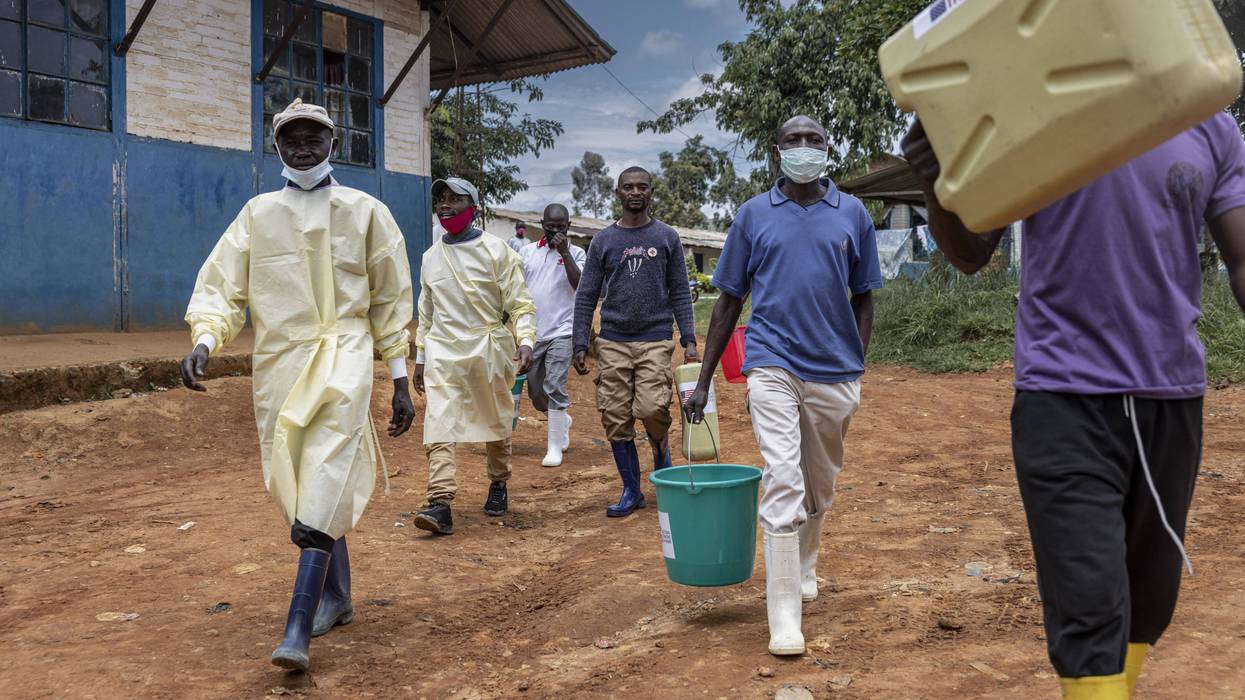
As the Ebola crisis that was first detected in the Democratic Republic of Congo in May became the deadliest outbreak of the disease in the country's history on Monday, one global public health expert in the United Kingdom pointed to the key difference between the 2014 epidemic in West Africa and the one that has now killed at least 2,325 people in the DRC.
In 2014, wrote Devi Sridhar, chair of global public health at the University of Edinburgh, in The Guardian, the US and other wealthy countries "worked with the World Health Organization (WHO) to escalate a response, bringing military-like coordination, necessary resources, logistics, and trained personnel."
Now, said Sridhar, "we’ve had two 'America-First'" terms of President Donald Trump.
"The US is no longer part of the WHO or working multilaterally, favoring a 'go-it-alone' response," she wrote.
In Trump's second term, the president cut tens of billions of dollars in foreign aid spending. Data released by the Organization for Economic Cooperation and Development in April showed the US spent 56.9% less on foreign assistance last year after Trump dismantled the US Agency for International Development (USAID), cut smaller programs, and demanded that Congress rescind billions that had already been appropriated for countries and programs in need.
Ebola has become the DRC's worst-ever outbreak in just three months, wrote Sridhar, "in the context of the defunding of foreign aid, the censorship of scientists, the closure of USAID, the implosion of the Centers for Disease Control and Prevention, and a 'Make America Healthy Again' movement."
By the time officials announced that the outbreak had been detected in May, they had already recorded 246 suspected cases and 80 suspected deaths in Ituri province—suggesting that US aid and public health cuts had "undermined some of the surveillance and detection initiatives that might have helped to catch this earlier," as Jeremy Konyndyk of Refugees International said at the time.
Months after getting a significant head start in spreading throughout the population, Ebola has now been detected in six of the DRC's 26 provinces, and the country's public health institute has recorded at least 4,945 cases, with 101 detected in the 24 hours preceding Monday's announcement.
Ebola "is winning in the Democratic Republic of the Congo,” said the United Nations last Friday, noting that the epidemic was killing one person every 30 minutes.
Amnesty International called on the globa; community to urgently try to make up for the surveillance failures that happened earlier this year and mobilize to slow the outbreak.
"We call for global solidarity as eastern DRC faces its deadliest Ebola outbreak in the country's history," said Amnesty. "Human rights must continue to be prioritized as health workers treat the disease across the region."
The US State Department said earlier this month that it has provided $512 million in direct assistance to help respond to the outbreak—far less than the $5.4 billion the US enacted in December 2014 to fight the epidemic in West Africa.
US spending is lagging as the outbreak has become the fastest-growing in the history of the virus, as The Guardian reported Monday. The 2014 outbreak took five months to reach 1,000 deaths, but more than 2,000 people have died of Ebola in less than three months since the disease was detected.
Thomas Parisch, a public health specialist with Doctors Without Borders in the DRC, told The Guardian that the country still appears to be struggling with the limits imposed by aid cuts.
"Normally, as an outbreak progresses, the case fatality ratio should fall as contact tracing improves and patients are identified and treated earlier," said Parisch. "Instead, we’re still seeing many cases detected very late, when treatment is less likely to succeed, with many identified only after they die in the community.”
The outbreak also differs from previous epidemics in that the current Ebola infections are being caused by the rare Bundibugyo virus. There are no approved vaccines or treatments for the strain, but WHO Director-General Tedros Adhanom Ghebreyesus said recently that two new vaccines were being tested on people.
Lawyer and advocate Bernice King urged the public to "refuse to look away."
"Nonviolence is an active commitment to protect life," said King. "The people of the DRC deserve the world’s attention, resources, care, and solidarity."
As inflation has wiped out wage growth, 53% of voters said they were worse off financially than when Trump took office, including nearly a quarter of Republicans.
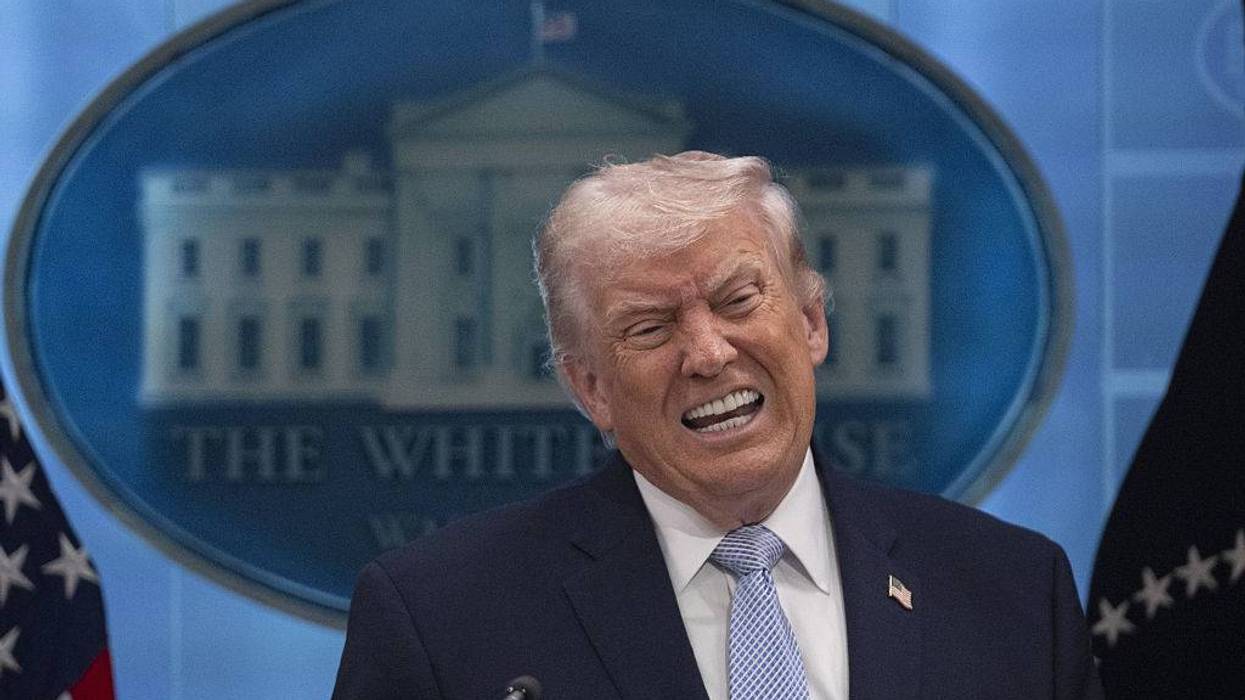
President Donald Trump's approval rating has hit a new low as the majority of Americans—including many of his own voters—now say they are economically worse off under his second administration.
In a Reuters/Ipsos poll released Monday, just 33% of Americans said they approved of Trump's performance in the White House, while 64% disapproved, a drop from 35% approval earlier in the month. They're the worst marks he's received during this term and are tied with his worst ever, which came in December 2017.
Trump's nadir comes as a majority of Americans say their finances have gotten worse since he came to power. In a Financial Times poll released on Sunday, more than 53% of registered voters said they were worse off since January 2025. This includes 57% of independents, but also nearly a quarter of Republicans.
Voters' economic angst aligns with what the metrics show. After hitting a three-year peak of 4.2% in May, inflation was still higher in July than it was when Trump took office, at 3.4%. Real wages declined as hourly pay failed to keep up with inflation, and the economy shed 23,000 jobs last month.
Trump responded to this bleak report by celebrating that the economy was "doing unbelievably from the standpoint of Wall Street," with the stock market continuing to soar.
The pocketbook issues faced by many Americans have been made worse by Trump's war with Iran, which has caused oil prices to spike, triggering a surge in gasoline prices and inflation that has rippled throughout the economy.
The war began unpopular and has only grown more so as the conflict, which Trump said would be over in weeks, approaches its sixth month. In a Reuters poll released in late July, only about a third of Americans said they supported it.
After backing out of a peace agreement earlier this summer, Trump has doubled down on the war in recent weeks. Americans, regardless of party, are now overwhelmingly doubtful that it will end any time soon.
Among all adults, 4 in 5 said they believed the war would "go on for a long time." This includes 80% of independents, but also 71% of Republicans. Across all parties, just 16% said they believed the war would "end in a matter of weeks."
There are increasing signs that even Trump's core base is beginning to sour on him. An Economist/YouGov poll out last week showed that his overall approval among GOP voters had fallen to a second-term low of 79%.
Even more concerning for him is a decline in enthusiasm among supporters: Where 68% said they "strongly approve" of Trump near the start of his term, just 48% now feel that way.
Democratic voters, meanwhile, appear fired up as November approaches. A Washington Post/Ipsos poll from July showed that Democrats have a 10-point advantage over the GOP among those who say they are certain to vote.
"In a diverse public school environment, all students should be treated with equal respect, regardless of their religious beliefs, or lack thereof," said one plaintiff.
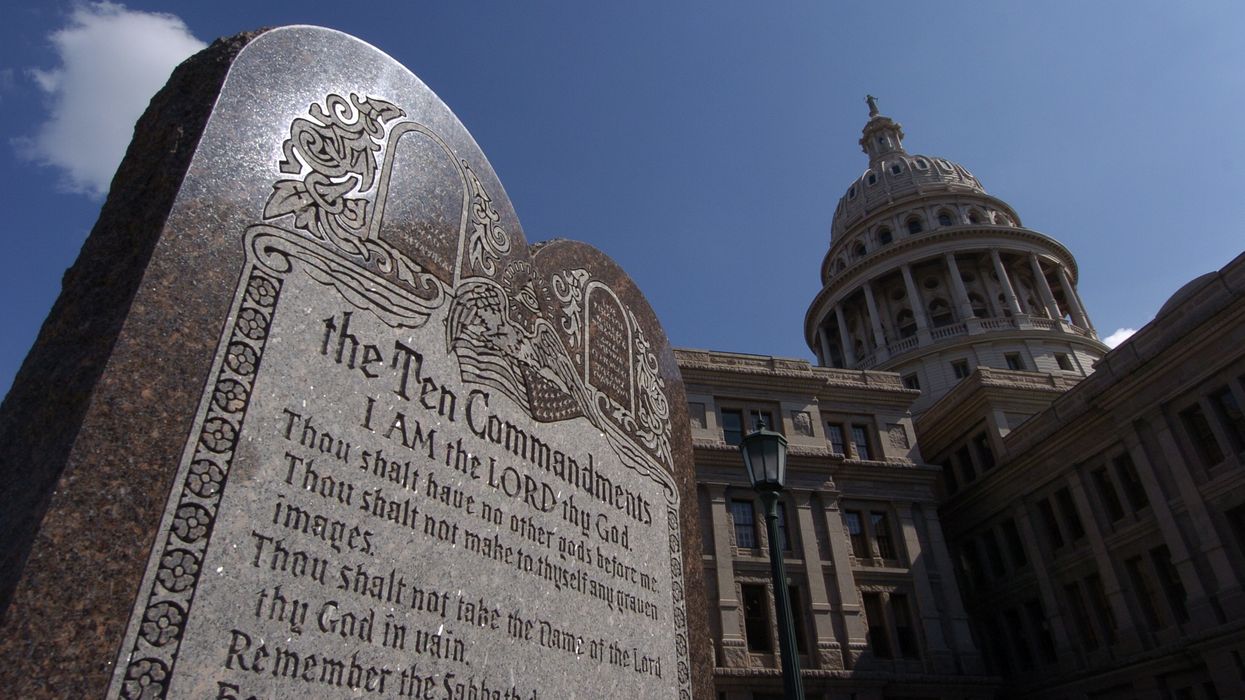
A group of families is asking the US Supreme Court to strike down Texas Senate Bill 10, a state law mandating that a copy of the Ten Commandments be displayed in public school classrooms.
The families, who come from a variety of religious denominations and are being represented by several prominent civil liberties groups, argued in a Monday court filing that SB 10 violates the First Amendment of the US Constitution because it "imposes on public school children, for nearly every hour they are in school, the state's favored scripture."
In making their case, the families argued that a recent appeals court ruling upholding the Texas law ran afoul of multiple past Supreme Court rulings, including the 2022 ruling in Kennedy v. Bremerton School District, which made reference to "problematically coercive" religious messages being "publicly broadcast or recited to a captive audience," and the 1980 ruling in Stone v. Graham, which determined that posting the Ten Commandments in schools violates the Constitution's establishment clause.
Rabbi Joshua Fixler, a plaintiff in the case, said the Texas Ten Commandments law made him "not only worried about my own kids," but "deeply concerned about all the children in my congregation."
"These displays put children in the position of having to defend themselves and their families’ religious beliefs," said Fixler, "against a government mandate that makes them feel different and separate from their classmates."
Fellow plaintiff Nichole Manning, an atheist from Dallas, argued that the Texas law is "interfering with our family’s decisions about how our children engage with religion."
“As a parent, I intentionally choose to have my children attend public school because I prefer an educational environment without any religious affiliation," Manning emphasized. "In a diverse public school environment, all students should be treated with equal respect, regardless of their religious beliefs, or lack thereof."
In an editorial published in the Houston Chronicle on Monday, plaintiff Audrey Nath said that the Texas law was interfering with her right to raise her children to "celebrate the diversity of religious faiths in our families: Hinduism, Jainism, Judaism, and Quakerism."
"My 9-year-old son is proud of his heritage, and he even brought that statue of Shiva to his public school as part of a presentation about his family history," Nath explained. "SB 10 puts a permanent, state-mandated sign above his desk telling him what he carried in is forbidden."
ACLU of Texas staff attorney Chloe Kempf, who is co-representing the families, said that past legal precedents give the current Supreme Court a clear roadmap to overturn the Texas law.
"The US Supreme Court has rejected this kind of government-imposed religion before, and it should do so again,” said Kempf. “Having these posters in Texas classrooms puts students at risk of bullying, stigmatization, and religious coercion. Our nation’s bedrock principle of separating church and state means that families and faith communities—not politicians—get to decide what role religion plays in children’s lives."
Annie Laurie Gaylor, co-president of the Freedom From Religion Foundation, argued that mandating schools display the First Commandment alone is "the antithesis of our First Amendment" because it dictates "which god must be worshipped."
"It is not the government’s role to daily expose young children to a coercive display of one religion’s set of religious edicts in our public schools," Gaylor emphasized. "Our public schools exist to educate, not to proselytize."

While welcoming the development, one advocate stressed that "we won't rest until the contracts are canceled, the waivers of law are rescinded, and the bulldozers are sent packing for good."
US Customs and Border Protection Commissioner Rodney Scott announced Monday that "CBP is pausing all construction activity in Big Bend National Park while I visit and conduct a personal, on-the-ground evaluation" of the Trump administration's controversial plans for the Texas site.
Although CBP previously abandoned plans for a 30-foot wall, crews recently started work on its revised scheme for the national land and a state park in the area, which involves "a new road, lights, miles of barriers designed to stop cars from crossing the border, and technology such as fiber optic cables to be buried under the fences," as The Associated Press reported Monday. It's part of President Donald Trump's much broader anti-immigrant agenda, which includes mass detention and deportation efforts.
The new plans for southern Texas have drawn criticism from local residents, Democratic and Republican politicians, all five sheriffs in the Big Bend border region, and organizations including the Center for Biological Diversity, which has filed a related lawsuit. The group's national public lands advocate, Laiken Jordahl, said last week that "this is the most heinous attack on an American national park in generations."
"The administration is preparing to blast hundreds of miles of destructive roads through the wildest place left in Texas and cut off public access to the Rio Grande, all to enrich private contractors," Jordahl continued. "Big Bend belongs to us all, and sacrificing it is a betrayal of every Texan and every American who believes our national parks should be protected. We won’t stop fighting this reckless assault on Big Bend National Park and America's natural heritage until this destruction ends."
National Parks Conservation Association president and CEO, Tiernan Sittenfeld, similarly declared last week that "bulldozing Big Bend National Park is an unconscionable attack on one of America's greatest treasures."
"The administration is slashing through miles of this wild landscape, threatening access to recreation, and harming sensitive wildlife habitat, she said. "Park advocates and local communities have warned the administration for months that their plan to build border wall infrastructure in Big Bend poses serious risks to this one-of-a-kind national park and surrounding landscape. Now Big Bend National Park and the people who love this place are suffering the consequences."
"Customs and Border Protection must halt construction in this iconic landscape," Sittenfeld argued. "There is still a chance for the administration to work together with Congress and communities to form a new plan for border security in the region that will not forever damage America's national parks."
Heeding such calls on Monday, Scott claimed that "CBP is firmly committed to protecting America, and that includes our national treasures like Big Bend National Park. We know the current and predictable national security threats and they are real. Now over the next couple of days, I will join a small team to evaluate the terrain and listen to local leadership, community members, and stakeholders to ensure that we secure our borders while simultaneously protecting BBNP for generations to come."
Noting that the "massive, nonpartisan outcry has taken Texas and the nation by storm," Jordahl welcomed Scott's announcement on social media.
"For the first time in weeks, the machines are quiet," he said. "This is welcome news, but they will likely commence with destruction again soon. DHS has lied to us every step of the way about this project. We can't afford to let up the pressure. We won't rest until the contracts are canceled, the waivers of law are rescinded, and the bulldozers are sent packing for good."
As part of the center's case, it joined Friends of the Ruidosa Church and a Big Bend-area river guide and landowner on Monday in asking a federal judge for an emergency injunction halting border barrier and road construction across the region.
"We've been watching the permanent destruction of a great American national park unfold in real time," Jordahl said in a statement. "Even with Customs and Border Protection pumping the breaks, the contractors could resume bulldozing deeper into the national park, causing irreversible damage to the wildest place in Texas. We're hopeful the judge will stop this destruction until there's a ruling on the merits of our case."
This article has been updated with the injunction request.