

SUBSCRIBE TO OUR FREE NEWSLETTER
Daily news & progressive opinion—funded by the people, not the corporations—delivered straight to your inbox.
5
#000000
#FFFFFF
To donate by check, phone, or other method, see our More Ways to Give page.
Daily news & progressive opinion—funded by the people, not the corporations—delivered straight to your inbox.
Anna Ghosh, Food & Water Watch (510) 922-0075, aghosh@fwwatch.org
Tim Gibbons, Missouri Rural Crisis Center (573) 449-1336, timgibbons@morural.org
Kathy Ozer, National Family Farm Coalition (202) 543-5675,kozer@nffc.net
A coalition of farm, rural and consumer organizations delivered a letter to the members of the Committee on Foreign Investment in the United States urging them to recommend that the Obama administration reject the proposed Shuanghui International Holdings, Ltd. acquisition of Smithfield Foods. The letter details the significant risks of a Shuanghui takeover of Smithfield to food security, consumer food prices, food safety, farm and rural economies in the United States and national security.
"The White House should reject the sale of America's food supply," said Tim Gibbons with the Missouri Rural Crisis Center. "This proposed acquisition is a prime example of how expanded corporate consolidation in agriculture has gone too far, resulting in lack of markets for independent producers, and damaging effects on our rural economies and country. The Smithfield purchase turns over American farms to a consolidated, globalized meatpacking industry that leaves rural communities to clean up the waste while China gets the meat."
Shuanghui's purchase of Smithfield would transfer ownership of a company that controls more than a quarter of American pork production and buys or contracts a quarter of U.S. hogs. The proposed deal is expected to shift Smithfield pork production towards exports to feed the Chinese market, which would likely significantly increase retail pork prices for American consumers. It would make many U.S. hog producers dependent on a foreign firm for hog contracts and prices.
"U.S. farmers already sell livestock on a concentrated market where they often cannot get fair contract terms or receive fair prices and this cross-border takeover will worsen the conditions farmers face," said Ben Burkett, Mississippi farmer and President of the National Family Farm Coalition.
The letter also demonstrates the risks the takeover could pose to U.S. food safety. First, the Chinese firm operates in one of the most notoriously lax food safety systems in the world, and the management culture clashes between Shuanghui and Smithfield could weaken the safety at Smithfield's U.S. plants. Second, Shuanghui would eventually want to export pork products to the United States, which would expose U.S. consumers to the host of food safety scandals that plague the Chinese food system.
"As recently as 2011, Shuanghui managers were sentenced to prison for allowing illegal veterinary drugs into the pork supply in China and we don't want to expose American consumers to such indifferent food safety standards," said Food & Water Watch executive director Wenonah Hauter. "If Shuanghui eventually exported bacon, sausage or ham to the United States under the well-known Smithfield brands like Armour or Gwaltney, American consumers would not even know, because processed pork is exempt from country of origin labeling."
The letter was delivered to the Cabinet Secretaries that make up the Committee on Foreign Investment in the United States on the eve of the U.S. Senate Agriculture Committee oversight hearing into the proposed acquisition of Smithfield. It was signed by Campaign for Contract Agriculture Reform, Coalition for a Prosperous America, Center for Rural Affairs, Contract Poultry Growers Association of the Virginias, Food & Water Watch, Iowa Citizens for Community Improvement, Land Stewardship Project, Missouri's Best Beef Co-Operative, Missouri Farmers Union, Missouri Rural Crisis Center, National Family Farm Coalition, National Farmers Union, Nebraska Farmers Union, Organization for Competitive Markets, Rural Advancement Foundation International--USA, R-CALF USA and Western Organization of Resource Councils.
The letter can be viewed here: https://fwwat.ch/15rV366
Food & Water Watch mobilizes regular people to build political power to move bold and uncompromised solutions to the most pressing food, water, and climate problems of our time. We work to protect people's health, communities, and democracy from the growing destructive power of the most powerful economic interests.
(202) 683-2500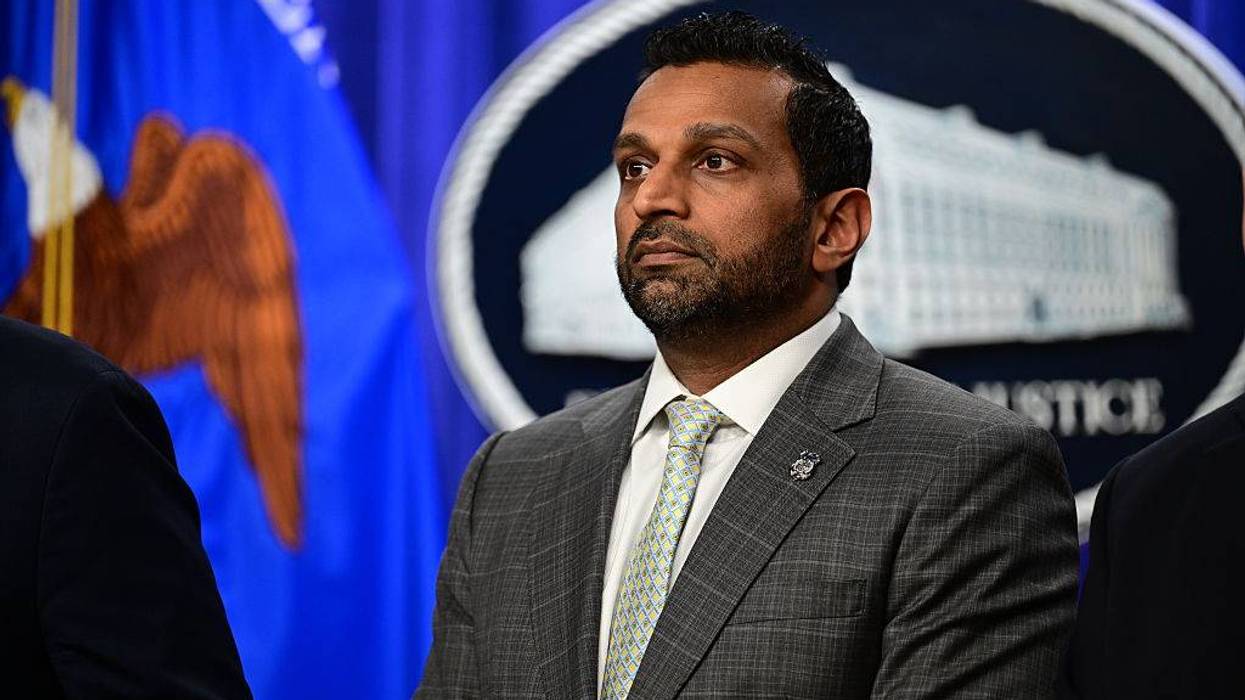
One press freedom advocate said the reported FBI investigation "would be outrageous even if The Atlantic reported classified information, which it didn’t."
The Federal Bureau of Investigation on Wednesday denied that it launched a reported probe into The Atlantic, which recently published a damning account of FBI Director Kash Patel’s alleged drunkenness, though magazine leadership and press freedom advocates remain alarmed.
As reported by MS NOW on Wednesday, the FBI is conducting a criminal leak investigation into The Atlantic's Sarah Fitzpatrick, whose reporting on Patel cited two dozen anonymous sources to document concerns about the FBI director's behavior.
MS NOW noted that the investigation into Fitzpatrick's reporting is "highly unusual because it did not stem from a disclosure of classified information" on the part of government insiders.
One source told MS NOW that the FBI agents assigned to the case have expressed serious reservations about its scope and purpose.
"They know they are not supposed to do this," the source said. "But if they don’t go forward, they could lose their jobs. You’re damned if you do and damned if you don't."
FBI spokesperson Ben Williamson denied to MS NOW that the agency had launched an investigation into Fitzpatrick, saying that "every time there’s a publication of false claims by anonymous sources that gets called out, the media plays the victim via investigations that do not exist."
Jeffrey Goldberg, editor-in-chief of The Atlantic, said the magazine was working to learn more about the alleged investigation, but "if true, this would be an outrageous, illegal, and dangerous attack on the free press and the First Amendment."
"We will defend Sarah and all of our reporters who are subjected to government harassment simply for pursuing the truth," Goldberg added.
Seth Stern, chief of advocacy at the Freedom of the Press Foundation, also condemned the reported investigation, which he said "would be outrageous even if The Atlantic reported classified information, which it didn’t."
"The FBI is reportedly conducting an invasive leak investigation merely to settle a personal vendetta," added Stern. "Separately, it doesn’t make much sense for Patel’s FBI to investigate leaks from what Patel’s lawsuit over the same reporting called ‘sham sources.’ Fake sources can’t leak."
Patel last month filed a $250 million defamation suit against The Atlantic for its report on his behavior, which the magazine said included "episodes of excessive drinking and unexplained absences."
The Atlantic vowed to fight the lawsuit, saying it stood by its reporting while describing Patel's complaint as "meritless."
"The secretary knows very well the damage and suffering that the criminal oil siege he himself proposed to his president is causing the Cuban people today," said Cuban Foreign Affairs Minister Bruno Rodríguez.
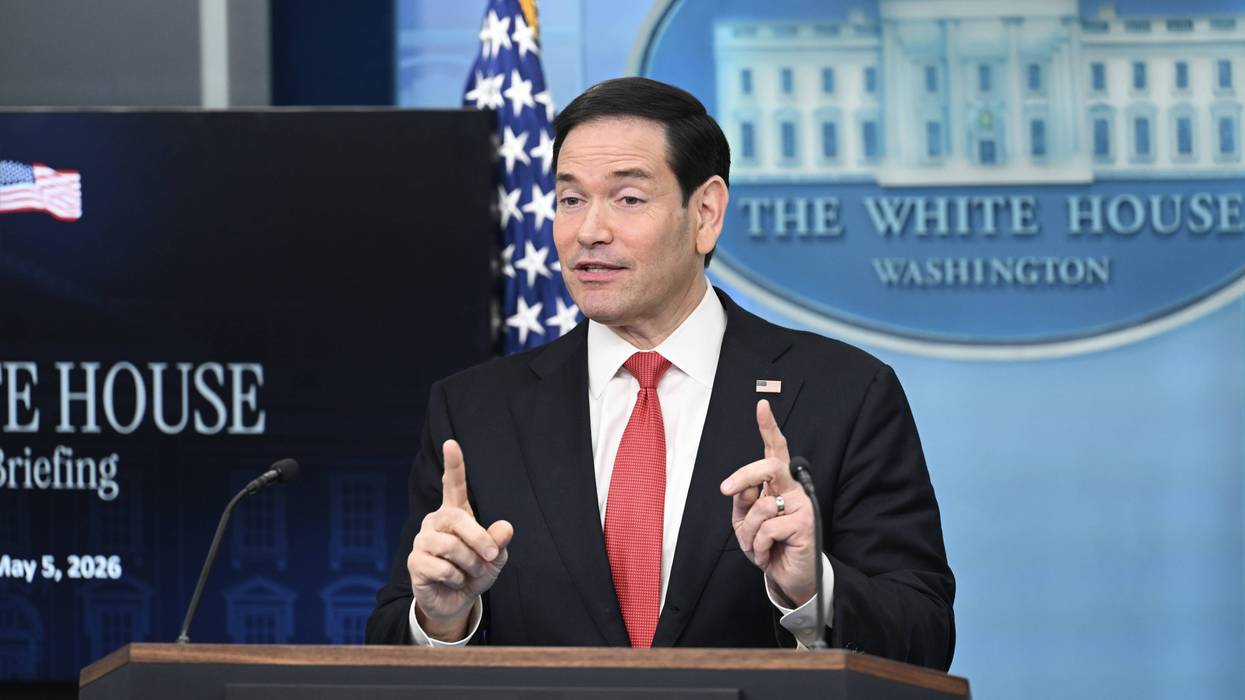
Peace advocates joined Cuba's top foreign relations official on Wednesday in accusing US Secretary of State Marco Rubio of blatantly lying about the existence of a blockade on oil exports to Cuba, which Rubio denied at a press briefing on Tuesday.
Anti-war group CodePink pointed to comments made by the US chargé d'affairs to Cuba, Mike Hammer, after President Donald Trump signed an executive order on January 29 threatening other countries with tariffs if they provided the communist country with oil and accusing the Cuban government of harboring terrorists—a claim officials have vehemently denied.
"Now there's going to be a real blockade," said the diplomat at the time. "Nothing is getting in. No more oil is coming."
Cuba's primary source of fuel had been cut off earlier in January after the US invaded Venezuela, killed dozens of Venezuelans and Cubans while abducting President Nicolás Maduro, and took control of the country's oil supply.
However, on Tuesday Rubio claimed that Venezuela had freely decided to no longer supply Cuba with "free oil"—an apparent reference to a barter system agreed to by the two countries.
"This is a lie," said CodePink in response to Rubio's comments.
Cuban Foreign Affairs Minister Bruno Rodríguez added that Rubio had "simply chosen to lie" about the Trump administration's policy, contradicting both Trump and White House press secretary Karoline Leavitt.
"In four months, only one fuel tanker has arrived in Cuba. All our suppliers are intimidated and threatened in violation of free trade rules and freedom of navigation," said Rodríguez.
He also pointed to Trump's new executive order, signed last Friday, which imposed new sanctions on Cuba's energy, finance, and security sectors and threatened to further isolate Cuba from international finance systems by authorizing sanctions on foreign banks that conduct major transactions with designated Cuban entities.
"The secretary knows very well the damage and suffering that the criminal oil siege he himself proposed to his president is causing the Cuban people today," said Rodríguez.
In late March, Leavitt said that an oil tanker from Russia had been permitted by Trump to reach Cuba for "humanitarian reasons," but denied there had been any policy change regarding allowing international fuel shipments to be sent to the island.
Decisions about shipments “are being made on a case-by-case basis,” said Leavitt at the time. "There has not been a formal change in sanction policy.”
Since Trump ramped up the blockade in January—intensifying a sanctions policy that the US has imposed on Cuba for more than six decades—nearly 100,000 Cubans, including about 11,000 children, have been left waiting for surgeries as the fuel shortage has led to rationing and frequent blackouts that have impacted the healthcare system. Healthcare workers have reported shortages of syringes, antibiotics, and IV supplies.
The Center for Economic Policy and Research (CEPR) also found last month that Trump's tightened sanctions and policies regarding Cuba, starting in his first term, have contributed to an “unprecedented increase” in the country's infant mortality rate, which soared 148% from 2018-25.
“It is clear that the increase in sanctions is responsible for this huge increase in infant deaths,” said Alex Main, director of international policy at CEPR, on Wednesday. “The oil blockade has been especially inhumane, disrupting the operation of ventilators, inhalers, and other crucial medical equipment and crippling emergency transportation. More than 80% of Cuba’s electricity is based on oil and oil products.”
US lawmakers who visited the island in April denounced the oil blockade as "cruel collective punishment" that has caused a water shortage, forced businesses and schools to shut down, and left cancer patients without lifesaving medications.
"Rubio is willfully lying" about the blockade, said Mexico City-based journalist José Luis Granados Ceja.
At Tuesday's press conference, after denying the blockade exists, Rubio pivoted to the Trump administration's position that Cuba's "economic model doesn't work" and blamed the country—whose healthcare system and literacy rates are frequently ranked higher than those of the US—for the crisis it's facing.
"Incompetent communists run that country. They don’t know how to fix it," said Rubio, the son of Cuban immigrants. "So it’s an unacceptable status quo, and we’ll be addressing it."
While joining Israel in waging war on Iran in recent months, the Trump administration has repeatedly suggested it hopes to take military action against Cuba.
Last Friday, the president said the US military "will be taking [Cuba] over almost immediately."
On Wednesday, CEPR and YouGov released a new poll that found 64% of Americans oppose a US military takeover of Cuba.
"This should make President Trump think twice about another ‘war of choice,’” said Mark Weisbrot, senior economist and co-director of CEPR. “Almost all of the experts on Cuba would laugh at the idea that Cuba presents a security threat to the United States. And the war against Iran has already cost Trump and his party significant support.”
"The global War on Terror has come home."
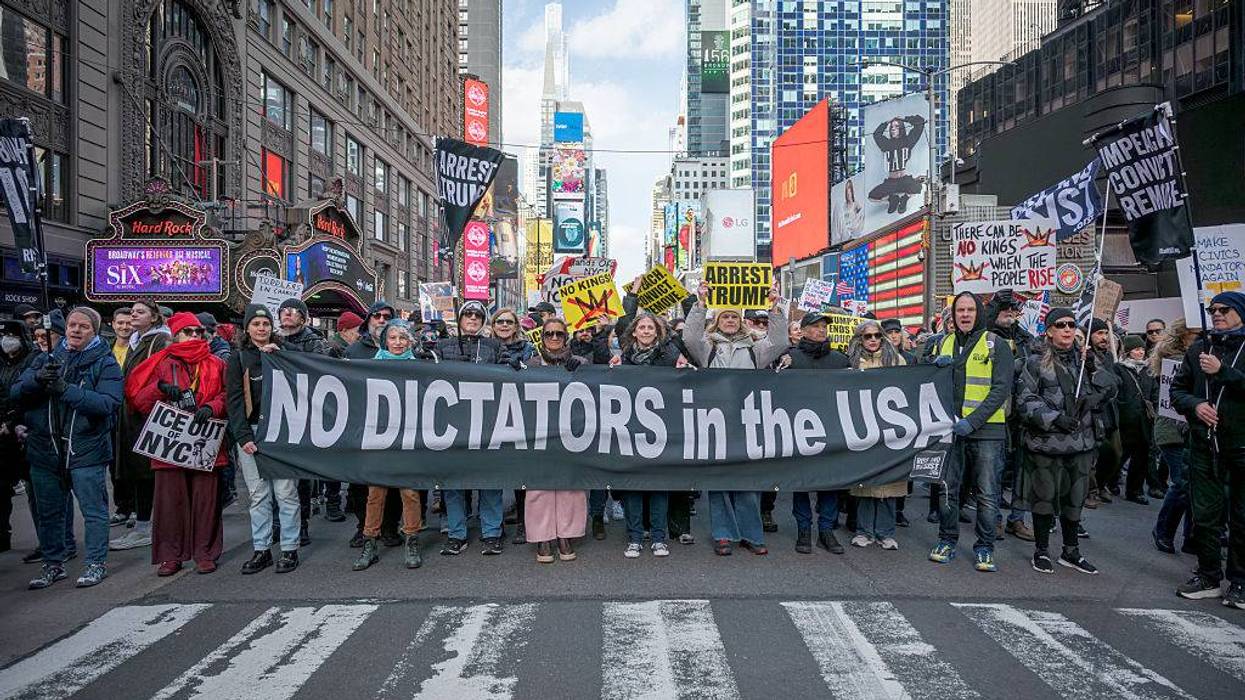
The Trump administration on Wednesday released an official counterterrorism strategy that puts "anti-fascist" organizations on par with terrorist organizations such as Islamic State and al-Qaeda.
In outlining its strategy, the document argues that the US faces three "major type" of terrorist threats: "Legacy Islamiast Terrorists," such as al-Qaeda and ISIS; "Narcoterrorists" that sell illegal drugs; and "Violent Left-Wing Extremists, including Anarchists and Anti-Fascists."
When it comes to the purported domestic left-wing threats, the document says the administration will "prioritize the rapid identification and neutralization of violent secular political groups whose ideology is anti-American, radically pro-transgender, and anarchist."
"We will use all the tools constitutionally available to us to map them at home," the document adds, "identify their membership, map their ties to international organizations like Antifa, and use law enforcement tools to cripple them operationally before they can maim or kill the innocent."
The document makes no mention of the threat posed by members of right-wing groups such as the Oath Keepers and Proud Boys, many of whom received pardons from President Donald Trump in 2025 for their role in violently storming the US Capitol building on January 6, 2021.
A report published last year by the Center for Strategic and International Studies found that, while left-wing political violence has grown since Trump's first election in 2016, it "remains much lower than historical levels of violence carried out by right-wing and jihadist attackers."
Journalist Ken Klippenstein reported on Wednesday that the strategy "is the brainchild of White House counterterrorism czar Sebastian Gorka, an eccentric figure I have reported on, who last year hinted at terrorism charges being levied for political opponents of the administration."
Digging into the details of the document, Klippenstein said it was essentially a strategy for prosecuting "pre-crime," which he noted "aims to build cases against people for what they might do, most ominously based on speech or beliefs."
At the end of his analysis, Klippenstein warned that the document makes clear "the global War on Terror has come home."
The counterterrorism strategy document builds on the framework established by National Security Presidential Memorandum-7 (NSPM-7), a directive signed by Trump in September that demanded a “national strategy to investigate and disrupt networks, entities, and organizations that foment political violence so that law enforcement can intervene in criminal conspiracies before they result in violent political acts.”
Rights groups have for months been sounding the alarm about the implications of NSPM-7, which they said could be used to initiative a widespread crackdown against the Trump administration’s critics.