

SUBSCRIBE TO OUR FREE NEWSLETTER
Daily news & progressive opinion—funded by the people, not the corporations—delivered straight to your inbox.
5
#000000
#FFFFFF
To donate by check, phone, or other method, see our More Ways to Give page.
Daily news & progressive opinion—funded by the people, not the corporations—delivered straight to your inbox.
Bahrain is facing a stark choice between the rule of law, or sliding into a downward spiral of repression and instability, Amnesty International warned in a new briefing today.
The briefing Bahrain: reform shelved, repression unleashed comes days before the first anniversary of a landmark report by the Bahrain Independent Commission of Inquiry (BICI), which was established by the country's authorities to investigate abuses during the 2011 anti-government protests.
Bahrain is facing a stark choice between the rule of law, or sliding into a downward spiral of repression and instability, Amnesty International warned in a new briefing today.
The briefing Bahrain: reform shelved, repression unleashed comes days before the first anniversary of a landmark report by the Bahrain Independent Commission of Inquiry (BICI), which was established by the country's authorities to investigate abuses during the 2011 anti-government protests.
The BICI report found the Bahraini government responsible for gross human rights violations and documented widespread abuses. It made a series of recommendations including calling on the authorities to bring to account those responsible for human rights abuses and to carry out independent investigations into allegations of torture and other violations.
After BICI published its report in November 2011, the government committed itself to implementing the recommendations.
But as this briefing makes clear, instead of fulfilling this undertaking, the authorities swiftly moved to entrench repression, culminating in October 2012 in the banning of all rallies and gatherings in the country in violation of the right to freedom of expression and peaceful assembly, and in November with the stripping of Bahraini nationality from 31 opposition figures.
"The scale and nature of the violations unleashed in Bahrain since the BICI made its recommendations are making a mockery of the reform process in the country," said Hassiba Hadj Sahraoui, Deputy Middle East and North Africa Director at Amnesty International.
"As Amnesty International has documented in this briefing, the authorities have reneged on their promises to pursue the path of reform. Any claim by the government that it is committed to the rule of law and to improving human rights sounds hollow, in the face of a moribund reform process.
"Indeed, it has become evident that the authorities in Bahrain do not have the will to take the steps necessary to reform. Protestations to the contrary only underscore the gap between their rhetoric and reality.
"As the country is engulfed in entrenched unrest and instability looms, the international community, and especially Bahrain's allies, have a duty to condemn what is happening in the country and to stop using the BICI report a shield to avoid having to criticize the Bahraini authorities." The establishment of BICI, made up of international human rights and legal experts, was considered a groundbreaking initiative, but a year on, it has been effectively shelved.
For victims and their families, justice and reparation remain elusive.
One such victim is Roula Jassim Mohammed al-Saffar who was among health professionals sentenced by a military court to between 5 and 15 years in prison in September 2011. She was subsequently acquitted by a civilian court on appeal. Following her arrest on 4 April 2011 she says she was tortured in detention. When Amnesty International met her in Bahrain while she was on bail she described what happened during questioning at the Criminal Investigation Department:
"A woman officer entered the room and said 'I will blindfold you and I will deal with you now'. Then three men entered the room and started hitting me... She had an electric device in each hand and hit me with it on both sides of my head at the same time. I felt dizzy and lost consciousness. I don't remember what happened straight after. Then they took me to another room and one of them called me a whore and insulted my family... On the third day she gave me electric shocks again and she asked if I went to the strike. Another woman started slapping me. She cut my hair with scissors. Then they burned my hair on the sides. They hit me and sexually harassed me by putting their hands all over my body... This continued for four or five days."
Meanwhile, Amnesty International continues to document widespread violations by security forces, including the use of unnecessary and excessive force against protesters, sometimes fatal.
Hussam al-Haddad, 16, died on 17 August 2012 in al-Muharraq, the day after he was shot by riot police. His family say he had gone to a nearby cafe while demonstrations were going on in the area. A family member who was present alleged that after Hussam al-Haddad was shot and, while he was on the ground, a riot police officer hit him with his rifle and kicked him. Hussam al-Haddad was taken to the military hospital and then to Salmaniya Medical Complex. His family was informed about his death at around 2am that night. On 9 October the Special Investigation Unit determined that the policeman who shot at him was acting in self-defence after being attacked and the case was therefore closed.
Since the beginning of 2012, an increasing number of gatherings have involved participants reportedly throwing Molotov cocktails or blocking roads. According to the government, two policemen have died in recent weeks after having been reportedly attacked in riots. Such violent attacks are not protected forms of expression under international human rights law, and those suspected of carrying them out may be brought to justice in conformity with standards of fairness and due process.
However, the use of violence does not exonerate the authorities from their obligations to respect human rights. Amnesty International has repeatedly called on the Bahraini authorities to refrain from using excessive force against protesters; the organization considers that policing of assemblies should always be guided by human rights considerations.
An increasing number of children aged between 15 and 18 have been held in adult prisons and detention centres in Bahrain in the past few months. The total may number 80, according to lawyers and local human rights groups. Human rights defenders and activists denouncing such abuses are repeatedly harassed and some have been jailed for carrying out their human rights work and peacefully exercising their rights to freedom of expression, association and assembly.
And in an ominous move, the Bahraini authorities on 7 November stripped 31 opposition figures of their Bahraini nationality. A Ministry of Interior statement indicated that the group, including politicians, activists and religious figures, had their nationality revoked because they had caused "damage to state security".
Bahrain risks sliding into protracted unrest and instability and is at a crossroads. The BICI report provides a roadmap to put Bahrain on the path of the rule of law; only the genuine implementation of the BICI report recommendations would halt the slide. Bahrain's close allies, including the USA and the UK can no longer shield behind BICI and pretend it's business as usual.
Amnesty International is a worldwide movement of people who campaign for internationally recognized human rights for all. Our supporters are outraged by human rights abuses but inspired by hope for a better world - so we work to improve human rights through campaigning and international solidarity. We have more than 2.2 million members and subscribers in more than 150 countries and regions and we coordinate this support to act for justice on a wide range of issues.
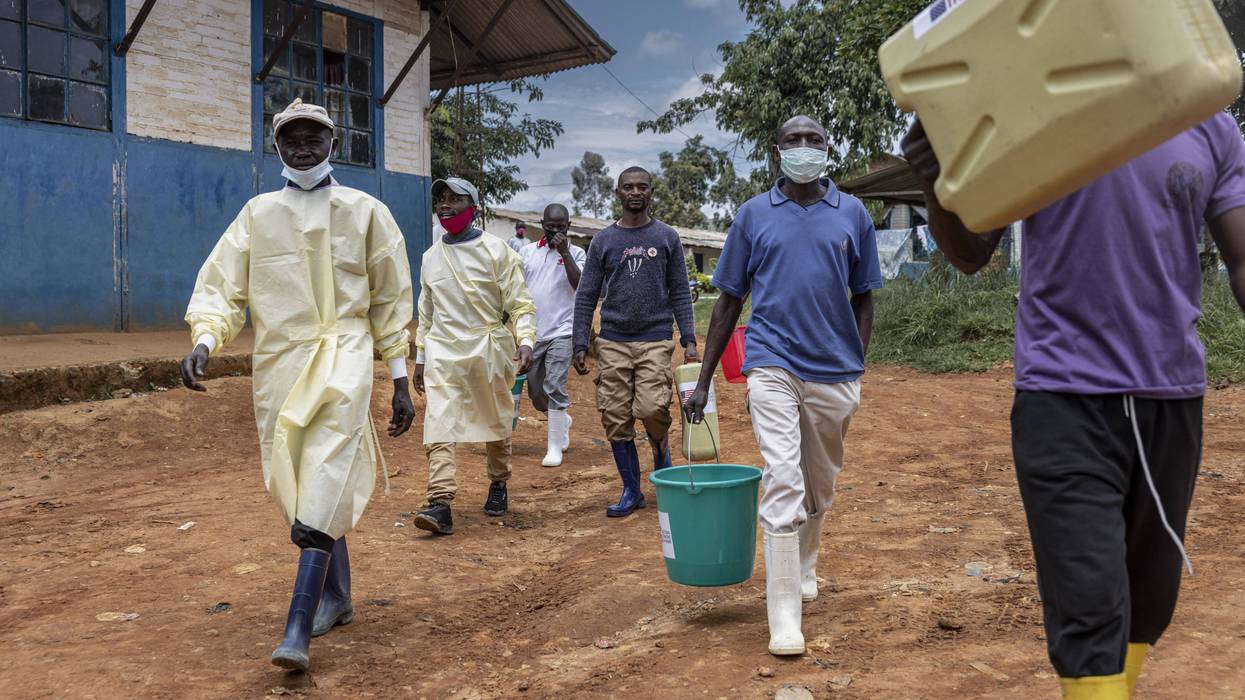
"Unsure how any US citizen would feel comfortable deploying" to help fight the outbreak, said one doctor, "knowing our government would not make sure they are okay if something happened."
The United Nations' emergency relief office on Thursday was mobilizing $60 million to fight the rapidly spreading Ebola outbreak in the Democratic Republic of Congo, with the body's under-secretary-general for humanitarian affairs saying relief teams are "fully mobilized" and "applying lessons from previous outbreaks," with a focus on building community trust and communicating with governments.
But with the Trump administration having dismantled the US Agency for International Development (USAID) and slashed funding and staffing for the Center for Disease Control and Prevention's (CDC) global efforts, the response is largely missing a key feature that helped with containment during the 2014 and 2019 outbreaks—the involvement of the US government and public health teams—and Secretary of State Marco Rubio signaled on Thursday that was unlikely to change.
In comments to the press, Rubio said the Trump administration's top priority is that Ebola doesn't reach the US—even if that means imposing travel restrictions against the guidance of the World Health Organization (WHO)—and described an approach that one disaster relief leader said was antithetical to the actions the US took in previous Ebola outbreaks.
"Our number-one objective on Ebola, before anything else, and we think it's terrible what's happening there to the people... Our number-one thing has to be, we can't have it affect the United States," said Rubio. "We can't have Ebola cases coming here."
Rubio: "We can't have ebola cases here. In fact, I think we had a flight last night headed to Detroit that was diverted." pic.twitter.com/S84FmWIq5b
— Aaron Rupar (@atrupar) May 21, 2026
The secretary of state noted that an Air France flight that had been headed for Detroit was diverted to Montreal on Wednesday after a passenger from Congo was found to have boarded the plane "in error."
The Department of Homeland Security announced new restrictions this week saying that all travelers who have been in the DRC, Uganda, and South Sudan in the past 21 days—including US citizens and permanent residents—can only enter the US through Washington Dulles International Airport.
When WHO declared the Ebola outbreak a public emergency of international concern last weekend, the agency noted that "no country should close its borders or place any restrictions on travel and trade."
"Such measures are usually implemented out of fear and have no basis in science," said WHO in its guidance, which also noted "state parties should be prepared to facilitate the evacuation and repatriation of nationals (e.g. health workers) who have been exposed" to Ebola.
Jeremy Konyndyk, president of Refugees International and a former USAID disaster relief official, said the message sent by Rubio was "insanely counterproductive."
By sending the message that the US is prioritizing that Ebola stays outside US borders above all, said Konyndyk, the Trump administration is telling "any US health workers that if they get infected trying to contain the outbreak, they won't be allowed home."
"In the 2014 outbreak we did the opposite, because we knew that posture would undermine the response and extend the outbreak," he said.
Dr. Krutika Kuppalli, who specializes in infectious diseases and deployed to West Africa in 2014 to help fight the Ebola outbreak that killed more than 11,000 people, said she did so "with the understanding that if something happened my government would take care of me."
"Unsure how any US citizen would feel comfortable deploying, knowing our government would not make sure they are okay if something happened," said Kuppalli.
The Trump administration's refusal to directly help US healthcare workers impacted by the outbreak has already resulted in two doctors being sent to European countries including Germany and the Czech Republic for treatment.
As he emphasized that Ebola cannot reach US shores, Rubio sent out messages of thanks to German and Czech officials for admitting the two medical workers to their hospitals.
With more than 170 deaths and about 750 infections suspected in the "rapidly" spreading Ebola outbreak and cases reported in Uganda as well as the DRC, public health experts are warning that the crisis is likely to "get worse before it gets better" and that its impact has likely already reached farther than initial numbers show due to a lack of surveillance on the ground.
Former CDC Director Robert Redfield told NewsNation on Thursday that "normally when we have these Ebola outbreaks, and I had three of them when I was CDC director, all of which were in the DRC, normally we recognize them when we have five, 10 cases, you know, at most."
"This one really wasn’t picked up until there was over 100 cases," he said.
WHO Director General Tedros Adhanom Ghebreyesus said Friday that the risk assessment for Ebola is "very high at the national level, high at the regional level and low at the global level."
As Common Dreams reported earlier this week, experts have pointed to President Donald Trump's cuts to foreign assistance and public health initiatives as reasons the outbreak had already spread as far as it did when the emergency was declared this week.
The State Department announced on Monday it was mobilizing $13 million in assistance to help contain the outbreak; the US spent more than $5 billion to fight to 2014 epidemic that hit several countries in West Africa.
"The United States cannot quickly reverse our abdication of leadership on the global health stage," wrote Dr. Craig Spencer, an emergency medicine physician who helped treat Ebola patients in 2014 and survived the disease himself. "But we can bolster our response to this crisis. There should be a steadfast commitment to working closely and coordinating with essential partners like the WHO. We need to mobilize funding and experts, speed up the development of new treatments, and increase resources for protective equipment and expanded testing."
"She is no different than the Jim Crow Republicans that are eviscerating Black Representation across the South," said another District 20 candidate.
Less than three weeks after Florida Gov. Ron DeSantis signed a congressional map rigged for his fellow Republicans into law, Democratic Rep. Debbie Wasserman Schultz came under fire on Friday for switching districts.
First elected to Congress in 2004, Wasserman Schultz currently serves the 25th District, a target of Florida Republicans' recently redistricting—which is part of President Donald Trump's national push to retain control of the House of Representatives.
DeSantis split up the Democrat's District 25 "into five different districts in his newly approved maps, leaving her with complicated options as Black Democratic leaders and candidates fight to keep her out of at least one of those districts," the Miami Herald reported earlier this month.
Despite that opposition, Wasserman Schultz announced in a Friday video featuring various local figures that she is indeed running there—in District 20.
"I've fought for the people of Broward County my whole adult life, and you've always been able to count on me to deliver results for our community," she said. "And I've waged these battles when our values were on the line, all while still raising a family, beating cancer, and answering President Barack Obama's call to lead our national party."
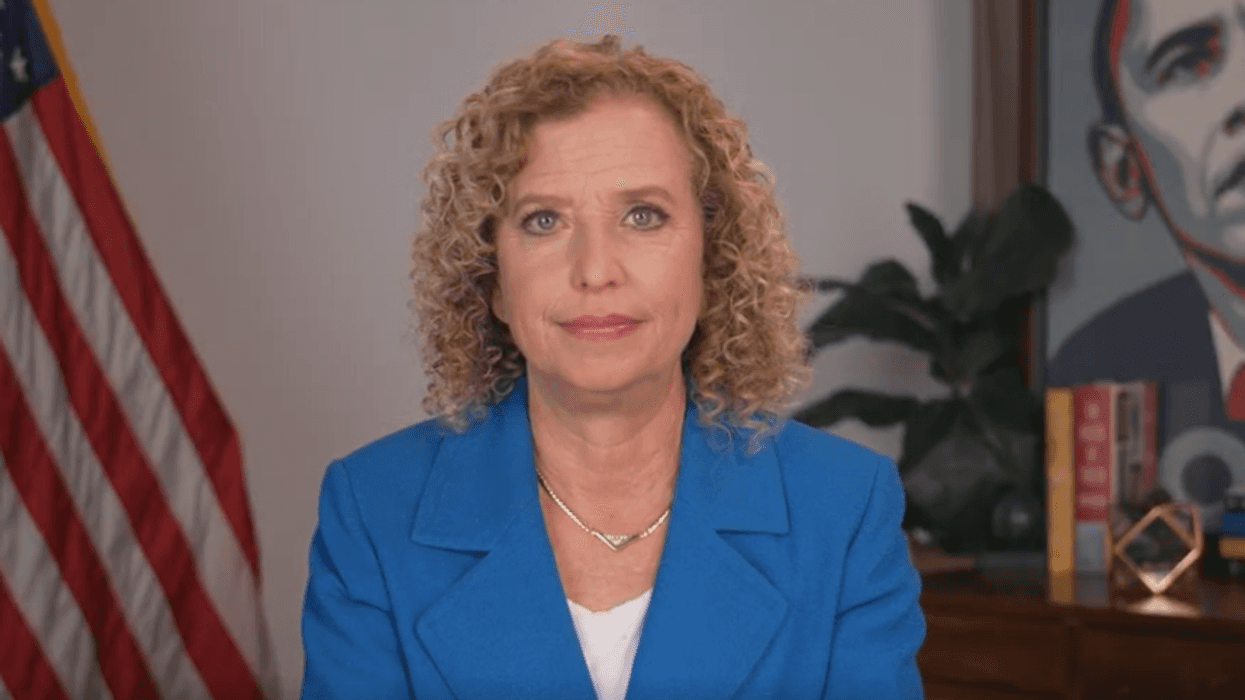
Wasserman Schultz chaired the Democratic National Committee from 2011 until her 2016 resignation—after WikiLeaks published her emails showing bias in that year's presidential primary. She didn't acknowledge her scandalous departure from DNC leadership in the video, but she did speak in front of an Obama poster and an American flag.
"I'm announcing my candidacy for reelection in Congressional District 20, because we cannot let Trump destroy Broward County's power. And we know Republicans couldn't care less about lowering your healthcare, gas, or grocery bills," she continued. "But I'll use all my seniority and influence in Washington to continue to make our lives more affordable, and make Broward a safer, less expensive place to live, raise a family, and retire. This district deserves a representative who won't be learning on the job and has a proven record of results."
As the Herald detailed last week:
Only two of the five districts her voters were split into favor a Democratic candidate—and both of those districts were created in 1992 under the Voting Rights Act to ensure Black voters could elect a candidate of their choice.
Rep. Frederica Wilson's district, the 24th Congressional District, was drawn to pack an even larger Black majority into the district in the new maps. But DeSantis' office intentionally broke up Black neighborhoods in District 20 as a justification for redrawing surrounding districts in a way that favors Republicans.
Black candidates and party leaders in that district say a well-funded, white Democrat jumping into the race would work to further weaken Black political power.
Elijah Manley, one of the Black Democrats who was already running in District 20, criticized Wasserman Schultz's potential run to the newspaper earlier this month, and again on Friday, after she confirmed her decision, calling her "Jim Crow Debbie."
"Debbie Wasserman Schultz is carpetbagging to FL-20, a Black opportunity district, instead of running in her own," Manley said on social media. "DWS is everything that's wrong with the Democratic establishment. From insider trading to payday lenders."
"She is no different than the Jim Crow Republicans that are eviscerating Black Representation across the South," he added in a statement. "I look forward to retiring her from public office permanently."
As Politico reported Friday:
The district Wasserman Schultz is seeking to represent was previously held by Democratic Rep. Sheila Cherfilus-McCormick, who resigned from her seat in April following ethics and legal deliberations over allegations she denies that she stole federal emergency funds and routed them to her campaign.
Cherfilus-McCormick is running again. The seat was held by a Black lawmaker for more than 30 years—a fact often raised by existing CD-20 Democratic candidates, all of whom are Black, as Wasserman Schultz was weighing whether to run for the seat...
The other candidates in the race include Manley, Luther Campbell, a former 2 Live Crew member who won a landmark free-speech Supreme Court case, physician Rudolph Moise, and former Broward County Mayor Dale Holness. Several of the candidates have accused Wasserman Schultz of counting on the county’s African American and Caribbean American voters splitting their allegiances, drawing an advantage to her candidacy despite the 20th District having been historically drawn to help with Black representation.
The Florida Legislative Black Caucus said in a lengthy statement that Wasserman Schultz's "decision to pursue reelection in this historically Black district, despite explicit requests from the Black community to seek candidacy in a neighboring district, is disheartening," and stressed that "this is more than a political issue; it is a pressing voting rights and civil rights issue."
"The residents of District 20 deserve transparency, engagement, and genuine commitment to listening," the caucus continued. "Building trust with Black leaders and constituents should be paramount for anyone seeking to represent a majority-Black district. Unfortunately, the actions taken by Congresswoman Wasserman Schultz suggest a failure to prioritize these essential values, perpetuating a narrative of performative allyship rather than meaningful connection."
Wasserman Schultz also faced criticism for her move beyond Florida. Nina Turner, a former Democratic Ohio state senator and congressional candidate, declared: "Time to retire her. Where are you DNC? Her run illustrates her clear disregard and disrespect for the Black community, especially in this moment. This is just as bad as what the GOP is doing across the country."
Mason Pressler, a national committeeman for Young Democrats of Michigan, said that "as progressives field Black candidates for majority-Black seats (PA-03, MO-01, MI-13, etc.), establishment Democrats like DWS are showing their true colors when it comes to protecting black representation. They don't care, and voters must reject this at the primary ballot box."

"Israel’s wanton killing of rescue workers and targeting of medical infrastructure in Lebanon has been one of this war’s most brazen features," Drop Site News noted.
Israeli attacks killed at least seven rescue workers in southern Lebanon on Thursday and Friday in violation of a US-brokered ceasefire, part of what critics say is a pattern of deliberate targeted murders of first responders that mirror the genocidal massacres committed in Gaza.
On Friday, paramedics from the al-Risala Association rushed to the site of an Israeli strike in Deir Qanun al-Nah, Tyre district, that reportedly killed a young girl and the village barber, identified by L'Orient Today as Ali Allameh. As they arrived on the scene, the paramedics were hit by a so-called "double-tap" strike—a follow-up bombing meant to eliminate survivors and first responders—that killed would-be rescuers Ali Abboud, Hussein Kassir, and Ahmad Hariri.
Hariri was also a well-known photojournalist who earlier this week documented an Israeli massacre of 14 people—including four children and 11 members of one family—in Deir Qanun al-Nah.
L'Orient Today reported that Israeli forces bombed two Islamic Health Committee centers in Hanouiyeh overnight Thursday, killing four rescue workers and wounding two others. Earlier on Thursday, an Israeli airstrike near the Tebnine Hospital reportedly killed two people and injured another while damaging all three floors of the facility.
Lebanon's Ministry of Public Health said more than 3,100 people have been killed by Israeli attacks since March 2, in addition to the more than 4,000 people, including nearly 800 women and over 300 children, slain in Israel’s 2023-25 attacks on its northern neighbor, where the militant resistance group Hezbollah is based. The dead from the current round of Israeli attacks include nearly 300 women, more than 210 children, and 123 medical and healthcare workers.
The Committee to Protect Journalists says 15 media professionals have also been killed in Lebanon since October 2023. One of them, Al-Akhbar correspondent Amal Khalil, was wounded last month by an Israeli strike while reporting on a previous bombing. Khalil was trapped under rubble, and as Red Cross workers attempted to extricate her, Israeli forces dropped a stun grenade on them as a warning to disperse. They were unable to rescue Khalil, who later died.
As in Gaza—where Israeli forces have killed or wounded more than 250,000 Palestinians since the Hamas-led attack of October 7, 2023—attacks by Israel have devastated Lebanon's healthcare infrastructure.
Israel's continued slaughter of Lebanese first responders comes as World Health Organization (WHO) member states gathered this week in Geneva, where they overwhelmingly backed a declaration of alarm over “the impact of the ongoing war on the Lebanese health systems, including attacks on health facilities and health workers, and the closure of dozens of primary healthcare centers and hospitals."
The measure, which also called on the WHO to "scale up" support for Lebanon's health system, passed by a vote of 95-2—with Israel and Honduras against—and 18 abstentions.
"Israeli military action has had unacceptable impacts on civilians and medical care," the United Kingdom said in an explanation of its vote in favor of the declaration. "The conflict has led to the displacement of over 1 million people and the closure of several hospitals and health facilities. The WHO has reported over 150 verified attacks against healthcare, with over 100 healthcare workers killed."
As Drop Site News reported Friday:
Israel’s wanton killing of rescue workers and targeting of medical infrastructure in Lebanon has been one of this war’s most brazen features. For the past five weeks, the relentless Israeli aerial and ground assault has continued despite a nominal ceasefire being announced by President Donald Trump on April 16. Last week, Israel and Lebanon agreed to a 45-day extension of the “ceasefire” after holding their third round of direct talks in Washington, of which Hezbollah is not a part. The declaration of a ceasefire has not stopped the Israeli military from continuing its bombardment of Lebanon, mostly in the south and the eastern Bekka Valley.
Rescue teams describe a pattern of repeated Israeli attacks directly targeting their members, often in double—or triple-tap strikes—where after a site is struck, it is struck a second or even third time as emergency crews arrive on the scene.
“We try to be careful and take safety precautions before interventions, like waiting 10 minutes to avoid the double taps,” Abdullah Halal, who leads a Civil Defense rescue team in Nabatiyeh, told Drop Site News.
"But," the outlet noted, "even those precautions have not always been enough. Last week, Halal lost two of his two colleagues in a double-tap strike."
Ali Saad, who is with the Lebanese Red Cross, told UN News on Wednesday that his colleagues share coordinates with Israeli forces and other belligerents, but rescue workers are still being targeted.
“This is why the Red Cross volunteers hug each other and say goodbye before every mission,” he said.