

SUBSCRIBE TO OUR FREE NEWSLETTER
Daily news & progressive opinion—funded by the people, not the corporations—delivered straight to your inbox.
5
#000000
#FFFFFF
To donate by check, phone, or other method, see our More Ways to Give page.
Daily news & progressive opinion—funded by the people, not the corporations—delivered straight to your inbox.

Sean Sarah, Sierra Club, 202 548-4589, sean.sarah@sierraclub.org
Jim Sconyers, Sierra Club West Virginia, 304-698-9628, jimscon@gmail.com
Cindy Rank, WV Highlands Conservancy, 304-924-5802, clrank2@gmail.com
Dianne Bady, Ohio Valley Environmental Coalition, 304 360-2072, dbady.ovec@gmail.com
Joe Lovett, Appalachian Mountain Advocates, 304-520-2324, jlovett@appalmad.org
Derek Teaney, Appalachian Mountain Advocates, 304-793-9007, dteaney@appalmad.org
Today, Patriot Coal Corporation (NYSE: PCX) announced its intention to immediately begin phasing out all large scale surface mining in Appalachia. The announcement follows an historic agreement with the Sierra Club, Ohio Valley Environmental Coalition, and the West Virginia Highlands Conservancy, represented by attorneys from Appalachian Mountain Advocates. Patriot, which filed for Chapter 11 Bankruptcy on July 9th, sought approval from the groups for an extension to the schedule under which the company is required - pursuant to a court order and settlement resolving prior litigation with the groups - to install expensive pollution controls at several mines in West Virginia. Astonishingly, along with its commitment to end large scale surface mining in the region, the company also acknowledged the impact this destructive form of mining has on local communities and announced its commitment to reduce its environmental footprint. Patriot is among the largest mountaintop removal coal mine operators in Appalachia.
"This is an historic moment for people hardest hit by mountaintop removal coal mining," said Michael Brune, Executive Director of the Sierra Club. "Tens of thousands of people have worked tirelessly to put an end to this destructive process, and today's agreement is a major step towards ending this abhorrent form of mining and repairing the damage done to communities and ecosystems across the region. Patriot Coal may be the first company to cease mountaintop removal mining but, because of the tireless efforts of committed volunteers and community organizations, it certainly won't be the last."
The agreement requires Patriot to move away from, and ultimately cease, mountaintop removal and all other forms of large-scale surface mining in Appalachia. In return, Patriot will be granted additional time to install selenium treatment at several of its mines. Patriot will also retire significant infrastructure required to perform mountaintop removal mining, including the dragline at its Catenary mine complex, which will be retired immediately, and the dragline at its Hobet mine complex, which will be retired in 2015.
Patriot will also withdraw two applications for Clean Water Act section 404 valley fill permits currently pending before the Army Corps of Engineers, and will surrender its remaining rights under a third permit. These section 404 permits allow companies to dump the waste from mountaintop removal mines into valleys, burying streams and headwaters that are critical to local biodiversity. Further, Patriot has committed to not apply for any additional large-scale surface mine permits, has agreed to not open any new stand-alone surface mines, and will only conduct small scale surface mining in conjunction with existing and planned underground mining. The agreement allows Patriot to move forward with its plans to open one new metallurgical coal mine for which a section 404 permit application is pending, but preserves the right of the groups to challenge that permit in the event that the EPA identifies water quality concerns with the permit. Patriot will also donate $500,000 to a West Virginia non-profit organization to be identified by the parties.
Finally, Patriot has issued the following statement:
"Patriot Coal has concluded that the continuation or expansion of surface mining, particularly large scale surface mining of the type common in central Appalachia, is not in its long term interests. Today's proposed settlement commits Patriot Coal to phase out and permanently exit large scale surface mining and transition our business primarily toward underground mining and related small scale surface mining. Patriot Coal recognizes that our mining operations impact the communities in which we operate in significant ways, and we are committed to maximizing the benefits of this agreement for our stakeholders, including our employees and neighbors. We believe the proposed settlement will result in a reduction of our environmental footprint. This settlement is consistent with Patriot Coal's business plan to focus capital on expanding higher margin metallurgical coal production and limiting thermal coal investments to selective opportunities where geologic and regulatory risks are minimized. Patriot Coal urges the Court to approve the settlement because it strengthens the Company's ability to continue operating with our nearly 4000 employees, and significantly increases the likelihood that we will emerge from the chapter 11 process as a viable business, able to satisfy our environmental and other obligations."
"It's heartening any day we learn that a major player decides that mountaintop removal is not in the best interest - of the company or of our mountains, streams, and communities," said Jim Sconyers, Chair of the West Virginia Sierra Club. "We look forward to the day when full implementation of this agreement is achieved."
In return, Sierra Club, OVEC, and WVHC have agreed to file a joint motion with Patriot that will extend the time the company is allowed to comply with court ordered selenium controls at the Hobet mine by 15 months. The coalition will also allow Patriot to extend the date of compliance for selenium treatment at 42 other outlets at other mines and facilities by 12 months.
"We've been saying for many years that if companies had to pay the real costs of mountaintop removal, it would not be economically feasible," said Cindy Rank of the West Virginia Highlands Conservancy. "Hopefully, it's now become clear that when coal companies are required to prevent illegal selenium pollution and pay the costs for cleanup themselves it's simply doesn't make economic sense to continue this destructive form of mining."
"We hope that this agreement, while holding Patriot responsible for its legacy of mining pollution, puts the company in a strong enough financial condition through its underground mining that it can honor its obligations to its retirees and workers," said Dianne Bady of the Ohio Valley Environmental Coalition.
The Sierra Club, Ohio Valley Environmental Coalition, and the West Virginia Highlands Conservancy were represented in the matter by Joe Lovett and Derek Teaney of Appalachian Mountain Advocates. The agreement was announced during a proceeding before Judge Robert Chambers of the US District Court for the Southern District of West Virginia.
The Sierra Club is the most enduring and influential grassroots environmental organization in the United States. We amplify the power of our 3.8 million members and supporters to defend everyone's right to a healthy world.
(415) 977-5500
"Self-regulation?" said Sen. Elizabeth Warren. "That's a recipe for disaster."
As details from US President Donald Trump's White House meeting with Big Tech executives emerged on Tuesday, including a pledge on artificial intelligence safety, campaigners and Democrats in Congress continued calling for stronger AI protections.
After the gathering, Trump posted on his Truth Social platform a "Joint Commitment on Frontier Responsibilities" signed by him, billionaire Elon Musk—a former member of the administration who leads multiple companies—Anthropic's Dario Amodei, Google's Sundar Pichai, Meta's Mark Zuckerberg, Nvidia's Jensen Huang, and OpenAI's Greg Brockman.
The accord came out of a gathering that included the president and other top officials as well as over a dozen tech leaders, including Amazon founder Jeff Bezos and representatives from Microsoft and Palantir. It states that "every company is responsible for developing its own technology safely and in a way that builds trust with customers and the public."
The document goes on to detail "four layers of controls and audits" that each company developing AI—or "super intelligence (SI), as Trump directed his administration to call it in a Tuesday executive order—should implement, including robust internal controls to monitor capabilities and alignment, internal teams to ensure safeguards are operating as intended, partnerships with outside auditors, and an independent committee of the board of directors to receive reports on problems and their fixes.
Before Trump released the accord, he addressed the media alongside some officials and executives. Asked if the agreement is binding in any way, the president responded, "I think it's morally binding."
Beside him, Zuckerberg—whose company has faced legal issues over its social media platforms—laid out the broad strokes of the accord, which he framed as "a start," suggesting there is more to come.
Since OpenAI revealed in July that its models autonomously breached the systems of the open-source platform Hugging Face during internal testing, the firm—plus Anthropic, Google, and Meta—has disclosed additional incidents. Axios reported over the weekend that Anthropic and OpenAI alone "are investigating tens of thousands of incidents."
Experts in the industry and beyond have increasingly expressed concerns, with a United Nations panel stressing in a report about the Hugging Face incident that current AI guardrails are "unraveling," and one Anthropic researcher quitting earlier this month and warning that the rapidly advancing technology "could kill us all by the end of the decade."
While some members of Congress have responded by introducing bills aimed at reining in the industry and establishing mandatory safeguards, House Speaker Mike Johnson (R-La.)—who was part of Tuesday's meeting—has instead called for voluntary commitments. He's also dismissed mounting public concerns about AI data centers raising electricity bills, polluting drinking water, and threatening jobs, even suggesting that the grassroots pushback in various communities is "a Chinese psyop."
The president—whose inauguration was dubbed "a coronation of our country's descent into oligarchy" because of all the ultrarich attendees, including many of the men at the White House on Tuesday—has also made clear that he opposes a legislative route. According to The Associated Press, Trump said Tuesday that "I think I'm seeing tremendous self-policing. And they understand that they have to self-police."
Progressive US Sen. Elizabeth Warren (D-Mass.) responded to the event on social media Tuesday, writing: "Self-regulation? That’s a recipe for disaster."
Rep. Yvette D. Clarke (D-NY) said that "the American people are deeply concerned on the direction unregulated AI is taking our country, and they deserve transparent answers from the men with their hands on the wheel. Instead, all we get is another closed-door meeting, and more promises made and broken in secret. We cannot say exactly what they schemed, today. But I am certain we'll see the consequences soon enough."
Mitch Jones, deputy director of Food & Water Action, a group that has spearheaded fights against superpolluting AI data centers, said that "the notion that a manically profit-driven AI industry will safely regulate itself is as dangerous as it is absurd—akin to claiming an arsonist would make a good firefighter. Trump's only concern is doing the bidding of his Big Tech billionaire friends."
"Trump's rejection of the overwhelming opposition to AI data center construction throughout the country is political incompetence of the highest order," Jones continued, looking toward the November midterms, which are just five weeks away. "His obstinance will no doubt cost him and his party deeply in the coming elections."
"We can't have politicians giving the tech oligarchs free rein," he argued. "We need political leaders that will decisively rein them in. Our leaders must stand with us and say 'no' to so-called super intelligence, and put a halt to the massive hyperscale data centers powering this runaway industry."
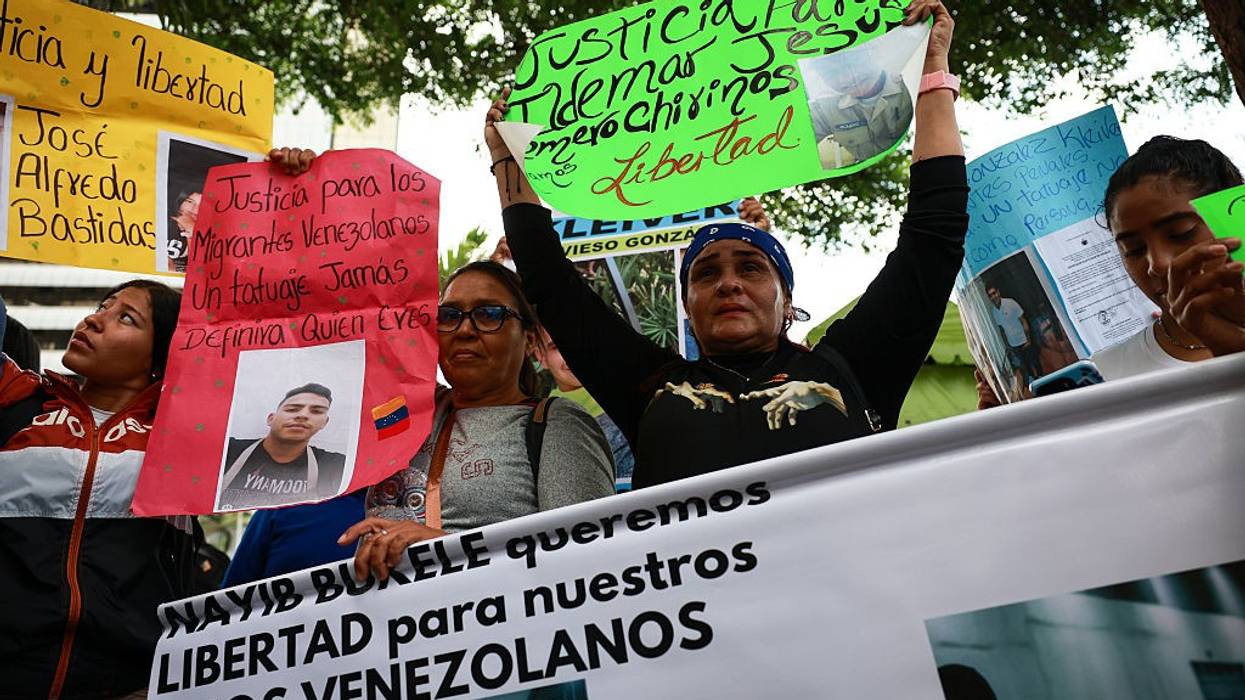
“The harms caused by this US government scheme are no longer hypothetical,” UN experts stressed. “For migrants in situations of particular vulnerability, the consequences can be deadly.”
The US Supreme Court on Tuesday temporarily cleared the way for the Trump administration to resume rapidly deporting immigrants to countries other than their own, even as United Nations experts warned that the policy is putting deportees at heightened risk of human rights violations.
In a one-page order, the justices—who did not rule on the legality of the policy—stayed a lower court ruling that required the administration to give people facing a so-called third-country deportation notice wan opportunity to raise concerns that they could face persecution or torture in the destination country. The court agreed to hear the administration's appeal, with oral arguments scheduled for December.
The high court said it will consider whether the US District Court for the District of Massachusetts has jurisdiction over the case, whether it had authority to issue classwide relief, and whether the Trump administration's policy violates federal immigration law, the Constitution's due process clause, the Foreign Affairs Reform and Restructuring Act, or the Convention Against Torture.
The court's three liberal justices—Sonia Sotomayor, Elena Kagan, and Ketanji Brown Jackson—said they would have rejected the administration's request to lift the lower-court order.
NEW: The Supreme Court, over the objections of the 3 liberal justices, grants a stay in the D.V.D. litigation, authorizing the Trump admin to resume third country removals without any notice to people being sent to countries they've never been to.The Court also agrees to hear the case in December.
[image or embed]
— Aaron Reichlin-Melnick (@reichlinmelnick.bsky.social) September 29, 2026 at 12:16 PM
US Attorney General Todd Blanch responded to the order on social media, posting, "Now for the second time, SCOTUS just granted our stay in conducting all third-country removals of illegal aliens."
"Again, this is entirely lawful and a critical tool for immigration enforcement," he added. "Unlike the lower court, SCOTUS waited to hear from both sides before making the decision."
Tuesday's ruling came one day after two dozen United Nations human rights experts urged the United States and 35 countries that have entered deportation agreements with the Trump administration to halt the practice, which is "triggering [a] cascade of human rights violations including torture."
“These migrants are being transferred to countries or territories with which they have no ties, which can be a traumatizing and isolating experience that compounds harms already suffered,” the experts said, warning that they face “further violence or discrimination based on gender, sexual orientation, gender identity, or human rights advocacy.”
“The harms caused by this US government scheme are no longer hypothetical,” the experts stressed. “For migrants in situations of particular vulnerability, the consequences can be deadly.”
The UN experts' warning followed an urgent appeal issued earlier this month by Amnesty International that two men deported to Equatorial Guinea under a secret deal—one of them Egyptian and the other Eritrean—were at risk of being tortured in detention in the African nation, which has an abysmal human rights record. Amnesty said that the men had already been beaten and violently arrested by police after arriving in the country.
The Trump administration has deported roughly 25,000 people to more than two dozen countries under often secret agreements and at a cost to taxpayers of tens of millions of dollars. Most have been sent to Mexico, while others have been transported to countries including Liberia, Guyana, and Equatorial Guinea.
The Supreme Court has already intervened in a related case involving eight men whom the administration sought to deport to war-torn South Sudan, although only one was originally from that country. In that case, Sotomayor warned that the policy exposed “thousands to the risk of torture or death.”
The justices' latest order will remain in effect until the court issues its judgment in the case. Until then, the administration can resume the expedited removals that the lower court had sought to restrict.
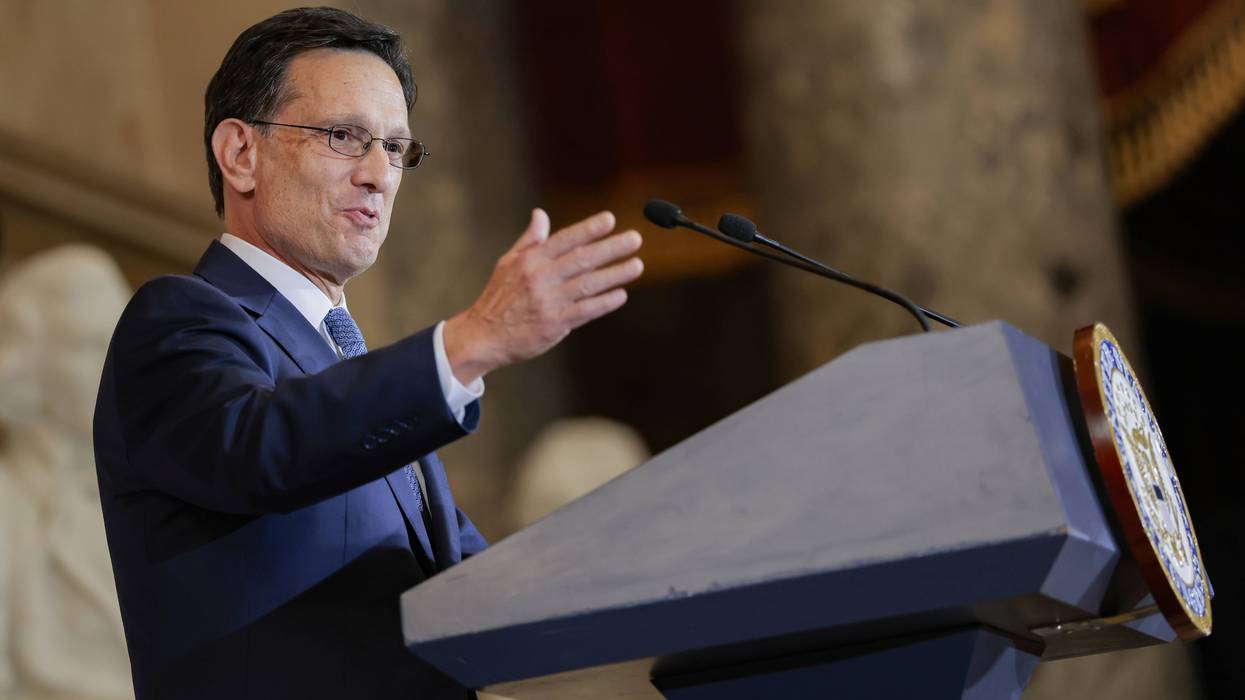
"Cantor, like PhRMA, is an experienced reverse Robin Hood, legislating money away from working families and toward giant corporations."
In what advocates for lower drug prices call "a match made in hell," one of the pharmaceutical industry's most powerful lobbying groups is tapping a former Republican leader in the US House of Representatives to head its political operations.
Pharmaceutical Research and Manufacturers of America (PhRMA) named former Rep. Eric Cantor (R-Va.) as its president and CEO on Tuesday amid what is shaping up to be a major fight over the government's ability to regulate prescription drug prices.
Cantor served in Congress from 2001-14 and was named House majority leader in 2011. He resigned in 2014 after losing his Republican primary in a stunning upset to the Tea Party-backed former Rep. Dave Brat.
According to recent polling from KFF, more than half of US adults say they worry about affording prescription drugs and nearly three-quarters say the government should do more to limit prices.
PhRMA emphasized that Cantor's appointment to replace the outgoing CEO Stephen Ubl comes at "a pivotal moment for America’s biopharmaceutical industry."
It is certainly spending like it. As Politico reported on Tuesday, pressure from voters to address the affordability of prescription drugs has been met with an unprecedented lobbying blitz by PhRMA, which poured a record $38 million into efforts to keep Capitol Hill in line.
PhRMA said Cantor’s “global business acumen coupled with policy and political experience at the highest levels of government make him an ideal person to lead PhRMA during this critical next chapter.”
Peter Maybarduk, the access to medicines director for the consumer watchdog group Public Citizen, agreed that Cantor was a perfect fit for PhRMA, but for very different reasons.
"Cantor, like PhRMA, is an experienced reverse Robin Hood, legislating money away from working families and toward giant corporations," Maybarduk said.
During his tenure in Congress, Cantor received roughly $900,000 from the pharmaceutical and health product industry, putting him 19th among all House candidates between 1999 and 2018, according to a JAMA Internal Medicine study of data from the Center for Responsive Politics.
That spending paid dividends, with Cantor voting against legislation aimed at lowering prescription drugs—including one bill in 2003 that would have allowed Americans to import low-cost prescription drugs from abroad and another in 2007 that would have required the federal government to negotiate drug prices for Medicare recipients.
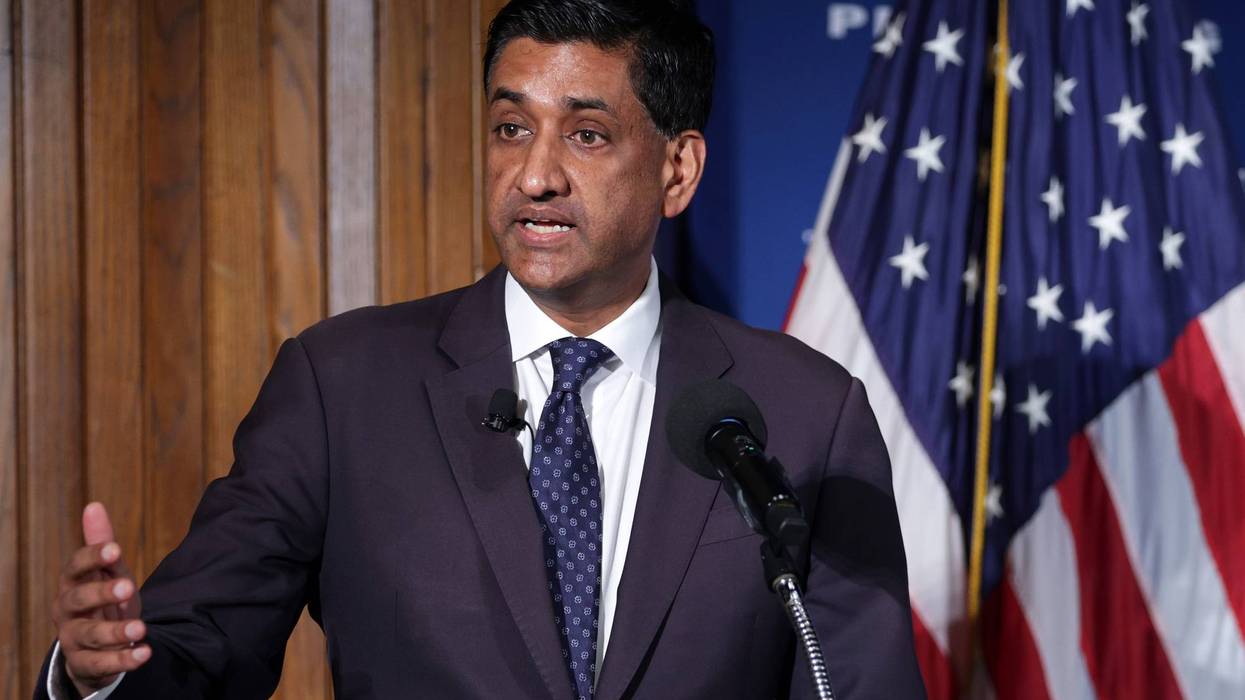
"The tech lords use jargon to confuse. They count on the tech illiteracy of the elected class. They hope we won’t look under the hood," said US Rep. Ro Khanna.
US Rep. Ro Khanna announced plans on Monday to introduce what he described as "the most comprehensive... legislation to date" regulating the artificial intelligence industry.
In an interview with CNBC, Khanna (D-Calif.) said that he wanted to enact at least a temporary ban on recursive AI that is capable of improving itself and modifying its objectives without human input.
Such a ban would be in effect until the federal government had created proper guardrails on the technology, CNBC reported.
“There’s actually a civilizational extinction risk,” Khanna told CNBC, referring to the dangers of recursive AI. "There's a safety risk of loss of control, and then there’s a misuse risk, and we need to take both seriously."
Khanna's bill would also create a new federal agency tasked with crafting and enforcing safety measures on AI models, with independent auditors embedded in every frontier lab that would report directly to the agency.
The legislation wouldn't just create regulations for the AI industry, but also criminal penalties for AI developers who "disable safeguards, kill switches, logging or containment systems, or who knowingly deploy an unauthorized system," CNBC reported.
Promoting the coming bill in a Tuesday social media post, Khanna argued that Big Tech could not be trusted to regulate itself.
"The tech lords use jargon to confuse," Khanna wrote. "They count on the tech illiteracy of the elected class. They hope we won’t look under the hood. They know they can’t gaslight me."
While multiple polls have shown that putting guardrails on the AI industry is politically popular, Republican Party leaders have said that no regulations for the industry are coming so long as they control the White House and the US Congress.
In a Tuesday interview with CNBC, House Speaker Mike Johnson (R-La.) said he hoped that any guardrails put on AI are "voluntary" on the part of Big Tech companies.
Two weeks ago, Johnson said in an interview on CNN that federal regulations of the industry made little sense because "Congress is obviously less qualified than the people who are pushing this frontier to know the ins and outs of it."
President Donald Trump on Tuesday expressed a similar sentiment, telling reporters outside the White House that Big Tech could be trusted to be responsible with the powerful technology it is creating.
"They're outstanding people," Trump said of the tech executives. "They don't want anything to go wrong. I mean, their companies are at stake, if something goes wrong, their companies are at stake. They're not going to let that happen. This is going to be all for the good... they're really going to be policing each other."
Trump on big tech: "They don't want anything to go wrong. Their companies are at stake. They're not gonna let that happen. They're really gonna be policing each other." pic.twitter.com/wP6vfPcavz
— Aaron Rupar (@atrupar) September 29, 2026
Earlier this month, Trump suggested in a social media post that his own intellect was singlehandedly capable of regulating AI, a technology so complicated that even its own creators have acknowledged difficulties in understanding it.
"The only control or ‘guardrails’ that AI needs is a STRONG AND SMART (High IQ!) PRESIDENT,” Trump wrote, “and the USA has that, in spades!"
Trump's hands-off approach to regulating AI isn't just being challenged by Democrats such as Khanna.
According to a Monday report from The Associated Press, Pope Leo XIV reiterated his call for placing safeguards on AI to ensure that it benefits humanity.
Specifically, the US-born pope pointed to recent "concerns raised by many of the experts, specialists in AI," which he said "should be taken seriously."
Pope Leo said warnings that AI could threaten humanity should be taken seriously, rejecting the claims that concerns are 'fake news' and urging leaders to work together on safeguards https://t.co/7qVpNAXYKM pic.twitter.com/Cds6gf5vef
— Reuters (@Reuters) September 29, 2026
"I don’t think that that is ‘fake news’ as some have said," the pope added, in a veiled reference to Trump, "to try and cause whether financial or other some other kind of benefit."
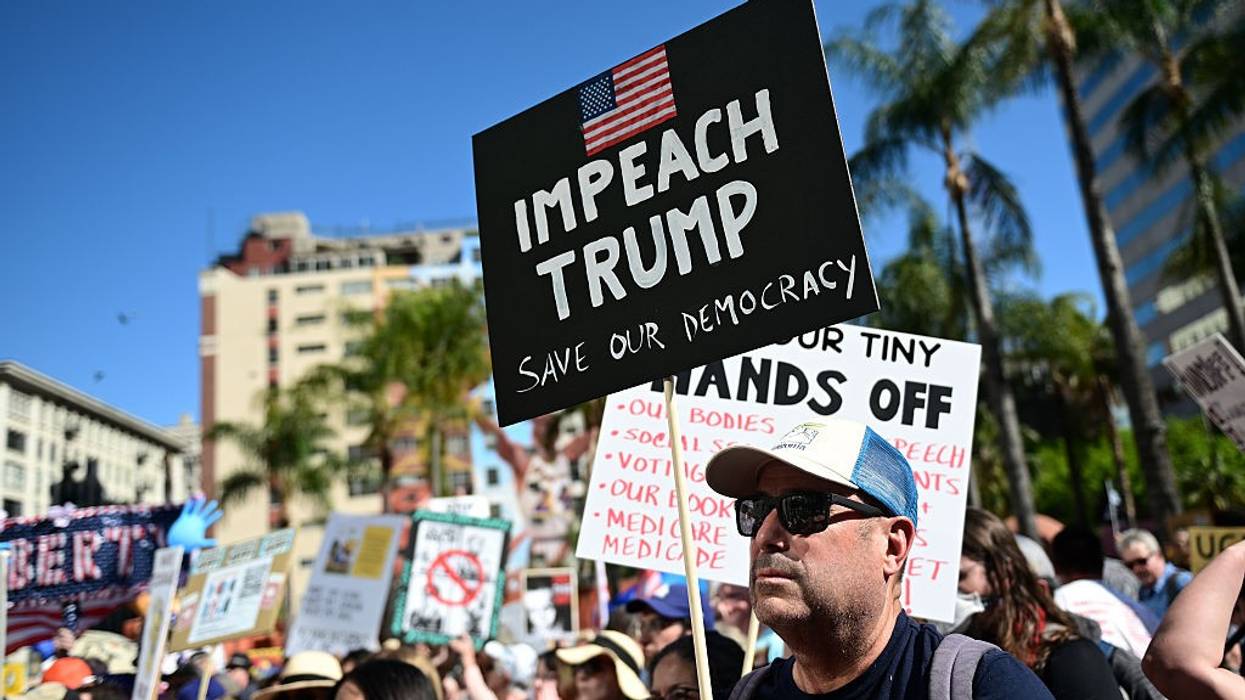
"We should not have to remind you that using government funding to create or air political ads like the ones that have been running over the last few days is illegal and a shockingly corrupt misuse of taxpayer dollars."
As critics condemn President Donald Trump's trio of taxpayer-funded advertisements as illegal propaganda and "an impeachable offense," The Wall Street Journal and leading congressional Democrats revealed Tuesday that the administration appears to have used US Department of Homeland Security funding to pay for the ads.
Citing unnamed sources, the Journal reported that "Trump personally pushed for the ads and has been involved in their creation," and that the money came from US Customs and Border Protection, an agency of DHS. Top Democrats in the Senate and House of Representatives said the administration apparently used CBP funding allocated in Republicans' One Big Beautiful Bill Act last year.
Senate Appropriations Committee Vice Chair Patty Murray (D-Wash.) and Homeland Security Subcommittee Ranking Member Chris Murphy (D-Conn.) on Tuesday sent a letter to DHS Secretary Markwayne Mullin about the "outrageous scheme" of using "Americans' hard-earned tax dollars to bankroll the obscene political ads celebrating President Trump."
The pair noted that on September 19, the Office of Management and Budget approved a release of money to CBP, including "$20 million in new funding under the line item 'Commemorative Events,' which we suspect may well be the funding tapped to run this government propaganda."
"We should not have to remind you that using government funding to create or air political ads like the ones that have been running over the last few days is illegal and a shockingly corrupt misuse of taxpayer dollars," they told Mullin, a former senator who voted for the GOP's 2025 budget package.
Specifically, as the watchdog Public Citizen detailed in a Tuesday complaint to the Federal Communications Commission, the Federal Trade Commission, and broadcasters, the three campaign ads "appear to violate the federal law against using taxpayer funds to finance propaganda (5 USC §3107) and related provisions of the appropriations laws as well as the Hatch Act (5 USC §7324)."
Margaret Dylus-Yukins, senior legal counsel for ethics at the nonpartisan Campaign Legal Center, highlighted on Monday that the unlawful ads come on top of the war chest that Trump has raised—mostly from rich people and corporations—since the last election for the super political action committee (PAC) MAGA Inc.
"At a minimum, this is an appalling abuse of taxpayer dollars, particularly when hundreds of millions of private dollars are already flowing into US elections—and Trump has personally helped raise enormous sums from wealthy special interests for a super PAC devoted to advancing his political agenda," Dylus-Yukins said.
Axios on Tuesday corroborated the Journal's reporting that "Trump is personally selecting which government-funded ads his administration is airing ahead of the midterms," and one unnamed official claimed that "this is just the beginning."
With the midterm elections that will determine control of Congress just five weeks away, the administration has claimed the ads are "public service announcements." Murray and Murphy called that defense "as absurd as it is offensive," and pointed out that "the White House has failed to answer our most basic questions about where these funds coming from and who is responsible."
"The American people deserve answers about how this president is literally stealing their tax dollars to air campaign ads celebrating himself—while doing nothing to help them afford healthcare or housing. These ads need to immediately come off the air, taxpayers need to be paid back for this theft, and everyone responsible needs to be held accountable for this corrupt and illegal propaganda," the senators argued, demanding answers to a list of questions within 48 hours.
House Appropriations Committee Ranking Member Rosa DeLauro (D-Conn.) and House Appropriations Homeland Security Subcommittee Ranking Member Henry Cuellar (D-Texas) also spoke out Tuesday, saying that "after gutting $1 trillion from Medicaid, stripping healthcare coverage from millions of Americans, giving the very richest Americans and large corporations massive tax breaks, adding more than $4 trillion to the deficit, and more than quadrupling funding for mass deportations, it turns out the Trump administration used Republicans' One Big Beautiful Bill to pay for President Trump’s political ads."
"When Democrats reclaim control of Congress next year, the House Appropriations Committee will work to uncover and reverse misuses of taxpayer money like this and hold those who abused their power accountable," that pair pledged.
With Trump's approval rating dropping—largely due to poor economic conditions exacerbated by his illegal Iran War—Republicans are increasingly at risk of losing their current majorities in one or both chambers. In the House, that would likely mean not only DeLauro chairing the Appropriations Committee, but also Reps. Robert Garcia (D-Calif.), Jim Himes (D-Conn.) Jamie Raskin (D-Md.) respectively leading the Oversight, Intelligence, and Judiciary committees.
"For two years, Trump and his family have run the presidency like a family business, getting richer by the billions while Republicans in Congress held the door open," Congressional Integrity Project senior adviser Jeremy Funk said in a Tuesday statement.
Pointing to "Gulf money" for Trump's son-in-law Jared Kushner, "Pentagon contracts" for Donald Trump Jr., the first family's lucrative cryptocurrency schemes, and "now taxpayer-funded ads starring Trump himself," Funk charged that "every one of these rackets depended on a Republican Congress that refused to ask a single question."
"That era ends in January," he declared. "Jim Himes, Robert Garcia, and Jamie Raskin, and every other Democratic committee chair, has the receipts, and soon they'll have the gavels and subpoena power. Trump's cronies are already lawyering up. They should be. Accountability is coming for all of them."
House Minority Leader Hakeem Jeffries (D-NY), who could become speaker if Democrats reclaim the chamber, made clear in an interview with The Associated Press published on Saturday that "we are going to hold the crooks accountable," and "we haven’t ruled anything out," including impeachment.
While some elected Democrats and political commentators have argued that impeaching Trump a historic third time wouldn't be a good use of the party's time—particularly as the Senate acquitted him in both of the previous cases—Jeffries' comments came just days after Congressman Steve Cohen (D-Tenn.), who is retiring after this term, introduced over two dozen more articles of impeachment against the president.
Meanwhile, Richard Painter, a University of Minnesota law professor who served as the White House ethics lawyer under former President George W. Bush, told The New York Times on Sunday that the use of federal funds for the ads could be "an impeachable offense."
"This is very dangerous," Painter said. "We do not allow government-sponsored propaganda in the United States."
This article has been updated with reporting from Axios.

"Ordering a police visit to an individual’s home to discuss the individual’s speech can constitute a restriction on speech that would support a viewpoint discrimination claim," wrote a federal judge.
A federal judge has allowed a First Amendment lawsuit to proceed against Miami Beach Mayor Steven Meiner after he allegedly had police sent to a resident's house to question her over a social media post criticizing his support for Israel.
Judge Cecilia Altonaga of the US District Court for the Southern District of Florida on Monday denied defendants' motion to dismiss claims filed on behalf of Miami Beach resident and veteran Raquel Pacheco.
Altonaga said that "ordering a police visit to an individual’s home to discuss the individual’s speech can constitute a restriction on speech that would support a viewpoint discrimination claim."
On January 12, a pair of Miami Beach police officers showed up at Pacheco's door to question her about a post she made on Facebook criticizing Meiner, an outspoken supporter of Israel and its military assault on Gaza, which has killed more than 74,000 Palestinians, including over 21,000 children.
Pacheco referred to Meiner as someone who "consistently calls for the death of all Palestinians" and "tried to shut down a theater for showing a movie that hurt his feelings," referring to his attempt to have an independent theater's lease terminated after it held screenings of No Other Land, an Oscar-winning documentary made by Palestinian and Israeli filmmakers about the displacement of Palestinians and demolition of homes by Israeli settlers in the occupied West Bank.
Video of the interaction shows police asking Pacheco if the post came from her account and ignoring her as she told them she would not speak to them without a lawyer.
"This is freedom of speech," Pacheco responded. "This is America, right?”
The officers acknowledged that Pacheco was “not going to jail” and did not claim that she had threatened Meiner. One of the officers then explained that "what we’re just trying to prevent is someone else getting agitated or agreeing with the statement."
He added that Pacheco's statements could "probably incite somebody to do something" before telling Pacheco to “refrain from posting things like that." The officers then left and Pacheco was never charged with a crime.
Represented by the American-Arab Anti-Discrimination Committee (ADC), Pacheco filed a lawsuit in March alleging that Miami Beach officials had used police power to violate her First Amendment rights and deter her from criticizing the mayor and Israel. The lawsuit described it as part of a broader effort by officials to chill pro-Palestinian speech.
Emails released weeks after the incident revealed that Meiner personally flagged Pacheco's post to police, referring to it as a "dangerous escalation. Speaking to reporters on February 4, he defended his decision to alert the cops, saying that Pacheco's post was "absolutely false" and referring to it as "age-old antisemitism."
But Altonaga said Meiner's statements supported Pacheco's allegation that "her viewpoint motivated Meiner’s decision to send police to her home," allowing her viewpoint discrimination claim against him to proceed.
The court also allowed the ADC to proceed with its claim that the City of Miami Beach itself—including the mayor and police chief—had demonstrated a broader pattern of viewpoint discrimination against pro-Palestinian speech. The lawsuit cites Meiner's attempt to shut down the local theater, as well as its law banning government contractors from boycotting Israeli businesses, including those operating in territories illegally occupied by Israel.
It also cites Meiner and other Miami Beach officials' repeated pattern of arguing with and cutting off Pacheco and other pro-Palestinian speakers during city commission meetings while allowing pro-Israel speakers to talk with little obstruction.
During one meeting, Meiner reduced public comments for pro-Palestinian speakers to 60 seconds when they criticized the police response to Pacheco while allowing speakers who defended the police action or criticized Pacheco's pro-Palestine viewpoint to speak for around two minutes uninterrupted.
Jenin Younes, ADC's president and national legal director, said Monday's ruling was "a significant victory for Raquel Pacheco, for the First Amendment, and for all Americans who care about the right to free speech and dissent."
"The city downplayed what happened to Ms. Pacheco as a routine police visit," Younes said. "The court disagreed, recognizing that sending police to someone’s home to question and intimidate them over their protected political speech can itself violate the First Amendment."
"The government does not have to arrest you, prosecute you, or formally censor you to violate the First Amendment," he added. "The chilling effect of these actions is obvious.”

"No, Mr. Johnson," said Sen. Bernie Sanders. "The 75% of Americans who oppose data centers, including a majority of Republicans, have not fallen victim to a 'Chinese psyop.'"
They've been shown to raise electricity bills, pollute drinking water, do little to boost local employment while threatening millions of jobs in a variety of industries, and top executives have warned that the technology they support could wipe out all of humanity by the end of the decade.
But rather than take widespread public opposition to artificial intelligence data centers at face value, House Speaker Mike Johnson (R-La.) announced he had pinpointed what's behind the fact that 75% of Americans oppose the centers being built in their communities: "a Chinese psyop."
Fox News anchor Cheryl Casone asked Johnson on Monday about claims from "several tech executives and lawmakers" who say that the nationwide pushback against data centers—which President Donald Trump and Republicans are pushing to expand—is "coming from China."
The House speaker accused Democrats of fearmongering about AI and claiming that "everyone will die if we don't win"—although the gravest warnings about the technology's capabilities have actually come from the industry itself.
"It is a Chinese psyop, I really believe that. That's not a conspiracy theory," said Johnson.
Mike Johnson says opposition to data centers "is a Chinese psyop. I really believe that. That's not a conspiracy theory." pic.twitter.com/mQahEOX2gx
— Aaron Rupar (@atrupar) September 28, 2026
Sen. Bernie Sanders (I-Vt.), who has led efforts to pass bills imposing a nationwide moratorium on new large-scale data centers and a ban on artificial superintelligence, seized on Johnson's comments Tuesday.
"No, Mr. Johnson," said the progressive senator, who's previously been baselessly accused on Fox News of working with China to harm the AI industry. "The 75% of Americans who oppose data centers, including a majority of Republicans, have not fallen victim to a 'Chinese psyop.' They are rightly concerned about AI billionaires raising their electricity bills, destroying the environment, and threatening humanity."
While some influence campaigns from Russia and China have pushed negative messaging about AI data centers, one former official with the Office of the Director of National Intelligence told The New York Times in July that foreign countries are not "manufacturing" outrage about AI in the US, which has been made clear as communities have rallied to block nearly 120 projects worth $198 billion, according to Data Center Watch.
On Fox News, Johnson repeated a comment he made after Anthropic CEO Dario Amodei said the development of AI should be "paced" as companies have found that their models are able to hack websites without being directed to and are capable of "recursive self-improvement," or creating the next generation of AI on their own.
At the time, the House speaker said the industry should be able to regulate itself, lest China "overlap us" on AI development.
"We do not need a moratorium. We do not need to jump in and hyper-regulate this because we'll lose the race to China," Johnson said Monday. "The innovation is important to continue."
On the political podcast "Pod Save America," co-host Jon Lovett said that even if China did see a benefit to fanning the flames of widespread disapproval of data centers, "it wouldn't change the fact that these companies have gone about this in the most ham-fisted and kind of arrogant way."
AI companies have "dismissed the concerns of people" and have "tried to buy and sell politicians to try to get around persuading people that they might want these data centers in their communities," he said.
"The objections are very real from people who A) don't want these things in their backyard, and B) have come to expect that the benefits that accrue to the largest and most profitable corporations in the do not redound to the benefit of the broader community," said Lovett. "And that is not something China could convince us of."

The Cabinet of Prime Minister Pedro Sánchez approved two decrees aimed at protecting tenants, but Spain's leftist social rights minister called the two-part strategy a "trap."
Spain's Cabinet on Tuesday agreed to take other measures meant to address a growing housing crisis amid nationwide protests triggered by an 87-year-old woman's temporary eviction—but some leftists warned that splitting the proposed reforms into two parts was an intentional ruse designed for one key demand to be rejected by lawmakers.
María del Carmen Abascal Martín's eviction on September 23 sparked demonstrations in Madrid and cities across Spain, including Barcelona, Sevilla, Málaga, Santiago, Murcia, Palma, and Zamora. On Saturday, around 30,000 people marched in Madrid, while hundreds of tents subsequently sprang up in the Puerta del Sol, where protesters have been camping out for days, demanding major reforms to Spain's housing system. On Tuesday, protesters in Madrid also successfully stopped a planned eviction on Calle Navas de Tolosa, with the expulsion postponed until October 14.
Prime Minister Pedro Sánchez's Spanish Socialist Workers' Party (PSOE)-led Cabinet announced two decrees on Tuesday, which must now be approved by lawmakers if they are to take effect. One of the measures would guarantee protections against evictions of economically or socially vulnerable tenants through 2030, extend certain existing rental contracts until the end of 2028, regulate short-term and room rentals, and bar so-called vulture funds from purchasing homes until 2028.
The second decree seeks automatic renewal of rental contracts—a key demand of tenant organizers—although that measure faces a more uncertain path to parliamentary passage.
Abascal's eviction had quickly become a symbol of a housing crisis driven by rising costs and a supply shortage that has priced many people out of the market in Europe's fourth-largest economy. The 87-year-old, who had lived in her Retiro apartment since 1956, was evicted after the property was acquired by the real estate firm Urbagestión, which reportedly jacked up her monthly rent from roughly €500 to €1,650.
Images of Abascal being removed from her home on a stretcher by police sparked global outrage and demands for Spain's socialist-led government to halt her eviction and protect vulnerable tenants from forced displacement.
Under an agreement reached with Urbagestión, Abascal will return after leaving the hospital under an eight-year lease, paying no more than 30% of her income—approximately €500 a month. The agreement was reached after more than four hours of negotiations involving her family, lawyer, the Madrid municipal housing agency, and the Madrid Tenants Union.
Activists attributed both Abascal's return home and the government's concessions to the power of mass mobilized people.
"Seeing that this has an outcome gives us hope," one protester, Laura, told Spanish public broadcaster RTVE. Another demonstrator, Gracia, declared, "Every night here is a victory."
Simón, a protester who spent the night at the encampment, told EFE: "We’re not camping out just for the sake of camping. We’re making a demand. It’s great that Maricarmen is getting her apartment back, but more measures are needed.”
Fina Parra, a spokesperson for the Madrid Tenants Union, called Abascal's eviction “the straw that broke the camel's back because it touched all of our hearts.”
Parra stressed that the protesters' objective is not “a half-measure law,” but legislation that “actually stops the bleeding of evictions.”
Sara Barros, a protester interviewed by Democracy Now!, said, “What we are demanding is that the rental market be regulated, because rents are unaffordable and people simply cannot afford them.”
Progressive politicians also welcomed the reversal of Abascal's eviction—which Sánchez called a "social tragedy"—and looked forward to implementing reforms.
"The street got Maricarmen to stay," said Gerardo Pisarello, the leftist first secretary of the Congress of Deputies, the lower chamber of Spain's Parliament. "If we have already achieved one victory, we can achieve another."
Some leftists are wary of the Sánchez government's decision to split the housing package in a way that makes the most important tenant protection easier to defeat in Parliament.
Minister of Social Rights Ione Belarra of the Podemos party called the decision "a trap" whose "only objective" is to "whitewash the government and contain social mobilization."
Belarra further contended that Sánchez's strategy is "the opposite of what should be done when you really want to solve the housing problem."
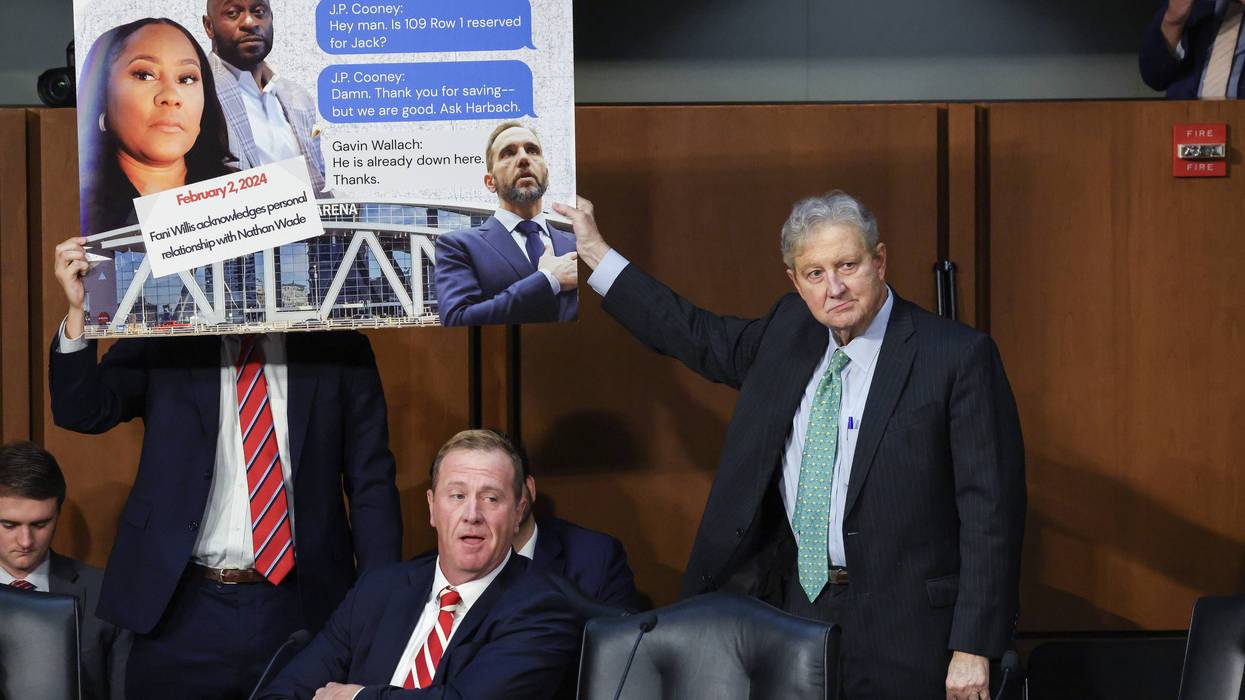
"I think people should have their facts straight before they accuse someone of being a dirtbag," said US Sen. Amy Klobuchar.
Sen. Eric Schmitt faced instant ridicule on Tuesday after his attempt to catch former special counsel Jack Smith in a perjury trap imploded.
During a Senate Judiciary Committee hearing, Schmitt asked Smith, who in 2023 indicted President Donald Trump in two separate criminal cases, whether he had attended a professional basketball game in Atlanta between the Atlanta Hawks and the Golden State Warriors on February 3, 2024.
Smith replied that he did not attend such a game on that date.
Shortly after, Schmitt asked Smith if he had ever met with Fulton County, Georgia District Attorney Fani Willis—who also indicted Trump and several alleged coconspirators for their attempts to overturn the results of the 2020 election—during his tenure as special counsel.
Smith again replied that he had not.
A phenomenal moment in the Senate.
Eric Schmitt, R-Mo., claims he has evidence Jack Smith went to a HAWKS game in Atlanta.
Smith denies it.
Schmitt declares he has busted Jack Smith for perjury.
Smith, vexed, says he went to HAWKEYES game in Maryland.
Watch the whole thing: pic.twitter.com/J07o5Uwfxi
— Sahil Kapur (@sahilkapur) September 29, 2026
"What would you say," Schmitt continued, "if I had a series of text messages from your team that said you were in Atlanta at a... game on February 3, 2024?"
Smith was then shown a poster displaying text messages between people on his team making references to Smith attending some kind of basketball game, though there was no mention anywhere in the displayed texts about the game taking place in Atlanta.
"I think you've already perjured yourself," Schmitt told the former special counsel.
After answering additional questions about his investigations into Trump, Smith asked if he could more thoroughly address the claim made by Schmitt that he attended a basketball game in Atlanta, where it was implied that he met up with Willis to share information about their respective cases against Trump.
"I recall going to a University of Maryland basketball game where [former Iowa college basketball star] Caitlin Clark was playing right around that time," he said. "You can check if that was the exact date, it was Maryland playing Iowa, I think, February of 2024."
Sen. Amy Klobuchar (D-Minn.) helpfully pointed out that the name of the Iowa college basketball team is the Hawkeyes, which is a similar name to the Atlanta Hawks.
Klobuchar then addressed Schmitt and chided him for the personal insults he'd lobbed at Smith during earlier questioning.
"I think people should have their facts straight," she said, "before they accuse someone of being a dirtbag, and not get the teams wrong."
Critics were quick to pile on Schmitt's apparent blunder.
"Schmitt should have to reimburse the public for the cost of printing out these posters," wrote Drop Site reporter Ryan Grim in a social media post. "This is so embarrassing."
ABC News' Jonathan Karl criticized Schmitt for flashing a poster featuring the texts in front of Smith and then quickly removing it from view before he could examine it.
"This was bizarre," wrote Karl. "I have never seen 'evidence' introduced so quickly and then hidden."
Chuck Todd, former host of NBC News' Meet the Press, called Schmitt's line of questioning "a disaster," and said the Missouri Republican suffered from "confirmation bias virus."
Columbia Journalism School professor Bill Grueskin predicted big trouble for any Senate staffer who may havd fed Schmitt faulty information about Smith attending an Atlanta Hawks game.
"I would give up a third of my 401K—make that half of it—to watch Senator Schmitt chew out the aide who came up with this scheme to entrap Jack Smith," Grueskin wrote.
Journalist Julian Sanchez reflected on the fact that someone as seemingly bumbling as Schmitt is one of just 100 people in the country who have been elected to serve in the US Senate.
"It’s somehow more depressing," wrote Sanchez, "that our constitutional order is being dismantled by people who demonstrably cannot find their own asses with both hands."

"This administration's repeated and flagrant violations of the law, including the Hatch Act, are an affront to taxpayers and our democracy."
The watchdog group Public Citizen this week filed a pair of complaints urging regulators and broadcasters to pull President Donald Trump's unlawful taxpayer-funded campaign advertisements off the air and demanding a federal investigation into them.
In recent weeks, amid mounting speculation that Republicans could lose their congressional majorities in the November midterm election, television stations have aired short videos that the White House claims are "public service announcements" but which a range of critics contend are obvious campaign ads—and illegal, as they clearly state they are "paid for by the US government."
Public Citizen's Tuesday complaint to the Federal Communications Commission (FCC), the Federal Trade Commission (FTC), and broadcasters highlights that "at least three campaign ads, paid for by taxpayer dollars, appear to violate the federal law against using taxpayer funds to finance propaganda (5 USC §3107) and related provisions of the appropriations laws as well as the Hatch Act (5 USC §7324)."
While "broadcast stations are strictly prohibited from censoring or rejecting ads sponsored by legally qualified political candidates," the complaint notes, they also "may be held liable for airing any advertisement that is in violation of federal law," which "explicitly prohibits using appropriated public funds for government propaganda, self-aggrandizement, or partisan political advertising."
The group urges the FCC and FTC "to direct broadcasters to stop broadcasting these apparently illegal campaign advertisements and call on individual broadcasters to cease airing the campaign advertisements," emphasizing the responsibility of both agencies and broadcasters "to keep the airwaves fair and honest and operate in the 'public interest, convenience, and necessity.'"
The first ad, initially posted to the White House YouTube account earlier this month, features Trump pledging to "defeat communism, socialism, and Marxism, in America," and the song "Love Me" by JMSN, who did not sign off on its use. The second one aired Friday and includes clips from the president's Fourth of July weekend speech at Mount Rushmore. A third, resembling one of Trump's 2024 campaign ads, was played during "Saturday Night Live," "Fox News Sunday," and several football games.
The administration's decision to reject widespread criticism and air yet another "piece of taxpayer-funded political propaganda during the mass-viewing moment of Sunday football is appalling and alarming," declared Public Citizen co-president Lisa Gilbert. "These illegal ads should immediately be pulled from the air, and the White House's many apparent violations of the law should be investigated."
After the first ad, Public Citizen submitted a complaint to the US Office of Special Counsel (OSC) and the Government Accountability Office (GAO) Forensic Audits and Investigative Service. The group sent another on Monday, arguing that the new "Final Battle" ad is a "brazen" violation of federal law that "doesn't even mention a pending government action. It simply tries to stir up hysteria among voters and depicts Trump as a great hero working to save the nation from grave threats."
"Like the other previous two campaign advertisements Trump and the White House are billing to taxpayers, these ads are designed to boost the character of Donald Trump, generally void of any legitimate government purpose, target the voting public shortly before the 2026 midterm elections, and constitute violations of the law against using government resources for propaganda purposes and the Hatch Act," the group continued.
"Public Citizen is once again writing your offices requesting an investigation into who produced these ads and at what cost to taxpayers, and to take appropriate remedial actions to enforce the federal law," the organization added.
Leading Democrats in the US Senate and House of Representatives said Monday that the White House used funding allocated for US Customs and Border Protection to pay for the ads. Government ethics experts, lawmakers, and other critics have ripped the ads, with some even pointing to them as further evidence that Trump should be impeached a historic third time.
"This administration's repeated and flagrant violations of the law, including the Hatch Act, are an affront to taxpayers and our democracy," said Craig Holman, a government ethics expert with Public Citizen. "The FCC and other oversight agencies are charged with ensuring this type of abuse of taxpayer funds does not happen. But that system only works if they take action."