SUBSCRIBE TO OUR FREE NEWSLETTER
Daily news & progressive opinion—funded by the people, not the corporations—delivered straight to your inbox.
5
#000000
#FFFFFF
To donate by check, phone, or other method, see our More Ways to Give page.
Daily news & progressive opinion—funded by the people, not the corporations—delivered straight to your inbox.
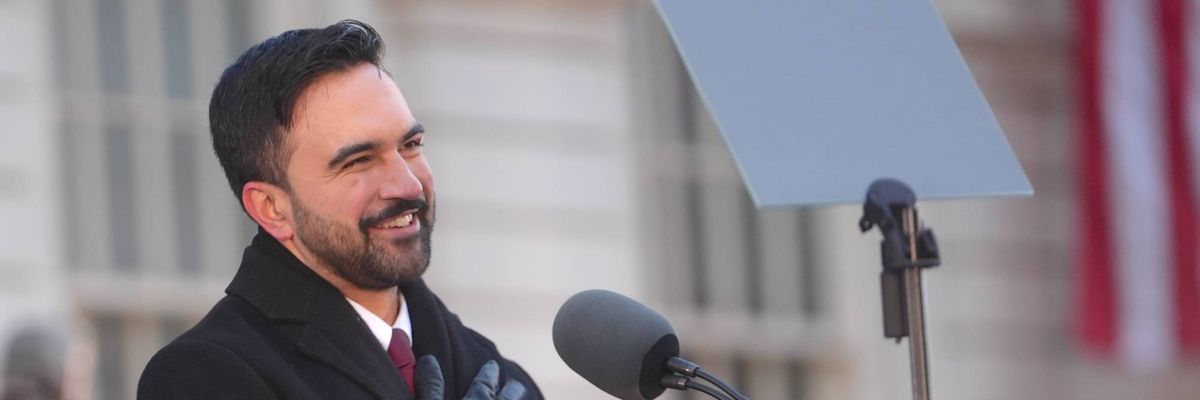
Democratic Mayor Zohran Mamdani becomes the first Muslim mayor of New York City, with the inauguration ceremony at City Hall, Manhattan, New York City, United States, on January 1, 2026.
Among them were orders that attacked critics of Israel, enabled ICE deportations, and promoted cryptocurrency.
In one of his first acts as New York City mayor, Zohran Mamdani has revoked several highly controversial executive orders signed by his predecessor, Eric Adams. Among them were a pair of orders that attacked critics of Israel and others that enabled ICE deportations and promoted cryptocurrencies.
They were part of a slate of nine orders Mamdani revoked on Thursday, all of which were issued by the former mayor after he was hit with corruption charges by the Department of Justice under former President Joe Biden on September 26, 2024—charges that the Trump administration later dropped as part of an apparent deal for Adams to cooperate with its mass deportation efforts.
Mamdani told the New York Daily News that the orders Adams signed after this date went "against the interests of working-class people and what they need from their mayor."
Two of Adams' revoked orders required the city to adopt a stance of unwavering support for Israel as it faced mounting criticism over its genocidal war in Gaza.
One order, signed in June 2025, officially recognized the International Holocaust Remembrance Alliance (IHRA) definition of antisemitism, which has been widely criticized, including by Jewish scholars, for conflating many criticisms of Israel with bigotry against Jewish people.
As the New York Times notes, the IHRA "includes 11 examples intended to illustrate antisemitism, seven of which include or relate in some way to criticism of Israel."
Hadas Binyamini, a spokesperson for the New York-based group Jews for Racial and Economic Justice, which supported Mamdani, said at the time that the order was "deeply dangerous" and would "inflict punitive measures against New Yorkers speaking out and organizing against Israeli state violence."
The other order, which Adams signed last month after Mamdani was elected, barred city agencies from boycotting or divesting from Israel.
Mamdani has expressed support for the use of economic leverage against what he, and many human rights groups, have said is an "apartheid" system in Israel that subjects Palestinians and other non-Jewish ethnic groups to discriminatory policies and human rights violations.
The revocation of these two orders expectedly drew the ire of conservative Jewish leaders, and even Israel's foreign ministry, who have decried Mamdani, New York's first Muslim mayor, as an antisemite.
However, Mamdani has repeatedly emphasized his commitment to protecting the more than 1 million Jewish New Yorkers.
In a separate executive order, he said the Mayor's Office to Combat Antisemitism, which Adams also established earlier this year, would remain open and that it "shall identify and develop efforts to eliminate antisemitism and anti-Jewish hate crime using the existing resources of the City of New York."
During a news conference Thursday, Mamdani said combating antisemitism "is an issue that we take very seriously, and as part of the commitment that we've made to Jewish New Yorkers, to not only protect them, but to celebrate and cherish them."
Donna Lieberman, the executive director of the New York Civil Liberties Union, described both orders as "last-ditch attempts to suppress viewpoints that the mayor and his benefactors disagreed with." She said it is "no surprise and it is good news that our new mayor has revoked them.”
Mamdani also said he would seek to modify an executive order directing the New York Police Department to restrict protests outside houses of worship, which Adams signed in November after pro-Palestine groups staged a demonstration outside a synagogue that hosted an event that recruited Jewish Americans to settle in the illegally occupied West Bank.
A spokesperson for Mamdani, then the mayor-elect, said he "believes every New Yorker should be free to enter a house of worship without intimidation, and that these sacred spaces should not be used to promote activities in violation of international law.” He has not yet specified what changes he seeks to make to Adams' order.
Mamdani also revoked an order that allowed Immigration and Customs Enforcement (ICE) agents to operate at New York's notorious Rikers Island prison, which he criticized as part of Adams' efforts to kowtow to Trump in exchange for a legal reprieve.
Murad Awawdeh, the president and CEO of the New York Immigration Coalition, said the order, which was blocked by the New York state Supreme Court in September, put "thousands of New Yorkers" at risk of "detention and deportation because they were sent to Rikers after being simply accused—not convicted—of a crime."
Mamdani also revoked an October order by Adams, who described himself as the "Bitcoin Mayor," that established a new cryptocurrency office to bring in industry leaders to advise city officials to help turn New York into "the crypto capital of the world.”
Adams had previously promoted the idea of using crypto to back New York's municipal bonds, which a top Mamdani ally, then-Comptroller Brad Lander, said was "not sufficiently stable to finance our city’s infrastructure, affordable housing, or schools."
Mamdani also halted Adams' plans to ban the city's horse carriage industry pending discussion with the carriage drivers' union, though the new mayor says he also wants to ban the practice.
Mamdani's office said the orders were meant to be a "fresh start for the incoming administration" and that the new mayor means to "reissue executive orders that the administration feels are central to delivering continued service, excellence, and value-driven leadership."
Dear Common Dreams reader, It’s been nearly 30 years since I co-founded Common Dreams with my late wife, Lina Newhouser. We had the radical notion that journalism should serve the public good, not corporate profits. It was clear to us from the outset what it would take to build such a project. No paid advertisements. No corporate sponsors. No millionaire publisher telling us what to think or do. Many people said we wouldn't last a year, but we proved those doubters wrong. Together with a tremendous team of journalists and dedicated staff, we built an independent media outlet free from the constraints of profits and corporate control. Our mission has always been simple: To inform. To inspire. To ignite change for the common good. Building Common Dreams was not easy. Our survival was never guaranteed. When you take on the most powerful forces—Wall Street greed, fossil fuel industry destruction, Big Tech lobbyists, and uber-rich oligarchs who have spent billions upon billions rigging the economy and democracy in their favor—the only bulwark you have is supporters who believe in your work. But here’s the urgent message from me today. It's never been this bad out there. And it's never been this hard to keep us going. At the very moment Common Dreams is most needed, the threats we face are intensifying. We need your support now more than ever. We don't accept corporate advertising and never will. We don't have a paywall because we don't think people should be blocked from critical news based on their ability to pay. Everything we do is funded by the donations of readers like you. When everyone does the little they can afford, we are strong. But if that support retreats or dries up, so do we. Will you donate now to make sure Common Dreams not only survives but thrives? —Craig Brown, Co-founder |
In one of his first acts as New York City mayor, Zohran Mamdani has revoked several highly controversial executive orders signed by his predecessor, Eric Adams. Among them were a pair of orders that attacked critics of Israel and others that enabled ICE deportations and promoted cryptocurrencies.
They were part of a slate of nine orders Mamdani revoked on Thursday, all of which were issued by the former mayor after he was hit with corruption charges by the Department of Justice under former President Joe Biden on September 26, 2024—charges that the Trump administration later dropped as part of an apparent deal for Adams to cooperate with its mass deportation efforts.
Mamdani told the New York Daily News that the orders Adams signed after this date went "against the interests of working-class people and what they need from their mayor."
Two of Adams' revoked orders required the city to adopt a stance of unwavering support for Israel as it faced mounting criticism over its genocidal war in Gaza.
One order, signed in June 2025, officially recognized the International Holocaust Remembrance Alliance (IHRA) definition of antisemitism, which has been widely criticized, including by Jewish scholars, for conflating many criticisms of Israel with bigotry against Jewish people.
As the New York Times notes, the IHRA "includes 11 examples intended to illustrate antisemitism, seven of which include or relate in some way to criticism of Israel."
Hadas Binyamini, a spokesperson for the New York-based group Jews for Racial and Economic Justice, which supported Mamdani, said at the time that the order was "deeply dangerous" and would "inflict punitive measures against New Yorkers speaking out and organizing against Israeli state violence."
The other order, which Adams signed last month after Mamdani was elected, barred city agencies from boycotting or divesting from Israel.
Mamdani has expressed support for the use of economic leverage against what he, and many human rights groups, have said is an "apartheid" system in Israel that subjects Palestinians and other non-Jewish ethnic groups to discriminatory policies and human rights violations.
The revocation of these two orders expectedly drew the ire of conservative Jewish leaders, and even Israel's foreign ministry, who have decried Mamdani, New York's first Muslim mayor, as an antisemite.
However, Mamdani has repeatedly emphasized his commitment to protecting the more than 1 million Jewish New Yorkers.
In a separate executive order, he said the Mayor's Office to Combat Antisemitism, which Adams also established earlier this year, would remain open and that it "shall identify and develop efforts to eliminate antisemitism and anti-Jewish hate crime using the existing resources of the City of New York."
During a news conference Thursday, Mamdani said combating antisemitism "is an issue that we take very seriously, and as part of the commitment that we've made to Jewish New Yorkers, to not only protect them, but to celebrate and cherish them."
Donna Lieberman, the executive director of the New York Civil Liberties Union, described both orders as "last-ditch attempts to suppress viewpoints that the mayor and his benefactors disagreed with." She said it is "no surprise and it is good news that our new mayor has revoked them.”
Mamdani also said he would seek to modify an executive order directing the New York Police Department to restrict protests outside houses of worship, which Adams signed in November after pro-Palestine groups staged a demonstration outside a synagogue that hosted an event that recruited Jewish Americans to settle in the illegally occupied West Bank.
A spokesperson for Mamdani, then the mayor-elect, said he "believes every New Yorker should be free to enter a house of worship without intimidation, and that these sacred spaces should not be used to promote activities in violation of international law.” He has not yet specified what changes he seeks to make to Adams' order.
Mamdani also revoked an order that allowed Immigration and Customs Enforcement (ICE) agents to operate at New York's notorious Rikers Island prison, which he criticized as part of Adams' efforts to kowtow to Trump in exchange for a legal reprieve.
Murad Awawdeh, the president and CEO of the New York Immigration Coalition, said the order, which was blocked by the New York state Supreme Court in September, put "thousands of New Yorkers" at risk of "detention and deportation because they were sent to Rikers after being simply accused—not convicted—of a crime."
Mamdani also revoked an October order by Adams, who described himself as the "Bitcoin Mayor," that established a new cryptocurrency office to bring in industry leaders to advise city officials to help turn New York into "the crypto capital of the world.”
Adams had previously promoted the idea of using crypto to back New York's municipal bonds, which a top Mamdani ally, then-Comptroller Brad Lander, said was "not sufficiently stable to finance our city’s infrastructure, affordable housing, or schools."
Mamdani also halted Adams' plans to ban the city's horse carriage industry pending discussion with the carriage drivers' union, though the new mayor says he also wants to ban the practice.
Mamdani's office said the orders were meant to be a "fresh start for the incoming administration" and that the new mayor means to "reissue executive orders that the administration feels are central to delivering continued service, excellence, and value-driven leadership."
In one of his first acts as New York City mayor, Zohran Mamdani has revoked several highly controversial executive orders signed by his predecessor, Eric Adams. Among them were a pair of orders that attacked critics of Israel and others that enabled ICE deportations and promoted cryptocurrencies.
They were part of a slate of nine orders Mamdani revoked on Thursday, all of which were issued by the former mayor after he was hit with corruption charges by the Department of Justice under former President Joe Biden on September 26, 2024—charges that the Trump administration later dropped as part of an apparent deal for Adams to cooperate with its mass deportation efforts.
Mamdani told the New York Daily News that the orders Adams signed after this date went "against the interests of working-class people and what they need from their mayor."
Two of Adams' revoked orders required the city to adopt a stance of unwavering support for Israel as it faced mounting criticism over its genocidal war in Gaza.
One order, signed in June 2025, officially recognized the International Holocaust Remembrance Alliance (IHRA) definition of antisemitism, which has been widely criticized, including by Jewish scholars, for conflating many criticisms of Israel with bigotry against Jewish people.
As the New York Times notes, the IHRA "includes 11 examples intended to illustrate antisemitism, seven of which include or relate in some way to criticism of Israel."
Hadas Binyamini, a spokesperson for the New York-based group Jews for Racial and Economic Justice, which supported Mamdani, said at the time that the order was "deeply dangerous" and would "inflict punitive measures against New Yorkers speaking out and organizing against Israeli state violence."
The other order, which Adams signed last month after Mamdani was elected, barred city agencies from boycotting or divesting from Israel.
Mamdani has expressed support for the use of economic leverage against what he, and many human rights groups, have said is an "apartheid" system in Israel that subjects Palestinians and other non-Jewish ethnic groups to discriminatory policies and human rights violations.
The revocation of these two orders expectedly drew the ire of conservative Jewish leaders, and even Israel's foreign ministry, who have decried Mamdani, New York's first Muslim mayor, as an antisemite.
However, Mamdani has repeatedly emphasized his commitment to protecting the more than 1 million Jewish New Yorkers.
In a separate executive order, he said the Mayor's Office to Combat Antisemitism, which Adams also established earlier this year, would remain open and that it "shall identify and develop efforts to eliminate antisemitism and anti-Jewish hate crime using the existing resources of the City of New York."
During a news conference Thursday, Mamdani said combating antisemitism "is an issue that we take very seriously, and as part of the commitment that we've made to Jewish New Yorkers, to not only protect them, but to celebrate and cherish them."
Donna Lieberman, the executive director of the New York Civil Liberties Union, described both orders as "last-ditch attempts to suppress viewpoints that the mayor and his benefactors disagreed with." She said it is "no surprise and it is good news that our new mayor has revoked them.”
Mamdani also said he would seek to modify an executive order directing the New York Police Department to restrict protests outside houses of worship, which Adams signed in November after pro-Palestine groups staged a demonstration outside a synagogue that hosted an event that recruited Jewish Americans to settle in the illegally occupied West Bank.
A spokesperson for Mamdani, then the mayor-elect, said he "believes every New Yorker should be free to enter a house of worship without intimidation, and that these sacred spaces should not be used to promote activities in violation of international law.” He has not yet specified what changes he seeks to make to Adams' order.
Mamdani also revoked an order that allowed Immigration and Customs Enforcement (ICE) agents to operate at New York's notorious Rikers Island prison, which he criticized as part of Adams' efforts to kowtow to Trump in exchange for a legal reprieve.
Murad Awawdeh, the president and CEO of the New York Immigration Coalition, said the order, which was blocked by the New York state Supreme Court in September, put "thousands of New Yorkers" at risk of "detention and deportation because they were sent to Rikers after being simply accused—not convicted—of a crime."
Mamdani also revoked an October order by Adams, who described himself as the "Bitcoin Mayor," that established a new cryptocurrency office to bring in industry leaders to advise city officials to help turn New York into "the crypto capital of the world.”
Adams had previously promoted the idea of using crypto to back New York's municipal bonds, which a top Mamdani ally, then-Comptroller Brad Lander, said was "not sufficiently stable to finance our city’s infrastructure, affordable housing, or schools."
Mamdani also halted Adams' plans to ban the city's horse carriage industry pending discussion with the carriage drivers' union, though the new mayor says he also wants to ban the practice.
Mamdani's office said the orders were meant to be a "fresh start for the incoming administration" and that the new mayor means to "reissue executive orders that the administration feels are central to delivering continued service, excellence, and value-driven leadership."