

SUBSCRIBE TO OUR FREE NEWSLETTER
Daily news & progressive opinion—funded by the people, not the corporations—delivered straight to your inbox.
5
#000000
#FFFFFF
To donate by check, phone, or other method, see our More Ways to Give page.
Daily news & progressive opinion—funded by the people, not the corporations—delivered straight to your inbox.

Josh Mogerman, NRDC, 312-651-7909;
Anne Woiwode, Sierra
Club, 517-484-2372
Concerned environmental groups have taken
action to protect Michigan's public health and clean energy future from
Consumers Energy's proposed coal-fired power plant near Bay City, MI.
Natural Resources Defense Council (NRDC) and Sierra Club challenged the
plant's recently issued air permit for not doing enough to limit harmful
pollution and for the state's failure to fully consider cleaner, better
alternatives for Michigan.
"Consumers' proposed $3.57 billion coal plant is dirty,
expensive, and unneeded," said Shannon Fisk, staff attorney for NRDC:
"And to add insult to injury, it would exacerbate the already
problematic issue of coal ash fouling Saginaw Bay. The state has the
opportunity to rebuild its economy with cutting edge energy technologies
which will create jobs and clean the air -- but that only happens if
state agencies and utility companies do the right thing. We need to
implement these cleaner, modern alternatives."
"What Michigan needs is clean, reliable electricity, and
Consumers Energy and the state are letting us down," said Anne Woiwode,
State Director of Sierra Club's Michigan Chapter. "We have alternatives
available to meet our state's electric needs, create many more
good-paying jobs, and protect the health of our communities. Michigan
families can't afford to carry the enormous burden of the state's
failure to hold Consumers Energy accountable."
Consumers Energy is seeking to build a $3.57 billion, 830 MW
coal-fired power plant next to the existing Karn-Weadock generating
station on the shores of Saginaw Bay. The Michigan Department of Natural
Resources & Environment (MDNRE) issued an air pollution permit for
the proposed plant that fails to address many important issues related
to public health, such as failing to fully protect surrounding
communities from dangerous fine particulate matter that can lodge deep
inside the lungs and cause respiratory problems. The permit also fails
to do enough to limit emissions of mercury, which has been linked to
developmental problems in children.
Last year, NRDC released A Green Energy Alternative for
Michigan, showing that aggressive energy efficiency programs combined
with the potential of 27,000 GWh of power from cleaner energy
technologies can fulfill the state's power needs. The state failed to
properly evaluate these cleaner and more technologically advanced
solutions in choosing to move the Consumers coal project forward.
Although Consumers agreed to retire some existing coal-fired power
generation by the end of 2017 as a condition to the permit, those aging
plants were likely to be retired anyway, making this agreement little
more than an empty shell.
Beyond the air pollution issues, concern has been raised
about the additional pollution created by the coal ash resulting from
the new plant's operations. According to the Bay City Times and state
records, the two ash landfills at Karn-Weadock have been leaking toxics
to Saginaw Bay for years, in excess of state standards meant to protect
aquatic organisms, drinking water and public health. It is estimated
that the new plant would create up to an additional 210,000 tons of
dangerous coal ash waste annually.
NRDC works to safeguard the earth--its people, its plants and animals, and the natural systems on which all life depends. We combine the power of more than three million members and online activists with the expertise of some 700 scientists, lawyers, and policy advocates across the globe to ensure the rights of all people to the air, the water, and the wild.
(212) 727-2700
"And they still want you to believe he's fighting for you," said one Democratic lawmaker.
US President Donald Trump on Tuesday confessed he is not concerned about the increasing level of economic hardship tens of millions of Americans are facing due to rising costs related to the war of choice he launched against Iran over two months ago.
Despite inflation hitting a three-year high and the average price of gasoline in the US now averaging over $4.50 per gallon, Trump was asked by a reporter outside the White House about how much “Americans’ financial situations” were on his mind as he tries to negotiate an end to the war he initiated with a preemptive attack by US and Israeli forces on February 28.
“Not even a little bit,” Trump said in response. “The only thing that matters when I’m talking about Iran—they can’t have a nuclear weapon. I don’t think about Americans’ financial situation. I don’t think about anybody. I think about one thing—we cannot let Iran have a nuclear weapon. That’s all.”
Trump on Iran War:
Reporter: What extent are Americans’ financial situation motivating you to make a deal?
Trump: Not even a little bit. I don't think about Americans’ financial situation pic.twitter.com/TJ94pGpqD8
— Acyn (@Acyn) May 12, 2026
"And they still want you to believe he's fighting for you," said Rep. Summer Lee (D-Pa.) in reaction to the president's comments.
While both the US and Israel do have nuclear weapons, the Iranians contend their nuclear program is not designed for military purposes. In 2017, during his first term, Trump ripped up the Joint Comprehensive Plan of Action (JCPOA), brokered by the Obama administration, which experts agree put in strong safeguards to prevent Iran from furthering any unchecked ambitions toward a nuclear weapon.
With peace talks largely stalled due to Trump's maximalist demands and refusal to admit he started the war without a plan on how to end it, frustration is growing in the United States, where a large majority of the population say they oppose the conflict, disapprove of the president's handling of it, and want it brought to a conclusion as soon as possible.
While Trump's comments were predictable to an extent, they still stirred outrage among those concerned about the economic headwinds Americans are facing due to the war in Iran.
"The sky is blue and water is wet," said the Groundwork Collaborative of the confession. "Nice of him to say it out loud though."
"Prices are up on gas, groceries, rent, utilities, healthcare, and just about everything else," said the AFL-CIO. "Shit’s too expensive and workers’ wages aren’t keeping up. America’s unions worry about this 24/7. Our president of the United States should, too."
"It’s no surprise," said Sen. Peter Welch (D-Vt.), with a look of disappointment. "That should be job one for him."
"Trump says he doesn't think about Americans' financial situation at all," asserted Rep. Brendan Boyle (D-Pa.). "We can tell."
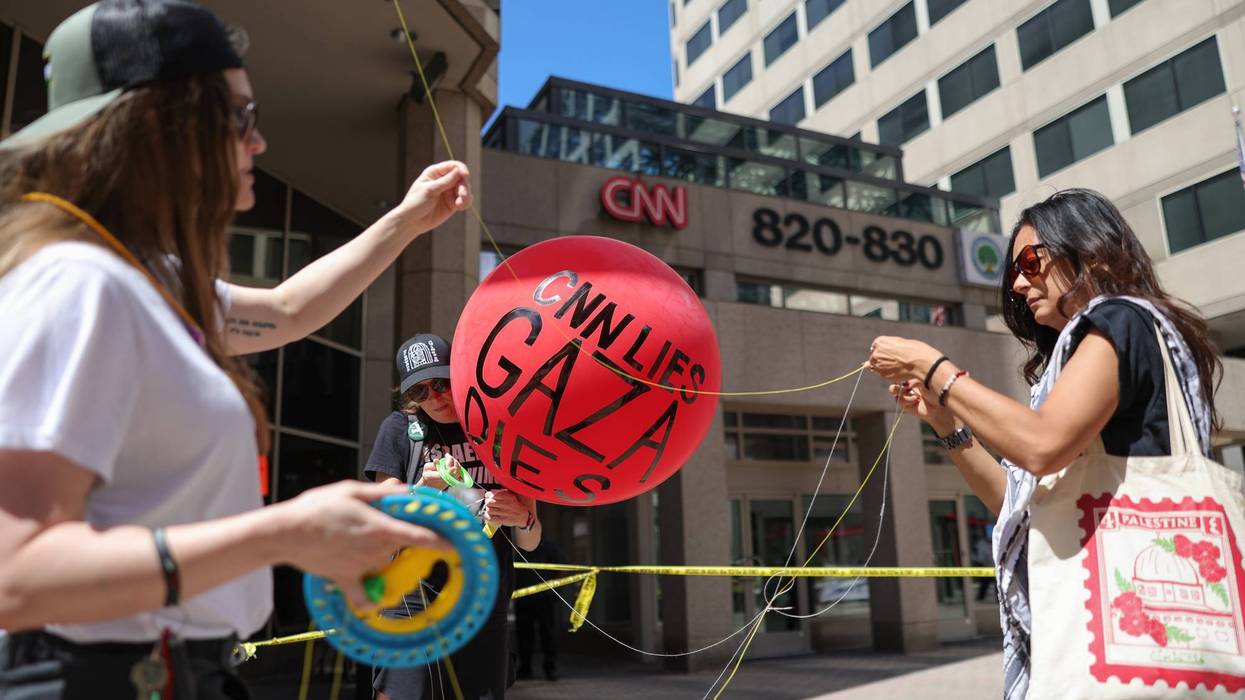
Adam Johnson said his analysis of thousands of articles and TV segments showed that "US media coverage of the war on Gaza was one-sided, racist, dehumanizing, and often veered into outright incitement."
A new book is using an exhaustive data analysis to demonstrate that mainstream US media outlets "systematically favor Israel" in their coverage of the Gaza genocide.
For his book, How to Sell a Genocide: The Media’s Complicity in the Destruction of Gaza, which became available last month from Pluto Books, journalist Adam Johnson said he "examined over 12,000 articles from The New York Times, The Washington Post, CNN.com, Politico, Axios, USA Today, and The Associated Press, along with 5,000 TV segments that aired on CNN and MSNBC," which has since rebranded as MS NOW
He said that by analyzing the content of these news outlets, he seeks to "demonstrate, beyond a reasonable doubt, that US media coverage of the war on Gaza was one-sided, racist, dehumanizing, and often veered into outright incitement," frequently using "double standards" that treat Israeli life and safety as inherently more important than those of Palestinians.
Johnson focused especially on center-left outlets that were considered influential within the administration of then-President Joe Biden, who continued to provide almost totally unrestricted aid to Israel despite fierce opposition by many Democratic voters in the lead-up to the 2024 election.
An article written by Johnson published Tuesday in The Intercept previews seven statistical findings proving this anti-Palestinian bias, particularly during the first year of the conflict when Israel's leaders were working hardest to establish a "narrative" in the American press that could justify the total destruction of Gaza and the mass displacement of its people.
He found that the media used the phrase "right to defend itself" almost exclusively to refer to Israel, which used it to justify numerous civilian massacres. Guests, anchors, and reporters on CNN and MSNBC referred to the right of Israelis to defend themselves 755 times during the first 90 days of the conflict, while the same right was invoked for Palestinians only eight times over that period.
Johnson found that print media outlets invoked Israel's right of self-defense 100 times more frequently than for Palestinians.
Although Palestinians lack a sovereign state due to Israel's illegal occupation, meaning their right to self-defense under Article 51 of the United Nations Charter is disputed, they are still afforded the right to self-determination and the right to resist occupation under international law.
Media outlets examined by Johnson also used the phrase "human shields" to describe instances where civilians were killed in close proximity to Palestinian militants. Though Johnson noted that this justification is "rejected by human rights groups," he found that CNN and MSNBC described Palestinians killed by Israel that way nearly 800 times, while print outlets did hundreds more.
But media outlets almost never described Israel's use of Palestinians as human shields, even though there have been multiple cases of Israeli troops documented forcing Palestinian detainees to carry out life-threatening tasks on the battlefield in order to protect themselves from injury.
The killing of Israeli civilians was frequently described in much more "emotive" terms than it was for Palestinian civilians, even as the latter were killed in far greater numbers.
Words like "massacre," "slaughter," "savage," and "barbaric" were used hundreds of times by print and TV outlets to refer to the killing of roughly 1,200 Israelis by Hamas militants on October 7, 2023. But Israeli forces' subsequent killings of approximately 24,000 Palestinians during the first 100 days of the conflict hardly ever elicited these words.
This is despite numerous documented attacks on schools, hospitals, aid facilities, and other civilian sites, as well as a near-total blockade of food, water, and medicine entering Gaza, which resulted in mass starvation and illness.
All the while, the horrific statistics coming out of Gaza were downplayed by the persistent use of the phrase "Hamas-run" by news networks to cast a shadow of doubt over the Gaza Health Ministry, which was the main official source for death toll figures in Gaza.
The US State Department, the World Health Organization, and Human Rights Watch had long relied on the ministry figures and investigations into their reporting on past conflicts found them to be accurate. But CNN nevertheless adopted it as an official policy to refer to the health ministry as "Hamas-run," a term which implied its figures were likely being inflated for propaganda purposes, even though independent estimates suggest it actually vastly undercounted the dead.
Facing pressure to cut off support for Israel, Biden and several officials in his administration used similar language to suggest the death tolls could be exaggerated, including National Security Council spokesperson John Kirby, who called the ministry “just a front for Hamas.“
In January 2026, after spending more than two years using the "Hamas-run" pejorative to cast doubt upon the idea that civilians were killed en masse in Gaza, the Israel Defense Forces (IDF) finally acknowledged the accuracy of the Gaza Health Ministry's death count, which by that point had surpassed 71,000.
Johnson further contextualized this anti-Palestinian bias by comparing coverage of the Gaza conflict to the coverage of Russia's invasion of Ukraine.
He found that CNN and MSNBC discussed child casualties more often in Ukraine, where about 262 children were killed during the first 100 days of the war, than in Gaza, where more than 10,000 children were killed during the same time frame. The killings of journalists was mentioned with roughly the same frequency, even though the number killed in Gaza was 77 compared with just eight in Ukraine.
The words "war crime" and "genocide" were also rarely invoked in the early days of the Gaza war, but were used liberally to describe Russia's attacks on Ukraine, despite the fact that vastly more civilians were killed and displaced in Gaza during the respective periods.
Johnson found that this biased coverage extended to the home front, especially as the war in Gaza fomented ethnic hatred. Incidents of both antisemitism and Islamophobia increased in the months after October 7. But headlines from the first six months of the conflict referred exclusively to antisemitism about 31 times as often as they referred exclusively to Islamophobia.
This emphasis on antisemitism only grew as protests on college campuses became more forceful throughout the conflict's first year. Though the protests often exclusively focused on Israel, they were commonly framed as attacks on Jewish students.
Coverage and discourse surrounding these protests and campus administrators' responses to them often drowned out coverage of the conflict itself.
One example of this that Johnson described as particularly "poignant" was The New York Times' wall-to-wall coverage of Harvard University President Claudine Gay, who resigned following pressure from Congress to crack down on pro-Palestine protests and a plagiarism scandal.
While hundreds of articles and TV spots were dedicated to covering the Gay story, Johnson found that the media almost totally ignored the IDF's killing of the 5-year-old Palestinian girl Hind Rajab, who was left to die in a car by soldiers after her entire family was killed around the same time. In fact, there were 95 headlines about Gay in print media between December 5, 2023, and January 5, 2024, while just six focused on the killings of thousands of Palestinian children.
In an interview promoting the book's release, Johnson said that the role of media institutions was not ancillary to the Gaza genocide, but rather they played a central role in prolonging it and maintaining support from the Biden administration.
"You need them as a kind of validator... to justify things like [the United Nations Relief and Works Agency for Palestine Refugees in the Near East] is Hamas, aid workers are Hamas, Al-Shifa [Hospital] is actually a secret command and control center, mass rapes were Hamas policy," he said. "These fundamental axioms of genocide were essential to the genocide, and they cannot exist without The New York Times."

"Seems like Third Way jumped into this race and leaned into identity politics in a way that just polarized the electorate further" in El-Sayed’s favor, said one commentator, "given he’s solely focused on healthcare."
In the Democratic US Senate primary race in Michigan, a big swing—particularly among voters aged 18-44—toward former public health official and Medicare for All advocate Dr. Abdul El-Sayed was found Tuesday in the latest poll by a research firm that six months ago had seen the progressive candidate in distant third place.
Twenty-eight percent of primary voters said they were supporting El-Sayed in a poll released by Mitchell Research and Communications, while 18% said they were backing US Rep. Haley Stevens (D-Mich.), who has the support of Democratic leaders and the powerful pro-Israel lobby group American Israel Public Affairs Committee (AIPAC).
Seventeen percent of voters said they were supporting state Sen. Mallory McMorrow (D-8).
The poll showed an inversion of the result found by Mitchell in November, when El-Sayed was trailing his two opponents by eight points and Stevens and McMorrow were separated by just three points.
Mitchell polled 405 likely primary voters between May 1-7, around the time that El-Sayed appeared with US Sen. Bernie Sanders (I-Vt.) at a rally as part of the senator's Fighting Oligarchy Tour. He drew loud applause for condemning AIPAC for its persistent conflation of antisemitism with criticism of Israel, and spoke about his strong support for expanding the Medicare system to everyone in the US.
The poll also came after a weekslong controversy that was promoted by centrist think tank Third Way, with the support of both Stevens and McMorrow, targeting El-Sayed for campaigning with Hasan Piker, a Twitch streamer and commentator who's been outspoken in his condemnation of Israel.
With the controversy largely in the rearview mirror despite some lawmakers' continued fixation on Piker, the new poll suggests the criticism of El-Sayed didn't land in Michigan—particularly among voters in younger demographics arguably more likely to have heard of Piker, who gained notoriety by sharing political commentary while playing video games online.
Among voters under the age of 45, El-Sayed had 80% of the support in the poll released Tuesday.
The other two candidates in the race barely registered among voters in the demographic, with 4% supporting Stevens and 3% backing McMorrow. The primary race has been called a "millennial showdown" by local media, with the three candidates ranging in age from 39-42.
The poll comes after numerous surveys have found that Israel—the issue that Third Way attempted to center in the election—has plummeting support among voters, following its yearslong assault on Gaza. Last October, nearly half of Democratic voters in swing districts, including in Michigan, said in a poll that they would vote against a candidate funded by AIPAC.
Meanwhile, Medicare for All—the proposal that's a key focus of El-Sayed's platform—was supported by 78% of Democratic voters, along with 71% of Independents and 49% of Republicans in a survey by Data for Progress late last year.
Rotimi Adeoye, a contributing opinion writer at The New York Times, said the poll suggested that Third Way had "jumped into this race and leaned into identity politics in a way that just polarized the electorate further in El-Sayed’s favor, given he’s solely focused on healthcare."
"If you are spending any time as a candidate not talking about housing, healthcare, the economy, groceries, and dedicating a second or a millisecond talking about Hasan Piker or the identity politics topic of the day on Twitter, you're losing," said Adeoye.
Jon Favreau, co-host of Pod Save America and a former speechwriter under the Obama administration, summed up the poll results succinctly.
The survey, he said, showed a "Third Way bump" for El-Sayed.