SUBSCRIBE TO OUR FREE NEWSLETTER
Daily news & progressive opinion—funded by the people, not the corporations—delivered straight to your inbox.
5
#000000
#FFFFFF
To donate by check, phone, or other method, see our More Ways to Give page.
Daily news & progressive opinion—funded by the people, not the corporations—delivered straight to your inbox.
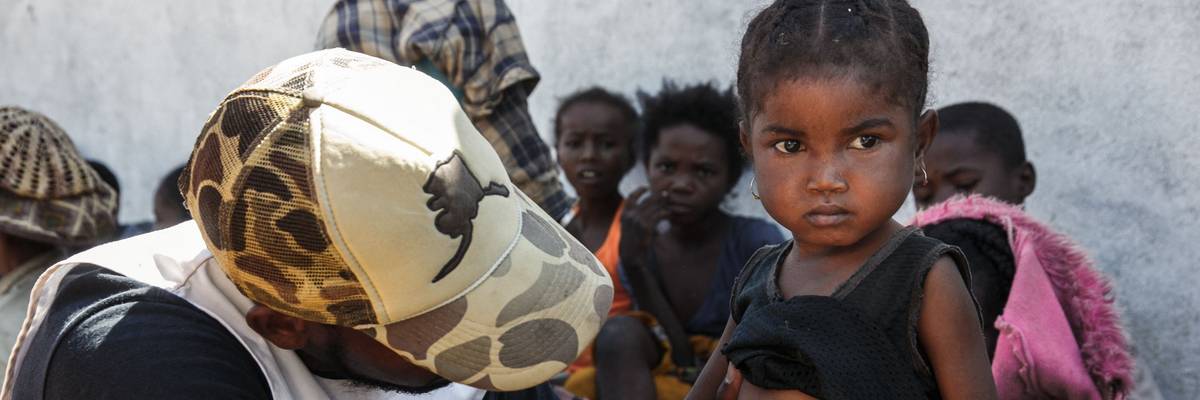
A nurse from Doctors Without Borders (MSF) examines a little girl in the village of Befeno, Madagascar, on September 2, 2021.
"It will be patients who will pay the ultimate price," said one global health advocate.
The US Congress has pushed back against President Donald Trump's efforts to slash foreign aid, which has long been supported by Democrats and Republicans alike—but a new report on more than a dozen Memoranda of Understanding that the White House has reached with countries that have long relied heavily on healthcare assistance shows that the administration is underspending "congressionally appropriated global health funds by potentially billions of dollars," as it pushes its "America First Global Health Strategy."
That's according to Public Citizen, which on Sunday joined Partners In Health in releasing an analysis of documents that the two nonprofits obtained after suing the Trump administration and filing a Freedom of Information Act (FOIA) request.
The groups reviewed the MOUs that have been signed for 18 out of 34 countries whose agreements have been negotiated by the US State Department, including Rwanda, Liberia, Burundi, and Madagascar.
Although Congress has voted to keep foreign aid levels relatively constant—rejecting a budget that called to slash global health spending by $6.2 billion before approving one that proposed a $615 million decrease in spending—the report finds that the MOUs cut foreign health aid by about $2 billion by 2030, compared to 2024 levels.
“These documents suggest that the Trump administration is on course to underspend on global health by billions of dollars compared to what Congress has ordered, risking lives and allowing diseases to spread,” said Peter Maybarduk, director of the Access to Medicines program at Public Citizen. “The administration must answer how and when it intends to invest the missing billions for health.”
Overall, funding for programs that aim to prevent the spread of diseases including HIV/AIDS, tuberculosis, and Ebola—which is currently spreading in the Democratic Republic of Congo's fastest-spreading outbreak on record—is set to be reduced by 59% from historical spending, according to the MOUs viewed by Public Citizen and Partners in Health.
Some countries would see their health assistance from the US plummet even more, with Rwanda's MOU stipulating a 97% reduction in US health aid. Liberia is set to receive 84% less funding for health initiatives by 2030, and Burundi is set to lose 78% of its aid.
"Partners In Health provides direct care in Rwanda, Liberia, and Sierra Leone, along with seven other countries, and expects under-spending of these funds to impact patients’ access to care," said Public Citizen.
The MOUs also demand that the countries meet strict co-financing requirements to make up for their lost funding, and governments in poor countries across Africa could face penalties "which could worsen funding cuts" if they miss the co-financing targets.
"The planned decreases in US funding are larger for several countries than the funding increases from partner governments," reads the report. "For more than half of countries (11 out of 18), co-financing commitments fall short of the US government’s cuts over five years compared to baseline US government funding."
Countries are likely to struggle to meet the co-financing requirements in the MOUs, warned Public Citizen and Partners In Health.
Malawi would be required to secure new healthcare funding equal to 56% of the country's total health expenditure, the report found. With Uganda also facing co-financing requirements from international health organizations including the Global Fund and Gavi, the East African country would be required to mobilize funds equal to 44% of its total health budget.
"These funding cuts will cause death and disease that is preventable,” said Vincent Lin, associate director of health policy and advocacy for Partners In Health. “The State Department is setting up other countries for failure with the co-financing requirements outlined in these agreements, but it will be patients who will pay the ultimate price.”
Maybarduk told The Washington Post that Sierra Leone will be required under its MOU to fill a 71% health funding gap by 2030.
“It’s going to be very difficult, and if a country like that falls behind, and then is punished for that, then of course the health problems compound," said Maybarduk.
The State Department denied to the Post that the Trump administration will not spend all the foreign health assistance funds appropriated by Congress; it suggested that more of the money than usual may go to religious organizations as well as an "innovation fund" to support US technology that aims to fight disease.
Last week, Public Citizen sued the Trump administration under FOIA to obtain the rest of the MOUs that remain hidden from the public.
The White House, said the group, "has kept the public in the dark about the full details of its plans for the future of US support for global health."
"The State Department has negotiated these bilateral agreements," the group said, "on rushed timelines with limited participation from civil society and affected communities."
Dear Common Dreams reader, It’s been nearly 30 years since I co-founded Common Dreams with my late wife, Lina Newhouser. We had the radical notion that journalism should serve the public good, not corporate profits. It was clear to us from the outset what it would take to build such a project. No paid advertisements. No corporate sponsors. No millionaire publisher telling us what to think or do. Many people said we wouldn't last a year, but we proved those doubters wrong. Together with a tremendous team of journalists and dedicated staff, we built an independent media outlet free from the constraints of profits and corporate control. Our mission has always been simple: To inform. To inspire. To ignite change for the common good. Building Common Dreams was not easy. Our survival was never guaranteed. When you take on the most powerful forces—Wall Street greed, fossil fuel industry destruction, Big Tech lobbyists, and uber-rich oligarchs who have spent billions upon billions rigging the economy and democracy in their favor—the only bulwark you have is supporters who believe in your work. But here’s the urgent message from me today. It's never been this bad out there. And it's never been this hard to keep us going. At the very moment Common Dreams is most needed, the threats we face are intensifying. We need your support now more than ever. We don't accept corporate advertising and never will. We don't have a paywall because we don't think people should be blocked from critical news based on their ability to pay. Everything we do is funded by the donations of readers like you. When everyone does the little they can afford, we are strong. But if that support retreats or dries up, so do we. Will you donate now to make sure Common Dreams not only survives but thrives? —Craig Brown, Co-founder |
The US Congress has pushed back against President Donald Trump's efforts to slash foreign aid, which has long been supported by Democrats and Republicans alike—but a new report on more than a dozen Memoranda of Understanding that the White House has reached with countries that have long relied heavily on healthcare assistance shows that the administration is underspending "congressionally appropriated global health funds by potentially billions of dollars," as it pushes its "America First Global Health Strategy."
That's according to Public Citizen, which on Sunday joined Partners In Health in releasing an analysis of documents that the two nonprofits obtained after suing the Trump administration and filing a Freedom of Information Act (FOIA) request.
The groups reviewed the MOUs that have been signed for 18 out of 34 countries whose agreements have been negotiated by the US State Department, including Rwanda, Liberia, Burundi, and Madagascar.
Although Congress has voted to keep foreign aid levels relatively constant—rejecting a budget that called to slash global health spending by $6.2 billion before approving one that proposed a $615 million decrease in spending—the report finds that the MOUs cut foreign health aid by about $2 billion by 2030, compared to 2024 levels.
“These documents suggest that the Trump administration is on course to underspend on global health by billions of dollars compared to what Congress has ordered, risking lives and allowing diseases to spread,” said Peter Maybarduk, director of the Access to Medicines program at Public Citizen. “The administration must answer how and when it intends to invest the missing billions for health.”
Overall, funding for programs that aim to prevent the spread of diseases including HIV/AIDS, tuberculosis, and Ebola—which is currently spreading in the Democratic Republic of Congo's fastest-spreading outbreak on record—is set to be reduced by 59% from historical spending, according to the MOUs viewed by Public Citizen and Partners in Health.
Some countries would see their health assistance from the US plummet even more, with Rwanda's MOU stipulating a 97% reduction in US health aid. Liberia is set to receive 84% less funding for health initiatives by 2030, and Burundi is set to lose 78% of its aid.
"Partners In Health provides direct care in Rwanda, Liberia, and Sierra Leone, along with seven other countries, and expects under-spending of these funds to impact patients’ access to care," said Public Citizen.
The MOUs also demand that the countries meet strict co-financing requirements to make up for their lost funding, and governments in poor countries across Africa could face penalties "which could worsen funding cuts" if they miss the co-financing targets.
"The planned decreases in US funding are larger for several countries than the funding increases from partner governments," reads the report. "For more than half of countries (11 out of 18), co-financing commitments fall short of the US government’s cuts over five years compared to baseline US government funding."
Countries are likely to struggle to meet the co-financing requirements in the MOUs, warned Public Citizen and Partners In Health.
Malawi would be required to secure new healthcare funding equal to 56% of the country's total health expenditure, the report found. With Uganda also facing co-financing requirements from international health organizations including the Global Fund and Gavi, the East African country would be required to mobilize funds equal to 44% of its total health budget.
"These funding cuts will cause death and disease that is preventable,” said Vincent Lin, associate director of health policy and advocacy for Partners In Health. “The State Department is setting up other countries for failure with the co-financing requirements outlined in these agreements, but it will be patients who will pay the ultimate price.”
Maybarduk told The Washington Post that Sierra Leone will be required under its MOU to fill a 71% health funding gap by 2030.
“It’s going to be very difficult, and if a country like that falls behind, and then is punished for that, then of course the health problems compound," said Maybarduk.
The State Department denied to the Post that the Trump administration will not spend all the foreign health assistance funds appropriated by Congress; it suggested that more of the money than usual may go to religious organizations as well as an "innovation fund" to support US technology that aims to fight disease.
Last week, Public Citizen sued the Trump administration under FOIA to obtain the rest of the MOUs that remain hidden from the public.
The White House, said the group, "has kept the public in the dark about the full details of its plans for the future of US support for global health."
"The State Department has negotiated these bilateral agreements," the group said, "on rushed timelines with limited participation from civil society and affected communities."
The US Congress has pushed back against President Donald Trump's efforts to slash foreign aid, which has long been supported by Democrats and Republicans alike—but a new report on more than a dozen Memoranda of Understanding that the White House has reached with countries that have long relied heavily on healthcare assistance shows that the administration is underspending "congressionally appropriated global health funds by potentially billions of dollars," as it pushes its "America First Global Health Strategy."
That's according to Public Citizen, which on Sunday joined Partners In Health in releasing an analysis of documents that the two nonprofits obtained after suing the Trump administration and filing a Freedom of Information Act (FOIA) request.
The groups reviewed the MOUs that have been signed for 18 out of 34 countries whose agreements have been negotiated by the US State Department, including Rwanda, Liberia, Burundi, and Madagascar.
Although Congress has voted to keep foreign aid levels relatively constant—rejecting a budget that called to slash global health spending by $6.2 billion before approving one that proposed a $615 million decrease in spending—the report finds that the MOUs cut foreign health aid by about $2 billion by 2030, compared to 2024 levels.
“These documents suggest that the Trump administration is on course to underspend on global health by billions of dollars compared to what Congress has ordered, risking lives and allowing diseases to spread,” said Peter Maybarduk, director of the Access to Medicines program at Public Citizen. “The administration must answer how and when it intends to invest the missing billions for health.”
Overall, funding for programs that aim to prevent the spread of diseases including HIV/AIDS, tuberculosis, and Ebola—which is currently spreading in the Democratic Republic of Congo's fastest-spreading outbreak on record—is set to be reduced by 59% from historical spending, according to the MOUs viewed by Public Citizen and Partners in Health.
Some countries would see their health assistance from the US plummet even more, with Rwanda's MOU stipulating a 97% reduction in US health aid. Liberia is set to receive 84% less funding for health initiatives by 2030, and Burundi is set to lose 78% of its aid.
"Partners In Health provides direct care in Rwanda, Liberia, and Sierra Leone, along with seven other countries, and expects under-spending of these funds to impact patients’ access to care," said Public Citizen.
The MOUs also demand that the countries meet strict co-financing requirements to make up for their lost funding, and governments in poor countries across Africa could face penalties "which could worsen funding cuts" if they miss the co-financing targets.
"The planned decreases in US funding are larger for several countries than the funding increases from partner governments," reads the report. "For more than half of countries (11 out of 18), co-financing commitments fall short of the US government’s cuts over five years compared to baseline US government funding."
Countries are likely to struggle to meet the co-financing requirements in the MOUs, warned Public Citizen and Partners In Health.
Malawi would be required to secure new healthcare funding equal to 56% of the country's total health expenditure, the report found. With Uganda also facing co-financing requirements from international health organizations including the Global Fund and Gavi, the East African country would be required to mobilize funds equal to 44% of its total health budget.
"These funding cuts will cause death and disease that is preventable,” said Vincent Lin, associate director of health policy and advocacy for Partners In Health. “The State Department is setting up other countries for failure with the co-financing requirements outlined in these agreements, but it will be patients who will pay the ultimate price.”
Maybarduk told The Washington Post that Sierra Leone will be required under its MOU to fill a 71% health funding gap by 2030.
“It’s going to be very difficult, and if a country like that falls behind, and then is punished for that, then of course the health problems compound," said Maybarduk.
The State Department denied to the Post that the Trump administration will not spend all the foreign health assistance funds appropriated by Congress; it suggested that more of the money than usual may go to religious organizations as well as an "innovation fund" to support US technology that aims to fight disease.
Last week, Public Citizen sued the Trump administration under FOIA to obtain the rest of the MOUs that remain hidden from the public.
The White House, said the group, "has kept the public in the dark about the full details of its plans for the future of US support for global health."
"The State Department has negotiated these bilateral agreements," the group said, "on rushed timelines with limited participation from civil society and affected communities."