
Traders work on the floor of the New York Stock Exchange on March 7, 2025 in New York City.
Jobs Report Seen as 'Calm Before the Storm' as Trump Chaos Rattles US Economy
"Donald Trump is on track to be the first president to deliberately engineer a severe depression," warned one observer.
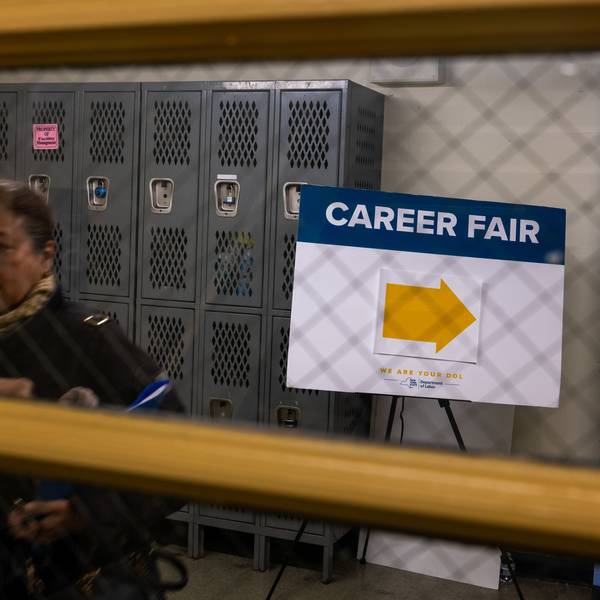
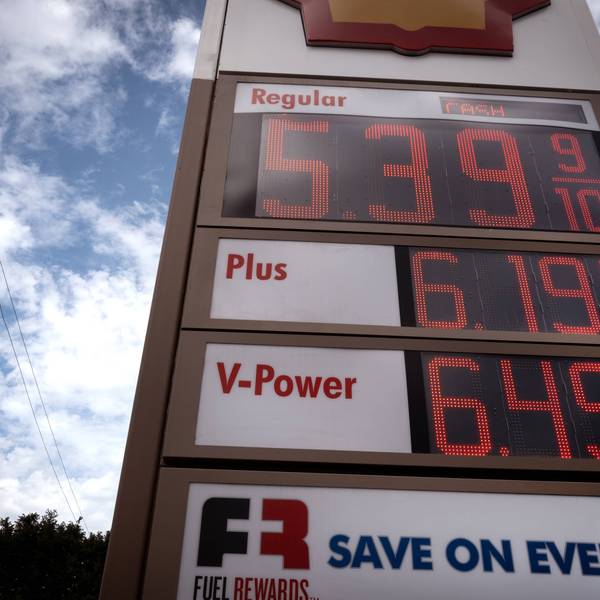
Labor Department figures released Friday show that U.S. job growth was weaker than expected last month as President Donald Trump worked to eviscerate the federal government—the nation's largest employer—and whiplashed financial markets with his erratic tariff announcements and reversals.
The U.S. added 151,000 jobs in February, fewer than the projected 170,000. But economists stressed that the numbers don't yet show the full extent of the damage Trump has done in the opening weeks of his second White House term.
"Unfortunately, this is the calm before the storm as trouble is clearly brewing and the pain will be felt across the economy in coming months," said Elise Gould, senior economist at the Economic Policy Institute.
While Gould stressed that "it's too soon" for jobs data to reflect the impact of the Trump administration's effort, in concert with billionaire Elon Musk, to gut the federal workforce—which has impacted some 100,000 government employees thus far—she said emerging numbers are still cause for concern.
"Nominal wage growth continues to hold steady, rising 4% over the year," Gould noted. "After falling steadily since its peak in June 2022, inflation has hovered around 3% for 20 months. As a result, average real wages have been rising. These gains could all be lost with the proposed tariffs and deportations."
The jobs data comes a day after Trump declared on his social media platform that "the Golden Age of America has just begun"—a message that appeared incongruous with economic trends and the perceptions of small business owners, investors, and working-class Americans facing a potentially massive tax hike and looming cuts to food assistance, Medicaid, and other benefits.
"Just one month on the job, warning signs are flashing across the Trump economy," Alex Jacquez, chief of policy and advocacy at the Groundwork Collaborative, said in a statement Friday. "Inflation is rising, consumer confidence is plummeting, business investment is pulling back, and now, the labor market is stalling."
"Instead of focusing on tax breaks for billionaires and giant corporations," Jacquez added, "Trump should find a way to get the economy back on track for working families before it spirals into recession."
"Trump has the power to issue commands in the domains that he controls, but he can't command the stock market to levitate, or prices to moderate, or consumers to feel confident, or people who have just been laid off to go out and shop."
Treasury Secretary Scott Bessent, a billionaire, conceded Friday that the U.S. economy is showing signs of wavering but insisted it's a "natural adjustment as we move away from public spending to private spending."
"We've become addicted to this government spending, and there's going to be a detox period," Bessent told CNBC.
But economists have warned that Trump's instability and constantly changing whims could result in a prolonged reduction in private investment. The president's tariff policy has been so chaotic that it has some wondering whether he's trying to wreck the economy on purpose.
"If we don't get clarity by the back half of this year, economic uncertainty can be like a deer in the headlights," Nancy Lazar, chief global economist at the investment bank Piper Sandler, told The New York Times on Friday. "Things just stop. Business confidence is muted, employment is muted, and capital spending is put on hold."
Richard Trent, executive director of the Main Street Alliance, said in a statement Friday that "small business owners don't need more chaos."
"In the past month alone, market turmoil has frozen hiring, disrupted key programs, and rattled confidence," said Trent. "There's still time to correct this, but that requires President Trump and Elon Musk to work with Congress, follow the law, and restore stability. Main Street needs steady leadership, not chaos and cutbacks."
In a column earlier this week,The American Prospect's Robert Kuttner wrote that less than two months into his second term, "Donald Trump is on track to be the first president to deliberately engineer a severe depression."
"Trump has the power to issue commands in the domains that he controls, but he can't command the stock market to levitate, or prices to moderate, or consumers to feel confident, or people who have just been laid off to go out and shop," Kuttner wrote. "In a couple of weeks, the budget talks will reach the point of an increasingly likely government shutdown. Closing the government will be even more of a hit to total demand and consumer and investor confidence."
"In agreeing to reopen the government, Democrats are in a good position to demand that Trump reopen the whole government, starting with the parts that Musk has illegally shut down," he added. "In the meantime, this engineered crisis is entirely Trump's."
We are at a crossroads
This country and this world are at a monumental crossroads. In a few short weeks, US voters will have an opportunity to beat back the forces of fascism and confront the billionaires who are rigging the economy, our media system, and our democracy, making it increasingly impossible for ordinary people to get by. We’re not just talking about the election. We’re talking about what must be done once these fascist elements are vanquished from power. We need a bolder set of solutions than what either major party has so far been willing to offer and a working-class movement ready to fight like hell for it. Trump didn't emerge from nowhere. The conditions that fueled MAGA authoritarianism were created by decades of radical neoliberal economic policies and a corrupt political system dominated by corporate interests. They slashed taxes on the super-rich, promising that the benefits would trickle down. They said giveaways to the corporate titans would make life more affordable for the rest of us. It was all bullshit. And when a bitter, betrayed populace searches for someone to blame, right-wing demagogues have little trouble finding scapegoats. People know when they're being lied to, but you won't hear any of this from the corporate media. Only independent journalism—powered and funded by people who believe in building a better world—can deliver truly trustworthy daily news. Our Fall Campaign is underway, and we need your help. To power our newsroom through the rest of the year, we need to raise $125,000 by midnight on October 31. So if you share our vision, please contribute whatever you can to sustain our work. |
Labor Department figures released Friday show that U.S. job growth was weaker than expected last month as President Donald Trump worked to eviscerate the federal government—the nation's largest employer—and whiplashed financial markets with his erratic tariff announcements and reversals.
The U.S. added 151,000 jobs in February, fewer than the projected 170,000. But economists stressed that the numbers don't yet show the full extent of the damage Trump has done in the opening weeks of his second White House term.
"Unfortunately, this is the calm before the storm as trouble is clearly brewing and the pain will be felt across the economy in coming months," said Elise Gould, senior economist at the Economic Policy Institute.
While Gould stressed that "it's too soon" for jobs data to reflect the impact of the Trump administration's effort, in concert with billionaire Elon Musk, to gut the federal workforce—which has impacted some 100,000 government employees thus far—she said emerging numbers are still cause for concern.
"Nominal wage growth continues to hold steady, rising 4% over the year," Gould noted. "After falling steadily since its peak in June 2022, inflation has hovered around 3% for 20 months. As a result, average real wages have been rising. These gains could all be lost with the proposed tariffs and deportations."
The jobs data comes a day after Trump declared on his social media platform that "the Golden Age of America has just begun"—a message that appeared incongruous with economic trends and the perceptions of small business owners, investors, and working-class Americans facing a potentially massive tax hike and looming cuts to food assistance, Medicaid, and other benefits.
"Just one month on the job, warning signs are flashing across the Trump economy," Alex Jacquez, chief of policy and advocacy at the Groundwork Collaborative, said in a statement Friday. "Inflation is rising, consumer confidence is plummeting, business investment is pulling back, and now, the labor market is stalling."
"Instead of focusing on tax breaks for billionaires and giant corporations," Jacquez added, "Trump should find a way to get the economy back on track for working families before it spirals into recession."
"Trump has the power to issue commands in the domains that he controls, but he can't command the stock market to levitate, or prices to moderate, or consumers to feel confident, or people who have just been laid off to go out and shop."
Treasury Secretary Scott Bessent, a billionaire, conceded Friday that the U.S. economy is showing signs of wavering but insisted it's a "natural adjustment as we move away from public spending to private spending."
"We've become addicted to this government spending, and there's going to be a detox period," Bessent told CNBC.
But economists have warned that Trump's instability and constantly changing whims could result in a prolonged reduction in private investment. The president's tariff policy has been so chaotic that it has some wondering whether he's trying to wreck the economy on purpose.
"If we don't get clarity by the back half of this year, economic uncertainty can be like a deer in the headlights," Nancy Lazar, chief global economist at the investment bank Piper Sandler, told The New York Times on Friday. "Things just stop. Business confidence is muted, employment is muted, and capital spending is put on hold."
Richard Trent, executive director of the Main Street Alliance, said in a statement Friday that "small business owners don't need more chaos."
"In the past month alone, market turmoil has frozen hiring, disrupted key programs, and rattled confidence," said Trent. "There's still time to correct this, but that requires President Trump and Elon Musk to work with Congress, follow the law, and restore stability. Main Street needs steady leadership, not chaos and cutbacks."
In a column earlier this week,The American Prospect's Robert Kuttner wrote that less than two months into his second term, "Donald Trump is on track to be the first president to deliberately engineer a severe depression."
"Trump has the power to issue commands in the domains that he controls, but he can't command the stock market to levitate, or prices to moderate, or consumers to feel confident, or people who have just been laid off to go out and shop," Kuttner wrote. "In a couple of weeks, the budget talks will reach the point of an increasingly likely government shutdown. Closing the government will be even more of a hit to total demand and consumer and investor confidence."
"In agreeing to reopen the government, Democrats are in a good position to demand that Trump reopen the whole government, starting with the parts that Musk has illegally shut down," he added. "In the meantime, this engineered crisis is entirely Trump's."
- Critics Ask If Trump and Musk Are 'Intentionally Crashing the Economy' ›
- US Voters Sour on Trump Economic Agenda 'Of, By, and For Billionaires' | Common Dreams ›
- More Dismal Labor Data for Trump Economy Ahead of Critical Jobs Report | Common Dreams ›
- Fed Governor Warns 'Job Growth Has Probably Been Negative' as US Labor Market Stalls | Common Dreams ›
Labor Department figures released Friday show that U.S. job growth was weaker than expected last month as President Donald Trump worked to eviscerate the federal government—the nation's largest employer—and whiplashed financial markets with his erratic tariff announcements and reversals.
The U.S. added 151,000 jobs in February, fewer than the projected 170,000. But economists stressed that the numbers don't yet show the full extent of the damage Trump has done in the opening weeks of his second White House term.
"Unfortunately, this is the calm before the storm as trouble is clearly brewing and the pain will be felt across the economy in coming months," said Elise Gould, senior economist at the Economic Policy Institute.
While Gould stressed that "it's too soon" for jobs data to reflect the impact of the Trump administration's effort, in concert with billionaire Elon Musk, to gut the federal workforce—which has impacted some 100,000 government employees thus far—she said emerging numbers are still cause for concern.
"Nominal wage growth continues to hold steady, rising 4% over the year," Gould noted. "After falling steadily since its peak in June 2022, inflation has hovered around 3% for 20 months. As a result, average real wages have been rising. These gains could all be lost with the proposed tariffs and deportations."
The jobs data comes a day after Trump declared on his social media platform that "the Golden Age of America has just begun"—a message that appeared incongruous with economic trends and the perceptions of small business owners, investors, and working-class Americans facing a potentially massive tax hike and looming cuts to food assistance, Medicaid, and other benefits.
"Just one month on the job, warning signs are flashing across the Trump economy," Alex Jacquez, chief of policy and advocacy at the Groundwork Collaborative, said in a statement Friday. "Inflation is rising, consumer confidence is plummeting, business investment is pulling back, and now, the labor market is stalling."
"Instead of focusing on tax breaks for billionaires and giant corporations," Jacquez added, "Trump should find a way to get the economy back on track for working families before it spirals into recession."
"Trump has the power to issue commands in the domains that he controls, but he can't command the stock market to levitate, or prices to moderate, or consumers to feel confident, or people who have just been laid off to go out and shop."
Treasury Secretary Scott Bessent, a billionaire, conceded Friday that the U.S. economy is showing signs of wavering but insisted it's a "natural adjustment as we move away from public spending to private spending."
"We've become addicted to this government spending, and there's going to be a detox period," Bessent told CNBC.
But economists have warned that Trump's instability and constantly changing whims could result in a prolonged reduction in private investment. The president's tariff policy has been so chaotic that it has some wondering whether he's trying to wreck the economy on purpose.
"If we don't get clarity by the back half of this year, economic uncertainty can be like a deer in the headlights," Nancy Lazar, chief global economist at the investment bank Piper Sandler, told The New York Times on Friday. "Things just stop. Business confidence is muted, employment is muted, and capital spending is put on hold."
Richard Trent, executive director of the Main Street Alliance, said in a statement Friday that "small business owners don't need more chaos."
"In the past month alone, market turmoil has frozen hiring, disrupted key programs, and rattled confidence," said Trent. "There's still time to correct this, but that requires President Trump and Elon Musk to work with Congress, follow the law, and restore stability. Main Street needs steady leadership, not chaos and cutbacks."
In a column earlier this week,The American Prospect's Robert Kuttner wrote that less than two months into his second term, "Donald Trump is on track to be the first president to deliberately engineer a severe depression."
"Trump has the power to issue commands in the domains that he controls, but he can't command the stock market to levitate, or prices to moderate, or consumers to feel confident, or people who have just been laid off to go out and shop," Kuttner wrote. "In a couple of weeks, the budget talks will reach the point of an increasingly likely government shutdown. Closing the government will be even more of a hit to total demand and consumer and investor confidence."
"In agreeing to reopen the government, Democrats are in a good position to demand that Trump reopen the whole government, starting with the parts that Musk has illegally shut down," he added. "In the meantime, this engineered crisis is entirely Trump's."
- Critics Ask If Trump and Musk Are 'Intentionally Crashing the Economy' ›
- US Voters Sour on Trump Economic Agenda 'Of, By, and For Billionaires' | Common Dreams ›
- More Dismal Labor Data for Trump Economy Ahead of Critical Jobs Report | Common Dreams ›
- Fed Governor Warns 'Job Growth Has Probably Been Negative' as US Labor Market Stalls | Common Dreams ›