SUBSCRIBE TO OUR FREE NEWSLETTER
Daily news & progressive opinion—funded by the people, not the corporations—delivered straight to your inbox.
5
#000000
#FFFFFF
To donate by check, phone, or other method, see our More Ways to Give page.
Daily news & progressive opinion—funded by the people, not the corporations—delivered straight to your inbox.

US Sen. Ed Markey (D-Mass.) speaks on Capitol Hill on April 15, 2026 in Washington, DC.
"This is not diplomacy; this is corruption at the expense of US national security."
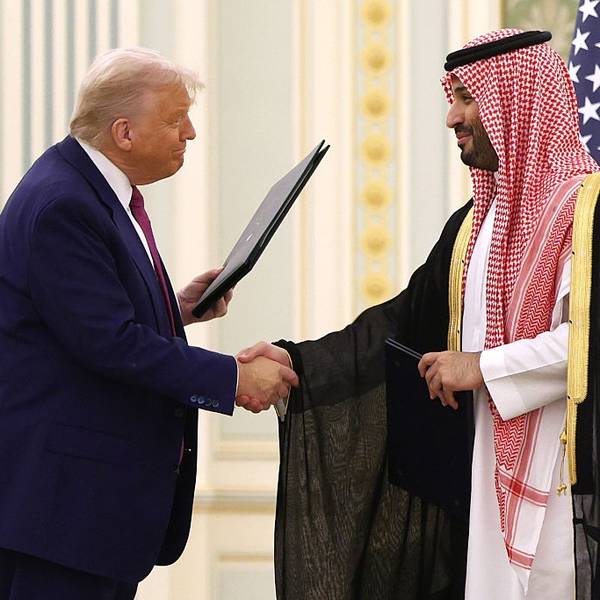
US President Donald Trump on Monday sent his proposed nuclear agreement with Saudi Arabia to Congress, and a leading Senate Democrat responded on Wednesday with a call for his colleagues to "block this dangerous deal."
That call came from Sen. Ed Markey (D-Mass.), co-chair of the bicameral Nuclear Weapons and Arms Control Working Group.
The 30-year deal was reached in July. It would allow US companies to share nuclear energy technology with Saudi Arabia, without safeguards to ensure that the Middle East kingdom would not use the materials to build nuclear weapons.
Following the White House submission to Congress, first reported by The Wall Street Journal, lawmakers have 90 days of continuous session to review the pact—as required by Section 123 of the Atomic Energy Act—and either object or let it take effect.
Since US Energy Secretary Chris Wright and Saudi Energy Minister Prince Abdulaziz bin Salman signed the deal in July, nonproliferation experts have expressed concerns. Kelsey Davenport from the Arms Control Association said at the time that the "inadequate" deal "sets a terrible precedent" because it "goes against long-standing bipartisan support for negotiating nuclear cooperation agreements that prohibit enrichment and reprocessing," and "Congress should vote to disapprove it."
Markey echoed expert concerns on Wednesday. He said that "as a US senator, Marco Rubio once understood that handing Saudi Arabia the technology to produce nuclear weapons was a terrible idea. But now, as secretary of state, Rubio is doing exactly that, and he and Trump are pursuing the most reckless nuclear deal in US history."
"This giveaway to Saudi Arabia is the starting gun for a Middle East nuclear arms race," he argued. "Congress must reject it."
Markey also said that "if the Trump administration wants to stop a Saudi bomb, it should require the nonproliferation gold standard, which would ban enrichment and reprocessing and require International Atomic Energy Agency additional protocol safeguards in Saudi Arabia. If Riyadh did not want a bomb, it would accept the gold standard. But the opposite is happening."
"Why? Maybe we should ask Saudi ruler Mohammed bin Salman, who has said repeatedly that he wants a nuclear bomb," the senator suggested, before taking aim at the president's son-in-law. "Or maybe we should ask Jared Kushner, who accepted a $2 billion investment from a Saudi sovereign wealth fund after leaving the White House at the end of the first Trump administration."
"This is not diplomacy; this is corruption at the expense of US national security," Markey concluded. "Congress must stop this dangerous agreement before it triggers a new nuclear arms race in the Middle East."
Even if the Republican-controlled Congress doesn't heed warnings from Markey and nonproliferation experts and block the deal, Trump may ultimately do so himself.
Administration officials have confirmed to journalists this week that the president will only let the pact move forward if Saudi Arabia agrees to a condition he imposed only after negotiations: joining the Abraham Accords, an initiative from Trump's first term that led to various countries normalizing diplomatic relations with Israel.
As CNN reported Wednesday:
Wright, speaking at a Wednesday press conference with the head of the International Atomic Energy Agency, said that the nuclear agreement and Abraham Accords negotiations "will be worked in parallel."
A Saudi official responded to a CNN query saying, "Saudi-US relations are ever-evolving and have continued to broaden and to deepen over the years."
"Saudi Arabia is looking forward to working closely with the US administration and Congress on ways to strengthen our partnership," the official added.
Congressional consideration of the agreement comes amid an illegal US-Israeli war on Iran. Trump continues to claim the military campaign is aimed at stopping the Iranian government from building nuclear arms—even though he tore up the Obama administration's related agreement during his first term, and the American intelligence community concluded before the current conflict that Tehran wasn't pursuing such weapons.
Last week, former Republican Georgia Congresswoman Marjorie Taylor Greene claimed that members of Trump's administration "are discussing using nuclear weapons on Iran in strategy meetings." In response, Jamal Abdi, president of the National Iranian American Council, said that "we must shut the Pandora’s box of the Iran War before more horrors are unleashed—including the possible use of nuclear weapons. The longer this catastrophic war of choice continues, the more horrors we risk unleashing that many of us would have previously found unthinkable."
In addition to the United States and Israel, the countries known to have nuclear weapons are China, France, India, North Korea, Pakistan, Russia, and the United Kingdom. According to the Stockholm International Peace Research Institute, as of January, the estimated global inventory of warheads is 12,187—about 9,745 of which are in military stockpiles for potential use.
Dear Common Dreams reader, It’s been nearly 30 years since I co-founded Common Dreams with my late wife, Lina Newhouser. We had the radical notion that journalism should serve the public good, not corporate profits. It was clear to us from the outset what it would take to build such a project. No paid advertisements. No corporate sponsors. No millionaire publisher telling us what to think or do. Many people said we wouldn't last a year, but we proved those doubters wrong. Together with a tremendous team of journalists and dedicated staff, we built an independent media outlet free from the constraints of profits and corporate control. Our mission has always been simple: To inform. To inspire. To ignite change for the common good. Building Common Dreams was not easy. Our survival was never guaranteed. When you take on the most powerful forces—Wall Street greed, fossil fuel industry destruction, Big Tech lobbyists, and uber-rich oligarchs who have spent billions upon billions rigging the economy and democracy in their favor—the only bulwark you have is supporters who believe in your work. But here’s the urgent message from me today. It's never been this bad out there. And it's never been this hard to keep us going. At the very moment Common Dreams is most needed, the threats we face are intensifying. We need your support now more than ever. We don't accept corporate advertising and never will. We don't have a paywall because we don't think people should be blocked from critical news based on their ability to pay. Everything we do is funded by the donations of readers like you. When everyone does the little they can afford, we are strong. But if that support retreats or dries up, so do we. Will you donate now to make sure Common Dreams not only survives but thrives? —Craig Brown, Co-founder |
US President Donald Trump on Monday sent his proposed nuclear agreement with Saudi Arabia to Congress, and a leading Senate Democrat responded on Wednesday with a call for his colleagues to "block this dangerous deal."
That call came from Sen. Ed Markey (D-Mass.), co-chair of the bicameral Nuclear Weapons and Arms Control Working Group.
The 30-year deal was reached in July. It would allow US companies to share nuclear energy technology with Saudi Arabia, without safeguards to ensure that the Middle East kingdom would not use the materials to build nuclear weapons.
Following the White House submission to Congress, first reported by The Wall Street Journal, lawmakers have 90 days of continuous session to review the pact—as required by Section 123 of the Atomic Energy Act—and either object or let it take effect.
Since US Energy Secretary Chris Wright and Saudi Energy Minister Prince Abdulaziz bin Salman signed the deal in July, nonproliferation experts have expressed concerns. Kelsey Davenport from the Arms Control Association said at the time that the "inadequate" deal "sets a terrible precedent" because it "goes against long-standing bipartisan support for negotiating nuclear cooperation agreements that prohibit enrichment and reprocessing," and "Congress should vote to disapprove it."
Markey echoed expert concerns on Wednesday. He said that "as a US senator, Marco Rubio once understood that handing Saudi Arabia the technology to produce nuclear weapons was a terrible idea. But now, as secretary of state, Rubio is doing exactly that, and he and Trump are pursuing the most reckless nuclear deal in US history."
"This giveaway to Saudi Arabia is the starting gun for a Middle East nuclear arms race," he argued. "Congress must reject it."
Markey also said that "if the Trump administration wants to stop a Saudi bomb, it should require the nonproliferation gold standard, which would ban enrichment and reprocessing and require International Atomic Energy Agency additional protocol safeguards in Saudi Arabia. If Riyadh did not want a bomb, it would accept the gold standard. But the opposite is happening."
"Why? Maybe we should ask Saudi ruler Mohammed bin Salman, who has said repeatedly that he wants a nuclear bomb," the senator suggested, before taking aim at the president's son-in-law. "Or maybe we should ask Jared Kushner, who accepted a $2 billion investment from a Saudi sovereign wealth fund after leaving the White House at the end of the first Trump administration."
"This is not diplomacy; this is corruption at the expense of US national security," Markey concluded. "Congress must stop this dangerous agreement before it triggers a new nuclear arms race in the Middle East."
Even if the Republican-controlled Congress doesn't heed warnings from Markey and nonproliferation experts and block the deal, Trump may ultimately do so himself.
Administration officials have confirmed to journalists this week that the president will only let the pact move forward if Saudi Arabia agrees to a condition he imposed only after negotiations: joining the Abraham Accords, an initiative from Trump's first term that led to various countries normalizing diplomatic relations with Israel.
As CNN reported Wednesday:
Wright, speaking at a Wednesday press conference with the head of the International Atomic Energy Agency, said that the nuclear agreement and Abraham Accords negotiations "will be worked in parallel."
A Saudi official responded to a CNN query saying, "Saudi-US relations are ever-evolving and have continued to broaden and to deepen over the years."
"Saudi Arabia is looking forward to working closely with the US administration and Congress on ways to strengthen our partnership," the official added.
Congressional consideration of the agreement comes amid an illegal US-Israeli war on Iran. Trump continues to claim the military campaign is aimed at stopping the Iranian government from building nuclear arms—even though he tore up the Obama administration's related agreement during his first term, and the American intelligence community concluded before the current conflict that Tehran wasn't pursuing such weapons.
Last week, former Republican Georgia Congresswoman Marjorie Taylor Greene claimed that members of Trump's administration "are discussing using nuclear weapons on Iran in strategy meetings." In response, Jamal Abdi, president of the National Iranian American Council, said that "we must shut the Pandora’s box of the Iran War before more horrors are unleashed—including the possible use of nuclear weapons. The longer this catastrophic war of choice continues, the more horrors we risk unleashing that many of us would have previously found unthinkable."
In addition to the United States and Israel, the countries known to have nuclear weapons are China, France, India, North Korea, Pakistan, Russia, and the United Kingdom. According to the Stockholm International Peace Research Institute, as of January, the estimated global inventory of warheads is 12,187—about 9,745 of which are in military stockpiles for potential use.
US President Donald Trump on Monday sent his proposed nuclear agreement with Saudi Arabia to Congress, and a leading Senate Democrat responded on Wednesday with a call for his colleagues to "block this dangerous deal."
That call came from Sen. Ed Markey (D-Mass.), co-chair of the bicameral Nuclear Weapons and Arms Control Working Group.
The 30-year deal was reached in July. It would allow US companies to share nuclear energy technology with Saudi Arabia, without safeguards to ensure that the Middle East kingdom would not use the materials to build nuclear weapons.
Following the White House submission to Congress, first reported by The Wall Street Journal, lawmakers have 90 days of continuous session to review the pact—as required by Section 123 of the Atomic Energy Act—and either object or let it take effect.
Since US Energy Secretary Chris Wright and Saudi Energy Minister Prince Abdulaziz bin Salman signed the deal in July, nonproliferation experts have expressed concerns. Kelsey Davenport from the Arms Control Association said at the time that the "inadequate" deal "sets a terrible precedent" because it "goes against long-standing bipartisan support for negotiating nuclear cooperation agreements that prohibit enrichment and reprocessing," and "Congress should vote to disapprove it."
Markey echoed expert concerns on Wednesday. He said that "as a US senator, Marco Rubio once understood that handing Saudi Arabia the technology to produce nuclear weapons was a terrible idea. But now, as secretary of state, Rubio is doing exactly that, and he and Trump are pursuing the most reckless nuclear deal in US history."
"This giveaway to Saudi Arabia is the starting gun for a Middle East nuclear arms race," he argued. "Congress must reject it."
Markey also said that "if the Trump administration wants to stop a Saudi bomb, it should require the nonproliferation gold standard, which would ban enrichment and reprocessing and require International Atomic Energy Agency additional protocol safeguards in Saudi Arabia. If Riyadh did not want a bomb, it would accept the gold standard. But the opposite is happening."
"Why? Maybe we should ask Saudi ruler Mohammed bin Salman, who has said repeatedly that he wants a nuclear bomb," the senator suggested, before taking aim at the president's son-in-law. "Or maybe we should ask Jared Kushner, who accepted a $2 billion investment from a Saudi sovereign wealth fund after leaving the White House at the end of the first Trump administration."
"This is not diplomacy; this is corruption at the expense of US national security," Markey concluded. "Congress must stop this dangerous agreement before it triggers a new nuclear arms race in the Middle East."
Even if the Republican-controlled Congress doesn't heed warnings from Markey and nonproliferation experts and block the deal, Trump may ultimately do so himself.
Administration officials have confirmed to journalists this week that the president will only let the pact move forward if Saudi Arabia agrees to a condition he imposed only after negotiations: joining the Abraham Accords, an initiative from Trump's first term that led to various countries normalizing diplomatic relations with Israel.
As CNN reported Wednesday:
Wright, speaking at a Wednesday press conference with the head of the International Atomic Energy Agency, said that the nuclear agreement and Abraham Accords negotiations "will be worked in parallel."
A Saudi official responded to a CNN query saying, "Saudi-US relations are ever-evolving and have continued to broaden and to deepen over the years."
"Saudi Arabia is looking forward to working closely with the US administration and Congress on ways to strengthen our partnership," the official added.
Congressional consideration of the agreement comes amid an illegal US-Israeli war on Iran. Trump continues to claim the military campaign is aimed at stopping the Iranian government from building nuclear arms—even though he tore up the Obama administration's related agreement during his first term, and the American intelligence community concluded before the current conflict that Tehran wasn't pursuing such weapons.
Last week, former Republican Georgia Congresswoman Marjorie Taylor Greene claimed that members of Trump's administration "are discussing using nuclear weapons on Iran in strategy meetings." In response, Jamal Abdi, president of the National Iranian American Council, said that "we must shut the Pandora’s box of the Iran War before more horrors are unleashed—including the possible use of nuclear weapons. The longer this catastrophic war of choice continues, the more horrors we risk unleashing that many of us would have previously found unthinkable."
In addition to the United States and Israel, the countries known to have nuclear weapons are China, France, India, North Korea, Pakistan, Russia, and the United Kingdom. According to the Stockholm International Peace Research Institute, as of January, the estimated global inventory of warheads is 12,187—about 9,745 of which are in military stockpiles for potential use.