SUBSCRIBE TO OUR FREE NEWSLETTER
Daily news & progressive opinion—funded by the people, not the corporations—delivered straight to your inbox.
5
#000000
#FFFFFF
To donate by check, phone, or other method, see our More Ways to Give page.
Daily news & progressive opinion—funded by the people, not the corporations—delivered straight to your inbox.
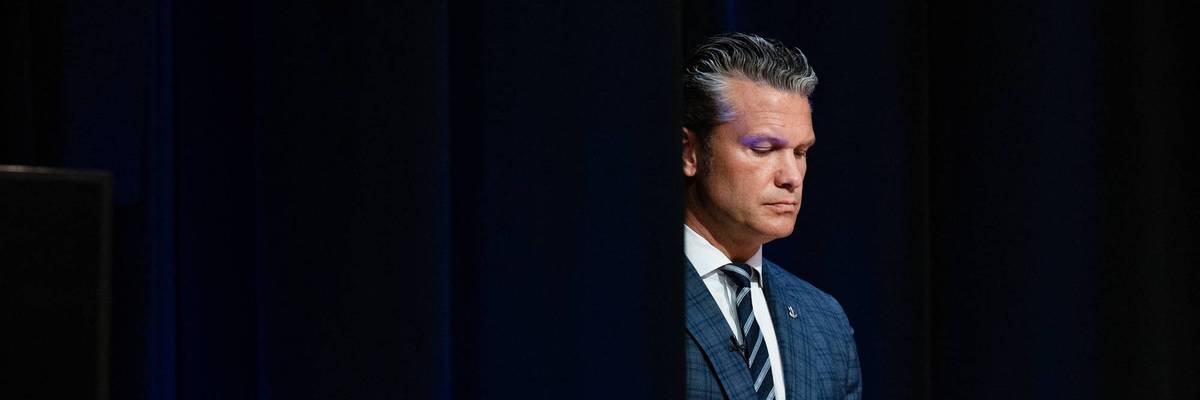
Rights groups warned that giving Secretary Pete Hegseth near-total control of what is released under the Freedom of Information Act "will naturally favor politicization and avoiding embarrassment over public transparency."
Press freedom organizations are urging Congress to reject a proposal that they warn could allow the Pentagon to withhold massive amounts of unclassified information from the public.
As part of its recent budget package, the Department of Defense submitted a proposal to Congress in late June that would create a new exception to the Freedom of Information Act (FOIA), allowing the defense secretary to bar certain "controlled unclassified information" (CUI) from public disclosure if the military determines that the national security risk outweighs the public interest.
CUI is a broad category of information that is not classified but that the government considers sensitive enough to be distributed only to specific people. But under current law, the government can only refuse to release information requested through FOIA if it meets certain exemptions, such as properly classified national security material, protected personal information, privileged internal communications, or records whose release could compromise law enforcement.
The new law would change this, allowing the defense secretary to declare almost any unclassified Pentagon record as both CUI and “national security information" to prevent it from being released. This could affect access to countless documents of significant public importance—from reports on investigations into military action, to internal records about the military's rules of engagement, to audit and oversight records.
"The CUI standard is already so broad that were it to be incorporated as a FOIA exemption for the Defense Department, massive amounts of important information would be yanked from the public," wrote Adam A. Marshall, the director of the Reporters Committee for Freedom of the Press. "That would be disastrous, especially when the Defense Department is at the forefront of so many stories the public needs to know about, from the United States’ war with Iran to the targeted destruction of boats in the Caribbean and eastern Pacific."
Clayton Weimers, the executive director of Reporters Without Borders North America, argued that the proposed rule change was unnecessary.
"The Pentagon already has extensive authority to protect genuine national security secrets. What it is asking Congress for now is something entirely different: the power to hide unclassified information from the public," he said. "At a time when the Department of Defense controls nearly one trillion dollars in taxpayer funding and makes decisions that can shape war and peace, the public deserves more transparency, not more secrecy."
Under Secretary Pete Hegseth, the Pentagon has attempted to dramatically clamp down on the flow of public information. It has held far fewer press briefings than previous administrations, issued requirements that reporters pledge not to release "unauthorized" information, and booted credentialed press from Pentagon offices in favor of administration-friendly outlets and influencers.
Secrecy has grown amid President Donald Trump's war against Iran, with the Pentagon withholding information about hundreds of US military injuries from the public and altering publicly available death counts to exclude the names of four US personnel recently slain in the region.
Last week, a coalition of more than 40 press freedom, civil rights, and watchdog organizations, led by Reporters Without Borders, sent a letter to members of the House Oversight Committee, arguing that giving the defense secretary final say over what information is made public would be especially dangerous and "will naturally favor politicization and avoiding embarrassment over public transparency."
Under the Trump administration, the Pentagon has already been much less willing to comply with FOIA requests than under the Biden administration. Pentagon data show that it took more than 30% longer, on average, to respond to complex FOIA requests in 2025 than in 2024, and that it granted only 17% of FOIA requests in full.
"The Pentagon is already too secretive, and the last thing it needs is a rubber stamp to hide unclassified records under the guise of national security," said Lauren Harper, the Daniel Ellsberg chair on government secrecy at the Freedom of the Press Foundation. “We don’t need the Pentagon hiding more information from FOIA. We need it to actually respond to public records requests, we need it to stop harassing journalists for doing their job, and we need it to be transparent and accountable to the public, service members, and their families.”
Dear Common Dreams reader, It’s been nearly 30 years since I co-founded Common Dreams with my late wife, Lina Newhouser. We had the radical notion that journalism should serve the public good, not corporate profits. It was clear to us from the outset what it would take to build such a project. No paid advertisements. No corporate sponsors. No millionaire publisher telling us what to think or do. Many people said we wouldn't last a year, but we proved those doubters wrong. Together with a tremendous team of journalists and dedicated staff, we built an independent media outlet free from the constraints of profits and corporate control. Our mission has always been simple: To inform. To inspire. To ignite change for the common good. Building Common Dreams was not easy. Our survival was never guaranteed. When you take on the most powerful forces—Wall Street greed, fossil fuel industry destruction, Big Tech lobbyists, and uber-rich oligarchs who have spent billions upon billions rigging the economy and democracy in their favor—the only bulwark you have is supporters who believe in your work. But here’s the urgent message from me today. It's never been this bad out there. And it's never been this hard to keep us going. At the very moment Common Dreams is most needed, the threats we face are intensifying. We need your support now more than ever. We don't accept corporate advertising and never will. We don't have a paywall because we don't think people should be blocked from critical news based on their ability to pay. Everything we do is funded by the donations of readers like you. When everyone does the little they can afford, we are strong. But if that support retreats or dries up, so do we. Will you donate now to make sure Common Dreams not only survives but thrives? —Craig Brown, Co-founder |
Press freedom organizations are urging Congress to reject a proposal that they warn could allow the Pentagon to withhold massive amounts of unclassified information from the public.
As part of its recent budget package, the Department of Defense submitted a proposal to Congress in late June that would create a new exception to the Freedom of Information Act (FOIA), allowing the defense secretary to bar certain "controlled unclassified information" (CUI) from public disclosure if the military determines that the national security risk outweighs the public interest.
CUI is a broad category of information that is not classified but that the government considers sensitive enough to be distributed only to specific people. But under current law, the government can only refuse to release information requested through FOIA if it meets certain exemptions, such as properly classified national security material, protected personal information, privileged internal communications, or records whose release could compromise law enforcement.
The new law would change this, allowing the defense secretary to declare almost any unclassified Pentagon record as both CUI and “national security information" to prevent it from being released. This could affect access to countless documents of significant public importance—from reports on investigations into military action, to internal records about the military's rules of engagement, to audit and oversight records.
"The CUI standard is already so broad that were it to be incorporated as a FOIA exemption for the Defense Department, massive amounts of important information would be yanked from the public," wrote Adam A. Marshall, the director of the Reporters Committee for Freedom of the Press. "That would be disastrous, especially when the Defense Department is at the forefront of so many stories the public needs to know about, from the United States’ war with Iran to the targeted destruction of boats in the Caribbean and eastern Pacific."
Clayton Weimers, the executive director of Reporters Without Borders North America, argued that the proposed rule change was unnecessary.
"The Pentagon already has extensive authority to protect genuine national security secrets. What it is asking Congress for now is something entirely different: the power to hide unclassified information from the public," he said. "At a time when the Department of Defense controls nearly one trillion dollars in taxpayer funding and makes decisions that can shape war and peace, the public deserves more transparency, not more secrecy."
Under Secretary Pete Hegseth, the Pentagon has attempted to dramatically clamp down on the flow of public information. It has held far fewer press briefings than previous administrations, issued requirements that reporters pledge not to release "unauthorized" information, and booted credentialed press from Pentagon offices in favor of administration-friendly outlets and influencers.
Secrecy has grown amid President Donald Trump's war against Iran, with the Pentagon withholding information about hundreds of US military injuries from the public and altering publicly available death counts to exclude the names of four US personnel recently slain in the region.
Last week, a coalition of more than 40 press freedom, civil rights, and watchdog organizations, led by Reporters Without Borders, sent a letter to members of the House Oversight Committee, arguing that giving the defense secretary final say over what information is made public would be especially dangerous and "will naturally favor politicization and avoiding embarrassment over public transparency."
Under the Trump administration, the Pentagon has already been much less willing to comply with FOIA requests than under the Biden administration. Pentagon data show that it took more than 30% longer, on average, to respond to complex FOIA requests in 2025 than in 2024, and that it granted only 17% of FOIA requests in full.
"The Pentagon is already too secretive, and the last thing it needs is a rubber stamp to hide unclassified records under the guise of national security," said Lauren Harper, the Daniel Ellsberg chair on government secrecy at the Freedom of the Press Foundation. “We don’t need the Pentagon hiding more information from FOIA. We need it to actually respond to public records requests, we need it to stop harassing journalists for doing their job, and we need it to be transparent and accountable to the public, service members, and their families.”
Press freedom organizations are urging Congress to reject a proposal that they warn could allow the Pentagon to withhold massive amounts of unclassified information from the public.
As part of its recent budget package, the Department of Defense submitted a proposal to Congress in late June that would create a new exception to the Freedom of Information Act (FOIA), allowing the defense secretary to bar certain "controlled unclassified information" (CUI) from public disclosure if the military determines that the national security risk outweighs the public interest.
CUI is a broad category of information that is not classified but that the government considers sensitive enough to be distributed only to specific people. But under current law, the government can only refuse to release information requested through FOIA if it meets certain exemptions, such as properly classified national security material, protected personal information, privileged internal communications, or records whose release could compromise law enforcement.
The new law would change this, allowing the defense secretary to declare almost any unclassified Pentagon record as both CUI and “national security information" to prevent it from being released. This could affect access to countless documents of significant public importance—from reports on investigations into military action, to internal records about the military's rules of engagement, to audit and oversight records.
"The CUI standard is already so broad that were it to be incorporated as a FOIA exemption for the Defense Department, massive amounts of important information would be yanked from the public," wrote Adam A. Marshall, the director of the Reporters Committee for Freedom of the Press. "That would be disastrous, especially when the Defense Department is at the forefront of so many stories the public needs to know about, from the United States’ war with Iran to the targeted destruction of boats in the Caribbean and eastern Pacific."
Clayton Weimers, the executive director of Reporters Without Borders North America, argued that the proposed rule change was unnecessary.
"The Pentagon already has extensive authority to protect genuine national security secrets. What it is asking Congress for now is something entirely different: the power to hide unclassified information from the public," he said. "At a time when the Department of Defense controls nearly one trillion dollars in taxpayer funding and makes decisions that can shape war and peace, the public deserves more transparency, not more secrecy."
Under Secretary Pete Hegseth, the Pentagon has attempted to dramatically clamp down on the flow of public information. It has held far fewer press briefings than previous administrations, issued requirements that reporters pledge not to release "unauthorized" information, and booted credentialed press from Pentagon offices in favor of administration-friendly outlets and influencers.
Secrecy has grown amid President Donald Trump's war against Iran, with the Pentagon withholding information about hundreds of US military injuries from the public and altering publicly available death counts to exclude the names of four US personnel recently slain in the region.
Last week, a coalition of more than 40 press freedom, civil rights, and watchdog organizations, led by Reporters Without Borders, sent a letter to members of the House Oversight Committee, arguing that giving the defense secretary final say over what information is made public would be especially dangerous and "will naturally favor politicization and avoiding embarrassment over public transparency."
Under the Trump administration, the Pentagon has already been much less willing to comply with FOIA requests than under the Biden administration. Pentagon data show that it took more than 30% longer, on average, to respond to complex FOIA requests in 2025 than in 2024, and that it granted only 17% of FOIA requests in full.
"The Pentagon is already too secretive, and the last thing it needs is a rubber stamp to hide unclassified records under the guise of national security," said Lauren Harper, the Daniel Ellsberg chair on government secrecy at the Freedom of the Press Foundation. “We don’t need the Pentagon hiding more information from FOIA. We need it to actually respond to public records requests, we need it to stop harassing journalists for doing their job, and we need it to be transparent and accountable to the public, service members, and their families.”