
SUBSCRIBE TO OUR FREE NEWSLETTER
Daily news & progressive opinion—funded by the people, not the corporations—delivered straight to your inbox.
5
#000000
#FFFFFF
To donate by check, phone, or other method, see our More Ways to Give page.


Daily news & progressive opinion—funded by the people, not the corporations—delivered straight to your inbox.
"This study underscores the cruelty and shortsightedness of the Trump administration's slashing of funding and weakening of protections for endangered species," said an expert at the Center for Biological Diversity.
On the heels of publishing a study that shows 2,204 species across the United States should be considered for protection under the Endangered Species Act, the Center for Biological Diversity on Wednesday sued President Donald Trump's administration for failing to release public records about efforts to dismantle the ESA.
"Americans want to live in a country where animals and plants on the brink of extinction get the protections they need to survive. The Trump administration is hiding information about its efforts to gut these protections," said Ryan Shannon, a senior attorney at the nonprofit, in a statement.
"Widespread public support for the Endangered Species Act makes the administration's secrecy around these rules all the more insidious," Shannon continued. "Trump hands out favors to his billionaire friends while ignoring the irreplaceable value of our nation’s endangered wildlife. This lawsuit seeks to bring that corruption out into the open."
Filed in federal court in Washington, DC, the Freedom of Information Act (FOIA) suit could make the departments of Commerce and the Interior, as well as the National Oceanic and Atmospheric Administration, National Marine Fisheries Service, and the US Fish and Wildlife Service (FWS), turn over documents about potential revisions to the ESA proposed in response to orders from Trump and Interior Secretary Doug Burgum.
"Thousands of plants and animals across America are at risk of extinction while they wait for the federal government to do something, anything, to help them."
The complaint warns that if the administration's proposed rules are implemented, they "will dismantle essential protections by, amongst other things, inserting economic considerations into the listing process, curtailing critical habitat designations, prohibiting habitat protections for species threatened by climate change, weakening consultation mandates, and removing nearly all protections for newly designated threatened species."
"On July 3, 2025, the center submitted FOIA requests to each defendant seeking records relating to the development of these proposed rules," the filing details. "The requested records are vital to understanding the basis, rationale, and likely impacts of the agencies' proposed rules. Such information is necessary for meaningful public participation in the rulemaking process."
"Without timely disclosure, the center and its members cannot effectively understand or respond to the agencies' proposed rules, thereby undermining FOIA's core purpose of ensuring government transparency and accountability," the complaint adds, noting that the center sent follow-up requests early last month.
The suit over Trump's "extinction plan" records followed publication of a study in which four experts at the center argued for protecting thousands more species under the landmark 1973 law—which, the analysis notes, "currently protects 1,682 species as endangered or threatened."
"According to the independent scientific organization NatureServe, however, there are more than 10,000 imperiled species in the United States that may need protection," explains the study, published in PeerJ. "One barrier to protecting recognized imperiled species is a lack of threats information."
The center's experts reviewed all species recognized NatureServe as "critically imperiled" or "imperiled" and identified 2,204 species "where there is sufficient threat information to indicate ESA protection may be warranted."
A majority of those species—1,320—are plants, followed by 309 insects, 115 terrestrial snails, 90 freshwater snails, 85 fish, 25 lichen and fungi, 23 reptiles and turtles, 21 amphibians, 14 birds, and various others.
Given that the FWS "has on average listed just 32 species per year since the law was passed," the analysis warns, "at this rate, most species currently recognized as imperiled and facing threats will not receive consideration for protection within any meaningful timeframe."

Noah Greenwald, a study co-author and co-director of endangered species at the Center for Biological Diversity, stressed in a Tuesday statement that "thousands of plants and animals across America are at risk of extinction while they wait for the federal government to do something, anything, to help them."
"This study underscores the cruelty and shortsightedness of the Trump administration's slashing of funding and weakening of protections for endangered species," Greenwald declared. "That so many species need help highlights just how much we're degrading the natural world at our own peril."
"Humans need clean air and water and a stable climate, just like the many species in decline," he added. "People are destroying the wild places where plants and animals live, and that habitat destruction remains the greatest threat to species' survival both in the United States and around the world.”
Habitat destruction threatens 92% of the 2,204 species, according to the analysis. Other notable threats include invasive species (33%), small population size (26%), climate change (18%), altered disturbance regime (12%), disease and predation (8%), over-utilization (7%), and inadequacy of existing regulations (4%).
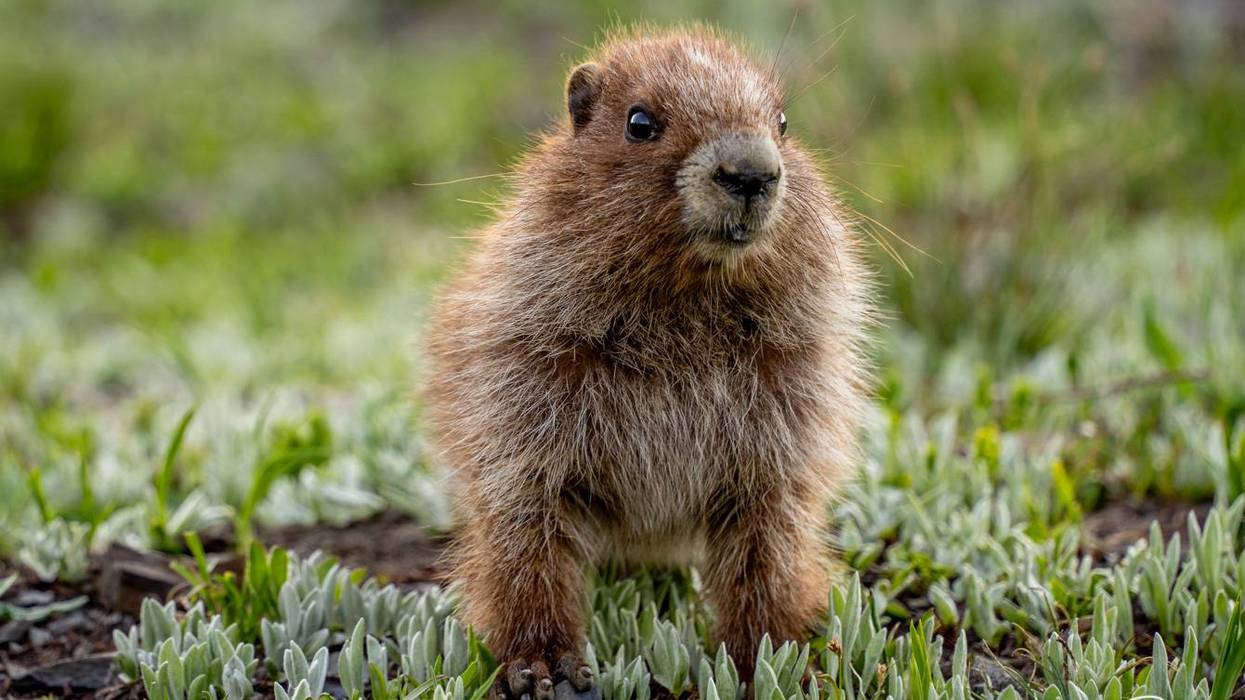
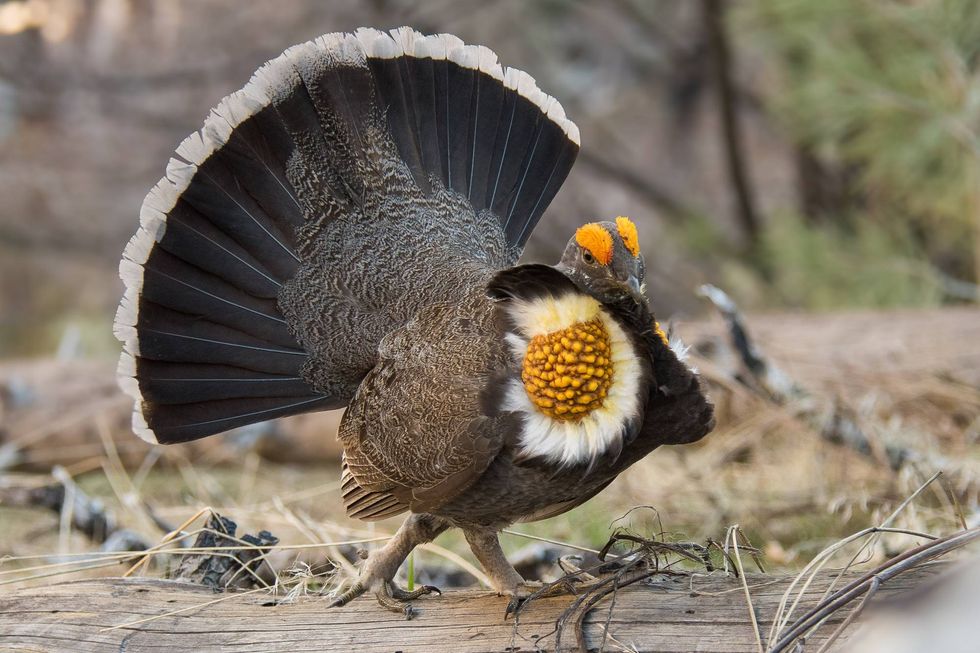
Last week, in response to petitions from the center and other groups, the FWS announced that 10 species across the country—including the Olympic marmot, gray cat's eye plant, Alvord chub fish, Mount Pinos sooty grouse, and San Joaquin tiger beetle—warrant consideration for ESA protections.
"I'm relieved to see these 10 precious plants and animals move closer to the protection they so desperately need," said Greenwald. "Unfortunately they're joining a backlog of hundreds of species waiting for safeguards during an administration that didn't protect a single species last year—the first time that's happened since 1981. As the global extinction crisis deepens, imperiled wildlife need the Endangered Species Act's strong protections now more than ever."
"When government actions tied to foreign resources are preceded and followed by closed-door meetings with the world’s largest oil companies, transparency is not optional—it is essential."
A legal watchdog group is demanding information about the extent to which the Trump administration planned its attack on Venezuela last weekend with American oil companies, which are expected to profit royally from the takeover of the South American nation's oil reserves.
The group Democracy Forward filed a series of Freedom of Information Act (FOIA) requests on Monday seeking records and information about the role of US oil companies in the planning of the attack, which killed an estimated 75 people and led to the US military's abduction of Venezuelan President Nicolas Maduro and his wife.
President Donald Trump did not inform Congress of the operation, which is required under the War Powers Act of 1973, but he told reporters on Sunday that he'd tipped off oil company executives both "before and after" the strike.
According to reporting by the Wall Street Journal, he informed executives roughly a month before the strike to "get ready" because big changes were coming to the country, which had long held state control over the largest oil reserves in the world.
Since toppling Maduro, in an operation that international law experts have widely described as illegal, Trump has said his goal is to "get the oil flowing" to American oil companies to start "taking a tremendous amount of wealth out of the ground.”
On Tuesday, Trump said Venezuela's interim leaders—who he's threatened with more attacks if they don't do what he says—have agreed to hand over 30-50 million barrels of oil to be sold by the US, which will control how the profits are dispersed.
Trump and several members of his Cabinet, including Energy Secretary Chris Wright and Interior Secretary Doug Burgum, are expected to meet with oil executives on Friday at the White House to discuss "security guarantees" for their new spoils.
Democracy Forward has requested information about communications between senior officials at the US departments of Energy and the Interior and executives at top oil companies, including Chevron, ExxonMobil, and ConocoPhillips, prior to the attack. This includes emails, attachments, and calendar invitations exchanged since December 2025.
The group has said it will seek to determine whether these companies were given "privileged access or influence" over the administration's policy toward Venezuela.
“The president couldn’t find time to brief members of Congress before kidnapping a foreign head of state, but appears to have prioritized discussions with Big Oil. When government actions tied to foreign resources are preceded and followed by closed-door meetings with the world’s largest oil companies, transparency is not optional—it is essential,” said Skye Perryman, the president and CEO of Democracy Forward. “The public deserves to know what interests are shaping decisions that have enormous consequences for global energy markets and democratic accountability.”
FOIA, which was passed in 1967, allows members of the public to request records from any federal agency. However, agencies have broad discretion to deny FOIA requests, including in cases involving national security or interagency communications.
"The Trump-Vance administration is refusing to hand over documents that could show their culpability in hiding international human civil rights abuses," says the president of Democracy Forward.
A coalition of LGBTQ+ and human rights organizations filed a lawsuit Monday against the U.S. Department of State over its refusal to release congressionally mandated reports on international human rights abuses.
The Council for Global Equality (CGE) has accused the administration of a "cover-up of a cover-up" to keep the reports buried.
Each year, the department is required to report on the practices of other countries concerning individual, civil, political, and worker rights protected under international law, including the Universal Declaration of Human Rights.
Governments and international groups have long cited these surveys as one of the most comprehensive and authoritative sources on the state of human rights, informing policy surrounding foreign aid and asylum.
The Foreign Assistance Act requires that these reports be sent to Congress by February 25 each year, and they are typically released in March or April. But nearly six months later, the Trump administration has sent nothing for the calendar year 2024.
Meanwhile, NPR reported in April on a State Department memo requiring employees to "streamline" the reports by omitting many of the most common human rights violations:
The reports... will no longer call governments out for such things as denying freedom of movement and peaceful assembly. They won't condemn retaining political prisoners without due process or restrictions on "free and fair elections."
Forcibly returning a refugee or asylum-seeker to a home country where they may face torture or persecution will no longer be highlighted, nor will serious harassment of human rights organizations...
...reports of violence and discrimination against LGBTQ+ people will be removed, along with all references to [diversity, equity, and inclusion] (DEI).
Among other topics ordered to be struck from the reports: involuntary or coercive medical or psychological practices, arbitrary or unlawful interference with privacy, serious restrictions to internet freedom, extensive gender-based violence, and violence or threats of violence targeting people with disabilities.
Last week, The Washington Post obtained leaked copies of the department's reports on nations favored by the Trump administration—El Salvador, Russia, and Israel. It found that they were "significantly shorter" than the reports released by the Biden administration and that they struck references to widely documented human rights abuses in these countries.
In the case of El Salvador, where the administration earlier this year began shipping immigrants deported from the United States, the department's report stated that were "no credible reports of significant human rights abuses" there, even though such abuses—including torture, physical violence, and deprivation have been widely reported, including by Trump's own deportees.
Human rights violations against LGBTQ+ people were deleted from the State Department's report on Russia, while the report on Israel deleted references to Israeli Prime Minister Benjamin Netanyahu's corruption trial and to his government's threats to the country's independent judiciary.
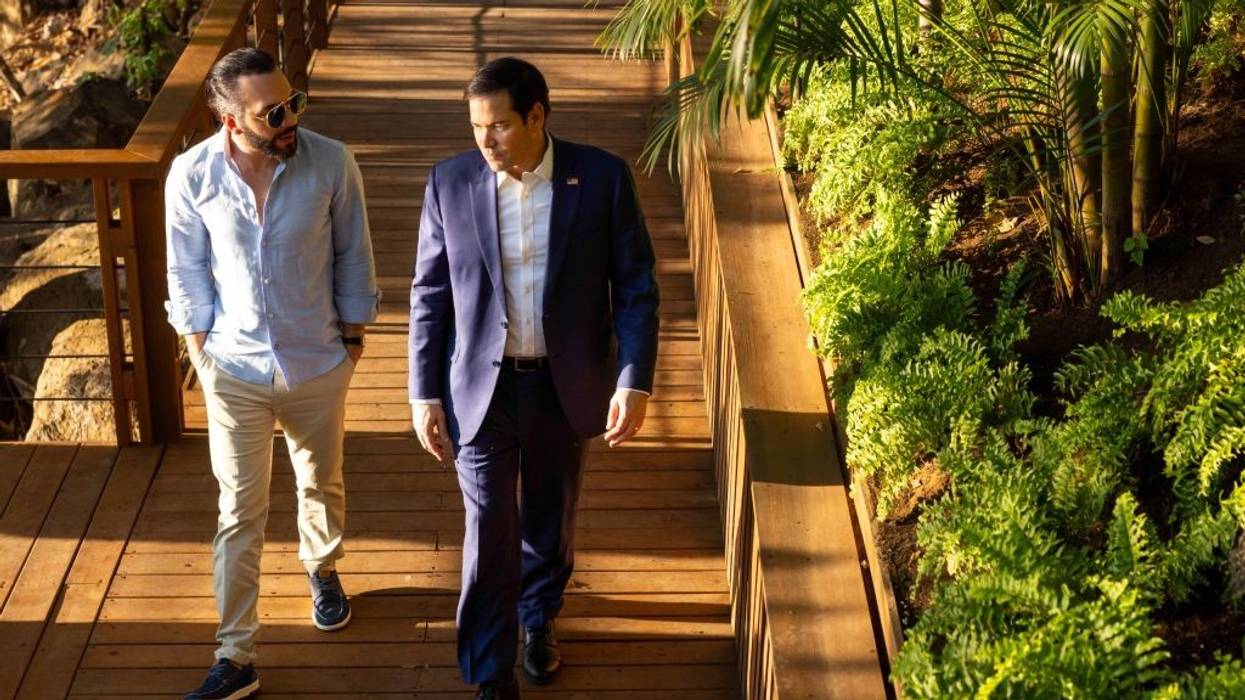
"Secretary Rubio's overtly political rewriting of the human rights reports is a dramatic departure from even his own past commitment to protecting the fundamental human rights of LGBTQI+ people," said Keifer Buckingham, the Council for Global Equality's managing director. "Strategic omission of these abuses is also directly in contravention to Congress's requirement of a 'full and complete report' regarding the status of internationally recognized human rights."
In June, the CGE sent a Freedom of Information Act (FOIA) request to the State Department calling for all communications related to these decisions to be made public. The department acknowledged the request but refused to turn over any documents.
Now CGE has turned to the courts. On Monday, the legal nonprofit Democracy Forward filed a complaint on CGE's behalf in the U.S. District Court for the District of Columbia, alleging that the department had violated its duties under FOIA to turn over relevant documents in a timely manner.
"The Trump-Vance administration is refusing to hand over documents that could show their culpability in hiding international human civil rights abuses," said Skye Perryman, Democracy Forward's president and CEO.
"The world is watching the United States. We cannot risk a cover-up on top of a cover-up," Perryman continued. "If this administration is omitting or delaying the release of information about human rights abuses to gain favor with other countries, it is a shameful statement of the gross immorality of this administration."