SUBSCRIBE TO OUR FREE NEWSLETTER
Daily news & progressive opinion—funded by the people, not the corporations—delivered straight to your inbox.
5
#000000
#FFFFFF
To donate by check, phone, or other method, see our More Ways to Give page.
Daily news & progressive opinion—funded by the people, not the corporations—delivered straight to your inbox.

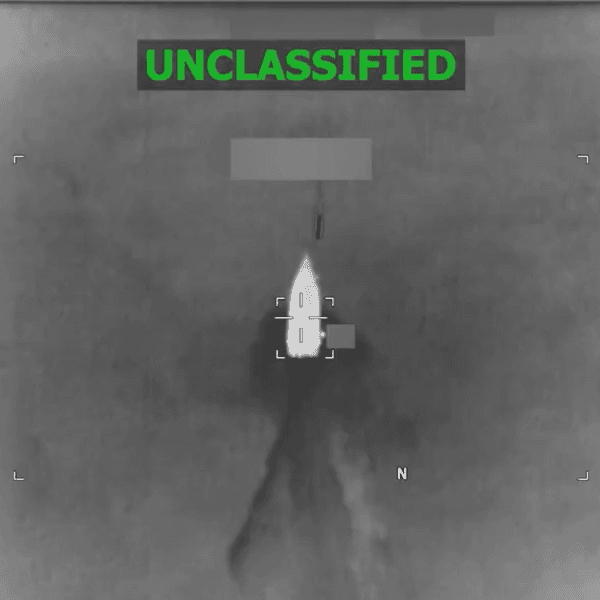
A boat burns after being bombed by US forces in the Pacific Ocean on May 29, 2026.
One legal expert said the grim milestone raises the question of whether the US is committing a "crime against humanity."
The US military on Friday bombed another boat it claimed was smuggling drugs in the eastern Pacific Ocean, killing three more people in what experts say is an illegal campaign whose death toll has now topped 200.
US Southern Command said in a statement that "Joint Task Force Southern Spear," the nine-month campaign ordered by President Donald Trump, "conducted a lethal kinetic strike on a vessel operated by Designated Terrorist Organizations."
"Intelligence confirmed the vessel was transiting along known narco-trafficking routes in the Eastern Pacific and was engaged in narco-trafficking operations," SOUTHCOM added, providing no evidence to support its claim. "Three male narco-terrorists were killed during this action. No US military forces were harmed. SOUTHCOM is unwavering in its commitment to applying total systemic friction on the cartels."
Friday's strike brought the number of people killed during Southern Spear to 202 in at least 60 strikes in the Caribbean Sea and Pacific Ocean.
The Trump administration has tried to justify the strikes by claiming that the US is in an “armed conflict” with drug cartels. Many legal experts disagree.
Former longtime Human Rights Watch executive director Kenneth Roth wrote on X: "Now more than 200 Trump summary executions—blatant murders."
"Legal experts agree: The Trump-ordered strikes on suspected drug boats are illegal extrajudicial killings because the military is not permitted to deliberately target civilians—even suspected criminals—who do not pose an imminent threat of violence," Roth said in a separate post.
Just Security editor-in-chief and New York University School of Law professor Ryan Goodman said that the "overwhelming consensus of experts, myself included, assess these to be murder because no armed conflict" is occurring, adding that they would be a "war crime if it were armed conflict."
Goodman said that, with 200 people killed, the strikes raise the question of whether the US is committing a "crime against humanity."
The boat strikes were fraught from the start. In the first known attack, US forces killed nine people in an initial strike and then two men clinging to the boat’s wreckage in a follow-up bombing.
The bombings have drawn widespread condemnation, including from Colombian President Gustavo Petro, who accused the US of "murder," and Venezuelan President Nicolás Maduro, who was abducted during a US invasion in January and imprisoned in the United States on dubious narco-terrorism charges.
Regional leaders and relatives of survivors say that at least some of the victims of the US bombings were fishermen with no ties to narco-trafficking. In January, relatives of two Trinidadian fishers killed in the strikes filed a federal wrongful death lawsuit in Massachusetts.
The bombings have terrorized fishing communities along the Caribbean and Pacific coasts to the point where many people have given up the only means they had of supporting their families.
Congressional war powers resolutions aimed at reining in Trump’s ability to extrajudicially execute alleged drug traffickers in or near Venezuela failed to pass the Senate last October and the House in December.
“Not only are these killings illegal, they are immoral. People of good conscience cannot allow this to continue, yet Congress has so far failed to halt, or even slow down, this lethal and unlawful campaign," Amnesty International USA national director for government relations Amanda Klasing said in a statement Wednesday.
"Lawmakers must do everything in their power to halt this campaign and hold everyone responsible accountable for their role in these extrajudicial killings,” she added.
Dear Common Dreams reader, It’s been nearly 30 years since I co-founded Common Dreams with my late wife, Lina Newhouser. We had the radical notion that journalism should serve the public good, not corporate profits. It was clear to us from the outset what it would take to build such a project. No paid advertisements. No corporate sponsors. No millionaire publisher telling us what to think or do. Many people said we wouldn't last a year, but we proved those doubters wrong. Together with a tremendous team of journalists and dedicated staff, we built an independent media outlet free from the constraints of profits and corporate control. Our mission has always been simple: To inform. To inspire. To ignite change for the common good. Building Common Dreams was not easy. Our survival was never guaranteed. When you take on the most powerful forces—Wall Street greed, fossil fuel industry destruction, Big Tech lobbyists, and uber-rich oligarchs who have spent billions upon billions rigging the economy and democracy in their favor—the only bulwark you have is supporters who believe in your work. But here’s the urgent message from me today. It's never been this bad out there. And it's never been this hard to keep us going. At the very moment Common Dreams is most needed, the threats we face are intensifying. We need your support now more than ever. We don't accept corporate advertising and never will. We don't have a paywall because we don't think people should be blocked from critical news based on their ability to pay. Everything we do is funded by the donations of readers like you. When everyone does the little they can afford, we are strong. But if that support retreats or dries up, so do we. Will you donate now to make sure Common Dreams not only survives but thrives? —Craig Brown, Co-founder |
The US military on Friday bombed another boat it claimed was smuggling drugs in the eastern Pacific Ocean, killing three more people in what experts say is an illegal campaign whose death toll has now topped 200.
US Southern Command said in a statement that "Joint Task Force Southern Spear," the nine-month campaign ordered by President Donald Trump, "conducted a lethal kinetic strike on a vessel operated by Designated Terrorist Organizations."
"Intelligence confirmed the vessel was transiting along known narco-trafficking routes in the Eastern Pacific and was engaged in narco-trafficking operations," SOUTHCOM added, providing no evidence to support its claim. "Three male narco-terrorists were killed during this action. No US military forces were harmed. SOUTHCOM is unwavering in its commitment to applying total systemic friction on the cartels."
Friday's strike brought the number of people killed during Southern Spear to 202 in at least 60 strikes in the Caribbean Sea and Pacific Ocean.
The Trump administration has tried to justify the strikes by claiming that the US is in an “armed conflict” with drug cartels. Many legal experts disagree.
Former longtime Human Rights Watch executive director Kenneth Roth wrote on X: "Now more than 200 Trump summary executions—blatant murders."
"Legal experts agree: The Trump-ordered strikes on suspected drug boats are illegal extrajudicial killings because the military is not permitted to deliberately target civilians—even suspected criminals—who do not pose an imminent threat of violence," Roth said in a separate post.
Just Security editor-in-chief and New York University School of Law professor Ryan Goodman said that the "overwhelming consensus of experts, myself included, assess these to be murder because no armed conflict" is occurring, adding that they would be a "war crime if it were armed conflict."
Goodman said that, with 200 people killed, the strikes raise the question of whether the US is committing a "crime against humanity."
The boat strikes were fraught from the start. In the first known attack, US forces killed nine people in an initial strike and then two men clinging to the boat’s wreckage in a follow-up bombing.
The bombings have drawn widespread condemnation, including from Colombian President Gustavo Petro, who accused the US of "murder," and Venezuelan President Nicolás Maduro, who was abducted during a US invasion in January and imprisoned in the United States on dubious narco-terrorism charges.
Regional leaders and relatives of survivors say that at least some of the victims of the US bombings were fishermen with no ties to narco-trafficking. In January, relatives of two Trinidadian fishers killed in the strikes filed a federal wrongful death lawsuit in Massachusetts.
The bombings have terrorized fishing communities along the Caribbean and Pacific coasts to the point where many people have given up the only means they had of supporting their families.
Congressional war powers resolutions aimed at reining in Trump’s ability to extrajudicially execute alleged drug traffickers in or near Venezuela failed to pass the Senate last October and the House in December.
“Not only are these killings illegal, they are immoral. People of good conscience cannot allow this to continue, yet Congress has so far failed to halt, or even slow down, this lethal and unlawful campaign," Amnesty International USA national director for government relations Amanda Klasing said in a statement Wednesday.
"Lawmakers must do everything in their power to halt this campaign and hold everyone responsible accountable for their role in these extrajudicial killings,” she added.
The US military on Friday bombed another boat it claimed was smuggling drugs in the eastern Pacific Ocean, killing three more people in what experts say is an illegal campaign whose death toll has now topped 200.
US Southern Command said in a statement that "Joint Task Force Southern Spear," the nine-month campaign ordered by President Donald Trump, "conducted a lethal kinetic strike on a vessel operated by Designated Terrorist Organizations."
"Intelligence confirmed the vessel was transiting along known narco-trafficking routes in the Eastern Pacific and was engaged in narco-trafficking operations," SOUTHCOM added, providing no evidence to support its claim. "Three male narco-terrorists were killed during this action. No US military forces were harmed. SOUTHCOM is unwavering in its commitment to applying total systemic friction on the cartels."
Friday's strike brought the number of people killed during Southern Spear to 202 in at least 60 strikes in the Caribbean Sea and Pacific Ocean.
The Trump administration has tried to justify the strikes by claiming that the US is in an “armed conflict” with drug cartels. Many legal experts disagree.
Former longtime Human Rights Watch executive director Kenneth Roth wrote on X: "Now more than 200 Trump summary executions—blatant murders."
"Legal experts agree: The Trump-ordered strikes on suspected drug boats are illegal extrajudicial killings because the military is not permitted to deliberately target civilians—even suspected criminals—who do not pose an imminent threat of violence," Roth said in a separate post.
Just Security editor-in-chief and New York University School of Law professor Ryan Goodman said that the "overwhelming consensus of experts, myself included, assess these to be murder because no armed conflict" is occurring, adding that they would be a "war crime if it were armed conflict."
Goodman said that, with 200 people killed, the strikes raise the question of whether the US is committing a "crime against humanity."
The boat strikes were fraught from the start. In the first known attack, US forces killed nine people in an initial strike and then two men clinging to the boat’s wreckage in a follow-up bombing.
The bombings have drawn widespread condemnation, including from Colombian President Gustavo Petro, who accused the US of "murder," and Venezuelan President Nicolás Maduro, who was abducted during a US invasion in January and imprisoned in the United States on dubious narco-terrorism charges.
Regional leaders and relatives of survivors say that at least some of the victims of the US bombings were fishermen with no ties to narco-trafficking. In January, relatives of two Trinidadian fishers killed in the strikes filed a federal wrongful death lawsuit in Massachusetts.
The bombings have terrorized fishing communities along the Caribbean and Pacific coasts to the point where many people have given up the only means they had of supporting their families.
Congressional war powers resolutions aimed at reining in Trump’s ability to extrajudicially execute alleged drug traffickers in or near Venezuela failed to pass the Senate last October and the House in December.
“Not only are these killings illegal, they are immoral. People of good conscience cannot allow this to continue, yet Congress has so far failed to halt, or even slow down, this lethal and unlawful campaign," Amnesty International USA national director for government relations Amanda Klasing said in a statement Wednesday.
"Lawmakers must do everything in their power to halt this campaign and hold everyone responsible accountable for their role in these extrajudicial killings,” she added.