SUBSCRIBE TO OUR FREE NEWSLETTER
Daily news & progressive opinion—funded by the people, not the corporations—delivered straight to your inbox.
5
#000000
#FFFFFF
To donate by check, phone, or other method, see our More Ways to Give page.
Daily news & progressive opinion—funded by the people, not the corporations—delivered straight to your inbox.
“It seems that this industry, in particular, values speed to market more than almost anything else."
A joint investigative report published by Floodlight and The Guardian on Thursday revealed that one of the largest planned artificial intelligence data centers on the East Coast is operating dozens of gas-powered generators without permits in a possible violation of federal law.
Using a thermal drone to take footage of the Microsoft-backed DataOne facility in Vineland, New Jersey last week, Floodlight determined that the data center was operating 45 generators at once.
The investigation noted that the generators were operating roughly one mile from two different schools, and that the gas-powered generators used as the facility "emit substantial amounts of health-harming air pollution linked to asthma, heart attacks, and even premature death."
Bruce Buckheit, who previously served as air enforcement chief at the Environmental Protection Agency (EPA), told Floodlight that DataOne is likely violating federal law with its unpermitted generators, and he said the government should make the facility pay a fine for "illegal emissions."
Buckheit added that DataOne's apparent disregard for regulations appeared to be a common trait in the AI industry.
“It seems that this industry, in particular, values speed to market more than almost anything else,” he said.
A New Jersey Department of Environmental Protection spokesperson told Floodlight that the agency is investigating DataOne's use of gas generators but has yet to reach "a full compliance determination."
Local residents told Floodlight that they have for months complained about the nonstop humming produced by the facility, which they suspect is being caused by the generators.
"It's just constant," resident Andrew Groetsch told Floodlight of the noise coming from the facility. "It never goes away."
DataOne, which is projected to cover 2.5 million square feet upon its completion, has long been controversial.
In an interview with NBC Philadelphia published earlier this month, Vineland resident Peggy Schumacher said that the noise from the data center has gotten so bad that it's making her neighborhood "unlivable."
"We are a mile away," Schumacher explained, "and the vibration in our house is horrible now."
Fellow Vineland resident Tallis West offered a similar description of living near DataOne in an interview with CBS News published in May.
"Outside is not even enjoyable to sit outside because of the noise sometimes," West said. "We can't enjoy being outside anymore."
Despite the objections of many local residents, the Vineland Planning Board earlier this month voted to approve the second phase of construction at the facility.
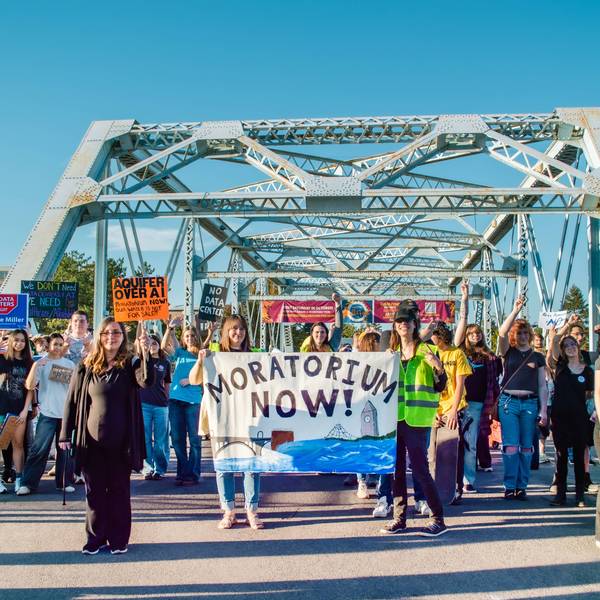
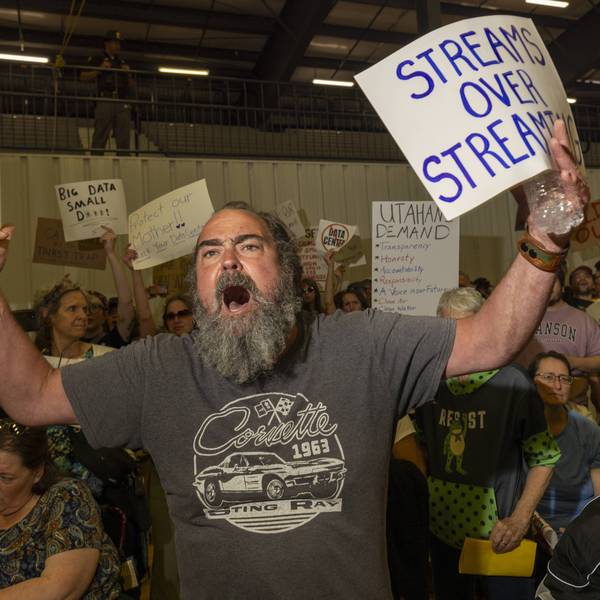
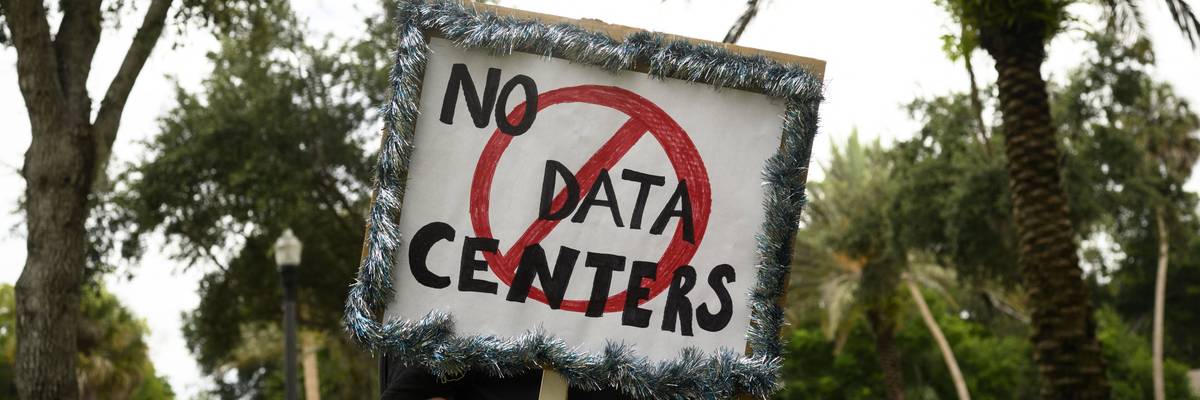
The tech industry's rapid buildout of AI data centers is getting major pushback from voters across the US, as residents issue complaints about both pollution and energy consumption that has been raising their utility bills.
Sen. Bernie Sanders (I-Vt.) and Rep. Alexandria Ocasio-Cortez (D-NY) earlier this year proposed a moratorium on new data center construction.
Dear Common Dreams reader, It’s been nearly 30 years since I co-founded Common Dreams with my late wife, Lina Newhouser. We had the radical notion that journalism should serve the public good, not corporate profits. It was clear to us from the outset what it would take to build such a project. No paid advertisements. No corporate sponsors. No millionaire publisher telling us what to think or do. Many people said we wouldn't last a year, but we proved those doubters wrong. Together with a tremendous team of journalists and dedicated staff, we built an independent media outlet free from the constraints of profits and corporate control. Our mission has always been simple: To inform. To inspire. To ignite change for the common good. Building Common Dreams was not easy. Our survival was never guaranteed. When you take on the most powerful forces—Wall Street greed, fossil fuel industry destruction, Big Tech lobbyists, and uber-rich oligarchs who have spent billions upon billions rigging the economy and democracy in their favor—the only bulwark you have is supporters who believe in your work. But here’s the urgent message from me today. It's never been this bad out there. And it's never been this hard to keep us going. At the very moment Common Dreams is most needed, the threats we face are intensifying. We need your support now more than ever. We don't accept corporate advertising and never will. We don't have a paywall because we don't think people should be blocked from critical news based on their ability to pay. Everything we do is funded by the donations of readers like you. When everyone does the little they can afford, we are strong. But if that support retreats or dries up, so do we. Will you donate now to make sure Common Dreams not only survives but thrives? —Craig Brown, Co-founder |
A joint investigative report published by Floodlight and The Guardian on Thursday revealed that one of the largest planned artificial intelligence data centers on the East Coast is operating dozens of gas-powered generators without permits in a possible violation of federal law.
Using a thermal drone to take footage of the Microsoft-backed DataOne facility in Vineland, New Jersey last week, Floodlight determined that the data center was operating 45 generators at once.
The investigation noted that the generators were operating roughly one mile from two different schools, and that the gas-powered generators used as the facility "emit substantial amounts of health-harming air pollution linked to asthma, heart attacks, and even premature death."
Bruce Buckheit, who previously served as air enforcement chief at the Environmental Protection Agency (EPA), told Floodlight that DataOne is likely violating federal law with its unpermitted generators, and he said the government should make the facility pay a fine for "illegal emissions."
Buckheit added that DataOne's apparent disregard for regulations appeared to be a common trait in the AI industry.
“It seems that this industry, in particular, values speed to market more than almost anything else,” he said.
A New Jersey Department of Environmental Protection spokesperson told Floodlight that the agency is investigating DataOne's use of gas generators but has yet to reach "a full compliance determination."
Local residents told Floodlight that they have for months complained about the nonstop humming produced by the facility, which they suspect is being caused by the generators.
"It's just constant," resident Andrew Groetsch told Floodlight of the noise coming from the facility. "It never goes away."
DataOne, which is projected to cover 2.5 million square feet upon its completion, has long been controversial.
In an interview with NBC Philadelphia published earlier this month, Vineland resident Peggy Schumacher said that the noise from the data center has gotten so bad that it's making her neighborhood "unlivable."
"We are a mile away," Schumacher explained, "and the vibration in our house is horrible now."
Fellow Vineland resident Tallis West offered a similar description of living near DataOne in an interview with CBS News published in May.
"Outside is not even enjoyable to sit outside because of the noise sometimes," West said. "We can't enjoy being outside anymore."
Despite the objections of many local residents, the Vineland Planning Board earlier this month voted to approve the second phase of construction at the facility.
The tech industry's rapid buildout of AI data centers is getting major pushback from voters across the US, as residents issue complaints about both pollution and energy consumption that has been raising their utility bills.
Sen. Bernie Sanders (I-Vt.) and Rep. Alexandria Ocasio-Cortez (D-NY) earlier this year proposed a moratorium on new data center construction.
A joint investigative report published by Floodlight and The Guardian on Thursday revealed that one of the largest planned artificial intelligence data centers on the East Coast is operating dozens of gas-powered generators without permits in a possible violation of federal law.
Using a thermal drone to take footage of the Microsoft-backed DataOne facility in Vineland, New Jersey last week, Floodlight determined that the data center was operating 45 generators at once.
The investigation noted that the generators were operating roughly one mile from two different schools, and that the gas-powered generators used as the facility "emit substantial amounts of health-harming air pollution linked to asthma, heart attacks, and even premature death."
Bruce Buckheit, who previously served as air enforcement chief at the Environmental Protection Agency (EPA), told Floodlight that DataOne is likely violating federal law with its unpermitted generators, and he said the government should make the facility pay a fine for "illegal emissions."
Buckheit added that DataOne's apparent disregard for regulations appeared to be a common trait in the AI industry.
“It seems that this industry, in particular, values speed to market more than almost anything else,” he said.
A New Jersey Department of Environmental Protection spokesperson told Floodlight that the agency is investigating DataOne's use of gas generators but has yet to reach "a full compliance determination."
Local residents told Floodlight that they have for months complained about the nonstop humming produced by the facility, which they suspect is being caused by the generators.
"It's just constant," resident Andrew Groetsch told Floodlight of the noise coming from the facility. "It never goes away."
DataOne, which is projected to cover 2.5 million square feet upon its completion, has long been controversial.
In an interview with NBC Philadelphia published earlier this month, Vineland resident Peggy Schumacher said that the noise from the data center has gotten so bad that it's making her neighborhood "unlivable."
"We are a mile away," Schumacher explained, "and the vibration in our house is horrible now."
Fellow Vineland resident Tallis West offered a similar description of living near DataOne in an interview with CBS News published in May.
"Outside is not even enjoyable to sit outside because of the noise sometimes," West said. "We can't enjoy being outside anymore."
Despite the objections of many local residents, the Vineland Planning Board earlier this month voted to approve the second phase of construction at the facility.
The tech industry's rapid buildout of AI data centers is getting major pushback from voters across the US, as residents issue complaints about both pollution and energy consumption that has been raising their utility bills.
Sen. Bernie Sanders (I-Vt.) and Rep. Alexandria Ocasio-Cortez (D-NY) earlier this year proposed a moratorium on new data center construction.