5
#000000
#FFFFFF
To donate by check, phone, or other method, see our More Ways to Give page.
Daily news & progressive opinion—funded by the people, not the corporations—delivered straight to your inbox.
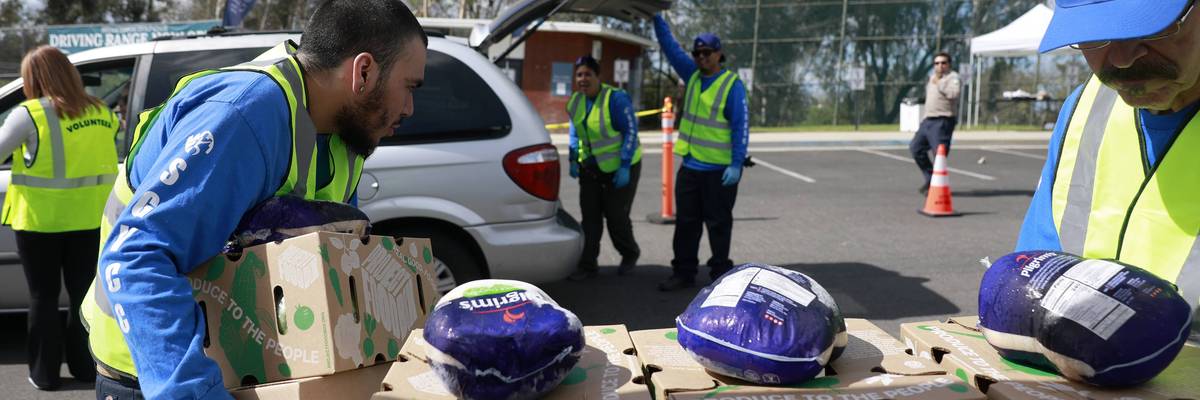
Volunteers load boxes of food into a car during a food distribution event on May 29, 2026 in Montebello, California.
"This is a plan to wreck state SNAP programs and push millions off of SNAP and into hunger."
The Republican budget package that President Donald Trump signed into law last summer included a change requiring states to fund a larger portion of the costs of administering the Supplemental Nutrition Assistance Program, which provides food aid to tens of millions of Americans.
That change, which advocates and experts warned would impose unsustainable burdens on some states and potentially result in more cuts to food aid, took effect late last week, amid a nationwide affordability crisis that has forced many Americans to turn to food banks and other sources of support to meet their families' needs.
Katie Bergh, a food policy expert at the Center on Budget and Policy Priorities (CBPP), explained that—under the Trump-GOP budget law—"every state now gets half as many federal dollars to ensure SNAP gets to eligible families on time and in the right amount."
"Some states didn't increase state funding to make up for this federal funding cut, which could lead to staff shortages, backlogs, and low-income families waiting months for help," Bergh warned. "Other states and counties are weighing property tax increases or cuts to other services to fill the gap."
CBPP has estimated that more than 5 million people, including more than a million children, have lost SNAP since Trump signed the Republican budget measure into law last year.
Rep. Shontel Brown (D-Ohio) condemned the newly implemented SNAP changes in a statement, noting that Trump and the Republican Party have created new work requirements—and thus new bureaucratic burdens for states and aid recipients—while also slashing administrative funding, a potentially disastrous combination.
"It’s a devastating gut punch and it’s intentional," said Brown. "This is a plan to wreck state SNAP programs and push millions off of SNAP and into hunger."
The Food Research & Action Center estimated in a recent analysis that the new cost burden for states "ranges from $3 million in Wyoming to $168 million in New York."
"States are being asked to administer a more complicated program with fewer federal resources. That is not an efficiency strategy. It is a fiscal transfer," the group said. "Ultimately, this policy does not simply affect state agencies. It affects every family waiting for an application to be processed, every community experiencing rising food insecurity, and every state budget attempting to balance growing needs with fewer available resources."
Dear Common Dreams reader, It’s been nearly 30 years since I co-founded Common Dreams with my late wife, Lina Newhouser. We had the radical notion that journalism should serve the public good, not corporate profits. It was clear to us from the outset what it would take to build such a project. No paid advertisements. No corporate sponsors. No millionaire publisher telling us what to think or do. Many people said we wouldn't last a year, but we proved those doubters wrong. Together with a tremendous team of journalists and dedicated staff, we built an independent media outlet free from the constraints of profits and corporate control. Our mission has always been simple: To inform. To inspire. To ignite change for the common good. Building Common Dreams was not easy. Our survival was never guaranteed. When you take on the most powerful forces—Wall Street greed, fossil fuel industry destruction, Big Tech lobbyists, and uber-rich oligarchs who have spent billions upon billions rigging the economy and democracy in their favor—the only bulwark you have is supporters who believe in your work. But here’s the urgent message from me today. It's never been this bad out there. And it's never been this hard to keep us going. At the very moment Common Dreams is most needed, the threats we face are intensifying. We need your support now more than ever. We don't accept corporate advertising and never will. We don't have a paywall because we don't think people should be blocked from critical news based on their ability to pay. Everything we do is funded by the donations of readers like you. When everyone does the little they can afford, we are strong. But if that support retreats or dries up, so do we. Will you donate now to make sure Common Dreams not only survives but thrives? —Craig Brown, Co-founder |
The Republican budget package that President Donald Trump signed into law last summer included a change requiring states to fund a larger portion of the costs of administering the Supplemental Nutrition Assistance Program, which provides food aid to tens of millions of Americans.
That change, which advocates and experts warned would impose unsustainable burdens on some states and potentially result in more cuts to food aid, took effect late last week, amid a nationwide affordability crisis that has forced many Americans to turn to food banks and other sources of support to meet their families' needs.
Katie Bergh, a food policy expert at the Center on Budget and Policy Priorities (CBPP), explained that—under the Trump-GOP budget law—"every state now gets half as many federal dollars to ensure SNAP gets to eligible families on time and in the right amount."
"Some states didn't increase state funding to make up for this federal funding cut, which could lead to staff shortages, backlogs, and low-income families waiting months for help," Bergh warned. "Other states and counties are weighing property tax increases or cuts to other services to fill the gap."
CBPP has estimated that more than 5 million people, including more than a million children, have lost SNAP since Trump signed the Republican budget measure into law last year.
Rep. Shontel Brown (D-Ohio) condemned the newly implemented SNAP changes in a statement, noting that Trump and the Republican Party have created new work requirements—and thus new bureaucratic burdens for states and aid recipients—while also slashing administrative funding, a potentially disastrous combination.
"It’s a devastating gut punch and it’s intentional," said Brown. "This is a plan to wreck state SNAP programs and push millions off of SNAP and into hunger."
The Food Research & Action Center estimated in a recent analysis that the new cost burden for states "ranges from $3 million in Wyoming to $168 million in New York."
"States are being asked to administer a more complicated program with fewer federal resources. That is not an efficiency strategy. It is a fiscal transfer," the group said. "Ultimately, this policy does not simply affect state agencies. It affects every family waiting for an application to be processed, every community experiencing rising food insecurity, and every state budget attempting to balance growing needs with fewer available resources."
The Republican budget package that President Donald Trump signed into law last summer included a change requiring states to fund a larger portion of the costs of administering the Supplemental Nutrition Assistance Program, which provides food aid to tens of millions of Americans.
That change, which advocates and experts warned would impose unsustainable burdens on some states and potentially result in more cuts to food aid, took effect late last week, amid a nationwide affordability crisis that has forced many Americans to turn to food banks and other sources of support to meet their families' needs.
Katie Bergh, a food policy expert at the Center on Budget and Policy Priorities (CBPP), explained that—under the Trump-GOP budget law—"every state now gets half as many federal dollars to ensure SNAP gets to eligible families on time and in the right amount."
"Some states didn't increase state funding to make up for this federal funding cut, which could lead to staff shortages, backlogs, and low-income families waiting months for help," Bergh warned. "Other states and counties are weighing property tax increases or cuts to other services to fill the gap."
CBPP has estimated that more than 5 million people, including more than a million children, have lost SNAP since Trump signed the Republican budget measure into law last year.
Rep. Shontel Brown (D-Ohio) condemned the newly implemented SNAP changes in a statement, noting that Trump and the Republican Party have created new work requirements—and thus new bureaucratic burdens for states and aid recipients—while also slashing administrative funding, a potentially disastrous combination.
"It’s a devastating gut punch and it’s intentional," said Brown. "This is a plan to wreck state SNAP programs and push millions off of SNAP and into hunger."
The Food Research & Action Center estimated in a recent analysis that the new cost burden for states "ranges from $3 million in Wyoming to $168 million in New York."
"States are being asked to administer a more complicated program with fewer federal resources. That is not an efficiency strategy. It is a fiscal transfer," the group said. "Ultimately, this policy does not simply affect state agencies. It affects every family waiting for an application to be processed, every community experiencing rising food insecurity, and every state budget attempting to balance growing needs with fewer available resources."