SUBSCRIBE TO OUR FREE NEWSLETTER
Daily news & progressive opinion—funded by the people, not the corporations—delivered straight to your inbox.
5
#000000
#FFFFFF
To donate by check, phone, or other method, see our More Ways to Give page.
Daily news & progressive opinion—funded by the people, not the corporations—delivered straight to your inbox.
Actor and activist Mark Ruffalo said that “extreme wealth inequality enabled” President Donald Trump, “and is the root cause of the trend towards authoritarianism we’re witnessing in the US and around the world.”
For years, progressives such as Sen. Bernie Sanders and Rep. Alexandria Ocasio-Cortez have made the case that the world's richest people wield a dangerous level of influence over US politics—and it turns out that many millionaires agree.
New polling conducted on behalf of Patriotic Millionaires surveyed 3,900 millionaires across the world and found that 77% of them believe that extremely wealthy people are able to buy political influence, with 62% believing that extreme wealth is a threat to democracy itself.
Furthermore, 82% of millionaires surveyed endorsed limits from how much politicians and political parties can receive from individual contributors, while 65% supported higher taxes on the highest earners to invest in public services.
President Donald Trump's second term also received low marks from the millionaires surveyed, with 59% saying he has had a negative impact on global economic stability, and 58% saying that he's hurt US consumers' ability to afford basic necessities.
The poll's release coincided with the sending of an open letter signed by hundreds of millionaires across 24 countries asking world leaders gathered in Davos, Switzerland for the World Economic Forum to increase taxes on the ultrawealthy in the name of rescuing global democracy. Trump is set to speak at the event on Wednesday.
"A handful of global oligarchs with extreme wealth have bought up our democracies; taken over our governments; gagged the freedom of our media; placed a stranglehold on technology and innovation; deepened poverty and social exclusion; and accelerated the breakdown of our planet," states the letter. "What we treasure, rich and poor alike, is being eaten away by those intent on growing the gulf between their vast power and everyone else."
Actor Mark Ruffalo, a signatory of the letter, argued that the extreme dangers posted by Trump and his political movement were the direct result of global wealth inequality that has gone unaddressed for decades.
"Donald Trump and the unique threat that he poses to American democracy did not come about overnight," Ruffalo explained. "Extreme wealth inequality enabled his every step, and is the root cause of the trend towards authoritarianism we’re witnessing in the US and around the world."
An investor at Deutsche Bank said the US reliance on foreign debt is a “key weakness” that could be used as leverage against Trump’s aggression.
A Danish pension fund is selling off its US treasuries in the wake of President Donald Trump's repeated threats to annex its sovereign territory, Greenland.
The fund, known as AkademikerPension, said on Tuesday that it was selling off assets worth $100 million by the end of this month.
Its investment director, Anders Schelde, insisted that the decision was due to "poor US government finances," and had nothing to do with Trump's bellicose threats in recent weeks, which have led several European nations to move troops to the island and conduct military exercises in preparation for a US invasion.
But, he said, Trump's threats "didn't make it more difficult to take the decision."
The US president said over the weekend that he would institute tariffs on several European nations if the US did not acquire Greenland by February 1. He has previously said he would not rule out using military force to conquer the island if diplomatic means failed, and when asked about it again on Monday, replied "No comment."
Greenland's prime minister, Jens-Frederik Nielsen, responded on Monday that it would “not be pressured” and “stand firm on dialogue, on respect, and on international law.” A day later, Nielsen warned the people of Greenland to start preparing for a possible military invasion. He said, "It’s not likely there will be a military conflict, but it can’t be ruled out."
Trump's threats against Greenland have rattled markets in recent days, with CNBC reporting on Tuesday that bond prices have fallen along with stock prices and the value of the US dollar, as investors sell American assets that have long been considered among the safest investments.
While Denmark accounts for only a sliver, Europe collectively holds about 40% of foreign US Treasury holdings, which it could use as a choke point in the event of further escalation by Trump.
"Europeans hold roughly $10 trillion in US assets: around $6 trillion in US equities and roughly $4 trillion in Treasuries and other bonds," said Ipek Ozkardeskaya, senior analyst at Swissquote. "Selling those assets would pull the rug from under US markets."
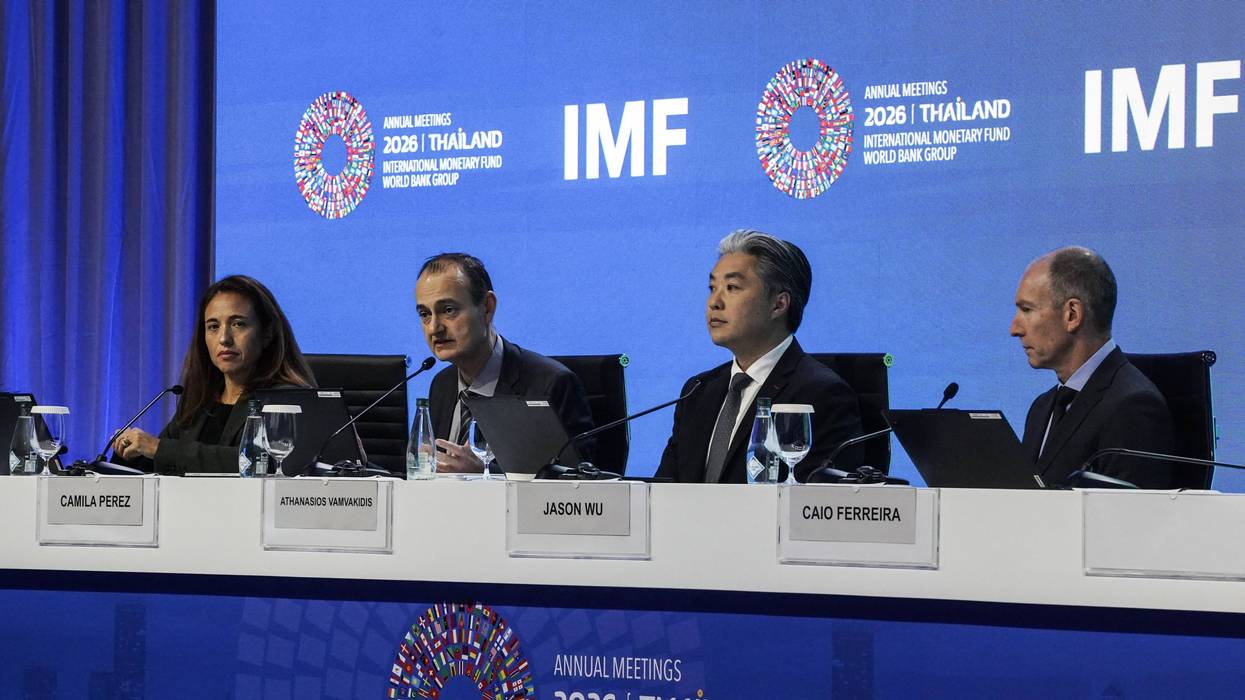
The idea of a wider European boycott of US bonds appears to have unnerved US Treasury Secretary Scott Bessent, who protested during remarks at the annual World Economic Forum summit in Davos that it "defies any logic" and urged European nations not to "listen to the media who are hysterical."
George Saravelos, head of FX research at Deutsche Bank, said if Trump is intent on shredding the long-standing US military alliance with Europe, it can return the favor by backing out of its role as America's number-one lender, which could trigger heightened inflation, dollar depreciation, and higher interest rates that make borrowing and spending more costly.
"For all its military and economic strength," Saravelos wrote, "the US has one key weakness: It relies on others to pay its bills via large external deficits."
"Don't tell me you can't provide a good nurse-staff ratio when you're paying your CEO at New York Presbyterian $26 million a year, the CEO at Montefiore $16 million a year, Mount Sinai $5 million a year," said Sen. Bernie Sanders.
As the largest nurses strike in the history of New York City marched into its second week with no resolution in sight, US Sen. Bernie Sanders (I-Vt.) and Mayor Zohran Mamdani joined hundreds of picketers in the bitter cold on Tuesday to support their fight for better pay and workplace protections.
Last week, the New York State Nurses Association (NYSNA) announced that nearly 15,000 NewYork-Presbyterian, Mount Sinai, and Montefiore hospital employees had "no choice" but to go on strike after the hospitals failed to meet their demands for safe staffing, workplace violence protections, safeguards against the use of artificial intelligence in healthcare, and to maintain 100% of their healthcare benefits.
Outside Mount Sinai West on 10th Avenue, Mamdani, attending his second picket, called for a "swift and urgent resolution" to the workers' demands after negotiations with the hospitals stalled last week and the chains began hiring replacement workers.
"This is about safe working conditions. This is about a fair contract. This is about dignity. And today is day nine—day nine—of those demands, and I want you to know that wherever I go in New York City, I hear about the plight of our nurses," the democratic socialist mayor said. "Now is your time of need, where we can ensure that this is a city that you don't just work in but a city that you can also live in."
In comments to CBS News New York, the hospital chains have scoffed at the NYSNA's demands for a 25% pay increase, especially in the wake of massive healthcare funding cuts from President Donald Trump's One Big Beautiful Bill Act last year.
A spokesperson for NewYork-Presbyterian said its nurses—who it said earn $163,000 on average—are among the highest-paid in the city, calling demands for a pay increase "unrealistic." A Montefiore spokesperson told the network that progress on negotiations will be impossible until the nurses "back away from their reckless and dangerous $3.6 billion demands."
But New York is also one of the most expensive cities in the world to live in. According to the Massachusetts Institute of Technology’s Living Wage calculator, the nurses' wages are often barely enough to meet a family's basic needs, especially for single parents with children.
NYSNA, meanwhile, has said management "is threatening to discontinue or radically cut nurses’ health benefits" and has done nothing to combat severe understaffing.
"We’re talking an emergency room filled to the brink,” said one of the strikers, staff nurse Morgan Betancourt. “Ninety patients, and we have maybe nine nurses.”
On Tuesday, Sanders (I-Vt.) emphasized that the hospitals' sudden frugality has been of little concern when it comes to compensating hospital executives.
"Don't tell me you can't provide a good nurse-staff ratio when you're paying your CEO at NewYork Presbyterian $26 million a year, the CEO at Montefiore $16 million a year, Mount Sinai $5 million a year," Sanders shouted to applause from the strikers. "Don't tell me you can't treat nurses with dignity when you're spending hundreds of millions of dollars on traveling nurses."
According to the Greater New York Hospital Association, the three hospitals combined had spent approximately $100 million to pay temporary nurses as of the fourth day of the strike. Temporary staffing agencies have required hospitals to pay scabs two to three times as much as they'd pay their regular nurses, Bloomberg reported.
Negotiations remain at a total standstill after breaking down last week. While the hospitals claim the union refused to budge on unreasonable demands, Jonathan Hunter, a negotiator for Mount Sinai nurses, told Spectrum News NY1, "They basically stonewalled us, presented us with nothing, and we left with nothing."
The strike has left the hospital system in a state of upheaval, forcing some patients to be moved and nonemergency surgeries to be canceled. Mamdani said it's all the more reason for the hospitals to reach an agreement with their workers.
"Too often when we see a strike, people forget that that is not where workers want to be," Mamdani said. "A strike is an act of last resort. What workers want is to be back at work. So what this will mean is making that possible. And so we call on every side to come back to that negotiating table. Have a swift and urgent resolution."
"While the president pledged that he would end inflation and now claims that prices are down, the data reflects what families are experiencing every day: higher costs that make it harder to make ends meet.”
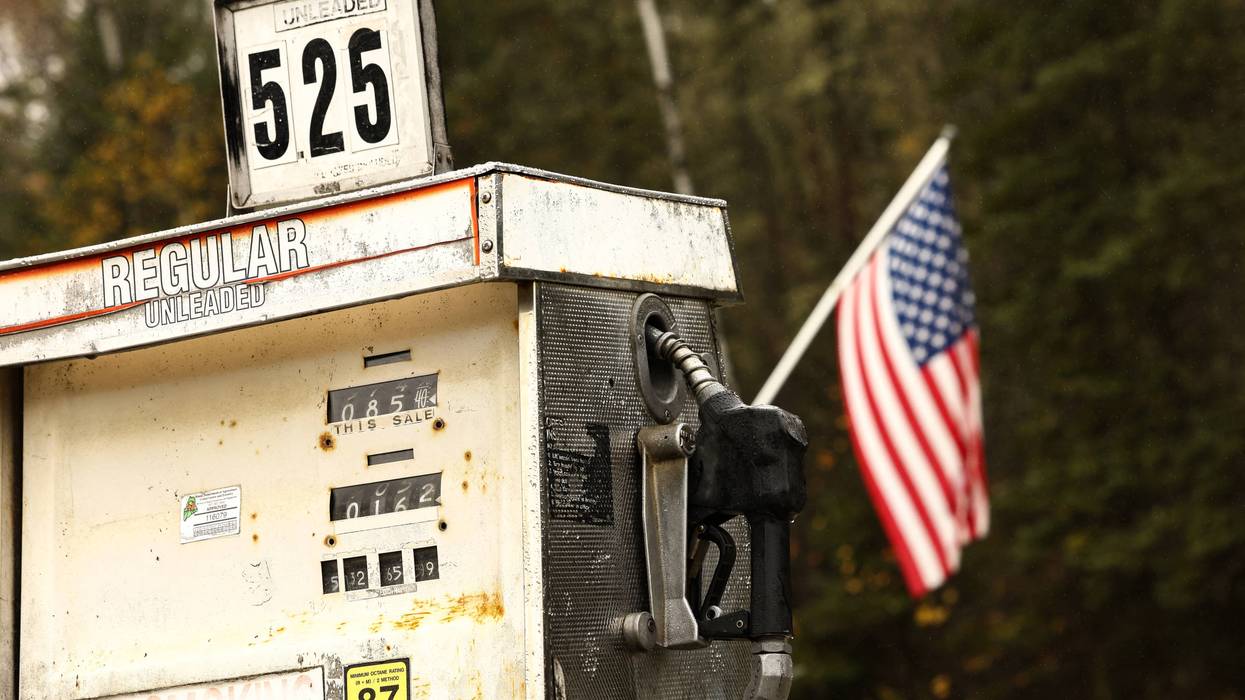
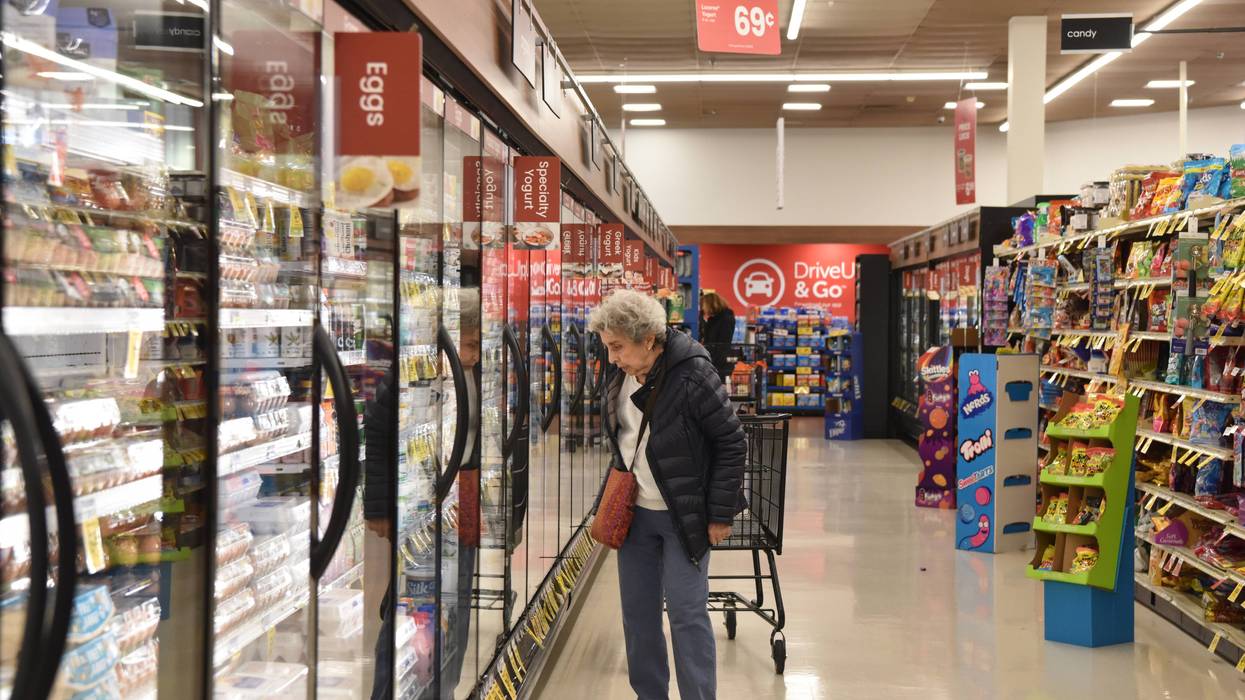
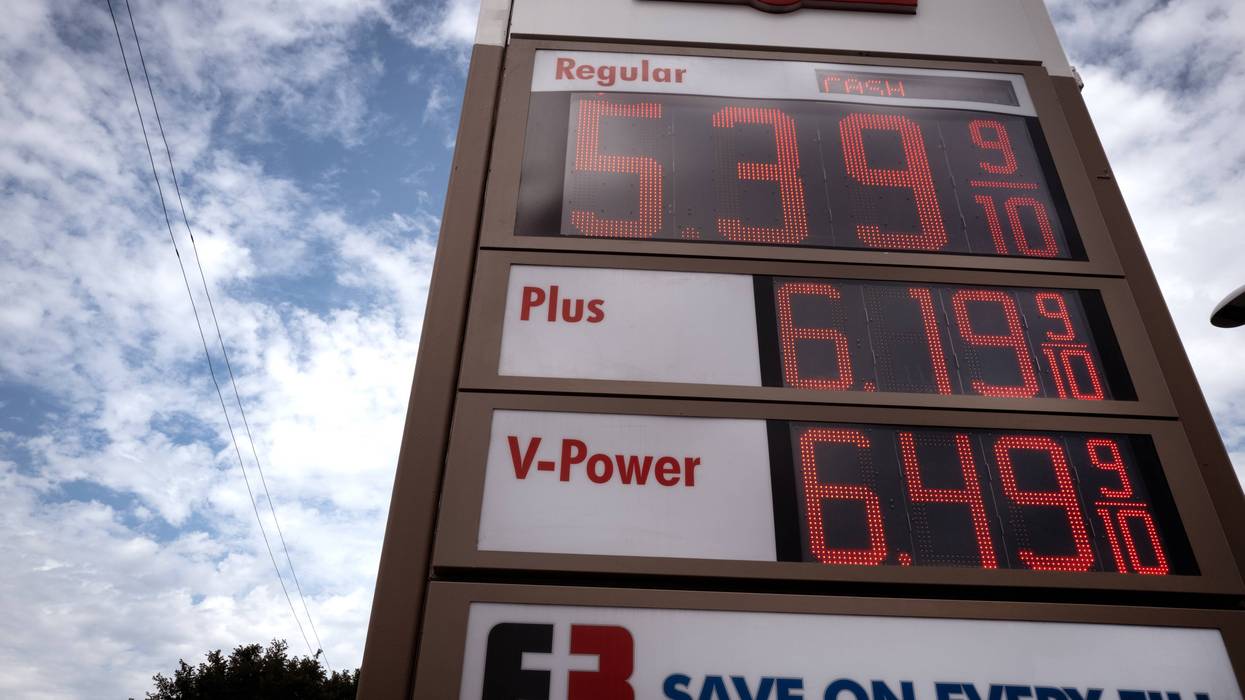
A congressional report published Tuesday further undercut US President Donald Trump's claim that he has defeated inflation, estimating that the average American family paid $1,625 in higher costs last year as the Republican president's tariffs and broader policy agenda drove up prices across the nation's economy.
The new analysis by Democrats on the Joint Economic Committee (JEC) found that the $1,625 total includes $323 more for housing expenses and $241 more for transportation costs. In some states—including Alaska, Connecticut, Massachusetts, and New York—the average family paid more than $2,000 in higher costs in 2025 as prices for groceries, housing, and other necessities continued to rise under Trump's leadership.
Sen. Maggie Hassan (D-NH), the ranking member of the JEC, said in a statement that "President Trump has imposed reckless tariffs, driven up healthcare costs, and created economic uncertainty. And because of these choices that he made, Americans are paying over $1,600 more than when he came into office."
“While the president pledged that he would end inflation and now claims that prices are down," Hassan added, "the data reflects what families are experiencing every day: higher costs that make it harder to make ends meet.”
The JEC report was released just weeks after Trump falsely proclaimed in a year-end address to the nation that "inflation is stopped" and "prices are down." CNN fact checker Daniel Dale noted that inflation data released on the morning of Trump's December 17 speech showed that "average consumer prices were 2.7% higher in December than they were a year prior and 0.3% higher than they were in November."
Trump also used his primetime speech to hail the supposed successes of his tariff regime. But a report released Monday showed that US consumers and businesses, not foreign exporters, are shouldering nearly all of the burden of the White House's import taxes.
"Despite President Trump’s claims that 2025 was the 'greatest first year in history' for an American president, Americans’ attitudes about their economic security and the latest economic data say otherwise," experts at the Center for American Progress wrote Tuesday. "With increased costs of everyday items due to tariffs and fewer job opportunities, families are feeling the direct impacts of the Trump administration’s harmful economic policies."