

SUBSCRIBE TO OUR FREE NEWSLETTER
Daily news & progressive opinion—funded by the people, not the corporations—delivered straight to your inbox.
5
#000000
#FFFFFF
To donate by check, phone, or other method, see our More Ways to Give page.
Daily news & progressive opinion—funded by the people, not the corporations—delivered straight to your inbox.

WikiLeaks whistleblower Chelsea Manning has released a podcast where she tells her story in her own words.
The recording was produced in collaboration with Amnesty International and voiced by actress Michelle Hendley. Due to prison restrictions, Chelsea is barred from speaking to any members of the press directly, or being recorded during her incarceration, so actress Michelle Hendley (known for her performance in Boy Meets Girl) has lent her voice to Chelsea's words for this episode of Amnesty's series "In Their Own Words."
Find the podcast here: https://www.amnesty.org.uk/chelsea
See Chelsea's tweet about it here: https://twitter.com/xychelsea/status/695553686261489664
"I have to say, I cried a few times listening to this. Hearing her speak, and tell the story. She sounds like me. It sounds like the way I would tell my story," Manning said of Hendley's voice in a phone conversation with Evan Greer of Fight for the Future, a digital rights group that has been supporting the transgender whistleblower who is currently serving a 35 year sentence in an all male military prison for exposing some of the U.S. government's worst abuses.
"I feel like I've been stored away for all this time without a voice or the ability to show my love and support to the folks who need it. I feel like there's so much of a contribution to society that I could be making. I spend every day looking forward to the hope that one day I can give that a go," Chelsea says in the podcast.
Amnesty International explains on their website how the project came to be, "Chelsea wrote to us and told us about her life in prison now, as well as the back story - how she came to be who she is and do what she did."
"She is spending decades in prison because she shared information that she thought could shed a light on potential abuses and prompt meaningful public debate on the conflict...Meanwhile, the US government has not investigated the abuses she exposed - while Chelsea has paid a high price for putting that information in the public realm," Amnesty writes.
The podcast begins in Chelsea's birthplace of Crescent, Oklahoma, and winds its way through her challenging life as a teenager, through to her time in the Army, and her current home of the United States Disciplinary Barracks at Fort Leavenworth. We are able to understand a bit better about why she joined the Army in the first place, to come to the aid of her country, and then how disillusionment soon followed, when she realized how badly the Iraq war was being mismanaged, resulting in often lethal results for the citizens of Iraq. As she explains:
"These were real people living in real places. When we made mistakes planning operations, innocent people died. When we failed to see the small scale and the big picture as being connected, then our operations wouldn't flow very well and innocent people would get caught up in detention for weeks or years because of a minor mistake that we made. It often became a burden for me when we made mistakes or overlooked things like the Iraqi government detaining people under false pretenses, and torturing their citizens because they wanted to make an example. A part of me still takes their suffering personally."
We are also given a glimpse of Chelsea's current life in prison, where she remains hopeful and tries to make the best of her situation, writing columns for the Guardian and acting as a leader in movements for transgender justice and government accountability.
The podcast comes after a series of recent attempts by the U.S. government to interfere with Chelsea's ability to speak out, including threatening her with solitary confinement last year for minor prison infractions including possession of LGBTQ reading material and an expired tube of toothpaste. Fight for the Future and other groups quickly gathered more than 100,000 signatures calling for no solitary for Chelsea, and later sent Chelsea more than 5,000 birthday cards from supporters.
Manning's case is set for an appeal in coming months, and many civil society groups plan to continue supporting her and demanding her release.
Fight for the Future is a group of artists, engineers, activists, and technologists who have been behind the largest online protests in human history, channeling Internet outrage into political power to win public interest victories previously thought to be impossible. We fight for a future where technology liberates -- not oppresses -- us.
(508) 368-3026
"We must not allow ICE to kidnap children and bring them to prisons where they profit off their pain, misery, and suffering," said Rep. Joaquin Castro.
A group of Democratic lawmakers on Tuesday demanded the termination of US Homeland Security Secretary Kristi Noem, as new footage emerged in Minneapolis of federal immigration officers drawing guns on unarmed observers.
More than a dozen Democrats serving in the US House of Representatives stood outside the Washington, DC headquarters of US Immigration and Customs Enforcement (ICE) on Tuesday and demanded that President Donald Trump fire Noem, who has taken heat for making false claims in recent weeks about Minneapolis residents Renee Good and Alex Pretti, both of whom were gunned down by federal agents last month.
Rep. Ilhan Omar (D-Minn.) delivered a brief speech at the event where she described her home city of Minneapolis as being under "occupation" by federal agents sent by Trump and Noem.
"We do not exaggerate when we say we have schools where two-thirds of the students are afraid to go to school," she said. "We do not exaggerate when we say we have people who are afraid to go to the hospital because our hospitals have occupying paramilitary forces. We do not exaggerate when we say our restaurants are shutting down because there are not enough people to drive the employees to work and from work."
Omar went on to reiterate her past calls to abolish ICE, which she described as "not just rogue, but unlawful." She also said that “Democrats are ready and willing to impeach" Noem if Trump doesn't fire her.
Later in the event, Rep. Joaquin Castro (D-Texas) spoke of his meeting last week with Liam Ramos, a 5-year-old boy from Minneapolis who had been detained at a Texas ICE facility before a judge last weekend ordered his release.
"While detained, he became lethargic and sick," Castro said, speaking of Ramos. "His father said that he'd become depressed. He was asking about his mother and his classmates, and most of all, he wanted to go home. But he also said that he was scared of the guards... he had clearly been traumatized."
Castro emphasized that, even though Ramos and his father have been freed from detention, there are still too many children being held at the facility, including at least one as young as two years old
"This is a machinery of cruelty and viciousness that Secretary Noem has overseen, the Trump administration has built, and people like Texas Gov. Greg Abbott have been complicit in upholding," he said. "We must not allow ICE to kidnap children and bring them to prisons where they profit off their pain, misery, and suffering."
As Democrats were making their case for Noem's removal, new footage emerged of federal immigration officers in Minneapolis pulling legal observers out of their cars at gun point.
In a video posted on social media by independent journalist Ford Fischer, agents can be seen swarming a vehicle with their guns drawn and demanding and its passengers exit the car.
Just now: ICE agents pull handguns and arrest observers who had been following them this morning in Minneapolis. pic.twitter.com/s3uIwWS3AA
— Ford Fischer (@FordFischer) February 3, 2026
After the observers were pulled from the vehicle and detained by officers on the scene, one officer in the video claims that the people in question had been threatening them with "hand guns."
An observer then asks the officer if he means that the people being taken into custody were waving firearms at them, and he replies that they were making fake guns with their fingers, not brandishing actual weapons.
As the officers left the scene, they were heckled by protesters.
"Put away your weapons you douchebag, nobody is threatening you!" yelled one.
"I think the DOE's attempts to cut corners on safety, security, and environmental protections are posing a grave risk to public health, safety, and our natural environment," said one expert.
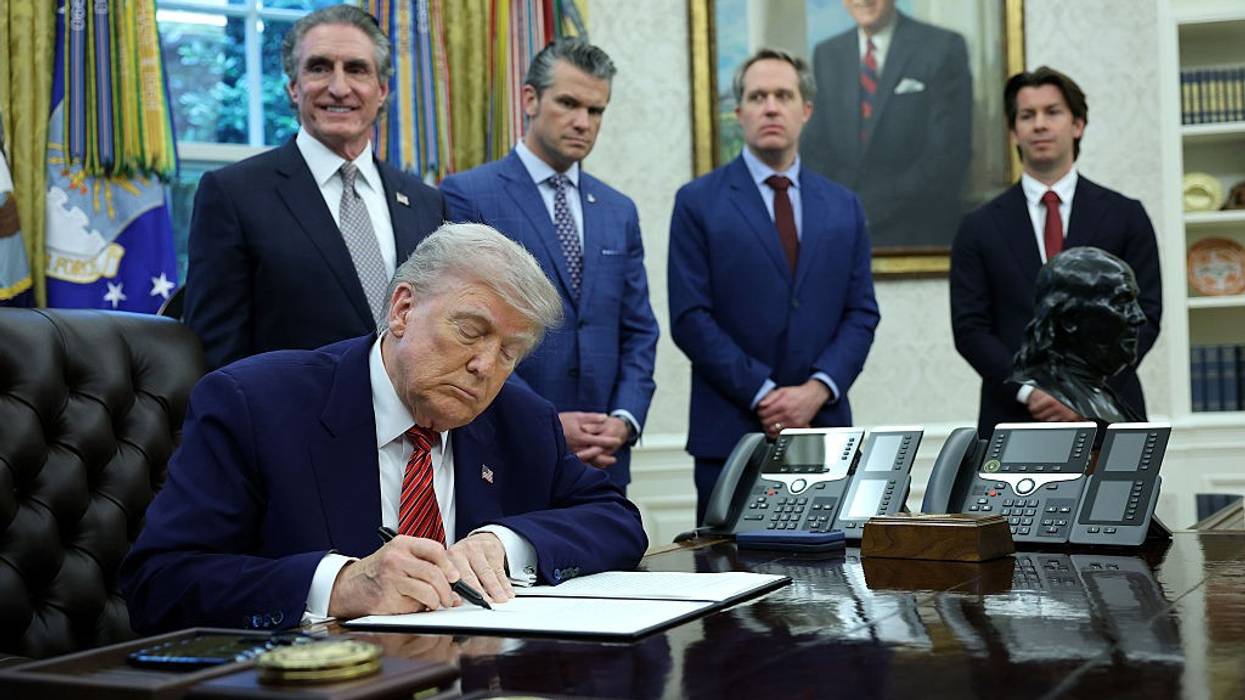
Less than a week after NPR revealed that "the Trump administration has overhauled a set of nuclear safety directives and shared them with the companies it is charged with regulating, without making the new rules available to the public," the US Department of Energy announced Monday that it is allowing firms building experimental nuclear reactors to seek exemptions from legally required environmental reviews.
Citing executive orders signed by President Donald Trump in May, a notice published in the Federal Register states that the DOE "is establishing a categorical exclusion for authorization, siting, construction, operation, reauthorization, and decommissioning of advanced nuclear reactors for inclusion in its National Environmental Policy Act (NEPA) implementing procedures."
NEPA has long been a target of energy industries and Republican elected officials, including Trump. The exemption policy has been expected since Trump's May orders—which also launched a DOE pilot program to rapidly build the experimental reactors—and the department said in a statement that even the exempted reactors will face some reviews.
"The US Department of Energy is establishing the potential option to obtain a streamlined approach for advanced nuclear reactors as part of the environmental review performed under NEPA," the DOE said. "The analysis on each reactor being considered will be informed by previously completed environmental reviews for similar advanced nuclear technologies."
"The fact is that any nuclear reactor, no matter how small, no matter how safe it looks on paper, is potentially subject to severe accidents."
However, the DOE announcement alarmed various experts, including Daniel P. Aldrich, director of the Resilience Studies Program at Northeastern University, who wrote on social media: "Making America unsafe again: Trump created an exclusion for new experimental reactors from disclosing how their construction and operation might harm the environment, and from a written, public assessment of the possible consequences of a nuclear accident."
Foreign policy reporter Laura Rozen described the policy as "terrifying," while Paul Dorfman, chair of the Nuclear Consulting Group and a scholar at the University of Sussex's Bennett Institute for Innovation and Policy Acceleration, called it "truly crazy."
As NPR reported Monday:
Until now, the test reactor designs currently under construction have primarily existed on paper, according to Edwin Lyman, director of nuclear power safety at the Union of Concerned Scientists, a nonprofit environmental advocacy group. He believes the lack of real-world experience with the reactors means that they should be subject to more rigorous safety and environmental reviews before they're built.
"The fact is that any nuclear reactor, no matter how small, no matter how safe it looks on paper, is potentially subject to severe accidents," Lyman said.
"I think the DOE's attempts to cut corners on safety, security, and environmental protections are posing a grave risk to public health, safety, and our natural environment here in the United States," he added.
Lyman was also among the experts who criticized changes that NPR exposed last week, after senior editor and correspondent Geoff Brumfiel obtained documents detailing updates to "departmental orders, which dictate requirements for almost every aspect of the reactors' operations—including safety systems, environmental protections, site security, and accident investigations."
While the DOE said that it shared early versions of the rules with companies, "the reduction of unnecessary regulations will increase innovation in the industry without jeopardizing safety," and "the department anticipates publicly posting the directives later this year," Brumfiel noted that the orders he saw weren't labeled as drafts and had the word "approved" on their cover pages.
In a lengthy statement about last week's reporting, Lyman said on the Union of Concerned Scientists website that "this deeply troubling development confirms my worst fears about the dire state of nuclear power safety and security oversight under the Trump administration. Such a brazen rewriting of hundreds of crucial safeguards for the public underscores why preservation of the Nuclear Regulatory Commission (NRC) as an independent, transparent nuclear regulator is so critical."
"The Energy Department has not only taken a sledgehammer to the basic principles that underlie effective nuclear regulation, but it has also done so in the shadows, keeping the public in the dark," he continued. "These long-standing principles were developed over the course of many decades and consider lessons learned from painful events such as the Chernobyl and Fukushima disasters. This is a massive experiment in the deregulation of novel, untested nuclear facilities that could pose grave threats to public health and safety."
"These drastic changes may extend beyond the Reactor Pilot Program, which was created by President Trump last year to circumvent the more rigorous licensing rules employed by the NRC," Lyman warned. "While the DOE created a legally dubious framework to designate these reactors as 'test' reactors to bypass the NRC's statutory authority, these dramatic alterations may further weaken standards used in the broader DOE authorization process and propagate across the entire fleet of commercial nuclear facilities, severely degrading nuclear safety throughout the United States."
“There’s very little in our product portfolio that has benefited from tariffs,” said the CEO of one North Carolina-based steel product company.
US President Donald Trump pledged that the manufacturing industry would come "roaring back into our country" after what he called "Liberation Day" last April, which was marked by the announcement of sweeping tariffs on imported goods—a policy that has shifted constantly in the past 10 months as Trump has changed rates, canceled tariffs, and threatened new ones.
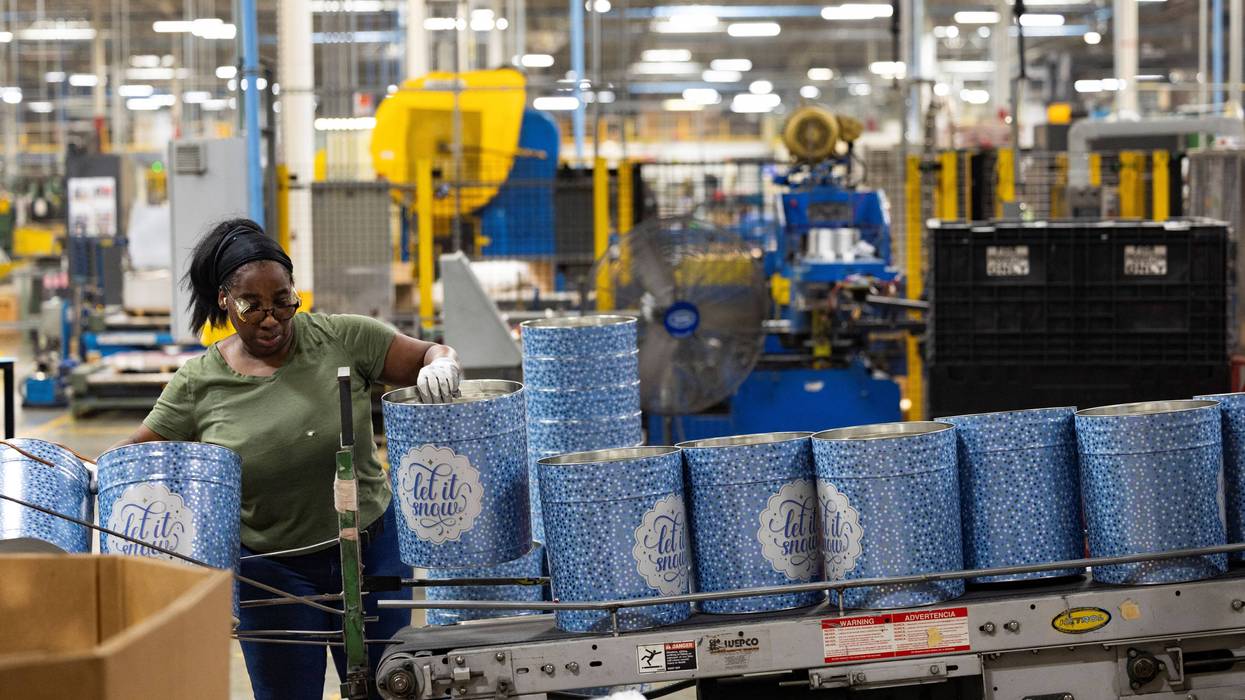
But after promising to turn around economic trends that have developed over decades—the shipping of jobs overseas, automation, and the obliteration of towns and cities that had once been manufacturing centers—Trump's trade policy appears to have put any progress achieved in the sector in recent years "in reverse," as the Wall Street Journal reported on Monday.
Federal data shows that in each of the eight months that followed Trump's Liberation Day tariffs, manufacturing companies reduced their workforce, with a total of 72,000 jobs in the industry lost since April 2025.
The Census Bureau also estimates that construction spending in the manufacturing industry contracted in the first nine months of Trump's second term, after surging during the Biden administration due to investments in renewable energy and semiconductor chips.
"But the tariffs haven’t helped," said Hanson.
Trump has insisted that his tariff policy would force companies to manufacture goods domestically to avoid paying more for foreign materials—just as he has claimed consumers would see lower prices.
But numerous analyses have shown American families are paying more, not less, for essentials like groceries as companies have passed on their higher operating costs to consumers, and federal data has made clear that companies are also avoiding investing in labor since Trump introduced the tariffs—while the trade war the president has kicked off hasn't changed the realities faced by many manufacturing sectors.
"While tariffs do reduce import competition, they can also increase the cost of key components for domestic manufacturers," wrote Emma Ockerman at Yahoo Finance. "Take US electric vehicle plants that rely on batteries made with rare earth elements imported from overseas, for instance. Some parts simply aren’t made in the United States."
At the National Interest, Ryan Mulholland of the Center for American Progress wrote that Trump's tariffs have created "three overlapping challenges" for US businesses.
"The imported components and materials needed to produce goods domestically now cost more—in some cases, a lot more," wrote Mulholland. "Foreign buyers are now looking elsewhere, often to protest Trump’s global belligerence, costing US firms market share abroad that will be difficult to win back. And if bad policy wasn’t enough, US manufacturers must also contend with the Trump administration’s unpredictability, which has made long-term investment decisions nearly impossible. Perhaps it’s no surprise, then, that small business bankruptcies have surged to their highest level in years."
Trump's unpredictable threats of new tariffs and his retreats on the policy, as with European countries in recent weeks when he said he would impose new levies on countries that didn't support his push to take control of Greenland, have also led to "a lost year for investment" for many firms, along with the possibility that the US Supreme Court could soon rule against the president's tariffs.
“If Trump just picked a number—whatever it was, 10% or 15% to 20%—we might all say it’s bad, I’d say it’s bad, I think most economists would say it’s bad,” Dean Baker, senior economist at the Center for Economic and Policy Research, told Yahoo Finance. “But the worst thing is there’s no certainty about it.”
Constantly changing tariff rates make it "very difficult for businesses... to plan," said Baker. “I think you’ve had a lot of businesses curtail investment plans because they just don’t know whether the plans will make sense.”
While US manufacturers have struggled to compete globally, China and other countries have continued exporting their goods.
“There’s very little in our product portfolio that has benefited from tariffs,” H.O. Woltz III, chief executive of North Carolina-based Insteel Industries, told the Wall Street Journal.
US Rep. Marcy Kaptur (D-Ohio) noted Monday that the data on manufacturing job losses comes a week after Vice President JD Vance visited his home state to tout "record job growth."
"Here’s the reality: Families face higher costs, tariffs are costing manufacturing jobs, and over $200 million in approved federal infrastructure and manufacturing investments here were cut by this administration," said Kaptur. "Ohio deserves better."