

SUBSCRIBE TO OUR FREE NEWSLETTER
Daily news & progressive opinion—funded by the people, not the corporations—delivered straight to your inbox.
5
#000000
#FFFFFF
To donate by check, phone, or other method, see our More Ways to Give page.
Daily news & progressive opinion—funded by the people, not the corporations—delivered straight to your inbox.
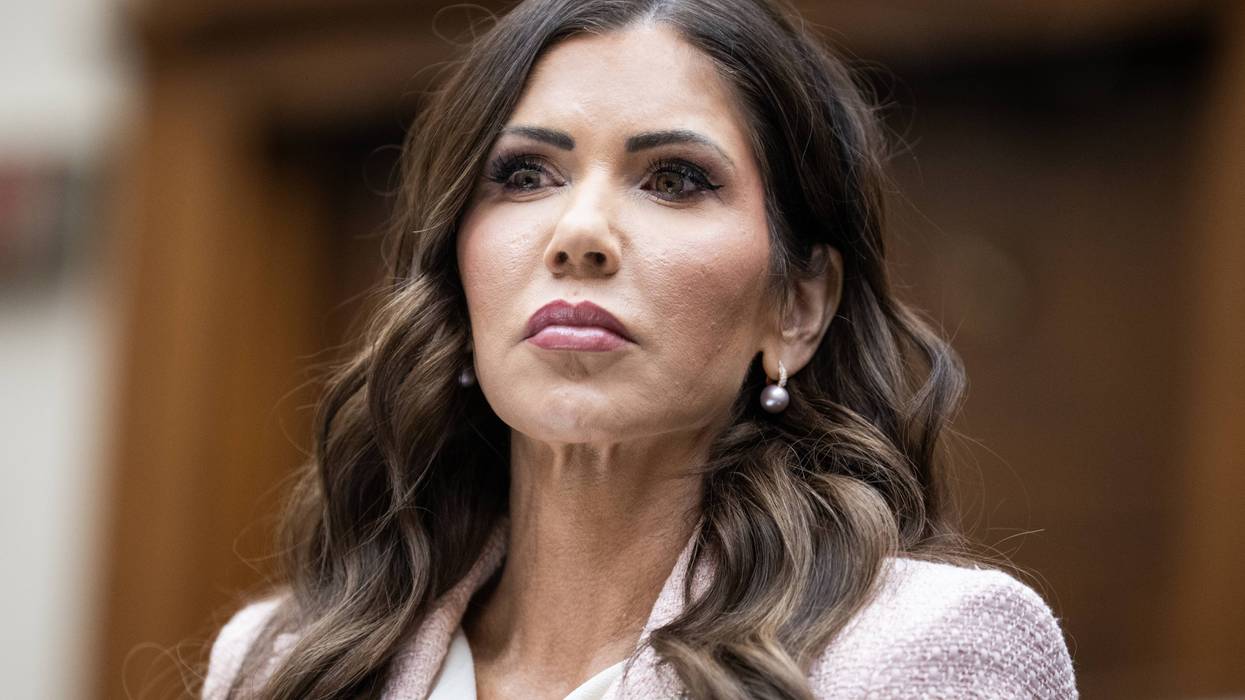
"Secretary Noem made a series of demonstrably false statements in a brazen attempt to undermine critical congressional oversight of the Department of Homeland Security."
Two Democratic congressional leaders on Monday said they had "low expectations" for President Donald Trump's Department of Justice to examine alleged perjury by ousted Homeland Security Secretary Kristi Noem, but they noted that the statute of limitations for making false statements to Congress is five years as they referred her for an investigation—meaning Noem's recent remarks about her department's operations under her leadership could be probed after Trump leaves office.
House Judiciary Committee Ranking Member Jamie Raskin (D-Md.) and Senate Judiciary Committee Ranking Member Dick Durbin (D-Ill.) wrote to Attorney General Pam Bondi days after Noem testified before two panels earlier this month—proceedings that came just before Trump announced he was firing the secretary.
Noem, who will officially leave office at the end of the month, has presided over the Department of Homeland Security (DHS) as Trump has embarked on his mass deportation plan—deploying armed federal agents to cities across the US, resulting in the deaths of more than two dozen people including at least three US citizens, sending hundreds of people to a notorious prison in El Salvador against a judge's orders, and detaining tens of thousands of people in centers known for abuse and neglect.
Those subjects were all addressed at the hearings in which Noem testified on March 3 and 4, and Durbin and Raskin argued in their letter to Bondi that the secretary's comments on the issues could make her liable for a federal crime.
"After months of evading our committees’ requests to testify in routine oversight hearings, Secretary Noem made a series of demonstrably false statements in a brazen attempt to undermine critical congressional oversight of the Department of Homeland Security," wrote the lawmakers. "Making false statements to Congress, and making false statements under oath, are federal crimes."
Noem repeatedly told the committees that under her leadership, DHS "absolutely" complies with federal court orders, and persisted in that claim even after Rep. Becca Balint (D-Vt.) pointed out that days earlier, Chief Judge Patrick Schiltz in the District Court of Minnesota had identified 210 instances of US Immigration and Customs Enforcement (ICE) violating court orders. The violations noted by the judge only represented those that took place between December 2025-February 2026 in the state of Minnesota.
Schiltz is one of several judges who have determined DHS and its underlying agencies have defied court orders, including in cases when judges have ordered the immediate release of immigrants who were held without due process or on false pretenses. The fact that Noem repeatedly told lawmakers that "we comply with all federal court orders" could violate federal statutes including 18 USC §1001, said Durbin and Raskin.
Noem was also asked by Sen. John Kennedy (R-La.) about a $220 million advertising campaign that featured her prominently in what she said was an effort by Trump to get "the message out" about her agency's anti-immigration operations. The president denied on the day he fired Noem that he had known anything about the campaign, but aside from that discrepancy, Durbin and Raskin said the outgoing secretary may have falsely stated that there was a competitive bidding process for the campaign.
Noem was confronted with evidence during one of the hearings that one contractor, Safe America Media, had received $143 million to produce the campaign. But she said repeatedly that "there was no involvement whatsoever of anybody that is on the political appointee side of this position on that media contract."
New reporting has shown that Noem actually "handpick[ed]" four companies that were politically connected to the secretary and her allies for the ad campaign.
At both the Senate and House hearings, Noem was asked whether DHS has detained US citizens since Trump took office for his second term last year. She responded definitively in the negative at both hearings—making "demonstrably false" statements, said Durbin and Raskin.
At least 170 US citizens were wrongfully detained in the first six months of Trump's crackdown, and during "Operation Midway Blitz" in Durbin's home state, a 15-year-old, a man who had presented his birth certificate and ID to prove his citizenship, and members of Chicago Alderman Mike Rodriguez's staff were among those who were detained.
Finally, the two Democrats accused Noem of perjuring herself when she responded to questions about conditions in ICE detention centers, claiming that the facilities provide "medical care to all of our detainees [and] three nutritious meals a day," and that detention standards are "the highest in the nation."
Numerous reports have pointed to medical neglect and abuse—some that could amount to torture, according to Amnesty International—at detention centers across the country. At least 48 people have died in these ICE facilities since January 2025. A family's account of conditions at Dilley Immigration Processing Center in Texas, which is run by private prison contractor CoreCivic, detailed moldy and worm-infested food and medical neglect, with the center ignoring a doctor's referral for a comprehensive scan to examine a lump under the mother's rib cage.
"There is ample evidence that ICE is neither meeting its own detention standards, nor providing anything that resembles a nutritious meal," wrote Durbin and Raskin. "ICE internal audits have documented significant failures to meet medical care standards."
The lawmakers urged Bondi to respond to their referral promptly while noting that they had "low expectations" that the Trump administration would hold Noem accountable.
At the House hearing earlier this month, Balint issued a warning to Noem that Americans "will get accountability" sooner or later.
One day, Kristi Noem won’t have Trump to hide behind.
She will be held accountable for the terror she and her employees have unleashed on the American people. pic.twitter.com/qVbz8Rd7Jy
— Rep. Becca Balint (@RepBeccaB) March 4, 2026
"You are the secretary of DHS—for now," said Balint. "And you think you're immune from accountability, but I promise you this: One day, [Trump] is not going to be president anymore. He is not going to be in charge, and when that day comes, we will still be here."
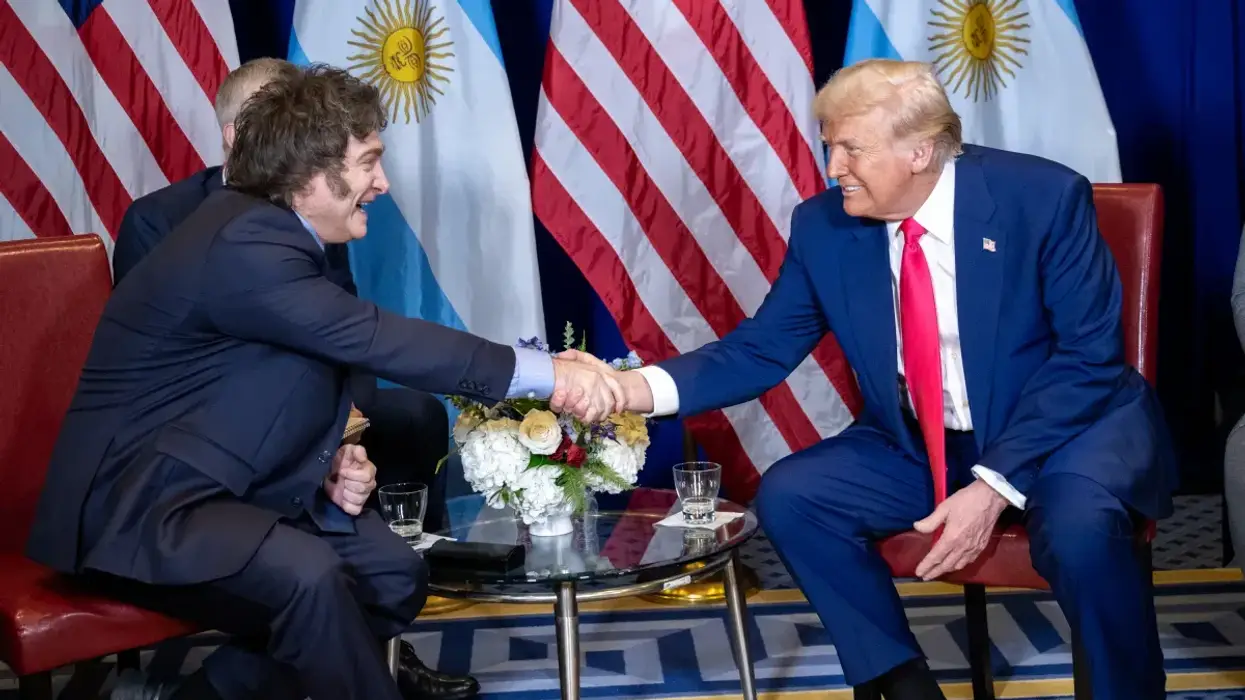
The group of Caribbean and Latin American leaders attending Trump’s weekend summit in Miami are the fan club of his aggressive interventionism, his so-called “war on narco-terror,” and his administration’s attacks on left-wing governments and movements.
For nearly three years the Dominican Republic had been excitedly preparing to host the region’s biggest multilateral event: the 2025 Summit of the Americas, bringing together the leaders of nearly every government in the Western Hemisphere. But on November 3, only a month before the summit was to take place, the DR’s foreign ministry abruptly announced the postponement of the event citing “recent climatic events” (i.e., hurricanes) and “profound divisions that currently hamper productive dialogue in the hemisphere.”
Indeed, regional “divisions”—others might say “alarm” or “outrage”—had intensified during the fall of 2025 following the US’ massive military build-up in the Caribbean, its air strikes against alleged drug boats—resulting in scores of extrajudicial killings—and the threats of a US attack on Venezuela. Past summits, including the 2022 summit in Los Angeles, had seen Latin American leaders fiercely push back against US regional policies. Fearing a potential public relations disaster, DR President Luis Abinader—following consultations with US Secretary of State Marco Rubio—decided that pulling the plug was the best option.
So far there’s no word of a new date for the Summit of the Americas. This weekend, however, President Donald Trump will convene a far smaller hemispheric summit at his golf resort in Miami. The group of Caribbean and Latin American leaders that will be attending Trump’s summit—entitled “Shield of the Americas”—are fans of his aggressive interventionism, his so-called “war on narco-terror,” and his administration’s attacks on left-wing governments and movements in the region. They have earned their exclusive invitations through various forms of tribute and by pledging their continued loyalty, though it remains to be seen whether Trump and Rubio will succeed in garnering support for every point on their agenda, in particular for their effort to push China out of the region.
***
Featuring a who’s who of the Latin American hard right, Trump’s divisions-free summit is reminiscent of recent Conservative Political Action Conferences (CPACs) held in Brazil, Argentina and Paraguay. Like those conferences—in which Argentina’s anarcho-capitalist president Javier Milei and Chile’s far-right president-elect José Antonio Kast have shared the stage with MAGA luminaries like Steve Bannon—the “Shield” summit appears designed to further promote Trump-aligned far-right cultish ideologies in the Americas. As an added bonus, it will be held at the National Trump Doral Miami, ensuring a solid weekend of revenue for Trump’s resort as well as quick, easy travel to and from Mar-a-Lago for the US president.
Still, it remains to be seen whether Trump—whose overall attitude toward the region and its inhabitants oscillates between contempt and indifference—will be willing to invest real time and energy in cultivating this group of leaders.
Each of the summit invitees—numbering 12 at last count—can claim to have advanced the US administration’s regional objectives in one way or another. Many have engaged in sustained attacks against left-wing governments and movements that have resisted Trump’s imperial ambitions. Milei, for instance, has repeatedly insulted President Lula da Silva of Brazil and thrown his support behind former Brazilian president Jair Bolsonaro, convicted last year of plotting a military coup against Lula.
Daniel Noboa of Ecuador, in addition to persecuting left-wing opponents at home, has engaged in an unprovoked tariff war against Colombia’s progressive president—and vocal Trump critic—Gustavo Petro. On March 4, for no apparent reason other than that of wanting to please Trump and Rubio, Noboa expelled the entire diplomatic staff at Cuba’s embassy in Quito. Similarly, Honduras’ recently-elected right-wing president Nasry Asfura rescinded a medical cooperation agreement with Cuba, leading to the departure of more than 150 Cuban doctors that had been serving low-income communities. This offering will have surely warmed the heart of Marco Rubio, who has been pressuring countries around the world to terminate similar agreements in order to eliminate one of Cuba’s few sources of foreign income.
Above all, the cohort of right-wingers attending the summit have been supportive of Trump’s “war on narco-terror,” currently the main vehicle for advancing Trump’s policy of expanding US political and economic influence in the region, referred to both mockingly and seriously as the “Donroe Doctrine.” The first signs of this “war” date back to the first day of Trump’s second term, when he instructed Rubio to designate various drug cartels and Latin American gangs as “foreign terrorist organizations.” It became real when, in late July of last year, the US president ordered a massive build-up of naval and aerial military assets in the south Caribbean and directed US Southern Command (Southcom) to conduct illegal aerial strikes against suspected drug boats, leading so far to over 150 extrajudicial killings of mostly unknown civilians.
On January 3, following months of threats of US intervention in Venezuela, US forces conducted an unprovoked military attack and invasion of Venezuela and abducted President Nicolás Maduro and his wife Cilia Flores, who were flown to New York to await trial on dubious charges. The next day, the members of the Community of Latin American and Caribbean States (CELAC, by its Spanish initials) met and discussed a statement denouncing the illegal attack on Venezuela. Nine governments opposed the statement and effectively blocked its release. The leaders of those governments, except for that of politically unstable Peru, are now on the “Shield of the Americas” invitation list. Two other leaders who’d been elected but hadn’t taken office—Kast of Chile and Asfura of Honduras—defended the attack, and have been invited as well.
A number of governments have gone even further in embracing Trump’s “narco-terror war.” After the US administration designated the fictitious Venezuelan drug organization “Cartel de los Soles” as a Specially Designated Global Terrorist, later identifying Maduro as its leader, the presidents of Argentina, Ecuador, Paraguay, and the DR (all “Shield” invitees) did the same. Given the lack of real evidence that this so-called cartel exists, the US Department of Justice removed the term from its indictment of Maduro; however, the terrorist designation remains in the books in the US and in those four Latin American countries.
Many of the governments represented at the Miami summit have adopted the term “narco-terror” in official discourse and policy statements. Noboa, whose security forces are allegedly responsible for forced disappearances and widespread human rights abuses, has launched his own “war on narco-terror” in Ecuador. On March 3 the US and Ecuador announced joint military operations targeting “terrorist organizations” with US special forces supporting Ecuadorian commandos to “combat the scourge of narco-terrorism,” per Southcom. Other summit invitees, including Argentina, the DR, Bolivia, and El Salvador appear to be getting in the game as well and Paraguay, like Ecuador, has signed a Status of Forces Agreement with the US administration, allowing the presence of US troops and providing them with immunity from local prosecution.
It’s possible that the Trump administration considers that framing US military expansionism in the hemisphere as a combined war on terrorism and drug-trafficking is helpful in garnering public support, though there’s not much indication that it has, outside of the Republican MAGA base. But it’s hard to claim, with a straight face, that President Trump is genuinely determined to fight drug trafficking knowing that he recently pardoned former Honduran president Juan Orlando Hernández, who was serving a 45-year sentence for his role in enabling the importation of more than 400 tons of cocaine to the US. Or when one considers that one of his primary partners in his drug war is President Noboa, whose family’s business appears to be implicated in cocaine trafficking, according to a recent investigation by the Organized Crime and Corruption Reporting Project.
As of the writing of this article, there are few details about the agenda of the summit except that apparently “security” and “foreign interference” will be discussed. Regarding “security,” Trump, Rubio, and Defense Secretary Peter Hegseth—who are all reportedly attending—probably won’t need to do much to convince their allies to double down further on the “narco-terror” threat. Given recent events, it’s likely they’ll focus more on shoring up regional support for the war with Iran, which has so far received mostly tepid backing, with the exception of presidents Milei, Kast, and Santiago Peña of Paraguay, who have all cheered on the joint US-Israeli attacks. They may also seek more overt backing for the intense US regime change effort targeting Cuba, which involves an oil blockade that could soon cause a “humanitarian collapse,” according to the United Nations. Trump and many Republicans have said that when they’re done in Iran, “Cuba is next.”
By “foreign interference” the White House is presumably not referring to US interference in Latin America and the Caribbean, which has been a constant for many decades but has reached new heights under Trump. Instead, the term is widely understood in Washington as primarily a reference to China’s growing regional influence. Here it is far from certain that Trump and his team will make much progress given the massive economic benefits derived from Chinese trade and investment. China is currently the top trading partner for Brazil, Chile, Ecuador, and Paraguay and the second biggest trading partner for nearly all of the other countries represented at the summit.
Many of these leaders have engaged in strident rhetoric against the PRC, but ultimately have quietly chosen to strengthen relations with the world’s second-biggest (and soon biggest) economy. Milei, for instance, referred to the Chinese government as “assassins” and said that he refused to do business with communists. He has completely changed his tune now: At Davos this year he called China “a great trading partner” and said that he plans to visit Beijing this year.
According to a schedule that the White House shared with the media, President Trump will participate in the “Shield of the Americas” summit for two and half hours and then fly back to Mar-a-Lago in the afternoon. With 12 other heads of state present, it’s doubtful that much will be achieved. There will be speeches—one can expect a long, rambling speech by Trump in which he’s likely to congratulate himself again for his “success” in Venezuela—there will doubtless be many selfies taken with Trump, but it’s unlikely that there will be anything resembling real dialogue.
Instead, the summit’s goal appears to be, first, offering the leaders limited face time with Trump as a sort of recompense for their loyalty and various good deeds. Some of these leaders have already received decisive support from Trump. Shortly before a key congressional election in Argentina, the US Treasury offered Milei’s government a $20 billion bailout, which stabilized the country’s economy and helped Milei’s party clinch a major electoral victory. Late last year, Trump interfered in a big way in Honduras’ election by endorsing Asfura’s candidacy and threatening to exact an economic punishment on the whole country if voters didn’t elect him. Asfura ended up winning by a razor thin margin that was contested by his opponents.
For leaders of some of the smaller countries, participating in the summit is itself a big reward, one that allows them to show domestic constituencies that their pliant behavior has paid off in the form of privileged access to the US president. For Trinidad’s Persad-Bissessar, who supported Trump’s boat strikes even after Trinidadian civilians were killed, and Guyanese president Irfan Aali, who promised US oil companies “preferential treatment” in their bids to operate in Guyana’s booming oil sector, the participation in such an exclusive event with Trump is, in itself, the reward.
Finally, it’s likely that, through this brief summit, Trump and Rubio are hoping to consolidate a hemispheric posse of sorts—a group of obedient allies who will continue to defend the administration’s interventionism and its violations of sovereignty and international law and that will eagerly participate in the expansion of the US’ militarized security agenda.
Still, it remains to be seen whether Trump—whose overall attitude toward the region and its inhabitants oscillates between contempt and indifference—will be willing to invest real time and energy in cultivating this group of leaders. His appointment of Kristi Noem as “special envoy” to the summit, as part of a maneuver to remove her from the position of Homeland Security Secretary, doesn’t send the most positive signal to his far-right guests. Even they may be cringing at the thought of the future of the summit being in the hands of a firebrand immigration enforcer who played a key role in the persecution and stigmatization of migrants that beckoned primarily from Latin America and the Caribbean.
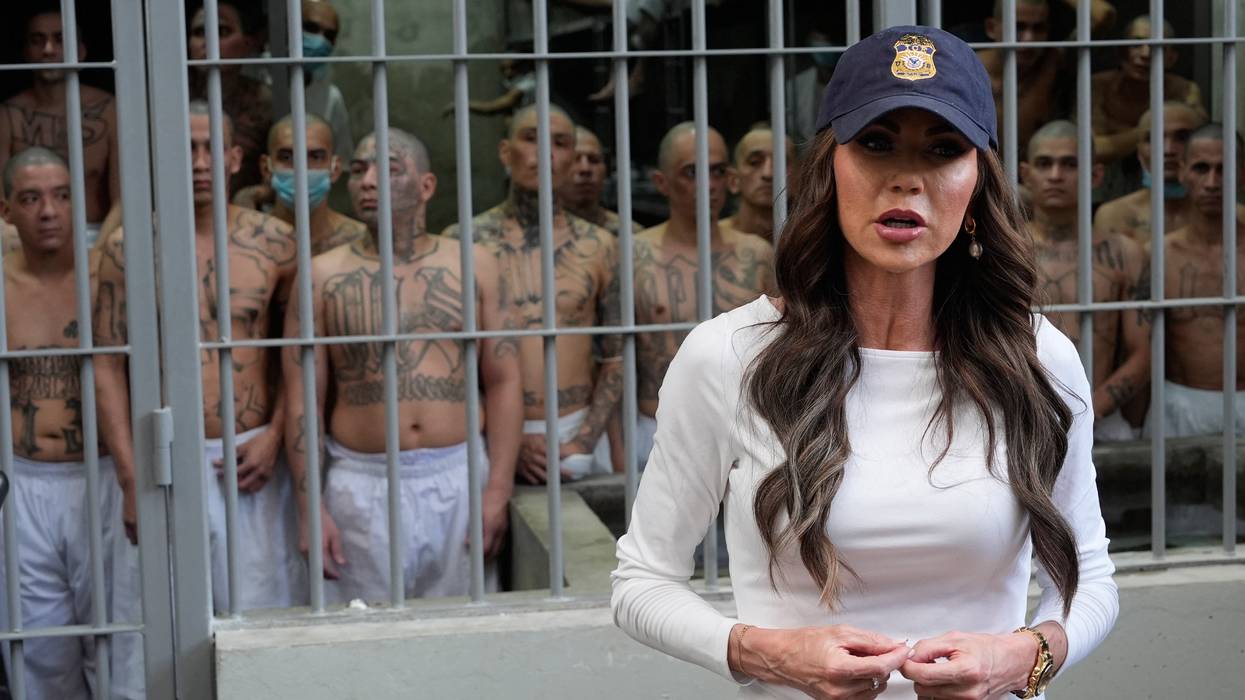
Nearly a decade before she was the public face of DHS, Noem’s tall tales about the estate tax helped gut one of the few remaining checks on elite fortunes.
Kristi Noem will no longer be the face of the Department of Homeland Security, labeling peaceful citizens defending liberty as “domestic terrorists.” President Donald Trump is now appointing her to a new position of “special envoy in the Western Hemisphere.”
Wherever she goes next, we should remember her DHS debacle wasn’t her first deception rodeo. It turns out that Noem has a long history of twisting the truth to serve the powerful.
In 2017, nearly a decade ago, we caught then-Rep. Kristi Noem (R-SD) telling a whopper fib about her family’s experience with the estate tax—or what Noem called the “death tax.”
The estate tax, our nation’s only levy on the inherited wealth of multimillionaires and billionaires, has been in place since 1916. In its first half century, it helped put a brake on the build-up of concentrated wealth and power, discouraging dynastic fortunes that threatened democracy.
It’s strangely fitting that Noem, who now slanders law-abiding immigrants and the citizens defending them as “domestic terrorists,” played a big role in gutting those taxes on the rich.
But for the last 30 years, the estate tax has been under right-wing assault, including a steady drumbeat for its repeal. And one tactic they’ve used is to claim the tax applies to small farmers and other working Americans, rather than the tiny percentage of extremely wealthy estates it actually targets—exclusively multimillionaires and billionaires, the top 0.01%
Noem’s personal political narrative, repeated at town hall meetings during her 2010 campaign for Congress, is a yarn about a rapacious and greedy federal government imposing an estate tax on her struggling family.
In a 2015 speech on the House Floor and in a 2016 op-ed for Fox News, Noem repeated the estate tax story. After her father died, Noem claimed, “We got a bill in the mail from the IRS that said we owed them money because we had a tragedy that happened to our family.”
“We could either sell land that had been in our family for generations or we could take out a loan,” Noem said, adding that “it took us 10 years to pay off that loan to pay the federal government those death taxes.” Noem says the episode was “one of the main reasons I got involved in government and politics.”
In December 2017, Noem was appointed by then-House Majority Leader Paul Ryan (R-Wis.) to the joint committee working to reconcile the 2017 Trump tax bill—which at the time included a proposal to eliminate the federal estate tax altogether.
That month, I published a widely circulated op-ed about Noem in USA Today arguing that “her sad family saga doesn’t add up.”
My commentary surfaced several simple facts: The federal estate tax has a 100% exemption for spouses. In other words, if a spouse dies, the estate’s assets go to the surviving spouse without any estate tax. Corinne Arnold, Kristi Noem’s mother, was alive during these years. (In fact, she is still alive now at 78 years and was active in Kristi’s second campaign for South Dakota governor in 2022.)
Estate tax attorney Bob Lord noted at the time: “It’s hard to believe the estate of a farmer who died in 1994 and was survived by his spouse was subject to the tax. It easily could have been deferred. That would have been a no-brainer.”
Moreover, the process of filing a return can be extended for years, especially for operating farms.
The combination of family tragedy and populist outrage makes for a potent partisan story, but veers from the truth. In the years she campaigned as a victim of the estate tax, Noem’s family actually cashed millions in government farm subsidies. Between 1995 and 2024, her family’s Racota Valley Ranch in Hazel, South Dakota deposited $4.9 million in government subsidy checks.
A few days after my USA Today article, the Argus Leader, South Dakota’s biggest statewide newspaper, wrote an editorial: “Time for Kristi Noem to Get Her Tax Story Straight.” In her now well-known deflective fashion, Noem fired back that it was “fake news.”
If Noem’s estate tax story is true, she could easily put our doubts to rest. She could explain why her family didn’t use a spousal exemption, share a redacted “bill” from the IRS, or disclose who provided the loan she allegedly received. But she hasn’t.
In the meantime, Noem has helped gut the estate tax, contributing to the growing concentration of wealth that threatens our economy and democracy.
Under the Trump tax bill Noem worked on, the federal estate tax now exempts the first $15 million of wealth for an individual and $30 million for a couple. And as governor of South Dakota, Noem fortified the state’s role as a trust haven, attracting billionaires interested in forming dynasty trusts to hide wealth and use loopholes to avoid federal taxes.
The Trump administration and its allies have blamed immigrants for all manner of social ills—including struggling schools, expensive housing and healthcare, and more. In reality, the blame more often lies with extremely wealthy people who won’t pay their fair share of taxes to support public programs.
So it’s strangely fitting that Noem, who now slanders law-abiding immigrants and the citizens defending them as “domestic terrorists,” played a big role in gutting those taxes on the rich.
These lies—about the estate tax, about immigrants, about protesters—have something in common: They protect the powerful. As lawmakers attempt to hold Noem accountable for the reckless activities of Immigration and Customs Enforcement—and consider her for future jobs—they should keep this early story in mind.

"Trump's violent, cruel deportation agenda didn't begin with Kristi Noem, and it won't end with her firing," said Rep. Summer Lee, who called for dismantling DHS and prosecuting everyone "violating our rights."
Amid mounting calls for the ouster of US Homeland Security Secretary Kristi Noem over her department's deadly immigration operations and detention facilities denounced as concentration camps, President Donald Trump announced Thursday that she will take on a new role and Sen. Markwayne Mullin will replace her.
Trump said on his Truth Social platform that the Republican senator from Oklahoma will take over the Department of Homeland Security (DHS) on March 31, while Noem, "who has served us well, and has had numerous and spectacular results (especially on the Border!), will be moving to be Special Envoy for The Shield of the Americas, our new Security Initiative in the Western Hemisphere we are announcing on Saturday in Doral, Florida."
The initiative will seemingly build on Trump's fatal bombings of boats allegedly trafficking drugs and a new joint operation that's sending US troops to Ecuador. White House press secretary Karoline Leavitt said that the governments attending the summit "have really formed a historic coalition to work together to address criminal narco-terrorist gangs and cartels and counter illegal and mass migration into not only the United States but the Western Hemisphere, which remains a key and top priority of this president."
After thanking Noem for "her service at 'Homeland,'" Trump promoted Mullin as "a MAGA Warrior, and former undefeated professional MMA fighter" who "truly gets along well with people, and knows the Wisdom and Courage required to Advance our America First Agenda."
Trump touted Mullin's Native American heritage and said he "will work tirelessly to Keep our Border Secure, Stop Migrant Crime, Murderers, and other Criminals from illegally entering our Country, End the Scourge of Illegal Drugs and, MAKE AMERICA SAFE AGAIN."
Mullin's conduct in Congress has notably included threatening to physically fight Teamsters president Sean O'Brien during a 2023 Senate hearing. His formal nomination to lead DHS will require confirmation by the Senate, which is narrowly controlled by Republicans. According to Fox News, Noem "will likely be at least temporarily replaced by Deputy Secretary Troy Edgar, a Navy veteran and former mayor of Los Alamitos, California, in the line of succession for the agency."
Trump's announcement came just hours after the National Review reported that Trump "is privately furious" with Noem "for suggesting in her Senate Judiciary Committee testimony on Tuesday that he gave advance approval of a taxpayer-funded $220 million ad campaign contract that was subcontracted to one of her allies."
During that Senate hearing, Noem faced outraged Democrats and Republicans. Sen. Amy Klobuchar (D-Minn.) ripped into her over DHS agents' killings of Renee Good and Alex Pretti in Minneapolis—a topic retiring Sen. Thom Tillis (R-NC) also addressed, noting the infamous passage of Noem's book in which she describes shooting her family's dog and goat.
Responding to Trump's announcement, Zeteo founder Mehdi Hasan said, "Good riddance to the racist, lying puppy killer."
Graham Platner, one of the Democrats running to challenge Sen. Susan Collins (R-Maine) in November, similarly said "good riddance" to what he called one of Collins' "worst confirmation votes ever."
The progressive oyster farmer and combat veteran also renewed his call to "dismantle" the DHS agency Immigration and Customs Enforcement, stressing that "the sickness at ICE goes far deeper than one person at the top."
Progressives currently serving in Congress joined Platner in welcoming Noem's departure from DHS but also reiterating criticism of the department leading Trump's mass deportation campaign.
"It's about time," declared Rep. Summer Lee (D-Pa.). "But Trump's violent, cruel deportation agenda didn't begin with Kristi Noem, and it won't end with her firing. We need to abolish ICE, dismantle DHS, and prosecute everyone responsible for violating our rights, bypassing due process, and killing people in our streets."
Congressional Progressive Caucus Chair Greg Casar (D-Texas) said that "this is a big win. Kristi Noem was a disaster, and people speaking up got her fired. But Kristi Noem is not the architect of Trump's dangerous mass deportation policies, and we can't let up the pressure. Fire Stephen Miller."
DHS remains partially shut down due to a congressional funding fight. Just a day after grilling Noem on the Fourth Amendment during a House Judiciary Committee hearing, Rep. Pramila Jayapal said "good riddance" to her while also arguing that "Congress still cannot fund DHS until there is real, tangible proof that this will be a meaningful, structural change."
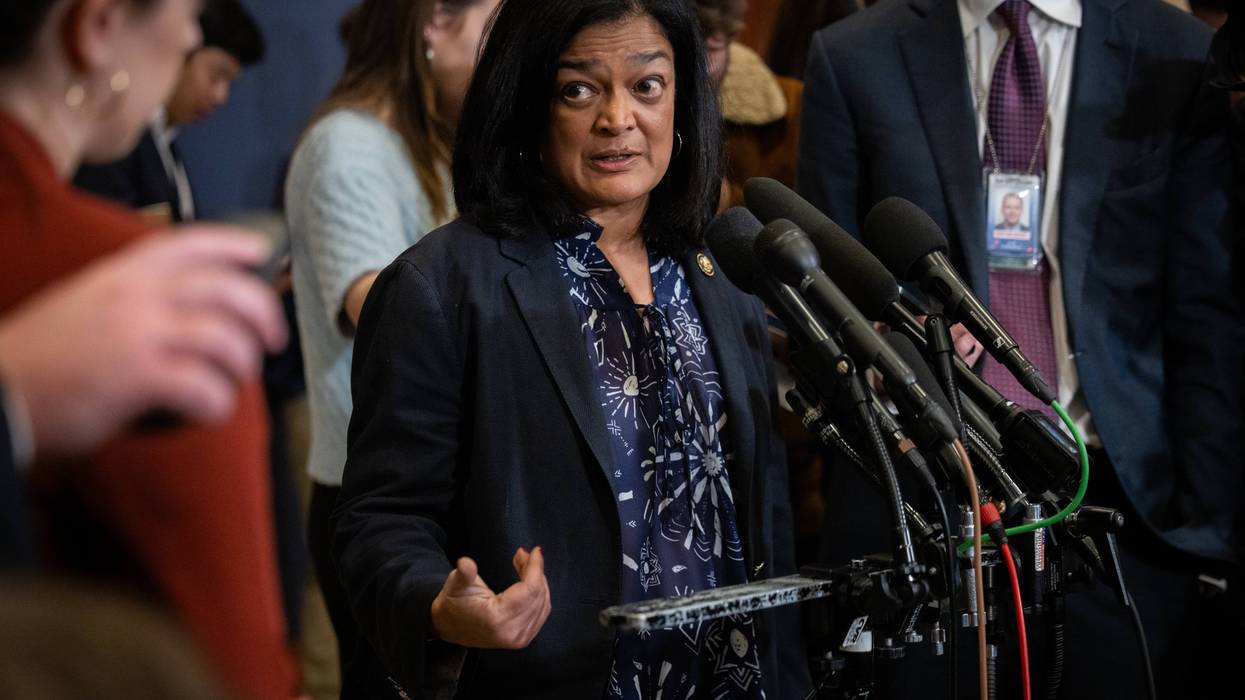
“I gave her an opportunity to answer for her agents’ lawlessness,” Jayapal said of the secretary of homeland security. “Instead, what we heard from her was excuses, deflections, and flat-out lies.”
Surrounded by people who have accused the Department of Homeland Security of violating their civil rights, Rep. Pramila Jayapal on Wednesday demanded that Secretary Kristi Noem be removed from her role as head of the agency.
"Today in the House Judiciary Committee, I questioned Secretary Noem. I gave her an opportunity to answer for her agents' lawlessness and the trauma that her personnel have inflicted on immigrants and citizens alike," Jayapal (D-Wash.) said at a news conference outside the Capitol building. "Instead, what we heard from her was excuses, deflections, and flat-out lies."
Jayapal grilled Noem on Wednesday during her second day of testimony before Congress, accusing her agency of “unlawfully detaining US citizens in violation of the Fourth Amendment."
An investigation published by ProPublica in October found that at least 170 citizens had been arrested or detained by immigration agents, and many more have been reported since.
The congresswoman said that after months of denying, despite the mountain of evidence, that any US citizens had been detained by US Immigration and Customs Enforcement (ICE), Noem finally acknowledged the detention of 18 US citizens by ICE in a letter sent Tuesday.
Jayapal then revealed that four other citizens, "who were not even included" in Noem's letter, were in the hearing room.
She read the story of Patricia O'Keefe, who she said "was monitoring ICE agents when they deployed pepper spray into her car vent without provocation."
"They smashed her car windows, pulled her and her friend out, arrested them for 'obstruction,' and detained them," Jayapal explained. "Patricia saw an entire area dedicated to detaining US citizens."
"An ICE agent also said, 'You guys have to stop obstructing us. That's why that lesbian bitch is dead,' referring to Renee Good," who was shot and killed by an ICE agent in Minneapolis in January. "ICE detained Patricia for over eight hours," Jayapal said.
She relayed the stories of the other citizens in the room, who she said had been detained for several hours for monitoring agents or peacefully protesting.
One was kept in leg irons for six hours after attempting to monitor agents from his car. Another was hit with a pepper ball while protesting and denied medical treatment or the ability to change out of clothes that were coated with dangerous chemicals. Another observer was chased down by agents and had firearms pointed at him before the situation was defused by local police, though he was detained for six hours.
Noting Noem's previous statements that ICE can arrest citizens if they are obstructing law enforcement or if there is "probable cause," Jayapal then asked the people she'd invited about the circumstances of their detention.
All of them responded that they were not charged with any crime after their encounters, that they were not questioned about their citizenship, and that they were all exercising their First Amendment rights.
Asked if she had anything to say to the four individuals or "the millions of American citizens across the country that are watching this and horrified at what your department is doing," Noem responded that “context is critical in each of these situations, to know the full range of what happened in each of these situations before and after the incident and their arrest.”
Jayapal reiterated: "Secretary, not a single one was charged with a crime, and they were detained."
Elsewhere during the hearing, Noem doubled down on her agency's most controversial tactics.
After Rep. Zoe Lofgren (D-Calif.) showed the secretary videos of citizens being violently dragged out of their homes and cars in arrests by agents without judicial warrants, Noem defended the agency’s practice, which experts have said violates the constitutional protection against unlawful search and seizure.
Other questions she evaded. When Rep. Jamie Raskin (D-Md.) asked her point-blank if she believed Good and Alex Pretti, whom ICE agents "shot in the face and killed," were "domestic terrorists" as Noem and others in the Trump administration claimed without evidence, the secretary repeatedly refused to correct the record, as ICE's acting director Todd Lyons did during a hearing last month.
Following Wednesday's hearing, Jayapal said Noem's responses "only further cemented my belief that she needs to resign, be fired, or be impeached."
"She refused to accept responsibility for the actions of ICE and [Customs and Border Protection], for the arrests of US citizens, for the deaths of 40 immigrants in ICE custody, for the kidnapping and the disappearances of children like Liam Ramos, and for the killings of Alex Pretti and Renee Good in the streets of Minnesota," Jayapal said. "It is a terrible shame that she could not do any of that."
Noem's appearance on Capitol Hill comes as DHS has been partially shut down for nearly three weeks, with Democrats demanding reforms to the agency's conduct in exchange for full funding.
Republicans have thus far refused to budge on demands that agents obtain judicial warrants before entering homes and private spaces, stop wearing masks to conceal their identities, and rein in the practice of “roving patrols” that have often taken the form of indiscriminate arrests rife with racial profiling.
She said Noem's testimony also affirmed her belief that "DHS, ICE, and CBP need to be dismantled."
"There is no reason for them to operate in this way with zero accountability and no way to ensure that they actually protect our residents rather than terrorize them," Jayapal said. "That is why I have refused to give another cent to these agencies without significant reforms."
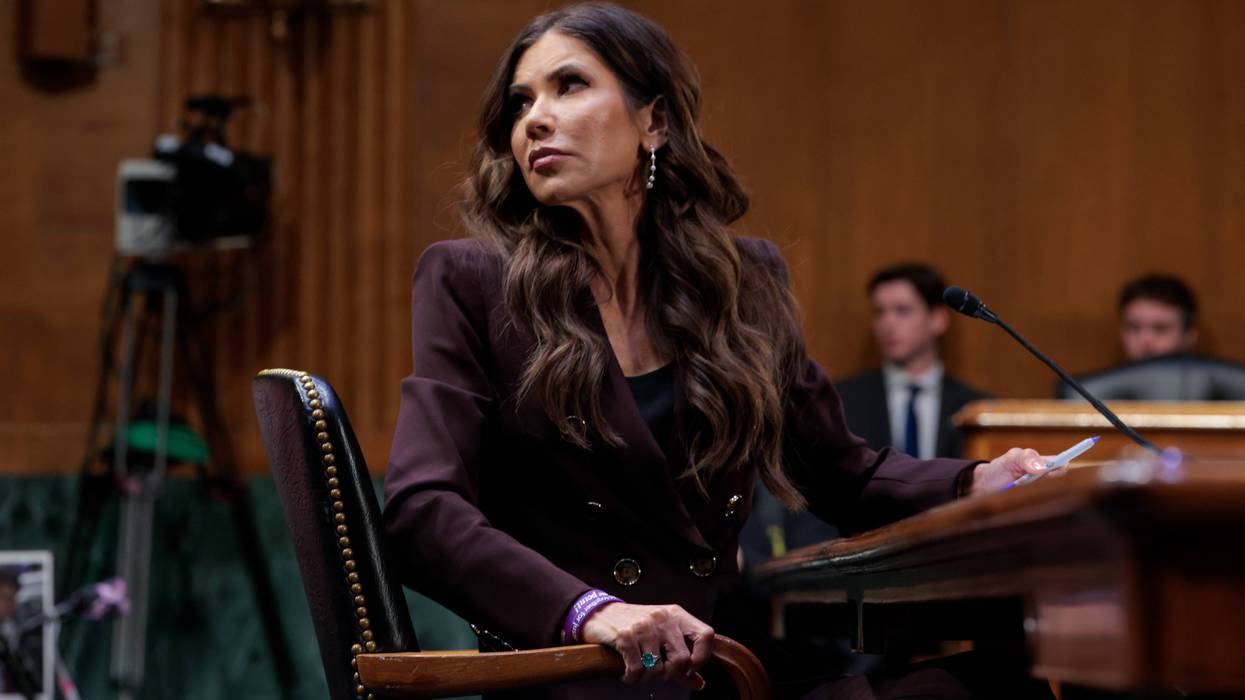
"Kristi Noem is brutally unqualified," said one journalist. "Never should have been in spitting distance as head of homeland security/ICE."
As the US Department of Homeland Security remains partially shut down, DHS chief Kristi Noem testified before the Senate Judiciary Committee on Tuesday and repeatedly refused to apologize to the family of Alex Pretti, who was recently killed by immigration agents in Minnesota.
"Two of my constituents, Renee Good and Alex Pretti, were killed," Sen. Amy Klobuchar (D-Minn.), who is running for governor, said while questioning Noem about Operation Metro Surge, for which the secretary and President Donald Trump sent thousands of immigration agents to the Twin Cities in January.
Border Patrol agent Jesus Ochoa and Customs and Border Protection officer Raymundo Gutierrez fatally shot Pretti, a Department of Veterans Affairs nurse, just weeks after Immigration and Customs Enforcement (ICE) officer Jonathan Ross similarly killed Good. Their deaths fueled the congressional funding fight that has led to the ongoing shutdown.
"They should be alive today," Klobuchar said of the two 37-year-old US citizens. "In fact, in one month, in the city of Minneapolis, when you look at the three fatalities that were results of shooting, two of three were committed by federal agents."
After highlighting the various rights that DHS agents trampled on in Minneapolis and Saint Paul, and questioning Noem about the current footprint—roughly 500 more agents than the number before the surge that the administration claims has ended—Klobuchar turned to the secretary's attempts to smear both Good and Pretti as domestic terrorists.
"When I spoke to Alex's parents, they told me that you calling him a domestic terrorist, this was directly from them, the day after he was killed, a nurse in our VA, Alex, one of the most hurtful things they could ever imagine was said by you about their son," said Klobuchar. "Do you have anything you want to say to Alex Pretti's parents?"
Noem responded, "We were relying, in the hours after that incident that was so horrific, on information we were getting from the ground, from our agents."
When Klobuchar jumped in, reiterating the question and extending it to Good's relatives, Noem claimed: "That's what I'm doing right now... I can't even imagine what they have gone through, in the loss of their son, in the loss of their family members. It's absolutely tragic."
Noem's comments about the two victims, and her broader handling of the DHS invasions of the Twin Cities and other US communities as part of Trump's mass deportation agenda, have sparked calls for her resignation, firing, or impeachment.
Before the surge in Minnesota, the administration launched Operation Midway Blitz, targeting immigrants in Chicago and its suburbs. Earlier in Tuesday's hearing, Sen Dick Durbin (D-Ill.), noted to Noem that during the invasion of his state, "one of your Border Patrol agents shot Marimar Martinez five times after ramming her car."
"You and your agency rushed to brand these victims as, quote, domestic terrorists," Durbin continued. "We have ample video evidence and eyewitness testimony proving you were wrong. Your statements cause immeasurable pain to these families. Let me give you an opportunity to do the right thing. Do you retract these statements identifying these individuals as domestic terrorists?"
The secretary responded: "When we have these situations happen, we always offer our condolences to those families, and I offer mine as well. These are tragic situations, and I can't imagine what these families go through in losing a loved one. What I will say is we always work to provide the American people with as much information as possible—that we're relying on reports from the ground and from agents that are there, and working to be transparent, and will continue to do all that we can to provide the accurate information and the facts to people as we can."
While going back and forth, Durbin also asked Noem: "Is it so hard to say you were wrong?" and "When you fail, do you admit it publicly?"
She claimed: "Absolutely. We always know that there's room for improvement."
Martinez, a 30-year-old US citizen, survived, and has since testified on Capitol Hill about what she endured. However, an ICE agent did fatally shoot Silverio Villegas González, a 38-year-old immigrant, in the suburb Franklin Park during the Illinois operation. As with the other cases, video footage of his killing contradicted the DHS narrative about it.
Sharing a clip of the DHS secretary's exchange with Durbin on social media, writer and editor Keith Murphy declared that "Kristi Noem is brutally unqualified. Never should have been in spitting distance as head of Homeland Security/ICE."
"But this is what Trump wanted," Murphy continued, also pointing to Defense Secretary Pete Hegseth, Health and Human Services Secretary Robert F. Kennedy Jr., Director of National Intelligence Tulsi Gabbard, US Attorney General Pam Bondi, and Federal Bureau of Investigation Director Kash Patel.
"The worst of the worst," Murphy concluded. "A generational clown car."
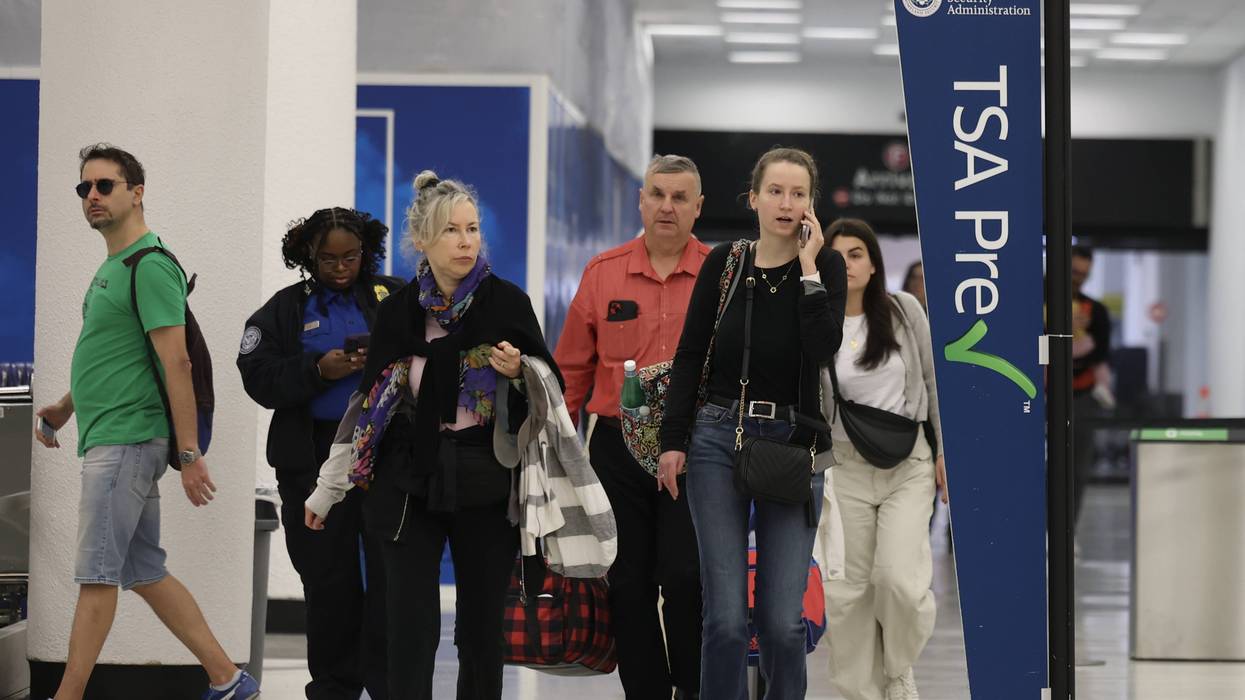
One Democrat had called the halt during the department's partial shutdown a case of "Trump and Kristi Noem purposely punishing the American people and using them as pawns for their sadistic political games."
After a flurry of overnight outrage, President Donald Trump's administration reversed plans to suspend the Transportation Security Administration's PreCheck program during a partial shutdown of the US Department of Homeland Security.
"At this time, TSA PreCheck remains operational with no change for the traveling public. As staffing constraints arise, TSA will evaluate on a case-by-case basis and adjust operations accordingly," the agency said Sunday morning. "Courtesy escorts, such as those for members of Congress, have been suspended to allow officers to focus on the mission of securing America's skies."
The Washington Post reported that a DHS official who spoke on the condition of anonymity said the reversal was "based off of conversations the secretary had with the White House and TSA."
DHS partially shut down last week amid a funding fight in Congress, with Democrats demanding reforms in response to agents with Customs and Border Protection (CBP) and Immigration and Customs Enforcement (ICE) openly violating the rights of immigrants and US citizens alike, and even killing Renee Good and Alex Pretti last month in Minnesota.
The department said late Saturday that it would close PreCheck lanes, which allow travelers at US airports to move through security more quickly; halt the CBP Global Entry service, which allows expedited clearance for arriving in the United States; and pause all non-disaster-related Federal Emergency Management Agency (FEMA) response efforts.
"Shutdowns have real-world consequences, not just for the men and women of DHS and their families who go without a paycheck, but it endangers our national security," said Homeland Security Secretary Kristi Noem, blaming the changes on Democrats in Congress. "The American people depend on this department every day, and we are making tough but necessary workforce and resource decisions to mitigate the damage inflicted by these politicians."
Critics in journalism, politics, the travel industry, and beyond quickly highlighted how PreCheck and Global Entry reduce the strain on not only air travelers but also federal workers across multiple DHS agencies.
"These nitwits are at it again," said House Committee on Homeland Security Ranking Member Bennie Thompson (D-Miss.). "This is Trump and Kristi Noem purposely punishing the American people and using them as pawns for their sadistic political games. TSA PreCheck and Global Entry REDUCE airport lines and ease the burden on DHS staff who are working without pay because of Trump's abuse of the Department and killing of American citizens."
"Trump and Kristi are making your lives harder—and your travel less safe—all on purpose because they know you don't trust them," he continued. "They pulled these games with FEMA disaster response last week, now this madness. They would rather force Americans to miss their travel waiting in long lines at the airport than stop Trump's secret police from shooting our neighbors. The American people—who want ICE reined in—will not fall for this bullshit. The administration must reverse this decision immediately."
While the Trump administration reversed course on PreCheck, the Global Entry suspension and FEMA restrictions remain in effect as a major snowstorm hit the East Coast.
"Everyone knows Donald Trump and DHS use bullying tactics—this is another one of them," said Senate Minority Leader Chuck Schumer (D-NY) in a Sunday statement about Global Entry. "The Trump administration is choosing to inflict pain on the public instead of adopting commonsense ICE reforms."
"In the 43-day historic Trump government shutdown DHS never changed the Global Entry program's status," Schumer said, referring to the funding battle that ended in November when a short list of Democratic senators gave in. "Democrats are fighting against this exact kind of abuse."
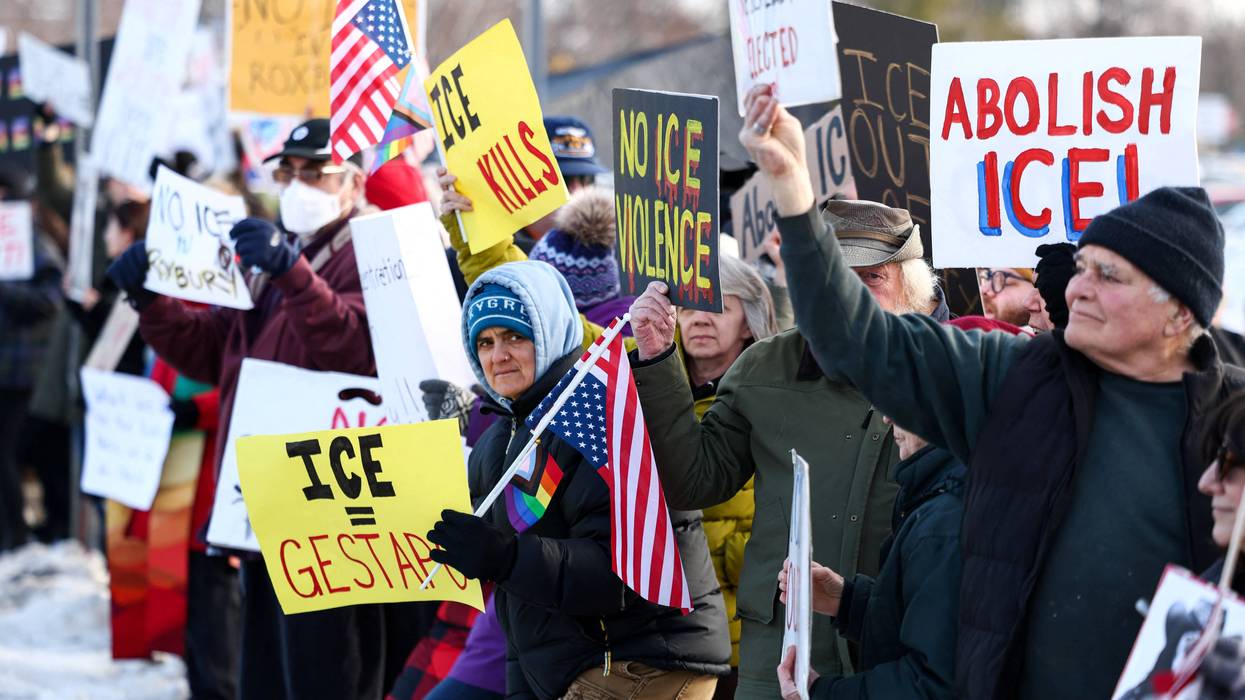
Pouring money into mass detention is not just wasteful; it is a moral decision about the future of this country.
When ICE agents injure and abuse people on city streets, they often do so in full public view, with witnesses recording their actions. Behind the high walls of ICE detention facilities, though, elected officials, attorneys, and detainees describe unchecked abuse.
ICE now detains more people than at any point in its history. Three out of four have no criminal conviction; only one in 20 been convicted of a violent crime, according to an analysis by the Cato Institute. Yet the 73,000 currently detained is not enough for the agenda of Stephen Miller and Kristi Noem. With billions in new federal funding, ICE is working to expand its detention network to a scale that will dwarf the federal prison system.
"I think every American should be alarmed," said Rep. Alexandria Ocasio-Cortez. "They are building and have built a black box system that disappears people, both immigrants and U.S. citizens alike."
Resistance to these detention facilities is growing rapidly at the local and state level. But Congress has the real power to stop a growing network of what scholars are now calling “concentration camps.”
“Democrats must push to reallocate ICE warehouse funds to programs that were devastated by Republicans like Obamacare, Medicaid, and SNAP,” said Bob Fertik, president of Democrats.com, a national advocacy group.
More than 30 people died in custody in 2025—a death toll that is both unacceptable and preventable, according to a letter signed by 22 Senate Democrats who cited violence, neglect, and lack of medical care.
Appearing on MSNOW, immigration attorney Eric Lee described the five-year-old twin girls whose family he represents: “They have recurring nightmares. They wake up screaming every night.” They beg for their mother, he said. Lee also described guards wrapping flannel around their fists so they can "beat detainees while minimizing the evidence, and a child with appendicitis writhing on the floor in pain and told to take an aspirin and come back in three days.”
The return home of five-year-old Liam Ramos drew national relief, but more than 3,800 children were in detention at some point in 2025, including 20 infants, and 1,300 were held longer than the legal limit of 20 days, according to an analysis by the Marshall Project. The twin five-year-olds have been incarcerated for eight months. Parents reported difficulty getting bottled water for formula, and food contaminated with mold and worms.
These stories are not isolated. The Marshall Project documented ICE agents breaking a family’s car window to seize a 2-year-old; a US citizen child deported with her mother without seeing a judge; and three siblings sent to a shelter for months after their parents attended a fingerprinting appointment. Judges have ruled more than 4,000 ICE detentions illegal, Reuters reports.
Despite this, the Trump administration is doubling down. Its solicitation to private prison companies seeks facilities that can hold up to 8,000 people each—twice the size of the largest federal prison.
Expansion is lucrative. The private corporations building and operating ICE detention camps reported record revenue, according to TIME magazine. They received $22 billion in ICE and CPB contracts 2025 alone; 86 percent of detention beds are run by for-profit companies.
As private prison profits climb, public support for ICE is collapsing. Two-thirds of respondents to an NBC News poll disapprove of how ICE is handling its job, with 55 percent “strongly disapproving.” According to a recent Economist/YouGov Poll Americans support abolishing ICE by 46-41 percent.
Even more opposition emerges when communities are faced with massive new detention facilities adjacent to their own communities.
In Social Circle, Georgia, residents are organizing against a proposed conversion of a warehouse into a detention facility.
Oregon’s congressional delegation, pushing back on a proposed ICE facility in that state, wrote: “We find it increasingly difficult to believe that ICE can responsibly house and care for people humanely given the well-documented cases of overcrowding, medical neglect, and insufficient nutrition at the facilities it currently operates.”
New Mexico passed legislation barring state and county collaboration with ICE, forcing at least one county-run facility to close.
While local resistance is powerful, congressional action to stop the funding is the surest way to stop the mass detention build-up. Congress has the power to defund ICE or to place limits on growth.
So far, negotiations over DHS and ICE funding—which was held up in the wake of the killings of Alex Pretti and Renee Good—have centered on reining in the violent and chaotic behavior of federal ICE agents on American streets. However, in spite of strong words from Senate Democrats, negotiations have largely omitted placing conditions on ICE detention facilities, where the abuses occur out of sight. None of the Democrats’ official negotiating positions challenge the $45 billion expansion.
Advocates warn that without Democratic leadership and coordinated, cross-movement intervention, ICE camps, and the cruel treatment of those detained, will spread like cancer across the American landscape.
“We need immigrant justice, criminal justice, and pro-democracy leaders to break out of their silos and work together at an unprecedented level to organize against ICE prison expansion,” said Janos Marton of the advocacy group Dream.Org.
For some lawmakers, the only answer is abolition. “ICE is a rogue, violent agency that has operated with callous disregard for human life,” said Rep. Ayanna Pressley (D-Mass.). “Congress should not be funding their campaign of cruelty. We must abolish ICE.”
“The 20th century tells you, when mass detention and camps are being built across the country that can house hundreds of thousands of people … we are going down a very dangerous path if the population doesn’t stand up and fight back,” warned Lee.
Congress can choose to spend tens of billions building a continent-wide archipelago of detention camps—or it can choose to invest in the things that strengthen freedom: health care, schools, communities, climate resilience, and the basic dignity that every person deserves. Pouring money into mass detention is not just wasteful; it is a moral decision about the future of this country. What lawmakers decide now will determine whether we move toward greater justice, or toward a future in which confinement — not rights — defines who we are.
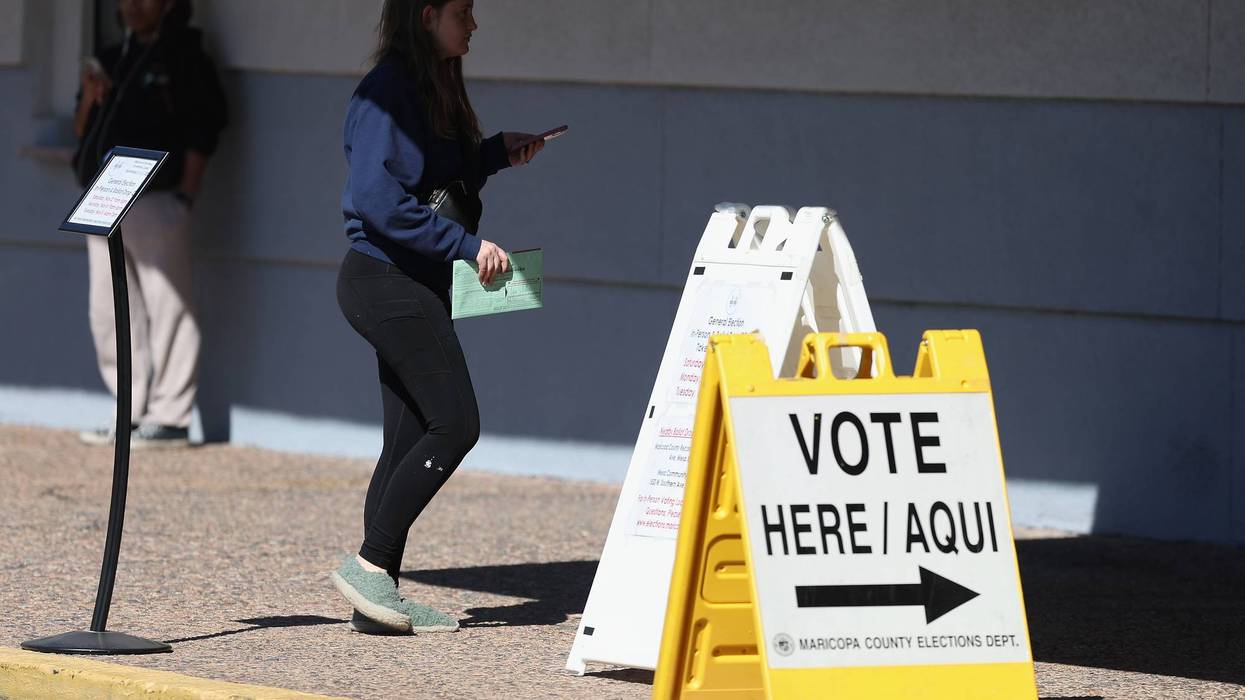
It comes shortly after Homeland Security Secretary Kristi Noem went to Arizona and said her agency would "make sure we have the right people voting, electing the right leaders."
As the Trump administration threatens to deploy Immigration and Customs Enforcement to menace voters on election day, Arizona Republicans are pushing for a bill that would require every county to allow federal agents at polling places to “observe election activities.”
The Arizona state Senate is expected to take up the proposal this week, which would require all 15 counties in the state to sign an agreement with ICE “to provide for a federal immigration law enforcement presence at each location within this state where ballots are cast or deposited.”
Following federal agents' killings of two American citizens in Minneapolis and a wave of violence and civil rights violations, including racial profiling, approval of ICE is at an all-time low among the American public, with more Americans now saying they want to abolish the agency than keep it around, according to polls.
Nearly half of all Arizona residents are nonwhite. Under this proposal, there will be virtually no way for them to vote without a federal immigration agent potentially watching.
The memo introducing the text to Senate Bill 1570 "requires such an agreement to provide for the presence of federal immigration law enforcement personnel during all hours in which voting is conducted, or ballots are deposited, including early voting locations, election day polling places, and ballot drop box locations."
It also "allows federal immigration law enforcement personnel to observe election activities and perform lawful duties within the scope of their federal authority."
As Jerod MacDonald-Evoy noted for the Arizona Mirror, monitoring elections is explicitly considered to be outside the "lawful duties" of ICE agents.
The proposal... seems to directly run afoul of federal law, which bars “any troops or armed men” who are part of “the civil, military, or naval service of the United States” from being deployed to polling locations. The only exception is if doing so is needed to “repel armed enemies of the United States.”
The proposal was introduced by Sen. Jake Hoffman (R-15), the chairman of the Arizona Freedom Caucus, whose page on the official website of the Arizona state legislature states that his "mission" is to "destroy the progress of Marxist communists at every level."
His bill prohibits agents from "interfering with the casting or depositing of ballots, except as otherwise authorized by law." However, Hoffman has suggested that agents are intended to verify who is and is not allowed to vote.
“The intent is to deter violations before they happen, ensure existing laws are followed, and protect the rights of every lawful voter,” Hoffman said Tuesday. “Just as importantly, the legislation makes clear that voting cannot be disrupted and that no one may be targeted simply for participating in an election. When voters see the rules applied fairly and consistently, confidence in the outcome follows.”
The Department of Homeland Security (DHS) has given agents directives to detain people without judicial warrants and perform "roving patrols" that take people's ethnicity and spoken language into account. There are many documented cases in which agents have stopped and detained US citizens purely based on their accent.
After previously floating the idea to outright cancel the 2026 midterm elections for fear of losing, President Donald Trump has more recently called for Republicans to "nationalize the voting" in certain Democratic strongholds in violation of the Constitution.
A top ally of the president, former White House strategist Steve Bannon, said earlier this month that Trump should "have ICE surround the polls" on election day so Democrats don't "steal the country again"—a reference to the baseless claim, disproven by numerous investigations and court cases, that the 2020 election was rigged against Trump.
The White House has since sought to downplay fears that agents may swarm the polls later this year.
At a press conference last week, Press Secretary Karoline Leavitt said deploying ICE to polling centers was "not something I’ve ever heard the president consider.” But she also hedged, saying: “I can’t guarantee that an ICE agent won’t be around a polling location in November.”
Todd Lyons, the acting head of ICE, assured members of Congress during a hearing last week that "there’s no reason to use ICE officers" at polling stations.
However, Secretary of Homeland Security Kristi Noem has hinted that her agency, which oversees ICE as well as Customs and Border Protection (CBP), will have a role in determining who is allowed to vote.
“When it gets to Election Day, we’ve been proactive to make sure we have the right people voting, electing the right leaders to lead this country,” she said on Friday.
Those comments were made as Noem paid a visit to Arizona to promote the Safeguard American Voter Eligibility Act, more commonly known as the SAVE Act.
This bill, proposed by Republicans in the US Congress, would require voters to prove their citizenship—not just provide a voter ID—in order to vote, which advocates have warned would lead to the potential disenfranchisement of millions of eligible voters. Noem said she discussed elections with Arizona officials.
Arizona's bill to allow ICE in the polls, which will receive a hearing in the Senate on Wednesday, suggests that Republicans there expect Trump's troops to be on their way in November.
Garrett Archer, a data analyst and reporter at ABC15 Arizona, said that Republican operatives in the state view the bill as a "telegraph of the potentially incoming Trump executive order."
"An executive order cannot force states to compel voters to show ID to vote," he wrote on social media. "But what they can try to do is station federal agents at polling places who would conduct the ID check."
Republicans control both houses of the Arizona state legislature and could theoretically pass the bill without Democratic support. However, it is unlikely to be signed by Democratic Gov. Katie Hobbs.
Elvia Díaz, a former editorial page editor and contributor at the Arizona Republic, said that although the requirement is unlikely to become law, "the mere idea is chilling."
"It signals, once again, that Trump Republicans are laying the groundwork to militarize the electoral process," she wrote in a blog post. "Placing armed immigration agents at the very locations where citizens exercise their right to vote resembles the kind of intimidation tactics seen in authoritarian regimes."
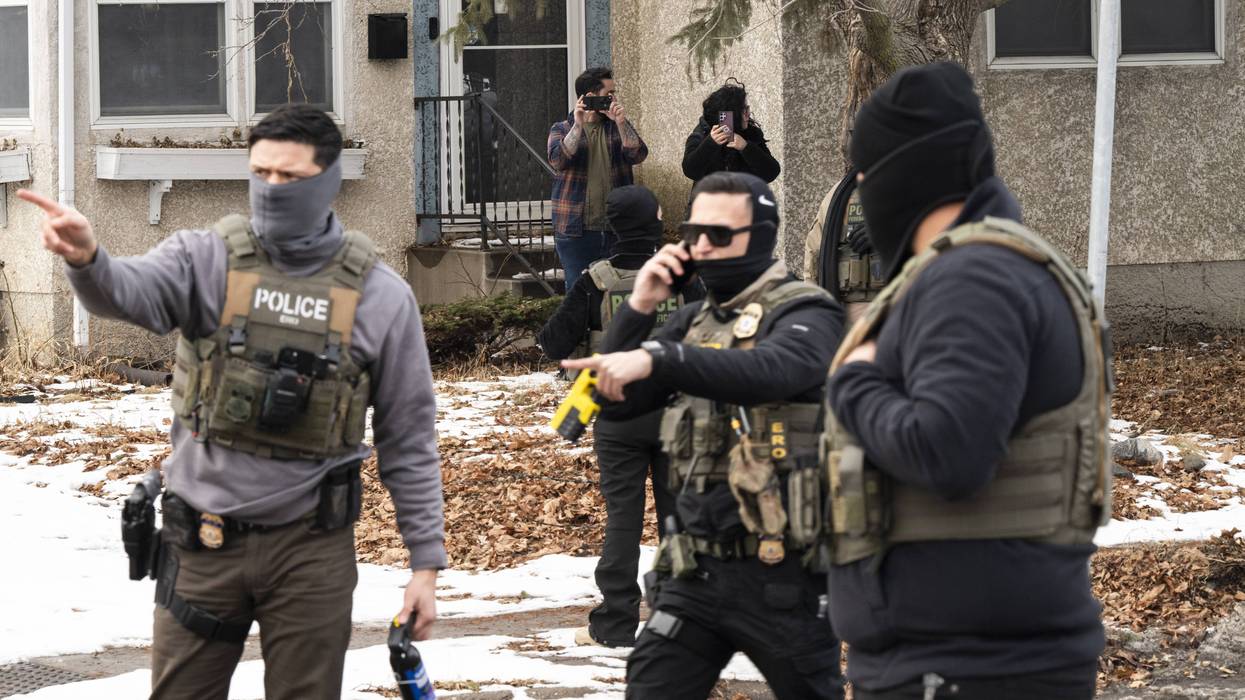
In some cases, the administration has kept immigrants locked up even after a judge has ordered their release, according to an investigation by Reuters.
Judges across the country have ruled more than 4,400 times since the start of October that US Immigration and Customs Enforcement has illegally detained immigrants, according to a Reuters investigation published Saturday.
As President Donald Trump carries out his unprecedented "mass deportation" crusade, the number of people in ICE custody ballooned to 68,000 this month, up 75% from when he took office.
Midway through 2025, the administration had begun pushing for a daily quota of 3,000 arrests per day, with the goal of reaching 1 million per year. This has led to the targeting of mostly people with no criminal records rather than the "worst of the worst," as the administration often claims.
Reuters' reporting suggests chasing this number has also resulted in a staggering number of arrests that judges have later found to be illegal.
Since the beginning of Trump's term, immigrants have filed more than 20,200 habeas corpus petitions, claiming they were held indefinitely without trial in violation of the Constitution.
In at least 4,421 cases, more than 400 federal judges have ruled that their detentions were illegal.
Last month, more than 6,000 habeas petitions were filed. Prior to the second Trump administration, no other month dating back to 2010 had seen even 500.
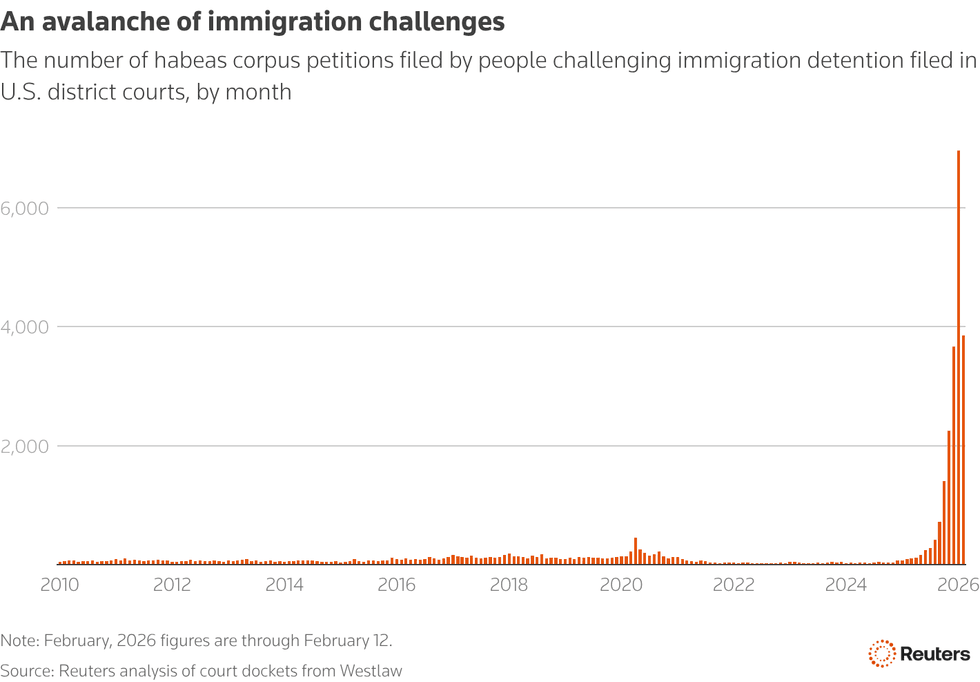 (Graphic by Reuters)
In part due to the sheer volume of legal challenges, the Trump administration has often failed to comply with court rulings, leaving people locked up even after judges ordered them to be released.
Reuters' new report is the most comprehensive examination to date of the administration's routine violation of the law with respect to immigration enforcement. But the extent to which federal immigration agencies have violated the law under Trump is hardly new information.
In a ruling last month, Chief Judge Patrick J. Schiltz of the US District Court in Minnesota—a conservative jurist appointed by former President George W. Bush—provided a list of nearly 100 court orders ICE had violated just that month while deployed as part of Trump's Operation Metro Surge.
The report of ICE's systemic violation of the law comes as the agency faces heightened scrutiny on Capitol Hill, with leaders of the agency called to testify and Democrats attempting to hold up funding in order to force reforms to ICE's conduct, which resulted in a partial shutdown beginning Saturday.
Following the release of Reuters' report, Rep. Ted Lieu (D-Calif.) directed a pointed question over social media to Kristi Noem, the secretary of the Department of Homeland Security, which oversees ICE.
"Why do your out-of-control agents keep violating federal law?" he said. "I look forward to seeing you testify under oath at the House Judiciary Committee in early March."