

SUBSCRIBE TO OUR FREE NEWSLETTER
Daily news & progressive opinion—funded by the people, not the corporations—delivered straight to your inbox.
5
#000000
#FFFFFF
To donate by check, phone, or other method, see our More Ways to Give page.
Daily news & progressive opinion—funded by the people, not the corporations—delivered straight to your inbox.
The Illinois Council Against Handgun Violence (ICHV) and the Brady Campaign to Prevent Gun Violence (Brady Campaign) brought together state legislators, gun violence victims and law enforcement at the Thompson Center today to send an urgent plea to state lawmakers to oppose HB 148, a dangerous bill that would potentially allow mentally ill individuals to carry guns in public places. Coinciding with the anniversaries of the Virginia Tech and Columbine massacres, the press event shared the results of a legislative hearing last week where the Illinois State Police (ISP) revealed shocking gaps in checking mental health records before issuing gun permits. This growing hole in the safety net was referred to as a "ticking time bomb" that could result in more lives, families and communities shattered by gun violence.
Last week, the Illinois House Human Services Appropriation Committee held a hearing on the status of missing mental health records in the system to prevent prohibited individuals from obtaining Firearm Owner's Identification (FOID) cards. The hearing focused on reports issued by the ISP, which indicated there is insufficient reporting of mental health records that should prohibit an individual from obtaining a FOID card, gaps which put Illinois lives at risk, specifically referencing both the Virginia Tech and Northern Illinois University (NIU) shootings. Of even greater concern to legislators was the fact that ISP officials stated that they intended to use the FOID system to approved permits for individuals to carry loaded, concealed guns - should HB 148 be passed by the legislature.
At the state level, the Illinois Department of Human Services (DHS), County Courts and ISP operate systems to collect and report mental health data before issuing FOID cards. According to the ISP report and testimony at the hearing, there are many dangerous gaps in the reporting of these records: Only 183 of 130,000 licensed clinicians have registered with DHS, and very few of the 102 county courts have reported individuals adjudicated mentally defective to the state system. Furthermore, it was revealed that the ISP should have reported an estimated 120,000 mental health records to the FBI National Instant Background Check System (NICS) to prevent dangerously mentally ill persons from obtaining guns over state lines, but has only reported 5,000. According to the ISP, even with limitless funds, it would take a minimum of two years to fix the system.
At the hearing, an October 2009 Illinois State Police Report entitled "Reducing Firearms Violence Through Enhanced Mental Health & Systemic Data Reporting: Saving Lives, Saving State Budget Dollars, Risk Avoidance" was distributed. Referencing the FOID background check system as a "ticking time bomb," the report stated that it created "exposure to lawsuits that will arise when a prohibited purchaser...obtains or keeps a gun they should not have and commits assaults and or murders."
"The public safety implications of these gaps in the system are deeply disturbing," said Illinois State Representative Ann Williams, who attended the hearing. "I was particularly concerned when I heard the Illinois State Police Firearms Bureau Chief state that the gaps in the background check system result in 'sleepless nights,' Given the revelations from the hearing, I believe it would be highly irresponsible, if not immoral, for the legislature to approve HB 148 which could put loaded, concealed weapons in the hands of dangerous individuals and allow them to carry them in most public places, such as trains, buses, campuses and street fairs."
The proposed law, as currently written, does not require law enforcement to conduct an extensive background check of state and federal mental health records and would require county sheriffs to issue a permit to carry loaded, concealed guns in most public places to any person meeting certain minimum qualifications, with limited discretion from law enforcement.
The month of April commemorates the anniversary of two of our nation's worst mass shootings, Columbine High School in 1999, and more recently, Virginia Tech in 2007, where a student with serious mental illness killed 32 students and professors and wounded 17 others before killing himself. Several victims and their families from these incidents and others will be at the press conference.
"I'm in Illinois today because there are dangerous gaps in Illinois' mental health records system. I'm in Illinois today because there's a dangerous proposal in Illinois that would push more loaded concealed guns into more public places in Illinois," said Colin Goddard, Assistant Director of Legislative Affairs for the Brady Campaign and a survivor of the Virginia Tech Campus shooting. "I know from personal experience that the policies and practices of the state and mental health practitioners have real-life consequences. I'm here to urge the legislators and residents of this great state to choose wisely. Don't make it easier for another Virginia Tech to happen here. Don't make it easier for someone like Cho to legally get a gun and turn a campus, a community, a state, and our nation upside-down. The Brady Campaign and I urge the legislature and Gov. Quinn to reject House Bill 148."
"As we stand here commemorating the anniversaries of the Colombine School and Virginia Tech shootings, we are reminded of the tragic toll gun violence has take on our communities. Now is not the time to weaken our state's gun laws," said Colleen Daley, Executive Director of ICHV. "This bill is a terrible idea and I cannot imagine that the legislature would want to take responsibility should any of these permits - allowing individuals to carry loaded, concealed guns in most public places - end up in the wrong hands. Based on the Illinois State Police testimony last week, this is a disturbingly real risk."
At the hearing, Illinois State Police Firearms Bureau Chief, John Coffman, stated that he had concerns about the dangerous gaps in the FOID system regarding poor mental health record reporting, and that those gaps remain a concern should the concealed carry legislation pass. "We are very concerned about the existence of some gaps and the potential tragedy that could occur as a result. We are all aware of what's happened around the country, and in the aftermath the scrutiny that's given to those situations, and who had what information and when and what they do with it."
One of the leading participants in the development of the Illinois State Police report was Eliot Fineman, President and Chief Executive Officer of the National Gun Victims Action Council, who lost his son to gun violence committed by a mentally ill individual.
"I want to tell members of the General Assembly, the Governor and the public that there are serious, potentially lethal problems in our system," said a statement issued by Fineman, who could not attend the hearing. "I agree with the testimony of Illinois State Police officials, when he stated that the gaps in the system result in sleepless nights for them."
In addition to the ISP reports, members of the media will also be provided with copies of recent polling data conducted by The Mellman Group, which indicates that two of out of three Illinois voters (65%) are opposed to allowing individuals to carry loaded, concealed weapons.
"When my colleagues consider the issue of legislation that would allow individuals to carry loaded, concealed guns in most public places, we need to look at the facts. The facts are that 65 percent of Illinois residents oppose it. The facts are that a recent report from the Violence Policy Center indicates that these types of laws in other states are resulting in putting guns into the hands of individuals that are killing people, killing police officers. The facts are that we have been reminded today of the risks associated with poor mental health record reporting, and our own Illinois State Police officials have validated our concerns," said State Senator Dan Kotowski, one of the leading members that fought for passage of legislation to improve mental health record reporting. "Instead of focusing on weakening our gun laws, we should be fighting to strengthen them. For example, why does anyone need a high capacity magazine?"
Brady United formerly known as The Brady Center to Prevent Gun Violence and its legislative and grassroots affiliate, the Brady Campaign and its dedicated network of Million Mom March Chapters, is the nation's largest, non-partisan, grassroots organization leading the fight to prevent gun violence. We are devoted to creating an America free from gun violence, where all Americans are safe at home, at school, at work, and in our communities.

The announcement, said one advocate for the end of the conflict, "should mark not merely the end of this war, but the beginning of a new US approach rooted in diplomacy, accountability, and the simple truth that peace is the only way forward.”
After the Trump administration in the United States and the government of Iran both acknowledged late Sunday that a memorandum of understanding, or MOU, had been reached to end the war initiated by the US and Israel in February, advocates for peace heralded the interim deal but also noted difficult hurdles remain to secure a lasting peace in the region.
"This Great Deal will bring Peace and Security to the whole Region. Many presidents have tried to make Peace with Iran, and all have failed before me," declared a social media post from President Donald Trump, who failed to mention that he was the one who started the war, alongside Israeli forces, on February 28.
While the MOU, a text of which has yet to be formally released but scheduled to be signed Friday in Geneva, reportedly includes an end to hostilities for 60 days, the opening of the Strait of Hormuz as soon as this week, and a halt to the US-imposed naval blockade on Iran. Tougher issues—including Iran's nuclear program, the release of seized Iranian assets, possible war reparations, and Israel's ongoing assault on Lebanon—have yet to be fully ironed out.
Kazem Gharibabadi, Iran’s deputy foreign minister, said a broader deal that would cover sanctions relief for Iran would be worked out during the 60-day ceasefire.
“We have incorporated all our important positions into the draft MOU,” Gharibabadi said Sunday. “This memorandum does not mean trusting the enemy; it has been written with active distrust. We will monitor the implementation of US commitments.”
Speaking Monday on state television, Gharibabadi reiterated that "Iran’s approach combines diplomacy with readiness for defense," stressing that even with agreements in place, Iran "remains fully prepared to counter any future threats" from the US and Israel.
UN Secretary-General António Guterres was among those to welcome the diplomatic development, calling it a “critical step” toward resolving the regional conflict that has caused global economic pain far beyond the Middle East. In a statement from Guterres' office, the UN chief expressed hopes "that the parties will build on this new momentum and redouble their efforts towards a final resolution of the conflict" that includes a “durable and comprehensive peace."
Foreign policy experts said the deal must be embraced, even if all the details are not yet clear, in order to bring about a much needed peace and as a way to begin to heal the human and economic suffering it unleashed.
Jamal Abdi, president of the National Iranian American Council (NIAC), said the deal to "end the disastrous US-Israeli war on Iran" should be seen as "welcome news," but noted that the situation—not forgetting previous claims of a resolution that turned out to be false—remains fragile.
The deal, said Abdi, "was finalized despite the considerable effort of [Israel Prime Minister] Benjamin Netanyahu to sabotage it, striking into the southern suburbs of Beirut in a clear provocation intended to deter Iran from signing the deal. It didn’t work—this time—but his motivation to drag the US back into war with Iran will remain so long as he is in office. President Trump was right to sharply criticize Netanyahu again, and he will have to keep one eye on the Israeli Prime Minister if he wants his peace with Iran to stick."
While an end to Israel's bombing and incursion into southern Lebanon has been a key demand of Iran since the war began, Israel has continued to pound targets, including civilian infrastructure, as part of its ongoing effort to sabotage peace efforts in the region. Israel's Defense Minister Israel Katz told Haaretz on Monday that Israeli forces would not withdraw from positions in occupied Syria, Lebanon, or the Gaza Strip.
National Security Minister Itamar Ben-Gvir said, "Trump's agreement doesn't bind us. Israel is not subordinate to the United States; we are an independent and sovereign state."
Joe Kent, former director of the National Counterterrorism Center who resigned from the Trump administration in March in protest over the Iran war, said a change of US policy towards Israel is vital if the peace deal is to hold.
"We can strengthen our chances of this deal holding," said Kent, "by cutting all military and intelligence assistance to Israel, [which] took every opportunity to tank this deal and will likely do so again unless we take action."
US lawmakers opposed to Trump's invasion and ongoing policies in the region also welcomed the news of the agreement.
"The ceasefire agreement with Iran with the opening of the Strait of Hormuz is welcome news," said Rep. Ro Khanna (D-Calif.) in a statement late Sunday. "Democrats should support it. I am glad it includes a provision for mutual respect of the US and Iran's sovereignty so we do not launch a dumb war of choice again."
"The war was a costly lesson for the US," added Khanna. "As expected, Trump failed to bring about regime change. The terms seem no better than what [President Barack] Obama secured under the [Joint Comprehensive Plan of Action] JCPOA nearly a decade ago. America lost 14 precious service members and wasted billions of dollars on this foolish endeavor. But today, we can be relieved that gas and food costs will start coming down for Americans. And that no more American or civilian lives will be lost."
According to Abdi at NIAC, the US policy choice with Iran was always "between peace and war," but the deal on the table now means there are no excuses not to choose peace going forward.
"We know the price of war, and so we must do the hard work to forge a stronger peace. We have seen where maximum pressure, sabotage, and military escalation lead: impoverishment, repression, regional instability, and finally a disastrous war with global consequences. The lesson could not be clearer," Abdi said.
"The United States and Iran must now implement this deal in good faith, resist efforts to sabotage it, and use this opening to build a broader path away from sanctions, war, and collective punishment," he continued. "Today’s announcement should mark not merely the end of this war, but the beginning of a new US approach rooted in diplomacy, accountability, and the simple truth that peace is the only way forward."

Iran's chief negotiator accused the Trump administration of giving the Israeli government a "green light" to continue attacking Lebanon and undermining diplomatic talks.
Update:
US President Donald Trump, Pakistan's prime minister, and the Iranian Foreign Ministry said Sunday that the US and Iran have reached an agreement on a framework to end the war that Trump launched in late February.
Iran's deputy foreign minister, Kazem Gharibabadi, said the terms of the deal will be made public after the memorandum of understanding is signed on Friday in Switzerland. Pakistani Prime Minister Shehbaz Sharif wrote on social media that "both sides have declared the immediate and permanent termination of military operations on all fronts, including in Lebanon."
The memorandum of understanding is expected to extend the current ceasefire agreement by 60 days while detailed negotiations take place.
Gharibabadi said the start of the 60-day negotiations will be contingent on the US lifting its naval blockade of Iranian ports, "ending the state of war and military operations," and "releasing Iran's frozen funds."
Earlier:
The Israeli military bombed the southern suburbs of Beirut on Sunday just as Iranian and US officials voiced optimism that a diplomatic agreement is in reach, prompting accusations that the government of Prime Minister Benjamin Netanyahu is trying to derail the negotiations.
Israel's strikes reportedly targeted a five-story apartment building, killing at least three people, according to Lebanese authorities. Netanyahu said the bombing was a response to Hezbollah rocket fire into northern Israel.
The latest bombing of Beirut came hours after US President Donald Trump said he expected a memorandum of understanding (MOU) to be signed as early as Sunday, potentially setting the stage for negotiations to end the illegal war Trump started in late February. Iranian officials have pushed back on the US president's claim that the MOU will be signed Sunday, but Iran's foreign minister said Friday that an agreement had "never been closer."
The Associated Press reported Sunday that Israel's new strikes on Beirut "threatened to hamper negotiations over a deal, which in its current form is a deep disappointment to Israel’s government."
"The last time Israel struck the Beirut suburbs a week ago, it set off the most serious escalation of fighting between Iran and Israel since the tenuous ceasefire took hold April 7," AP added.
Kenneth Roth, former executive director of Human Rights Watch, wrote on social media that "as a US-Iranian deal seems like it might be closer, Israel predictably bombs the Beirut suburbs, evidently hoping to sabotage the deal."
"Why does Trump put up with this and continue to arm and fund such obstructionism?" Roth asked.
Mohammad Bagher Ghalibaf, Iran's chief negotiator and speaker of parliament, said Israel's strikes indicate that the US "either does not have the will or the ability to fulfill its obligations."
"You cannot gain concessions by giving [Israel] a green light," he added. "The good cop, bad cop routine has become old. If you do not have the will or the ability to fulfill your commitments, then there is no basis for talking about continuing down this path."
As the US & Iran reportedly near a deal that includes ending the war in Lebanon, Israel is attacking Beirut again.
Either Trump can't restrain Netanyahu, or the deal is already being violated before it's signed.
Either way, it undermines the deal's value for Iran. pic.twitter.com/v08c21i7wa
— Sina Toossi (@SinaToossi) June 14, 2026
While the MOU that's reportedly under consideration has not been released in full, its broad outlines have been reported in media outlets and divulged by Iranian and US officials in recent days. Reuters reported Sunday that "a final draft of the memorandum of understanding with the US covered a range of issues, from Tehran’s nuclear work to reopening the Strait of Hormuz and US waivers on oil sanctions, with a final deal to be discussed in the 60 days following agreement by the two sides."
Under the MOU, Iran would immediately reopen the Strait of Hormuz and the US would end its illegal blockade of Iranian ports, according to Reuters. The US would also agree to waive oil sanctions on Iran and release $25 billion in frozen Iranian assets, while Iran would agree to "maintain the current status of its nuclear program, refraining from further uranium enrichment and expansion of nuclear facilities."
Abbas Araghchi, Iran's foreign minister, said in a television interview on Friday that the MOU's proposed 60-day ceasefire extension would include Lebanon.
Axios reported that Netanyahu has "found himself in the dark" as US-Iran negotiations have progressed in recent days, "calling allies close to the Trump administration to try and gather information."
Following Sunday's strike on Beirut, Trump told Axios' Barak Ravid that Netanyahu "has no fucking judgment."
"I passed this message on to him—that I am very unhappy with the attack in Beirut," said Trump, whose administration has approved billions of dollars worth of weapons sales to the Israeli government.
Trita Parsi, executive vice president of the Quincy Institute for Responsible Statecraft, warned that "Israel will do more sabotage unless Trump imposes a cost on Israel."
"Netanyahu knows exactly what he is doing and is judging that an attack on Beirut—rather than southern Lebanon—is exactly what's needed to derail the pending US-Iran deal," Parsi argued.
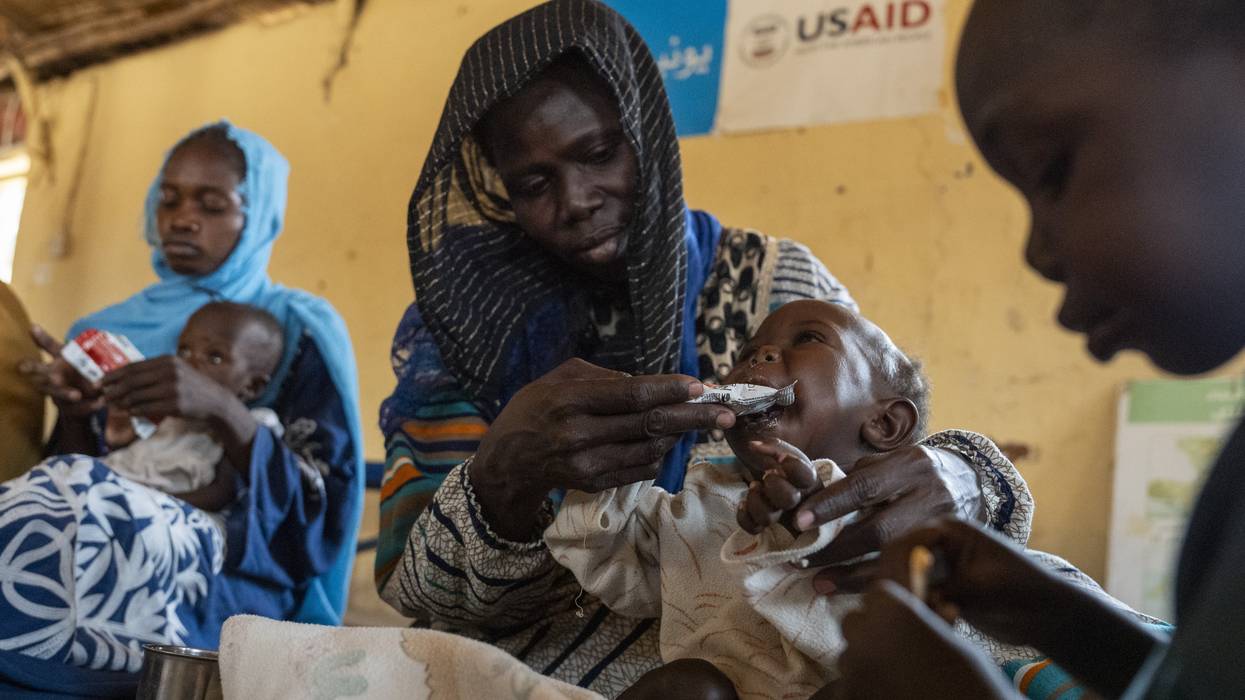
"Now in its third consecutive year of famine, Sudan received nothing."
Elon Musk's vault to trillionaire status following the public debut of his rocket company SpaceX came on the heels of an analysis showing the devastating impact of his destruction of the US Agency for International Development on millions of people in countries facing or on the brink of famine.
The analysis, authored by Council on Foreign Relations expert and longtime aid worker Sam Vigersky, noted that Musk's targeting of USAID during his tenure as head of the Department of Government Efficiency (DOGE) resulted in the transfer of the Food for Peace program to the US Department of Agriculture (USDA), an agency "without international humanitarian or disaster-response expertise."
Vigersky found that the USDA this year chose just seven countries to receive American grain under the Food for Peace program: the Democratic Republic of Congo, Ethiopia, Guatemala, Haiti, Kenya, El Salvador, and Rwanda. The latter two countries, Vigersky noted, "do not meet an emergency threshold" for assistance.
"Meanwhile, the country facing the largest hunger crisis in the world—Sudan—did not make the list. Now in its third consecutive year of famine, Sudan received nothing. In fact, more than 40% of Sudan’s community kitchens, a lifeline for the displaced, have closed in the past six months as funding dried up, according to Islamic Relief," Vigersky reported. "Afghanistan, Lebanon, and Yemen were also passed over. Millions of people in those countries live one step from famine, according to the Integrated Food Security Phase Classification (IPC), the UN-backed monitoring system that uses a standardized five-point scale (five being famine) to measure the severity of food insecurity."
Experts assessing the global impact of USAID's decimation at the hands of billionaire US President Donald Trump and the world's first trillionaire, who bragged publicly about "feeding USAID into the wood chipper," estimate that hundreds of thousands of people have already died as a result of the large-scale loss of humanitarian assistance—and millions more will die in the coming years if swift action is not taken to restore aid.
"The impacts of the cuts were immediate and tragic," Nicholas Enrich, a former USAID employee who became a whistleblower, wrote in The Boston Globe on Friday. "Health clinics and emergency ambulance services shuttered overnight. Clinical trials were deserted. Thousands of healthcare workers lost their jobs. Lifesaving food and medicine was left to expire in warehouses. According to conservative estimates, in the year since USAID was dismantled, 750,000 people have died as a result of the cuts. For the first time in a generation, more children died in one year — 2025—than in the previous year."
Oxfam has estimated that a 10% tax on Musk's $1 trillion fortune would generate enough revenue to end extreme poverty worldwide for a year.