

SUBSCRIBE TO OUR FREE NEWSLETTER
Daily news & progressive opinion—funded by the people, not the corporations—delivered straight to your inbox.
5
#000000
#FFFFFF
To donate by check, phone, or other method, see our More Ways to Give page.
Daily news & progressive opinion—funded by the people, not the corporations—delivered straight to your inbox.
Miguel Tinker Salas, 909-607-2920
Gregory Wilpert, 646-541-7212
Greg Grandin, 347-804-6851
In an open letter to the Board of Directors of Human Rights Watch, over 100 experts on Latin America criticized the organization's recent report on Venezuela, A Decade Under Chavez: Political Intolerance and Lost Opportunities for Advancing Human Rights in Venezuela, saying that it "does not meet even the most minimal standards of scholarship, impartiality, accuracy, or credibility." The signers include leading academic specialists from universities in the United States, including Harvard, Johns Hopkins, and a number of state universities, and academic institutions in Argentina, Australia, Brazil, Mexico, the U.K., Venezuela and other countries. The letter cites Jose Miguel Vivanco, lead author of the report, saying "We did the report because we wanted to demonstrate to the world that Venezuela is not a model for anyone..."[1], as evidence of its political agenda. The letter also criticizes the report for making unsubstantiated allegations, and that some of the sources that Human Rights Watch relied on in the report are not credible.
"By publishing such a grossly flawed report, and acknowledging a political motivation in doing so, Mr. Vivanco has undermined the credibility of an important human rights organization," the letter states.
The letter notes that numerous sources cited in the report - including opposition newspapers El Universal and El Nacional, opposition group Sumate, and a mentally unstable opposition blogger - have been known to fabricate information, making it "difficult for most readers to know which parts of the report are true and which aren't." The letter also argues that the Human Rights Watch report makes sweeping allegations based on scant evidence. For example, its allegation of discrimination in government services is based on just one person whose nephew claimed she was denied medicine from a government program.
The full text of the letter follows:
December 16, 2008
Human Rights Watch 350 Fifth Avenue, 34th floor
New York, NY 10118-3299 USA
To the Board of Directors,
We write to call your attention to a report published by Human Rights Watch that does not meet even the most minimal standards of scholarship, impartiality, accuracy, or credibility. The document, A Decade Under Chavez: Political Intolerance and Lost Opportunities for Advancing Human Rights in Venezuela, appears to be a politically motivated essay rather than a human rights report. Indeed, the lead author of the report, Jose Miguel Vivanco, stated as much when he told the press just a few days after its publication, "We did the report because we wanted to demonstrate to the world that Venezuela is not a model for anyone..."[2]
Clearly Mr. Vivanco is entitled to his views about Venezuela, but such statements run counter to the mission of Human Rights Watch and indeed any organization dedicated to the defense of human rights. By publishing such a grossly flawed report, and acknowledging a political motivation in doing so, Mr. Vivanco has undermined the credibility of an important human rights organization.
We do not make these charges lightly and we hope you will understand the seriousness of such grave errors in judgment. As scholars who specialize in Latin America, we rely on what are supposed to be independent, non-partisan organizations such as Human Rights Watch for factual information about human right abuses committed by governments and sometimes non-governmental actors. So do many other constituencies, including the press, government officials, and the public. It is a great loss to civil society when we can no longer trust a source such as Human Rights Watch to conduct an impartial investigation and draw conclusions based on verifiable facts.
The report makes sweeping allegations that are not backed up by supporting facts or in some cases even logical arguments. For example, the report's most important and prominent allegation is that "discrimination on political grounds has been a defining feature of the Chavez presidency." (p. 1) Yet the report does not show, or even attempt to show, that political discrimination either increased under the current government (as compared to past governments), or is more of a problem in Venezuela than in any other country in the world.
What is the evidence offered for such a broad generalization?
"In most cases, it was not possible to prove political discrimination-with rare exceptions, citizens were given no grounds at all for the actions taken-yet many were told informally that they were losing their jobs, contracts, or services for having signed the referendum petition [to recall President Chavez]. For example, in one case reported to Human Rights Watch, a 98-year-old woman was denied medicines that she had long received from a state development agency because, as her family was told by the program secretary, she had signed the referendum petition." (p.21) (Italics added).
Taking services first, the above paragraph refers to an allegation that one Venezuelan citizen was denied medicines for political reasons. Amazingly, this is the only alleged instance of discrimination in government services cited in the entire 230-page report. In other words, the Barrio Adentro program has provided health services to millions of poor Venezuelans each year since 2003, and the authors found one allegation (as reported to the authors in a phone conversation with the nephew of the alleged victim) of discrimination involving one person. On this basis the authors make the sweeping generalization that "Citizens who exercised their right to call for the referendum-invoking one of the new participatory mechanisms championed by Chavez during the drafting of the 1999 Constitution-were threatened with retaliation and blacklisted from some government jobs and services." (p. 10, italics added).
This is outrageous and completely indefensible. We do not expect a report of this nature to adhere to rigorous academic standards, but there have to be some standards.
With regard to employment, there is no doubt that there were cases where individual government officials discriminated on the grounds of employees' political beliefs. (There were also cases of discrimination and firing of pro-government employees in the private sector, which the report mentions in a parenthesis (p.10) and does not investigate). However, the report does not show that there was any organized or systematic effort to purge the government of anti-government employees. Indeed, as anyone who is familiar with the government of Venezuela knows, after nearly ten years since the election of President Hugo Chavez, the civil service is still loaded with employees who are against the government.
The report does not demonstrate whether the firings that occurred, in both the public and private sector, were simply the result of individual actions in a highly polarized society in which the opposition spent at least four years (according to opposition leader Teodoro Petkoff)[3] trying to dislodge the government though a military overthrow. Indeed, it is not hard to imagine that many government officials would, in such a climate, be apprehensive about employing people who are against the government. The report does not consider this possible cause of observed discrimination. Of course this would not justify such discrimination, but neither would it support the sweeping allegations of this report, which attempts to argue that the government is using its control over employment in the public sector in order to repress political opposition.
Indeed, the report's most serious allegation of discrimination in employment concerns a case where discrimination was not based on political partisanship, but in regards to unlawful subversion that no government would, nor should tolerate: "In the aftermath of the oil strike, PDVSA purged its ranks of thousands of workers who participated in the strike." (p.29). But as anyone who was in Venezuela at the time can attest, this was quite openly a strike to topple the government, which the opposition had succeeded in doing less than eight months earlier. The oil strike devastated the economy - which lost 24 percent of GDP in the resulting recession -- and came close to achieving its goal a second time.
The report implies that public employees, in this case oil workers should have the right to strike for the overthrow of an elected government; we do not support that view. It is especially dubious when that group of employees makes up less than one percent of the labor force, and is using its control over a strategic resource - oil revenues made up nearly half of government revenues and 80 percent of export earnings -- to cripple the economy and thereby reverse the result of democratic elections. The view that such a strike is "a legitimate strike" is not, to our knowledge, held by any democratic government in the world.[4]
But most importantly with regard to the credibility of the HRW report, it is profoundly misleading for the authors to argue that "political discrimination is a defining feature" of a government that is not willing to risk the continuing employment of people who have carried out such a strike.
The report's overwhelming reliance for factual material on opposition sources of dubious reliability also undermines its credibility and makes it difficult for most readers to know which parts of the report are true and which aren't. The most cited source with regard to political discrimination is the newspaper El Universal.[5] This is not only a stridently opposition newspaper, it has also, for the years during which it is cited, repeatedly fabricated news stories. For example, in a typical fabrication of the type deployed to libel government officials, El Universal reported that then Interior Minister Jesse Chacon had purchased a painting for $140,000.[6] This turned out to be completely false. There are many examples of fabrications in El Universal, as well as other opposition sources cited by the report.[7]
We find it troubling that a report on Human Rights depends heavily on unreliable sources. Would a report on human rights in the United States be taken seriously if it relied so heavily on Fox News, or even worse The National Enquirer? Indeed, this report ventures even further into the zone of unreliable sources and cites a mentally unstable opposition blogger as a source. (p. 20, footnote 30). This is a person who indulges not only in routine fabrications and advocates the violent overthrow of the government, but also has publicly fantasized about killing his political enemies and dumping the bodies from helicopters into the slums, and torturing others by "pour[ing] melted silver into their eyes."[8]
A disturbing thing about the report's reliance on these sources is that it indicates a lack of familiarity with the subject matter, or perhaps worse, a deep political prejudice that allows the authors to see most of these sources as unproblematic. Indeed, there is only one passing indication that the newspapers El Universal and El Nacional, are opposition newspapers, and it is a reference to the past[9], which the reader might therefore reasonably judge to be irrelevant. On the other hand, the report refers to the newspaper Ultimas Noticias as "largely sympathetic to Chavez and his government" and "a generally pro-government tabloid." (p.70, p.89) This is a newspaper that prints articles that are harshly critical of the government on a daily basis, and according to polling data in Venezuela is seen as vastly more independent than any other major newspapers. The authors' view of the Venezuelan media seems to mirror the view of the right-wing Venezuelan opposition, or the U.S. Right's view of the "liberal media" in the United States.
Such profound prejudice, in which events are interpreted overwhelmingly through the lens of Venezuela's right-wing opposition, is apparent throughout the document: for example when the authors describe groups that helped organize and supported the April 2002 coup as "new organizations dedicated to the defense of democracy and the rule of law." (p. 203).
But the worst thing about the report's reliance on opposition sources like El Universal, El Nacional, or Sumate, is that these sources have engaged in enough fabrications as to make them unreliable sources for factual material.
In its discussion of the media, the report also paints a grossly exaggerated picture of reality, while presenting some valid criticisms of existing law and practice. It is acknowledged in footnotes buried deep within the text that the opposition still dominates both broadcast and print media (footnote 184, p.74; footnote 181, p.73). Yet the government is reproached for "having significantly shifted the balance of the media in the government's favor" by creating pro-government TV stations since the 2002 coup, when "Chavez faced an almost entirely hostile private media." This is an odd position for a human rights organization to take. While it would be nice if the government could create TV stations that had no bias whatsoever, isn't it better to have some competition in the media - from left-leaning, pro-government stations - than to have a right-wing, anti-democratic, private monopoly? Especially when that right-wing monopoly had, as never before in world history, organized a military coup against a democratically elected government and led a devastating oil strike that nearly toppled the government a second time? Do the authors consider this type of media monopoly to be more protective of human rights than a media that is still dominated by the opposition but also presents some other sources of information?
The report refers repeatedly to the danger of "self-censorship," but does not provide any examples of this actually happening. This is a major weakness in its argument, since it is not that difficult to find examples of self-censorship in response to government pressure in, for example, the U.S. media.
In the 2004 U.S. Presidential election, the Sinclair Broadcast Group of Maryland, owner of the largest chain of television stations in the U.S., planned to show a documentary that accused candidate John Kerry of betraying American prisoners during the Vietnam War. The company ordered its 62 stations to show the film during prime-time hours just two weeks before the election. Nineteen Democratic senators sent a letter to the U.S. F.C.C. https://leahy.senate.gov/press/200410/101504.html calling for an investigation into this proposed intervention by Sinclair in the campaign, and some made public statements that Sinclair's broadcast license could be in jeopardy if it carried through with its plans. As a result of this pressure, Sinclair backed down and did not broadcast the film.
This example is directly relevant to the HRW report on Venezuela, because it shows that, in order to have a broadcast license in the United States and other democratic countries, the licensee is expected to follow certain rules and not to become a major political actor, e.g. by intervening in elections. As Vivanco himself has noted, "lack of renewal of the contract [broadcast license], per se, is not a free speech issue." Yet this report cites the denial of RCTV's broadcast license renewal as a simple, and indeed its primary, example of the Venezuelan government's alleged attack on free speech. It does not seem to matter to the authors that the station had participated in a military coup and other attempts to topple the government and would not receive a broadcast license in any democratic country.
The report even uses innuendo to imply that the government is to blame for attacks on journalists, which have occurred against both opposition and pro-government journalists. The authors state that the opposition TV station Globovision "has received warning letters from CONATEL because of the political tone of its reporting, it has been frequently refused entry to government press conferences, and its reporters and cameramen have been physically attacked and threatened by Chavez supporters." (p. 117) The authors provide no evidence that the government in any way condoned or supported such alleged attacks.
The major media in Venezuela to this day are practically unmatched in this hemisphere, and indeed most of the world, for their vehement, unfettered, and even vicious, libelous, and violence inciting attacks on the government[10]. While the HRW report presents a number of valid criticisms of existing law and a few cases of unwarranted intervention by government officials, it serves no legitimate purpose to hide or distort the actual state of Venezuela's media.
The same can be said for the rest of the report, including its treatment of the judiciary.[11] HRW has an obligation to criticize any laws or practices of the Venezuelan government that it sees as endangering human rights, and we welcome the valid criticisms that it raises in its report. But Mr. Vivanco has gravely undermined the credibility of Human Rights Watch by producing a report that, by his own admission, is politically motivated, as well as grossly exaggerated, based on unreliable sources, and advertises broad and sweeping allegations that are unsupported by the evidence.
We therefore request that HRW retract and revise its report so as to produce a credible document. Mr. Vivanco should also retract his remarks as to the political motivation for the report.
We would be glad to meet with you to discuss this issue further, and would welcome a debate with Mr. Vivanco in any public forum of his choosing, should he be willing to defend his report in public.
We hope you will consider these requests with the seriousness they deserve. Our letter is not meant as a justification for the Venezuelan government's decision to expel the authors of the HRW report from the country. Human rights are too important to be used as a political football, as has so often been the case when Washington singles out another government as an enemy state. This is why we depend on civil society organizations for independent, non-partisan, non-political reporting and investigation.
In the spirit of sharing our concerns with our Spanish-speaking colleagues, we are having this letter translated to be circulated in Latin America.
Sincerely,
1. Rodolfo Acuna, Professor, Chicano/a Studies, California State University , Northridge
2. Federico Alvarez, Professor Universidad Nacional Autonoma de Mexico
3. Tim Anderson, Senior Lecturer in Political Economy, University of Sydney , Australia
4. Miguel Angel Herrera, Historia, Universidad de Costa Rica
5. Robert Austin, Ph.D, Honorary Fellow, School of Historical Studies, University of Melbourne
6. Margara Averbach, Professor of Literatura, Universidad de Buenos Aires, Argentina
7. William Aviles, Associate Professor, Political Science University of Nebraska , Kearney
8. Mario Ayala, Programa de Historia Oral, Facultad de Filosofia y Letras, Universidad de Buenos Aires
9. David Barkin, Profesor de Economia, Universidad Autonoma Metropolitana-Xochimilco
10. .Carlos Beas, Activista Movimiento Indigena, Oaxaca-MEXICO
11.. Alejandro Alvarez Bejar, Professor Economics Universidad Autonoma Nacional de Mexico
12. Donald W, Bray, Professor Emeritus, California State University , Los Angeles
13. Marjorie Woodford Bray, Professor, Latin American Studies, California State University , Los Angeles
14. Charles Bergquist, Professor of History, University of Washington
15. Atilio A. Boron Director del PLED, Programa Latinoamericano de Educacion a Distancia en Ciencias Sociales, Buenos Aires, Argentina
16. Chesa Boudin, Yale Law School
17. Clara Mantini Briggs, Associate Researcher, Demography, University of California , Berkeley
18. Charles Briggs, Professor Anthropology, University of California , Berkeley
19. Julia Buxton, Senior Research Fellow, Centre for International Cooperation and Security, Department of Peace Studies, Bradford University
20. Maria Emilia Caballero, Comite '68 Pro Libertades Democraticas en Mexico
21. Marisol de la Cadena, Associate Professor of Anthropology, UC-Davis , CA
22. Jose Calderon, Professor Sociology and Chicano/a Studies, Pitzer College
23. Hernan Camarero, Professor, Universidad de Buenos Aires, Argentina
24. Cristina Castello, Poeta y Periodista, Buenos Aires, Argentina
25. Ana Esther Cecena, Instituto de Investigaciones Economicas, UNAM
Observatorio Latinoamericano de Geopolitica
26. Eleonora Quijada Cervoni, School of Language Studies, The Australian National University
27. Julie A. Charlip, Professor, Department of History, Whitman College
28. Norma Stoltz Chinchilla, Professor of Sociology and Women's Studies, California State University Long Beach
29. Christopher Clement, Visiting Professor Politics, Pomona College
30. Ron Chilcote, Professor Economics, University of California Riverside
31. Noam Chomsky, Professor of Linguistics, Massachusetts Institute of Technology
32. Antonia Darder, Professor Educational Policy and Latino Studies, University of Illinois , Urbana-Champaign
33. Michael Derham, University of Northumbria , School of Arts and Social Sciences
34. Monica Dias Martins, Professor Political Science, State University of Ceara , Brazil
35. Hector Diaz-Polanco, Centro de Investigaciones y Estudios Superiores en Antropologia (CIESAS)
36.Luis Duno, Associate Professor of Hispanic Studies, Rice University , Houston , TX
37. Steve Ellner, Professor Political Science, University of Oriente , Venezuela
38. Arturo Escobar, Kenan Distinguished Professor of Anthropology, UNC-Chapel Hill , NC
39. Raul Fernandez, Professor, School of Social Science , University of California Irvine
40. Sujatha Fernandes, Queens College , City University of New York
41. Bill Fletcher, Jr., Executive Editor, BlackCommentator.com
42. Gabrielle Foreman, Visiting Distinguished Professor of Africana Studies, Bowdoin College
43. Cindy Forster, Associate Professor History, Scripps College
44. Felix Hernandez Gamundi, Comite '68 Pro Libertades Democraticas en Mexico
45. Raul Alvarez Garin, Comite '68 Pro Libertades Democraticas en Mexico
46. Jose Francisco Gallardo Rodriguez, General Brigadier y Doctor en Administracion Publica
47. Marco A. Gandasegui, (h) Professor, University of Panama
48. Lesley Gill, Professor and Chair of Anthropology, Vanderbilt University , Nashville , TN
49. Magdalena Gomez, Columnist, La Jornada
50. Gilbert Gonzalez, Professor School of Social Science, University of California , Irvine
51. Armando Gonzalez-Caban, Latin American Perspective
52. Jeffrey Gould, Professor of History, Indiana University .
53. Greg Grandin , Professor of History, Director of Graduate Studies, New York University
54. Angel Guerra, Journalist, La Jornada
55. Maria Guerra, Universidad Nacional Autonoma de Mexico
56. Peter Hallward, Professor of Modern European Philosophy, Middlesex University , UK
57. Daniel Hellinger, Professor Political Science, Webster University
58. Ramona Hernandez, Director, CUNY Dominican Studies Institute & Professor of Sociology, The City College of New York
59. Derrick Hindery, Assistant Professor of International Studies and Geography, University of Oregon
60. Forrest Hylton, Ph.D. Candidate, History, NYU
61. Robin D. G. Kelley, Professor of History and American Studies
62. Misha Kokotovic, Associate Professor Department of Literature, UC San Diego
63. Maria Lagos, Associate Professor Emerita, Dept. of Anthropology, Lehman College , CUNY.
64. Sidney Lemelle, Professor of History, Pomona College
65. Deborah Levenson, Professor of History, Boston College
66. Nayar Lopez Castellanos, Universidad Autonoma de la Ciudad de Mexico
67. Gilberto Lopez y Rivas, Instituto Nacional de Antropologia e Historia, Centro Regional Morelos
68. Florencia E. Mallon, Julieta Kirkwood Professor of History, University of Wisconsin-Madison , WI
69. Luis Martin-Cabrera, Assistant Professor, UCSD
70. Jorge Mariscal, Professor, Literature, University of California , San Diego
71. Peter McLaren, Professor, Graduate School of Education and Information Studies, University of California , Los Angeles
72. Frida Modak, Chilean Journalist
73. Daniel Molina, Comite '68 Pro Libertades Democraticas en Mexico
74. Jose Mollet, Profesor Asistente y escritor, Director del Centro de Investigaciones Socioculturales, Instituto de Cultura del Estado Falcon, Venezuela
75. Carlos Montemayor, Writer
76. Maricarmen Montes, Nuestra America
77. Josefina Morales, Investigadora UNAM, Mexico
78. Luis Hernandez Navarro, Journalist
79. Fabio Gabriel Nigra, Assistant Professor of History, Universidad de Buenos Aires, Argentina
80. Enrique Ochoa, Professor, Latin American Studies, California State University , Los Angeles
81. Elizabeth Oglesby, Department of Geography, University of Arizona
82. Jocelyn Olcott, Department of History, Duke University Press
83. Mercedes Olivera, Centro de Estudios Superiores de Mexico y Centroamerica, Universidad de Ciencias y Artes de Chiapas.
84. Mark Overmyer -Velazquez, Associate Professor of History, University of Connecticut
85. Jose Herrera Pena Centro de Investigaciones Juridicas, Facultad de Derecho y Ciencias Sociales, Universidad Michoacana de San Nicolas de Hidalgo.
86. Rebeca Peralta, Nuestra America
87. Salvador E. Morales Perez, Instituto de Investigaciones Historicas, Universidad Michoacana de San Nicolas de Hidalgo
88. Hector Perla, Assistant Professor Latin American and Latino Studies, University of California , Santa Cruz
89. John Pilger, journalist and documentary film maker
90. Deborah Poole, Professor, Anthropology, Johns Hopkins
91. Carlos Walter Porto Goncalves Professor do Programa de Pos-graduacao em Geografia da Universidade Federal Fluminense
92. Pablo A. Pozzi, Professor of History, Universidad de Buenos Aires, Argentina
93. Vijay Prashad, Professor, International Studies, Trinity College
94. Gerardo Renique, City College , City University of New York
95. William Robinson, Professor Sociology, University of California , Santa Barbara
96. Victor Rodriguez, Professor, Chicano Latino Studies, California State University , Long Beach
97. Rene Patricio Cardoso Ruiz, Director en Estudios Latinoamericanos, Investigador Nacional I del SIN, Facultad de Humanidades, Universidad Autonoma del Estado de Mexico
98. Jan Rus, Latin American Perspectives
99. Emir Sader, Secretario Ejecutivo de CLACSO, Sociologo, Argentina
100. Miguel Tinker Salas, Professor of History, Pomona College
101. Rosaura Sanchez, Professor, Literature, University of California , San Diego
102. John Saxe-Fernandez, Essayist, Mexico
103. Alejandro M. Schneider, Assistant Professor of History, Universidad Nacional de La Plata, Argentina
104. Enrique Semo, Professor of Economics, Universidad Nacional Autonoma de Mexico
105. T.M. Scruggs, Associate Professor, Ethnomusicology
106. Jose Steinsleger, Mexican Writer and Journalist
107. Beatriz Stolowicz, Universidad Autonoma Xochimilco
108. Oliver Stone, Filmmaker
109. Sinclair Thomson, Professor History, New York University
110.Steven Topik, Professor, History, University of California , Irvine
111. Jorge Turner, Universidad Nacional Autonoma de Mexico
112. Carolina Verduzco, Comite '68 Pro Libertades Democraticas en Mexico
113. William H. Watkins, Professor, College of Education , Univ. of Illinois , Chicago
114. Mark Weisbrot, Co-Director, Center for Economic and Policy Research
115. Dr Stephen Wilkinson Assistant Director International Institute for the Study of Cuba London Metropolitan University
116. Gregory Wilpert, Ph.D, Adjunct Professor of Political Science, Brooklyn College
117. John Womack, Professor, History, Harvard
118. Nahirana Zambrano, Professor of American Studies, University of the Andes, Venezuela
###
[1]"Venezuela no es modelo para nadie," September 21, 2008, El Universal. Since El Universal is not necessarily a reliable source (see below), we confirmed that this quote from Mr. Vivanco was accurate.
[2]"Venezuela no es modelo para nadie," September 21, 2008, El Universal. Since El Universal is not necessarily a reliable source (see below), we confirmed that this quote from Mr. Vivanco was accurate.
[3] Petkoff describes the opposition "strategy that overtly sought a military takeover" from 1999-2003, and also writes about the opposition's use of its control over the oil industry to topple the government. "A Watershed Moment in Venezuela." Inter-American Dialogue Working Paper (July 2008)
[4] The United States has several laws that would have prevented such a strike from even having been carried out, and allowed for firing the participants and even jailing of its organizers.
[5] In addition to these opposition newspapers, the section on political discrimination cites extensively other opposition newspapers (El Nacional, Tal Cual) and the opposition group Sumate.
[6] https://www.eluniversal.com/2004/09/27/pol_art_chacon.shtml
[7] A few more examples: On August 4, 2004, El Universal ran a story on their front page that a recent poll showed the Yes vote against Chavez was winning and that there was "evidence that indicates the exit of Hugo Chavez as president." The poll turned out to be non-existent. Another opposition newspaper cited by HRW, El Nacional, has also fabricated stories in attempts to discredit the government. On January 12, 2003, El Nacional reported that an oil worker had been burned to death in an accident at El Palito oil refinery. On the day that the article ran, the reportedly "dead" worker appeared on television in good health. The HRW report also frequently cites the opposition group Sumate; Sumate maintained, on the basis of faked exit polls (for which it helped gather data), that the 2004 recall referendum was actually stolen by a fantastic electronic fraud. See "Polling and the Ballot in Venezuela www.cepr.net/documents/presentations/venezuela_polling.ppt . The opposition media in general promoted this bizarre conspiracy theory. (Chavez won the referendum, which was certified by international observers including the OAS and the Carter Center, by a margin of 58-41 percent).
[8] See https://www.guardian.co.uk/commentisfree/2007/sep/01/friendsinlowplaces
[9] "Two long-established daily newspapers-El Universal and El Nacional-were persistent critics"(p.69)
[10] A recent example is when the Editor of the Newspaper El Nuevo Pais, Rafael Poleo, stated on Globovision's talk show, Alo Ciudadano, that "Hugo is going to end up like Mussolini, hung with his head towards the floor." See https://www.youtube.com/watch?v=UeotfcwBLqI
[11] For a more detailed but still not exhaustive account of the HRW report's exaggerations, errors, and omissions, see Gregory Wilpert, "Smoke and Mirrors: An Analysis of Human Rights Watch's Report on Venezuela" Venezuelanalysis.com October 17, 2008. https://www.venezuelanalysis.com/analysis/3882
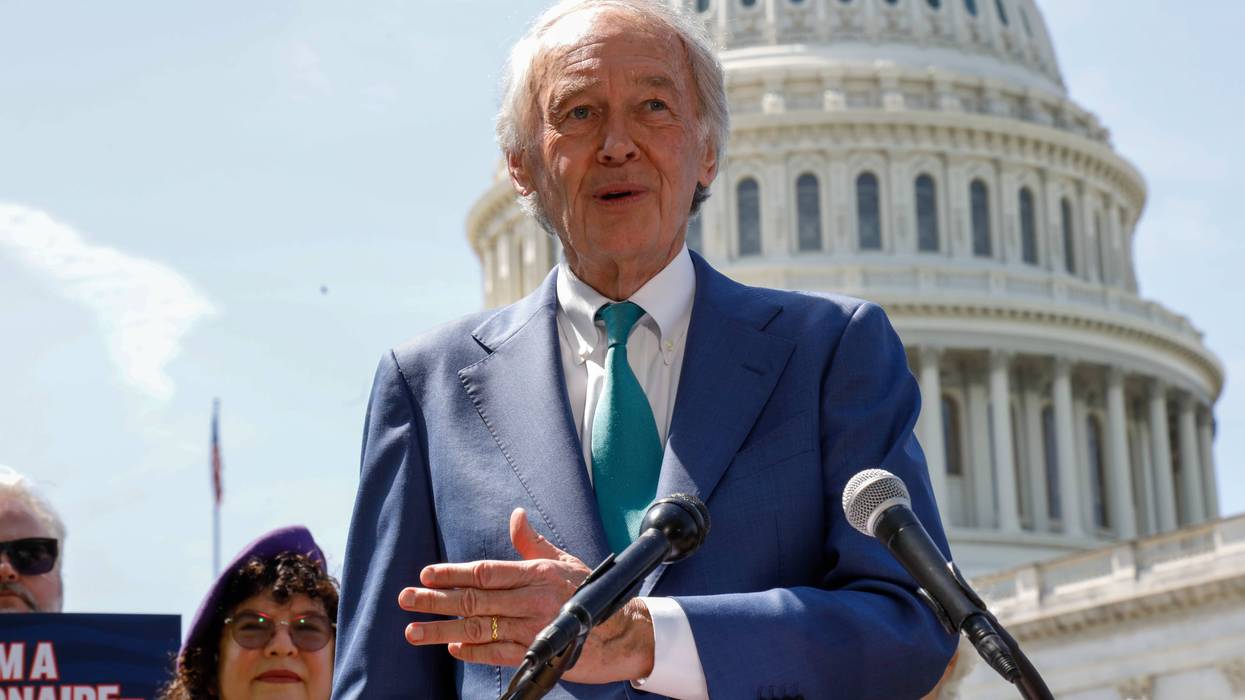
"It’s time to put people before the Pentagon and make major cuts to Trump’s bloated and wasteful defense spending," said Sen. Ed Markey, who introduced the bill.
Democratic US Sen. Ed Markey of Massachusetts took aim Monday at President Donald Trump's illegal war of choice on Iran and request for a record $1.5 trillion in total military-related spending authorization by introducing legislation that would cap the Pentagon budget at half that amount.
Markey introduced the Slash the Pentagon Act at a Capitol Hill press conference that took place "as Americans struggle to pay for healthcare, rent, electricity, groceries, and gas, while Trump has spent over $100 billion on his expensive, dangerous, and unnecessary war with Iran."
“Instead of funding Medicaid and education or investing in veterans’ care, Republicans want to pad the pockets of gold-plated defense contractors with billions more dollars for weapons and wars we do not need,” Markey said at the press conference.
“Just before SpaceX’s IPO made Elon Musk a trillionaire, Trump gave SpaceX billions in contracts for his expensive and ineffective ‘Golden Dome’ system," Markey continued. "Coincidence? No, corruption."
"It’s time to put people before the Pentagon and make major cuts to Trump’s bloated and wasteful defense spending," the senator added. "We should invest in our hospitals, schools, affordable housing, and the real security American families need right now—not expensive wars and weapons that make us less safe.”
Markey's bill comes just days after the Senate Armed Services Committee voted 18-9 to advance the $1.15 trillion National Defense Authorization Act (NDAA) for fiscal year 2027, and the House Appropriations Defense Subcommittee approved the Fiscal Year 2027 Defense Appropriations Bill during a closed-door markup. The House bill provides $1.072 trillion for the Pentagon and other military-related activities, a $234 billion increase from this year’s enacted level.
The Trump administration’s broader national security proposal requests nearly $1.5 trillion in total defense-related spending for 2027, which includes $350 billion in supplemental funding for munitions production, shipbuilding, missile defense, drones, artificial intelligence, and other long-term military programs.
During his press conference, Markey highlighted "better ways to use a $750 billion cut from Trump’s $1.5 trillion military budget":
“For decades we’ve been told there is always enough money for weapons and war but never enough for the challenges our communities face day to day,” said Shayna Lewis, deputy director of Win Without War.
“Now, as families grapple with rising costs, President Trump is demanding an unthinkable $1.5 trillion Pentagon budget—all while brushing aside the concerns and struggles of the American people," Lewis added. "Thankfully, a growing coalition of lawmakers is listening, and gearing up to bring spending back into line with people’s needs.”

"A 1-year-old child is dead because police officers in Mississippi opened fire on a car in a crowded Walmart parking lot," said attorney Ben Crump.
Relatives of a toddler shot dead on Sunday by police in rural Mississippi are demanding answers and accountability.
"I don’t know anything right now," Carlos Haynes told Memphis channel WMC. "My grandson gone. I just want justice."
Carolyn Sokes, the slain toddler's great-grandmother, said: "The police department not telling us anything. They removed the baby's body without anybody seeing it. All we know is that a car was shot up and a 1-year-old baby was killed, and then nobody tells us anything, like we're not anybody."
One-year-old Kohen Wiley, who was being held by his mother in the front passenger seat while his aunt was behind the wheel, was shot and killed by police in Senatobia, 40 miles south of Memphis, during an incident in a Walmart parking lot. The baby's aunt was also shot and critically injured.
Cellphone video footage obtained by Fox 13 Memphis shows a vehicle driving away from officers, but does not appear to capture the moment of the shooting. A photo of the car shows bullet holes in the windshield.
An eyewitness told WREG that “I seen the officers take off running, not in the car, I’m talking about on feet."
“They’re running through the parking lot and I see the car take off, you know, so in my head, I’m like, I know they’re not chasing the car, they don’t think they’re going to catch the car. Then I hear gunshots, and I’m like, I know they’re not shooting at a car that’s leaving in public; this is Walmart."
Another witness said that he heard two gunshots fired by officers who were already waiting in the Walmart parking lot as the two women left the store holding a box of diapers and the baby.
According to the Mississippi Department of Public Safety (DPS):
Law enforcement officers responded to a shoplifting call at Walmart on US 51. Upon arrival, officers encountered two subjects and a juvenile child fleeing from the store into a vehicle. Officers attempted to stop the vehicle, but the driver drove in the direction of the officers, almost striking one. An officer then discharged their weapon and the vehicle fled the scene. The subjects arrived at a local hospital where one juvenile child in the vehicle was pronounced deceased, and another subject had critical injuries. No law enforcement officers received any serious physical injury.
The responding law enforcement agencies—the Senatobia Police Department (SPD) and Tate County Sheriff's Office (TCSO)—have yet to release the names of the involved officers or any video footage of the incident.
TCSO said deputies were in the area investigating an unrelated matter when their assistance was requested. On Monday, Tate County Sheriff Luke Shepherd declined to comment about the shooting, including whether anyone had been charged, citing pending investigations, according to Mississippi Today.
SPD issued a statement saying it is "committed to full transparency" and "will share as much information as possible" with the public.
Walmart said in a written statement, “We’re saddened by what took place at our Senatobia, MS store."
Relatives of the slain toddler said his mother and aunt were not shoplifting and expressed wariness about local police, who have been embroiled in multiple brutality scandals involving Black victims in recent years.
“Senatobia Police Department get away with too much stuff,” Stokes, the great-grandmother, told WREG. “I hear about it all the time, it’s in the news all the time."
Licole Wiley, the child’s grandmother and the sister of the critically injured woman, lamented that the toddler died "allegedly over some Pampers."
"Whatever the incident may have come to, it still didn’t need for you to shoot two adults and a baby that was not even a threat to you," she added.
Another one of the child's grandmothers, Lasandra Williams, said that “everybody that was involved needs to be held accountable."
"I’m not giving up until I get justice,” she added. “Justice will be served. If it has anything to do with me, it will be served.”
Mississippi Today reported Tuesday that Wiley's relatives have hired national civil rights attorney Ben Crump.
"A 1-year-old child is dead because police officers in Mississippi opened fire on a car in a crowded Walmart parking lot," Crump said in a statement. "Kohen Wiley was a baby. His mother, who has not been charged with any crime, says she was trying to communicate to officers that there was a baby in the car. They fired anyway, leading to the death of an innocent 1-year-old. We intend to seek justice for baby Kohen and the life that was stolen from him.”
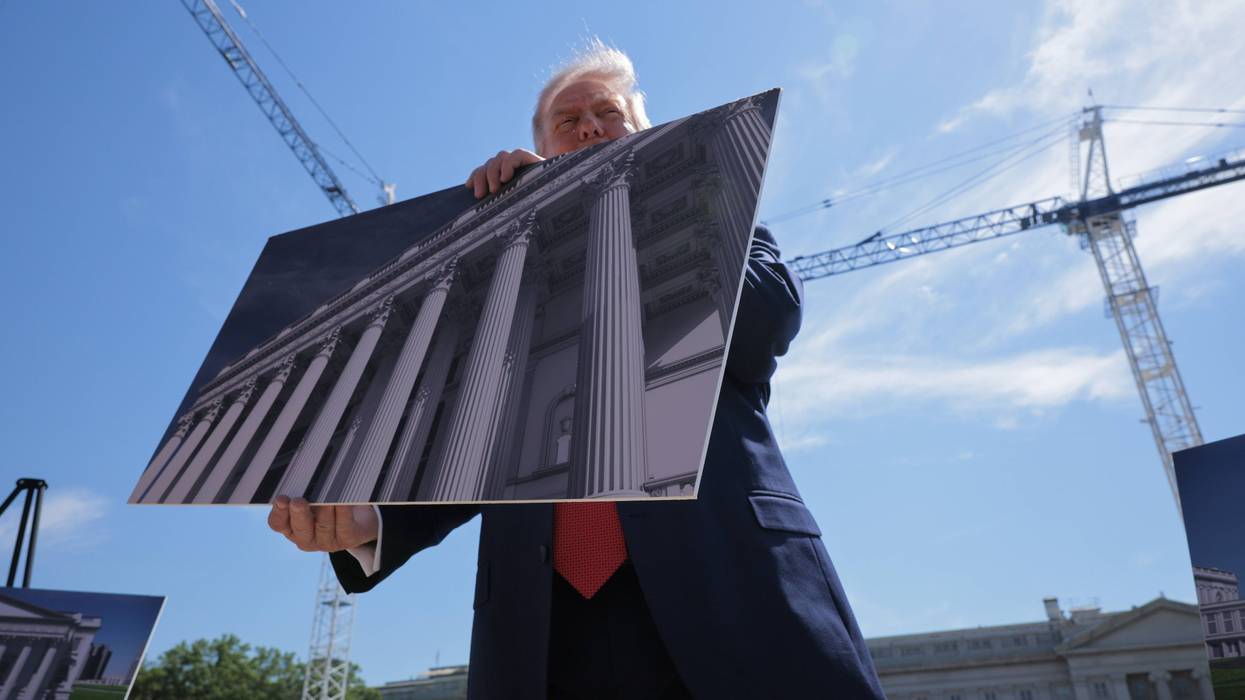
"They cut your healthcare while spending taxpayer dollars on a golden ballroom for Donald Trump," said Rep. Greg Casar. "And they lied about it."
Internal documents show that President Donald Trump was lying when he said taxpayers would not be footing the bill for his massive White House ballroom.
Reiterating what he'd already said countless times, the president claimed in March that the project was "taxpayer-free" and entirely funded by private donors, who'd spend $400 million to build it in the now-demolished East Wing of the White House.
But at the time he made these comments, he knew that was untrue.
The Washington Post reported on Tuesday that a detailed project summary made three weeks earlier showed the total construction cost at $600 million, with more than half of the funds coming from taxpayers.
Here is a montage of Trump promising his ballroom won't cost taxpayers any money, despite new reports that taxpayers will be paying for half of the $600M project https://t.co/51scEAuOfX pic.twitter.com/EqUPUUSxqX
— Headquarters (@HQNewsNow) June 16, 2026
The Post continued:
By the time Trump made his comments in March, the federal government had already approved more than a dozen payments to the contractor overseeing the work, Clark Construction, totaling tens of millions of dollars in public funds, according to a log of the contractor’s invoices obtained by The Post...
Multiple project summaries provided to the White House by Clark Construction show that internal cost estimates have been significantly higher than administration officials have acknowledged in public comments or court filings. They also show that the work was projected to rely heavily on taxpayer dollars from the moment it was announced.
According to the March 5 estimate reviewed by the Post, $293 million worth of funding is coming from donors—many of whom have received new or extended federal contracts over the past six months.
The rest of the money comes from taxpayer-funded sources: $155 million would come from the Secret Service, $149 million from the White House Military Office, and $3 million from the Executive Residence.
In May, Republicans in Congress proposed an additional $1 billion from taxpayers to fund “security adjustments and upgrades" for which Trump has said would be comprised of a subterranean six-story bunker complete with everything from bomb shelters to military medical facilities and a base to launch "unlimited numbers of drones."
Although that funding was ultimately excluded from the bill, taxpayer money is still being used through agency accounts, the Post's reporting shows.
The claim that the ballroom would not use taxpayer dollars has been repeated by other Republicans in Congress, including Speaker of the House Mike Johnson (R-La.), who described it in May as "totally privately funded."
Asked by a reporter on Tuesday about the Post's revelation, Senate Majority Leader John Thune (R-SD) contradicted this assurance, acknowledging that there "is certainly some expectation that there would be dollars allocated that would go above and beyond the private money that's been raised."
White House spokesperson Davis Ingle told the Post that "President Trump and generous American patriots are funding the ballroom to the tune of approximately $400 million, which will be a secure and appropriate venue for presidents for generations to come." He did not address questions about the taxpayer funding or the cost of the project.
The news has put many Republicans, particularly those who've voted to cut taxpayer-funded social welfare programs in the name of fiscal prudence, in an uncomfortable position.
A new investigation in the Washington Post examines an internal estimate in March evaluating the cost of President Trump’s White House ballroom and reveals that the project’s internal cost estimate is $600 million, half of which will be covered by taxpayers. Trump had previously… https://t.co/HbMxmQHOty pic.twitter.com/e5RoMsJWlN
— Drop Site (@DropSiteNews) June 16, 2026
Asked about the revelations by a reporter from Drop Site News, Sen. John Kennedy (R-La.) scoffed, "You believe everything in the Washington Post." Stating he had not seen the report, he said, "I'm sure they have anonymous sources."
Notably, the White House itself did not dispute the Post's story, nor did the story rely on anonymous sources.
Others fell back on the White House's security justification. Asked if he supported using taxpayer dollars for the project, Sen. Rick Scott (R-Fla.) responded, "I support protecting the president," and said he supports funding for "more Secret Service agents, something like that." The spending outlined in the Post's story does not include funding for more agents.
Public Citizen democracy advocate Jon Golinger called for an immediate investigation by Congress following revelations that taxpayer money was being spent.
"These secret records reveal that Trump’s ballroom is being built on a foundation of lies, fraud, and corruption," he said. "We are also calling for an investigation to uncover the names and actions of every Trump White House and administration official who was involved in this plot to circumvent congressional approval and spent unauthorized taxpayer dollars on Trump’s ballroom."
Golinger said the unauthorized use of taxpayer money could violate the Antideficiency Act, which "makes executive officials who engage in unlawful taxpayer spending schemes personally, and potentially criminally, liable for their actions."
Rep. Greg Casar (D-Texas), the chair of the Congressional Progressive Caucus, said the unauthorized use of taxpayer funds was "a huge scandal."
"They cut your healthcare while spending taxpayer dollars on a golden ballroom for Donald Trump," he said, "And they lied about it.