
SUBSCRIBE TO OUR FREE NEWSLETTER
Daily news & progressive opinion—funded by the people, not the corporations—delivered straight to your inbox.
5
#000000
#FFFFFF
To donate by check, phone, or other method, see our More Ways to Give page.


Daily news & progressive opinion—funded by the people, not the corporations—delivered straight to your inbox.
"It’s hard to see how Making America Healthy Again was anything but another broken campaign promise," said one critic.
The US Environmental Protection Agency on Friday announced its anticipated reapproval of dicamba for two key crops, a move which, given the pesticide's proven health risks, places the EPA at apparent odds with President Donald Trump's vow to "Make America Healthy Again."
“The industry cronies at the EPA just approved a pesticide that drifts away from application sites for miles and poisons everything it touches,” Nathan Donley, environmental health science director at the Center for Biological Diversity, said in response to Friday's announcement.
“With the EPA taking aggressive pro-pesticide industry actions like this, it’s hard to see how Making America Healthy Again was anything but another broken campaign promise," Donley added. "When push comes to shove, this administration is willing to bend over backward to appease the pesticide industry, regardless of the consequences to public health or the environment.”
The EPA said in a statement that the agency "established the strongest protections in agency history for over-the-top (OTT) dicamba application on dicamba-tolerant cotton and soybean crops," and that "this decision responds directly to the strong advocacy of America's cotton and soybean farmers."
While scientific studies have linked exposure to high levels of dicamba to increased risk of cancer and hypothyroidism and the European Union has classified dicamba as a category II suspected endocrine disruptor, the EPA said Friday that "when applied according to the new label instructions," it "found no unreasonable risk to human health and the environment from OTT dicamba use."
This is the third time the EPA has approved dicamba for OTT use. On both prior occasions, federal courts blocked the approvals, citing underestimation of the risk of chemical drift that could harm neighboring farms.
The agency highlighted new restrictions on dicamba use it said will reduce risk of drift.
"EPA recognizes that previous drift issues created legitimate concerns, and designed these new label restrictions to directly address them, including cutting the amount of dicamba that can be used annually in half, doubling required safety agents, requiring conservation practices to protect endangered species, and restricting applications during high temperatures when exposure and volatility risks increase," it said.
Critics noted that the EPA during the Biden administration published a report revealing that during Trump’s first term, senior administration officials intentionally excluded scientific evidence of dicamba-related hazards, including the risk of widespread drift damage, prior to a previous reapproval.
Others pointed to the recent appointment of former American Soybean Associate lobbyist and dicamba advocate Kyle Kunkler as the EPA's pesticides chief.
"Kunkler works under two former lobbyists for the American Chemistry Council, Nancy Beck and Lynn Dekleva, who are now overseen by a fourth industry lobbyist, Doug Troutman, who was recently confirmed to lead the chemicals office following endorsement by the chemical council," the Center for Food Safety (CFS) noted Friday.
The Trump EPA has also come under fire for promoting the alleged safety of atrazine, a herbicide that the World Health Organization says probably causes cancer, and for pushing the US Supreme Court to shield Bayer, which makes the likely carcinogenic weedkiller Roundup, from thousands of lawsuits.
CFS science director Bill Freese said that “the Trump administration’s hostility to farmers and rural America knows no bounds."
“Dicamba drift damage threatens farmers’ livelihoods and tears apart rural communities," Freese added. "And these are farmers and communities already reeling from Trump’s [Immigration and Customs Enforcement] raids on farmworkers, the trade war shutdown of soybean exports to China, and Trump’s bailout of Argentina, whose farmers are selling soybeans to the Chinese—soybeans China used to buy from American growers.”
“The fact that we’re here again after two failed attempts to fix this broken pesticide shows that Lee Zeldin and his army of industry lobbyists are utterly incapable of protecting the public,” said one expert.
The US Environmental Protection Agency plans to reapprove dicamba despite the pesticide's proven health and environmental risks, the Washington Post reported Friday—a move that would seemingly fly in the face of the Trump administration's pledge to "Make America Healthy Again."
According to a draft statement obtained by the Post, the EPA called the reapproval “the most protective dicamba registration in agency history," while noting “several measures” to head off “ecological risks.”
Two EPA officials told the Post's Amudalat Ajasa on condition of anonymity that the agency would move to reapprove dicamba next week.
It would be the third time the EPA approved the pesticide. On both prior occasions, federal courts blocked the approvals, citing underestimation of the risk of chemical drift that could harm neighboring farms.
“The fact that we’re here again after two failed attempts to fix this broken pesticide shows that Lee Zeldin and his army of industry lobbyists are utterly incapable of protecting the public,” Center for Biological Diversity (CBD) senior scientist Nathan Donley told the Post, referring to the EPA administrator.
One judge ruled in 2024 that since widespread dicamba drift damaged millions of acres of nontolerant crops, some farmers felt "coerced" to purchase expensive, dicamba-resistant seeds to safeguard their own fields, creating a "near-monopoly" for companies selling the products.
Some scientific studies have linked dicamba to increased risk of cancer and hypothyroidism. The European Union classifies dicamba as a category II suspected endocrine disruptor.
In 2021, the Biden administration published an EPA report revealing that during Trump's first term, senior officials intentionally excluded scientific evidence of dicamba-related hazards, including the risk of widespread drift damage, before reapproving the dangerous chemical.
A separate EPA report described the widespread harm to farmers and the environment caused by dicamba during the 2020 growing season.
Writing for the New Lede this week, Donley warned that "much like the greenwashing you see at the grocery store, with terms like 'eco-friendly' or 'green' advertising chemical-laden products on store shelves, Zeldin’s MAHA-washing paints the same rosy picture to distract from decisions that harm public health."
"We all stand to lose if this pesticide gets the green light," he added.
“Administrator Zeldin is removing all incentives for big polluters to follow the law and turning a blind eye to those who suffer from the impacts of pollution.”
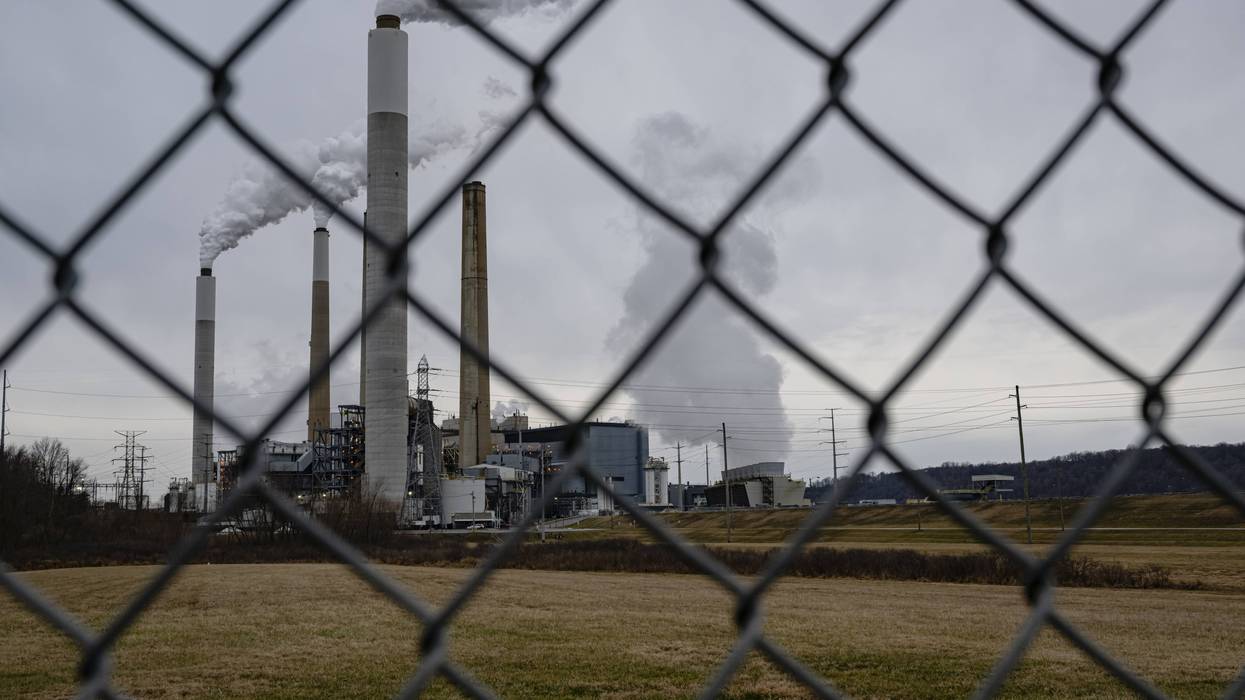
The Trump administration settled just 15 of the illegal pollution cases referred by the US Environmental Protection Agency in the first year of President Donald Trump's second term in the White House, according to data compiled by a government watchdog—the latest evidence that Trump officials are placing corporate profits above the EPA's mission to "protect human health and the environment."
In the report, The Collapse of Environmental Enforcement Under Trump's EPA, Public Employees for Environmental Responsibility (PEER) noted Thursday that in the first year of former President Joe Biden's administration, 71 cases referred by the EPA were prosecuted by the US Department of Justice (DOJ).
“Under [EPA Administrator] Lee Zeldin, anti-pollution enforcement is dying a quick death,” said Tim Whitehouse, executive director of PEER and a former enforcement attorney at EPA.
The DOJ lodged just one environmental consent decree in a case regarding a statutory violation of the Clean Air Act from the day Trump was inaugurated just over a year ago until now—signaling that the agency "virtually stopped enforcing" the landmark law that regulates air pollution.
"Enforcing the Clean Air Act means going after violators within the oil, gas, petrochemical, coal, and motor vehicle industries that account for most air pollution," reads the report. "But these White House favorites will be shielded from any serious enforcement, at least, while Lee Zeldin remains EPA’s administrator."
“For the sake of our health and the environment, Congress and the American people need to push back against Lee Zeldin’s dismantling of EPA’s environmental enforcement program.”
In the first year of his first term, Trump's DOJ settled 26 Clean Air Act cases, even more than the 22 the department prosecuted in Biden's first year.
The report warns that plummeting enforcement actions are likely to contribute to health harms in vulnerable communities located near waterways that are filled with "algae blooms, bacteria, or toxic chemicals" and near energy and chemical industry infrastructure, where people are more likely to suffer asthma attacks and heart disease caused by smog and soot.
“Enforcing environmental laws ensures that polluters are held accountable and prevented from dumping their pollution on others for profit,” said Joanna Citron Day, general counsel for PEER and a former senior counsel at DOJ’s Environmental Enforcement Section. “For the sake of our health and the environment, Congress and the American people need to push back against Lee Zeldin’s dismantling of EPA’s environmental enforcement program.”
EPA's own enforcement and compliance database identifies 2,374 major air pollution sources that have not had a full compliance evaluation in at least five years, and shows that no enforcement action has been taken at more than 400 sources that are marked as a "high priority."
Nearly 900 pollution sources reported to the EPA that they exceeded their wastewater discharge limits at least 50 times in the past two years.
The agency has also repealed its rules limiting carbon pollution from gas-powered cars, arguing that the EPA lacks the authority to regulate carbon.
As public health risks mount, PEER noted, Zeldin is moving forward with plans to stop calculating the health benefits of rules aimed at reducing air pollution, and issued a memo last month detailing a "compliance first" policy emphasizing a "cooperative, industry-friendly approach" to environmental regulation.
“Administrator Zeldin is removing all incentives for big polluters to follow the law," said Whitehouse, "and turning a blind eye to those who suffer from the impacts of pollution.”